
Animals in a snowy landscape! The charm of Fuji Safari Park, only available in winter!
At Fuji Safari Park in Shizuoka Prefecture, you can enjoy an exciting safari experience and get up close and personal with the animals from your own car or the park bus! The animals live freely in a natural environment, and you can enjoy the scenery of each season. It even snows from January to early March.

Written by
Located at an altitude of 850m, this is one of the largest safari parks in Japan. In the vast natural surroundings at the foot of Mt. Fuji, about 800 animals from 60 species, including lions, Amur tigers, and giraffes, live freely. The park is divided into a "Safari Zone" and a "Placement Zone," where you can take your time to observe the animals and enjoy interacting with them in a natural environment.
This service includes sponsored advertisements.
-
Table of Contents
- What is Fuji Safari Park?
- Does it snow at Fuji Safari Park?
- Animals in the snowy landscape (Safari Zone)
- Animals enjoying the snowy scenery (Interaction Zone)
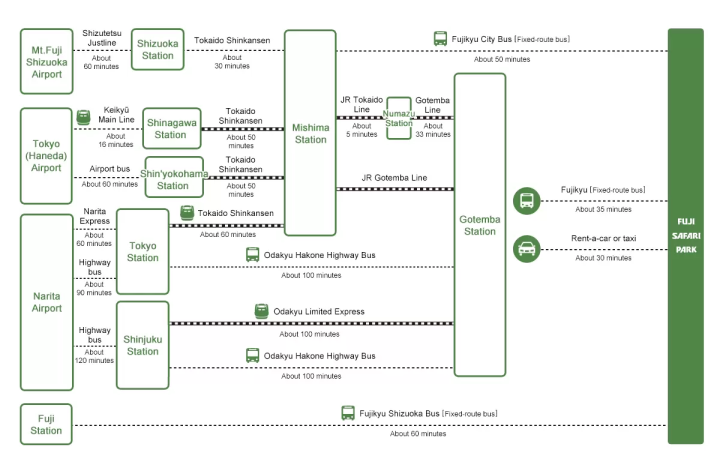
- access
- Admission reception hours and admission fees
![[Updated for 2026] Fuji Safari Park Complete Guide! Prices, Access, and How to Enjoy](https://resources.matcha-jp.com/resize/200x2000/2024/12/10-214444.webp)
What is Fuji Safari Park?
This is one of Japan's largest safari parks, where 800 animals from about 60 species, including lions, giraffes, and elephants, live freely in the vast natural environment at the foot of Mount Fuji. The park is divided into two areas: the Safari Zone and the Interaction Zone. The Safari Zone can be toured by car or sightseeing bus, while the Interaction Zone can be toured on foot. Also, snow falls a few times a year in winter (January to early March). For a limited time, you may have the chance to see the animals enjoying the snowy scenery!
Does it snow at Fuji Safari Park?
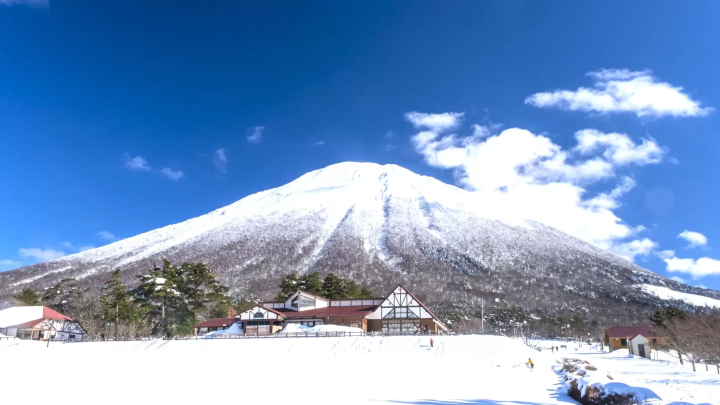
Shizuoka Prefecture has a warm climate, but Fuji Safari Park is located at an altitude of 850m, so the temperature is lower than on the plains, and snow falls every year from January to early March. In some cases, 10 to 20cm of snow can pile up in a single day, turning the whole area into a world of silver! If the weather is good for several days, the snow will melt and disappear in a few days, but you can enjoy the special "Snow Safari Park" for a limited time.
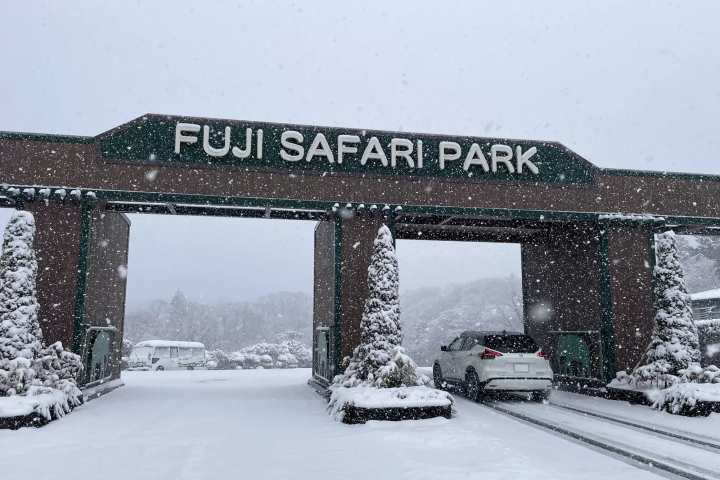
However, if there is snow or ice on the roads in the park or surrounding areas, you will not be able to drive on cars with normal tires. Please note that you will need to use winter tires, tire chains, or other anti-skid measures for your car.
Also, depending on the amount of snowfall, surrounding roads may be closed and the park may be temporarily closed, so please check the official website and road signs before visiting.
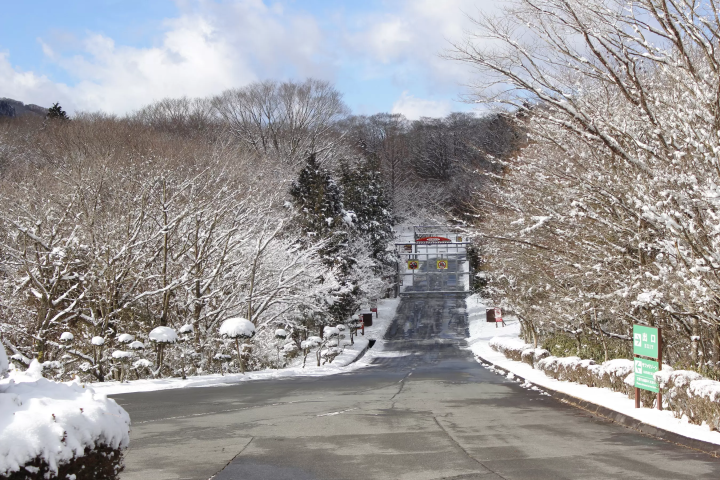
The entrance to the Safari Zone the day after it snowed
Even after the roads have been cleared of snow, snow will remain in various places in the park for a few days, allowing you to observe animals spending time in the snow!
Animals in the snowy landscape (Safari Zone)
Some animals are happy when it snows, running and rolling around in the snow. Of course, they do things at their own pace whether there is snow or not! Different animals react in different ways, but we'll show you how some animals spend their time in the snowy scenery.
*During low temperatures or snowfall, some animals that do not tolerate the cold (such as cheetahs and giraffes) may not be able to be seen due to health management needs of the animals.
American bear playing in the snow
When it snows, American bears become more active than usual! They play with each other, lie down and relax... You can see them being active in the snowy scenery as usual!
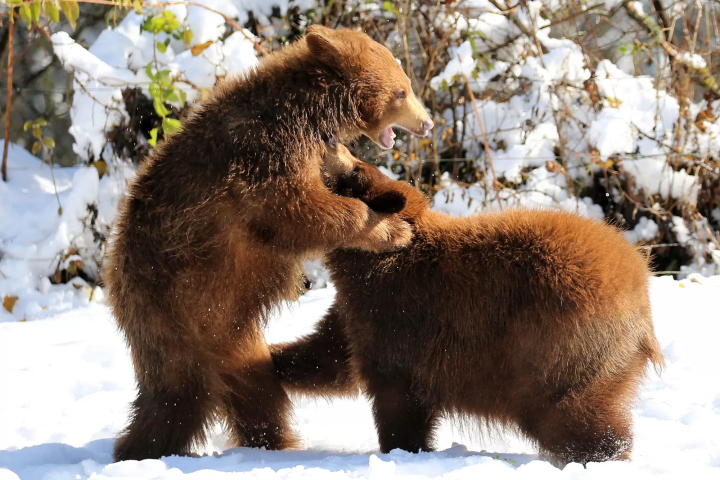
Snow sumo? American bears playing together in the snow!
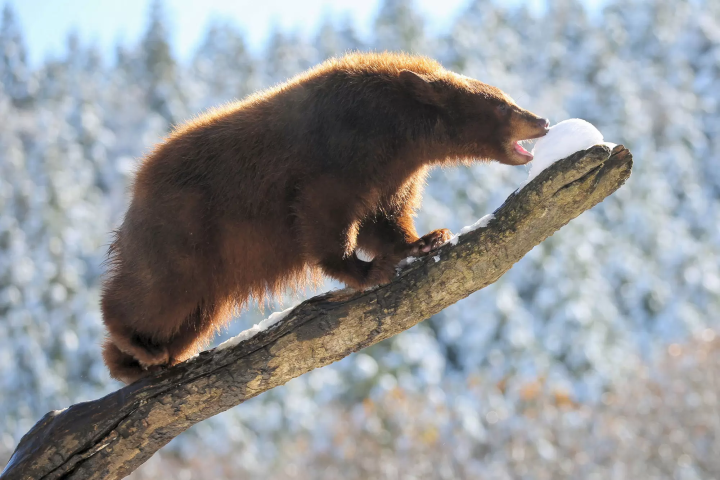
The American horse is curious about the snow piled up on the top of the tree!
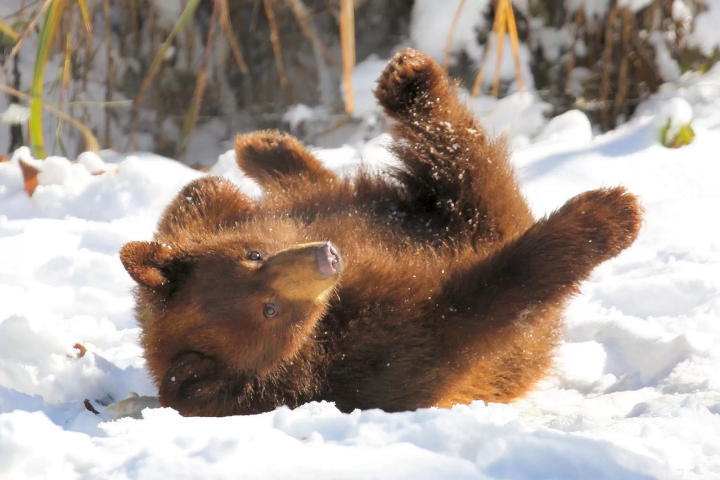
An American bear rolling around in the snow!
Lion in the snow
Lions don't like getting wet, so on snowy days they choose to spend their time in places that have been cleared of snow or in trees where there is less snow!
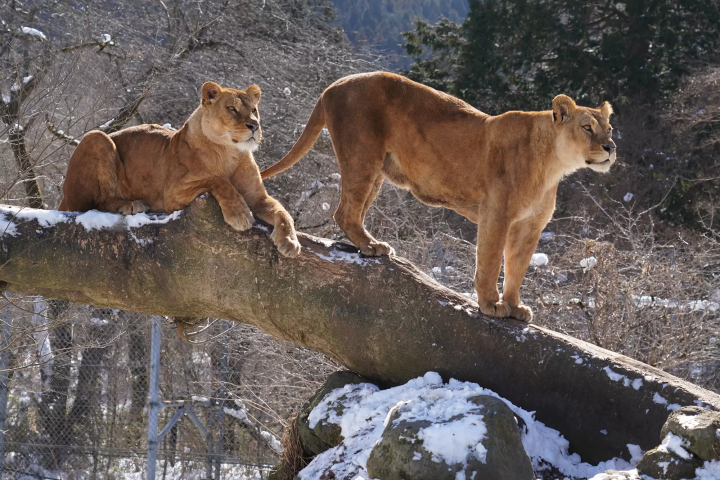
Lions relaxing in the trees!
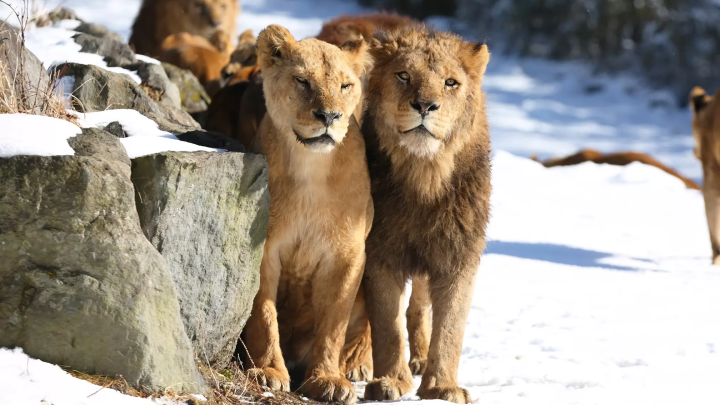
A pride of lions enjoying a sunny spot after the snow melts!
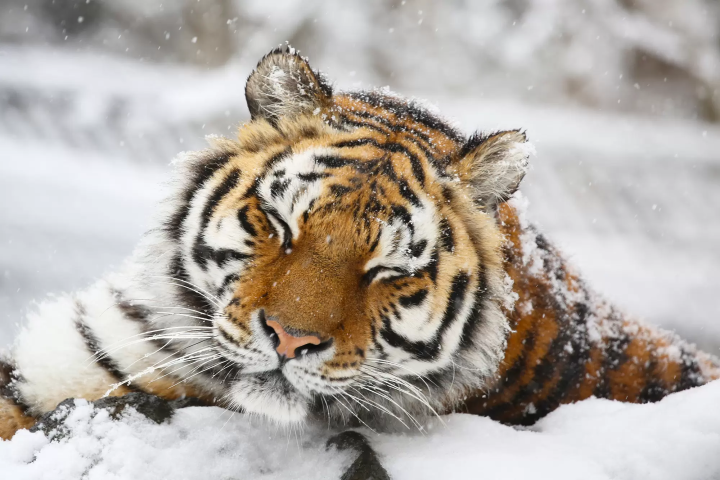
Amur tigers active even in the snow
Amur tigers originally live in northern China and Russia, so they are comfortable in the cold and snow of winter! They are active as usual.
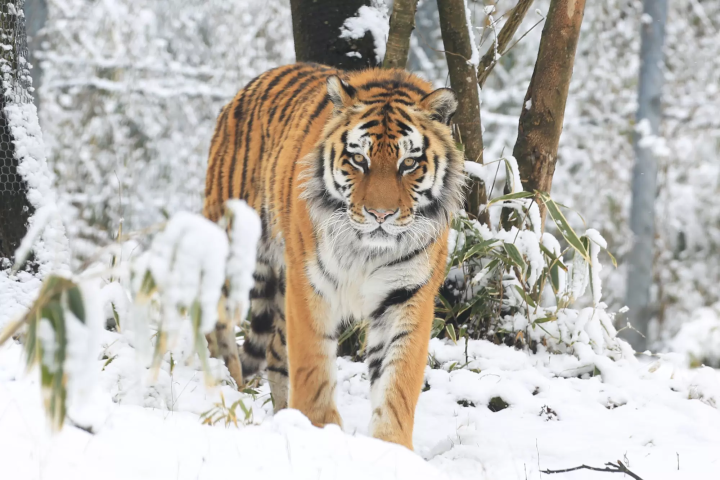
An Amur tiger patrolling its territory in the snow as usual!
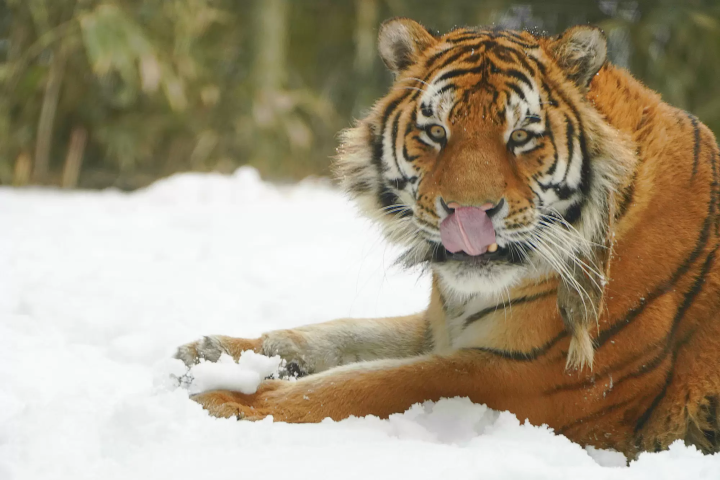
An Amur tiger is relaxing, lying down on the snow and grooming itself!
Herbivores living in the snow
Some animals become excited and active when it snows or when snow piles up, while others continue to live their lives as usual.
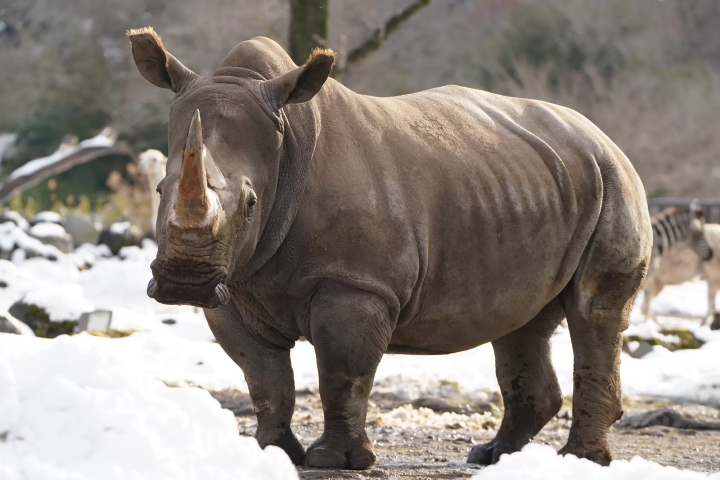
When it snows or snow piles up, white rhinos run around and become active!
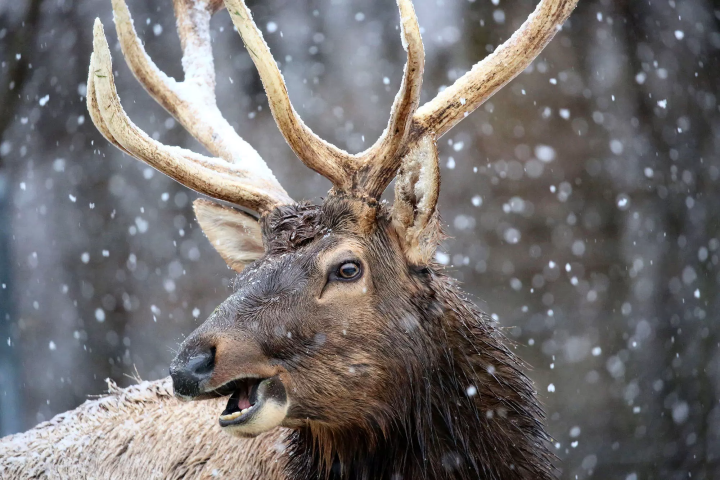
Wapiti, a type of deer that lives in the mountains and forests of North America, is resistant to the cold and continues to be active as usual.
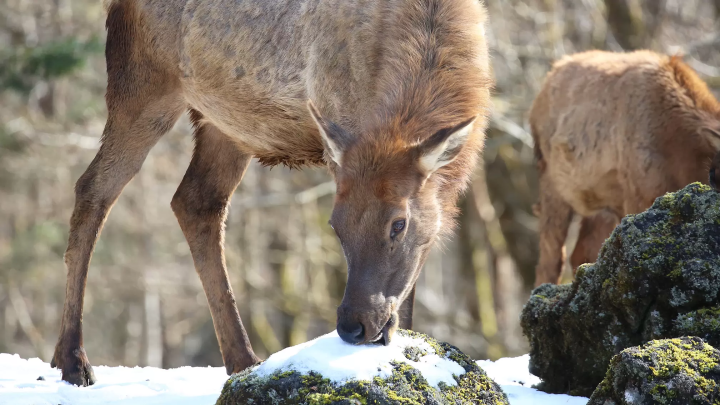
Wapiti eats snow instead of water!
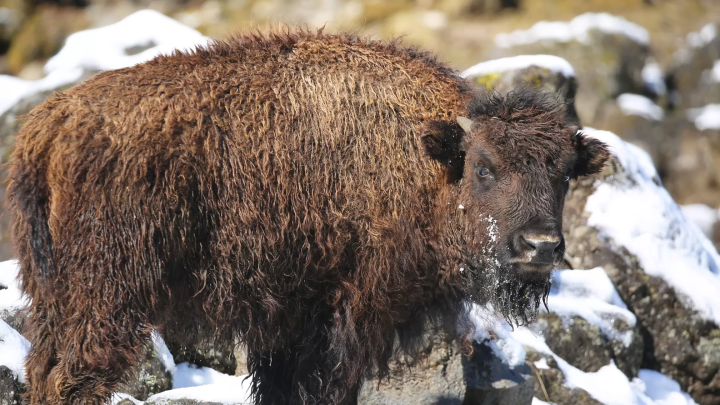
The American bison look like they're having fun running around and eating snow!
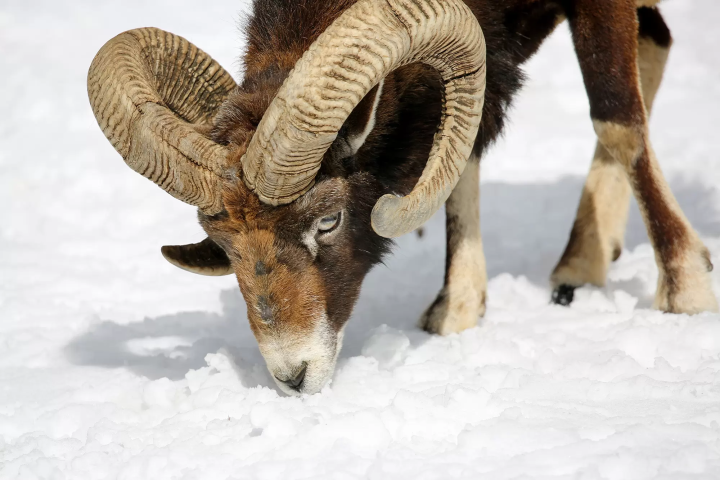
A mouflon (a type of sheep) munches on snow
Animals enjoying the snowy scenery (Interaction Zone)
Red panda enjoying the snow
Red pandas live in the mountainous regions of China and Nepal (altitudes 1,500-4,000m) and are good at the cold! When the snow piles up, they roll around and run around, looking like they're having a blast!
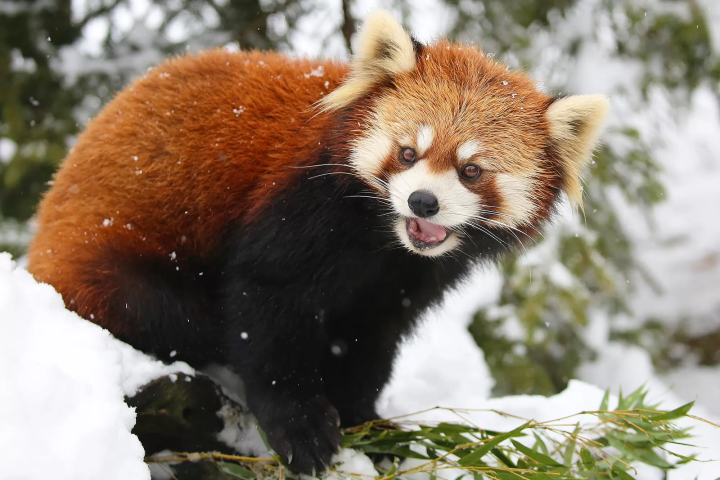
A red panda stuffing his teeth with his favorite bamboo!
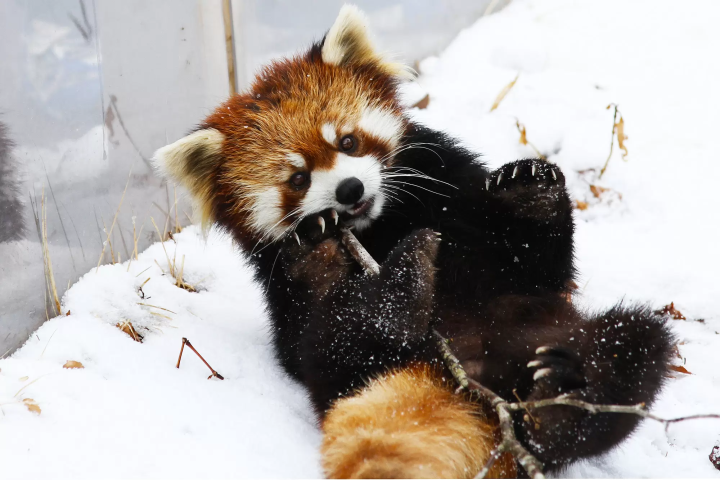
A red panda finds a branch to play with and rolls around in the snow!
Other animals
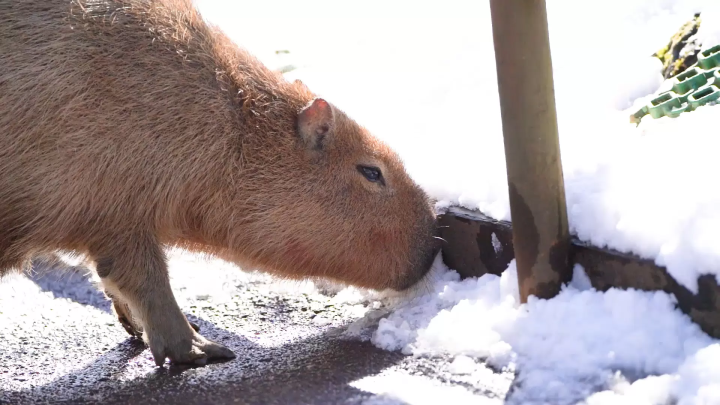
Capybaras eat snow instead of water
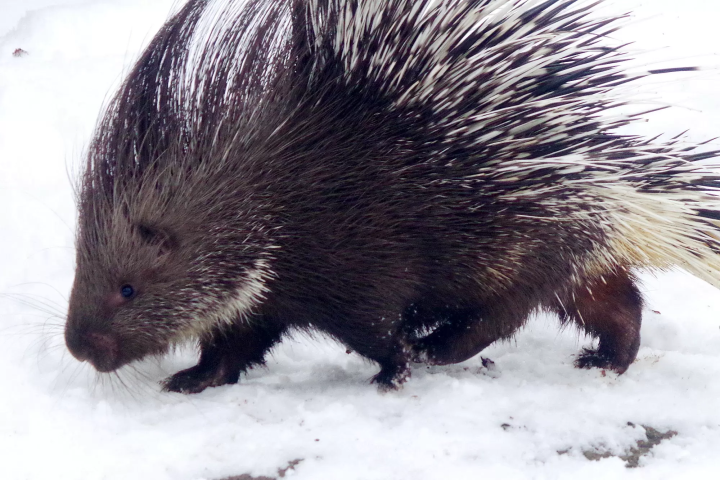
A maned porcupine moving around actively on the snow
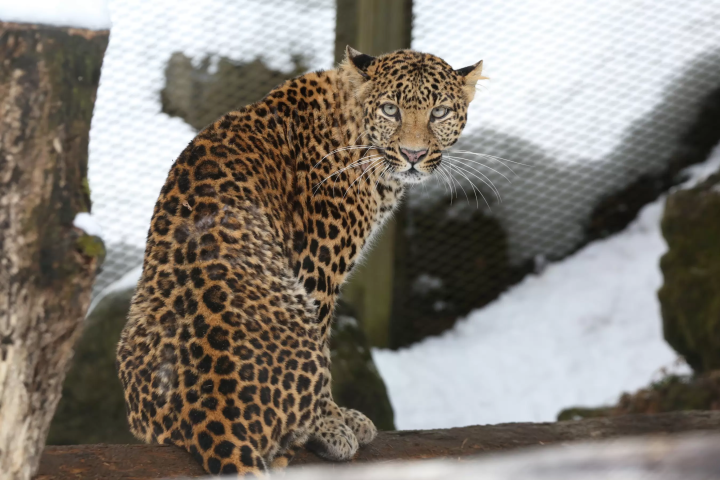
Leopards avoid the snow and spend time in the trees
access
◎By car
From Tokyo: Approx. 120 minutes from Tokyo via the Tomei Expressway. Nearest IC: 10 km from Susono IC, approx. 15 minutes. From Nagoya: Approx. 180 minutes from Nagoya via the Shin-Tomei Expressway, approx. 18 km from Shin-Fuji IC, approx. 30 minutes.
*If there is snow on the surrounding roads, you will need to use winter tires, tire chains, or other anti-skid devices for your car.
◎By train or bus
From Tokyo) Tokaido Shinkansen (Tokyo or Shinagawa Station ⇒ Mishima Station: approx. 50 minutes) ⇒ Local bus (Mishima Station ⇒ Fuji Safari Park: approx. 50 minutes) Odakyu Romancecar (Shinjuku Station ⇒ JR Gotemba Station: approx. 100 minutes) ⇒ Local bus (Gotemba Station ⇒ Fuji Safari Park: approx. 35 minutes) From Nagoya) Tokaido Shinkansen (Nagoya Station ⇒ Mishima Station: approx. 110 minutes) ⇒ Local bus (Mishima Station ⇒ Fuji Safari Park: approx. 50 minutes)
Admission reception hours and admission fees
Admission reception hours
9:00-16:30 (March 11th-October 31st)
9:00-15:30 (November 1st to November 30th)
10:00-15:30 (December 1st - March 10th)
Admission fee
The admission fee is as follows, and includes a tour of the Safari Zone by car and the Interaction Zone on foot. If you transfer to the tour bus within the park, a separate bus tour fee will be charged.
◎ Adults (high school students and above): 3,200 yen ◎ Children (ages 4 to junior high school students): 2,000 yen ◎ Seniors (ages 65 and above): 2,500 yen * Parking is free
Located at an altitude of 850m, this is one of the largest safari parks in Japan. In the vast natural surroundings at the foot of Mt. Fuji, about 800 animals from 60 species, including lions, Amur tigers, and giraffes, live freely. The park is divided into a "Safari Zone" and a "Placement Zone," where you can take your time to observe the animals and enjoy interacting with them in a natural environment.
The contents on this page may partially contain automatic translation.


Special Features
More












![[Introducing our English Program] Experience English-language activities at KidZania Tokyo!](https://resources.matcha-jp.com/resize/720x2000/2026/05/19-264204.webp)


![Enjoy popular spots in Okayama Prefecture with the great value digital travel ticket [Okayama Hare Tabi Passport]!](https://resources.matcha-jp.com/resize/720x2000/2025/04/28-232194.webp)