
A Culinary Paradise! Taketoyo: The Home of Tamari Soy Sauce
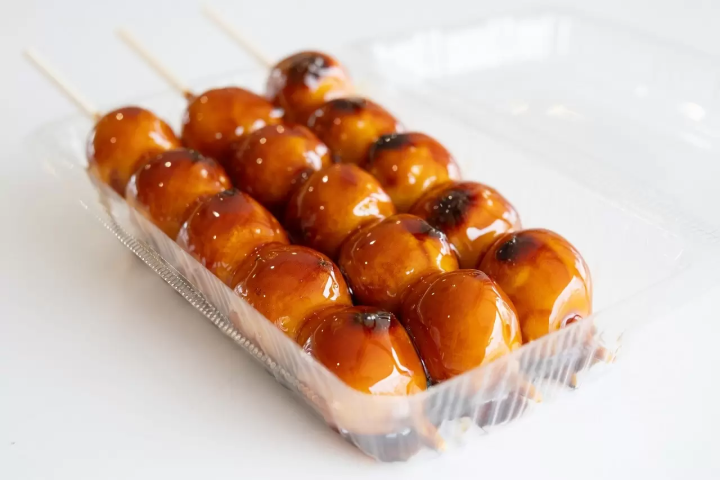
Taketoyo, a city in Aichi’s Chita Peninsula, is renowned for its rich, umami-packed tamari soy sauce (made solely from soybeans and salted water). This one-day itinerary explores the fascinating production process and offers a taste of tamari in local cuisine and sweets.

Written by
Japanese HAKKO is the source of UMAMI. We'll introduce you to its little-known "secrets" and "charms" in detail! Nagoya, where a Shogun once ruled Japan, is famous for Nagoya Castle and Ghibli Park, but it is actually a treasure trove of food culture that produces "UMAMI," the essence of Japanese cuisine. ■What's HAKKO? HAKKO technology plays a crucial role in the production of seasonings that determine the taste of Japanese cuisine, as well as in the creation of sake, which is popular all over the world. ■What's Nagoya like? Located in the central region of Japan, Nagoya serves as a hub for both air and land travel. Its blessed natural environment and climate have fostered a unique fermented food culture. The Chita Peninsula , surrounded by Ise Bay and Mikawa Bay , is a scenic area where brewing industries such as sake, vinegar, miso, and tamari have flourished since ancient times. Nishimikawa, the birthplace of Tokugawa Ieyasu, has a history of unique fermented seasonings such as "Hatcho Miso" and "White Soy Sauce."
This service includes sponsored advertisements.
Tamari Soy Sauce: A Rich-Tasting Culinary Marvel Made in Taketoyo
As highlighted by this series of articles on HAKKO, Japan’s Aichi Prefecture is a treasure trove of masterfully made ingredients, many of them fermented, that are indispensable to Japanese cuisine.
While staples like soy sauce and miso paste are found throughout Japan, Aichi offers unique, less common variations. These are crafted using techniques passed down through generations, resulting in rich-tasting, sophisticated ingredients that bring Japanese culinary arts to new heights.
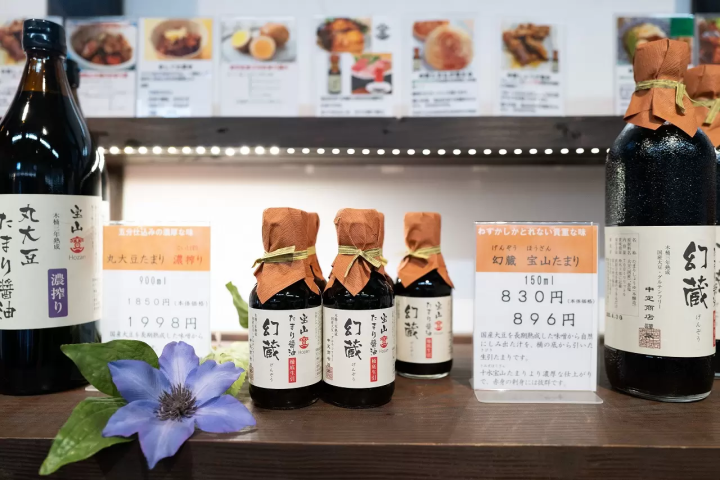
This time, we would like to throw the spotlight on tamari soy sauce, also known as "rich, umami-packed soy sauce." Originally a by-product of miso-making, tamari is crafted by fermenting a mixture of 100% soybean koji (*a type of mold used to ferment foods like miso and soy sauce) and salted water for three years.
The liquid that oozes from the pressed mash is repeatedly scooped and sprinkled back over it, resulting in a soy sauce with exceptional depth and richness that elevates any sushi or sashimi dish.
Tamari soy sauce is a specialty of Taketoyo, a city just a 45-minute train ride from Nagoya on the Meitetsu Line. This article offers a Taketoyo one-day travel itinerary, including a visit to a tamari soy sauce factory, opportunities to dine on dishes featuring tamari, and a souvenir shop where you can buy local treats.
Nakasada Shoten: Delve into the Secrets of Tamari Soy Sauce Making
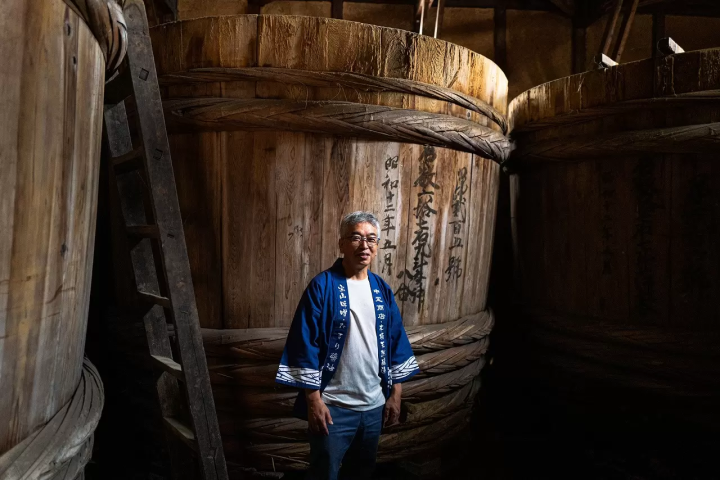
Wander through a dimly lit, fragrant maze of wooden barrels, each over 2.5 meters tall!
This fascinating experience transports you back to around 1880, when Nakasada Shoten began making miso paste in cedar barrels inherited from former sake breweries.
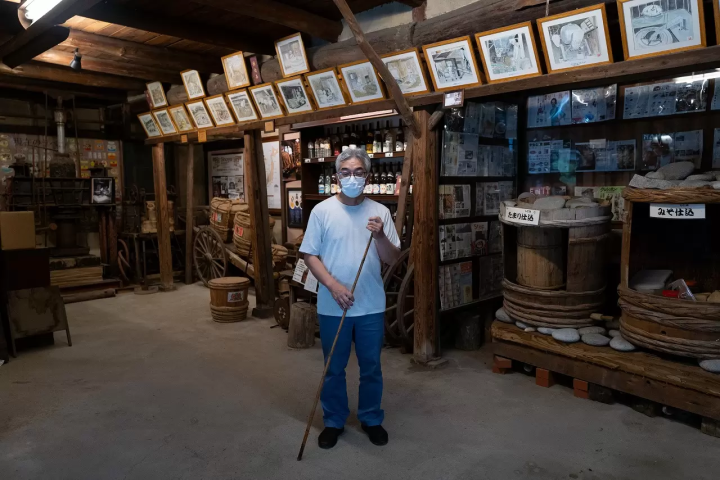
Nakasada Shoten is a leading manufacturer of miso paste and tamari soy sauce in Taketoyo. Visitors can tour their factory and explore the Denshokan, a historical gallery on the premises.
The Denshokan showcases old utensils used in the factory over its 140-year history, along with historical records. You’ll also find here a series of original drawings explaining how tamari soy sauce is made.
A factory tour at Nakasada Shoten lets you explore the "kura" — the storehouses housing the large wooden barrels of tamari soy sauce and miso paste. During Japan's modernization in the early 1870s, many sake breweries in the Taketoyo region (active since the Edo period, 1603-1868) closed down.
Their cedar barrels, once used for sake fermentation, were repurposed for making miso paste and tamari soy sauce.
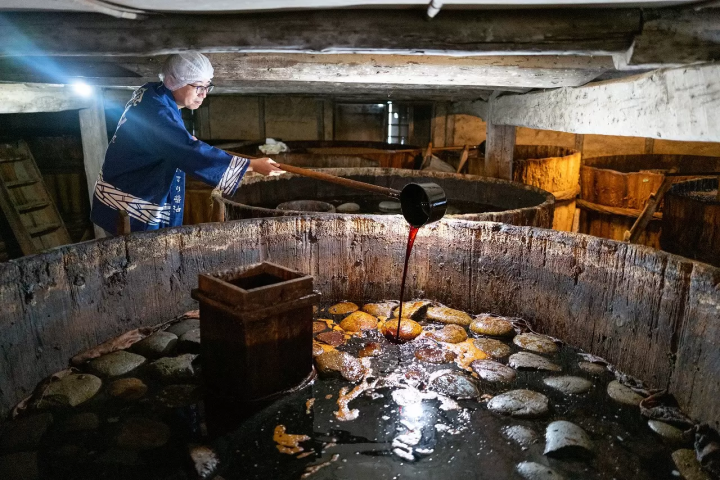
According to Mr. Nakagawa, the president of Nakasada Shoten, the secret to the rich taste of tamari soy sauce lies both in these old wooden barrels and the Kumikake—scooping out tamari and pouring it back over the rock-covered mash, a process that is repeated about 40 times a day for each barrel.
Depending on the fermentation stage, you might get to try Kumikake. As you experience the tamari's gentle fragrance, you'll also appreciate the physical effort involved in nurturing the barrels' contents as they slowly mature.
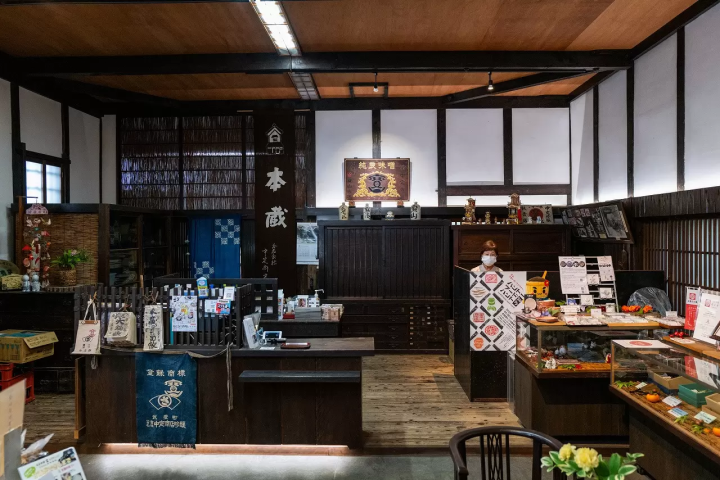
Don't forget to stop by the Nakasada Shoten shop! Here, you can purchase their tamari soy sauce and miso paste, along with other delightful items, including tamari-flavored rice crackers, soy sauce cookies that pair well with coffee, amazake beverages, and other treats.
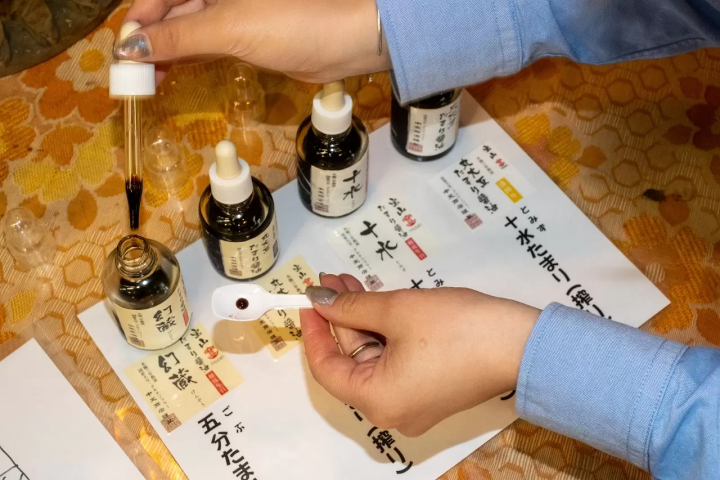
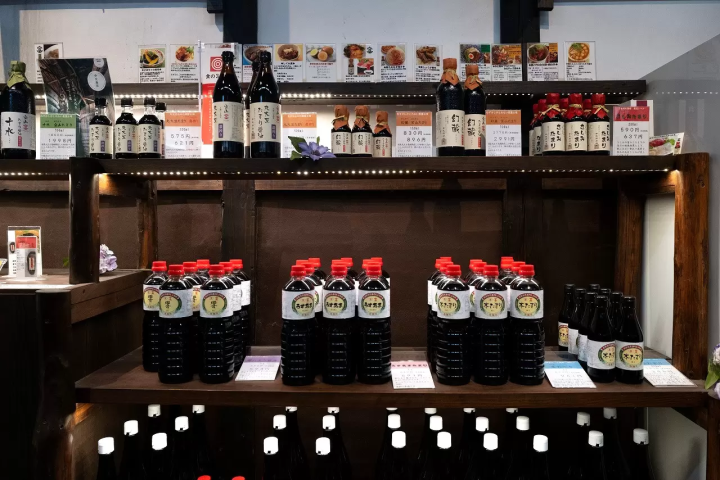
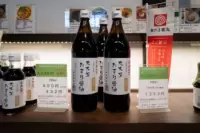
In one corner, you can sample four different types of tamari soy sauce, each with a slightly varying level of umami and flavor profile. Taste them all to discover your favorite! Behind the small bottles of soy sauce, you'll also find photos and recipes for dishes using Nakasada Shoten's tamari soy sauce and red miso paste.
For factory tours, please contact the facility in advance. Please note that the factory tours are currently available only in Japanese.
Nakasada Shoten
 51 Komukae, Taketoyocho, Chita, Aichi, 470-2343
This region, blessed with a warm climate and quality water, inspired a conviction that excellent miso and tamari could be produced using these resources. Thus, a miso and tamari brewery was founded in June 1879.
Tamari soy sauce is said to have originated from the liquid that seeped out during the soybean miso-making process, accumulating at the bottom of the barrel before being collected.
It can be considered the origin of soy sauce. Its characteristics include a lower salt content compared to other soy sauces and a rich, full-bodied flavor.
Since its main ingredient is soybeans, it is rich in protein and glutamic acid, an essential amino acid for the human body and a component of umami flavor.
Made with only domestic soybeans and salt, they have been producing traditional miso for 140 years. The brewery is committed to natural fermentation, drawing out a rich umami flavor through long-term aging without any unnecessary additives.
Miso-making classes and brewery festivals are also popular.
51 Komukae, Taketoyocho, Chita, Aichi, 470-2343
This region, blessed with a warm climate and quality water, inspired a conviction that excellent miso and tamari could be produced using these resources. Thus, a miso and tamari brewery was founded in June 1879.
Tamari soy sauce is said to have originated from the liquid that seeped out during the soybean miso-making process, accumulating at the bottom of the barrel before being collected.
It can be considered the origin of soy sauce. Its characteristics include a lower salt content compared to other soy sauces and a rich, full-bodied flavor.
Since its main ingredient is soybeans, it is rich in protein and glutamic acid, an essential amino acid for the human body and a component of umami flavor.
Made with only domestic soybeans and salt, they have been producing traditional miso for 140 years. The brewery is committed to natural fermentation, drawing out a rich umami flavor through long-term aging without any unnecessary additives.
Miso-making classes and brewery festivals are also popular.
Taste Cuisine with Tamari Soy Sauce! Lunch at Taketoyo Yutaka Zushi
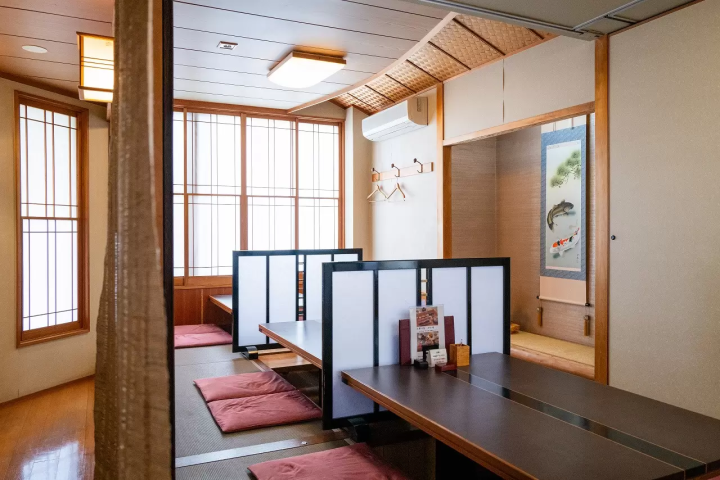
You've learned about tamari soy sauce, and now you're probably eager to taste how it enhances local dishes!
Taketoyo locals are incredibly proud of their tamari, so you'll find it featured in many local restaurants.
We recommend Yutaka Zushi Taketoyo, a sushi restaurant just a 7-minute walk from Chita Taketoyo Station on the Meitetsu Line.
Yutaka Zushi is celebrated for its authentic, delicious sushi and meticulously prepared sushi kaiseki courses.
For lunch, expect to pay between 1,500 and 2,500 yen. Dinner menus range from 3,500 to 5,000 yen.
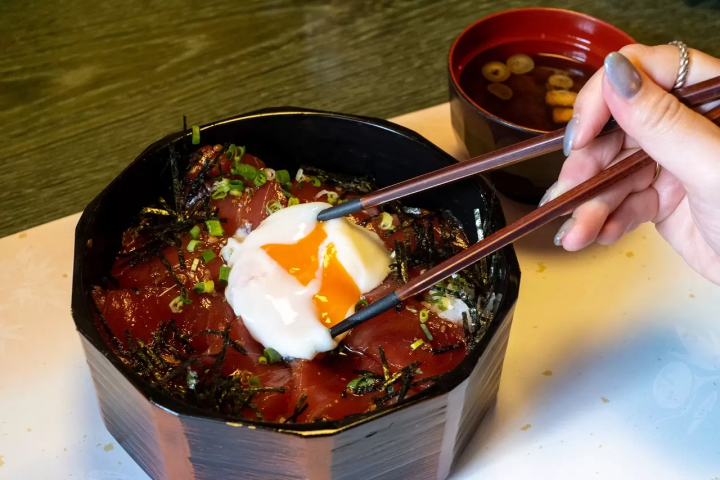
While there are many excellent choices, we highly recommend their original Maguro Tamari Koji-zuke Don for lunch. This donburi dish features fresh tuna slices marinated in tamari soy sauce, served over a bed of sushi rice and topped with a perfectly half-boiled egg and shreds of seaweed.
When your Maguro Tamari Koji-zuke Don arrives, gently break the half-boiled egg so the rich yolk oozes over the tuna. This creates not only a visually appealing dish but also a delightful blend of flavors.
The tuna slices are marinated in tamari soy sauce for just five minutes, enough time to infuse them with the sauce's distinct aroma and richness.
The runny yolk beautifully complements the tamari, adding an extra layer of creaminess and depth to the entire dish. It's a truly satisfying culinary experience you'll want to savor again and again!
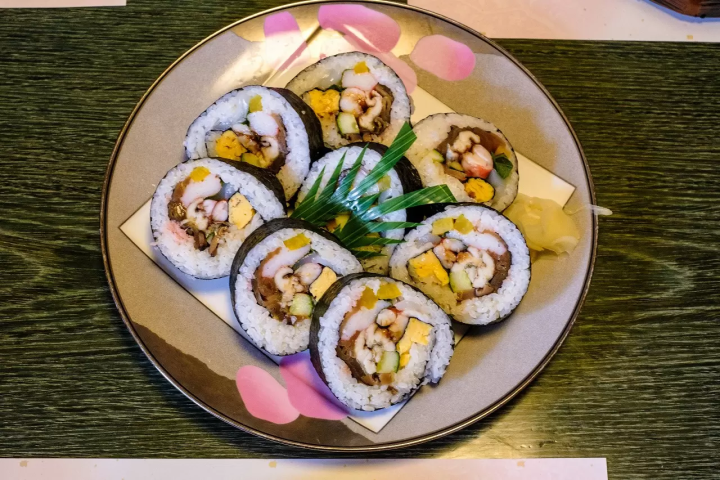
We also tried Yutaka Zushi's famous sushi rolls. Naturally, the soy sauce provided at the table was tamari soy sauce, and it was excellent to experience how it also enhances the flavor of the sushi.
For lunch in Taketoyo, Yutaka Zushi is your top choice if you want to savor authentic sushi and experience firsthand how tamari soy sauce elevates local cuisine.
Yutaka Zushi
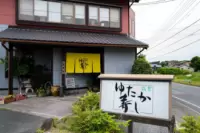 Kitadamen 18-1 Kowa, Mihamacho, Chita, Aichi, 470-2406
Founded on April 5, 1934, the restaurant offers a wide selection of fresh seafood, carefully chosen each day with a discerning eye, honed over more than 80 years of history.
Enjoy the utmost hospitality, provided by a master who has devoted his life to sushi, in collaboration with a head chef who has trained at renowned restaurants.
The counter also features an elaborate design that often surprises those who see it for the first time. We hope you'll also look forward to this detail.
In addition to the counter, the restaurant offers a wide variety of seating options, including sunken kotatsu seats, private table rooms, and banquet halls.
Kitadamen 18-1 Kowa, Mihamacho, Chita, Aichi, 470-2406
Founded on April 5, 1934, the restaurant offers a wide selection of fresh seafood, carefully chosen each day with a discerning eye, honed over more than 80 years of history.
Enjoy the utmost hospitality, provided by a master who has devoted his life to sushi, in collaboration with a head chef who has trained at renowned restaurants.
The counter also features an elaborate design that often surprises those who see it for the first time. We hope you'll also look forward to this detail.
In addition to the counter, the restaurant offers a wide variety of seating options, including sunken kotatsu seats, private table rooms, and banquet halls.
Sweets Made with Miso Paste!? Stop for a Treat at Patisserie KUMURA
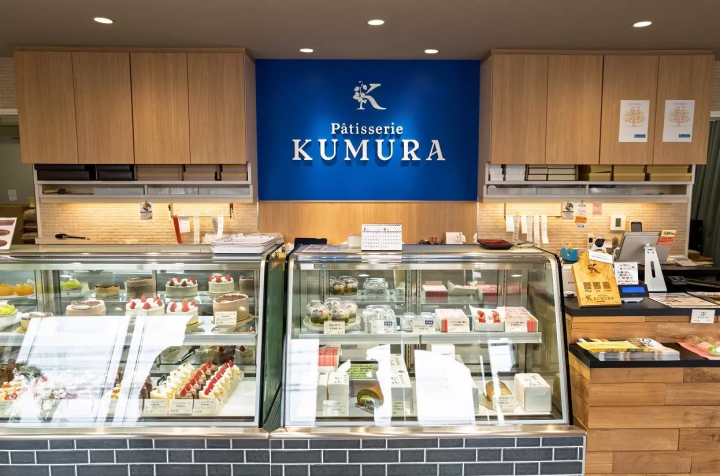
Patisserie KUMURA, one of Taketoyo's most renowned confectioneries, is a unique father-and-son establishment.
The father, Mr. Kumura, specializes in traditional Japanese confectionery, while his son focuses on Western confectionery. This rare combination allows them to offer a wide array of both types of desserts under one roof, significantly boosting their popularity.
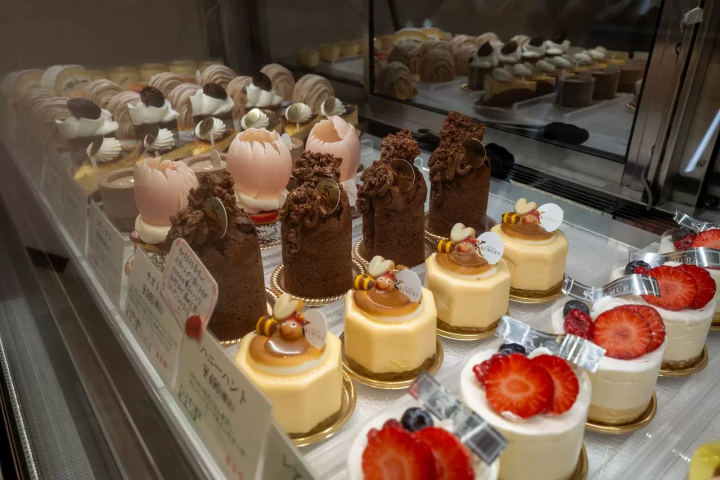
Stepping into Patisserie KUMURA, you'll be amazed by the vast selection of sweets! Their offerings range from roll cakes, puddings, and fruit cakes to yokan jelly, castella, financiers, and even seasonal wagashi (Japanese confectionery often enjoyed in tea ceremonies).
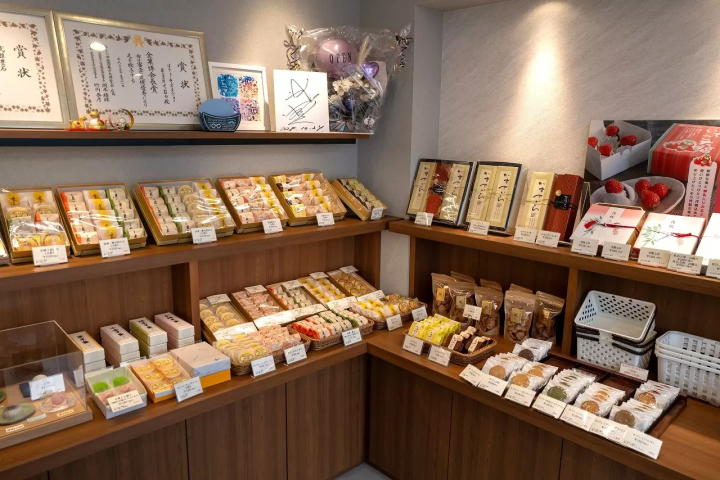
We're recommending Patisserie KUMURA on this itinerary because they create unique sweet treats using fermented ingredients like miso paste and sake.
For instance, their Miso Castella is a fragrant, sweet-and-salty treat that appeals to a wide range of tastes. Made with red miso paste, a specialty of Taketoyo, it's perfect as a snack or with coffee or black tea. Individually packaged, it also makes an ideal souvenir to share.
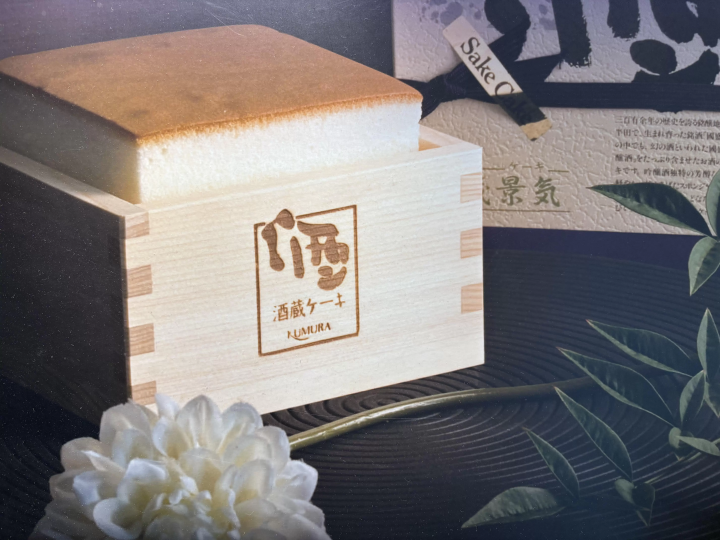
Another must-try treat is the Sakagura Cake, a delicate sponge cake infused with Kunizakari, a renowned sake from Nakano Sake Brewery in neighboring Handa City. The sake's gentle flavor harmonizes beautifully with the other ingredients. But what truly makes this cake special is its incredibly refined texture—it literally melts in your mouth like cotton candy! (Please note: Drivers and children should avoid this treat due to the alcohol content.)
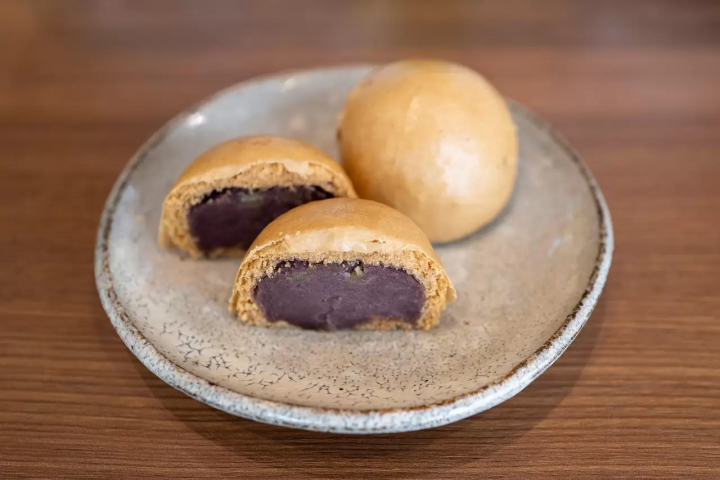
The Kura no Kaori manju (steamed buns) were among the very first sweets Patisserie KUMURA developed using local fermented ingredients. The name translates to "The Aroma of the Miso Factory," and these buns are made with miso paste incorporated directly into the dough. Take a bite, and you'll be surprised how wonderfully the subtle miso flavor complements the sweet red bean paste filling! The gentle miso aroma also gives the bun an appetizing fragrance.
Please note that these buns are available exclusively at Town Station Aji-no-kura TAKETOYO, our next recommended stop on this itinerary, and not at Patisserie KUMURA's main store.
Patisserie KUMURA plans to develop more sweets using local fermented ingredients.
In the meantime, take your time to browse their current offerings—they truly have something for everyone!
Patisserie KUMURA
 1-95 Nashinoki, Taketoyo-cho, Chita, Aichi, 470-2309
Founded in Taketoyo in 1953, the shop was renovated and reopened in September 2024. All cakes and baked goods have been completely revamped.
With a focus on fresh ingredients and made-to-order quality, this Japanese-Western confectionery shop aims to create sweets that incorporate time-honored traditions and trends of the new generation. Cherished by the local community and loved by customers, it is deeply rooted in the region.
Their delicious cakes, baked goods, and Japanese sweets are made with love and are great gifts.
*There is no cafe space.
1-95 Nashinoki, Taketoyo-cho, Chita, Aichi, 470-2309
Founded in Taketoyo in 1953, the shop was renovated and reopened in September 2024. All cakes and baked goods have been completely revamped.
With a focus on fresh ingredients and made-to-order quality, this Japanese-Western confectionery shop aims to create sweets that incorporate time-honored traditions and trends of the new generation. Cherished by the local community and loved by customers, it is deeply rooted in the region.
Their delicious cakes, baked goods, and Japanese sweets are made with love and are great gifts.
*There is no cafe space.
Find Local Products and Souvenirs at Town Station Aji-no-kura TAKETOYO
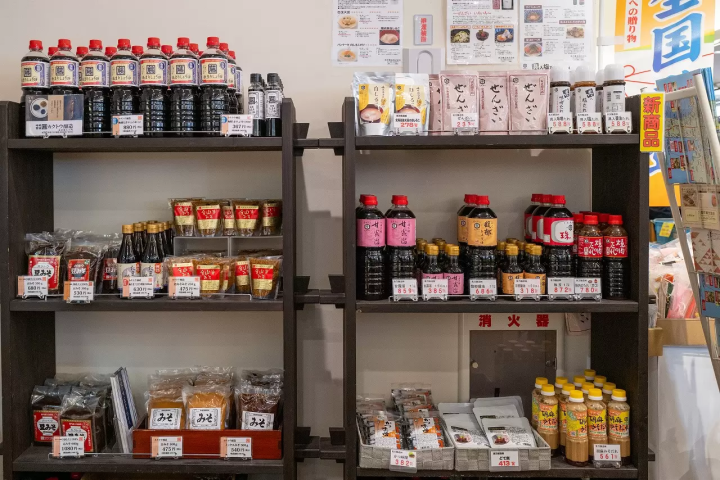
Town Station Aji-no-kura TAKETOYO is your one-stop shop for local specialties. It features famous products from Taketoyo, the broader Chita Peninsula, and even other Aichi Prefecture favorites, making it an ideal spot for souvenirs.
You'll find a wide selection of tamari soy sauce, including products from Nakasada Shoten. Miso paste offerings range from intense red miso to milder wheat-based varieties suitable for daily use. Additionally, a dedicated corner showcases beverages from the six renowned sake breweries of Chita.
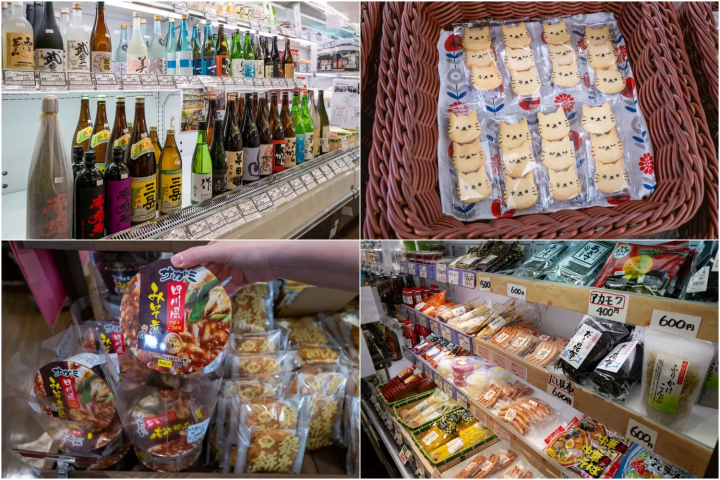
In the center of the facility, discover a stand brimming with renowned local confections. Among them are Patisserie KUMURA's Kura no Kaori steamed buns and a variety of sembei (rice crackers), perfect for those who prefer less sweetness.
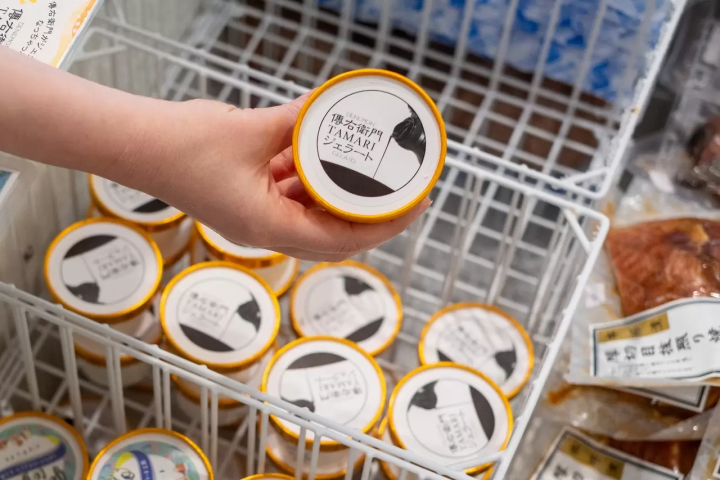
Don't miss the ice cream section, featuring a unique tamari-flavored gelato. This addictive treat harmonizes the salty, aromatic notes of soy sauce with creamy milk. Its rich taste will leave a lasting impression! You can enjoy your purchases in the facility's eat-in corner.
Grab a quick bite at the beloved cafeteria, popular with locals. It offers simple, satisfying meals like tamari-broth ramen, curry rice, or onigiri with impressive fried shrimp.
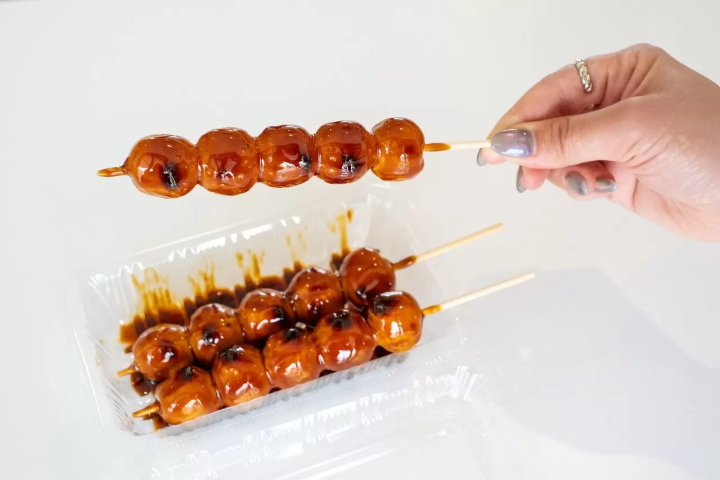
We highly recommend the Mitarashi Dango: soft glutinous rice dumplings generously topped with a fragrant, salty-sweet tamari soy sauce. It's truly addictive!
Aji-no-Kura TAKETOYO also features a section with fresh local produce and long-shelf-life sweets, perfect for souvenirs. Take your time to explore this treasure trove of Taketoyo goodies and find your perfect take-home treats.
Roadside Station Ajinokura Taketoyo
 11-1 Chushiroda, Taketoyo-cho, Chita, Aichi, 470-2512
This shop sells miso and tamari products from six breweries that continue to preserve traditional brewing methods: Izuman Brewery, Ito Shoten, Marumata Shoten, Nakasada Shoten, Kakuto Brewery, and Minamigura Shoten.
After strolling through the town of miso breweries and exploring its brewing history, be sure to pick up some of the products shaped by that history as souvenirs.
There are also many local and seasonal flavors available, from locally grown vegetables, fruits, and rice to traditional Japanese sweets, original desserts, and bread.
At the food court, you can enjoy light snacks such as mitarashi dango and yakisoba made with Taketoyo's miso and tamari, as well as seafood dishes prepared with fresh catches from the Chita Peninsula.
11-1 Chushiroda, Taketoyo-cho, Chita, Aichi, 470-2512
This shop sells miso and tamari products from six breweries that continue to preserve traditional brewing methods: Izuman Brewery, Ito Shoten, Marumata Shoten, Nakasada Shoten, Kakuto Brewery, and Minamigura Shoten.
After strolling through the town of miso breweries and exploring its brewing history, be sure to pick up some of the products shaped by that history as souvenirs.
There are also many local and seasonal flavors available, from locally grown vegetables, fruits, and rice to traditional Japanese sweets, original desserts, and bread.
At the food court, you can enjoy light snacks such as mitarashi dango and yakisoba made with Taketoyo's miso and tamari, as well as seafood dishes prepared with fresh catches from the Chita Peninsula.
Summary
These four facilities offer invaluable insights into Japanese culinary traditions centered on fermented foods. Be sure to include them in your Nagoya travel plans for a day of tasty discoveries in Taketoyo!
Gourmet lovers will be deeply impressed by Nakasada Shoten's historic storehouse, filled with century-old wooden barrels where miso and tamari soy sauce mature, releasing a stimulating aroma.
Don't miss the delicious sushi and donburi with tuna marinated in tamari soy sauce at Yutaka Zushi, or the impressive confections at Patisserie KUMURA. Aji-no-Kura TAKETOYO is where you’ll find the best local products in one place, which is very convenient for finding souvenirs.
All these locations are easily accessible from Chita Taketoyo Station on the Meitetsu Kowa Line. This station is about a 45-minute train ride from Meitetsu Nagoya Station and approximately one hour from Centrair Nagoya Airport (with one transfer).
Japanese HAKKO is the source of UMAMI. We'll introduce you to its little-known "secrets" and "charms" in detail! Nagoya, where a Shogun once ruled Japan, is famous for Nagoya Castle and Ghibli Park, but it is actually a treasure trove of food culture that produces "UMAMI," the essence of Japanese cuisine. ■What's HAKKO? HAKKO technology plays a crucial role in the production of seasonings that determine the taste of Japanese cuisine, as well as in the creation of sake, which is popular all over the world. ■What's Nagoya like? Located in the central region of Japan, Nagoya serves as a hub for both air and land travel. Its blessed natural environment and climate have fostered a unique fermented food culture. The Chita Peninsula , surrounded by Ise Bay and Mikawa Bay , is a scenic area where brewing industries such as sake, vinegar, miso, and tamari have flourished since ancient times. Nishimikawa, the birthplace of Tokugawa Ieyasu, has a history of unique fermented seasonings such as "Hatcho Miso" and "White Soy Sauce."
The contents on this page may partially contain automatic translation.
Special Features
More








![[Introducing our English Program] Experience English-language activities at KidZania Tokyo!](https://resources.matcha-jp.com/resize/720x2000/2026/05/19-264204.webp)

![Enjoy popular spots in Okayama Prefecture with the great value digital travel ticket [Okayama Hare Tabi Passport]!](https://resources.matcha-jp.com/resize/720x2000/2025/04/28-232194.webp)