A Healing Visit to Matsusaka, Mie: Experience Kimono and Eat Matsusaka Beef
While a visit to Ise Jingu or VISON may be the standard of a trip to Mie Prefecture, Matsusaka City should also be considered as a destination. The city offers Matsusaka Cotton, Matsusaka Beef, and onsen as well. Read on to learn about its appeals.

Written by
Tokyo, Japan
MATCHA's promotional account for corporate and local government advertising. We aim to provide useful information to our readers in an enjoyable manner.
This service includes sponsored advertisements.
A Trip to Matsusaka, While Visiting Ise Jingu or VISON
Those traveling to Mie Prefecture should not miss Ise Jingu, one of the prominent spiritual places in Japan, or VISON, a resort facility.
But Mie also offers other appeals, such as Matsusaka City, located close to the spots mentioned above. Visitors can relax both their body and mind at Matsusaka.
It is a 30 to 40 minute drive to the city from Ise City or VISON. Matsusaka, located at the central area of the prefecture, is easy to access, with cultural attractions and fine food.
While Matsusaka Beef, one of the top three Wagyu brands, may come to the mind of some people, there are other appeals as well.
Matsusaka Cotton, originating in the Edo Period, is one of them. Also, Mie Prefecture is one of the top three producers of Japanese tea, and the city makes Matsusaka Tea.
Visitors can wear a simple, elegant kimono made from Matsusaka Cotton, and stroll the area where buildings from the Edo Period are preserved. They can taste the superb Matsusaka Beef at a long-established restaurant as well.
At the end of the tour, a tea house and an onsen (hot spring) awaits in a quiet mountain area. This is a trip to gradually loosen all five of your senses.
Contents
How to Get to Matsusaka
Matsusaka Cotton : Take a Stroll in a Kimono
The History : A Closer Look at Historical Landmarks
The Taste of Matsusaka at an Established Restaurant
Iitaka Roadside Station : Nature, a Hot Spring, and Souvenirs
Shinryoku Sabo : Peace in the Tranquil Mountains
Recommended Accommodations
How to Get to Matsusaka
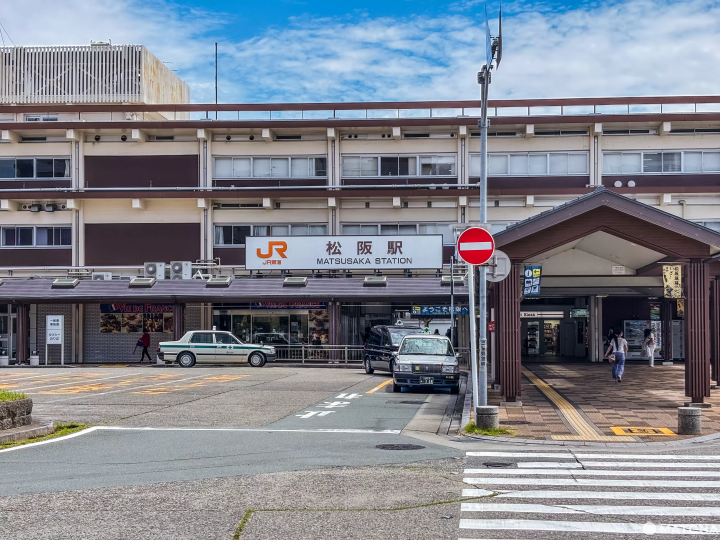
Matsusaka City is one of the transportation hubs in Mie Prefecture. Accessible from nearby tourist destinations and major cities, it can be fitted easily into an itinerary.
From Ise Jingu
From Iseshi Station, take the JR Sangu Line, or the Kintetsu Yamada Line to Matsusaka Station. The ride takes 15 to 20 minutes.
From VISON
Take the Mie Kotsu bus from VISON bus terminal to Matsusaka Station. It heads directly to the station, and the ride takes about 40 minutes.
From Major Cities
Osaka: Take the Kintetsu Express from Osaka Nanba Station to Matsusaka Station. The ride takes about an hour and a half.
Nagoya: Take the JR Rapid Express "Mie" from JR Nagoya Station; or the Kintetsu Express from Kintetsu Nagoya Station, to Matsusaka Station. The ride takes about 60 to 80 minutes.
Kyoto: Take the Kintetsu Express bound for the Ise area from Kintetsu Kyoto Station, to Matsusaka Station. The ride takes about an hour and 50 minutes. There is a direct route, and another one in which the passenger needs to switch trains at Yamato Yagi Station.
From Chubu Centrair International Airport
First, take the Meitetsu Express "μ-Sky" to Meitetsu Nagoya Station. From the station, there are two routes to Matsusaka.
The first one is to walk to the neighboring JR Nagoya Station, and take the JR Rapid Express "Mie" to Matsusaka Station. The second one is to ride the Kintetsu Express from Kintetsu Nagoya Station to Matsusaka Station.
Please note that Japan Rail Pass does not apply to the stations between Yokkaichi and Tsu, managed by Ise Railway.
As Rapid Express "Mie" runs through these stations, passengers will be asked to compensate the fare during the ride.
Matsusaka Cotton: Take a Stroll in a Kimono
After arriving at Matsusaka Station, try a time-travel experience.
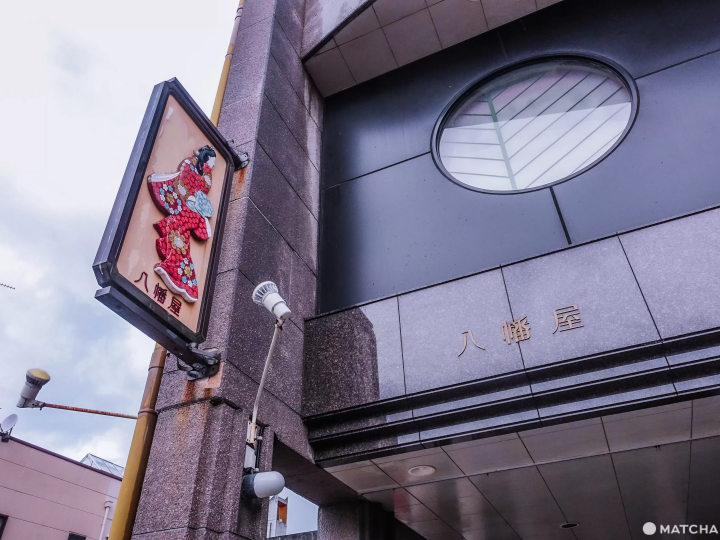
It is a 7 minute walk from the station to Kimono Specialty Store “Wasokan Yahataya(Yahataya)”, with more than 100 years of history. They also run a rental service of kimonos made from Matsusaka Cotton.

Picture courtesy of Matsusaka City
Matsusaka Cotton is one of the traditional crafts of the city. Its biggest feature is the striped pattern, using a naturally dyed cotton thread.
In the Edo Period, when luxury was forbidden, the dyed pattern, which shows a multitude of expressions, was considered subtly chic, and favored by the common people.
When the population of Edo (the current Nihonbashi district in Tokyo) was estimated to be around 1 million, about 500,000 tan (a roll of cloth approximately 10 meters in length) of Matsusaka Cotton was annually shipped to the area. The Mitsui family, which dealt in the cotton business at the time, prospered, and the foundation was laid for the Mitsukoshi.
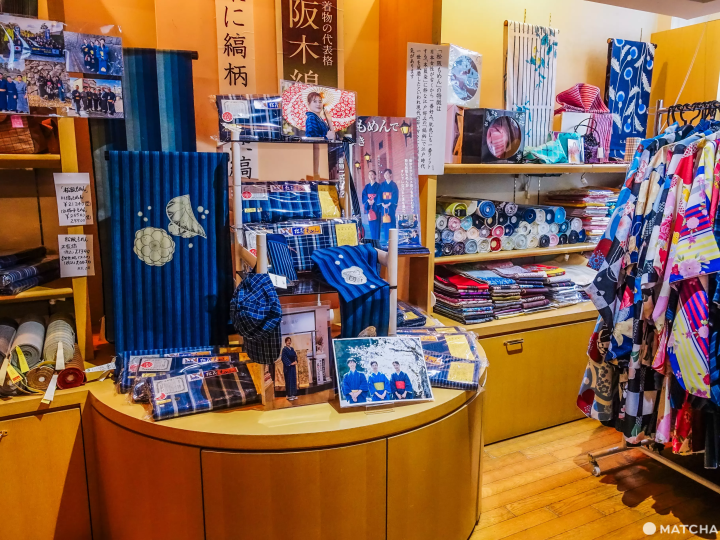
Besides the rental service, Kimono Specialty Store “Wasokan Yahataya” handles high-quality, formal silk kimono, along with general merchandise handmade by craftpersons.
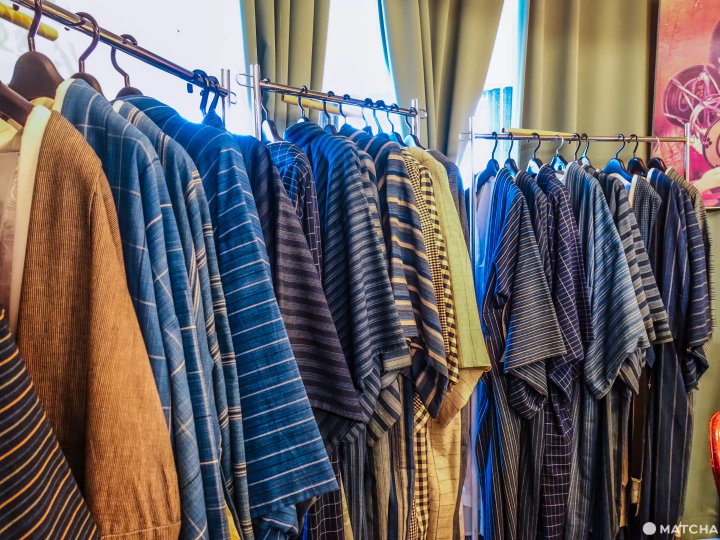
To promote Matsusaka Cotton, Kimono Specialty Store “Wasokan Yahataya” offers a rental kimono which can be worn in just 3 minutes.
Visitors can try them without taking off their clothes.
This type of kimono is displayed at the Osaka Expo, representing Matsusaka, and also conveying Japanese charm to tourists from all over the world. Kimono Specialty Store “Wasokan Yahataya”
 Hino-cho, Matsusaka City, Mie Prefecture 515-0084
Kimono Specialty Store “Wasokan Yahataya” not only offers Matsusaka cotton kimono rentals, but is also a long-established store that sells high-quality pure silk furisode, wedding kimonos, and Japanese-style goods handmade by craftsmen. In recent years, we have developed a new style of kimono that can be easily worn in three minutes to further spread the appeal of Matsusaka cotton. It can be worn directly over clothes, and has received positive feedback from travelers as it is convenient and comfortable.
Hino-cho, Matsusaka City, Mie Prefecture 515-0084
Kimono Specialty Store “Wasokan Yahataya” not only offers Matsusaka cotton kimono rentals, but is also a long-established store that sells high-quality pure silk furisode, wedding kimonos, and Japanese-style goods handmade by craftsmen. In recent years, we have developed a new style of kimono that can be easily worn in three minutes to further spread the appeal of Matsusaka cotton. It can be worn directly over clothes, and has received positive feedback from travelers as it is convenient and comfortable.
The History: A Closer Look at Historical Landmarks
Matsusaka Castle Ruins
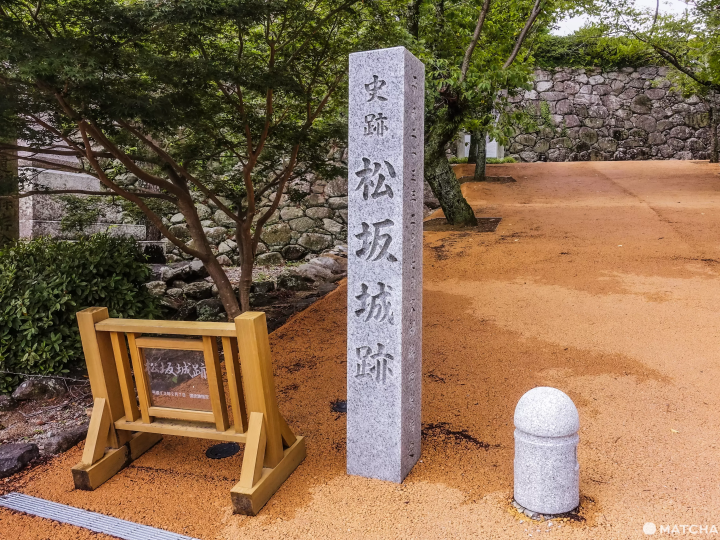
After changing into a kimono, take a stroll in the historic district of Matsusaka.
It is a 10 to 15 minute walk to Matsusaka Castle Ruins from Kimono Specialty Store “Wasokan Yahataya”.
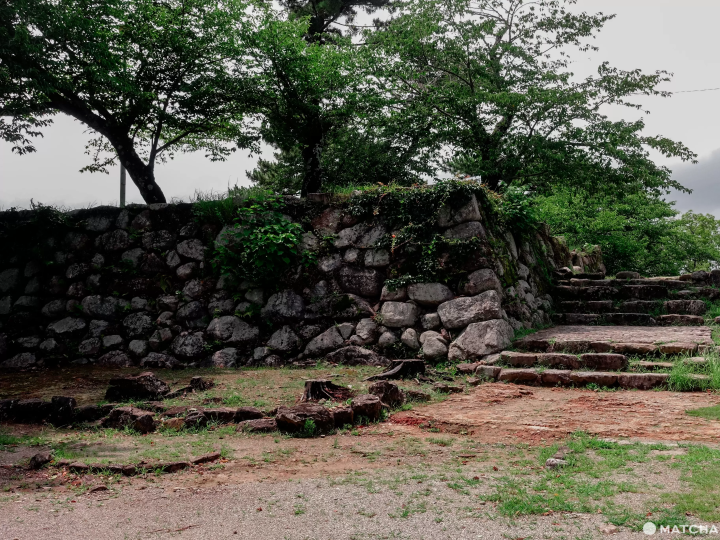
The stone walls still remain, displaying various styles of fieldstone construction. Visitors can still feel the air of the Sengoku and Edo periods today. Matsusaka Castle Ruins (Matsusaka Park)
 515-0073 Tonomachi, Matsusaka City, Mie Prefecture
Matsusaka Castle is a tourist spot in Matsusaka City that has been selected as one of Japan's 100 most famous castles and a nationally designated historic site. Its stone walls, built using a variety of techniques, are highly regarded. You can enjoy seasonal flowers and scenery, including cherry blossoms, plum blossoms, wisteria, and ginkgo trees.
515-0073 Tonomachi, Matsusaka City, Mie Prefecture
Matsusaka Castle is a tourist spot in Matsusaka City that has been selected as one of Japan's 100 most famous castles and a nationally designated historic site. Its stone walls, built using a variety of techniques, are highly regarded. You can enjoy seasonal flowers and scenery, including cherry blossoms, plum blossoms, wisteria, and ginkgo trees.
Gojoban Yashiki
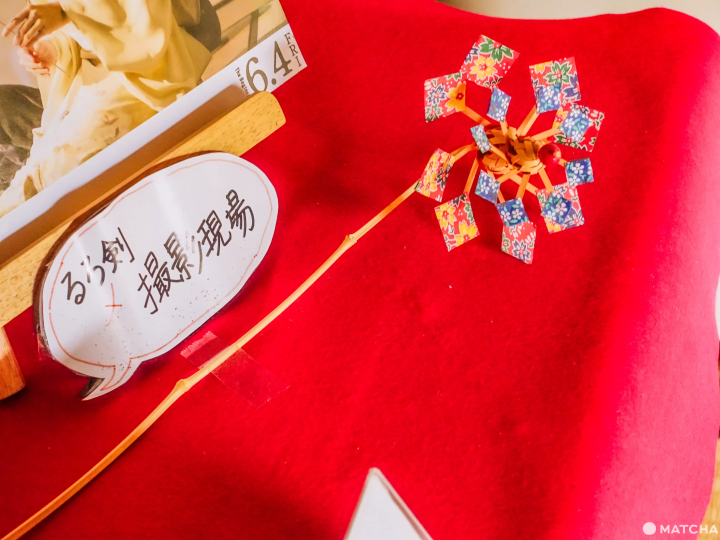
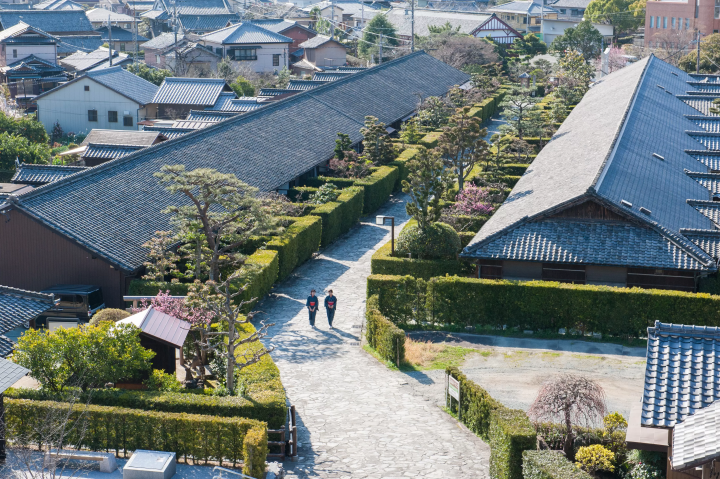
Gojoban Yashiki (castle guard residences), two row houses with a tiled roof stretching for 90 meters, and surrounded by Japanese yew, is a former residence of samurai families.
It was used as a filming location for the movie "Rurouni Kenshin: The Beginning," starring Takeru Sato, and photographs of the filming, along with various props, are displayed inside.
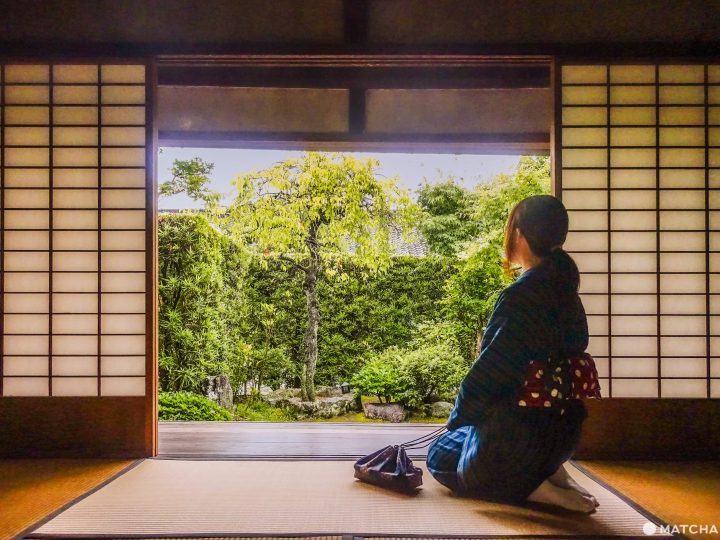
The blue, stripe-patterned Matsusaka Cotton fits nicely in this scenery as you walk around the area.
Photographs of the stroll will be filled with beautiful scenes, and stories to tell.
During the visit, keep in mind not to enter the private areas, which are currently used as abodes. Gojoban Yashiki
 1385 Tonomachi, Matsusaka City, Mie Prefecture, 515-0073
A samurai residence from the late Edo period in Tonomachi, Matsusaka City, Mie Prefecture. This is the remains of the existing group mansion (tenhouse) where Matsusaka Castle Guard resides.
1385 Tonomachi, Matsusaka City, Mie Prefecture, 515-0073
A samurai residence from the late Edo period in Tonomachi, Matsusaka City, Mie Prefecture. This is the remains of the existing group mansion (tenhouse) where Matsusaka Castle Guard resides.
Former Hasegawa Residence
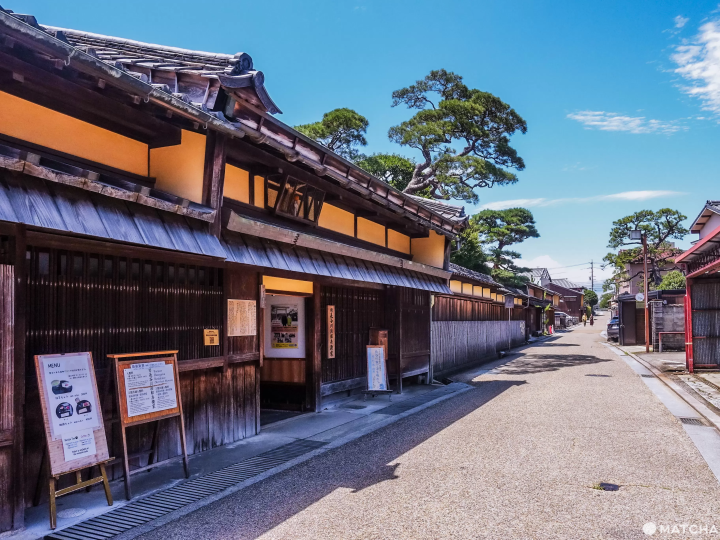
Former Hasegawa Residence, designated as an important cultural asset by the Japanese government, is located in this district.
The Hasegawa family thrived as a cotton merchant in the Edo Period, and the grand estate conveys their success.
Designed in a solemn and calm style, the interior will surely leave the visitors breathless.
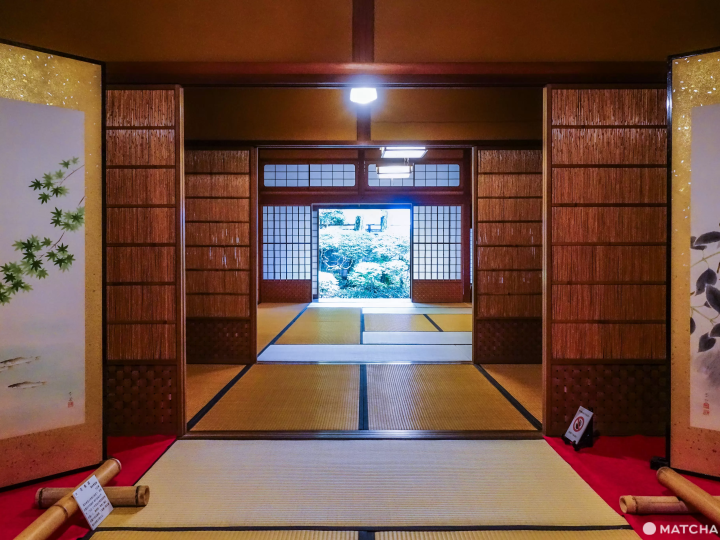
The rooms are carefully refurbished to its original state, along with a courtyard which offers a different scenery every season.
Visitors should check the interior details, created by the outstanding craftsmen of that era.
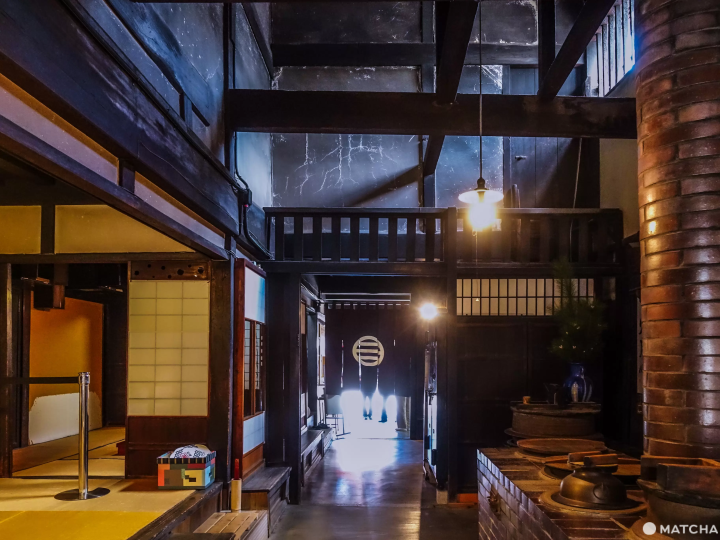
A life of a wealthy merchant, and also the bustle of the cotton trade, can be felt at this residence.
The facility also shows the history of how the merchandise made Matsusaka famous in Japan. Former Hasegawa Residence
 1653 Uomachi, Matsusaka City, Mie Prefecture, 515-0082
This is the main family home of Hasegawa Jirobei, a wealthy merchant who was based in Matsusaka during the Edo period. The vast grounds contain over 30 rooms, including the main house, a detached building, a storehouse, a stroll-style garden, and a teahouse.
1653 Uomachi, Matsusaka City, Mie Prefecture, 515-0082
This is the main family home of Hasegawa Jirobei, a wealthy merchant who was based in Matsusaka during the Edo period. The vast grounds contain over 30 rooms, including the main house, a detached building, a storehouse, a stroll-style garden, and a teahouse.
Matsusaka Cotton Center
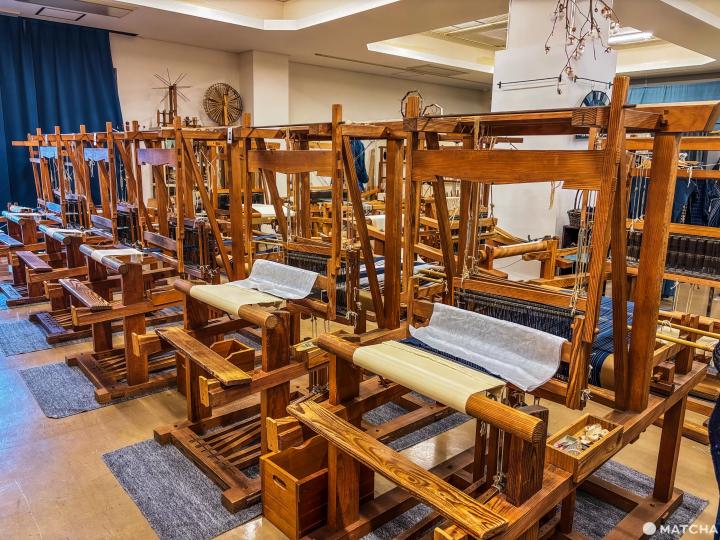
Those who wish to experience the traditional craft should visit the Matsusaka Cotton Center.
The facility handles cotton products, and also hosts a workshop to promote the handwoven Matsusaka Cotton.
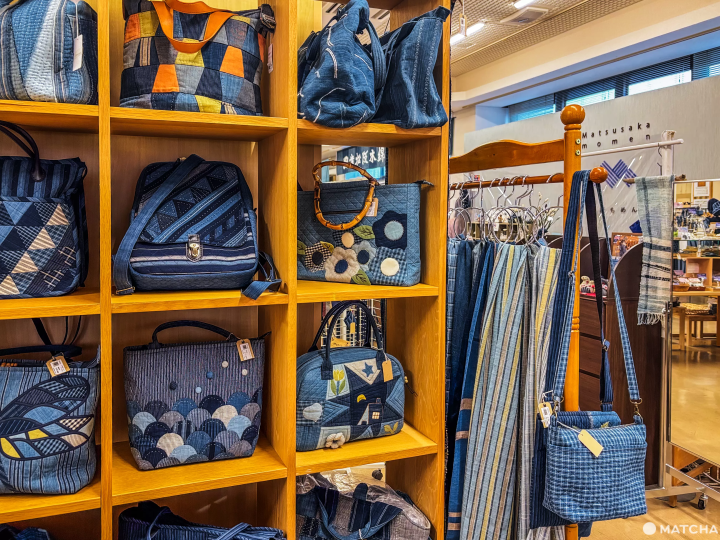
The gift shop handles a wide variety of items, such as handkerchiefs, wallets, and clothing. This is the perfect spot to look for unique souvenirs. Matsusaka Cotton Center
 2176 Honmachi, Matsusaka City, Mie Prefecture, 515-0081
At the Matsusaka Cotton Center, Matsusaka Momen crafts are on display. You can also try your hand at weaving and purchase accessories made with Matsusaka Momen, which also make great gifts.
2176 Honmachi, Matsusaka City, Mie Prefecture, 515-0081
At the Matsusaka Cotton Center, Matsusaka Momen crafts are on display. You can also try your hand at weaving and purchase accessories made with Matsusaka Momen, which also make great gifts.
The Taste of Matsusaka at an Established Restaurant
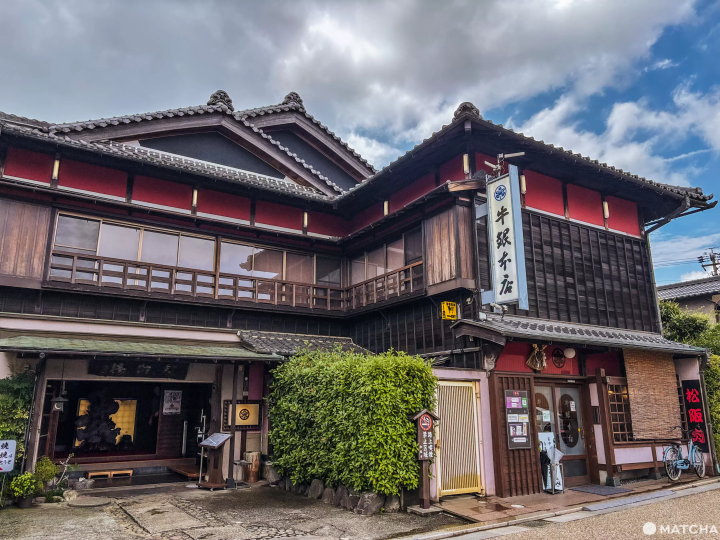
A visit to Matsusaka will not be complete without tasting Matsusaka Beef. After walking around the historic district, head for Gyugin, located at an 8 minute walk away from Matsusaka Castle Ruins.
Since it was founded, the restaurant has been regarded as one of the best in Matsusaka, and is famous for its wooden architecture.
The fourth generation owner is now in charge. Visitors will feel as if they have stepped into a different era.
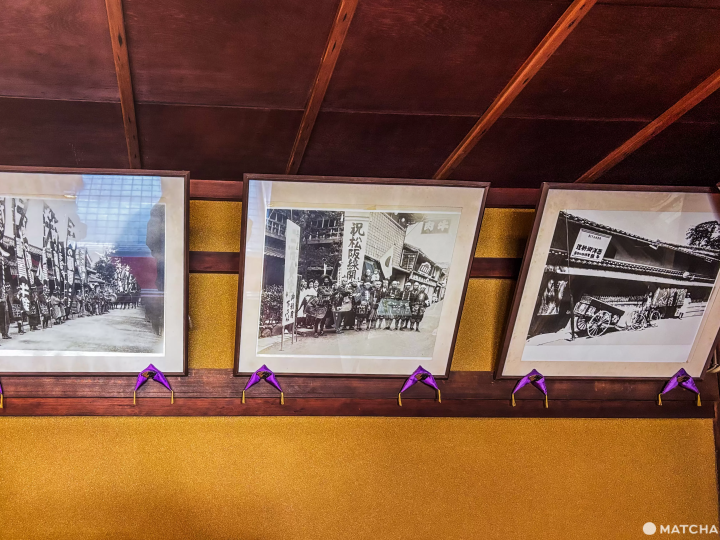
With historic photographs of Matsusaka adorning the interior, the restaurant has a unique atmosphere.
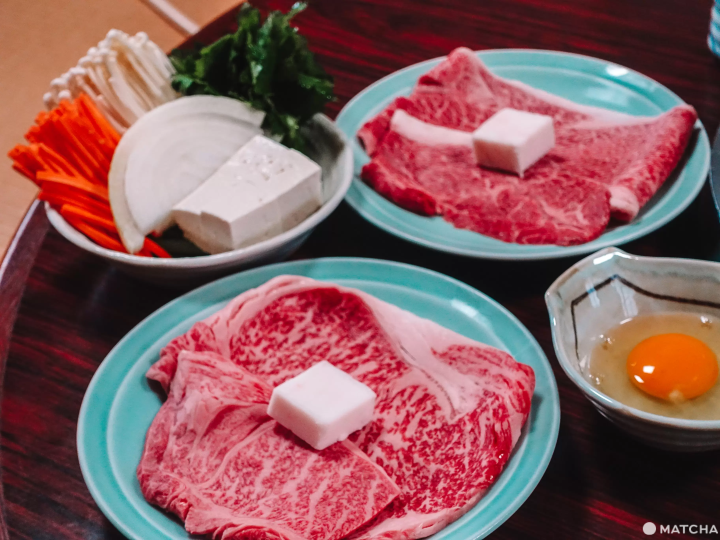
Gyugin has served top-quality beef for more than a century.
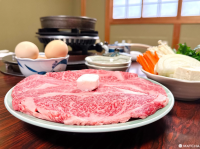
They particularly take pride in serving Tokusan (special product) Matsusaka Beef, fattened with great care. The beautiful marbling makes the product look like a work of art.
When cooked, the fat in the meat turns into a deep and sweet-flavored sauce. Tasting the soft-textured beef will feel like being in a dream.
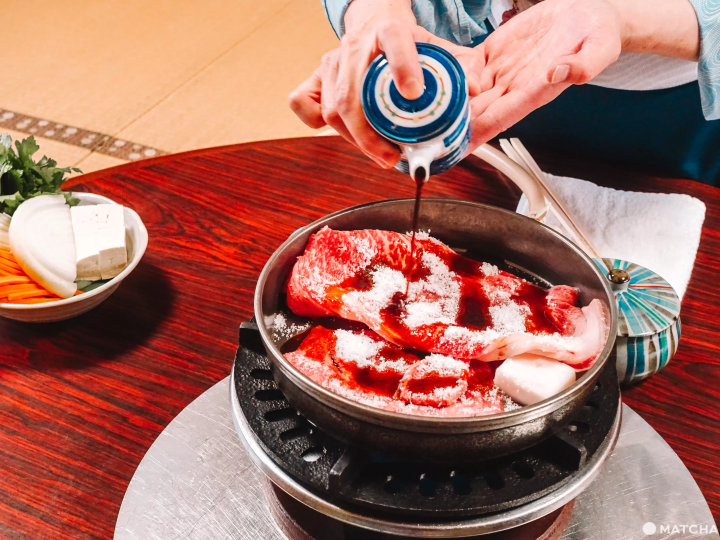
The sukiyaki, carefully cooked by the staff, employs a special mix of sugar and soy sauce. Ordinary vegetables, prepared with top-quality beef, will also surprise the guests.
Every bite will bring a taste of heaven. Gyugin Main Store
 1618 Uomachi, Matsusaka City, Mie Prefecture 515-0082
Gyugin is a long-established Matsusaka beef sukiyaki restaurant that was founded in 1902. The restaurant's charm lies in its tasteful appearance, which blends naturally into the historic streetscape. The stately space that only a long-established restaurant can have, combined with high-quality service with meticulous attention to detail, has made it a popular restaurant.
1618 Uomachi, Matsusaka City, Mie Prefecture 515-0082
Gyugin is a long-established Matsusaka beef sukiyaki restaurant that was founded in 1902. The restaurant's charm lies in its tasteful appearance, which blends naturally into the historic streetscape. The stately space that only a long-established restaurant can have, combined with high-quality service with meticulous attention to detail, has made it a popular restaurant.
Iitaka Roadside Station: Nature, a Hot Spring, and Souvenirs
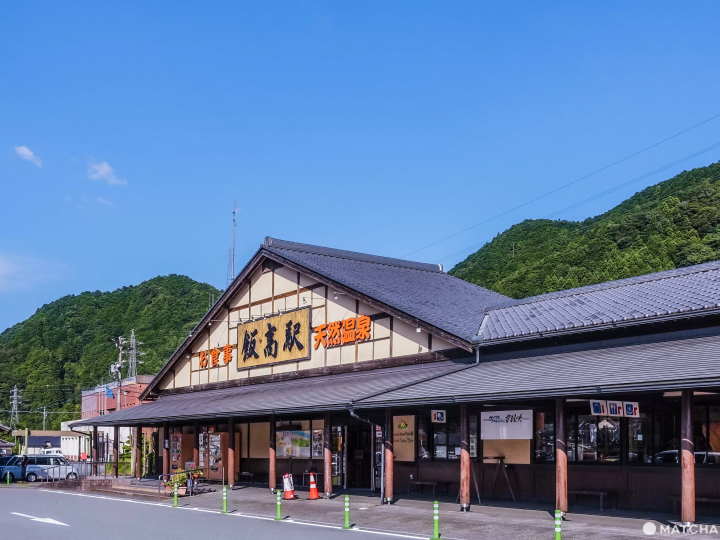
After lunch, satisfying both the mind and the body, head for the suburbs, which is rich in nature.
From Matsusaka Station, it is a 40 minute ride on a rental car or a taxi to Iitaka Roadside Station, located in the mountains.

This facility is the only roadside station in Mie furnished with a natural onsen (hot spring). Located along a clear stream, it also handles fresh vegetables, fruits, and special products grown by local farmers.
Visitors will be able to wash away the travel fatigue at Iitaka-no-Yu, the bathing facility.
After walking around for half a day, and tasting the local cuisine, a soothing bath is the perfect solution. The warm water will release the tension, and it will feel like being surrounded by nature.
This stop will be one of the highlights of this trip.
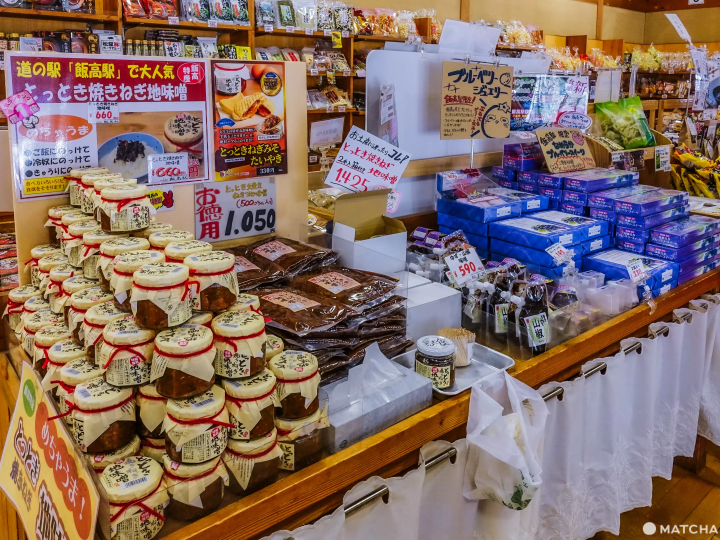
Following the onsen, take a look at the local products section. While there is a wide variety of items to choose from, check the Iitaka miso.
It is blended with grilled green onions, and the aromatic flavor goes well with rice or salad. Try a small sample, and you will know why this has become a long-standing, popular souvenir.
There are also various desserts made with locally grown blueberries, perfect as gifts for family members or friends. Iitaka Roadside Station
 515-1502 177 Miyamae, Iitaka-cho, Matsusaka City, Mie Prefecture
Iitaka Station opened on July 24, 1990 as a store selling local specialties.
At the time, it attracted attention as people wondered, "Why is there a station when there are no trains running?"
On April 22, 1993, it was registered as the first roadside station in Mie Prefecture, along with 103 other facilities nationwide.
For this reason, locals say that "Iitaka Station is the station that inspired the idea of roadside stations."
The truth of this is unknown, but it is certain that Iitaka Station existed before the former Ministry of Construction began its roadside station project.
The facility was registered as a corporation in October 2004, and the first phase opened on November 25th of the same year after a complete renovation, adding hot spring facilities, a restaurant, and an information office.
On April 15, 2005, the second phase of the project opened, with a sales outlet for local produce and an experience facility.
In July 2006, a grassy park was added.
In November of the same year, he opened Nippon Therapy Relaxation.
In July 2016, a sister store, Hase Station, opened in the Hase area of Iitaka Town.
As of April 2018, there are 18 roadside stations in the prefecture.
It has become popular as the only roadside station with a day-trip natural hot spring facility, and remains so to this day.
515-1502 177 Miyamae, Iitaka-cho, Matsusaka City, Mie Prefecture
Iitaka Station opened on July 24, 1990 as a store selling local specialties.
At the time, it attracted attention as people wondered, "Why is there a station when there are no trains running?"
On April 22, 1993, it was registered as the first roadside station in Mie Prefecture, along with 103 other facilities nationwide.
For this reason, locals say that "Iitaka Station is the station that inspired the idea of roadside stations."
The truth of this is unknown, but it is certain that Iitaka Station existed before the former Ministry of Construction began its roadside station project.
The facility was registered as a corporation in October 2004, and the first phase opened on November 25th of the same year after a complete renovation, adding hot spring facilities, a restaurant, and an information office.
On April 15, 2005, the second phase of the project opened, with a sales outlet for local produce and an experience facility.
In July 2006, a grassy park was added.
In November of the same year, he opened Nippon Therapy Relaxation.
In July 2016, a sister store, Hase Station, opened in the Hase area of Iitaka Town.
As of April 2018, there are 18 roadside stations in the prefecture.
It has become popular as the only roadside station with a day-trip natural hot spring facility, and remains so to this day.
Shinryoku Sabo: Peace in the Tranquil Mountains
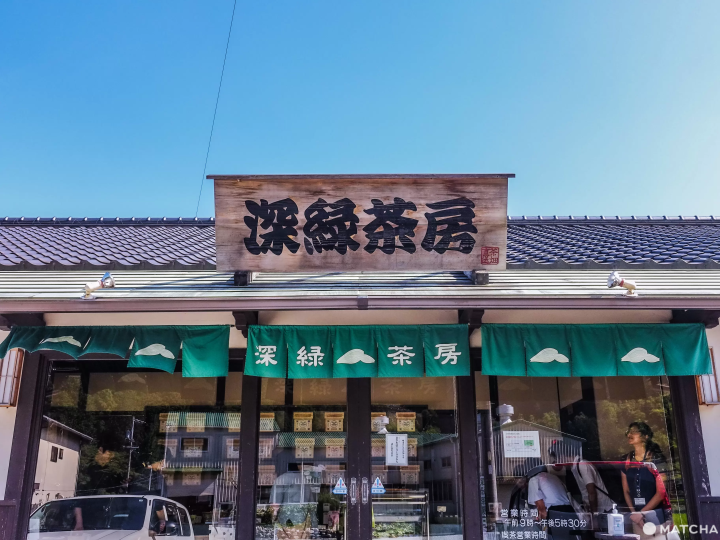
The relaxing tour continues after a refreshing bath.
The next stop is Shinryoku Sabo, a tea room located near Iitaka Roadside Station, in the mountain regions.
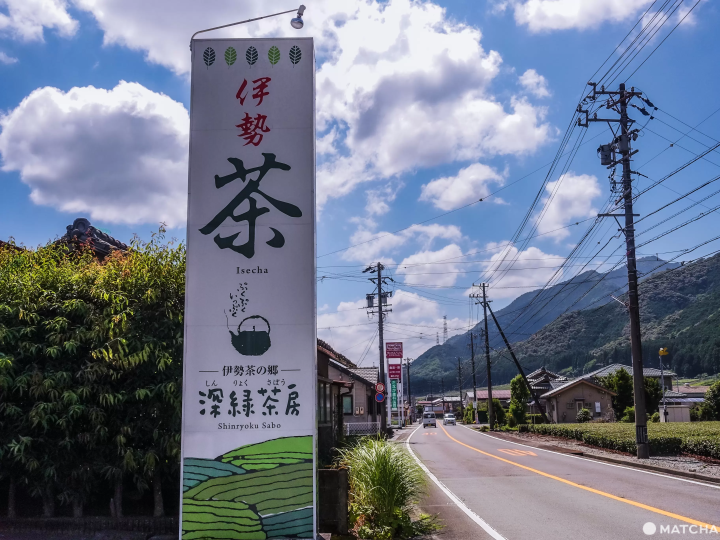
Mie Prefecture is the third largest tea producer in Japan. Matsusaka Tea is one of its prominent local brands.
Shinryoku Sabo, where visitors can enjoy the view of the plantation and wind down, serves Matsusaka Tea.
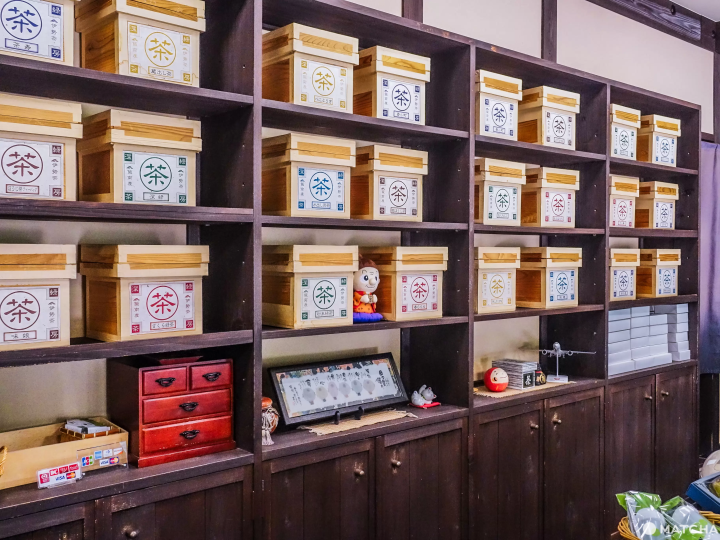
They also handle various brands from all over the prefecture, carefully grown by the tea farmers.

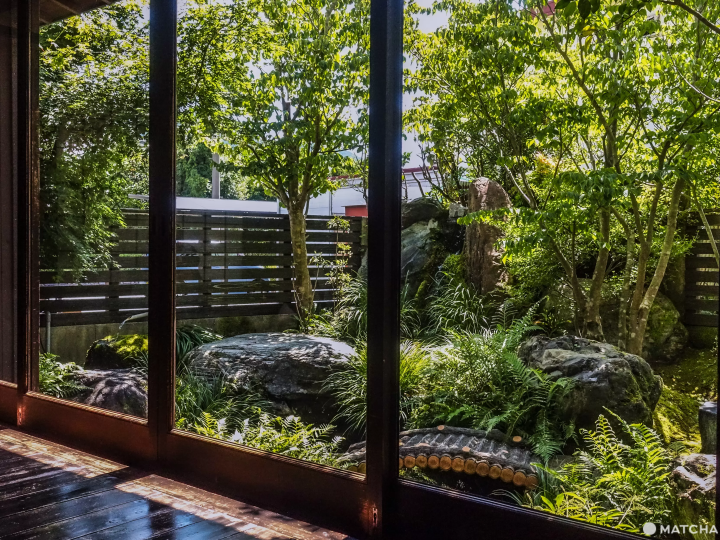
Step inside and the room is filled with the elegant fragrance of tea.
A carefully maintained Japanese garden can be seen through the floor-to-ceiling windows. The place is like a hideaway, with a calm atmosphere.
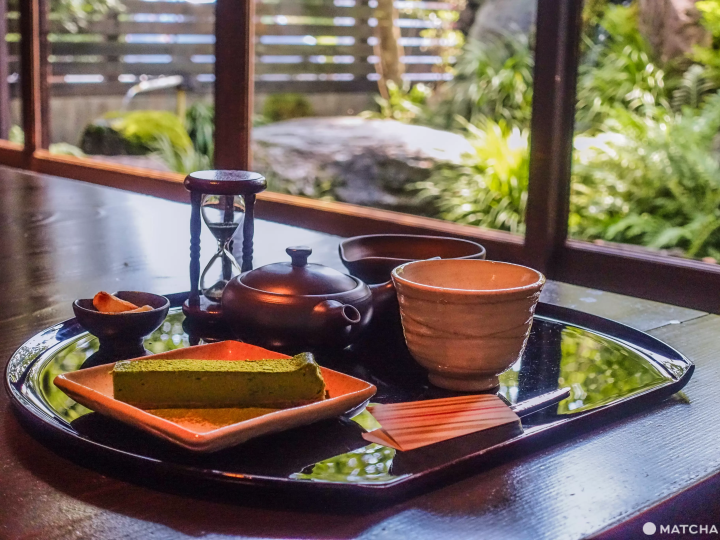
Rich-flavored ochatsumi (tea picking) soft-served ice cream, and cheesecake, which goes well with tea, are some of the items on the menu.
The popular drink is the sencha (green tea), prepared in the traditional style, using kyusu (small teapot) and yuzamashi (cooled boiled water). The staff will explain how to brew and drink tea, so the visitors will be able to enjoy the authentic taste.
When you sip the warm tea, the flavor slowly changes from bittersweet to mellow. Combined with the view of the greenery, it will create a serene feeling, as if the time has stopped.
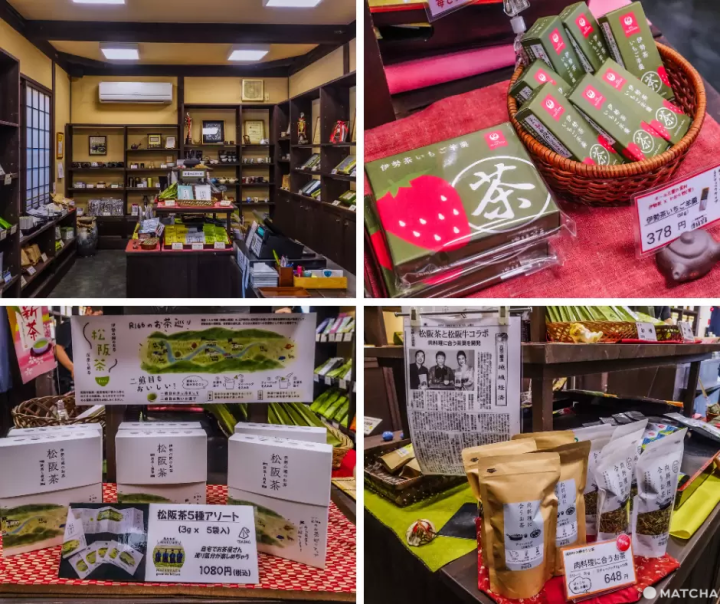
Be sure to take a look at the gift shop.
There are items with local appeals, such as Isecha Strawberry Yokan, made in collaboration with Japan Airlines, and a tea that goes well with meat dishes, which was co-produced with Gyugin. Shinryoku sabo
 515-1411 4209-2 Kayumi, Iinan-cho, Matsusaka City, Mie Prefecture
Shinryoku Sabo is a tea shop run by a tea farmer in Matsusaka, Mie Prefecture. When you think of tea, you think of Shizuoka or Uji in Kyoto, but in fact Mie Prefecture is the third largest tea producer in Japan. Among them, Iinan Town in Matsusaka City has a large temperature difference between day and night, making it suitable for tea making. We put our love into each and every tea leaf and work hard to make delicious tea.
Tea has different "taste," "aroma," and "color" every year depending on the weather conditions,
and it is impossible to make exactly the same tea.
Because it is something that is influenced by nature, we who work in agriculture think of it as a fresh new year every year, face nature, and work hard to turn the characteristics of that year's tea into "strengths."
We believe that in order to make tea that customers will think is "delicious!" even if they drink it every day, we must work hard on tea production, never forget to be grateful for the blessings of nature, and encourage each other as staff members.
Please enjoy Iinan tea, which is grown with the blessings of the local nature and a heart full of gratitude.
515-1411 4209-2 Kayumi, Iinan-cho, Matsusaka City, Mie Prefecture
Shinryoku Sabo is a tea shop run by a tea farmer in Matsusaka, Mie Prefecture. When you think of tea, you think of Shizuoka or Uji in Kyoto, but in fact Mie Prefecture is the third largest tea producer in Japan. Among them, Iinan Town in Matsusaka City has a large temperature difference between day and night, making it suitable for tea making. We put our love into each and every tea leaf and work hard to make delicious tea.
Tea has different "taste," "aroma," and "color" every year depending on the weather conditions,
and it is impossible to make exactly the same tea.
Because it is something that is influenced by nature, we who work in agriculture think of it as a fresh new year every year, face nature, and work hard to turn the characteristics of that year's tea into "strengths."
We believe that in order to make tea that customers will think is "delicious!" even if they drink it every day, we must work hard on tea production, never forget to be grateful for the blessings of nature, and encourage each other as staff members.
Please enjoy Iinan tea, which is grown with the blessings of the local nature and a heart full of gratitude.
Recommended Accommodations
Those who wish to spend more time at Matsusaka, to enjoy the quiet and beauty of the city, should consider staying overnight.
The following are two recommended accommodations.
Stay Okumatsusaka
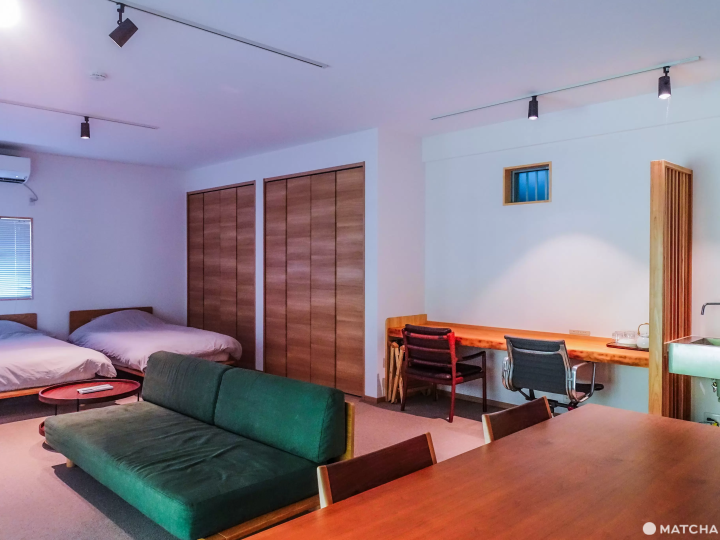
This is a specially designed guesthouse, renovated from an old residence.
The wooden interior, with a modern, mountain-lodge style, has a warm atmosphere. It resonates with the surrounding environment.
There are four beds, so the facility is fit for a stay with family members or friends.
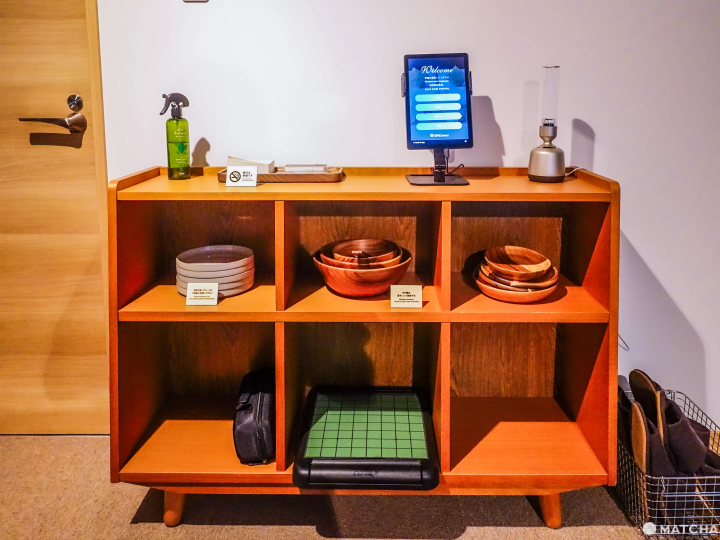
Stay Okumatsusaka is furnished with tableware, so guests can purchase some food, and enjoy in-room dining.
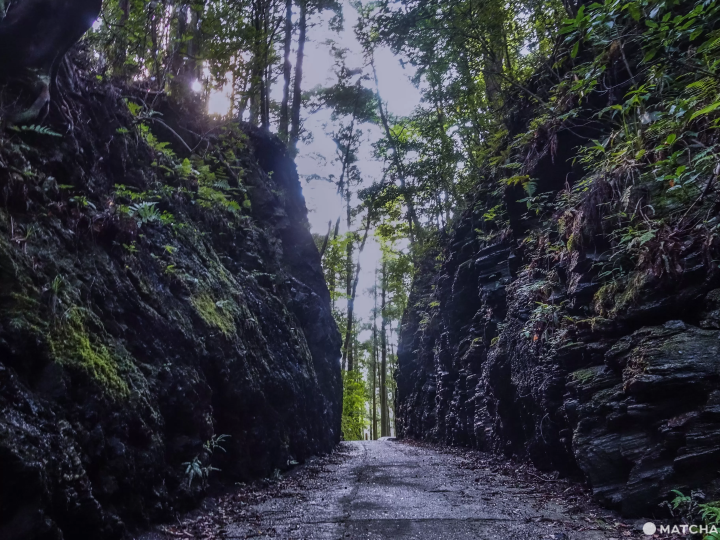
There is a trekking course which leads to Mezurashi-toge, another place of interest in Matsusaka.
The legend goes that it was named by Amaterasu Ohmikami (*), who was impressed by the scenery, citing that its beauty was like a rare cloth.
This spot has a mystic air, and is also known for the legend of land division, when Amaterasu set the border between two countries.
*: The goddess of the sun, and one of the most important deities in Japanese mythology. Enshrined in the Naiku of Ise Jingu, she is considered as the mythical ancestress of the Japanese Imperial Family.
Iitakaeki Cottage
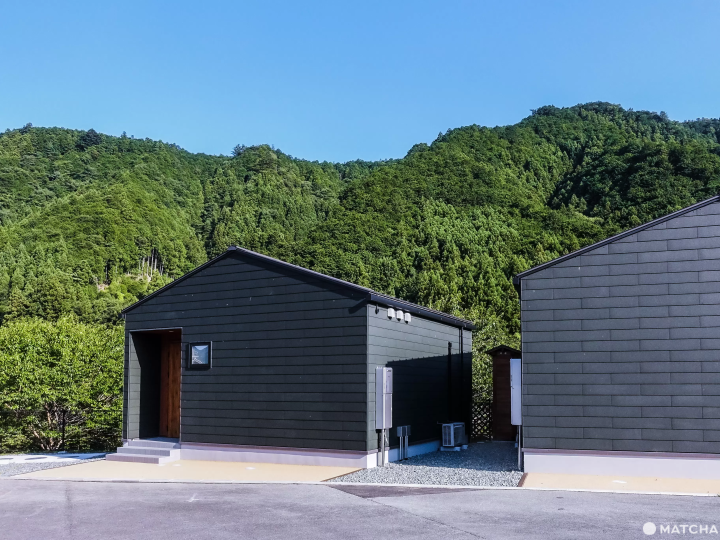
Those who wish to be surrounded by nature should stay at Iitakaeki Cottage, which stands next to the Iitaka Roadside Station.
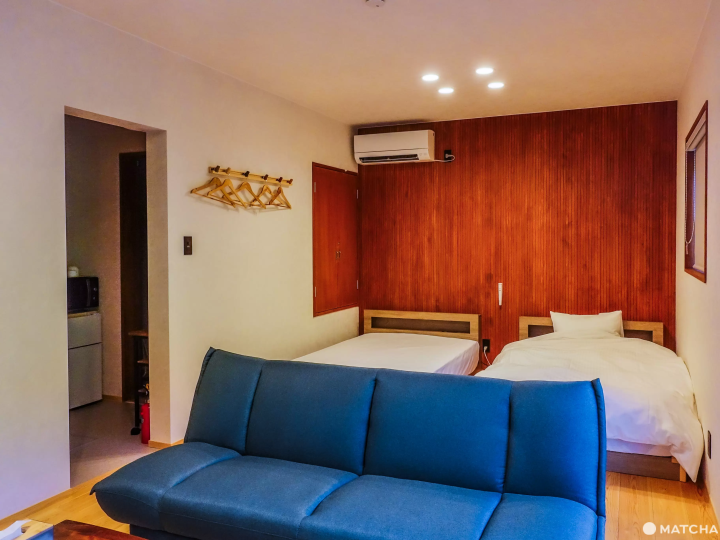
There are two types of cottages, Japanese- and Western-style, with the wooden interior creating a warm atmosphere.
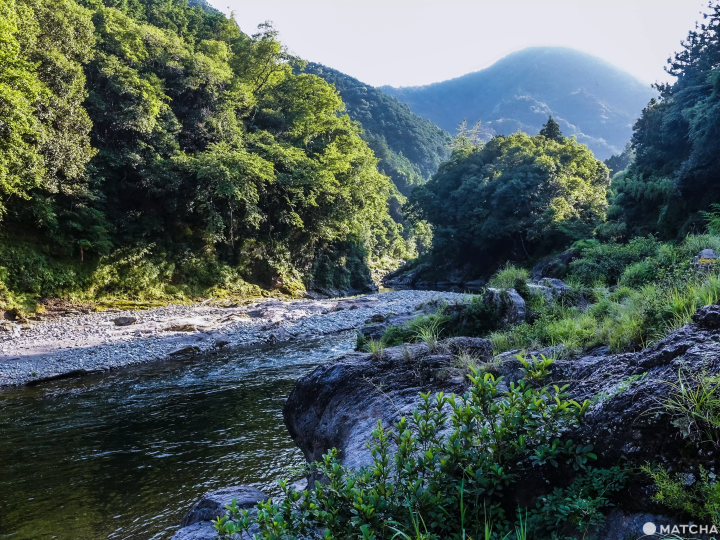
From the balconies, guests can enjoy the view of the mountains and the stream.
Up to four people can stay at a cottage, so it is perfect for a trip with family or friends.
Guests can experience the country life, like bathing in an onsen, tasting dishes made from local foodstuff at the roadside station, or purchasing fresh farm products and local specialties.
A Relaxing Trip to Matsusaka City
A popular tourist destination in Mie is the distinguished Ise Jingu, or VISON, which has been gathering attention recently.
While that may be the case, be sure to visit Matsusaka during those trips, as the city offers unique attractions.
At Matsusaka, instead of a whirlwind tour of sightseeing spots, visitors will be able to enjoy a relaxing trip, one that will unwind both the mind and the body.
Read also
Written by 大久保太太
Sponsored by Matsusaka City
MATCHA's promotional account for corporate and local government advertising. We aim to provide useful information to our readers in an enjoyable manner.
Special Features
More