
A journey to discover the mysteries and charms of fermentation in Hokuriku -TOYAMA/ISHIKAWA/FUKUI-
Japan is home to a wide variety of fermented foods, and its fermentation culture is influencing global food trends. This time, we'll be introducing a fermentation experience trip focusing on koji, which has become popular among chefs and gourmets in recent years, and sake lees, which are produced during the sake brewing process!

This service includes sponsored advertisements.
In recent years, koji (malted rice) has been gaining attention among top chefs and food enthusiasts overseas. Japan is home to a wide variety of uniquely developed fermented foods, such as miso, soy sauce, natto, and sake, which have supported people's diets since ancient times.
The Hokuriku region, made up of Toyama, Ishikawa, and Fukui, is where you can experience the essence of this fermentation culture, where traditions are still cherished and fermentation culture is a part of everyday life. In this article, we will focus on rice fermentation and visit Ishikuro Tane Koji-ten in Toyama, Shijimaya Honpo in Ishikawa, and Gosakuso in Fukui to introduce the depth of fermentation in the Hokuriku region.
-
Table of Contents
- Discover the origins of koji: Ishikuro Tane Koji-ten in Nanto City, Toyama Prefecture
- Kabura zushi: A Delicacy Made with Koji - Shijimaya Honpo in Kanazawa City, Ishikawa Ishikawa Prefecture
- The wonder of fermentation using sake lees - Gosakuso, Takahama Town , Oi District , Fukui Prefecture
- A trip to Hokuriku to discover the mysteries of fermentation
Discover the origins of koji: Ishikuro Tane Koji-ten in Nanto City, Toyama Prefecture
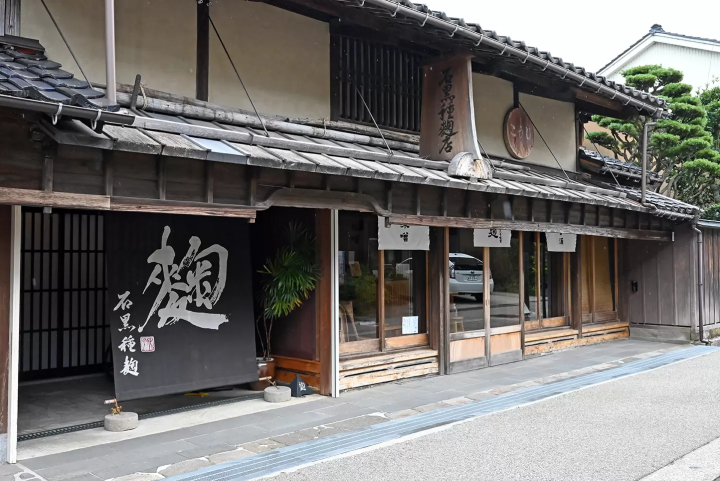
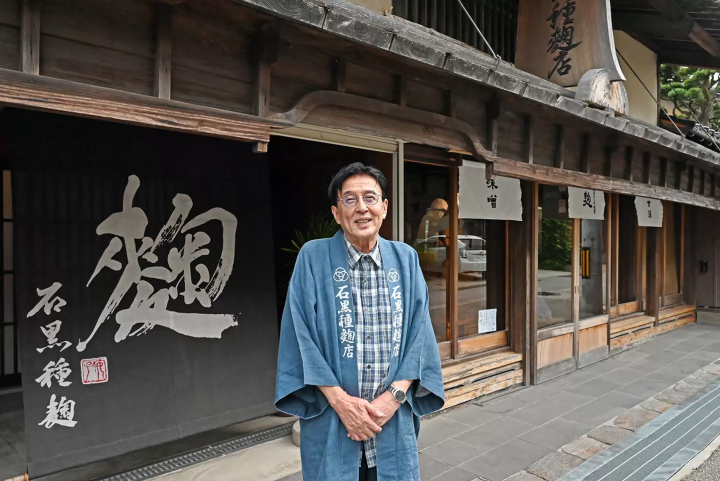
Ishikuro Tane Koji-ten, located in Nanto City, Toyama Prefecture , is the only producer of tane koji in the Hokuriku region, and one of only about 10 in the entire country . Records show that the company was founded in 1895 (Meiji 28), but its history of making koji as a family business dates back to the Bunsei era of the Edo period, in the early 1800s.
"Tanekoji" is the "koji base" that forms the base for fermented foods made using rice koji, such as miso, soy sauce, sake, and amazake. "Tanekoji" is the spores of the koji mold necessary to make rice koji, and "komekoji" is made by growing the koji on steamed rice. When rice koji is mixed with rice and fermented, it becomes amazake or sake, and when mixed with soybeans and fermented, it can make miso.
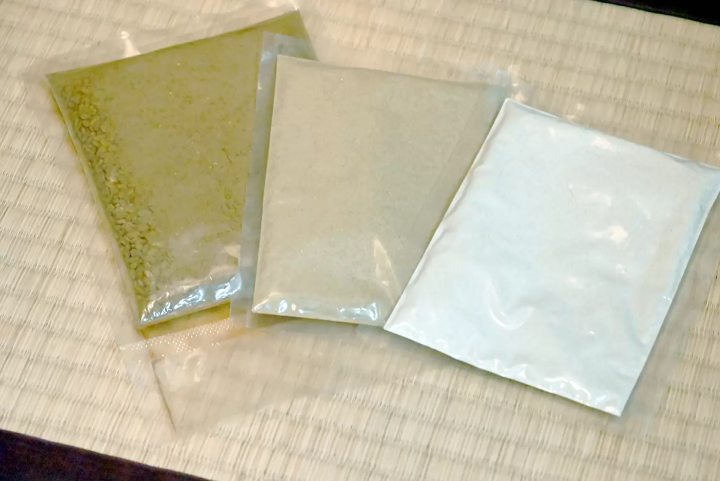
The color and properties of koji starter vary depending on the type, and they are used for different purposes such as miso, soy sauce, and sake.
The koji starter produced at Ishikuro Tane Koji-ten is delivered to miso breweries and koji makers not only locally but all over the country, supporting the food culture of each region and, so to speak, serving as the foundation of Japanese cuisine.
Unique koji made by hand
Nowadays, koji production is increasingly mechanized, but Ishikuro Tane Koji-ten still makes both rice koji and koji starter by hand, adhering to the traditions that have been passed down since the store's founding. A distinctive method is the "koji lid method," in which steamed rice is placed in a small wooden box and left to ferment in a special "muro" (room). The fermentation heat given off by the koji mold keeps the inside of the room at 32°C and the humidity at around 90%, allowing the koji mold to spread deep into the rice, resulting in high-quality rice koji.
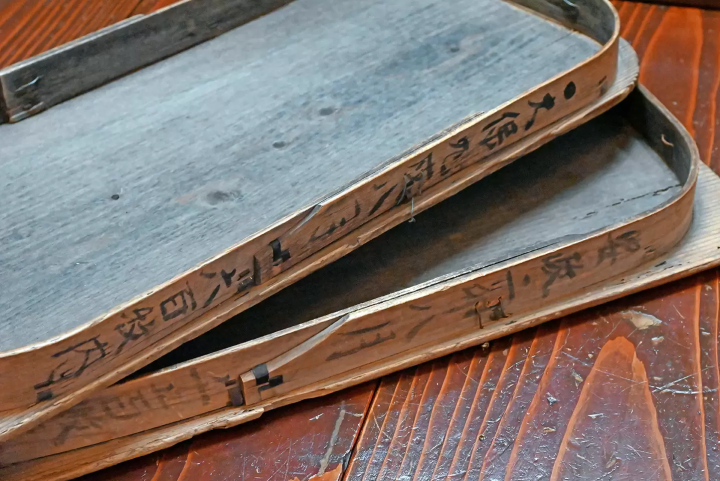
Koji lids, which have been passed down for over 200 years and have the Edo period era written on them, are a type of lid.
"Because it's done by hand, we can maximize the power of the bacteria. The secret recipe for making koji starter is passed down from father to son, and only the designated successor can make koji starter at Ishikuro Koji Shop. I'm currently teaching my only son the method of making koji starter that has been passed down for generations, but due to strict family rules, I can't teach my wife, siblings, or employees," says Ishikuro Hachiro, the eighth generation koji maker and fourth generation head of the family as a koji maker.
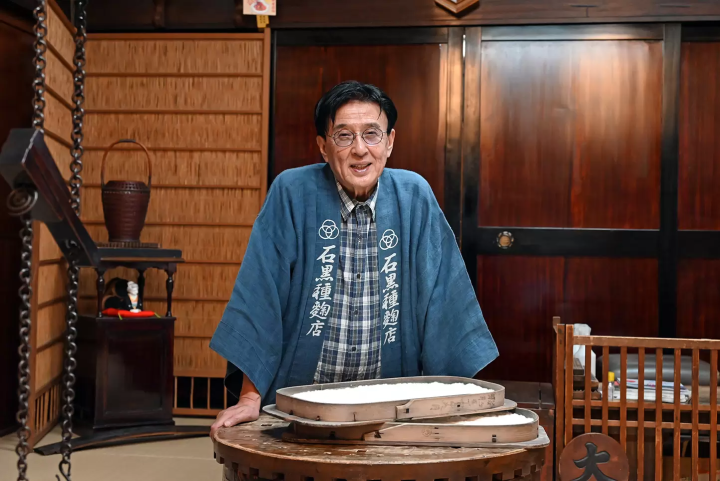
The head of the family, Ishikuro Hachiro, has a deep knowledge of fermentation and is visited by famous chefs and researchers from not only Japan but also overseas.
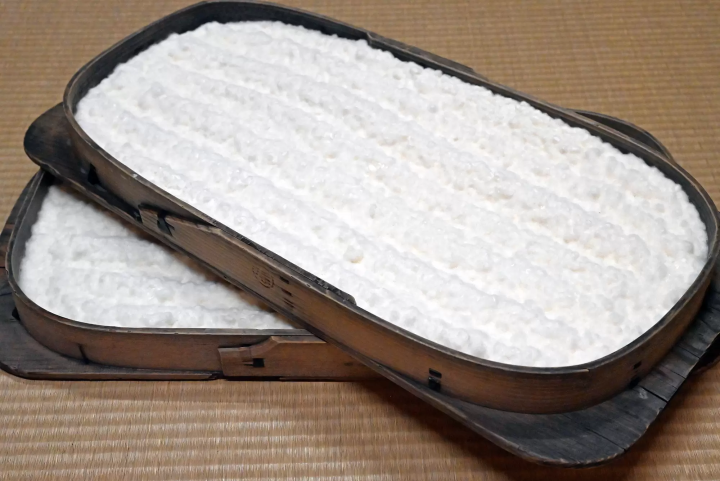
Ishikuro Tane Koji-ten's rice koji, made by cultivating koji mold in every single grain of rice, is pure white and as beautiful as snow . The koji produced in this way is characterized by its natural sweetness and extremely strong enzyme power. It is not only delicious, but has also attracted attention for its health and beauty benefits, earning high praise from chefs and fermentation enthusiasts alike.
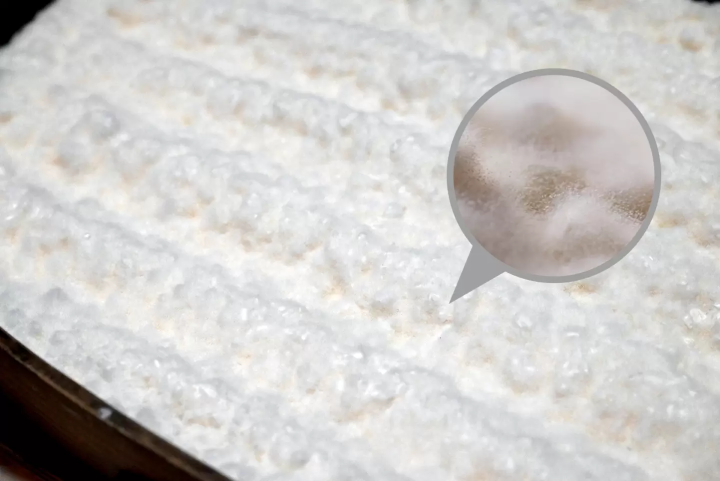
The rice koji from Ishikuro Tane Koji-ten is as beautiful and pure white as fresh snow, covered in fluffy mycelium.
Fermentation culture nurtured by Toyama's climate
The climate of Nanto Nanto City , Toyama Prefecture, is also not to be overlooked as a suitable place for making koji. Winters are cold and snowy, and summers are humid. This environment is conducive to fermentation, and the region is blessed with high-quality water and rice , which has fostered the fermented food culture unique to the Hokuriku region, including miso and "Kabura zushi." The power of this land is the reason why the custom of making homemade miso remains in households in this region today.
Ishikuro Tane Koji-ten offers a wide range of products, from traditional rice koji to salt koji and amazake. Their amazake, made with Toyama Prefecture-grown koshihikari rice, Shin-Taisho glutinous rice, and the secret ingredient of Noto sea salt, is additive-free, rich in flavor, and healthy for the body. They also stock products that are closely tied to the local dining table, such as amazake for Kabura zushi and koji for pickles. There are many loyal fans who say, "Ishikuro's koji is the only way to make miso," and "If you make amazake with Ishikuro's koji, Kabura zushi tastes delicious."
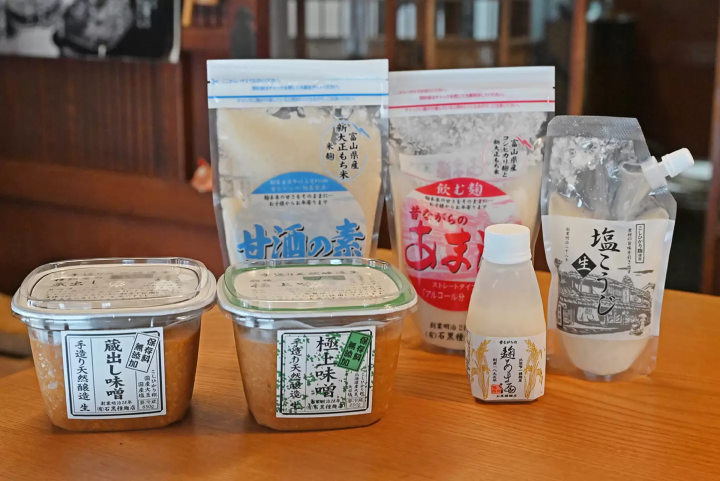
Ishikuro Tane Koji-ten's special miso and amazake are available. Because they are additive-free and contain live enzymes, they are difficult to take overseas, but they can be shipped within Japan as long as they are refrigerated. We recommend trying their amazake and miso while you're in Japan.
Amazake, made only from rice koji, rice, and water, is also called "drinkable IV drip" and is Toyotomi in glucose, essential amino acids, and B vitamins, all of which are produced through fermentation. Amazake is available in convenient mini bottles that can be drunk as is, as well as in bags that can be diluted before drinking. It has gained popularity due to its beauty benefits, as well as its effects on improving the intestinal environment and boosting immunity.
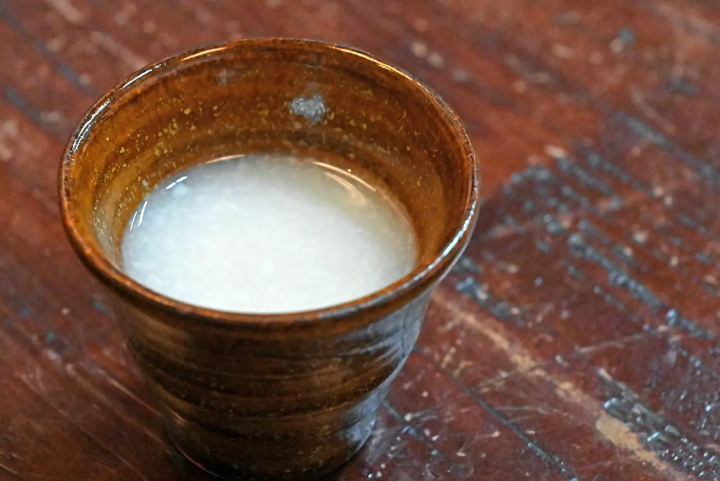
Amazake is a drink that has a gentle sweetness that comes from fermenting rice. It can be used not only as a drink but also in desserts and cooking.
Stepping through the shop's noren curtain, you'll find yourself surrounded by the handiwork and local culture that has been passed down for over 100 years. A visit to Ishikuro Tane Koji-ten is more than just a shopping experience; it's an experience that connects you to the origins of Japanese food culture.
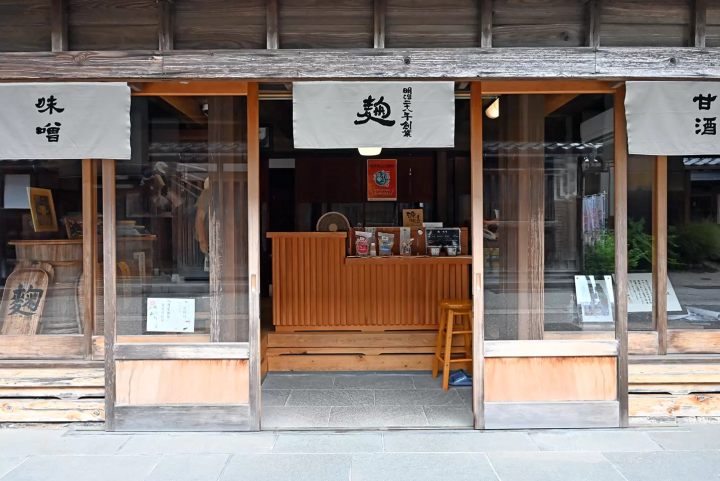
The quaint building was constructed in the mid-Edo period, and in the Oku of the store, rice koji and the rare koji starter, which is passed down from father to son, are made.
Ishikuro Tane Koji-ten
54 Toyama Prefecture shinmachi , Nanto City, Toyama Prefecture
TEL 0763-52-0128
[Business hours] Monday to Friday 9:00-18:00, Saturday and public holidays 10:00-17:00
[Closed] Sundays
[access]
◆8 minutes by car from Fukumitsu IC on the Tokai-Hokuriku Expressway
◆Approximately 2 hours and 30 minutes from Tokyo to Kanazawa Station on the Hokuriku Shinkansen
Approximately 50 minutes by bus from the west exit of Kanazawa Station to Fukumitsu Station, then a 10-minute walk from Fukumitsu Station
◆Approximately 2 hours and 40 minutes from Tokyo to Shin Takaoka Station on the Hokuriku Shinkansen
Approximately 40 minutes from Shin Takaoka Station to Fukumitsu Station on the Johana Line
Kabura zushi: A Delicacy Made with Koji - Shijimaya Honpo in Kanazawa City, Ishikawa Ishikawa Prefecture
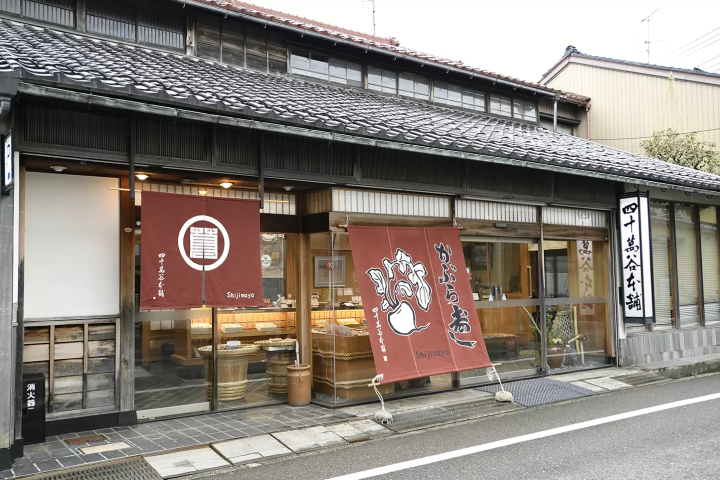
Located in a corner of Kanazawa where traditional townhouses remain, Shijimaya Honpo is a long-established fermented food store founded in 1875 (Meiji 8). Blessed with the pure underground waters of Hakusan, the store was founded by the founder, Shijimaya Yoemon, as a soy sauce store. The store later expanded to include miso, koji, and pickles, and is now known as a leader in Ishikawa's fermentation culture.
Kabura zushi: a trinity of turnip, yellowtail, and koji
"Kabura zushi" is synonymous with "Shijimaya Honpo." This local dish, made in Ishikawa Prefecture and western Toyama Prefecture, is made by sandwiching salted yellowtail (buri) between large salted turnips (kabu), which are then pickled in rice koji and fermented. Characterized by a mellow acidity and umami flavor achieved through lactic acid fermentation, this traditional fermented food is a popular winter treat and New Year's dish.
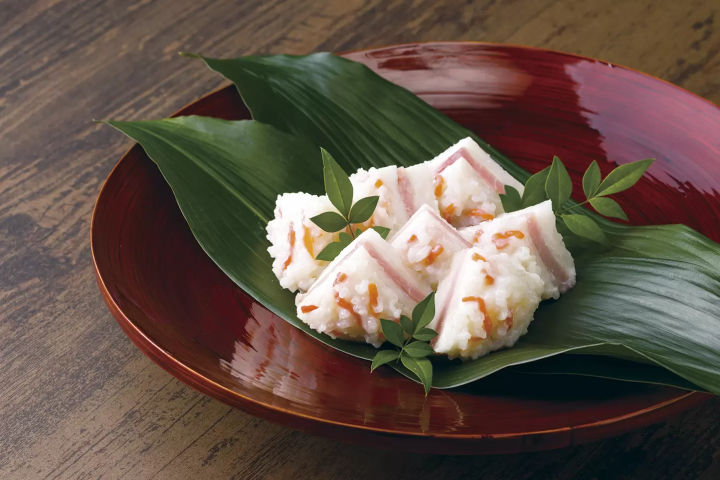
The turnip has a moist and crunchy texture, and the yellowtail sandwiched between them is packed with umami, like prosciutto. The gentle sweetness of the koji and the subtle acidity of lactic acid fermentation wrap the whole dish together, creating a delicious trinity.
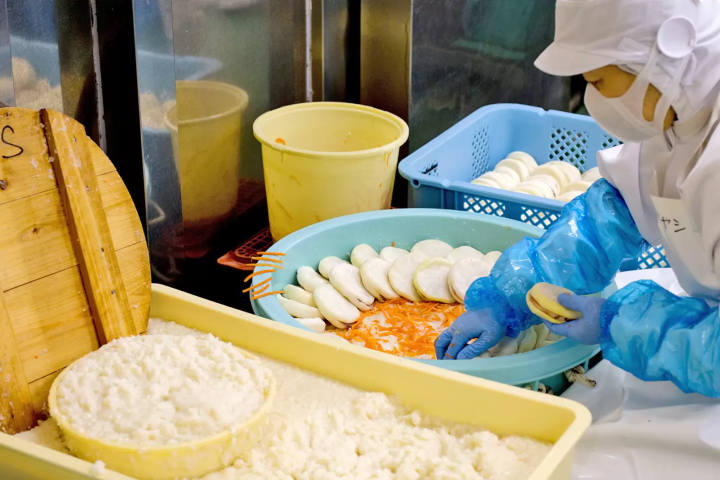
Kabura zushi is marinated. Shredded carrots are also added.
Kabura zushi was originally a winter dish, but Shijimaya Honpo has devised ways to provide consistent quality regardless of the season to suit modern dining tables, and now offers Kabura zushi that can be enjoyed in the summer and Daikon zushi that can be served year-round.
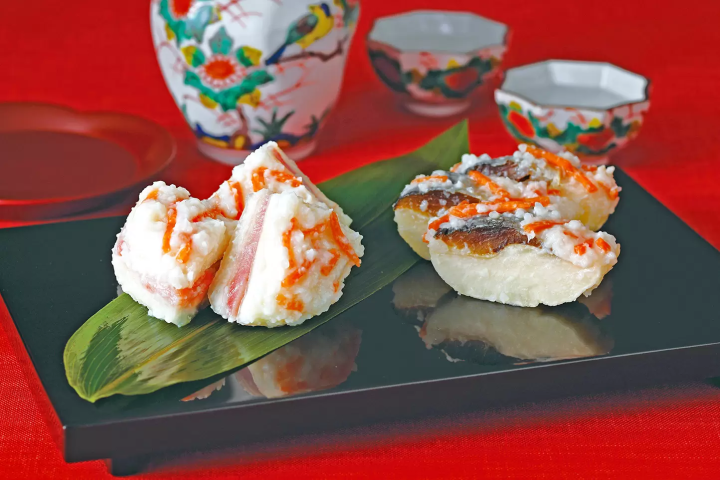
The Kabura zushi on the left is made by sandwiching salted yellowtail between turnips and fermenting it with koji. The Daikon zushi on the right is a local dish made by placing herring on daikon radish and fermenting it with koji.
Fermentation is a delicate process that is easily affected by the seasons and climate, but at Yommanya Honpo, in addition to the experience and intuition of traditional craftsmen, they have introduced new techniques to precisely control temperature and humidity, ensuring consistent quality and deliciousness while preserving the traditional flavor.
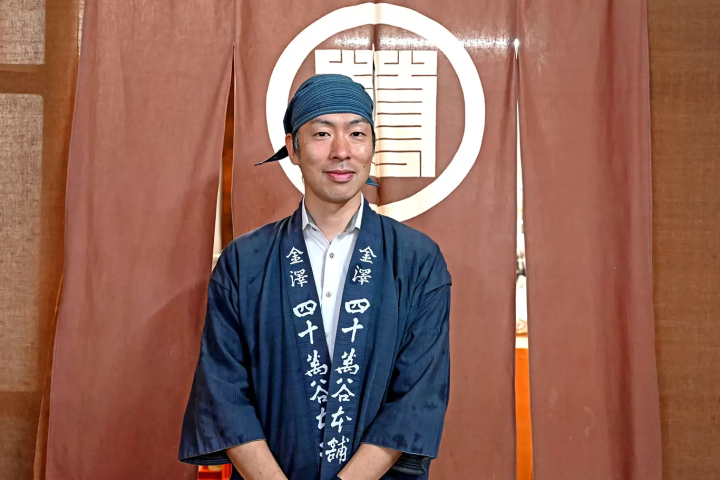
The sixth-generation head of the family, Shijimaya Masakazu, became president in July 2025.
The roots of sushi and the history of "Kabura zushi"
By the way, when you see "Kabura zushi," do you think it's different from the sushi you imagine? Sushi, a representative form of Japanese cuisine, is Nigiri zushi, made by placing fish or other ingredients on vinegared rice seasoned with vinegar and seasonings. Some sushi uses vegetables, so some people may have imagined turnips garnished with vinegared rice.
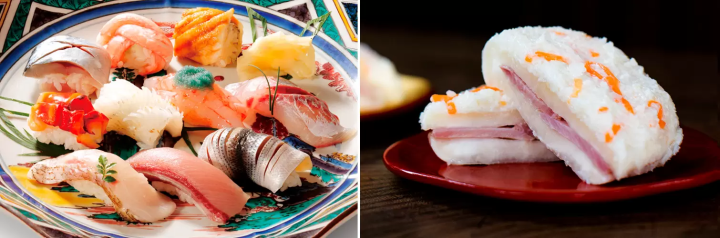
On the left is regular Nigiri zushi, and on the right is Kabura zushi.
Although they look and taste different, both "kabura zushi," made by sandwiching yellowtail between turnip vegetables and marinating it in rice koji, and Nigiri zushi can be traced back to the same ancestor. "Kabura zushi" is a type of "Nare zushi" or "Izushi," and is a style of sushi with a longer history than Nigiri zushi.
The origins of Japanese sushi can be found in Southeast Asia. In Southeast Asia, fish caught in abundance during the rainy season were salted so that they could be eaten during the dry season when fish were scarce. Eventually, starch such as rice was added and the sushi was fermented, and it is said that this was introduced to Japan along with rice cultivation.
The Engishiki, compiled in the 900s during the early Heian period, lists sushi made with sweetfish, crucian carp, salmon, and other fish. However, these are "Nare zushi," which is made by lactic acid fermentation of fish with salt and cooked rice. Eventually, instant sushi such as "Oshi zushi" and "Maki zushi" were developed, which add acidity using vinegar rather than lactic acid fermentation, and in the late Edo period, "Nigiri zushi," a type of sushi that combines modern vinegared rice with seafood and other toppings, was born.
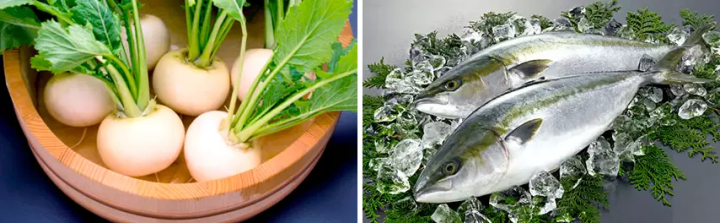
Ishikawa Prefecture and Toyama Prefecture are known for their winter yellowtail production. Kabura zushi is a traditional dish made with yellowtail and turnip, both of which are in season in winter.
" Izushi" is a dish made by pickling fish and vegetables in salt, rice, and koji and then fermenting them , and "Kabura zushi" is one type of "Izushi." "Izushi" is found along the Sea of Nihon Sea coast from Tohoku to Hokuriku, and a similar dish called "Shikhye" is also found along the Sea of Nihon Sea in Korea. The prototype of "Kabura zushi" can be found in "Shioburi no Sushi," a record by Funaki Yasunobu, a chef of the Kaga domain.
Fermentation culture: not just something to eat, but something to experience
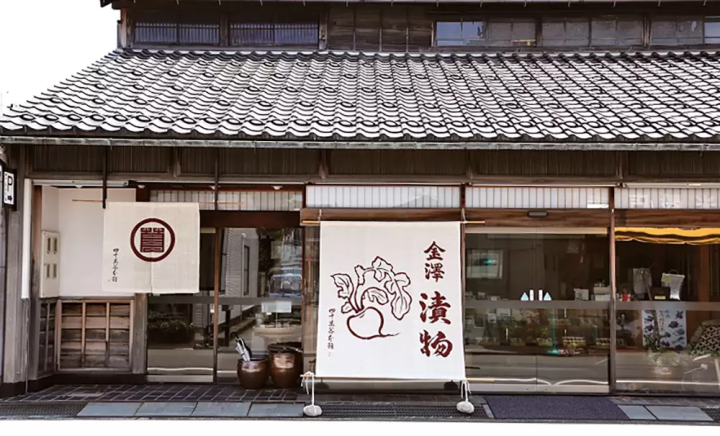
The main store in Yayoi, Kanazawa City is a traditional townhouse built about 150 years ago, with thick red pine beams giving it a stately and imposing appearance. Located in an Important Preservation District for Traditional Buildings, the space itself tells the story of history, transporting visitors back in time.
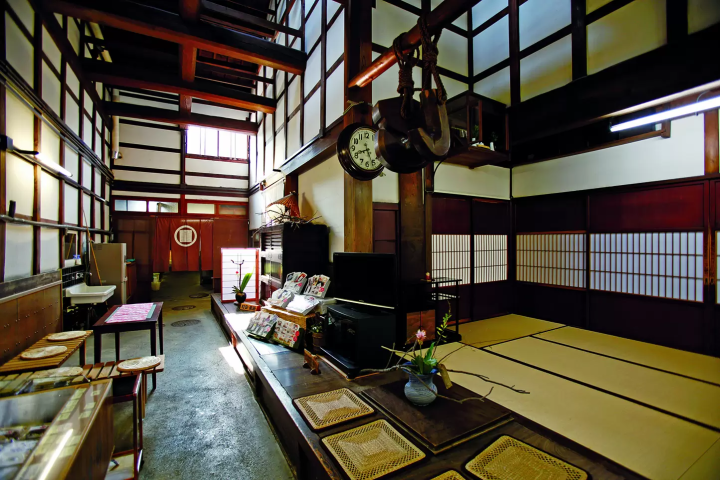
It is located in an area of Kanazawa where many historic temples and buildings remain.
At the attached cafe, you can enjoy fermented dishes using the company's own products, as well as reservation-only lunches , and you can also experience a pickle-making workshop in the charming townhouse space , making it a place where travelers can "eat, learn, and experience."
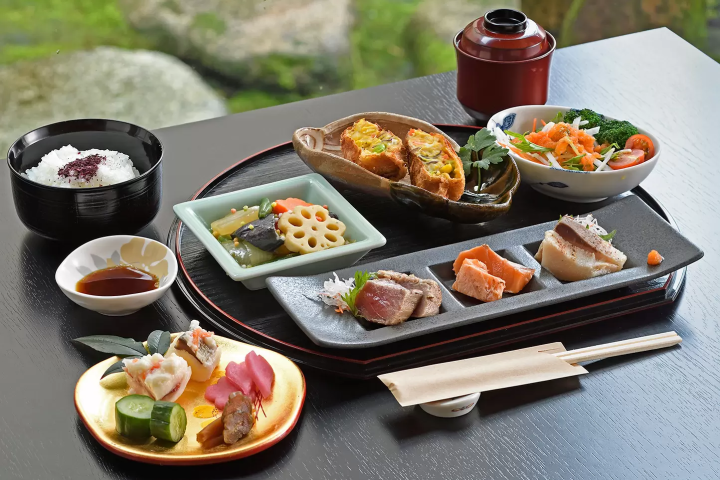
A special lunch is served on specific days about once a week, and reservations are required. You can enjoy lunch made with fermented foods and pickles from Shijimaya Honpo.
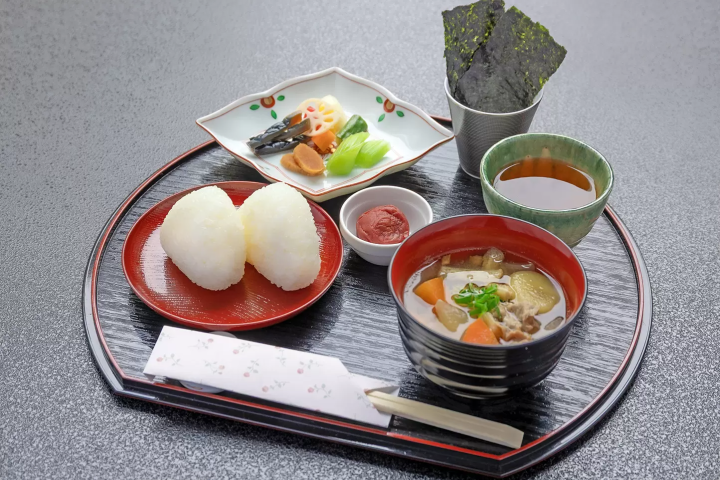
There is also a wide selection of cafe menus and meals available, including rice balls, miso soup, and a set of four pickles, which can be enjoyed without a reservation.
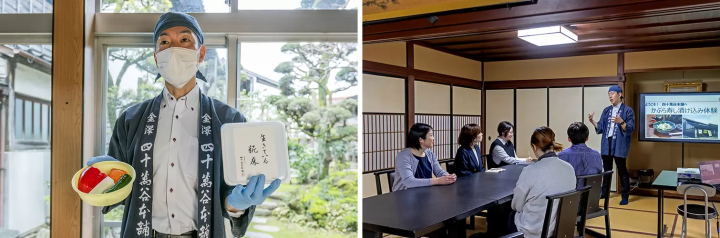
Hands-on workshops such as the "Kabura zushi Experience Class" are held in November and from January to March, and the "Nukazuke Experience Class" and "Koji Pickle Experience Class" are held from April to October. Before the practical classes, there is also a lecture on Kanazawa's fermentation culture, and by reservation you can have a valuable experience that combines sightseeing and learning.
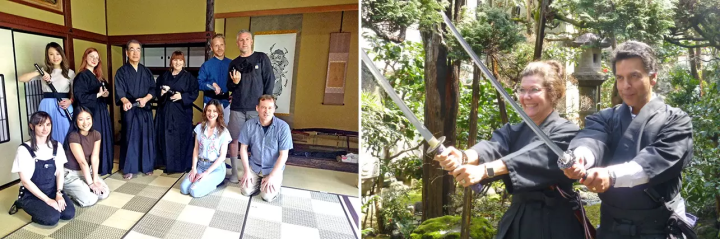
Apart from the pickling experience, the "Samurai and Townspeople Culture Experience" is also popular, and it seems that even foreign celebrities secretly visit. "Shijimaya Honpo" has been doing business in Kanazawa, a place where samurai culture is deeply rooted in daily life, and has inherited townspeople culture through the generations. On the other hand, due to the fact that the family married into a samurai family and the head of the family is of samurai descent, the influence of samurai culture is still alive in their daily lives, and so they are running these experiential workshops.
Shijimaya Honpo Main Store
1-17-28 Yayoi , Kanazawa City
TEL 076-241-3122
[Business hours] 9:00-18:00, Cafe 9:00-16:30 last order
[Closed] Sundays
[access]
◆Approximately 2 hours and 30 minutes from Tokyo to Kanazawa Station on the Hokuriku Shinkansen
Bus: From JR Kanazawa Station, take the bus via Izumino 3-chome and get off at "Numata Town", then walk 5 minutes from the Numata Town stop
Taxi: Approximately 15 minutes from JR Kanazawa Station
The wonder of fermentation using sake lees - Gosakuso, Takahama Town , Oi District , Fukui Prefecture
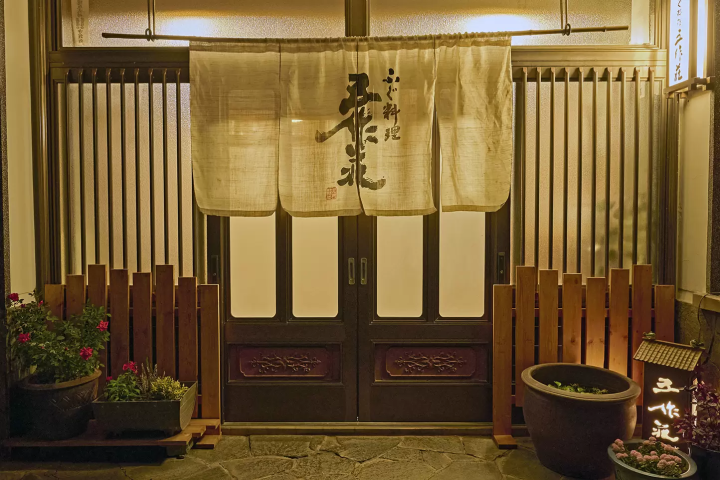
Gosakuso, a ryokan inn located near Wakasa Bay in Takahama Takahama Town , Fukui Prefecture , is known as a renowned restaurant for its pufferfish dishes . Wakasa Bay is the northernmost tiger pufferfish farming area in Japan, and Wakasa Fugu is a brand of tiger pufferfish farmed in Wakasa Bay . Wakasa Fugu, which is raised in the clean waters and warm waters of the Sea of Nihon Sea , has firm flesh and is renowned for its quality, which is comparable to that of wild pufferfish.
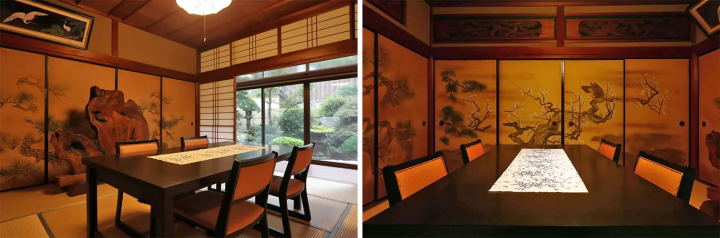
The elegant dining space of the ryokan inn Gosakuso. You can book a stay that includes a pufferfish course, or just a meal.
The name "Gosakuso" comes from the name of the first owner, Gosaku Imai, who was the great-grandfather of the fourth-generation owner , Yusuke Imai. Gosaku Imai was the man who successfully established "chikuyo" (stock farming) in Wakasa Bay and laid the foundation for today's pufferfish farming .
The season when pufferfish are delicious is said to be "from the autumn equinox to the spring equinox," and pufferfish caught out of season were deemed worthless and discarded on the sea or beach. In the Wakasa region, pufferfish caught in fixed nets and gill nets from April to May were a nuisance, biting through the nets and destroying the fishermen's valuable tools, but Gosaku Imai took notice of this.
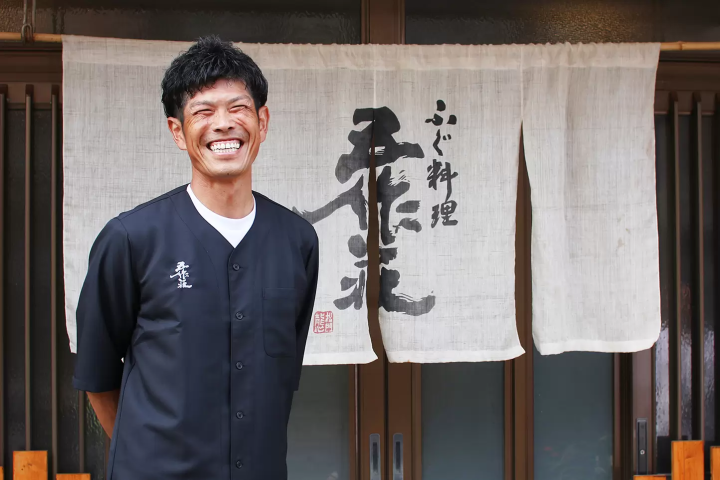
Yusuke Imai, the fourth generation owner of Gosakuso.
In 1953 (Showa 28), Gosaku wondered if there was a way to keep pufferfish caught in the spring alive until winter, and approached the Fisheries Experimental Station for advice, but was told that at the time there was no precedent for keeping pufferfish alive through the summer anywhere in Japan. However, he did not give up, and attempted to raise wild pufferfish caught in Wakasa Bay in an enclosure in the ocean. At first, he failed repeatedly, but in the fourth year, his efforts bore fruit, and he succeeded in "farming" tiger pufferfish caught in fixed nets in early spring, by raising them in an enclosure made of wire mesh in a part of the ocean .
This "farming" led to the development of technology to artificially raise fry in Wakasa Bay , and in Showa , Fukui Prefecture began a test farming experiment to raise fry in Uchiura Bay Takahama Town , and tiger pufferfish farming subsequently spread throughout Wakasa Bay. Gosaku Imai can be considered the father of "Wakasa pufferfish."
Chikuyo Farmed pufferfish allows you to enjoy delicious pufferfish all year round
There are many restaurants that serve farmed Wakasa fugu, but most of them only serve it in the winter. However, Gosakuso uses farming techniques to provide fresh and delicious fugu dishes all year round , and you can enjoy them whether you're staying overnight or just coming for a day trip.
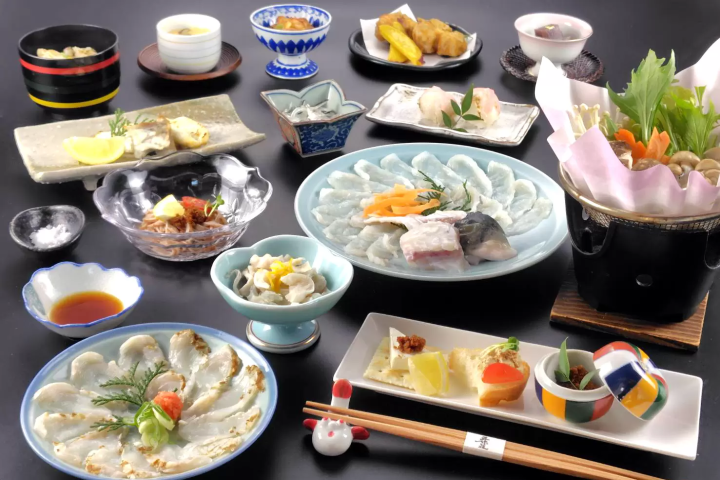
Gosakuso's full course menu allows you to enjoy a wide variety of fugu dishes, including sashimi, hotpot, and fried fugu. Gosakuso's farmed fugu are raised in cold seawater, which means they have a firmer texture and more flavor than farmed fugu.
Fugu is a high-class Japanese delicacy beloved by gourmets for its unique chewy texture and rich flavor. It is enjoyed in a variety of ways, including as sashimi, in a hotpot (tetchiri), or deep-fried. The soft roe of male Shirako is known as a top-class delicacy due to its creamy and rich flavor. It is high in protein, low in fat, and contains collagen, making it good for beauty and health.
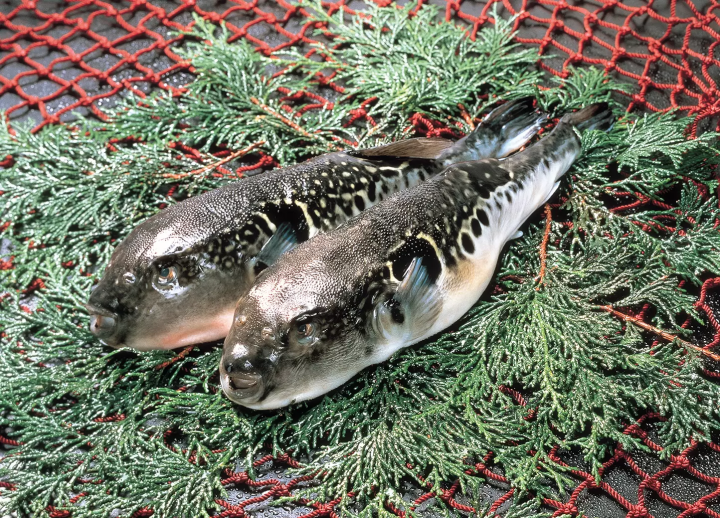
Fugu has been eaten in Japan since ancient times, but depending on the species and part of the fish, it contains a deadly poison called tetrodotoxin. Because it can be fatal if hit, it is likened to a "gun," and sashimi is called "tessa" and hotpot is called "tetchiri." Because it is necessary to accurately understand the location of the poison and the type of fugu, and to prepare and serve it for consumption, only chefs with a "fugu chef's license" can prepare it. Of course, at Gosakuso, you can eat it with peace of mind.
"Fukujyu" is a miraculous taste that takes three years to develop
At Gosakuso, you can enjoy the finest pufferfish dishes, but one dish you should definitely try is the pufferfish ovaries pickled in sake lees . Normally, pufferfish ovaries are highly poisonous and cannot be eaten, but the first owner, Gosaku Imai, applied the wisdom of nearby fishermen who had been preserving fish by fermenting them using the method of "heshiko," and through trial and error, he succeeded in detoxifying the ovaries.
*In Fukui Prefecture, a fermented preserved food made by salting blue fish such as mackerel and then pickling them in rice bran for a long period of time is also widely enjoyed, and in some areas of Ishikawa Prefecture, there is a local dish in which pufferfish ovaries are pickled in salt and rice bran to detoxify them.
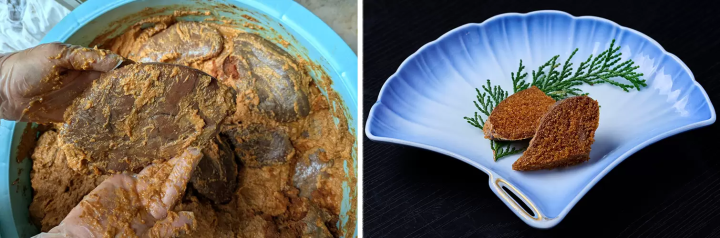
The manufacturing method is truly unique, first pickling the pufferfish ovaries in salt for two years, then soaking them in sake lees for another year . It takes three years from preparation to completion. After more than 1,000 nights of aging, the poison-free pufferfish ovaries are finally ready to eat. The amber-colored pufferfish ovaries are not just detoxified, but have also been elevated to a delicacy with a rich, deep flavor. It is truly a miraculous fermented food, and was named "Fukujyu" (fortune jewels) after the 1,000 nights of aging .
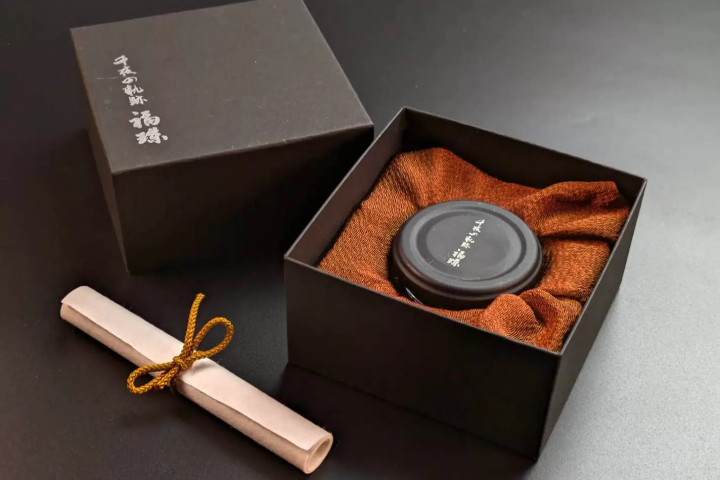
The trail of one night, Fukujyu has been commercialized and is available for purchase.
It can be enjoyed in a variety of ways, such as as a snack with sake, with rice, as a seasoning for pasta, or mixed with cream cheese. It is soaked in the pure rice daiginjo sake lees of "Bon," a renowned sake from Fukui Prefecture , so the pure, clear aroma and deep flavor of the sake lees blends with the wild pufferfish ovaries to create an exquisite flavor. It goes perfectly with "Bon" sake, of course!
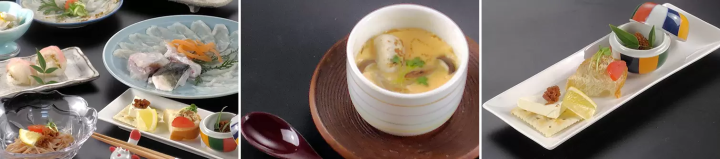
The course menu also includes dishes made with Fukujyu, such as appetizers, pasta, and chawan-mushi.
Fugu is also known as "fuku" (meaning happiness), and is known as an auspicious fish. Fukudama, which takes three years to prepare from the ovaries of the fish, is the culmination of Gosaku's lifelong challenge and is now a treasure of Wakasa. When the amber-colored grains dissolve on the tongue, the rich flavor and aroma of sake lees spread, and you can experience the moment when you are enveloped in the mystery of fermentation. A visit to Gosakuso will not only allow you to savor fugu cuisine, but will also be a journey that will expose you to the depths of the fermentation culture that is rooted in the Hokuriku region and the history of challenge .
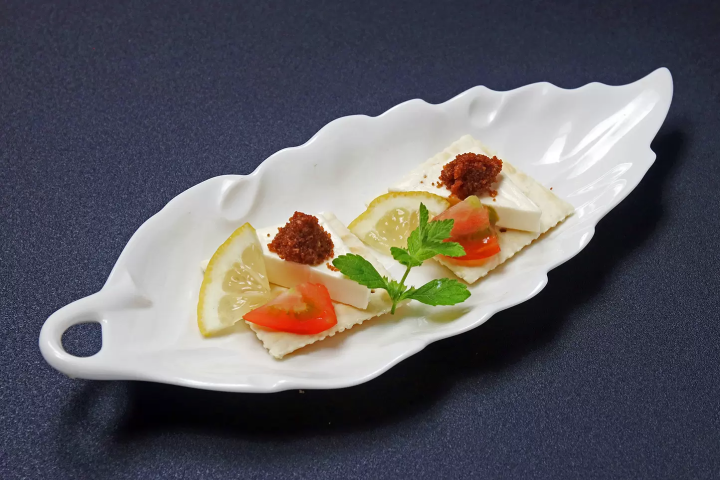
It has a salty and rich flavor that makes an impact even with a small amount. The elegant aroma of sake lees spreads in your mouth when you put it in your mouth, and it goes well with cheese.
Fugu Cuisine Gosakuso
131-16-1 Wada, Takahama-cho , Takahama Town, Fukui Prefecture
TEL 0770-72-0164
[Check-in] 16:00-18:00
[Check-out] ~10:00
[Business hours] Lunch from 11:00, Dinner from 17:00
[Closed] Irregular holidays *Reservations required
[access]
◆Approximately 2 hours and 30 minutes from Tokyo to Tsuruga Station on the Hokuriku Shinkansen
Approximately 1 hour and 30 minutes from JR Tsuruga Station to Wakasa Wada Station, then 5 minutes by car from Wakasa Wada Station
◆Approximately 1 hour and 20 minutes from Osaka to JR Tsuruga Station by Thunderbird Express
Approximately 1 hour and 30 minutes from JR Tsuruga Station to Wakasa Wada Station, then 5 minutes by car from Wakasa Wada Station
◆ 12 minutes by car from Oi Takahama IC on the Wakasa Maizuru Expressway
A trip to Hokuriku to discover the mysteries of fermentation
The world is paying close attention to Japan's fermented foods and culture, including its national alcoholic beverage, sake, and its national fungus, koji (Aspergillus oryzae). Chefs around the world are now preparing their own amazake (sweet sake) and fermented seasonings using Japanese koji. Fermentation is not simply a cooking technique; it is a culture woven together with the local climate, the wisdom of the people, and time. The wisdom and challenges of fermentation encountered in Toyama, Ishikawa, and Fukui are sure to leave a lasting impression on the hearts and palates of visitors.
We are working to enliven the entire Hokuriku area.
The contents on this page may partially contain automatic translation.
Special Features
More









![[Shinjuku Girls' Trip] 4 Recommended Shops for Women at Odakyu Ace!](https://resources.matcha-jp.com/resize/720x2000/2026/05/11-263877.webp)
![[Close to Chubu Centrair International Airport] Tokoname's beloved "town milk"](https://resources.matcha-jp.com/resize/720x2000/2026/01/30-257067.webp)