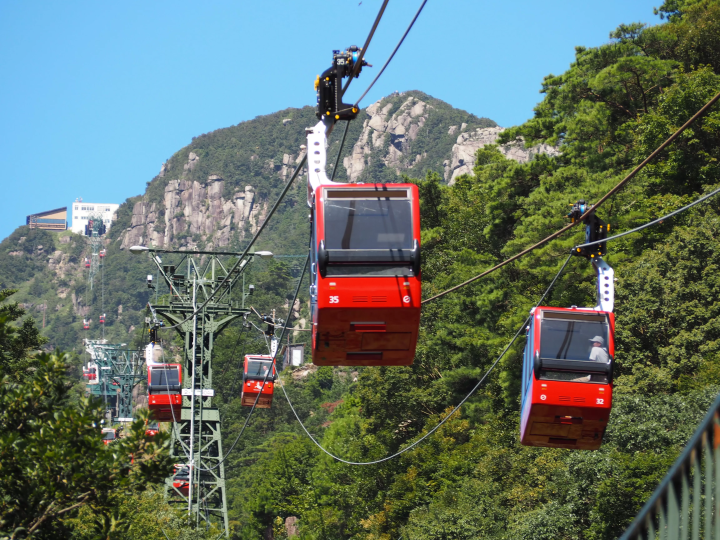
A trip around Wakasa and the Mikata Five Lakes - Five ways to experience the five-colored lakes and the Hara scenery of Japan -
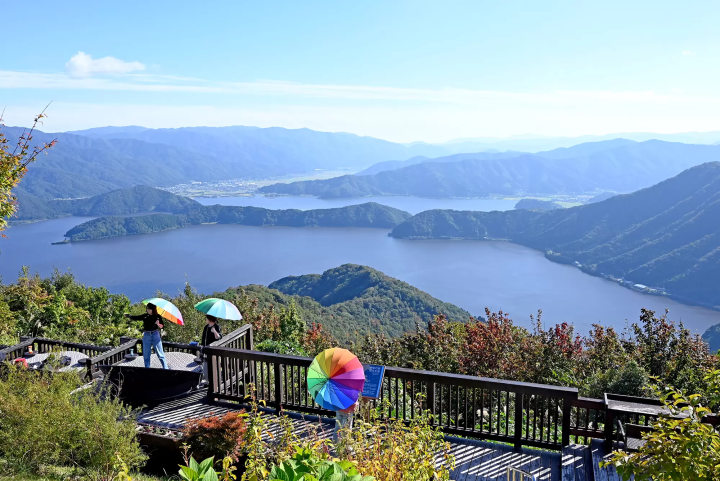
The Wakasa area in southern Fukui Prefecture, overlooking Wakasa Bay, features a diverse landscape of sea, mountains and lakes — with the lakes themselves often described as “glowing in five colours.” This article introduces a journey centered around the Mikata Five Lakes, spanning Mihama Town and Wakasa Town in Fukui Prefecture.

This service includes sponsored advertisements.
-
Table of Contents
- A journey through Wakasa starting from Tsuruga
- Five ways to enjoy the Mikata Five Lakes to satisfy all your senses
- 1. Gokoichi Cycling - A cycling trip to experience the Mikata Five Lakes with all your senses
- 2. Fukui Prefecture Varve Museum — A "70,000-Year Ruler" Measuring Time Around the World
- 3. Food and accommodation in Wakasa, "Miketsukuni" - A journey to savor the bounty of the lake and sea
- 4. Rainbow Line - A 360-degree panoramic view of five lakes
- 5. Mikata Five Lakes Nature Cruise — Set off on a lake tale on a battery-powered sightseeing boat
- Trip Summary
A journey through Wakasa starting from Tsuruga
The Wakasa region is home to many appealing tourist destinations. With the extension of the Hokuriku Shinkansen to Tsuruga Station in 2024, access from Tokyo and Kanazawa has been greatly enhanced, and travel from the Kansai and Chūkyō regions is now more convenient as well.This has made the area a popular destination for international travelers. In front of Tsuruga Station is Tsuruga Polt Square otta, which offers hotels, restaurants, and shops. Buses, taxis, and rental cars to the city are readily available, this makes Tsuruga Station an ideal base for sightseeing in the Wakasa region. Tsuruga City is also home to attractive spots such as Kehi Shrine, Tsuruga Red Brick Warehouse, and Kehi no Matsubara, making it a great starting point for a trip to Mikatagoko Lakes and the wider Wakasa area.
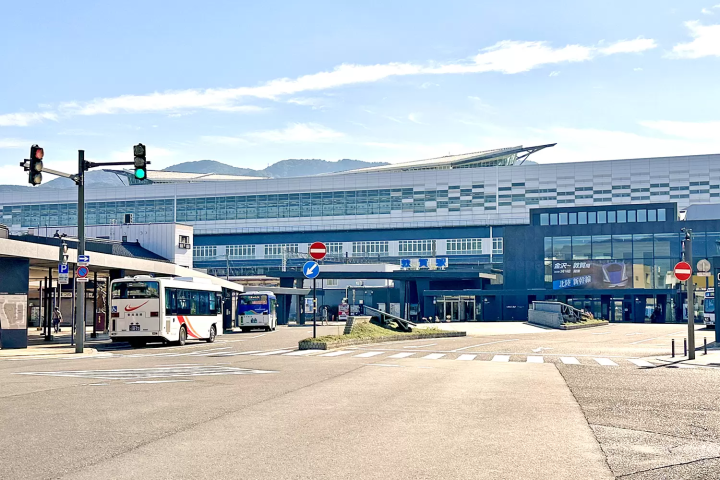
Tsuruga Station, where the Hokuriku Shinkansen line will be extended in 2024, is the starting point for travel in the Wakasa area and is easily accessible from Tokyo, the Kansai region, and the Chukyo region.
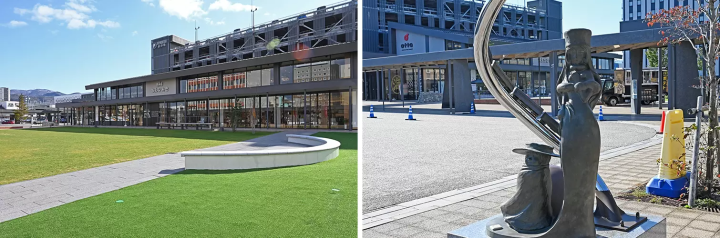
TSURUGA POLT SQUARE otta and the plaza in front of Tsuruga Station were developed in preparation for the opening of the Shinkansen in 2024. The main shopping street that connects Tsuruga Station to Kehi Shrine is lined with monuments of manga artist Matsumoto Matsumoto's masterpieces.
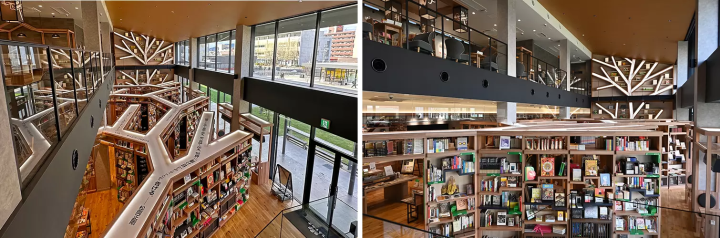
While you're waiting for your train, we recommend visiting Chienamiki, a bookstore with a cafe attached, located in Otta in front of the station.
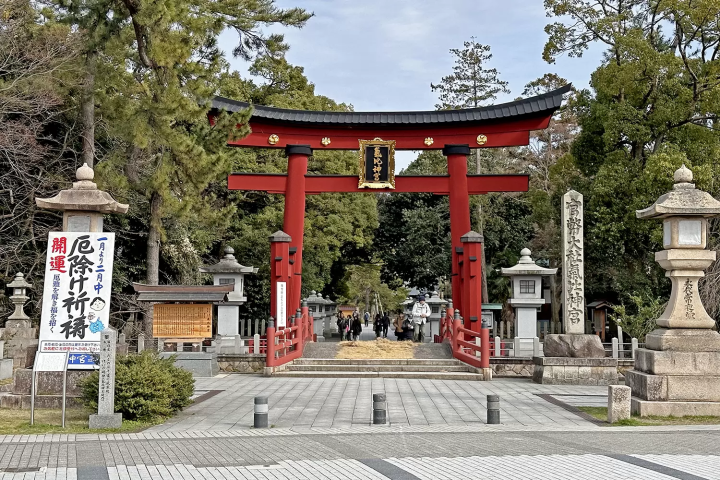
Kehi Shrine is the main shrine of the Hokuriku region and the Ichinomiya of Echizen Province. Its bright red torii gate is one of Japan's three largest wooden torii gates.
Access to Tsuruga Station and Mikata Five Lakes
To Tsuruga Station
Tokyo Station - Tsuruga Station: Approximately 3 hours and 10 minutes on the Hokuriku Shinkansen
Kyoto Station - Tsuruga Station: Approximately 50 minutes on the Hokuriku Main Line Thunderbird
Nagoya Station - Tsuruga Station: Approximately 1 hour by Shinkansen and limited express
To Mihama Station (the nearest station to Mikata Five Lakes)
Tsuruga Station - Mihama Station: Approximately 20 minutes on the JR Obama
If you are driving, take the Meishin Expressway and Hokuriku Expressway and get off at Mihama IC on the Maizuru Wakasa Expressway.
Gokoichi Bus: Operates between Tsuruga Station, Mihama Station, and tourist spots on Saturdays, Sundays, and public holidays only
(Until November 24, 2025; please check for operation from 2026 onwards)
https://www.pref.fukui.lg.jp/doc/n-kankou-chiiki/202504gokoichi-bus.html
Five ways to enjoy the Mikata Five Lakes to satisfy all your senses
It's only a 20-minute ride on the JR Obama from Tsuruga Station to JR Mihama Station, the closest station to the Mikata Five Lakes. The Mikata Five Lakes are a collective name for five lakes straddling the Mihama Town and Wakasa Town in Fukui Prefecture , where freshwater and seawater mix. Because each lake differs in water quality and depth, they display distinct shades of blue, which is why they are collectively nicknamed the “Five-Colored Lakes." This scenic spot is a representative feature of Wakasa Bay Bay Quasi-National Park, and was registered as a Wetland of International Importance under the Ramsar Convention in 2005. The Mikata Five Lakes region presents a wealth of experiences: scenic waterside villages, fishing communities along both sea and lakeshore, ancient lake-bed sediments dating back 70,000 years (used by scientists to chart Earth’s history), and a distinctive local cuisine. Together, these attractions appeal to all the senses of any traveller.
The five lakes of Mikata Five Lakes
Lake Mikata: The southernmost lake and the only freshwater lake into which five rivers flow.
Lake Kugushiko: A brackish lake that is constantly receiving seawater because it is connected to the Nihon Sea via the Hayase River. The largest number of fish species have been confirmed among the Mikata Five Lakes.
Hyuga Hirugako: Connected to the Nihon Sea and with no rivers flowing into it, this saltwater lake has the highest salinity of any of the Mikata Five Lakes. It is home to farms for yellowtail, pufferfish, and other fish.
Lake Suigetsu: The largest lake in Mikata Five Lakes. It is a deep, brackish lake where seawater and freshwater mix, and where the world-standard varves were discovered.
Lake Sugako: The smallest brackish lake among the Mikata Five Lakes. Because it is less affected by seasonal winds, many wild birds can be observed flying in during the winter.
1. Gokoichi Cycling - A cycling trip to experience the Mikata Five Lakes with all your senses
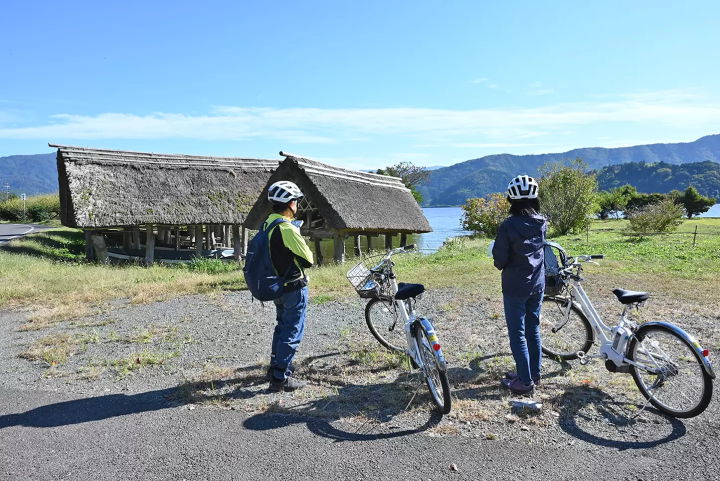
There's no better way to experience the charms of Mikata Five Lakes than by cycling. The sparkle of the lake's surface, the smell of the wind, the chirping of birds, and the presence of local people—things that are hard to notice from a car—are all part of the scenery of Mikata Five Lakes as you cycle along the lakeside paths. The Wakasa Mihama Tourism Association, located inside JR Mihama Station, rents out electric-assist bicycles and road bikes, and also offers Gokoichi Cycling tours led by local guides. Guides are well-versed in the region's nature, history, and culture, and cycling tours will enrich your experience as you listen to stories that will enrich your trip, such as the origins of the lakes, their background as a plum-producing region, and the unusual topography that connects the lakes to the Sea of Nihon Sea.
The Wakasa Mihama Tourism Association is a convenient base for tourist information and advice on accommodation and activities, so we recommend not only cycling, but also gathering information on the official website from the trip planning stage, or stopping by at the start of your trip.
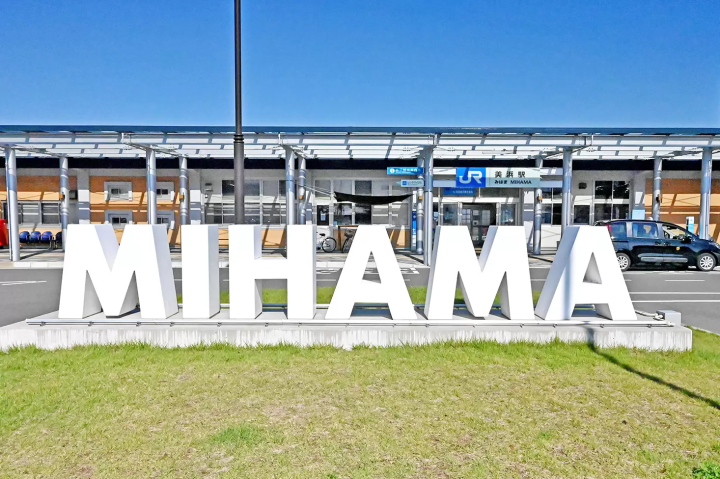
Mihama Station is a 20-minute train ride from Tsuruga Station. There is also a parking lot for those arriving by car.
Gokoichi Cycling
This guided cycling route covers approximately 30 km around the Mikata Five Lakes and takes about 4-5 hours. With a guide you can relax and enjoy the scenery without worry, pausing at key scenic viewpoints and historic sites.
• Lunch included plan (30km, approximately 4-5 hours) Price: 11,000 yen (tax included) / person Minimum number of participants: 2 people
Plan with coffee on the lakeside (30km, approx. 4-5 hours) Price: From 4,500 yen/person Minimum number of participants: 2 people
Trial plan (10-20km, approximately 3 hours) Price: 3,700 yen/person Minimum number of participants: 2 people
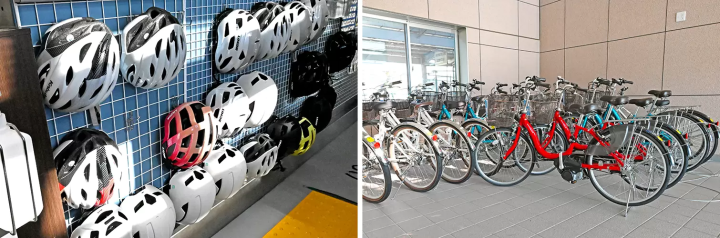
Cycling reservations can be made at the Wakasa Mihama Tourism Association counter located inside the station building.
Experience the charm of each season while cycling
The five lakes of Mikata Five Lakes each have different water colors and surrounding environments, and the scenery changes every time you ride, which is one of the attractions.
Spring: Plum blossoms bloom along the lakeside, creating a paradise-like atmosphere
Early summer: Plum harvest season, with a sweet and sour scent carried on the breeze.
Autumn: The autumn colors of the mountains reflected on the lake surface are popular among photography enthusiasts.
Winter: Snow-capped mountains and tranquil lakes are enveloped in a mystical silence.
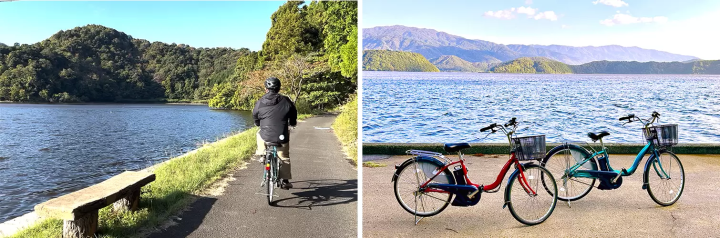
This is Lake Suigetsu, where varves were discovered. The surrounding scenery and environment of each of the five lakes are different, and you can easily see their characteristics by touring them with a guide.
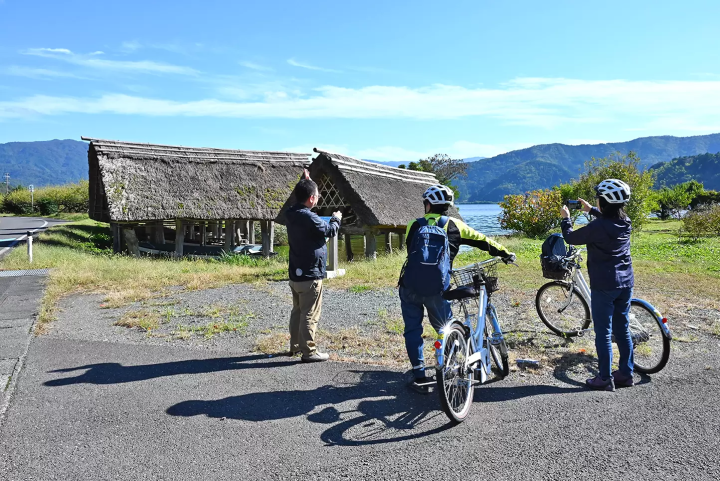
The thatched-roof buildings scattered along the lakeside are boathouses that housed boats used to travel between plum orchards and rice paddies and to ship harvests.
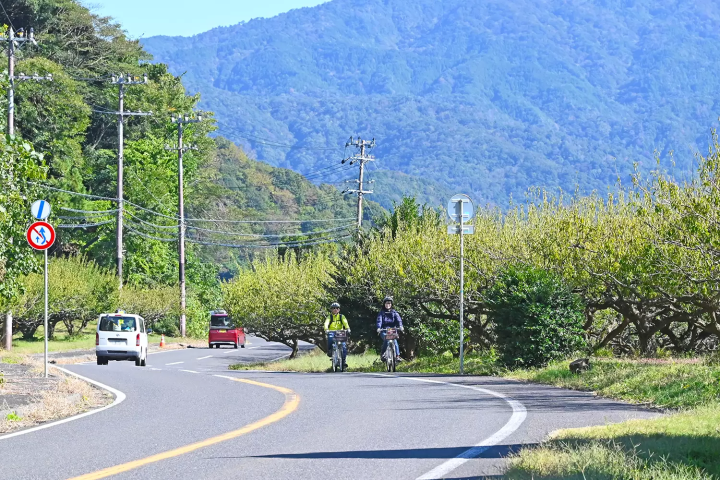
Plum production is thriving, and many plum trees are planted along the lakeside.
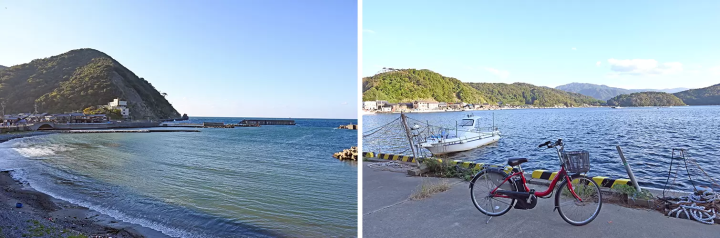
The image on the left shows Wakasa Bay, while the image on the right shows Lake Hyuga (Hirugako). Directly connected to the bay, Lake Hyuga has the highest salt concentration among the Mikata Five Lakes, and its shores are lined with guesthouses and fishermen's houses, creating the atmosphere of a traditional fishing village.
Wakasa Mihama Tourism Association
35-7 Matsubara, Mihama Town, Fukui Prefecture (inside JR Mihama Station)
TEL: 0770-32-0222 (reception hours: 8:30-17:15)
2. Fukui Prefecture Varve Museum — A "70,000-Year Ruler" Measuring Time Around the World
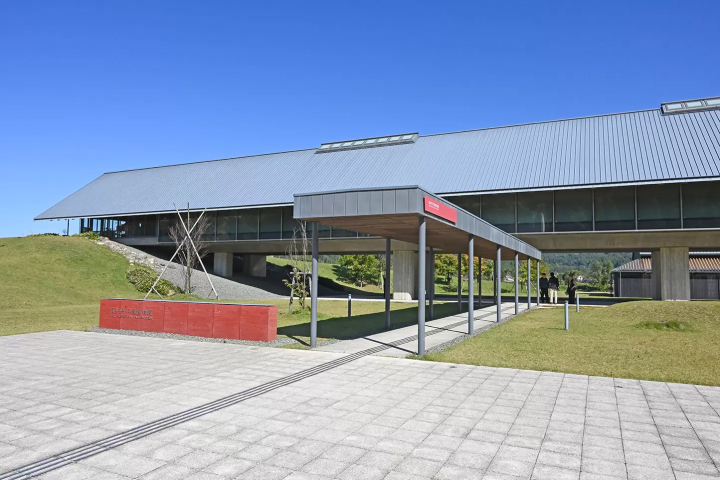
Among the Mikata Five Lakes, Lake Suigetsu is a special lake. Discovered here are 70,000 years of varves—striped layers of rock that have accumulated on the lakebed over the years, also known as the Earth's tree rings. These varves have been adopted as the international dating standard, IntCal, and are used in historical and scientific research worldwide. The Fukui Prefecture Varve Museum, which opened in 2018, exhibits and showcases these varves. Varves not only serve as a "ruler" for geological time, but also as the ultimate "recorder" of past events, recording them year by year. This experiential museum, with its fascinating exhibits that broaden perspectives from the lake to world history, is enjoyable for adults and children alike, even if you're not a science buff. English signage and multilingual audio guides are available, making it popular with international visitors.
Highlights
• Display of actual varve cores
Learn how varves serve as a "ruler" for determining historical dates
•Video exhibit showing the changes in the lake and its surrounding natural environment
•Introducing the topography and ecosystem of Mikata Five Lakes Geopark
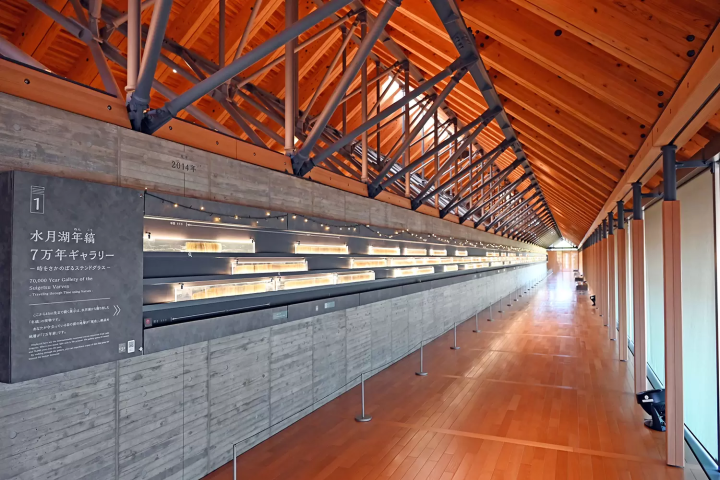
The highlight is the Lake Suigetsu 70,000 Years of Varves Gallery, which displays varves excavated from the bottom of Lake Suigetsu to a depth of 45m horizontally!
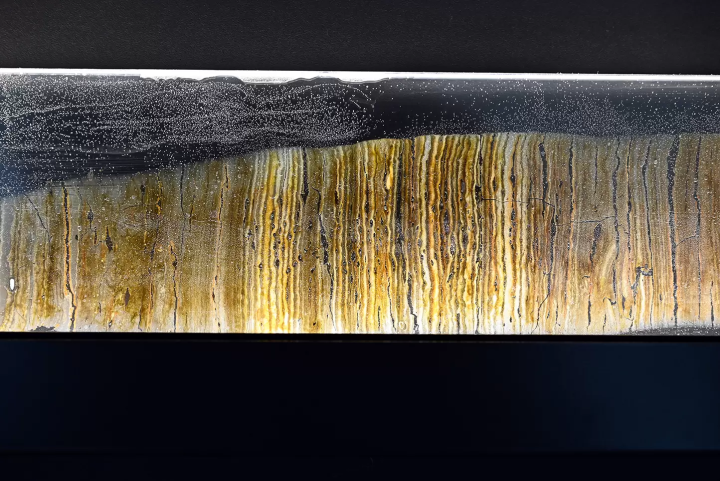
This stained glass piece is made from varves that have been sliced and polished using special techniques to be thin enough for light to pass through, then set into glass. The varves of Lake Suigetsu record the history of climate change and natural disasters from approximately 70,000 years ago to the present, and the pollen contained in the varves not only reveals the past vegetation of the surrounding area, but also serves as a ruler that can accurately determine the age of fossils and artifacts excavated around the world.
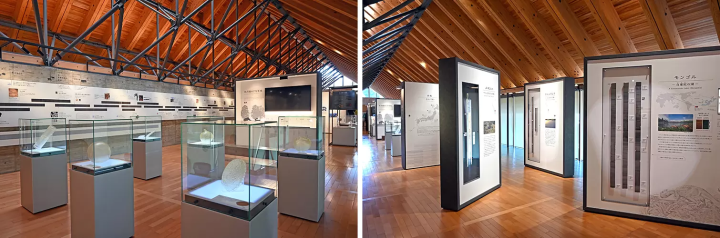
The permanent exhibition provides an easy-to-understand introduction to the history of how the world's best varves were cultivated. Varves collected from all over the world are also on display, so you might even be able to find varves from your own country!
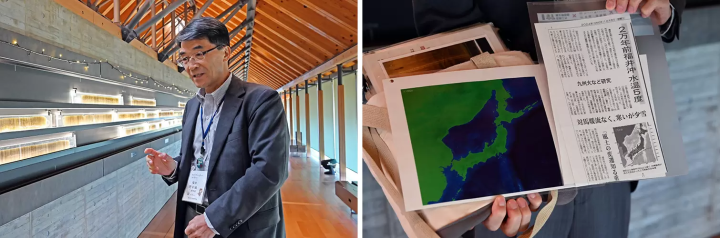
You can learn more about varves and the region by listening to explanations from a guide who will provide free commentary.
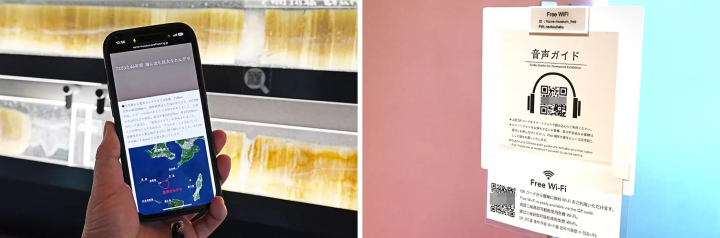
By scanning the QR code with your smartphone, you can access multilingual commentary displays and audio guides.
Fukui Prefecture Varve Museum
122-12-1 Torihama, Wakasa- Wakasa Town, Fukui Prefecture Prefecture (inside Jomon Roman Park)
TEL 0770-45-0456
[Open] 9:00-17:00 (last entry 16:30)
Closed: Tuesdays (closed the following day if Tuesday is a public holiday), New Year's holidays (12/29-1/2)
*Open during Golden Week and summer vacation
[Fee] 500 yen, 200 yen for elementary, junior high and high school students
https://varve-museum.pref.fukui.lg.jp
3. Food and accommodation in Wakasa, "Miketsukuni" - A journey to savor the bounty of the lake and sea
Overlooking the Nihon Sea and blessed with abundant nature, the Wakasa region has been known as "Miketsukuni" (provinces that supplied food to the imperial court) since ancient times, transporting Toyotomi ingredients such as salt and seafood to the capital and supporting the capital's food culture. The Mikata Five Lakes, with their unique geography, where the lake and the sea are located close together, also boast a particularly rich food culture. A wide variety of seafood inhabits the freshwater, brackish, and saltwater lakes, with eel and clams being some of the region's most famous products. Yellowtail, crab, pufferfish, and many other fish species are caught from the Nihon Sea. The region is also known for its specialty product, "heshiko," made by fermenting mackerel in salt and rice bran, and for its plums. Enjoying the local food culture is one of the joys of travel, so be sure to enjoy it to your heart's content at restaurants, inns, and hotels.
Isoya: A small inn that focuses on food and ingredients
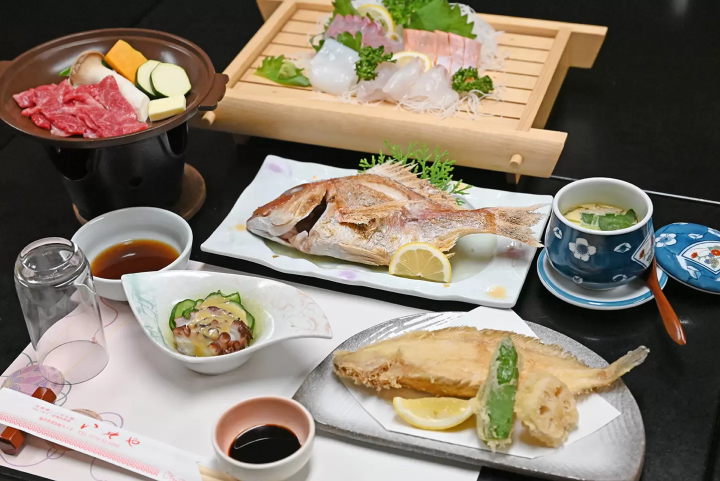
Situated beside Lake Kugushi and the Sea of Japan, Isoya is a hotel celebrated for its cuisine and is just a minute’s walk from a beautiful beach. This homey Japanese-style inn, run by a married couple, features a well-maintained courtyard, a sukiya-mon gate, and a tranquil Japanese atmosphere, all of which will put your heart at ease with its hospitality. While you can stay overnight, we recommend choosing a plan that includes dinner and breakfast, which are carefully prepared with carefully selected ingredients, as simply staying overnight would be a waste. The hotel's focus on seasonal seafood, home-grown vegetables, and wild clams from Lake Kugushiko are highlighted by its careful preparation and seasoning. This is a recommended inn for those who want to sample the bounty of Wakasa's seafood and lake.
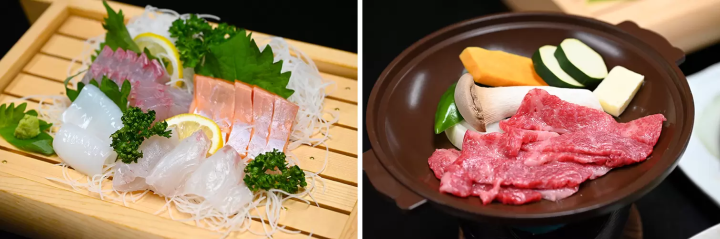
Enjoy a dinner packed with seafood. In addition to the Toyotomi fish species caught in the nearby waters, the Fukui brand Fukui Salmon farmed in Wakasa Bay is delicious with its elegant, melt-in-your-mouth fat. In addition to the basic course, meal plans also include the option to add Wagyu beef, and vegetarian options are available with prior consultation.
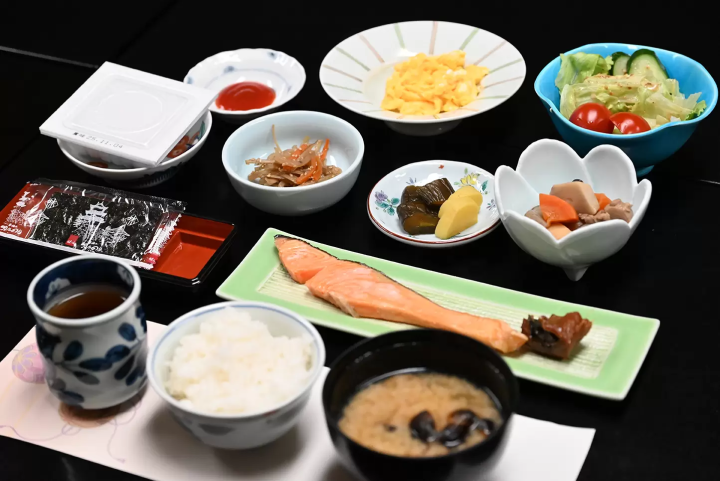
Breakfast is also one of the pleasures at Isoya. The menu is centered around rice, miso soup, and grilled fish, and is typical of a Japanese inn breakfast.
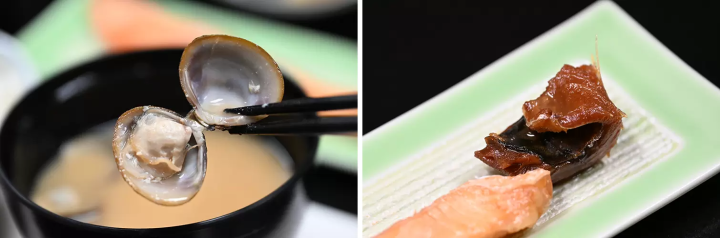
The miso soup, made with wild clams collected by the innkeeper himself and homemade miso, is exquisite. Heshiko, made by pickling mackerel in salt and rice bran, then fermenting and aging it, is one of Wakasa's traditional foods.
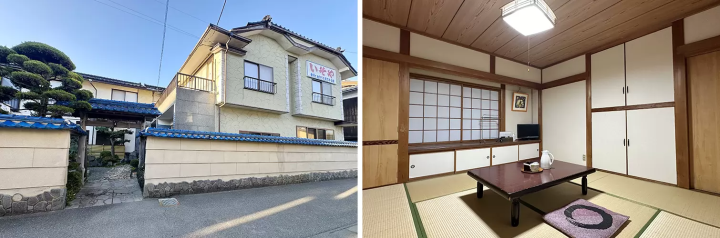
Isoya is seeing an increase in the number of foreign tourists, and sleeping on a futon on tatami mats is a great way to experience Japanese culture.
Isoya, a small inn that focuses on food and ingredients
17-1 Kukuko , Mihama Town, Fukui Prefecture
TEL 0770-32-0263
Check-in from 15:00
Check-out until 10:00
"Unagiya Genyomon" is a famous restaurant serving locally specialty eel.
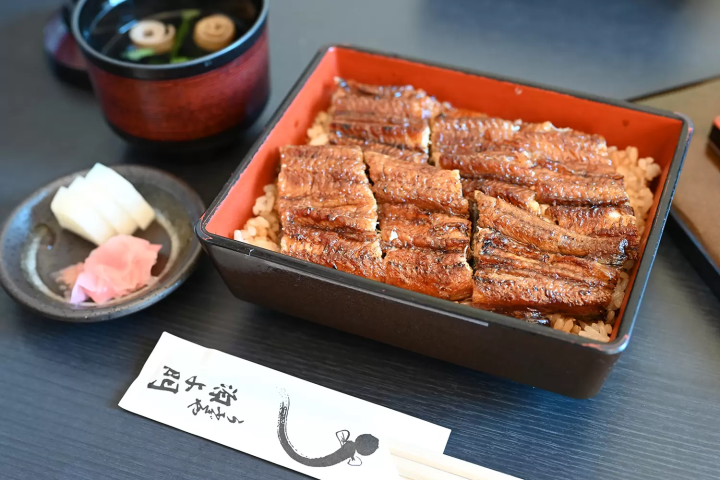
"Unagi-ya Genyomon" is a long-established eel specialty restaurant where you can enjoy "narrow-mouthed blue eels," wild eels from Lake Mikata, especially during the fishing season from May to November. Compared to regular eels, "narrow-mouthed blue eels" have a slightly bluer surface, a thicker and longer tail, and a thin, pointed snout. It's said that their narrow mouths come from their penchant for feeding on sandworms, and their appearance earned them the nickname "narrow-mouthed blue eels." The flesh is firm and richly flavored, with a depth that's quite different from regular eels. Furthermore, at "Unagi-ya Genyomon," the eels are kept fresh in "Kirasan Water," an underground water sourced from Mt. Kira, the mountain behind the restaurant, to bring out the natural flavor of the ingredients. The eel is grilled instead of steamed, resulting in plump flesh and crispy, fragrant skin. November is the season when the eel is at its fattiest.
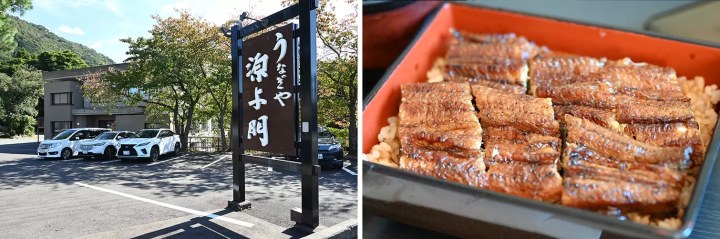
Located near Lake Mikata, Unagiya Genyomon is a long-established eel specialty restaurant that has been in business for four generations. The Unaju, topped with plump, fragrantly grilled eel, comes with soup and pickles. You can choose the portion size from six slices of the whole eel or three slices of half the eel.
Unagiya Genyomon
52-6 Mikata, Wakasa-cho, Mikata- Wakasa Town, Fukui Prefecture
TEL 0770-45-0035
[Business hours] 11:00-13:30
[Closed] Thursdays
Ajiikkyu, a Japanese restaurant with a spectacular view of the lake
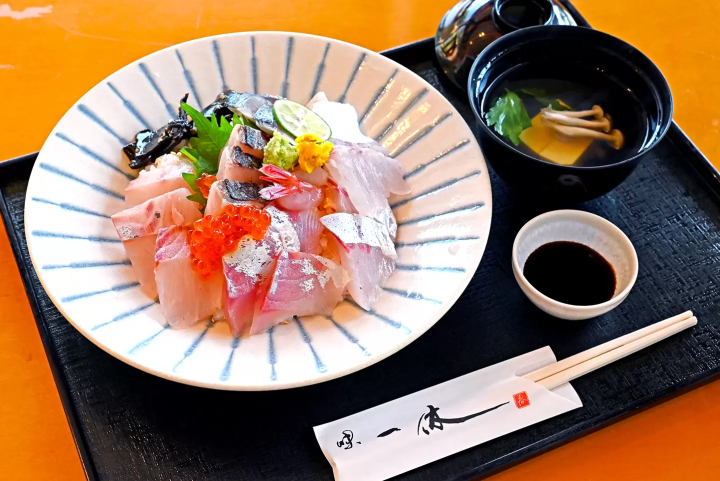
Aji Ikkyu is a Japanese Fukui where you can enjoy the seasonal flavors of Fukui, including charcoal-grilled eel, seasonal fish, Mihama , and in winter, high-quality, firm-fleshed tiger pufferfish, Echizen crab, and yellowtail raised in Wakasa Bay . With Lake Kugushi stretching out beyond the windows, both the food and the view will enhance your trip. The dishes are presented with a Japanese aesthetic sense, and a selection of local sake, including Hayaseura, is available. Private rooms are available for small groups, and the restaurant is also perfect for banquets and parties. The lunch-only Kaisendon (seafood bowl) is packed with locally caught seasonal seafood, and the Tempura Donburi (tempura bowl) is also popular and generously sized. Be sure to try local specialties such as Wakasa Guji ( Wakasa shad) and Heshiko (fish shad).
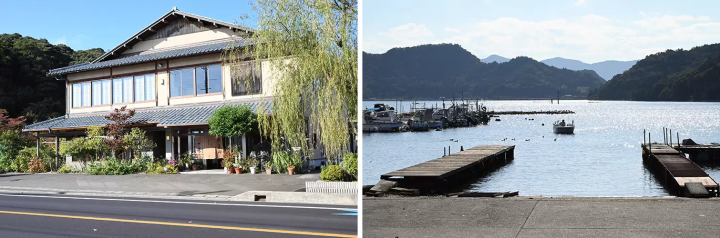
Live fish dishes Ajiikkyu
80-3 Kukuko , Mihama Town, Fukui Prefecture
TEL 0770-32-0152
[Business hours] 11:00-14:00, reservation required for dinner 17:00-19:00 last order
[Closed] Irregular holidays
4. Rainbow Line - A 360-degree panoramic view of five lakes
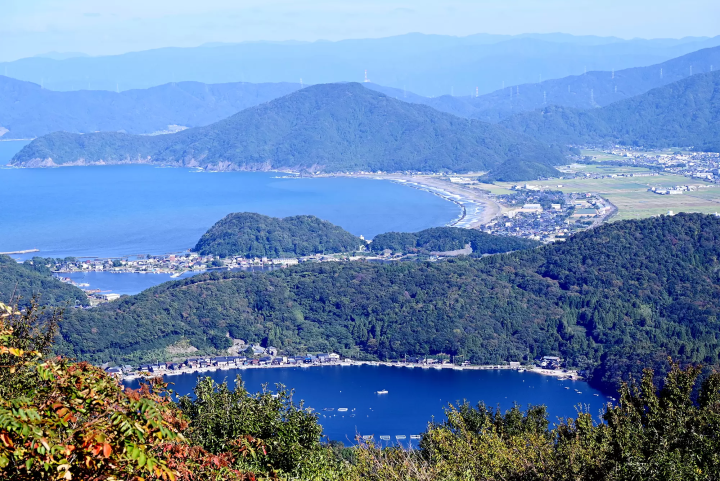
If you’re planning a visit to the Mikata Five Lakes, be sure not to miss the breathtaking views from the Rainbow Line Summit Park. The Rainbow Line (Mikata Five Lakes Rainbow Line Prefectural Road) is an 11.4km driving course that connects Hyuga Gate in Hyuga Mihama Town to Miyama Gate in Wakasa Town. While you can enjoy the view of the Mikata Five Lakes below, an even more spectacular view awaits if you take the lift or cable car from the mountainside parking lot to the summit of Mt. Baijyo, which is 400 meters above sea level. At the summit, Rainbow Line Summit Park features five terraces and a cafe, offering a 360-degree panoramic view of the Mikata Five Lakes, the Nihon Sea, and the Ozora. In addition to the seasonal scenery, the park also offers foot baths and gourmet food at the cafe and restaurant.
Highlights
On a clear day you can admire seven distinct shades of blue – from the five lakes, the Sea of Japan and the sky – along with layered green foliage in spring and vibrant autumn colours on the mountains. At dusk, the setting sun casts a golden glow across the lake’s surface, creating a magical scene.
•Footbath terrace
•Sweets and drinks at cafes and restaurants
•Plenty of photo spots
•The rose garden is at its best in early summer and autumn
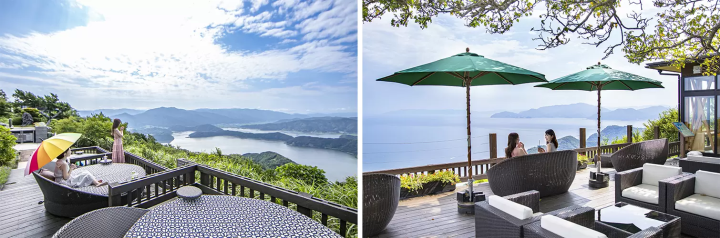
The summit park has five unique terraces where you can enjoy the panoramic view while reclining on a sofa, enjoying gourmet food, or soaking your feet in a foot bath.
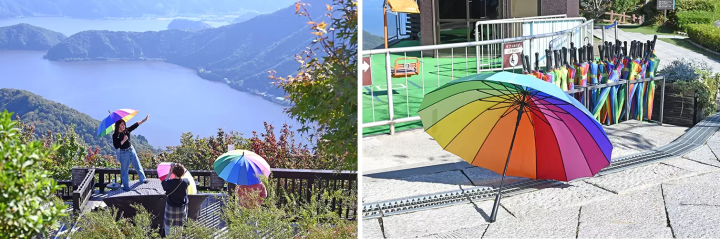
Summit Park is a treasure trove of photo spots! You can borrow a rainbow-colored umbrella for free and take some memorable photos of the Rainbow Line.
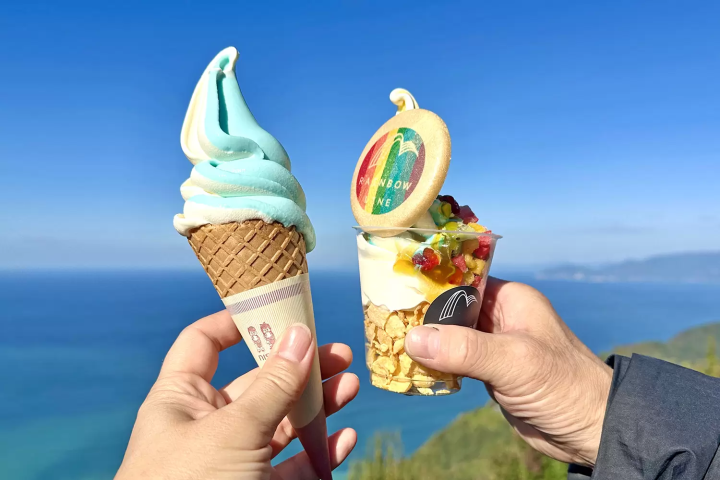
Soft serve ice cream and parfaits from Summit Cafe Nanairo, located on the Chuo Terrace.
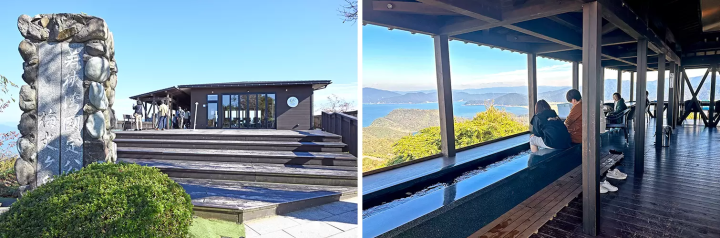
Mihama Terrace, located to the Higashi of Summit Park, is a popular all-weather spot where you can enjoy the spectacular Sky Footbath, all five Mikata Lakes, and the Nihon Sea all at once.
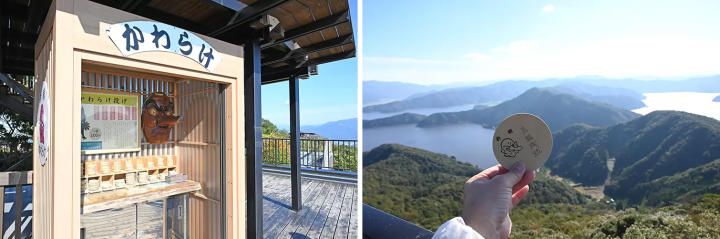
At Wakasa Terrace, you can write your wish on a clay plate called a kawarake and throw it into the valley.
Rainbow Line Summit Park
75-2-6 Hyuga , Mihama Town, Fukui Prefecture
TEL 0770-47-1170
[Business hours] Summer 9:00-17:00 (March 1st-November 30th), Winter 9:00-16:30 (December 1st-February 28th)
[Closed] New Year's holiday (12/31-1/2), 5 days in early February
Admission: 1,000 yen for adults, 500 yen for elementary school students (including lift and cable car fare)
Prefectural Route Mikatagoko Rainbow Line
Traffic hours: 8:00-18:00 (nighttime road closure)
[Fee] Mountaintop Park parking fee: 800 yen
*Bicycles and pedestrians are not permitted.
*Please use taxis or rental cars.
* Gokoichi Bus: A convenient route bus from Tsuruga Station, Mihama Station, etc. to tourist spots around the Mikata Five Lakes
Limited service on Saturdays, Sundays and public holidays, and suspended during winter
(Until November 24, 2025; please check for operation from 2026 onwards)
https://www.pref.fukui.lg.jp/doc/n-kankou-chiiki/202504gokoichi-bus.html
5. Mikata Five Lakes Nature Cruise — Set off on a lake tale on a battery-powered sightseeing boat
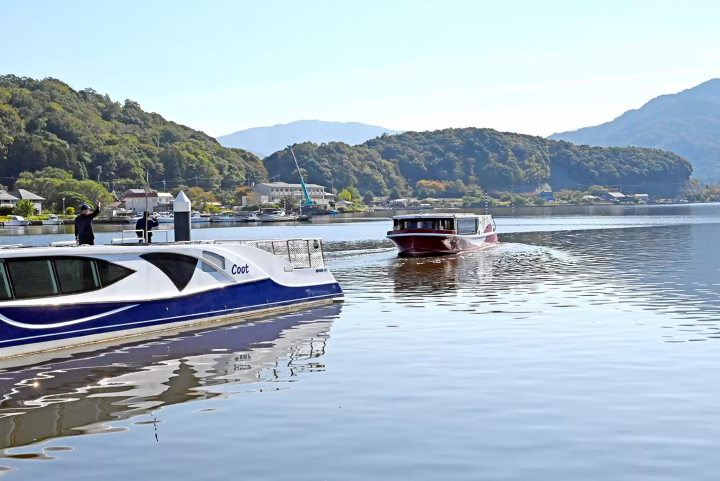
Mihama Town Center operates the Mikata Five Lakes Nature Cruise on Japan's first eco-friendly battery-propelled pleasure boat powered by renewable energy. This exceptionally quiet boat glides as smoothly as a waterfowl swimming across the lake, creating a sense of unity with nature. The basic course departs from Lake Kugushiko, passes through the Urami River, and tours Lake Suigetsu in approximately 50 minutes. An onboard guide will introduce you to the sights and explain how the pleasure boat works, allowing you to learn about the local nature and culture. Mihama Town Center also has a cafe where you can enjoy coffee and sweets while gazing out at the lake. Located on the Gokoichi Cycling route, it can also be used as a rental bicycle reception and drop-off spot.
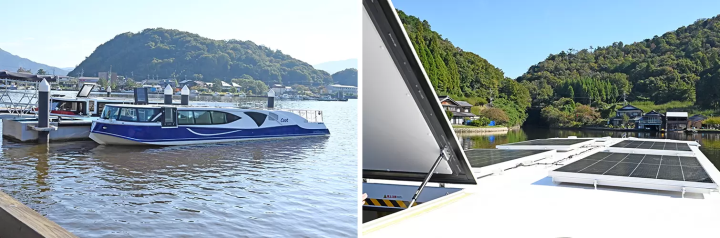
This sightseeing boat is powered by renewable energy, which is rare even in Japan. It is so quiet that you can even hear the birds and the wind when you step out onto the deck. It is environmentally friendly and offers the comfort of being one with the lake.
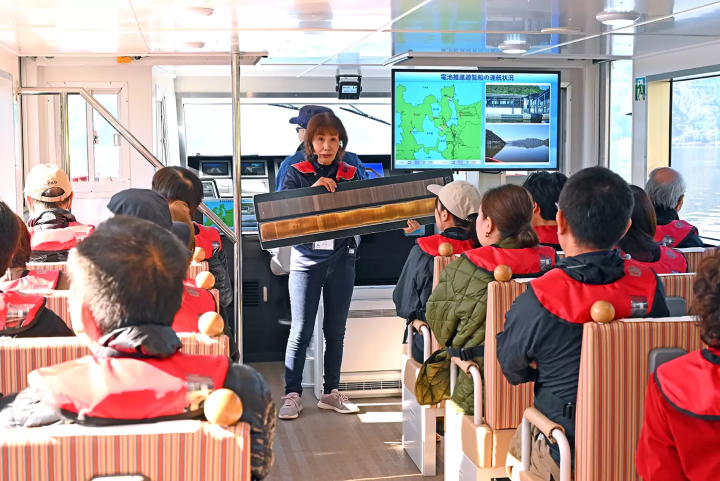
During the cruise, the guide will explain the characteristics and ecosystems of the five lakes, their culture and history, and the agriculture and fishing that have been practiced in the region. At Lake Suigetsu, there will also be an explanation about varves.
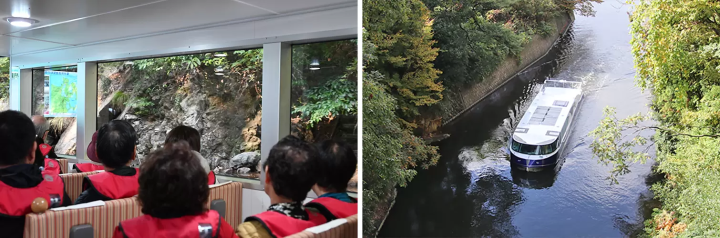
The route passes through Uramigawa River, the largest artificial waterway among the Mikata Five Lakes, connecting Lake Kugushi and Lake Suigetsu. The Kanbun earthquake of 1662 prevented water from draining from Lake Suga to Lake Kugushi, and in 1664, Namekata Kyubei Namegata the Uramigawa River, taking approximately two years and employing a total of 220,000 people to resolve the resulting flooding.
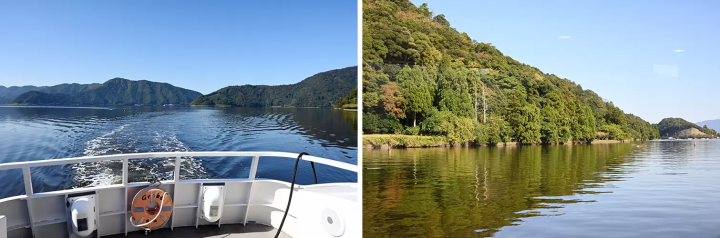
Take a sightseeing boat around Lake Suigetsu, where the world's largest varves have been discovered. It's interesting to see scenery that can only be seen from the lake, and to cycle through the scenery in the opposite direction.
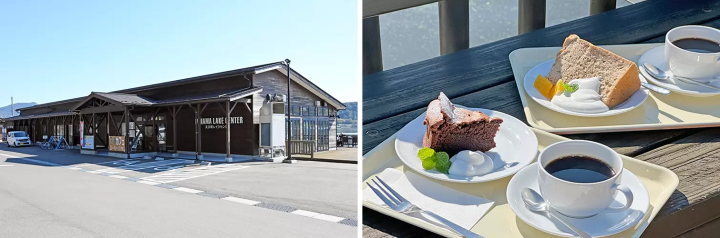
There is also a cafe on the premises where you can enjoy coffee, sweets, curry, katsudon and other meals on the terrace while looking out at Lake Kugushi. It is also recommended as a starting and ending point for cycling trips or as a stopover.
Mihama Town Lake Center
24-4-1 Hayase , Mihama Town , Fukui Prefecture
TEL 0770-47-5960
[Business hours] 9:00-17:00
[Closed] Wednesdays, New Year's holidays
Mikata Five Lakes Nature Cruise
Five flights per day, 50 minutes travel time
1st flight departs at 9:30, 2nd flight departs at 10:45, 3rd flight departs at 13:00, 4th flight departs at 14:15, 5th flight departs at 15:30
[Fee] Adults (junior high school students and above) 1,980 yen, elementary school students 990 yen, preschoolers free
https://mihama-lakecenter.com/home/cruise
Trip Summary
The Mikata Five Lakes are more than just a scenic destination. With their shifting lake-colours, interlinking mountains and close proximity to the sea, the area forms a living landscape where communities have flourished for generations. Feel the breeze on a bike ride, go back in time through the varves, savor the cuisine of Wakasa, enjoy the spectacular views from the mountaintop, and be embraced by the lakes on a pleasure boat. A journey around the five lakes from five different perspectives is sure to leave a lasting impression on your five senses and your memory.
We are working to enliven the entire Hokuriku area.
The contents on this page may partially contain automatic translation.
Special Features
More