
Discover Saginoyu Onsen: A Hidden Gem in San’in — A Relaxing Getaway of Hot Springs and Folk Traditions
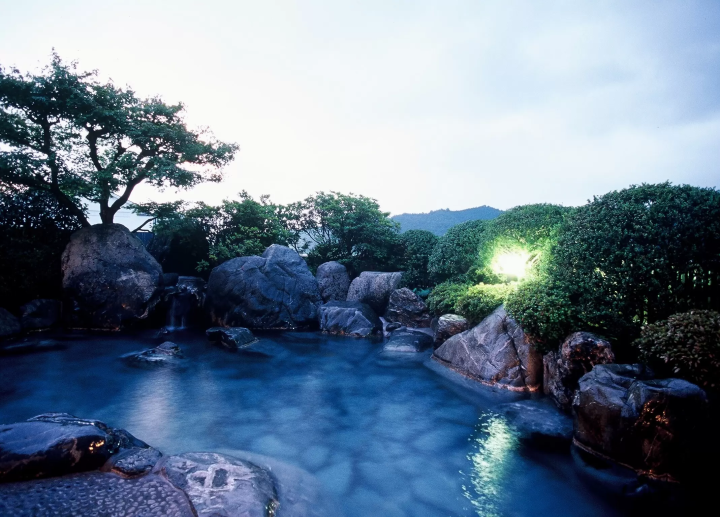
Accessible via the "Sunrise Izumo" sleeper train or Yonago Kitaro Airport, Saginoyu Onsen is a certified National Health Resort known for its chloride and sulfate waters with therapeutic properties. This guide explores the charm of Saginoyu, must-visit local spots, and the best ryokans for your stay.

Written by
National hot spring resorts are designated by the Minister of the Environment under the Hot Springs Act as healthy hot spring resorts where the benefits of hot spring use are expected to be sufficient. 79 hot spring resorts have been designated nationwide (as of October 2024). National hot spring resorts are selected based on the following criteria. 1. Conditions regarding the quality and volume of hot spring water (1) The source of the hot spring water used must be a therapeutic spring. (2) The hot spring water used must have an abundant volume of water. The standard volume of water flow must be 0.5 liters per minute or more per hot spring user. 2. Conditions regarding the environment of the hot spring resort (1) The hot spring is suitable as a resort from the perspective of the natural environment, townscape, history, climate, culture, etc. (2) A plan for the placement of doctors who can provide guidance on proper hot spring use and health management from a medical perspective, or a plan for the placement or training policy of personnel who can provide guidance on bathing methods, etc. in cooperation with the doctors, must be established. (3) Appropriate efforts will be made to protect hot spring resources, manage the hygiene of hot springs, promote public use of hot springs, and take into consideration the elderly and disabled, etc. (4) Enhanced efforts to prevent disasters.
This service includes sponsored advertisements.
If you would like to know more about day trips to Saginoyu Onsen and recommended accommodations, please read this article.
-
Table of Contents
- What is Saginoyu Onsen?
- Top 6 Gourmet & Sightseeing Spots: Where to Eat and Shop
- The Best 3 Ryokans to Experience the Healing Waters of Saginoyu
- Access information
What is Saginoyu Onsen?
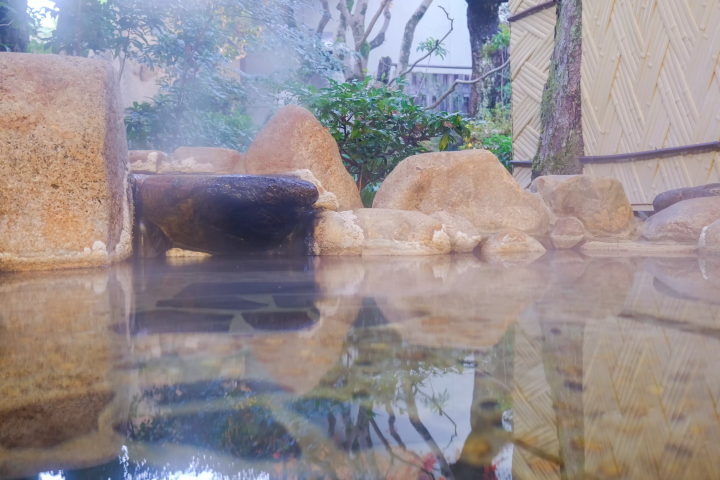
Saginoyu Onsen was named after the legend that a white heron descended upon the hot spring and healed a wound in the leg about 1,300 years ago. From the Sengoku period to the Edo period, it prospered as the palace bath of successive feudal lords.
The abundant amount of hot spring water, gushing out at over 1,100 liters per minute, remains unchanged from the past. Furthermore, the temperature of the source is around 50 degrees, so by the time it is poured into the bathtub, it is at just the right temperature. You can enjoy the benefits of the hot spring as it is "direct from the source" without adding water or heating.
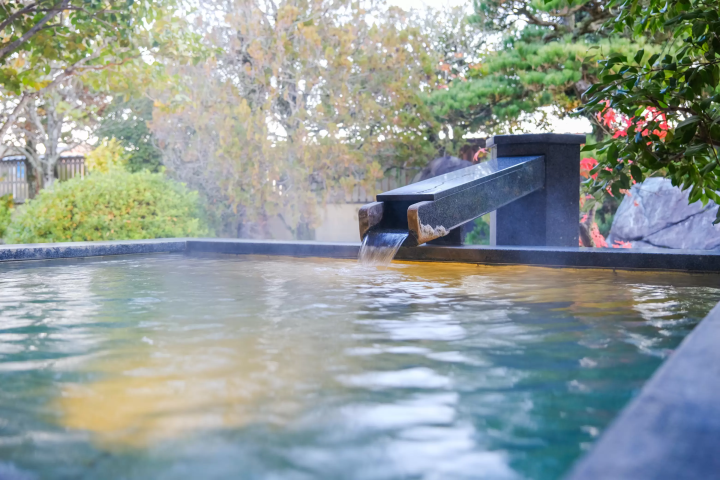
The spring water is a rare type of weakly radioactive sodium-calcium chloride-sulfate hot spring, characterized by the presence of a gas called radon.
Radon emits small amounts of radiation, which is said to promote metabolism and regulate the autonomic nervous system. It is also said to be effective for treating cuts and skin diseases.
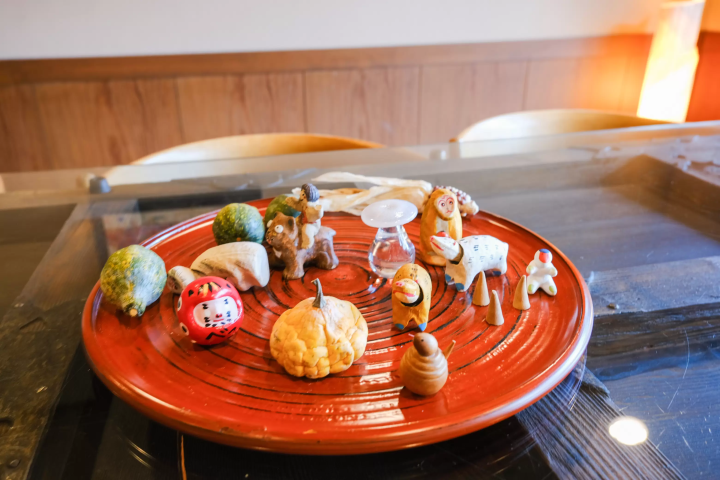
Saginoyu Onsen is also designated as a " National Hot Spring Recreation Area, " a designation given to hot springs that meet a variety of criteria, including not only the quality and quantity of the spring water, but also the natural environment, history, and climate. The tranquil surroundings, where the Iinashi River and the Gassan Toda Castle Ruins blend, warmly welcome visitors to this resort.
Top 6 Gourmet & Sightseeing Spots: Where to Eat and Shop
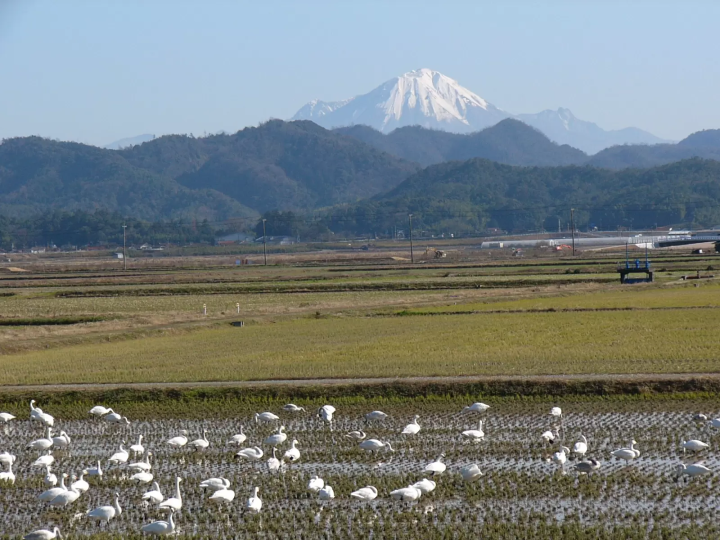
It's an hour and a half from Haneda Airport. After arriving at Yonago Airport, you can travel for about 50 minutes by rental car to reach Saginoyu Onsen.
The Saginoyu Onsen area is easy to get around by car, and there are many sightseeing spots and places to stop by. From here, we will introduce plenty of must-see spots for Saginoyu Onsen trip.
Road Station Ara Essa is recommended for filling up on food during your trip
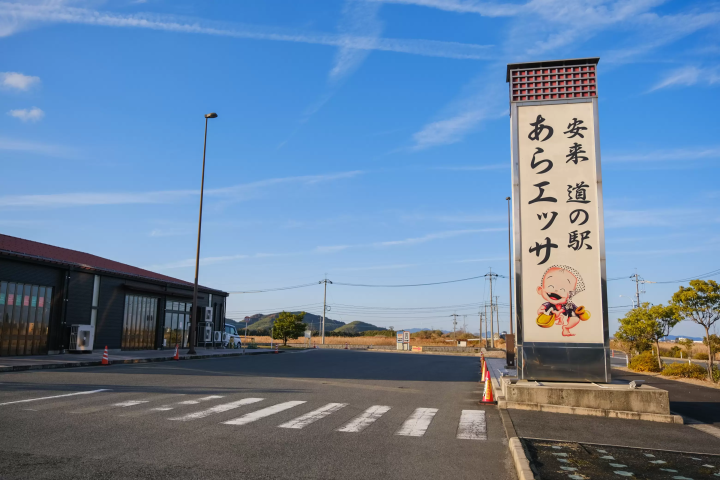
From Yonago Airport, head south along the Lake Nakaumi side of Lake Nakaumi and drive for 30 minutes on National Route 9. You will come across a roadside station that is convenient for those traveling by car. Look for the large sign of "Araessa-kun," a boy Dojo-sukui (Loach scooping) loaches.
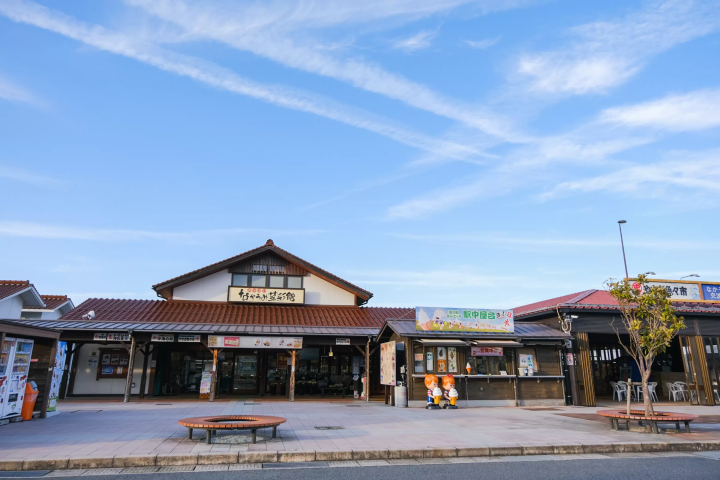
At Road Station Ara Essa, you'll find Nakaumi Saisaikan and Yasugi Gyogyoichi, which sell local specialties, as well as Nakaumi Nakaumi no Sato, where you can easily sample local delicacies.
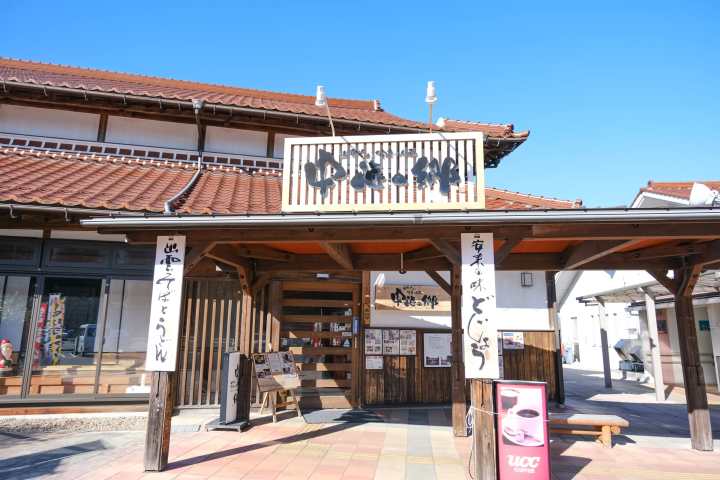
Most people who visit Nakaumi no Nakaumi no Sato order the "Yasugi Loach Yanagawa Set Meal," which features locally farmed loach.
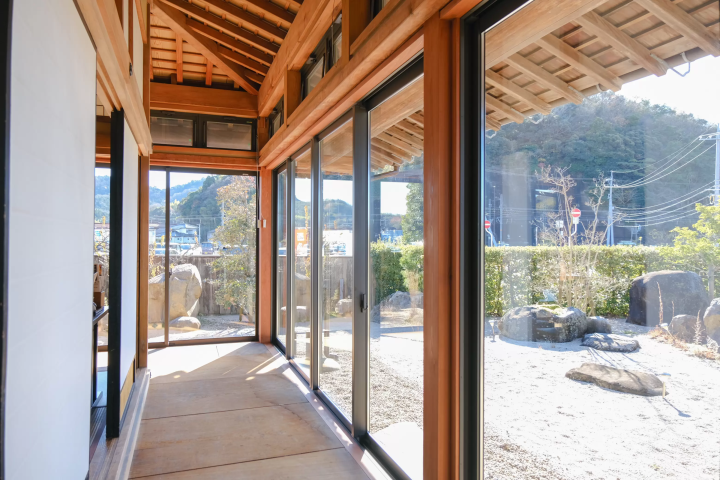
I immediately placed my order and rested my tired feet on the tatami mat for a while.
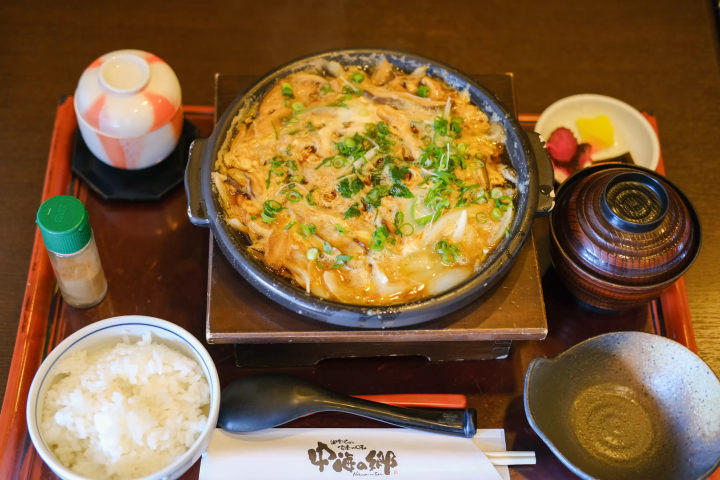
What was brought to us was a piping hot dish of simmered loach with egg. It looked similar to a stewed pork cutlet, and was filled with plenty of ingredients such as shiitake mushrooms, burdock root, and onions.
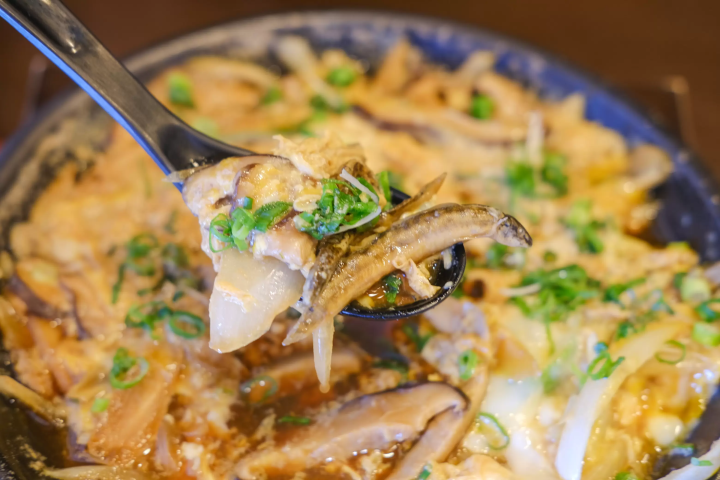
It is said that loach shrinks when heated, but even so, it is so substantial that it overflows from the spoon! Each set meal contains a generous amount of around 15 loaches.
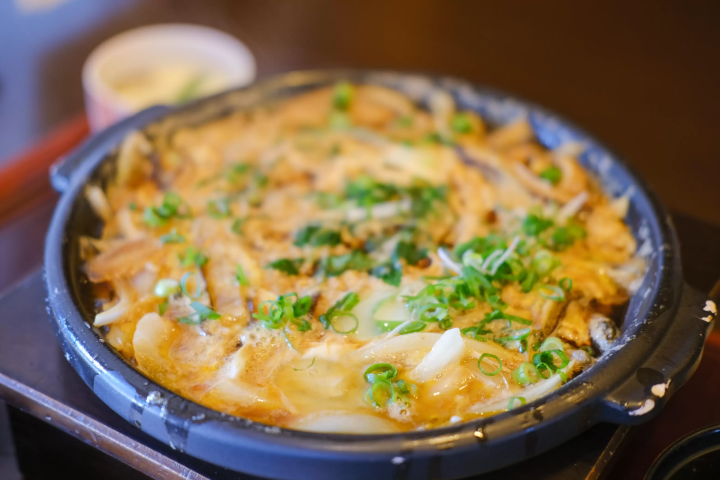
The texture of the loach is more elastic than you might imagine, and it goes down smoothly. It has no unpleasant odor or strong taste, so even those who are reluctant to eat loach will find it easy to eat.
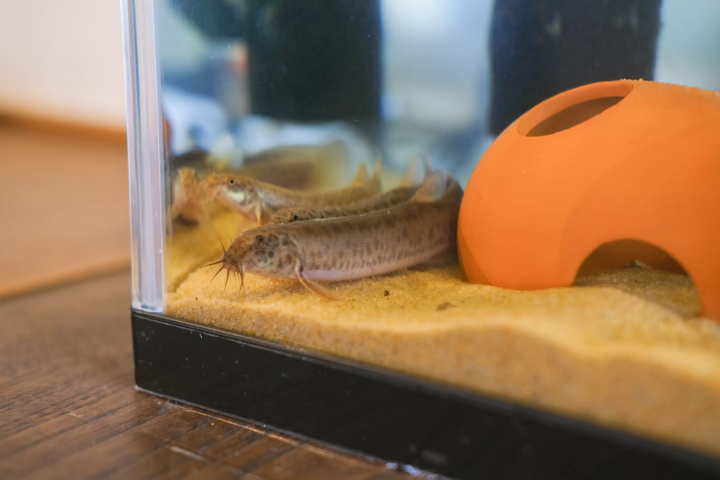
The loaches used in the "Yasugi Loach Yanagawa Set Meal" are farmed in rice paddies and raised in an environment that is almost identical to nature. If you want to try high-quality loaches raised in a low-stress environment, be sure to stop by Nakaumi no Sato.
After enjoying the local gourmet food of Yasugi City , don't forget to look for souvenirs. At Nakaumi Saisaikan , located next to Nakaumi Nakaumi no Sato , you can carefully examine locally grown seasonal fruits and vegetables, as well as specialties from Shimane Prefecture and Yasugi City.
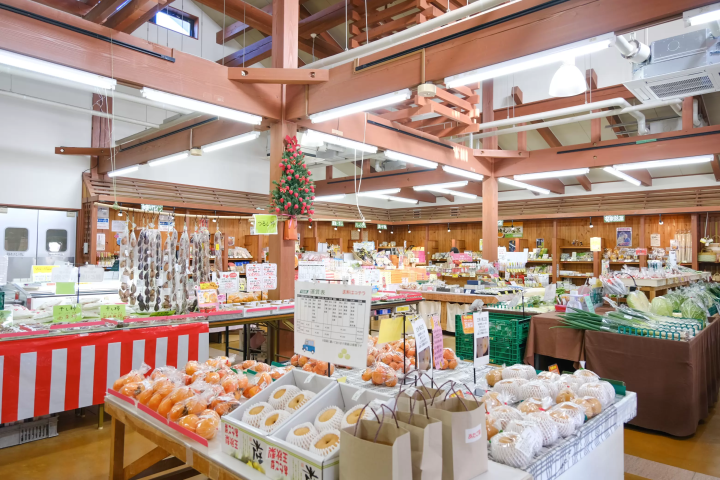
The fruit corner in the center of the store is especially recommended. They use only fruits from Yasugi City, so you can always buy fresh fruit from Yasugi City.
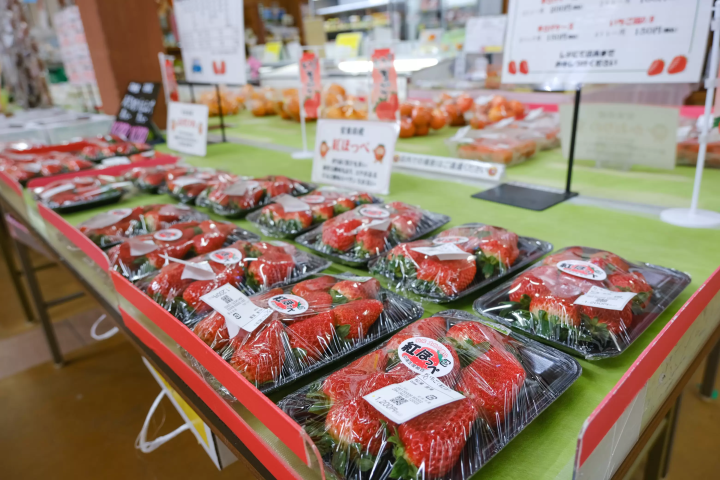
When I visited, strawberries were in season, and the bright red strawberries, such as Benihoppe and Akihime, were shining brightly.
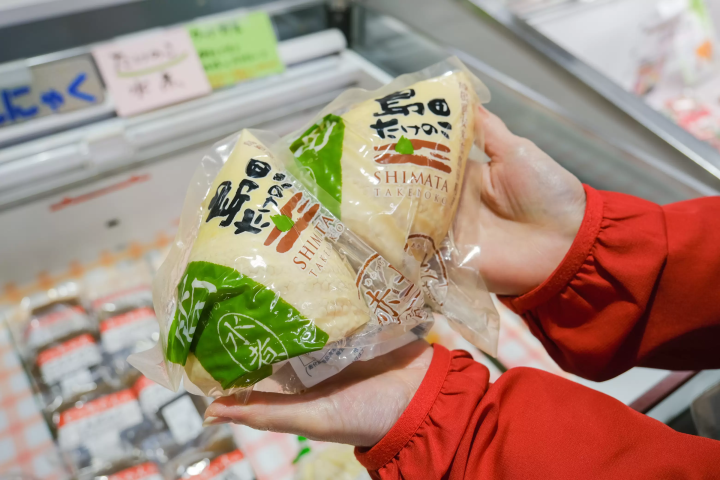
Shimada bamboo shoots are popular throughout the year. They are popular for their mild taste and soft texture, and in the spring they appear in stores both raw and boiled.
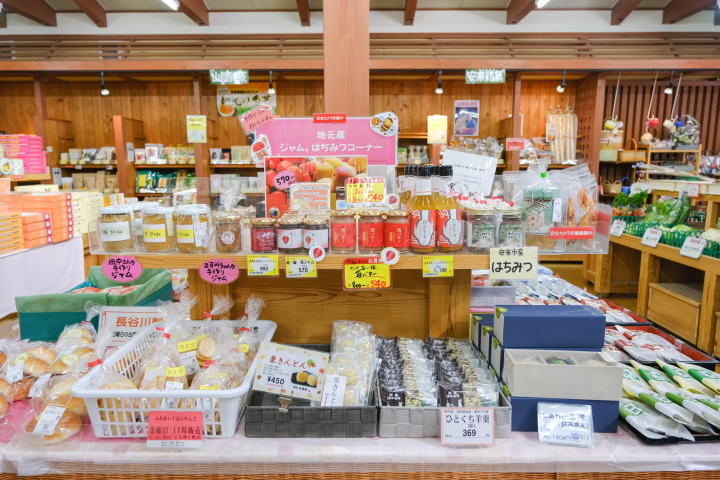
You can also find a wide variety of souvenirs, including sweets made with Yasugi City fruits, alcohol, and bancha tea. If you want to carefully select local products, be sure to visit this place.
Road Station Ara Essa
 118-1 Lake Nakaumi, Yasugi City, Shimane Prefecture, 692-0074
This roadside station is a 30-minute drive from Yonago Airport. Toilets and rest areas are available 24 hours a day.
During the day, you'll be greeted by the Nakaumi Saisaikan farm produce shop, the Yasugi Uosaiichi seafood shop, the Nakaumi no Sato traditional Japanese restaurant, and the Ekinaka Yatai food booth.
Nakaumi no Sato's specialty is the Yasugi Loach Yanagawa Set Meal, available year-round. This egg-covered loach dish is a must-try favorite for people of all ages.
Nakaumi Saisaikan offers a wide selection of seasonal vegetables, fruits, and even local souvenirs, packed with Yasugi and Shimane specialties.
118-1 Lake Nakaumi, Yasugi City, Shimane Prefecture, 692-0074
This roadside station is a 30-minute drive from Yonago Airport. Toilets and rest areas are available 24 hours a day.
During the day, you'll be greeted by the Nakaumi Saisaikan farm produce shop, the Yasugi Uosaiichi seafood shop, the Nakaumi no Sato traditional Japanese restaurant, and the Ekinaka Yatai food booth.
Nakaumi no Sato's specialty is the Yasugi Loach Yanagawa Set Meal, available year-round. This egg-covered loach dish is a must-try favorite for people of all ages.
Nakaumi Saisaikan offers a wide selection of seasonal vegetables, fruits, and even local souvenirs, packed with Yasugi and Shimane specialties.
Gassan Toda Castle Ruins: A castle that has a history of prosperity as the center of Sanin
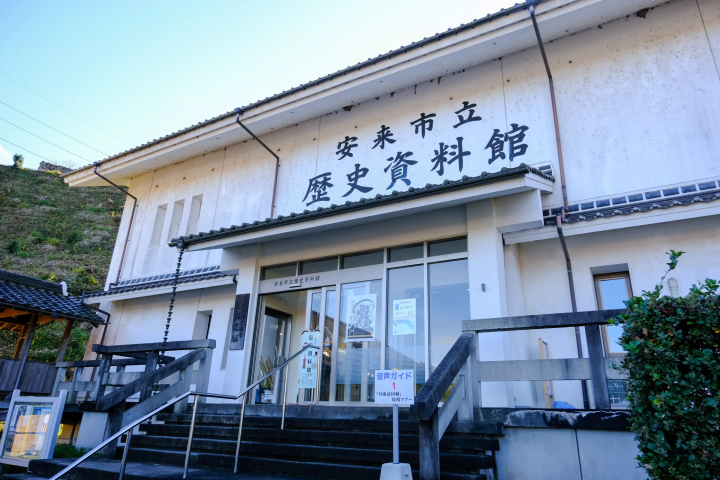
Gassan Toda Castle, one of Japan's 100 most famous castles, is a must-see when visiting Saginoyu Onsen.
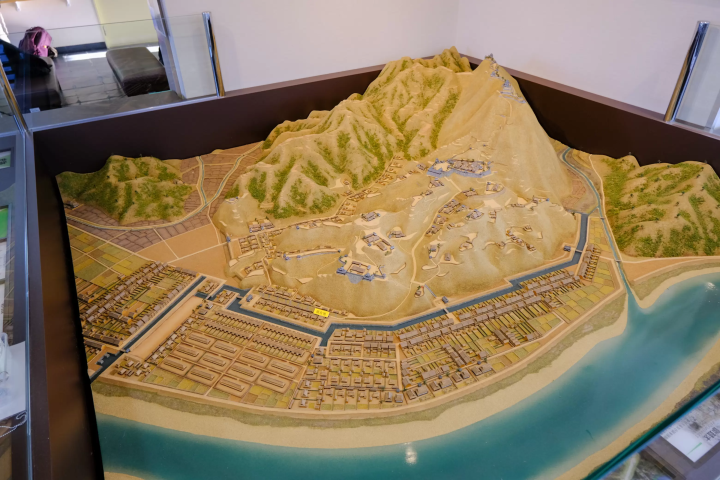
You can reach the Yasugi City Historical Museum at the foot of Mount Gassan by car, and you can take a stroll around the castle ruins at any time.
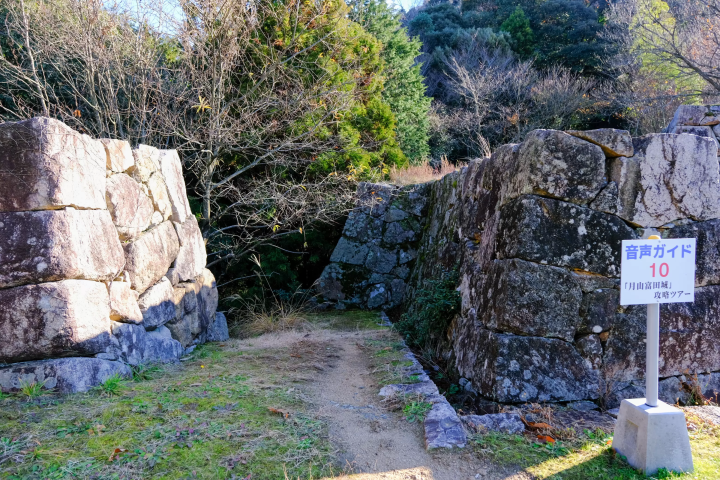
For those who want to enjoy a stroll while immersing themselves in history, we recommend the audio guides sold at the Yasugi City Historical Museum. Simply download the dedicated app to your smartphone and enter the password you purchased to use it.
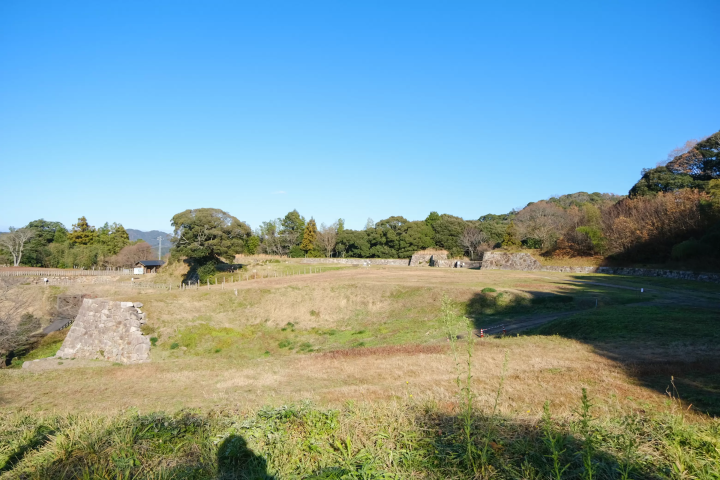
When you hear the word "castle ruins," you tend to imagine a building with a castle tower, but the Gassan Toda Castle Ruins are something a little different.It is a magnificent natural mountain castle with numerous defensive walls, centered around Mount Gassan, which is 190 meters above sea level.
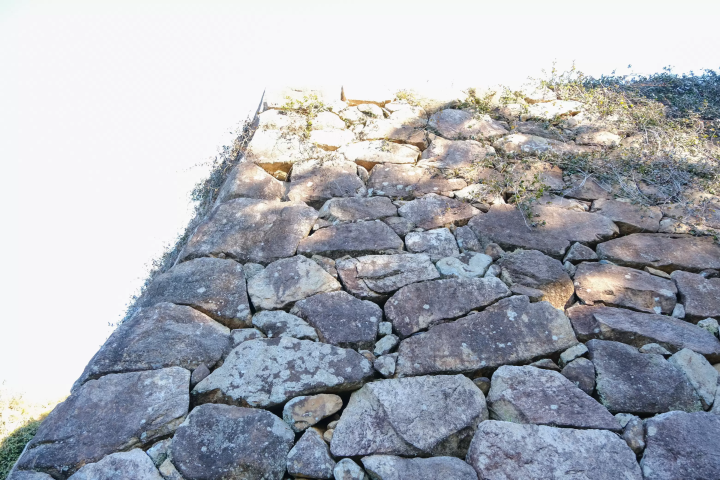
In history, the castle has never been attacked all the way to the top of the mountain and then taken, and it is famous among fans as an "impregnable castle" (difficult to attack and never falls).
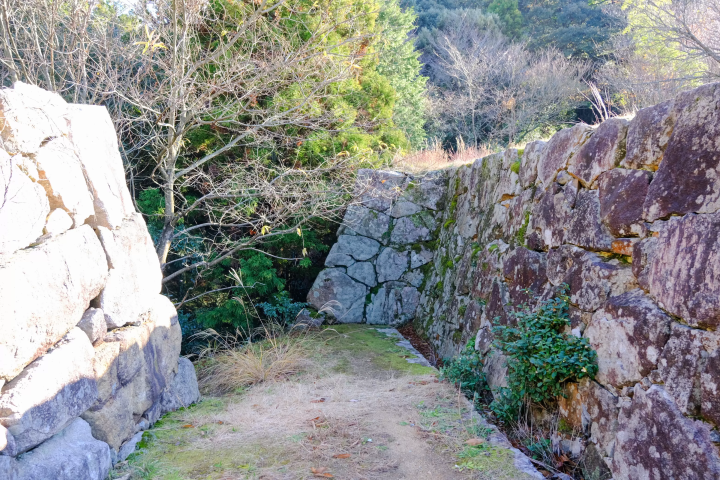
It takes about an hour to reach the summit, but even beginners will find their interest piqued by the easy-to-understand audio guide. The more you learn about mountain castles, such as the steep, artificial slopes created to prevent attacks, and the earthen defensive walls called "earthworks," the more you'll be captivated by their fascinating nature.
From the summit, you can see the Yasugi Hirano, Lake Lake Nakaumi, and the Shimane Peninsula, making it a great spot for photography. Why not visit as a stopover on your trip, with beautiful scenery and an intriguing learning experience?
Gassan Toda Castle Ruins
 Tonda , Hirose Town, Yasugi City, Shimane Prefecture, 692-0403
This is a spot where you can learn about the historical background of Mount Gassan Tonda, known as an impregnable castle, and see up close the Ishigaki and earthworks that still remain today. You can walk to the top of the mountain, and on clear days you can see the Nihon Sea and the Shimane Peninsula. You can also listen to an audio guide using the dedicated app.
At the foot of the mountain is the Yasugi City Historical Museum, where you can learn more about the history of Mount Gassan Tonda Castle.
Tonda , Hirose Town, Yasugi City, Shimane Prefecture, 692-0403
This is a spot where you can learn about the historical background of Mount Gassan Tonda, known as an impregnable castle, and see up close the Ishigaki and earthworks that still remain today. You can walk to the top of the mountain, and on clear days you can see the Nihon Sea and the Shimane Peninsula. You can also listen to an audio guide using the dedicated app.
At the foot of the mountain is the Yasugi City Historical Museum, where you can learn more about the history of Mount Gassan Tonda Castle.
Dojo-sukui (Loach scooping) Yasugibushiya, run by a leading loach scooping expert
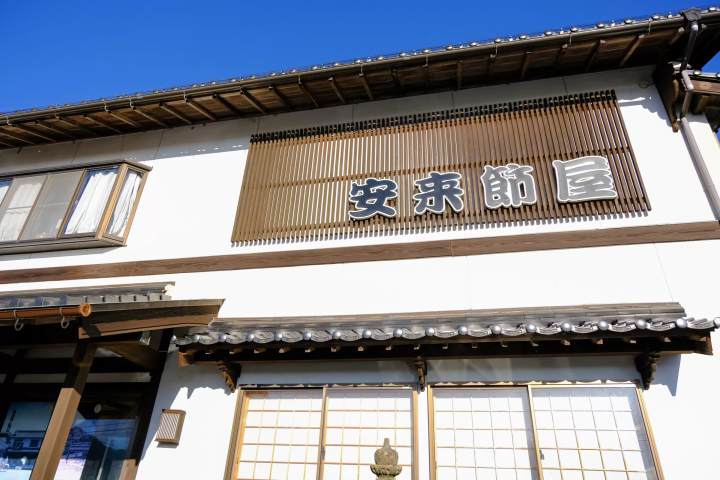
If you come to Yasugi City , you should definitely check out the " Yasugibushi, " also known as the " Dojo-sukui (Loach scooping) Dance." This folk song originated in Yasugi City and developed from the end of the Edo period through the Meiji era.
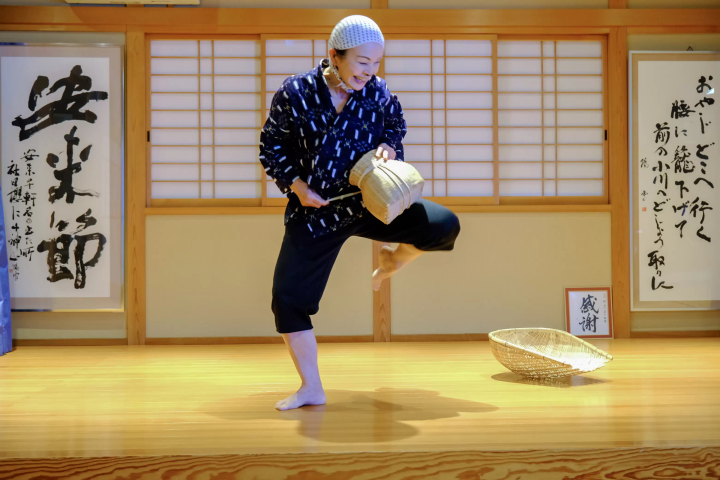
With a coin attached to their nose and a towel covering their head, and expressive expressions that describe the Dojo-sukui (Loach scooping) process of catching loaches, this is a humorous dance that does not require words. It has been passed down as a traditional performing art in Yasugi City, and many people still dance the Yasugibushi dance today.
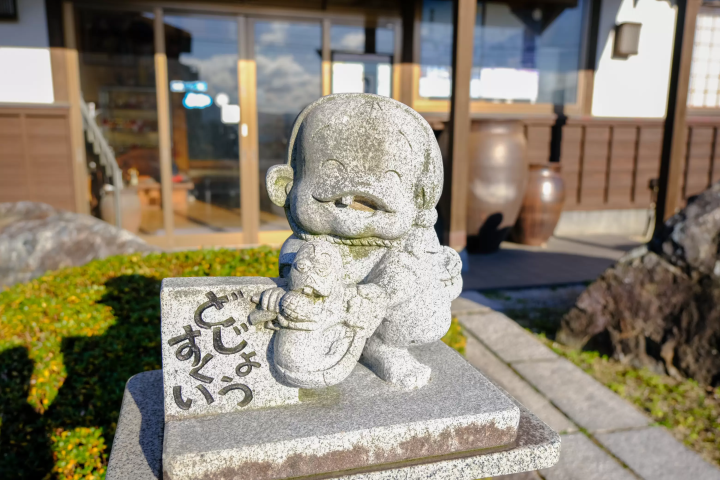
Among them, Ichiukawa Tsutomu has become a symbol of Yasugibushi and has made many media appearances. As a master of Yasugibushi, he continues to pass on the dance to many people today.
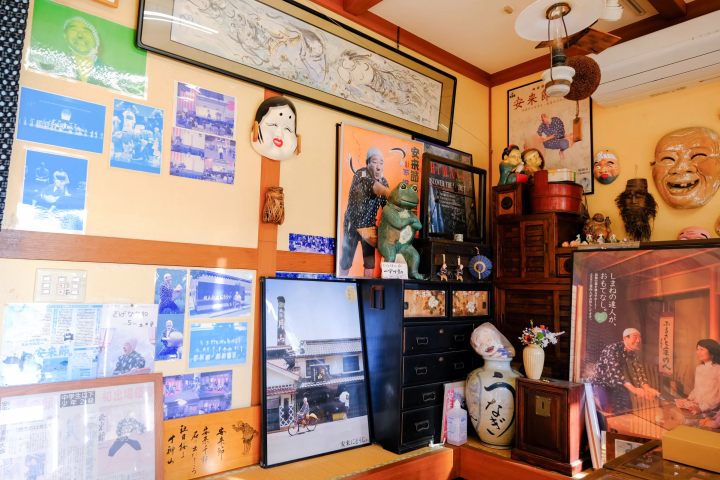
Ichiukawa himself runs the shop "Yasugibushiya," where he sells hand-baked rice crackers and various goods related to Yasugibushi.
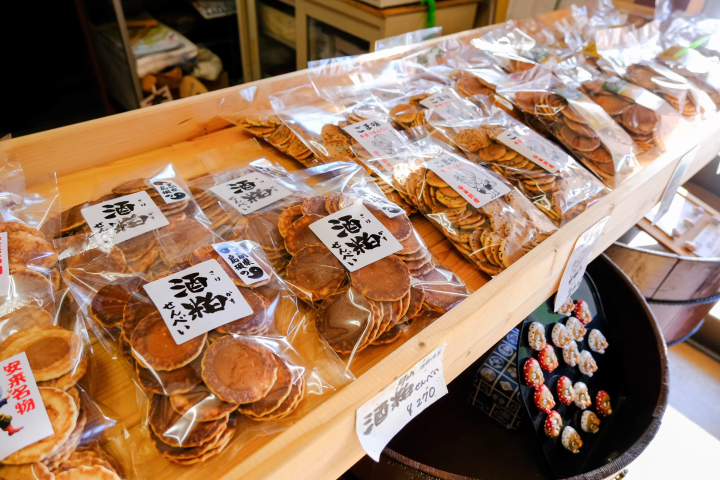
The rice crackers are popular for their nostalgic, simple flavor, making them perfect as souvenirs. The best-selling flavors are the miso and egg flavors.
Anyone can also experience Dojo-sukui (Loach scooping) by making a reservation. You can see the Dojo-sukui (Loach scooping) scooping up close and experience the traditional Japanese performing arts through the Yasugibushi dance.
Yasugibushiya
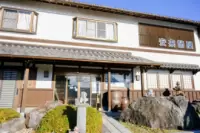 467-5 Furukawacho, Yasugi City, Shimane Prefecture, 692-0064
You can purchase "handmade rice crackers," a popular souvenir from Yasugi City, with a simple taste. They come in a variety of flavors, including egg peanut, sake lees, and sesame.
If you make a reservation, you can also experience "loach scooping," a dance performed to the "Yasugi Bushi" song.
467-5 Furukawacho, Yasugi City, Shimane Prefecture, 692-0064
You can purchase "handmade rice crackers," a popular souvenir from Yasugi City, with a simple taste. They come in a variety of flavors, including egg peanut, sake lees, and sesame.
If you make a reservation, you can also experience "loach scooping," a dance performed to the "Yasugi Bushi" song.
Yasugibushi Entertainment Hall, where you can enjoy some of Japan's finest local folk songs
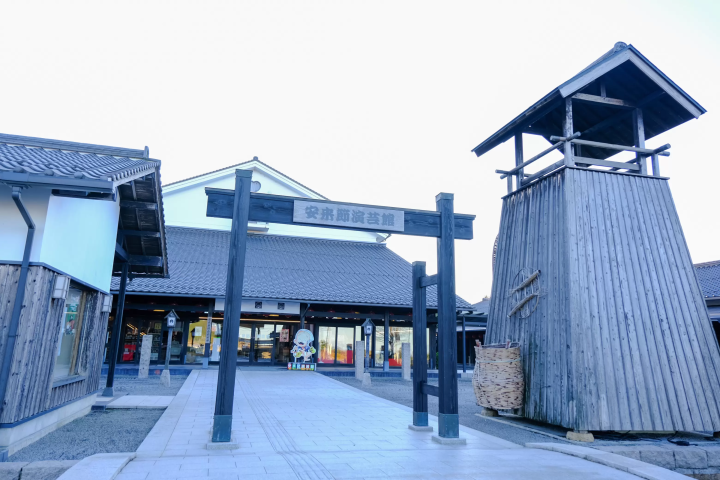
The Yasugibushi Entertainment Hall Yasugibushiya , is also a must-see spot when visiting Yasugi. A typical itinerary is to visit both facilities together.
Yasugibushi Entertainment Hall is the only entertainment hall in Sanin that has box seats and a runway. On weekends and holidays, they also hold two Yasugibushi performances a day, which cost 1,000 yen for adults and 500 yen for children.
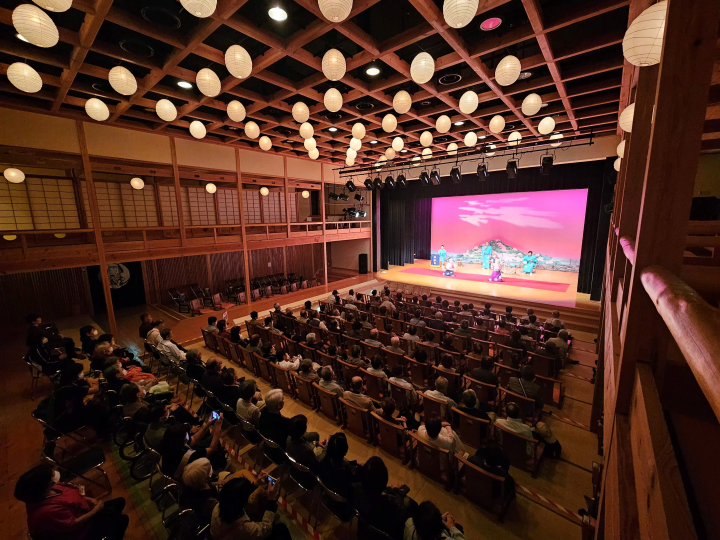
The entertainment hall can accommodate approximately 200 people. In addition to Yasugibushi, performances of Izumo Kagura and Rakugo are also held here on an irregular basis.
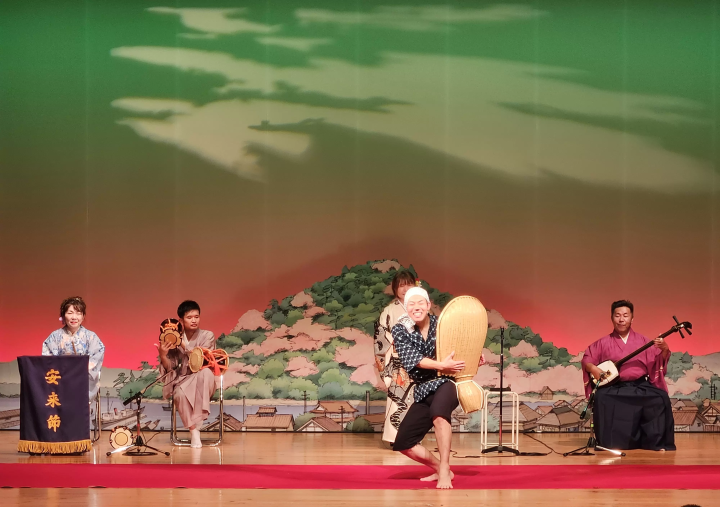
The Yasugibushi are the powerful live music and the detailed expressions and movements. At the end of the performance, there is also a very popular corner where you can learn the Dojo-sukui (Loach scooping) dance from a teacher on stage.
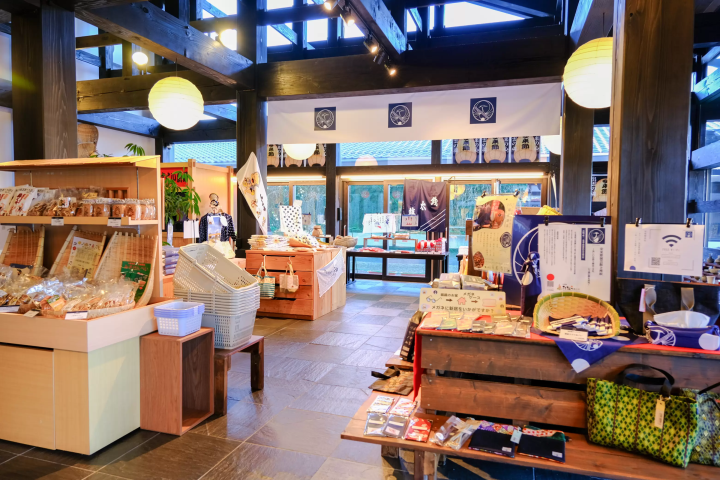
If you visit on a weekday, we recommend using it as a souvenir shop and museum related to Yasugibushi . You can find limited edition Araessa-kun goods and Kiyomizu Yokan , a Yasugi specialty.
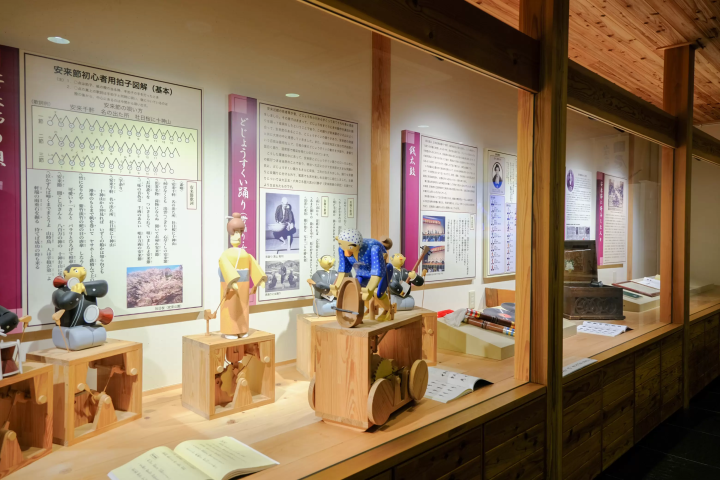
The museum is also barrier-free, making it easy to access with wheelchairs and strollers, making it a great place for the whole family to have a rare experience of experiencing local folk songs.
First, try learning about the history and worldview of Yasugibushi at this performing arts center. Then, if you feel like you want to experience the dance more fully or see the master's skills up close, we recommend visiting the masters at Yasugibushiya, which we introduced earlier. By visiting these two places, you will be able to enjoy the charm of Yasugibushi even more deeply.
Yasugi Bushi Performing Arts Hall
 534 Furukawacho, Yasugi City, Shimane Prefecture, 692-0064
This is the only theater in San'in region with box seats and a main runway. Two performances of "Yasugi Bushi" are held on Saturdays and Sundays, and anyone can watch without a reservation. (Please note that there may be cancellations, so please check the website.)
The museum also features merchandise and exhibits related to "Yasugi Bushi" and "Eel Scooping," making it the perfect place to purchase Yasugi souvenirs.
534 Furukawacho, Yasugi City, Shimane Prefecture, 692-0064
This is the only theater in San'in region with box seats and a main runway. Two performances of "Yasugi Bushi" are held on Saturdays and Sundays, and anyone can watch without a reservation. (Please note that there may be cancellations, so please check the website.)
The museum also features merchandise and exhibits related to "Yasugi Bushi" and "Eel Scooping," making it the perfect place to purchase Yasugi souvenirs.
Adachi Museum of Art: A different impression depending on the time of day and the season
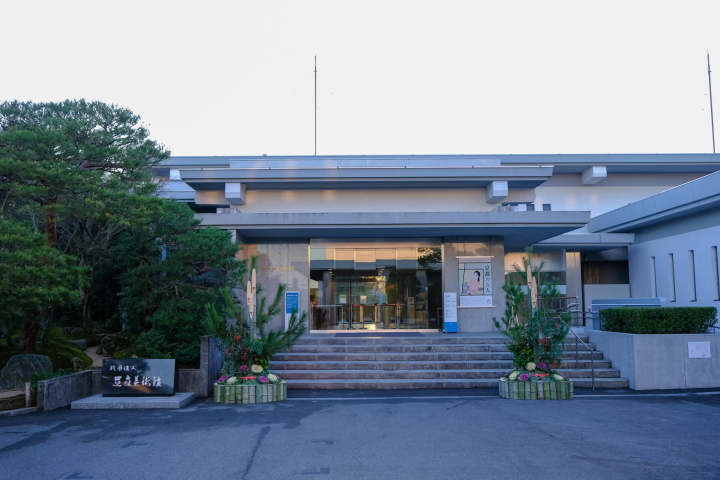
For those who want to fully appreciate the beauty of the four seasons, we recommend the Adachi Museum of Art in the Saginoyu Onsen area. Its Japanese garden has been ranked number one in Japan by the American magazine Sukiya Living Magazine/Journal of Japanese Gardening every year since 2003.
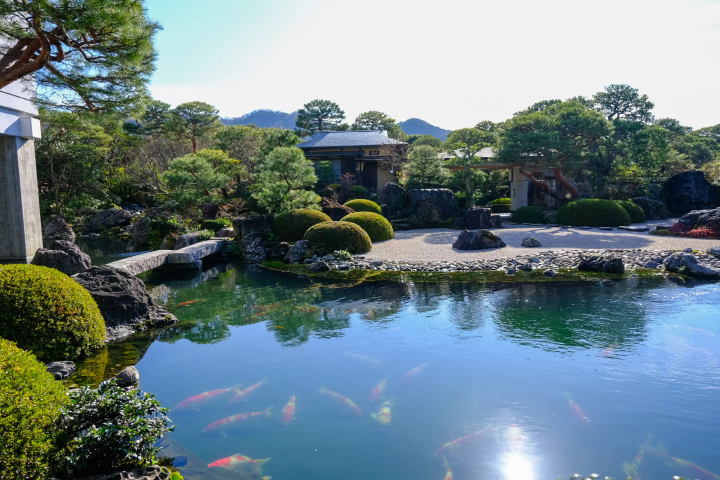
The Adachi Museum of Art was founded by local businessman Adachi Zenko, who used his own collection as a starting point. Adachi believed that "a garden is also a painting," and sought to create a harmony between Japanese paintings and Japanese gardens.
The Japanese garden, which changes with the seasons, covers an area of approximately 165,000 square meters including borrowed scenery, and it took approximately 15 years from the museum's opening to create the space it is today.
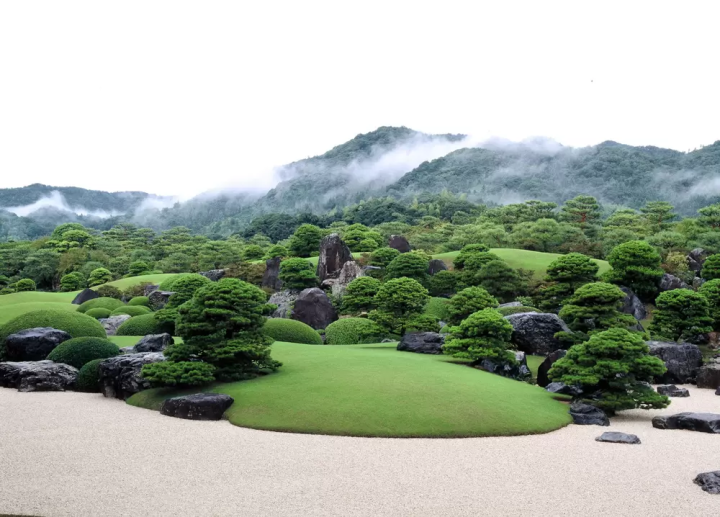
The museum is open every day of the year (except for the new building, which is closed on certain days for changing exhibits). You can enjoy the gardens in different looks throughout the day, such as the garden bathed in the morning sun and the garden bathed in the setting sun.
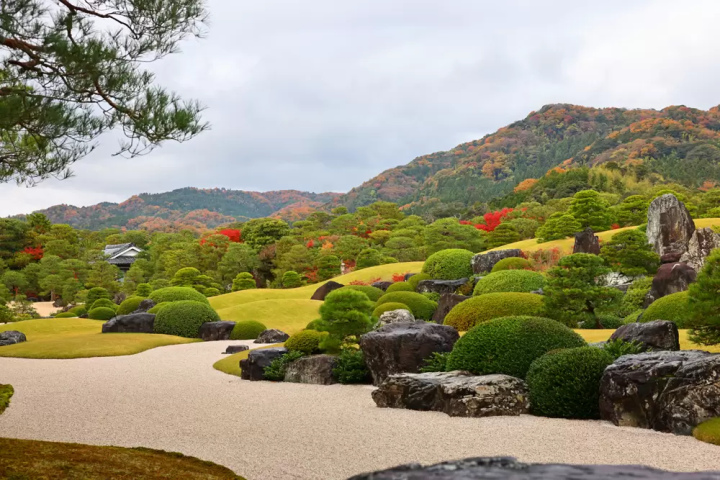
One of the highlights is the museum's main garden, the Dry Landscape Garden. The natural mountains in the distance are incorporated into the garden, creating a vast and profound landscape.
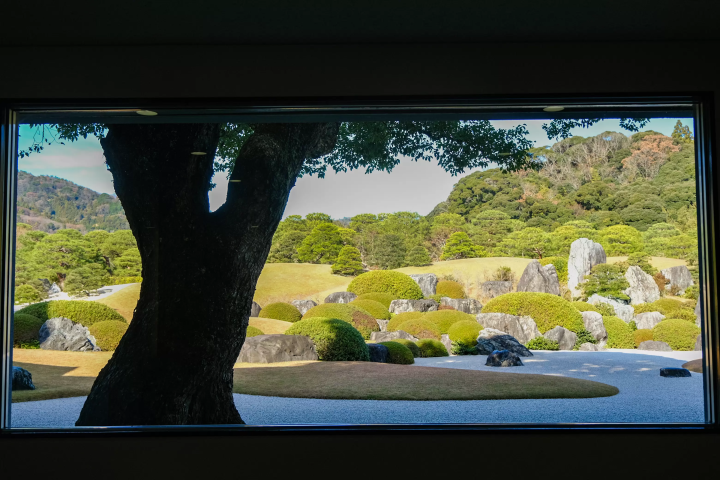
There are also other gardens that are truly captivating, such as the "Living Hanging Scroll", which has been carved out of the wall of the alcove to express the garden as a "living painting", the "Living Framed Painting", which uses the window frame as a picture frame, and the "White Gravel and Pine Garden", which expresses the atmosphere of Yokoyama Taikan's "Beautiful Pine Beach". All of the gardens are maintained 365 days a year by dedicated gardeners.
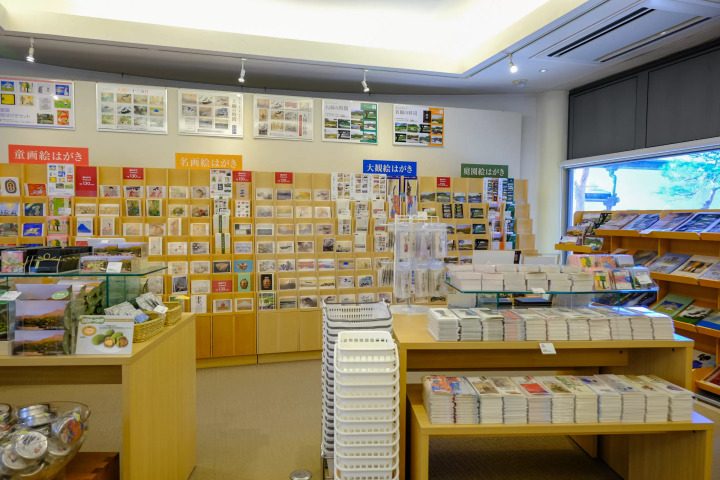
In the exhibition room, you can encounter masterpieces by Yokoyama Taikan, Takeuchi Seiho, and Kawai Gyokudō, as well as ceramics and calligraphy by Kitaoji Rosanjin. This is a spot that you should take the time to visit during your trip to soothe your eyes and soul.
Adachi Museum of Art
 320 Furukawa-cho, Yasugi City, Shimane Prefecture, 692-0064
This art museum is open every day of the year and boasts a charming Japanese garden. Thanks to the efforts of its in-house gardener, the garden has been beautifully maintained so that you can enjoy it from any angle at any time.
A free shuttle bus runs from JR Yasugi Station, providing convenient access to Sagi-no-yu Onsen.
320 Furukawa-cho, Yasugi City, Shimane Prefecture, 692-0064
This art museum is open every day of the year and boasts a charming Japanese garden. Thanks to the efforts of its in-house gardener, the garden has been beautifully maintained so that you can enjoy it from any angle at any time.
A free shuttle bus runs from JR Yasugi Station, providing convenient access to Sagi-no-yu Onsen.
" Yasugi Kiyomizu-dera " where you can experience exquisite vegetarian cuisine and Kiyomizu Yokan
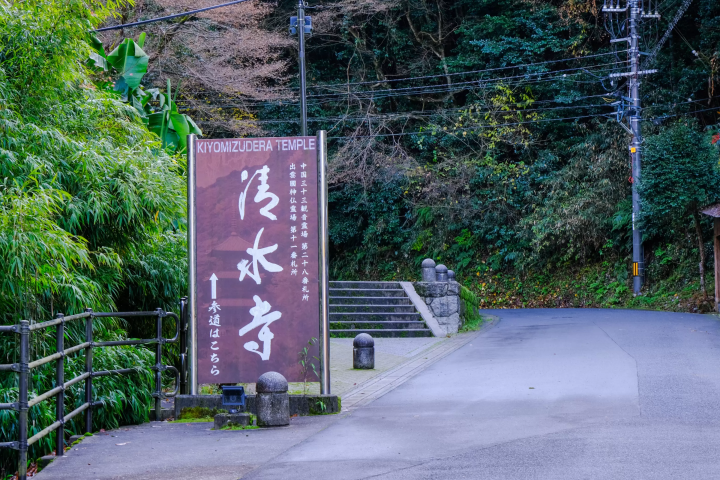
Yasugi Kiyomizu-dera Temple in Yasugi City was founded in 587. It is a Tendai sect temple that is famous for warding off evil spirits.
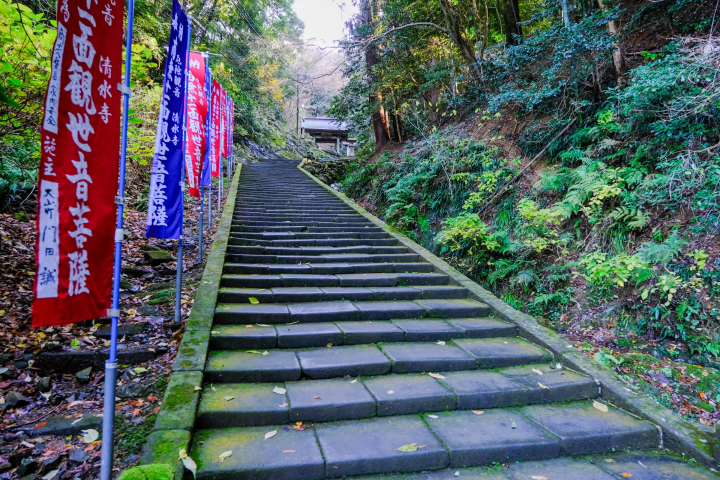
After climbing the 108 steps, you will arrive at the Honpo Hall, which was built in the Muromachi period. Visiting hours are from 9:00 to 16:00. You can pray and purchase amulets.
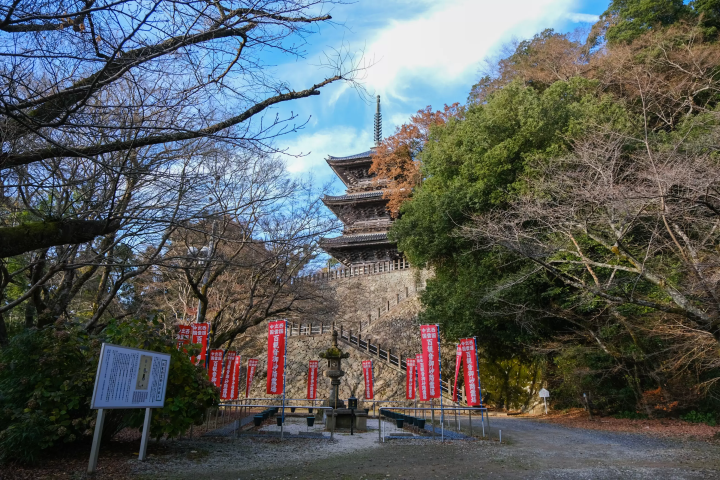
Oku the Hondo Hall is the Mie pagoda. If you make a reservation in advance, you can climb it for 500 yen per person.
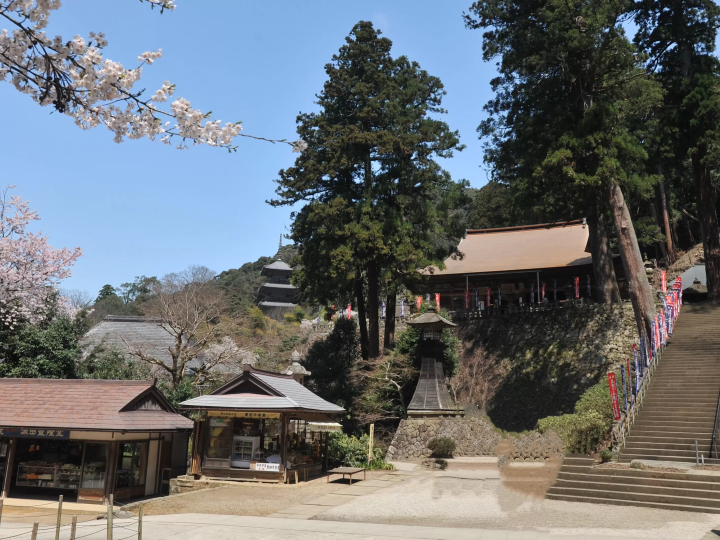
There are four yokan shops around Kiyomizu-dera Temple, two of which are located within the temple grounds. Each shop makes their own unique yokan using traditional methods, resulting in a wide variety of unique flavors, from a stronger red bean flavor to a smoother texture. It has also been selected as a "100 Kiyomizu Yokan" by the Agency for Cultural Affairs as a food culture that has been passed down through generations, making it a must-try specialty when visiting Kiyomizu-dera Temple.
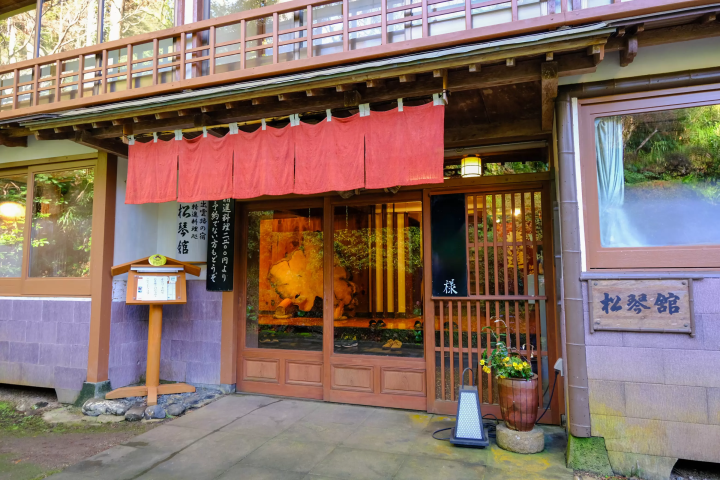
You can enjoy traditional shojin ryori in this area, from restaurants at the entrance to temples to long-established inns along the approach to the temple. Among them, Shokinkan is an inn where you can casually enjoy authentic shojin ryori. Since its founding in 1869, it has been welcoming people in this area for over 150 years with its good old-fashioned accommodation experience and homemade cuisine.
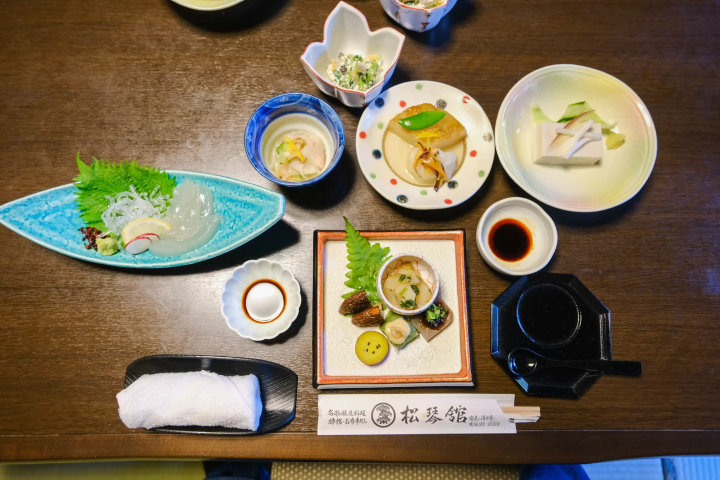
Shojin ryori is a type of cuisine that is made without meat or fish, based on the Buddhist teaching of "not killing."Shokinkan serves all homemade dishes using vegetables, grains, and beans.
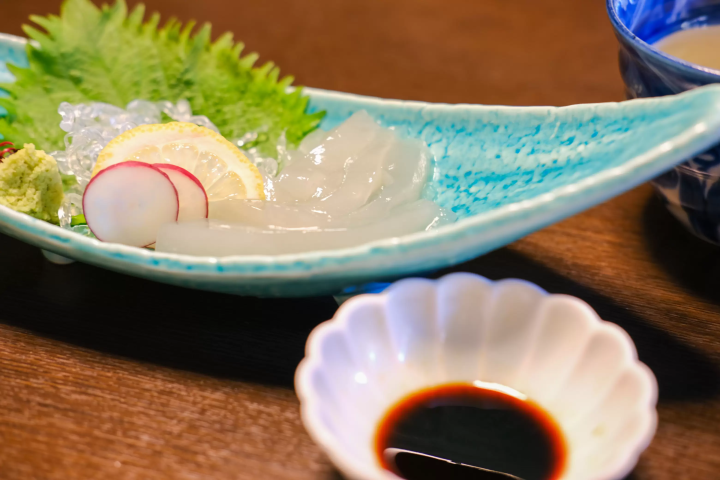
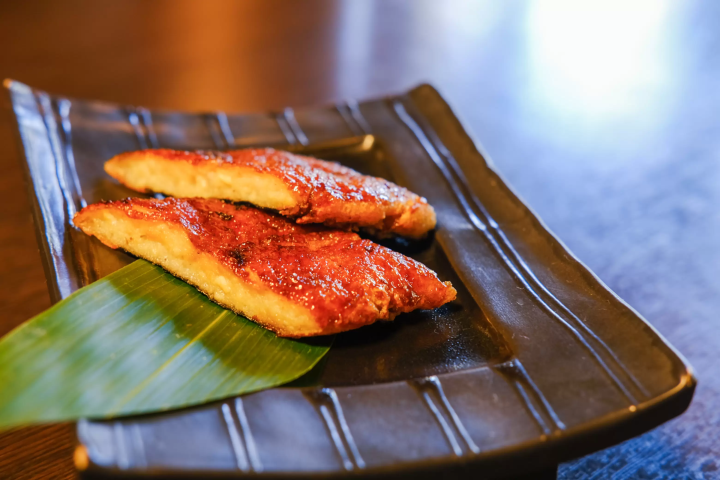
For lunch, we had a wide variety of vegetarian dishes, including imitation squid and imitation eel made with ingredients from Shimane, and smooth sesame tofu, all of which were deeply flavorful.
The sixth-generation owner, Kinji Aoyama, is constantly working on new dishes to surprise his customers with how delicious shojin ryori can be. If you want to eat colorful shojin ryori that is nourishing for both the eyes and the soul, then be sure to stop by Shokinkan.
Yasugi Kiyomizu-dera Temple
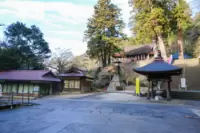 528 Shimizu-cho, Yasugi City, Shimane Prefecture, 692-0033
The temple enshrines the Eleven-Headed Kannon Bodhisattva, also known as the Evil-Proof Kannon, as its principal image, and is famous as a temple for warding off evil. It takes about 10 minutes to climb stone steps from the parking lot, so it is recommended that you wear comfortable shoes when visiting.
Within the temple grounds, there is a Mie pagoda that can be climbed to the top by reservation, as well as four yokan shops, a specialty of Kiyomizu-dera.
528 Shimizu-cho, Yasugi City, Shimane Prefecture, 692-0033
The temple enshrines the Eleven-Headed Kannon Bodhisattva, also known as the Evil-Proof Kannon, as its principal image, and is famous as a temple for warding off evil. It takes about 10 minutes to climb stone steps from the parking lot, so it is recommended that you wear comfortable shoes when visiting.
Within the temple grounds, there is a Mie pagoda that can be climbed to the top by reservation, as well as four yokan shops, a specialty of Kiyomizu-dera.
The Best 3 Ryokans to Experience the Healing Waters of Saginoyu
After enjoying plenty of sightseeing in Yasugi, it's finally time for a blissful bath. We will introduce three ryokans unique to this People's Health Resort Spring , where you can instantly recover from the fatigue of everyday life and travel.
Chikuyo: Day-trip bathing available! Vegetarian, vegan, and halal-friendly menus available
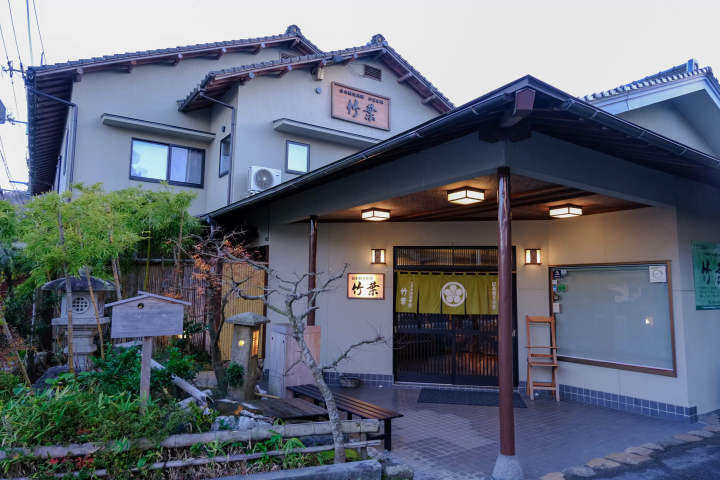
Founded in 1959, the inn "Chikuyo" is located right next to the Adachi Museum of Art of Art. It is said that the name "Chikuyo" comes from the way bamboo grows quickly and straight.
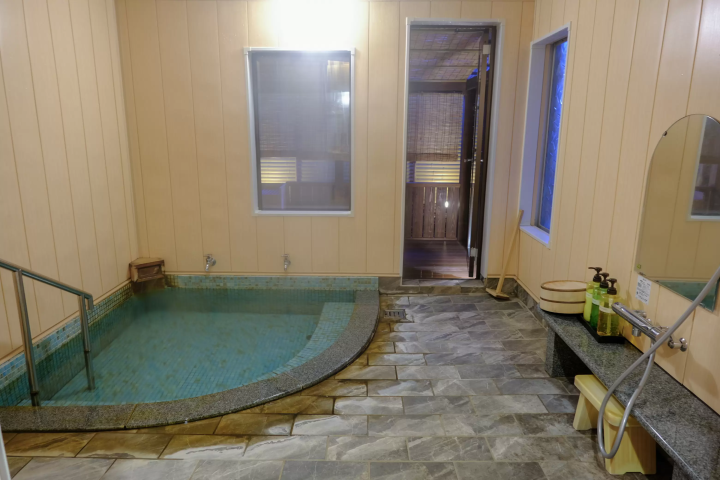
The impressive bath at Chikuyo is a relaxing, soothing bath. The tiled indoor bath features water that bubbles up quietly. The gentle steam and the soothing temperature of the hot spring will soothe your tired legs and back.
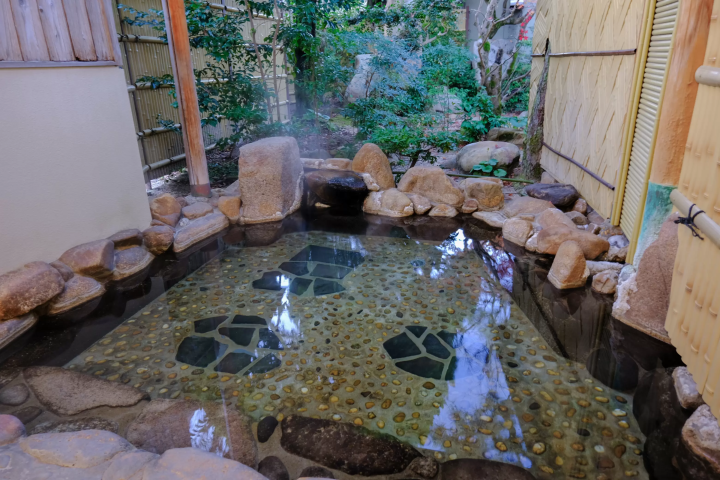
The stone open-air bath is a deep space that blends seamlessly with the garden. Time seems to flow slowly, and the cool air outside is pleasant, allowing you to warm your body thoroughly.
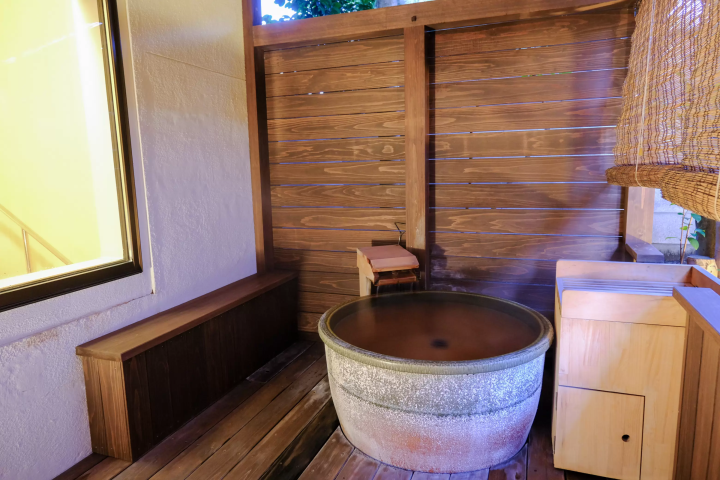
You can also reserve a private bath for 50 minutes for an additional fee. This bath also has an indoor bath and an open-air bath, allowing you to enjoy a luxurious bath in a private space.
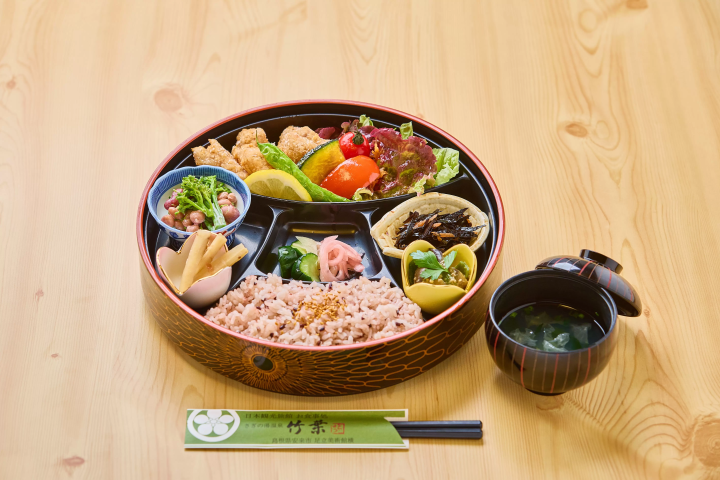
Furthermore, you can enjoy lunch along with your day trip to the baths, which is unique to Chikuyo. Vegetarian, vegan, and halal menus are available, so it is recommended for foreign visitors tourists (reservations required).
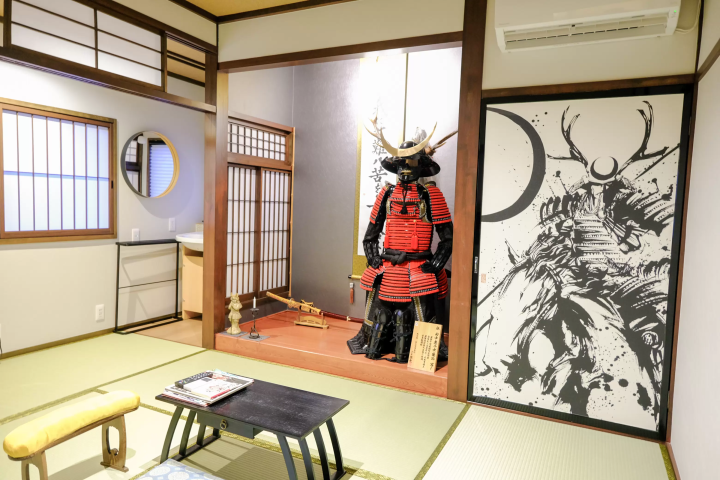
The most popular of the guest rooms is the room designed after the Sengoku warlord, Yamanaka Shikansuke. This impressive room, decorated with custom-made armor and ink paintings, is sure to leave a lasting impression!
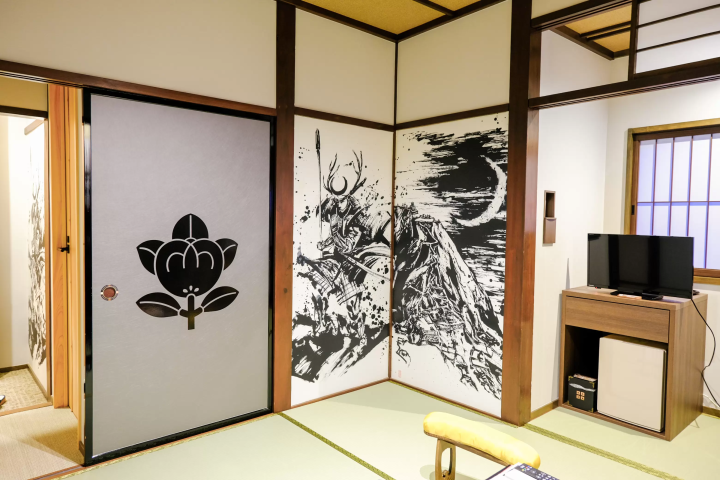
You will have an unforgettable stay under the watchful eye of a Mount Gassan period warlord associated with Tonda.
Chikuyo
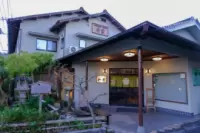 438 Furukawacho, Yasugi City, Shimane Prefecture, 692-0064
This inn is located next to the Adachi Museum of Art. It is open for lunch and offers specially prepared dishes that are vegetarian and halal (reservations required).
In addition to staying overnight, you can also take a day trip to the baths and enjoy a relaxing soak in the Saginoyu hot springs.
438 Furukawacho, Yasugi City, Shimane Prefecture, 692-0064
This inn is located next to the Adachi Museum of Art. It is open for lunch and offers specially prepared dishes that are vegetarian and halal (reservations required).
In addition to staying overnight, you can also take a day trip to the baths and enjoy a relaxing soak in the Saginoyu hot springs.
Saginoyu Onsen Yasugien: A natural inn surrounded by trees and plants
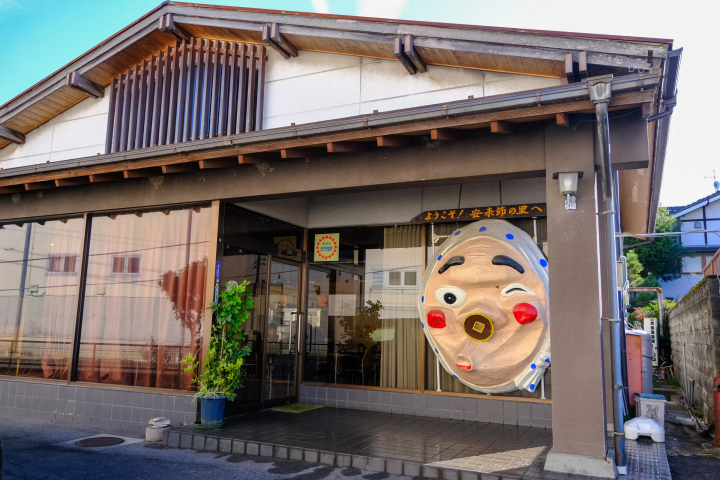
Located next to the new wing of the Adachi Museum of Art of Art, Saginoyu Onsen Yasugien is a traditional Japanese inn known for its warm hospitality. Look for the giant Hyottoko mask hanging at the entrance.
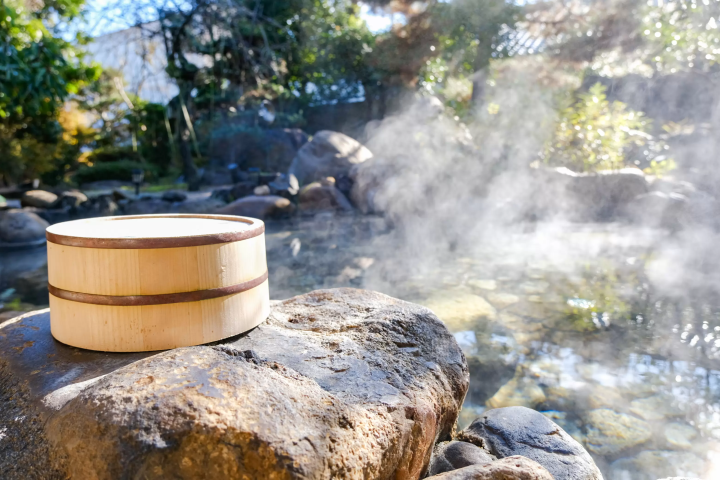
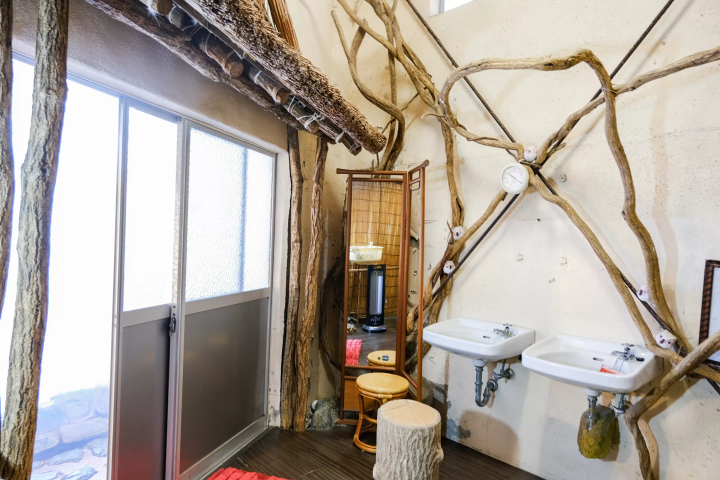
If you stay at Yasugien, you can bathe in natural hot springs that flow directly from the source 24 hours a day. When you head to the changing room to enter the hot spring, you will be overwhelmed by the elaborate world view.
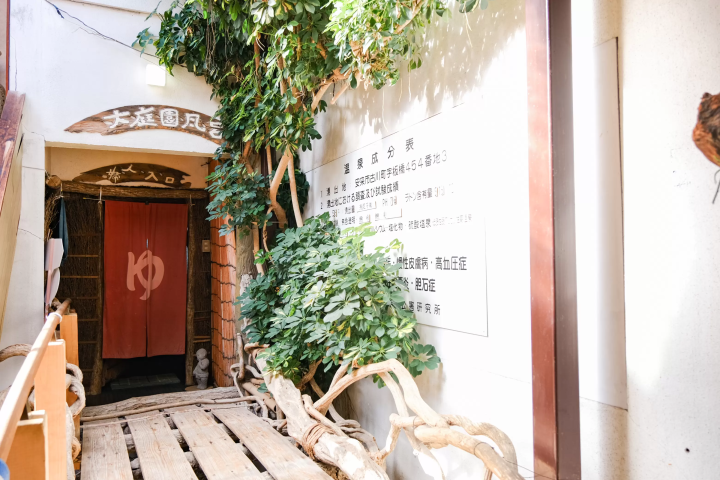
The first thing that greets you is a wooden arch bridge that evokes the jungle and nature. Once you pass through the noren curtain at the Oku, you'll arrive at the artistic changing room, where the curves of the trees are cleverly arranged.
When you open the bath door with anticipation, you'll see a bath with a tiled roof that makes you feel like you've traveled back in time! The stone indoor bath exudes a solemn atmosphere even during the day, and is a must-see for hot spring lovers.
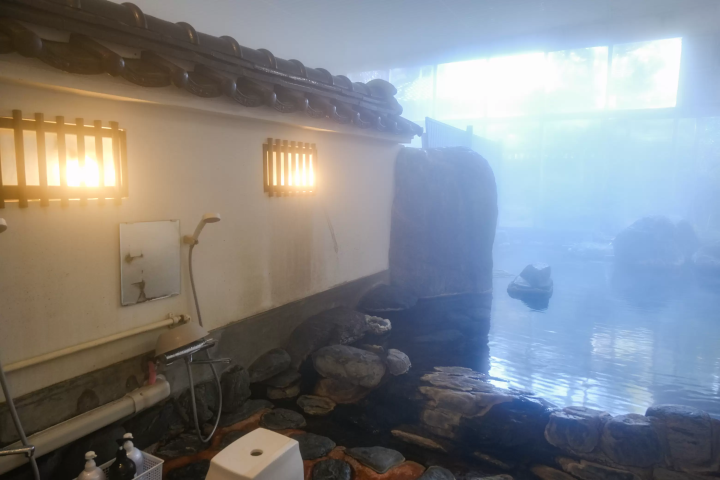
After pouring the water over yourself, you slowly soak your feet in the bathtub, where you'll be greeted by hot spring water of about 47-50 degrees Celsius. The clear, colorless spring water is perfect for a long bath.
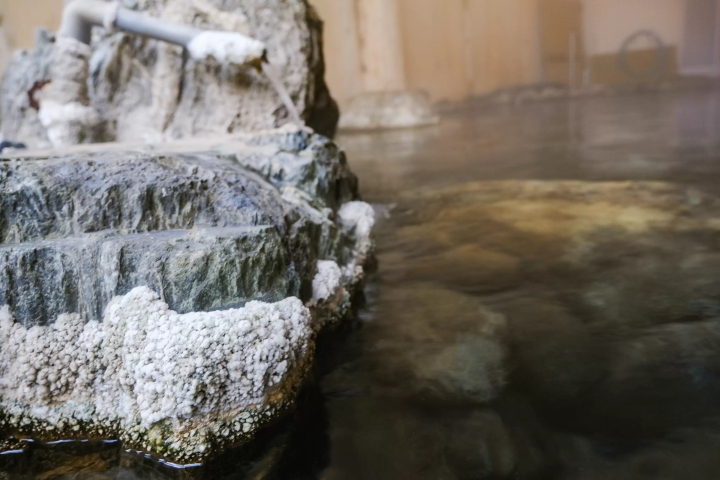
When you bathe, you can clearly see the white hot spring deposits on the rocks. They blend in with the plants around the rocks and the bathtub, giving you a sense of freedom, like you're bathing in the middle of nature.
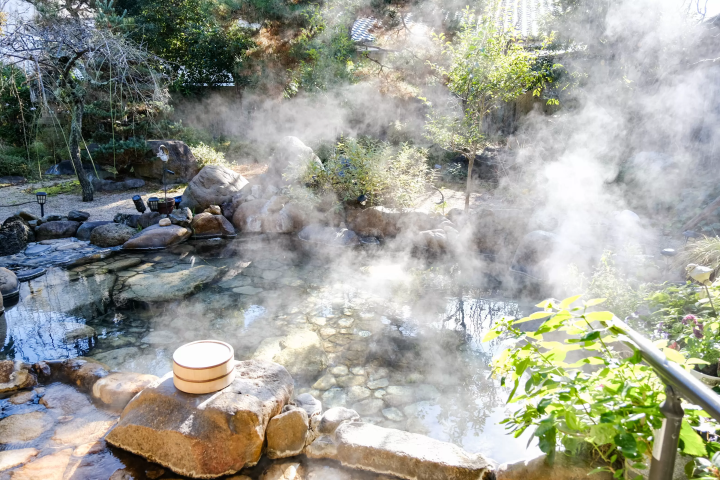
For those who want to enjoy a private bath, we recommend the private open-air bath for one hour. Like the large public bath, it is made of stone, and the great thing about it is that you can have the garden created just for the open-air bath all to yourself.
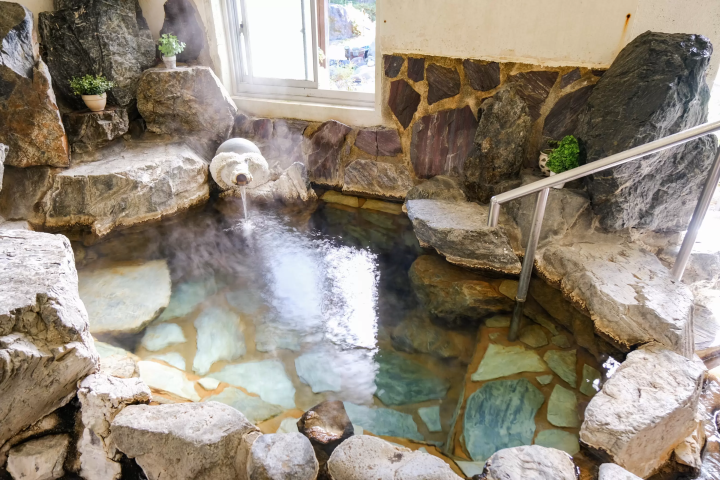
Planters and ornamental plants are decorated to blend in with the garden and add a touch of color.
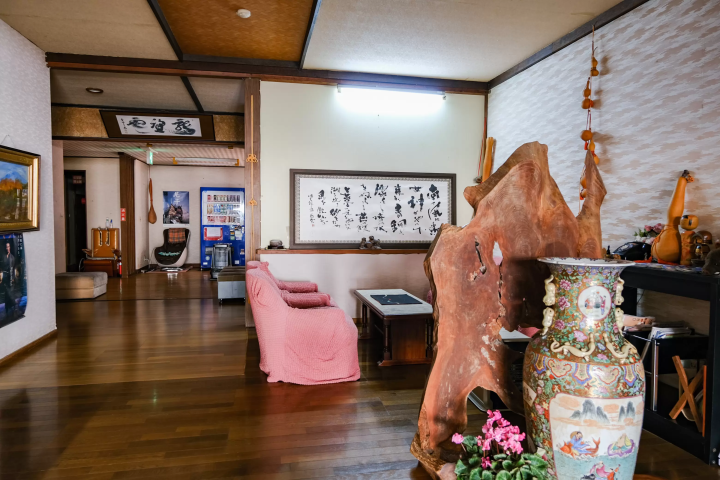
Yasugien also accepts guests for hot spring treatments of up to two nights, so it is recommended for those who want to fully enjoy the benefits of the hot springs.
Yasugien
 478 Furukawa-cho, Yasugi City, Shimane Prefecture, 692-0064
This hot spring inn is located in Saginoyu Onsen town. A large Hyottoko monument is the landmark.
The homey atmosphere and spacious baths where you can relax will touch the hearts of travelers.
478 Furukawa-cho, Yasugi City, Shimane Prefecture, 692-0064
This hot spring inn is located in Saginoyu Onsen town. A large Hyottoko monument is the landmark.
The homey atmosphere and spacious baths where you can relax will touch the hearts of travelers.
Saginoyuso: enjoy the constantly flowing natural hot spring
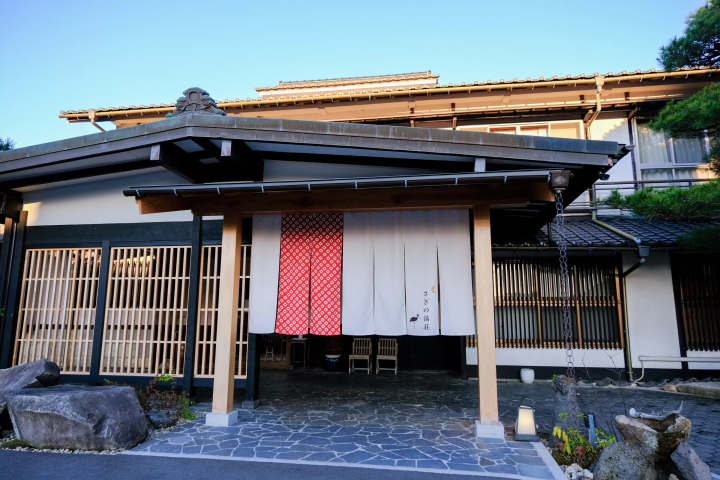
Our accommodation for the night was Saginoyuso , the hotel with the largest capacity in Saginoyu Onsen .
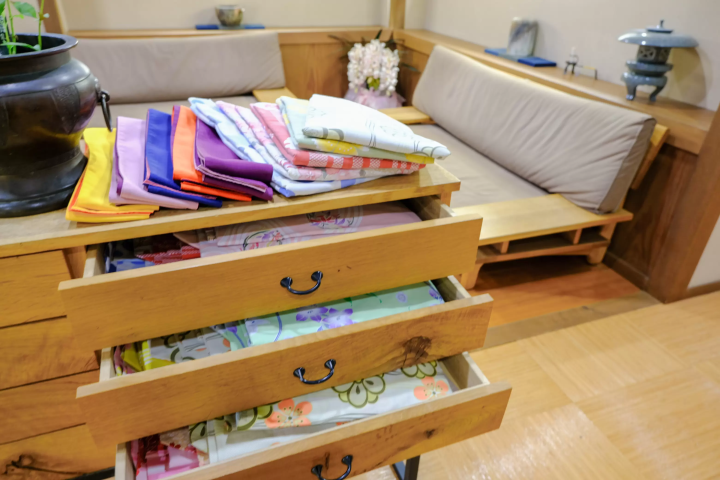
Upon arrival, the luxurious check-in begins with choosing your favorite yukata.
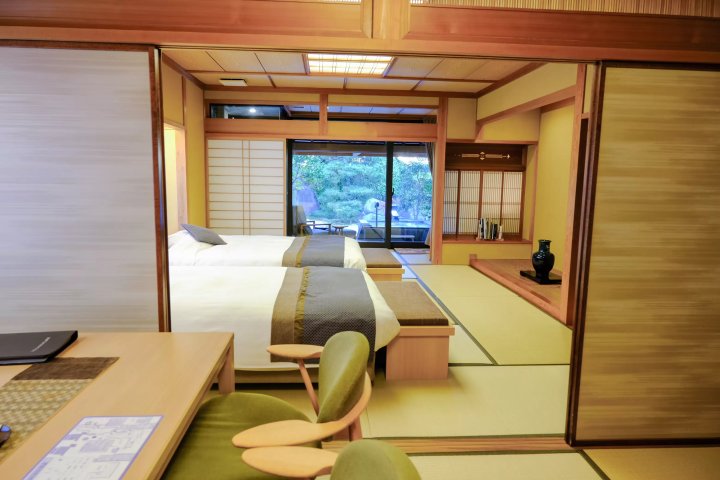
I stayed in a spacious Japanese-style room with my own private open-air bath. There was also a foot bath next to the bath, creating a relaxing space perfect for soothing the fatigue of travel.
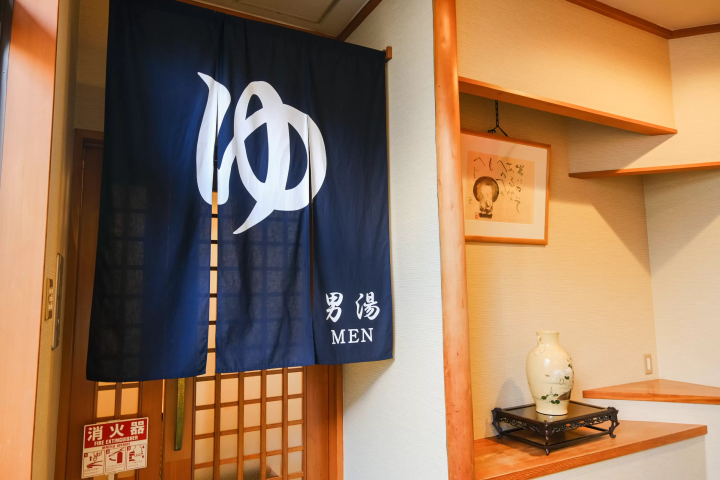
There are four types of baths available at Saginoyuso: the privately available Shiratsuyu and Iwatsuyu baths, the large public bath, and the open-air bath.
The private baths can be reserved for 50 minutes from 3:00 PM to 10:00 PM, and can be used at any time between 10:00 PM and 9:00 AM the following morning if they are available. The large public baths are open all night, so it's a good idea to check in early and enjoy a soak.
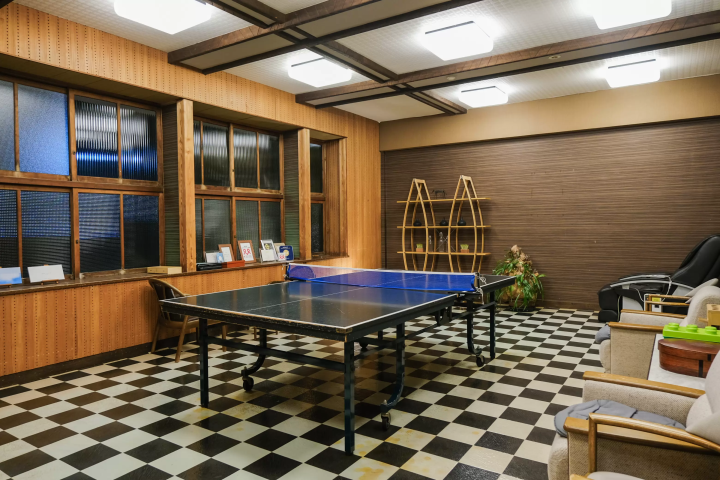
The inn is built around a garden, and just walking around will pique your interest. There are many things to make you want to stroll around, such as the elegant scenery of seasonal trees and carp in the pond, a shop selling local specialties, a table tennis court, and a lounge.
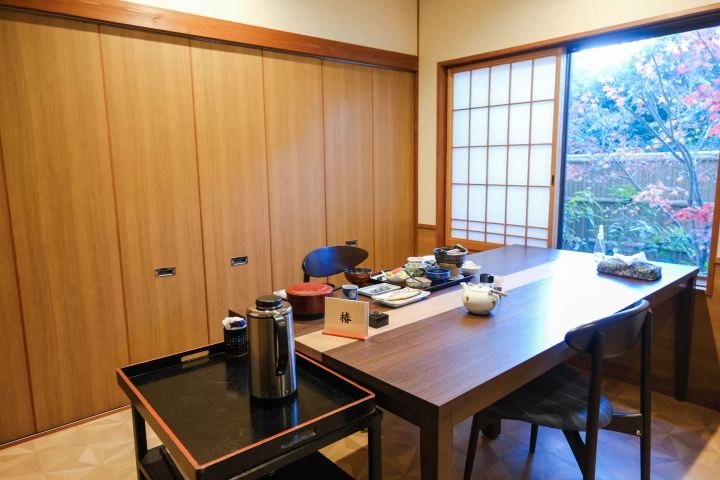
For dinner, each group will be guided to a private room where they can enjoy their meal in privacy.
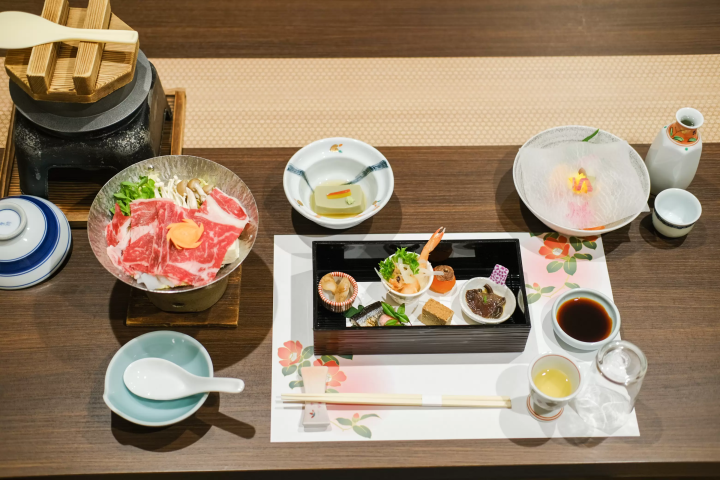
The menu for this day was a luxurious lineup featuring winter flavors, including "Crab Miso Tofu," "Yuzuan Grilled Pacific Saury," and "Wagyu Beef and Mushroom Hot Pot," all of which are visually beautiful and satisfying to the soul.
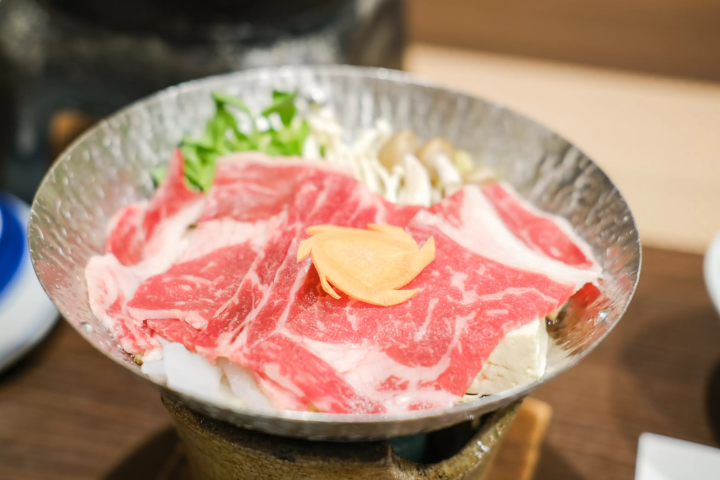
The Wagyu Mushroom Hot Pot is a special dish that allows you to enjoy the high-quality fat of the beef. The clear soup with a gentle fragrant dashi stock brings out the umami and sweetness of the beef all at once.
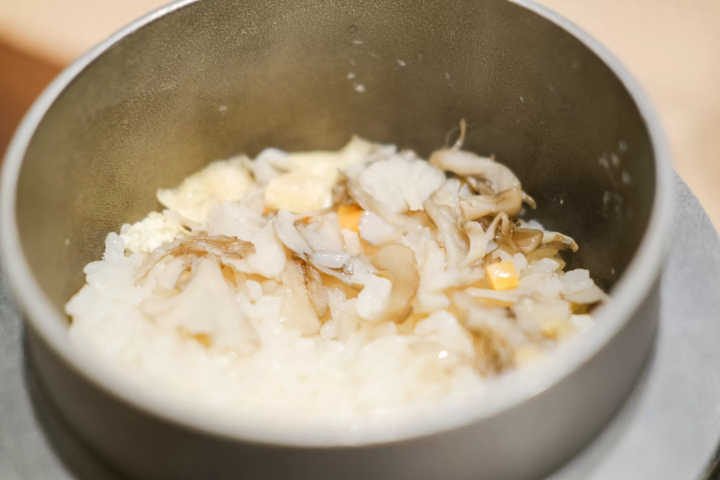
The rice is cooked slowly for about 20 minutes, and is served hot and steaming hot. The umami of the maitake mushrooms permeates the rice, making it so delicious you won't be able to stop eating.
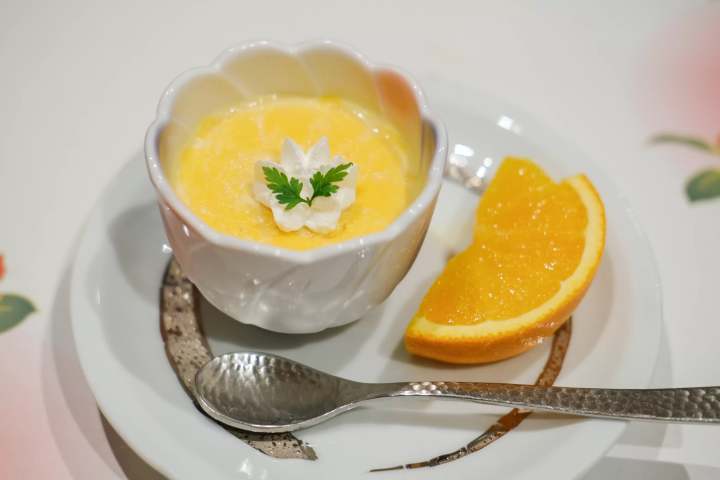
The pumpkin pudding for dessert was smooth and delicious, leaving me feeling happy until the very end.
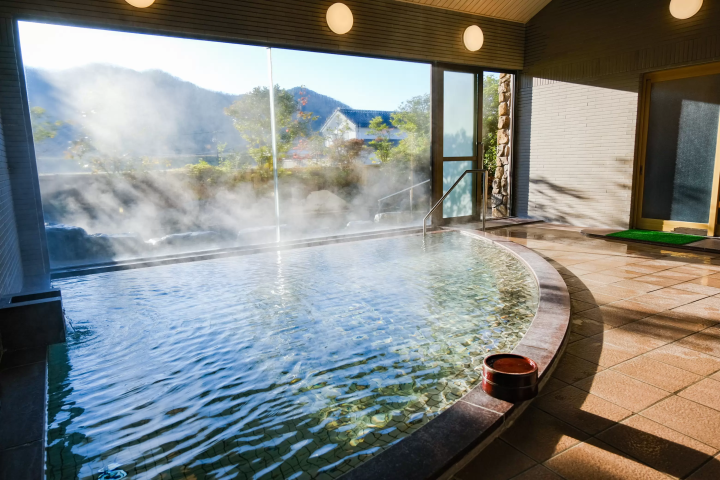
After satisfying your body and mind with gourmet food, head to the hot springs. First, warm your body from the inside out in the large bath.
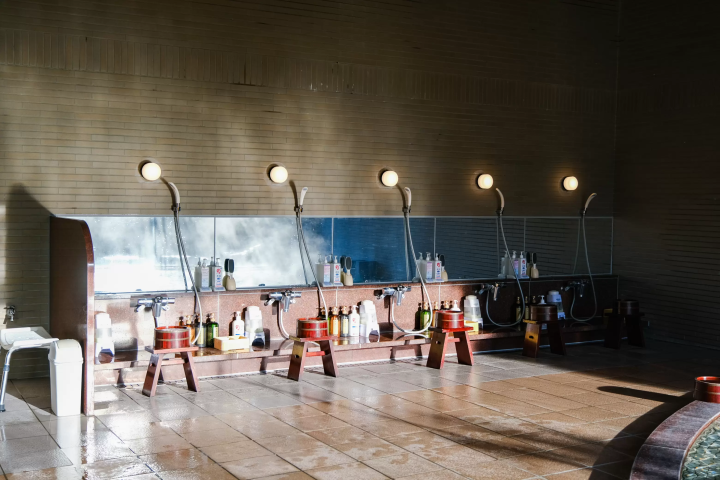
The large bath, with glass walls on both sides, gives you the feeling of being in the middle of nature! You can relax and enjoy the view of the water rippling as it is constantly poured in, alternating with the natural scenery of Shimane.
Even more eye-catching is the open-air bath, which is just as large as the indoor bath. Made of stone, the spacious open-air bath is large enough to comfortably accommodate 10 people.
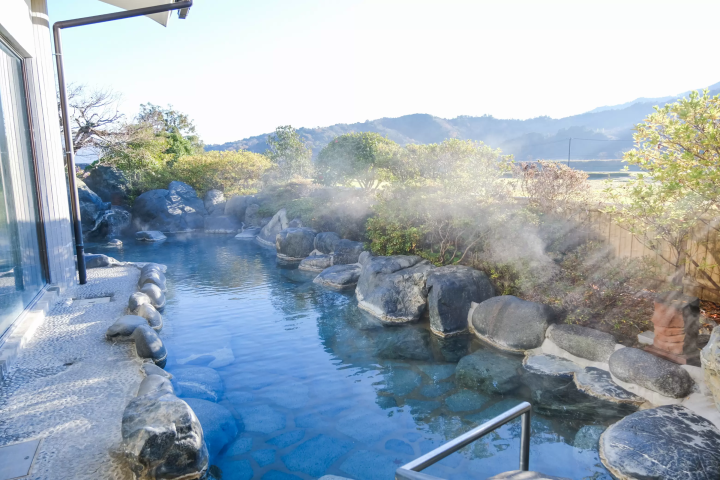
The warm and tranquil countryside scenery is another attraction unique to Saginoyuso.
The popular private open-air bath "Iwatsuyu" is located at the end of the outdoor corridor.
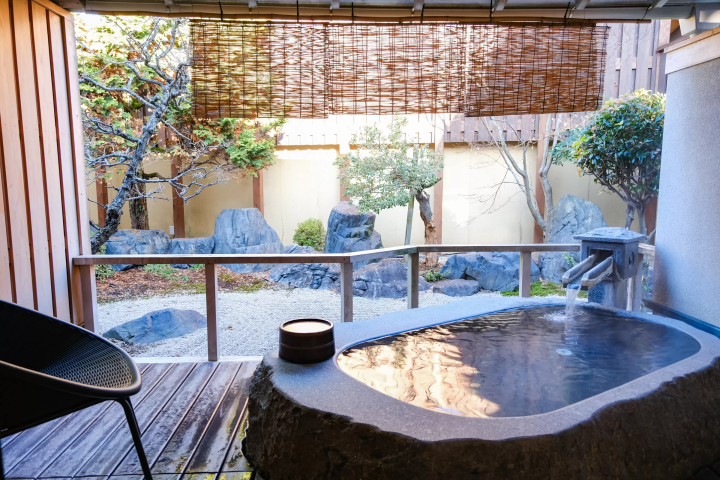
The open-air bath, where you can relax and enjoy the hot springs in a private space, is very popular at any time. Just soaking in the bath, where you have the Japanese garden all to yourself, will make you feel luxurious.
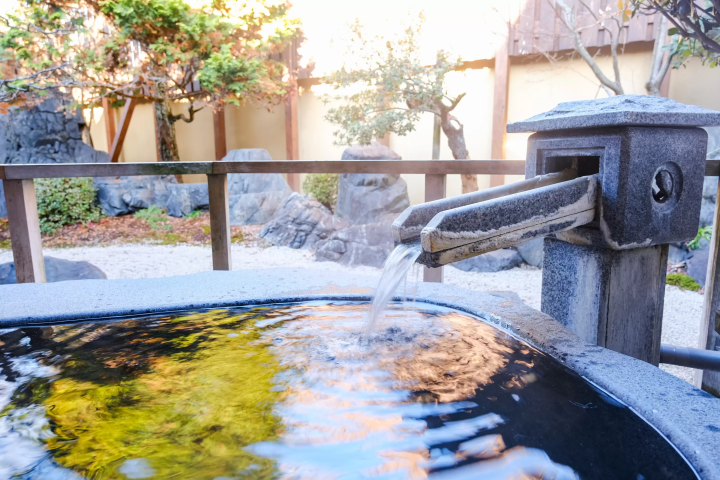
You can enjoy an extraordinary experience to your heart's content with the overflowing hot spring water.
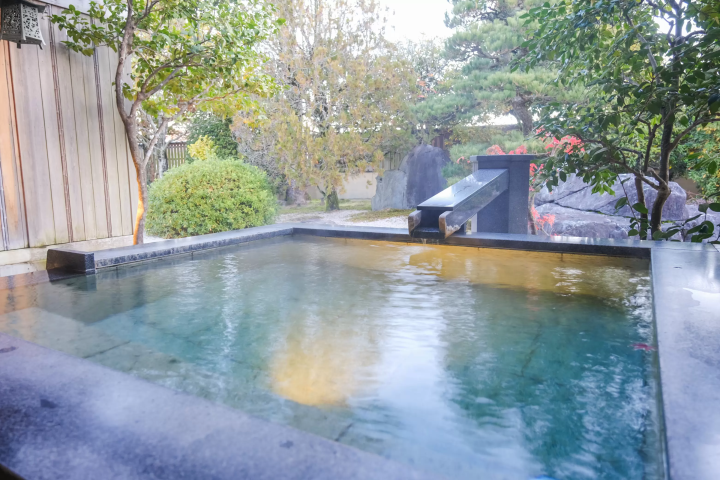
Thanks to the Saginoyu Onsen, which is known for its effects on fatigue, sensitivity to cold, and joint pain, I slept soundly without catching a chill. In the morning, I was pleasantly awakened by the sound of the hot spring water flowing into the open-air bath in my room.
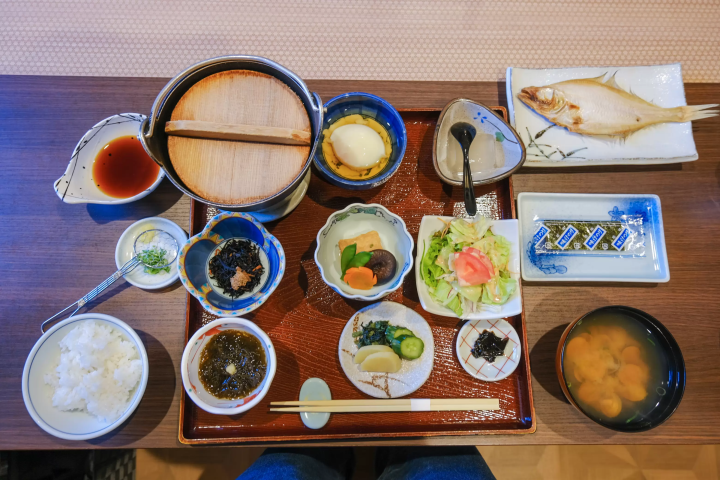
Start your morning off fresh with a healthy Japanese breakfast. The extensive lineup of dishes, including boiled tofu, mozuku seaweed, and grilled fish, will surely bring a smile to your face.
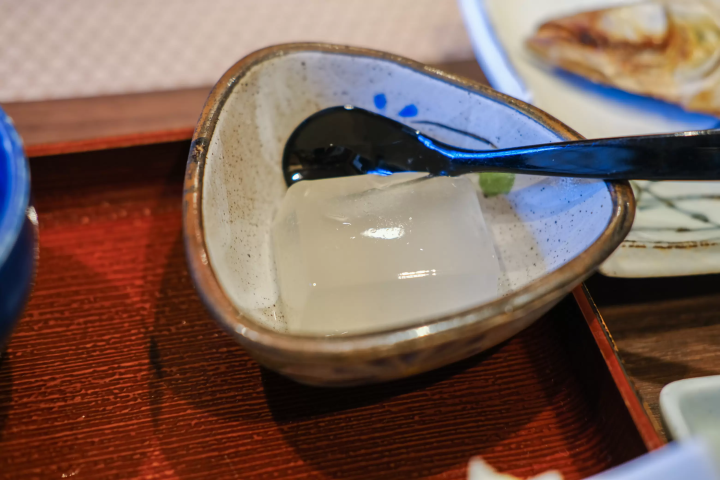
You can enjoy gourmet food without getting bored, even with the yuzu jelly for dessert.
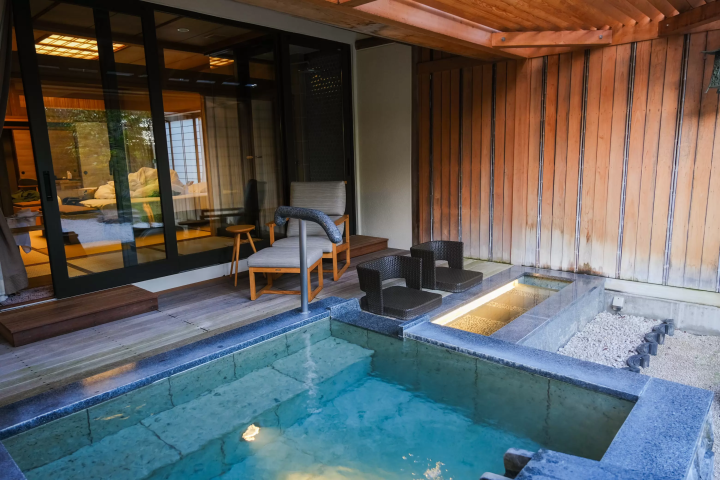
Before check-out, you can relax in the open-air bath in your room. You can add cold water to your liking, so you can adjust the temperature and enjoy a foot bath to fully enjoy the hot spring until the very end.
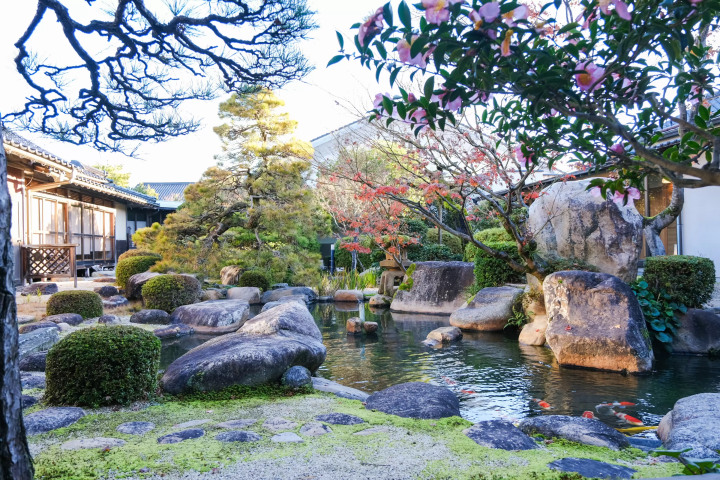
Take a step away from your daily life and immerse yourself in the rich hot spring waters and heartfelt hospitality that only a " national hot spring resort " can offer. Your time spent at Saginoyuso will make this luxurious wish come true, and it will be an unforgettable trip.
Saginoyu-so
 478-1 Furukawa-cho, Yasugi City, Shimane Prefecture, 692-0064
This inn is just a 30-second walk from the Adachi Museum of Art. Guests will be warmly welcomed with meals that reflect the four seasons, hot spring water straight from the source, and luxuriously laid-out guest rooms.
Day trips to the large public bath are available, and the indoor bath and rock bath can also be reserved for private use.
478-1 Furukawa-cho, Yasugi City, Shimane Prefecture, 692-0064
This inn is just a 30-second walk from the Adachi Museum of Art. Guests will be warmly welcomed with meals that reflect the four seasons, hot spring water straight from the source, and luxuriously laid-out guest rooms.
Day trips to the large public bath are available, and the indoor bath and rock bath can also be reserved for private use.
Access information
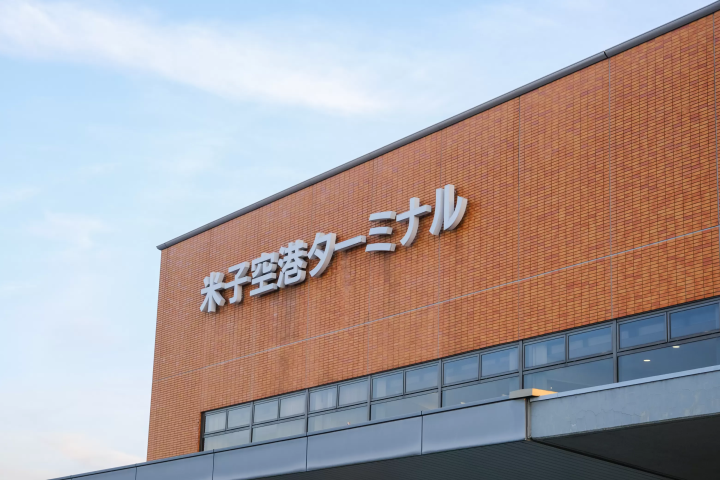
There are two main ways to get to Saginoyu Onsen from Tokyo .
By plane
One way is to fly from Haneda Airport to Yonago Airport. From Yonago, you can rent a car at the airport, which will allow you to make the most of your time sightseeing.
If driving is difficult, you can take the Sakai Line or airport shuttle bus from Yonago Airport Station to Yonago Station, then take the Sanin Main Line to the next station, Yasugi Station.
From Yasugi Station, you can access Saginoyu Onsen Town by taking the Yasugi City Wide Area Bus or taxi. It takes about 20 minutes from Yasugi Station to the hot spring town. There is also a free shuttle bus from Yasugi Station to the Adachi Museum of Art , which is located near the hot spring town.
By express train
The second way to get there from Tokyo is to use the sleeper express "Sunrise Izumo." This sleeper express train departs every night and arrives the next day at noon, making it perfect for those who want to make travel an enjoyable part of the journey.
It takes about 11 hours from Tokyo to Yasugi Station. From Yasugi Station, you can take the Yasugi City Wide Area Lifestyle Bus or a taxi. There is also a free shuttle bus from Yasugi Station to the Adachi Museum of Art , located near Saginoyu Onsen Town.
Access from the Kansai area
If you are coming from the Kansai area, there are two ways to get there: by Shinkansen or by plane.
If you are taking the Shinkansen, travel from Osaka Station to Okayama Station and transfer to the Limited Express Yakumo Limited Express to Yasugi Station. The journey takes approximately three and a half hours. From Yasugi Station, you can take the Yasugi City Wide Area Lifestyle Bus or a taxi. It takes about 20 minutes from Yasugi Station to Saginoyu Onsen Town. There is also a free shuttle bus from Yasugi Station to the Adachi Museum of Art , which is located near the hot spring town.
If you're flying, fly from Izumo Itami to Izumo Enmusubi Airport. The flight time is about 50 minutes, and if you rent a car from the airport, you'll arrive at the hot spring town in just under an hour.
National hot spring resorts are designated by the Minister of the Environment under the Hot Springs Act as healthy hot spring resorts where the benefits of hot spring use are expected to be sufficient. 79 hot spring resorts have been designated nationwide (as of October 2024). National hot spring resorts are selected based on the following criteria. 1. Conditions regarding the quality and volume of hot spring water (1) The source of the hot spring water used must be a therapeutic spring. (2) The hot spring water used must have an abundant volume of water. The standard volume of water flow must be 0.5 liters per minute or more per hot spring user. 2. Conditions regarding the environment of the hot spring resort (1) The hot spring is suitable as a resort from the perspective of the natural environment, townscape, history, climate, culture, etc. (2) A plan for the placement of doctors who can provide guidance on proper hot spring use and health management from a medical perspective, or a plan for the placement or training policy of personnel who can provide guidance on bathing methods, etc. in cooperation with the doctors, must be established. (3) Appropriate efforts will be made to protect hot spring resources, manage the hygiene of hot springs, promote public use of hot springs, and take into consideration the elderly and disabled, etc. (4) Enhanced efforts to prevent disasters.
The contents on this page may partially contain automatic translation.
Special Features
More







![[Mie] TOBA SEASIDE HOTEL Dining Guide | Popular Buffet & Seasonal Menu Introduction](https://resources.matcha-jp.com/resize/720x2000/2026/05/11-263832.webp)
![[80 minutes by train from Kyoto ] Experience the countryside in Fukuchiyama City , Kyoto Prefecture , a special place only locals know about](https://resources.matcha-jp.com/resize/720x2000/2025/12/19-253414.webp)