[2026 Edition] 8 Famous Cherry Blossom Spots in Maizuru City , Kyoto Prefecture ! Introducing Popular and Hidden Gems
![[2026 Edition] 8 Famous Cherry Blossom Spots in Maizuru City , Kyoto Prefecture ! Introducing Popular and Hidden Gems](https://resources.matcha-jp.com/resize/720x2000/2026/01/06-254882.webp)
We present to you "8 carefully selected cherry blossom viewing spots" that are packed with the charm of Maizuru, from popular classic spots to hidden gems loved by locals. We will guide you on an exciting spring trip that will make you want to head out with your camera in hand!

Written by
This is a voluntary tourism organization that promotes the attractions of the northern Kinki region of Tamba, Tajima, Tango, and Wakasa. The flavors of Northern Kinki are not limited to crab, a representative winter sea delicacy, but also include oysters, yellowtail, and pufferfish, as well as cockles, rock oysters, and white squid in the summer, and mountain flavors such as Tamba chestnuts and Tamba black beans, and the summer fruit sand dune melon, making this an area where you can enjoy gourmet food all year round. I would be happy to be able to visit the vast northern Kinki region many times and share information on railroad journeys.
This service includes sponsored advertisements.
-
Table of Contents
- Yoshiwara Cove (best time to see: late March to early April)
- Ruriji Temple's weeping cherry blossoms (best viewing time: late March to early April)
- Maizuru Park (Tanabe Castle Ruins) (Best time to see: late March to early April)
- Keirinji Temple (best time to see: late March to early April)
- Along the Isa River (best time to see: late March to early April)
- Yohoro River's Thousand Cherry Blossoms (best time to see: late March to early April)
- Kyoraku Park (best time to see: late March to early April)
- Repatriation Memorial Park (mid- to late April)
- The camellias are also in full bloom!
List of famous cherry blossom spots in Maizuru City
| Autumn foliage spots | Best time to see | Highlights |
| Late March to early April | A waterway and cherry blossoms. A sight you won't see anywhere else. | |
| Weeping cherry blossoms at Ruriji Temple | Late March to early April | This weeping cherry tree is said to be 300 years old. |
| Maizuru Park (Tanabe Castle Ruins) | Late March to early April | A park where you can enjoy 100 cherry trees in Maizuru Park, located on the site of Tanabe Castle. |
| Guilin Temple | Late March to early April | The view of the largest gate in Maizuru City and the cherry blossoms is beautiful |
| Along the Isa River | Late March to early April | You can take photos of trains shining against the cherry blossoms |
| The Thousand Cherry Blossoms of Yohoro River | Late March to early April | The 7-kilometer-long row of cherry blossom trees boasts approximately 1,000 trees, the largest in Maizuru. |
| Kyoraku Park | Late March to early April | 800 cherry trees on a small hill! |
| Repatriation Memorial Park | Mid-April to late April | Approximately 170 cherry trees line the path leading to the observation deck. They are late blooming. |
Click here to find out how to get to Maizuru City!
Access from Kyoto can be found here.
Yoshiwara Cove (best time to see: late March to early April)
![[2026 Edition] 8 Famous Cherry Blossom Spots in Maizuru City , Kyoto Prefecture ! Introducing Popular and Hidden Gems](https://resources.matcha-jp.com/resize/720x2000/2026/02/10-258182.webp)
The cove is also known as the Venice of Japan. The canal scenery with fishing boats lined up behind the houses is a popular photo spot among foreign visitors tourists. The view from the bridge gives off a nostalgic vibe, making it a photo spot that will have you pressing the shutter without even realizing it.
Ruriji Temple's weeping cherry blossoms (best viewing time: late March to early April)
![[2026 Edition] 8 Famous Cherry Blossom Spots in Maizuru City , Kyoto Prefecture ! Introducing Popular and Hidden Gems](https://resources.matcha-jp.com/resize/720x2000/2026/02/10-258181.webp)
The sight of the 400-year-old tree and the 100-year-old young tree spreading their branches and blooming so beautifully that they almost touch the ground is loved by many as the "Yoshida Weeping Cherry Blossoms."
It is said that Hosokawa Yusai, who was also the teacher of poetry, transplanted a cherry tree from Yoshida in Kyoto to console the nobleman Nakanoin Michikatsu, who was imprisoned here from 1580-1599, and named the area Yoshida. As a result of this connection, a cutting from Yoshida Daigengu Shrine was grafted onto the tree in 2004, and it was a success. Another tree was planted within the grounds as the third generation, and has since begun to produce lovely flowers. In Showa , the tree was designated a cultural property and a natural monument by Maizuru City Maizuru City for the "magnificent scenery created by the combination of old and young trees during the flowering season."
Maizuru Park (Tanabe Castle Ruins) (Best time to see: late March to early April)
![[2026 Edition] 8 Famous Cherry Blossom Spots in Maizuru City , Kyoto Prefecture ! Introducing Popular and Hidden Gems](https://resources.matcha-jp.com/resize/720x2000/2026/02/10-258176.webp)
The castle gate was completed in 1992. The exhibition room introduces the history of successive castle lords, centered around Hosokawa Yusai, and the castle town of Tanabe.
Keirinji Temple (best time to see: late March to early April)
![[2026 Edition] 8 Famous Cherry Blossom Spots in Maizuru City , Kyoto Prefecture ! Introducing Popular and Hidden Gems](https://resources.matcha-jp.com/resize/720x2000/2026/02/10-258180.webp)
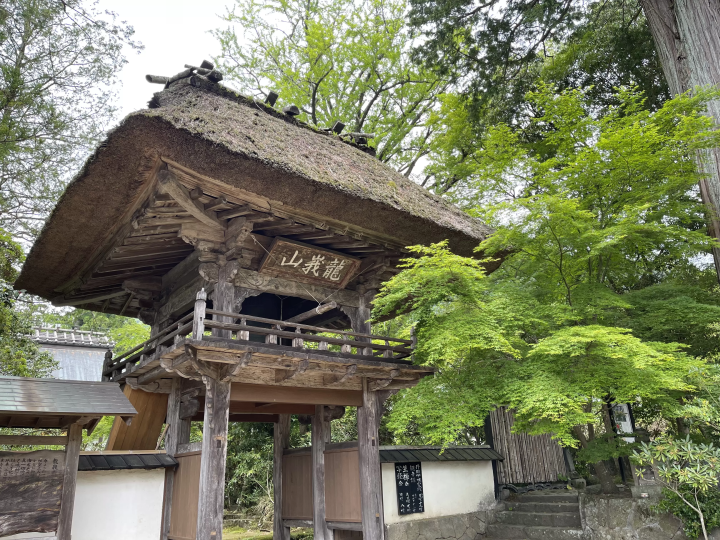
Keirinji Temple is a Motoyama temple of the Soto sect and is a little-known cherry blossom spot.
During the siege of the castle, Daikei, a monk of Keirinji Temple, volunteered to join Yusaisai's army with 14 of his disciples, ready to risk his life in repaying the kindness of Yusai for many years. Later, in recognition of this service, Tadaoki presented them with a painting of the Buddha in Nirvana and a temple bell. Founded by Chikuo Yusen during the Muromachi period, the temple grounds, lined with halls influenced by Chinese culture, are full of exotic charm.
Along the Isa River (best time to see: late March to early April)
![[2026 Edition] 8 Famous Cherry Blossom Spots in Maizuru City , Kyoto Prefecture ! Introducing Popular and Hidden Gems](https://resources.matcha-jp.com/resize/720x2000/2026/02/10-258177.webp)
This cherry blossom viewing spot is known for the beautiful row of cherry trees along the Isa River in Maizuru City that can be seen from National Route 27. The row of cherry trees stretches for about 300 meters and is perfect for strolling or jogging.
Yohoro River's Thousand Cherry Blossoms (best time to see: late March to early April)
![[2026 Edition] 8 Famous Cherry Blossom Spots in Maizuru City , Kyoto Prefecture ! Introducing Popular and Hidden Gems](https://resources.matcha-jp.com/resize/720x2000/2026/02/10-258175.webp)
Along the Yohoro River that flows through the center of Higashi-Maizuru, a row of cherry blossom trees blooms in profusion for about 7 kilometers, with about 1,000 trees, the largest in Maizuru.
Among them, the particularly large old cherry tree in front of the hospital is mostly Somei Yoshino. They look like roadside trees, but when the Naval Hospital moved from Tsutsujigaoka in December Showa, the current sidewalk area was part of the hospital grounds. 23 cherry trees were planted on the boundary between the road and the hospital to commemorate the move. Later, at the request of the city, the hospital provided the area for the sidewalk, and it took on its current appearance. The trees on the river side were apparently planted during repair work following damage caused by Typhoon No. 13 in Showa. On a spring day, after passing through the tunnel of cherry blossoms in front of Maizuru Medical Center, it is also lovely to cross the bridge and view the cherry blossoms from the promenade on the opposite bank.
Kyoraku Park (best time to see: late March to early April)
![[2026 Edition] 8 Famous Cherry Blossom Spots in Maizuru City , Kyoto Prefecture ! Introducing Popular and Hidden Gems](https://resources.matcha-jp.com/resize/720x2000/2026/02/10-258179.webp)
This park is located on a hill overlooking Maizuru and is lined with approximately 450 cherry trees.
After the war, about 70 cherry trees were donated by a former US soldier, Nikkei II, who was originally from Hawaii and was stationed in the city. They are known as "Aloha Cherry Blossoms," and about 40 of them remain today. They were donated at the time with the hope of lifting the spirits of the Japanese people, and they are called "Aloha Cherry Blossoms" because of the aloha spirit of acceptance, compassion, respect, and love that is the homeland of those soldiers, Hawaii.
Repatriation Memorial Park (mid- to late April)
![[2026 Edition] 8 Famous Cherry Blossom Spots in Maizuru City , Kyoto Prefecture ! Introducing Popular and Hidden Gems](https://resources.matcha-jp.com/resize/720x2000/2026/02/10-258178.webp)
Along the path leading to the observation plaza, double-flowered cherry trees were planted by those who returned to Maizuru after World War II, as well as their relatives and associates. Over 100 cherry trees were planted in the hope of everlasting peace, and the road lined with double-flowered cherry trees stretches out, marking the passage of time as the cherry trees grow.
The camellias are also in full bloom!
![[2026 Edition] 8 Famous Cherry Blossom Spots in Maizuru City , Kyoto Prefecture ! Introducing Popular and Hidden Gems](https://resources.matcha-jp.com/resize/720x2000/2026/02/10-258183.webp)
At Maizuru Natural Culture Park, you can see the 1,500 species and approximately 30,000 camellias, the most in Japan, as well as precious native and Western species cultivated here.
Best time to see: Mid to late March.
This is a voluntary tourism organization that promotes the attractions of the northern Kinki region of Tamba, Tajima, Tango, and Wakasa. The flavors of Northern Kinki are not limited to crab, a representative winter sea delicacy, but also include oysters, yellowtail, and pufferfish, as well as cockles, rock oysters, and white squid in the summer, and mountain flavors such as Tamba chestnuts and Tamba black beans, and the summer fruit sand dune melon, making this an area where you can enjoy gourmet food all year round. I would be happy to be able to visit the vast northern Kinki region many times and share information on railroad journeys.
The contents on this page may partially contain automatic translation.
Special Features
More