
Discover the Behind-the-Scenes Transformation Driven by Product Development and Production Innovation
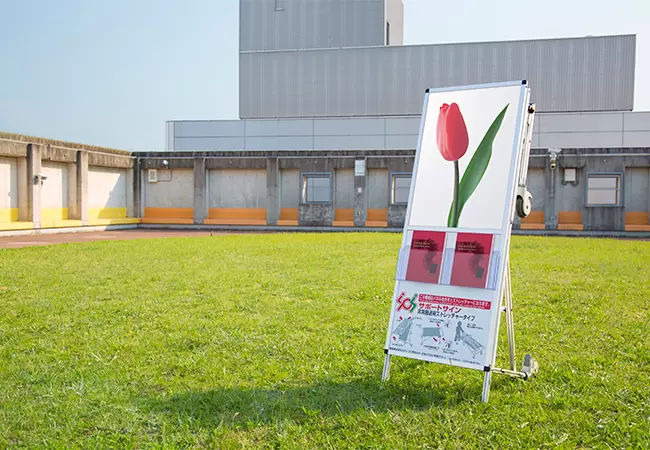
This article introduces a factory tour designed for business leaders, university programs, and visitors who want to learn directly from Japan’s world‑renowned manufacturing sites. At a signage manufacturing company with over 60 years of history, participants can explore how the company transformed its business model, strengthened product development capabilities, and built an efficient production system. The tour offers a rare opportunity to experience real Japanese manufacturing on the factory ...

Written by
Namba in Osaka is the cultural center where theaters, shopping streets, and gourmet spots are all within walking distance, blending entertainment with authentic Osaka culture. It is a highly attractive MICE area where participants can enjoy exploring the city itself. The Namba ⇔ Kansai International Airport MICE Guide provides comprehensive MICE support based on Nankai Group venues, hotels, and convenient access. Pre- and post-event, we also offer tour plans combining industrial tourism—such as corporate visits and factory tours—in South Osaka and Wakayama. HP:https://www.japanrootsguide.com/en "This account is operated by Nankai Co., Ltd." [Photo description] 1. Rapi:t express train directly connecting Kansai International Airport and Namba 2. Scenery of Dotombori
This service includes sponsored advertisements.
-
Table of Contents
- How a Japanese Manufacturer Built a New Model of Monozukuri and Business Transformation
- Take a Look Inside the Factory Tour!
- President’s briefing : Understanding the Company’s Transformation and Innovation Strategy
- Factory tour
- Hands‑On Mini Frame Workshop
- Tour Details
- How to contact us
How a Japanese Manufacturer Built a New Model of Monozukuri and Business Transformation
Founded 60 years ago in Sakai City, this top-tier manufacturer holds 10–15% of the domestic market share in stand-type signage products. Originally operating as a precision components processor for industrial machinery bearings, the company strategically shifted away from subcontracting to become a full-scale finished‑product manufacturer, integrating everything from production to sales.
The company is also strongly committed to product development, continuously creating unique items from its own distinctive perspective—such as a pull-up training machine and the “Support Sign,” a display board that also functions as an emergency‑aid device—which have helped open new sales channels.Their young workforce, with an average age of just 31, is supported by a production environment that enables even early‑career employees to contribute to high‑quality manufacturing. This atmosphere fosters flexible thinking, which in turn drives new initiatives and further product‑development efforts.
This tour offers visitors the opportunity to learn how the company evolved from a subcontractor to a market-leading manufacturer, and to discover the strengths of Japanese monozukuri directly on the factory floor.
Take a Look Inside the Factory Tour!
Here is an overview of what you can expect during the visit.The tour program follows the schedule below:
President’s briefing→ Factory tour → Hands-on mini-frame making workshop
President’s briefing : Understanding the Company’s Transformation and Innovation Strategy
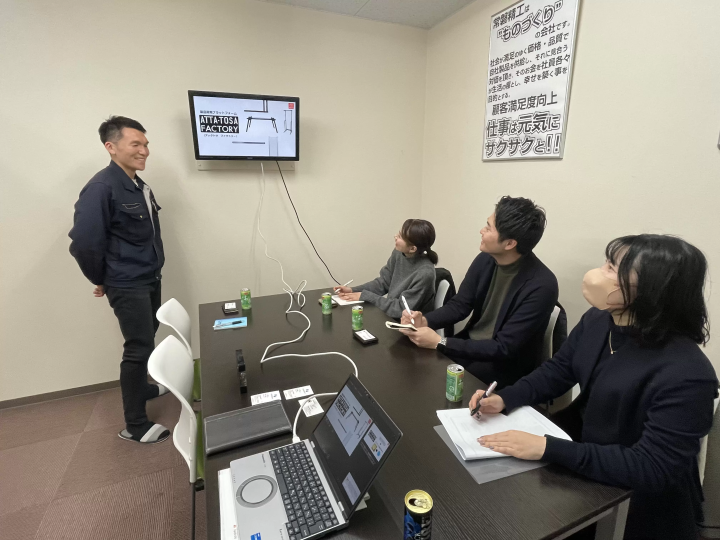
The tour begins with a briefing from the company’s president, who shares the history of the business and its evolution.
Visitors will learn how the company shifted from subcontracting to becoming a full-scale finished‑product manufacturer, the role of industry–academia collaboration in product development, and initiatives aimed at increasing the company’s local value and strengthening community engagement through monozukuri. A highlight of the session is the company’s new product‑development platform launched in January 2024.
This system enables employees to propose new ideas, which are then further refined through co‑creation with external partners. It has already resulted in several innovative products, including the “Support Sign”—a display board that also functions as an emergency‑aid device—as well as outdoor tables.
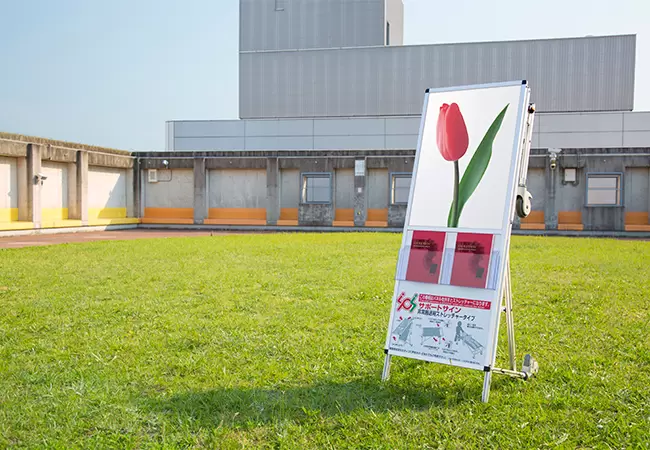
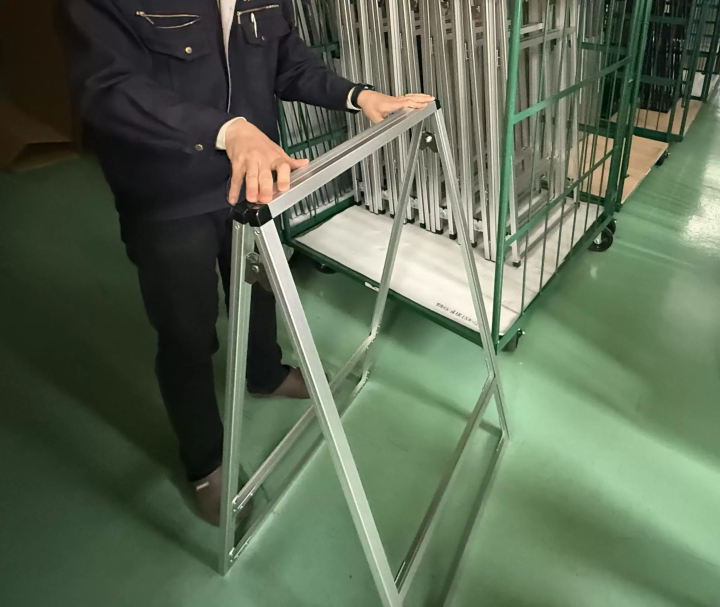
The Support Sign is normally used as a standard display sign, but in the event of a disaster or accident, it can be transformed into a wheelchair or stretcher. This innovative emergency‑assistance device has already been adopted by over 500 educational institutions and private companies across Japan, earning attention as a practical tool for disaster preparedness and rescue support.
During the president’s briefing, visitors will learn how ideas emerging from real on‑site needs are refined, developed, and eventually commercialized through the company’s unique product‑development process.
Factory tour
From this point, visitors step inside the factory to observe the company’s core manufacturing technologies. Inside the facility, numerous welded and processed components are stored in a ready‑to‑assemble state. Each part is intentionally designed for ease of assembly, enabling products to be completed simply by combining the necessary components.
Because the finished product is fully envisioned during the design stage, the production process is highly streamlined, minimizing waste and enabling fast, efficient manufacturing.
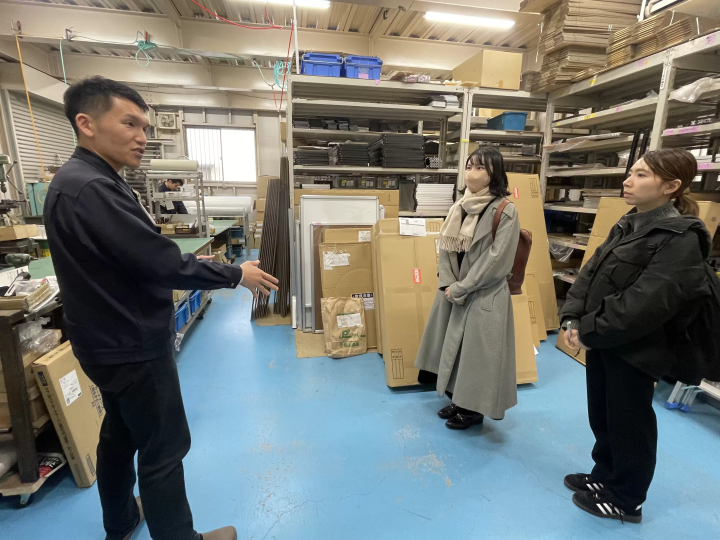
The factory utilizes an advanced production‑management system that tracks inventory levels for over 2,500 types of components in real time.
Because the system constantly visualizes “which parts are available and in what quantity,” the company can respond to urgent orders, short lead times, and even same‑day shipping.
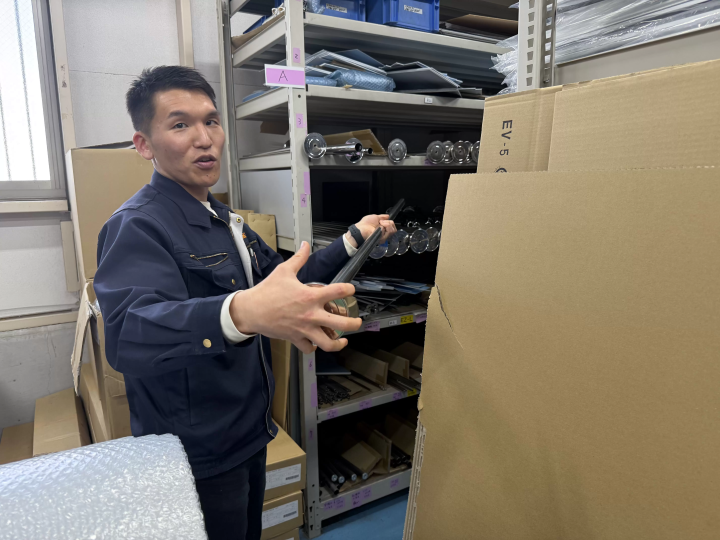
Next, visitors are guided through the manufacturing process.
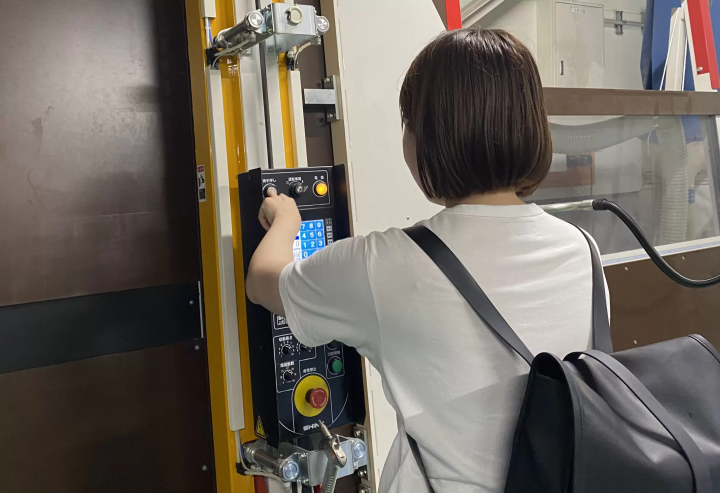
Along the production line are various machines used for cutting aluminum materials and drilling components—areas in which the company has made significant capital investments.
In the past, workers relied heavily on manual skills, using tools like measuring tapes and pencils. However, such methods inevitably led to variations and inconsistencies in product quality.
By introducing precision machinery, the company has standardized processing accuracy and established a production system that maintains high and consistent quality.
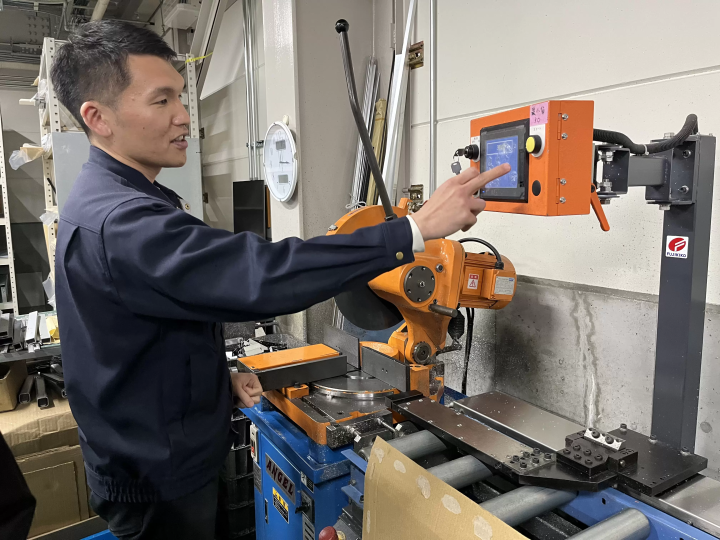
As a result of these investments, even less‑experienced staff can easily participate in the manufacturing process, creating a workplace with an average age of just 31 years.
The production line—supported by advanced equipment and well‑designed systems—successfully balances high quality with speed, forming the core of the company’s monozukuri excellence.
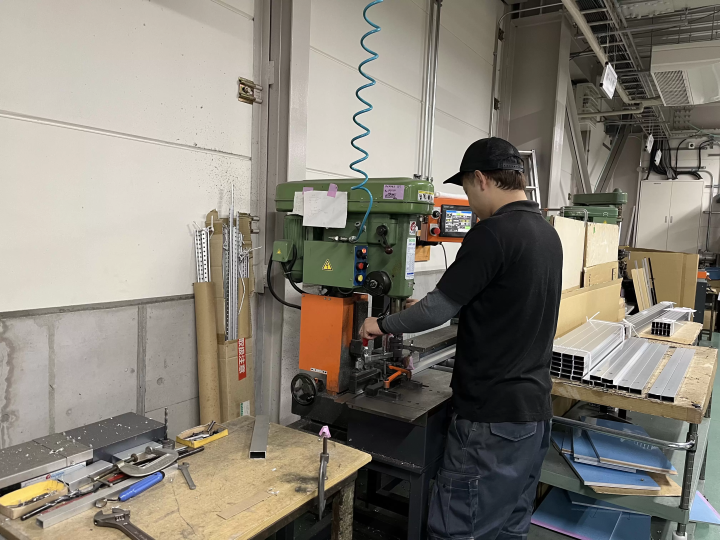
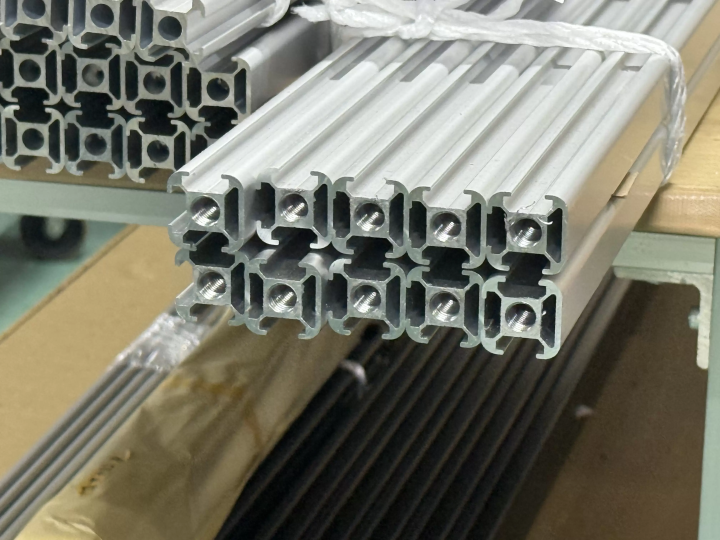
The factory manages approximately 50 different aluminum frame cross‑sections, with each component tracked individually.
Depending on the intended application, the most suitable combination of parts is selected. This flexible, non‑standardized design approach allows the company to meet a wide range of customer needs and produce highly customizable products.
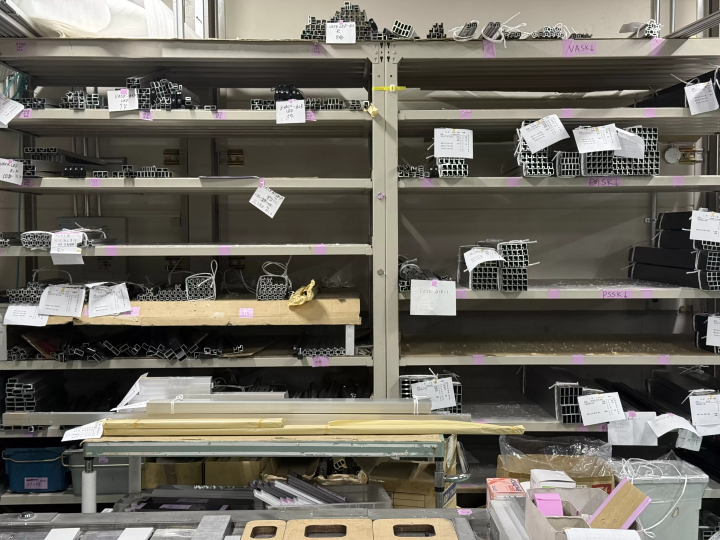
Inside the factory, aluminum frames are stocked in a partially assembled state, already built up to the frame stage.
By designing the workflow with the finished product in mind, the company can maintain high quality while achieving a fast and efficient production system.
Hands‑On Mini Frame Workshop
After the factory tour, participants can enjoy a hands‑on Mini Frame Making experience.
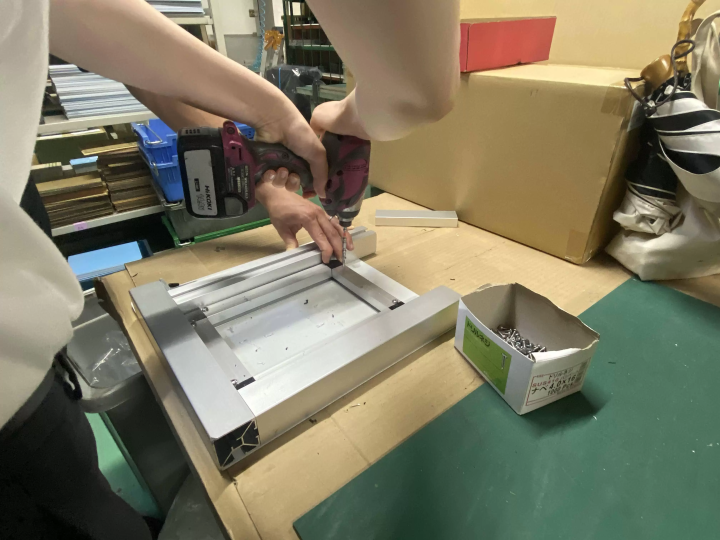
Using industrial‑grade equipment, visitors cut rigid panels and assemble aluminum frames—tasks that are rarely encountered in everyday life.
This immersive workshop offers an exciting opportunity to work with real manufacturing tools and processes firsthand.
Participants can take their completed mini frame home as a souvenir.
It’s a hands‑on opportunity to appreciate the appeal of aluminum framing while fully experiencing the joy and sense of accomplishment that come from creating something with your own hands.
Tour Details
During the factory tour, visitors can observe manufacturing processes that are rarely seen in everyday life.
In the photo‑frame workshop, participants cut rigid panels using industrial machinery and assemble aluminum frames, experiencing real monozukuri hands‑on.
While creating their own frame, visitors gain a tangible sense of “I’m building this myself,” and discover the depth and appeal of aluminum craftsmanship up close.
≪Contents&Fee≫
・Factory Tour + Mini Frame Workshop
Adults: ¥3,800 per person (tax included) / Children: ¥1,900 per person (tax included)
・Design Management Lecture + Factory Tour + Mini Frame Workshop
¥28,800 per group (tax included)
≪Number of people≫
1–15 participants
≪Time≫
Approximately 90–120 minutes
≪Booking≫
Up to 2 weeks in advance
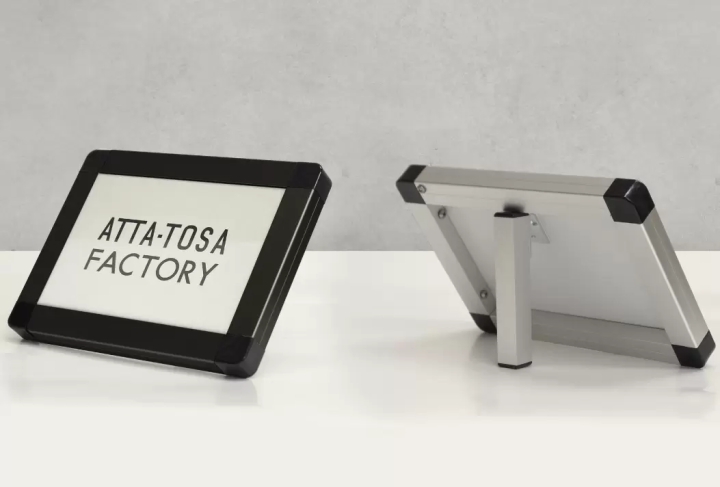
Visitors will discover how strategic equipment investment and smart production management enable the company to balance both high quality and rapid output.
Through the product‑development platform, guests can also observe how ideas evolve into real products, gaining insight into the company’s culture of innovation and continuous improvement.
The tour offers a hands‑on understanding of Japanese monozukuri, highlighting the team’s on‑site capabilities and willingness to embrace new challenges. International visitors are welcome. (Interpreters are required.)
How to contact us
1. Please fill out the necessary information in the form below and contact us.
2. We will contact you from "industrial.tourism@nankai.co.jp" within 3 business days.
Please feel free to contact us for any enquiries about available dates or detailed tour information!
Namba in Osaka is the cultural center where theaters, shopping streets, and gourmet spots are all within walking distance, blending entertainment with authentic Osaka culture. It is a highly attractive MICE area where participants can enjoy exploring the city itself. The Namba ⇔ Kansai International Airport MICE Guide provides comprehensive MICE support based on Nankai Group venues, hotels, and convenient access. Pre- and post-event, we also offer tour plans combining industrial tourism—such as corporate visits and factory tours—in South Osaka and Wakayama. HP:https://www.japanrootsguide.com/en "This account is operated by Nankai Co., Ltd." [Photo description] 1. Rapi:t express train directly connecting Kansai International Airport and Namba 2. Scenery of Dotombori
The contents on this page may partially contain automatic translation.
Special Features
More







![[Mie] TOBA SEASIDE HOTEL Dining Guide | Popular Buffet & Seasonal Menu Introduction](https://resources.matcha-jp.com/resize/720x2000/2026/05/11-263832.webp)
![[80 minutes by train from Kyoto ] Experience the countryside in Fukuchiyama City , Kyoto Prefecture , a special place only locals know about](https://resources.matcha-jp.com/resize/720x2000/2025/12/19-253414.webp)