
Kurashiki Hanpu: A new form born from natural materials, traditional techniques, and the spirit of artisans

Kurashiki Hanpu is a new style created using canvas from Kurashiki , which boasts the highest production volume in Japan, and combines natural materials, traditional techniques, and the spirit of artisans.

Written by
Okayama Prefecture is located in the Center of Western Japan and is known as the "Land of Sunshine" due to its warm climate and little rain throughout the year. It's conveniently located halfway between famous tourist destinations like Kyoto, Osaka, and Hiroshima! It's also the gateway to Shikoku via the Seto. Okayama is also known as the "Fruit Okayama," and the fruits that are sun-drenched in the warm climate of the Setouchi are of the highest quality in terms of sweetness, aroma, and flavor. You can enjoy seasonal fruits such as white peaches, Muscat grapes, and Pione grapes! Okayama is also home to world-class tourist spots, including Okayama Castle, Okayama Korakuen Garden, one of Japan's three most famous gardens, and Kurashiki Bikan Historical Quarter, which boasts history, culture, and art!
This service includes sponsored advertisements.
Kurashiki canvas, which originated from cotton cultivation in the Edo period and boasts the highest production volume in Japan

Kurashiki City is a large reclaimed land, and since the Edo period, the cultivation of salt-resistant cotton has begun, and the city has become a major cotton production center. It is said that cotton fabrics such as Kokura obi belts were produced in large quantities, and the technique of twisting threads was refined.

In the Meiji era, canvas factories began operating using the twisting techniques they had developed up until then, and since then, canvas produced in Kurashiki has been used all over the country for a variety of household and industrial products. Currently, Kurashiki accounts for approximately 70% of domestically produced canvas.
We offer bags made from tasteful canvas woven on an old-fashioned shuttle loom.

Since canvas production began in Kurashiki City in the Meiji era, for a long time canvas was nothing more than an unnamed "white fabric," but it was named "Kurashiki Hanpu" by Viston Co., Ltd., which was established in 2003 with the investment and cooperation of Kurashiki's two major canvas weaving companies. While many canvas manufacturers use fabrics imported from overseas, Viston offers a wide variety of bags made from its own 100% cotton canvas.

One of these is the "Selvage Tote," a simple and useful bag for everyday use. The material is canvas woven on a shuttle loom that has been carefully used since it was discontinued in the Showa. The simple design, which makes use of the selvage, known as the edge of a woven fabric, is popular with people of all ages. The beautifully trimmed selvage is a sign of first-class canvas.
Canvas products carefully crafted with pride as "MADE IN KURASHIKI"
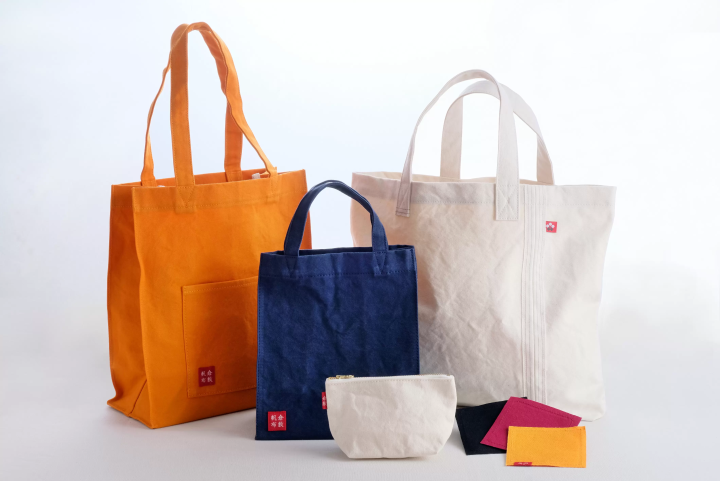
The company started out by making bags that took advantage of the characteristics of canvas, which has both a traditional texture and strength, and now produces a wide range of products, from coasters and other household and kitchen goods to interior items such as chair seats.
All of these items are carefully hand-spun by artisans and are durable enough to withstand heavy use. In addition to the texture of natural cotton, the fabric also has an appealing texture that improves with use.
Add color to your life with these warm items, created using traditional techniques and a love for canvas.
Kurashiki Hanpu Bikan Historical Store
 11-13 Honmachi, Kurashiki City, Okayama Prefecture 710-0054
We are a shop directly managed by a Kurashiki canvas weaver, which accounts for approximately 70% of the national market share of domestically produced canvas.
We sell tote bags, accessories, and more at our store, which is an old storehouse that has been renovated. Feel the warmth of durable canvas products that get better the more you use them.
11-13 Honmachi, Kurashiki City, Okayama Prefecture 710-0054
We are a shop directly managed by a Kurashiki canvas weaver, which accounts for approximately 70% of the national market share of domestically produced canvas.
We sell tote bags, accessories, and more at our store, which is an old storehouse that has been renovated. Feel the warmth of durable canvas products that get better the more you use them.
Okayama Prefecture is located in the Center of Western Japan and is known as the "Land of Sunshine" due to its warm climate and little rain throughout the year. It's conveniently located halfway between famous tourist destinations like Kyoto, Osaka, and Hiroshima! It's also the gateway to Shikoku via the Seto. Okayama is also known as the "Fruit Okayama," and the fruits that are sun-drenched in the warm climate of the Setouchi are of the highest quality in terms of sweetness, aroma, and flavor. You can enjoy seasonal fruits such as white peaches, Muscat grapes, and Pione grapes! Okayama is also home to world-class tourist spots, including Okayama Castle, Okayama Korakuen Garden, one of Japan's three most famous gardens, and Kurashiki Bikan Historical Quarter, which boasts history, culture, and art!
The contents on this page may partially contain automatic translation.
Special Features
More











![[Osaka Sightseeing Bus Tour] Enjoy 360° views of Osaka from an open-top bus!](https://resources.matcha-jp.com/resize/720x2000/2026/05/25-264541.webp)
![[Autumn 2026] Private Night Tour to See the World Heritage Site Toji Temple Illuminated in a Fantastical Light-Up Effect](https://resources.matcha-jp.com/resize/720x2000/2026/04/28-263309.webp)