
Experience Autumn Tradition at Gero Onsen|Hiburi Fishing
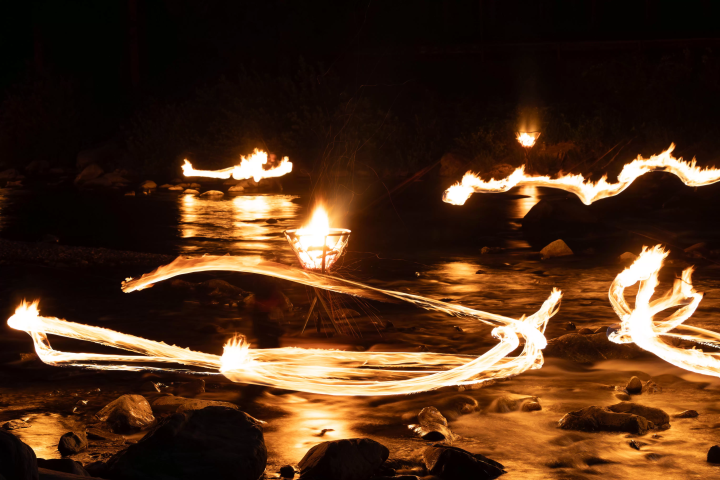
We will explain the traditional fishing method "Hiburi fishing," which is only carried out in early autumn in the Mase district of Gero City Gifu Prefecture . The fantastical sight of the torch flames chasing the sweetfish is a special experience that can be enjoyed along with sightseeing in Gero Onsen. We will also introduce tours that are only available in October.
Written by
We are a startup that rediscovers tourism resources rooted in local culture, nature, and lifestyles, and reconstructs them into experiential value through the power of technology and design. Working in collaboration with local governments, private sector, and residents, we produce systems that generate new economies and circulation in local areas.
This service includes sponsored advertisements.
-
Table of Contents
- 30 minutes by car from Gero Onsen, the traditional fishing method of "Hiburi fishing" on the clear waters of the Maze River
- You can see the fire yellowtail fishing in Maze, "Japan's most beautiful village"!
- Experience a magical night! Join the tour to see the firefishing.
30 minutes by car from Gero Onsen, the traditional fishing method of "Hiburi fishing" on the clear waters of the Maze River
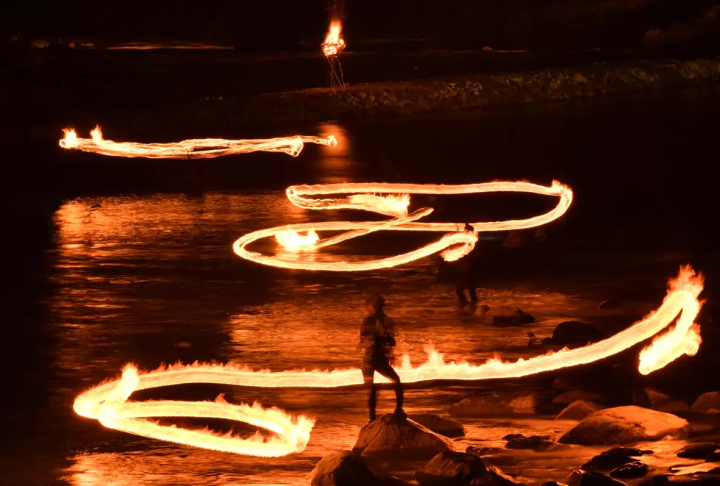
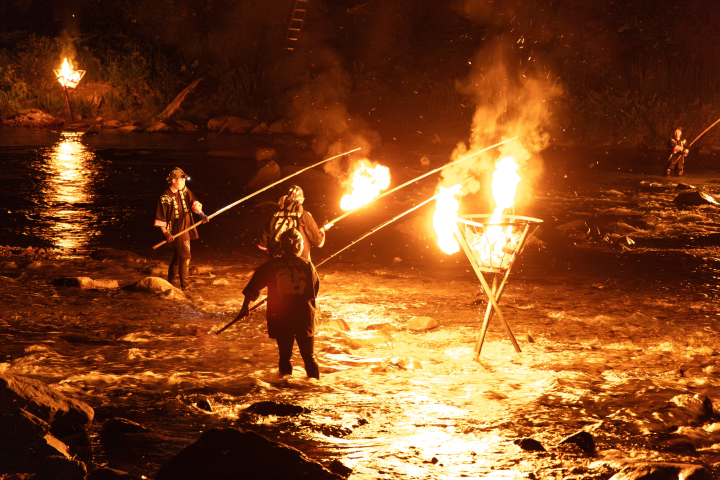
*Photo provided by Mars Photo Studio
Have you ever seen the fantastical flames dancing on the surface of a river on a Japanese autumn night? In this article, we will introduce the traditional fishing method of Maze no Hiburi Fishing, which is only available in early autumn in Gero City, Gifu Prefecture. This mystical sight is sure to be etched deeply in your travel memories.
Japan is home to beautiful nature in every season, as well as a wealth of unique cultures and traditions that have developed within it. Autumn in particular is a fascinating season, with the mountains colored with autumn leaves and festivals held all over the country to share the joy of the harvest. Gero City in Gifu Prefecture, which we will introduce this time, is a special place where you can fully enjoy Japan's beautiful autumn.
Gero Onsen is about 1 hour and 40 minutes by express train from Nagoya Station.
If you take the "Hida" limited express train from Nagoya Station, you can go directly to Gero Onsen in about 1 hour and 40 minutes. Gero Onsen has a history of over 1,000 years and is known as one of the "Three Great Hot Springs of Japan" along with Arima Onsen and Kusatsu Onsen. The hot spring town is attractive for its hot spring waters that are gentle on the skin, its traditional townscape, and its local gourmet food, making it a place where you can experience the beauty of Japanese culture and nature.
Mazegawa is a place rich in nature, located a further 30 minutes by car from Gero Onsen.
What is the traditional fishing method "Hiburi fishing"?
"Hiburi fishing" is a traditional fishing method handed down on the Maze River, a clear stream that flows through Gero City, Gifu Prefecture. It is done by taking advantage of the habit of "ochi-ayu" (sweetfish) that swim down the river to spawn in autumn. Fishermen wave a torch flame just above the water's surface, and chase the sweetfish, startled by the light, into their nets. This fishing method is full of wisdom and techniques handed down from ancient times.
In September, when the autumn winds begin to blow, after 7pm when the sun sets and darkness falls, the fire fishing begins on the Maze River. The glow of the water's surface created by the flickering flames is truly "fire art." The sight of fireballs moving around just above the water's surface fascinates visitors, who can witness a spectacular performance that combines Japanese nature and culture.
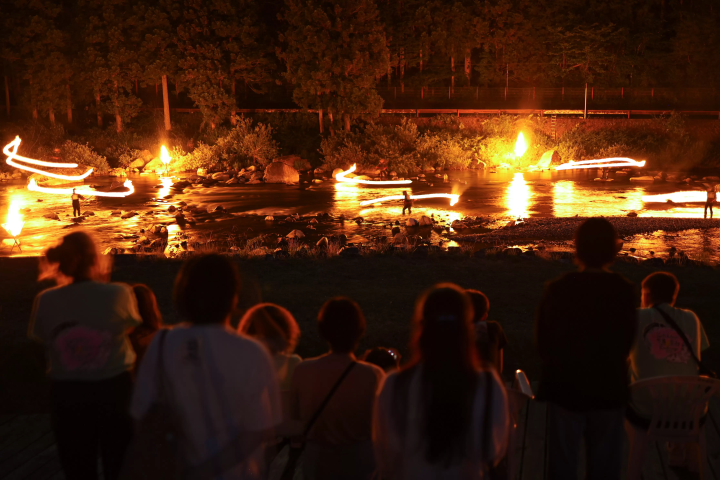
*Photo provided by Mars Photo Studio
In the past, fire-fishing was a part of life for the residents of Maze, securing a precious supply of food for the winter. At its peak, it is said that as many as 1,000 ayu could be caught in one night. However, due to the hard work involved and the aging of the local population, the number of people engaged in fire-fishing has been declining.
Amidst this, some residents with a strong desire to preserve the traditions of Maze for the future rose up and formed the Ayutoritai. In 2012, they began offering fire-fishing as an experience for tourists. Currently, there are around 10 to 15 members who continue to be active, and some children have been interested since elementary school and come to help out. Fire-fishing is a fishing method that requires thorough experience and knowledge of the depth of the river, and the techniques and knowledge have been passed down from generation to generation within the Ayutoritai.
★Why not experience traditional Japanese culture on a premium tour to see the fantastic firefishing?
The mechanism of fire yellowtail fishing
The mysterious firefishing process involves several steps.
1. Setting up the net : The net is set up in the pool where the fire fishing will be carried out. If the river current is strong, adjust the net so that it does not drift away by using stones as weights. In order to catch ayu effectively, it is important to leave some slack in the net, rather than pulling it too tight.
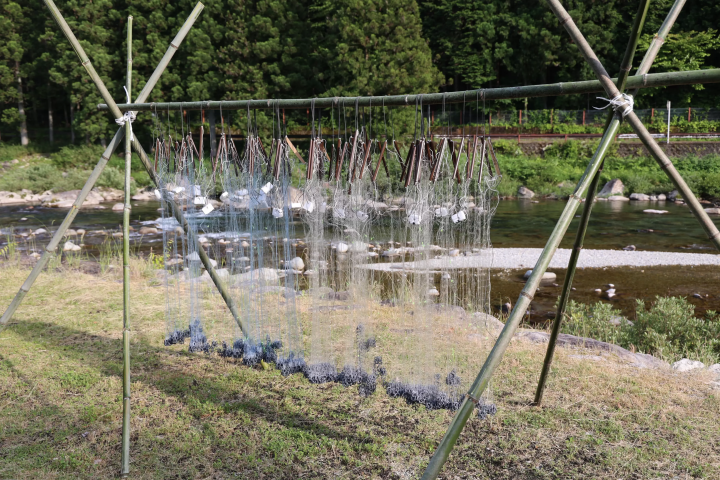
*Photo provided by Mars Photo Studio
2. Waving torches : When it gets dark, fishermen enter the river and wave torches around, frightening the ayu with their light. By holding the light near the surface of the water, the light reaches the deeper parts of the river, luring more ayu into the nets. This requires skilled technique and physical strength, as the torch flame goes out when it touches water.
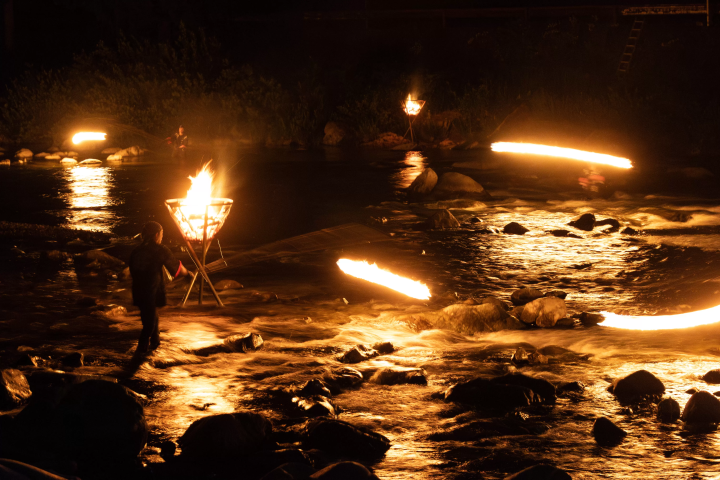
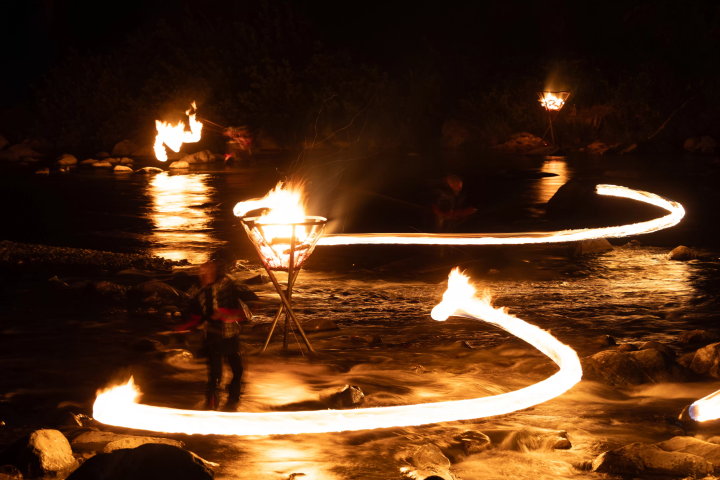
*Photo provided by Mars Photo Studio
3. Ayu are startled by the light and run away : Normally, ayu cling to rocks to rest at night, but when they are startled by the light of a torch, they leave the rocks and swim away. Amago, ugui, and iwana (char) also live in the Maze River, but it is said that only ayu react to the light.
4. The escaped ayu gets caught in the net : The ayu swims out and gets caught in the net around its pectoral fins, unable to escape. When the ayu gets caught in the net, the position of the net changes, so the fisherman adjusts the net while continuing to wave the fire.
5. Removing the Ayu from the Net : At the end of the fishing season, the net is pulled up from the river and the Ayu caught in it are carefully removed. During the Ayu-catching team's demonstration, you will have the opportunity to try your hand at removing the Ayu from the net.
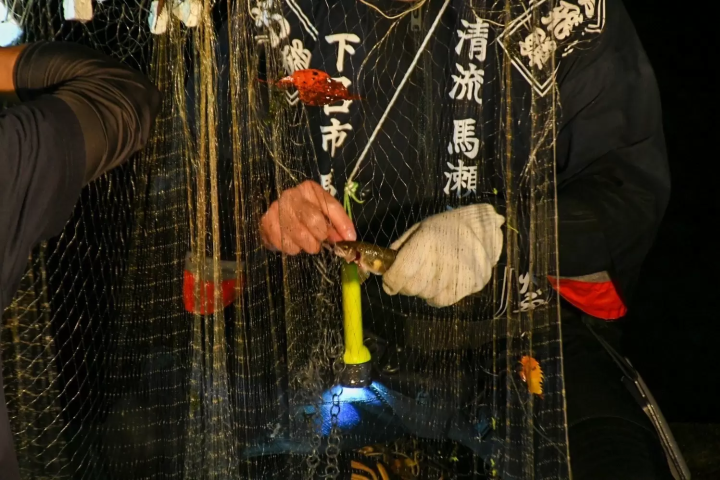
*Photo provided by Minami Hida Masegawa Tourism Association
Torches and nets are used in fire fishing.
The two main tools used in fire-fishing are torches and nets. Torches were once made from thinly split pine roots, but now they are made from bamboo sticks with oil-soaked towels wrapped around the ends. Nets are made from lightweight, durable nylon and began to become popular around 1950, when fire-fishing in the Maze River is said to have begun.
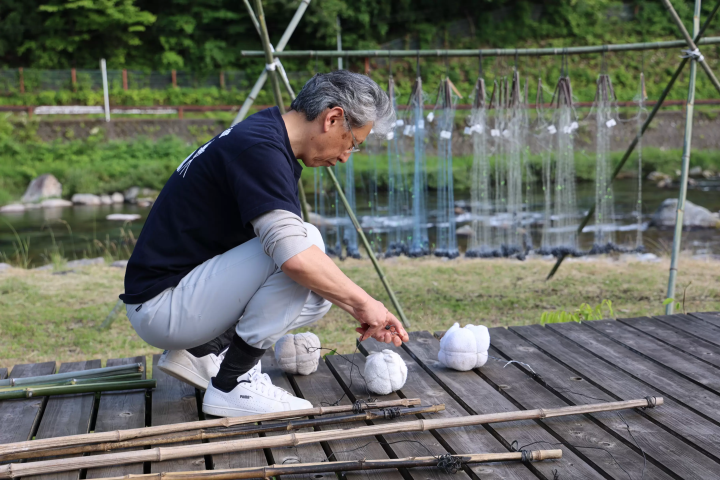
↑ A bamboo stick with an oil-soaked towel wrapped around the end is used as a torch.
*Photo provided by Mars Photo Studio
What is "Takuri fishing"?
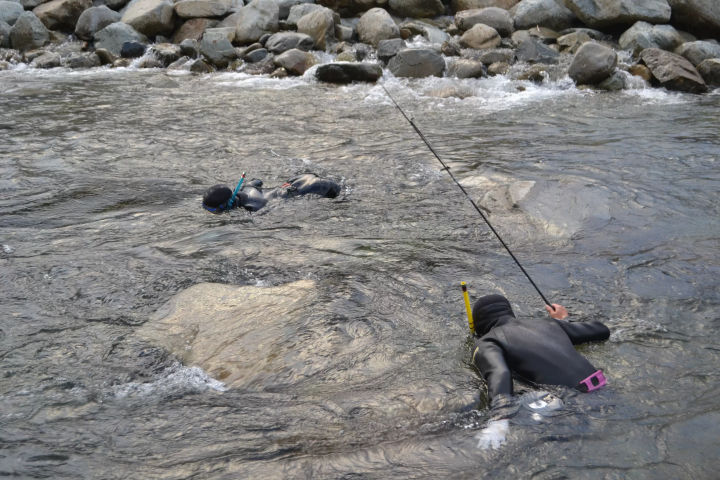
*Photo provided by Minami Hida Masegawa Tourism Association
"Takuri fishing," which is sometimes done at the same time as Hiburi fishing, is a method of catching sweetfish by peering into the river using a tool with a U-shaped hook at the end called a "takuri." Experts are said to be able to capture the movements of sweetfish even in the dark.
You can see the fire yellowtail fishing in Maze, "Japan's most beautiful village"!
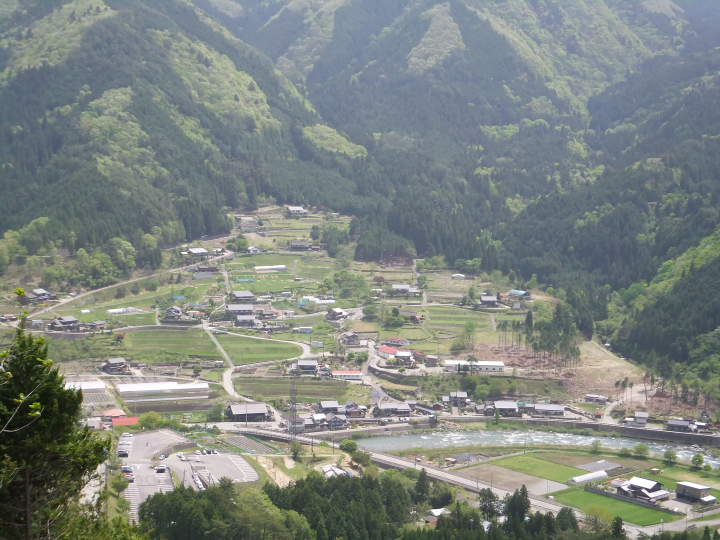
*Photo provided by Minami Hida Masegawa Tourism Association
The Maze district, where the fire-fishing fishing takes place, is located almost in the center of Gifu Prefecture, in the area of the former Maze village. Approximately 95% of the area is covered by forests, with the Maze River running through the region. The Maze River is known as one of the nation's leading meccas for ayu fishing, and is said to be home to the " best ayu" (sweetfish ) due to its pure water. During ayu fishing season, many anglers from all over Japan visit the area.
Maze is a place where forests, farmland, rivers, and people coexist.
The beautiful scenery and ecosystem of the Maze area are protected by the Maze River Eco-River System. Water springing from the forest becomes the source of the river, and the shadows of the trees cast on the river surface prevent the water temperature from rising. Fallen leaves provide habitat for fish, and insects that grow in the forest become food for the fish; a rural ecosystem has been created in which the forest, farmland, people, and river coexist closely. In addition, there are many "natural banks" along the river that have been modified as little as possible by humans, and local residents are actively involved in efforts to protect the clear stream, such as cleaning up the area and installing public toilets.
The Maze area is also a member of the "Most Beautiful Villages in Japan" association, which aims to protect the landscape and culture of Japan's farming, mountain and fishing villages and promote regional development. The culture of coexistence with nature is alive and well throughout this region.
Maze's sweetfish are known as the "most delicious sweetfish in Japan."
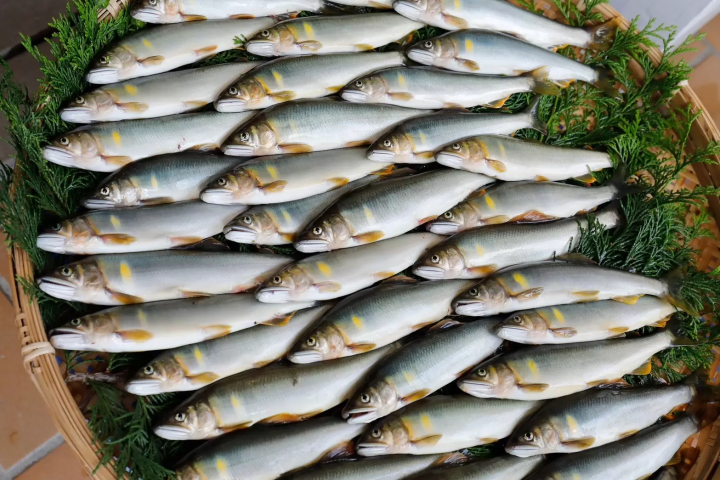
*Photo provided by Minami Hida Masegawa Tourism Association
The sweetfish raised in the Maze River are known as the "most delicious sweetfish in Japan" due to their high quality. Sweetfish grow by eating algae (aka) that attach to the stones on the riverbed, so the sweetfish from Maze, which eat high-quality algae, are said to "smell like watermelon."
The deliciousness of these fish is backed up by their brilliant achievements at the annual "Clear Stream Ayu Tasting Event." In this competition, salt-grilled ayu fish raised in clear streams from all over Japan are tasted and compared based on five criteria: appearance, aroma, gut, meat, and overall quality, to determine the grand prize winner. Ayu fish from the Maze River won the runner-up prize in the 2010 and 2017 competitions, and won the grand prize in 2023.
Among the sweetfish dishes at Maze, the "salt-grilled" sweetfish is a must. By skewering the sweetfish, sprinkling it with decorative salt, and slowly grilling it over charcoal, the flavor of the sweetfish is trapped inside the skin, allowing you to enjoy a fragrant and juicy taste.
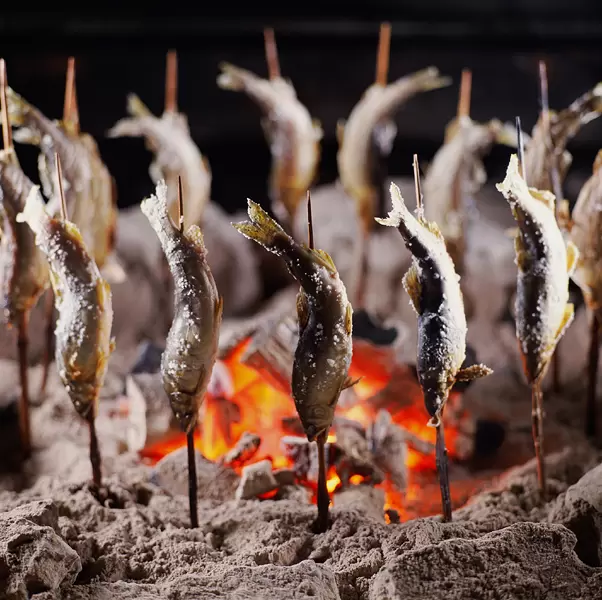
↑ Grilled sweetfish (photo courtesy of Minami Hida Masegawa Tourism Association)
Another recommended dish is "ayu sashimi," which can only be enjoyed with fresh ayu. The fresh ayu is filleted and served with wasabi soy sauce, giving it a firm, light flavor that can only be experienced in the area where it is produced.
In particular, the "fallen sweetfish" caught by the fire fishing method are fatty in preparation for the spawning season in the fall, and are often still carrying eggs, so you can enjoy a special flavor that is different from the sweetfish caught in the summer.
Experience a magical night! Join the tour to see the firefishing.
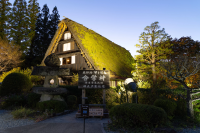
Why not try a special experience in Gero City this autumn? The "Early Autumn Only! Gero Onsen Premium Tour to enjoy the dancing flames in the clear stream and the majestic illuminated Gassho Village" is a special plan that allows you to fully experience the beauty of Japanese tradition and nature.
↓Click here for details↓
[Tour reservations]
Make unforgettable memories of Japan in Gero
The "Hiburi Fishing" can only be enjoyed for a short period of the year, and it is a special experience that can only be had on an autumn night in Japan. Why not create unforgettable memories in Gero, where tradition and nature coexist?
We are a startup that rediscovers tourism resources rooted in local culture, nature, and lifestyles, and reconstructs them into experiential value through the power of technology and design. Working in collaboration with local governments, private sector, and residents, we produce systems that generate new economies and circulation in local areas.
The contents on this page may partially contain automatic translation.
Special Features
More









![[Shinjuku Girls' Trip] 4 Recommended Shops for Women at Odakyu Ace!](https://resources.matcha-jp.com/resize/720x2000/2026/05/11-263877.webp)