
MOA MUSEUM OF ART of Art Architecture
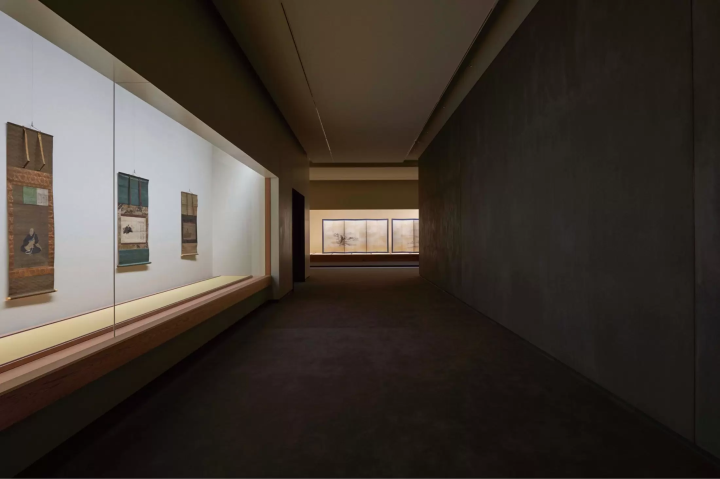
After undergoing renovations that lasted approximately 11 months, the MOA MUSEUM OF ART reopened on February 5, 2017. The exhibition space was designed by the New Material Research Institute, which is headed by internationally renowned contemporary artist Hiroshi Sugimoto and architect Tomoyuki Sakakida.

Written by
The museum is built on a 230,000m2 hill in Atami, and you can see beautiful views of Izu Oshima and Hatsushima from the main lobby and Moore Square. The facility also features a garden that changes with the seasons, with cherry blossoms and azaleas in the spring, fresh greenery in early summer, and autumn leaves in the fall. Enjoy a relaxing resort-like experience while savoring art and nature. The museum opened in 1982, and 36 years later, from 2016 to 2017, it underwent renovation work to revamp the exhibition space and update the facilities. The lobby area and exhibition space were designed by the New Material Laboratory, which is headed by internationally renowned contemporary artist Hiroshi Sugimoto together with architect Tomoyuki Sakakida. We tackled the question of how to reconstruct and pass on the materials and techniques used in ancient, medieval, and early modern times in the present day, and through various attempts, we created a modern space using traditional Japanese materials, embodying the new MOA MUSEUM OF ART.
This service includes sponsored advertisements.
Hiroshi Sugimoto | Hiroshi Sugimoto
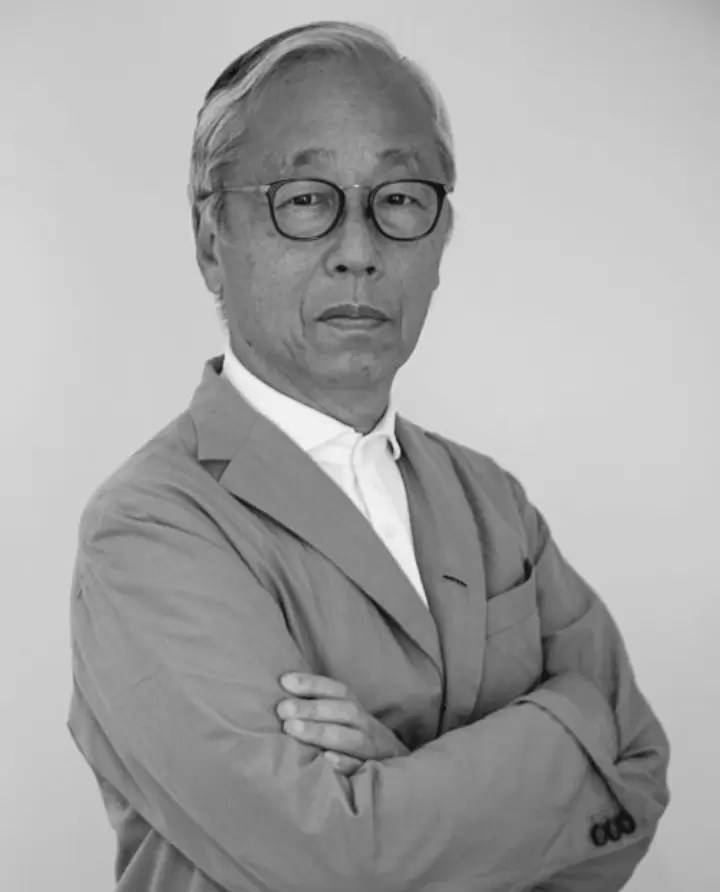
Born in Tokyo in 1948, he graduated from Rikkyo University and moved to the United States in 1970 to study photography at the Art Center College of Design (LA). He has lived in New York since 1974. He has established an international reputation for his meticulous photographs, based on clear concepts and shot with a large-format camera. His works are housed in museums around the world, including the Metropolitan Museum of Art (NYC), the Museum of Modern Art (NYC), the Centre Pompidou (Paris), and the Tate Modern (London). In recent years, he has expanded his activities to include writing and design, and in 2008 he founded the architectural design firm "New Material Research Institute" with architect Tomoyuki Sakakida. He has designed the interiors of the "IZU PHOTO MUSEUM" (2009, Shizuoka) and the "London Gallery" (2009, 2011, Tokyo), and in February 2017, the MOA MUSEUM OF ART of Art (Atami), for which he renovated the exhibition rooms, reopened after a renovation. In the fall of the same year, he also designed the landscape for the Odawara Art Foundation's Enoura Observatory, a facility for which he also opened. His major publications include "Sense of Space" (Magazine House), "Until the Moss Grows", "Actual Images", "The Origin of Art" (Shinchosha), and "Hobbies and Art - The Mysterious Kappo Ajisenkyo" (edited by Hearst Fujingahosha, Kodansha). He has a deep knowledge of ancient art and traditional performing arts, both in Japan and abroad, and in 2013 "Sugimoto Bunraku: Sonezaki Shinju", for which he was responsible for the composition, direction, art and video, toured Europe (Madrid, Rome and Paris). In 2016, he directed his first contemporary play, "Nikusei" (written by Hirano Keiichiro, music by Shoji Sayaka, starring Tera Island Shinobu), at Sogetsu Hall ( Tokyo ). He has received numerous awards and honours, including the Mainichi Art Award in 1988, the Hasselblad International Photography Award in 2001, the Praemium Imperiale in Memory of Prince Takamatsu in 2009, the Medal with Purple Ribbon in autumn 2010, an Officer of the Order of Arts and Letters of the French Republic in 2013, and the inaugural Isamu Noguchi Award in 2014.
Hiroshi Sugimoto's spatial design concept
I wanted to see the many treasures of Japanese culture housed at the MOA MUSEUM OF ART in their best light and in their best setting. The light that Ashikaga Yoshimasa saw in the Higashi Hall of Jisho-ji Temple, the light that Sen no Rikyu saw in the Tai-an tea house. In order to realize this kind of pre-modern light inside the museum, I focused on using pre-modern materials: Yakusugi cedar, black plaster, and tatami mats. I set myself the mission of showing pre-modern times within the modern facility that is the museum. After much trial and error to solve this difficult problem, I succeeded in sneaking cutting-edge optical technology behind the scenes. In my mind, the oldest thing becomes the newest thing.
About the lacquered entrance door by Mimasaka
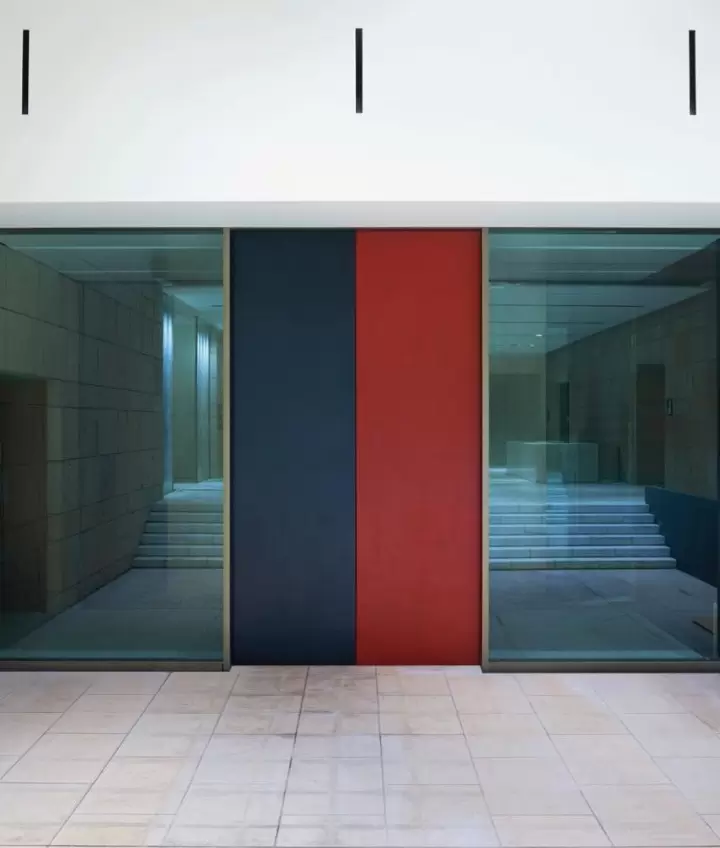
I have long pondered the origins of civilization. Humanity has crafted magnificent treasures with its own hands. However, I find myself wondering whether we can create masterpieces like those of the past. Will contemporary art become national treasures in a thousand years? When it comes to art, I struggle to gauge whether the times are evolving or declining. But then I saw a glimmer of hope. Lacquerware is one technique that embodies the aesthetic sense of the Muromachi period. This medieval aesthetic tradition was preserved in the hands of Living National Treasure Murose Kazumi. I commissioned Murose to create doors for the museum. They resemble the paintings of Mark Rothko, the Negoro Bon vases at Todaiji Temple, and yet are neither. Their color and luster exude a scent befitting a gateway that transports modern people back to premodern times, and they make people sit up straight and take notice.
Architect Tomoyuki Sakakida
When we began the design, we visited the Hakone Museum of Art and gave a deep consideration to the state of artworks and the spaces that surround them, and we felt that striving to incorporate the founder's words, "To entertain the world's people through beauty and contribute to the advancement of culture," and his thoughts on beauty into the design was a declaration of respect for the museum and the approach we should take.We also felt that this meant coexisting beautiful parts that have stood the test of time with modern sensibilities, and using Japanese materials and techniques, such as using display cases inspired by the Hakone Museum of Art to resemble floors (toko), and that our mission was to explore Japanese aesthetics.
The MOA MUSEUM OF ART, which opened in 1982, is primarily made up of Indian sandstone and domestic marble, and over the years since its opening, its appearance has acquired a rich texture with age and blended in with its environment. Rather than simply replacing it with new ones, we aimed to create a coexistence between the existing and new parts, and to transform it into a new museum while inheriting the history that has been cultivated.
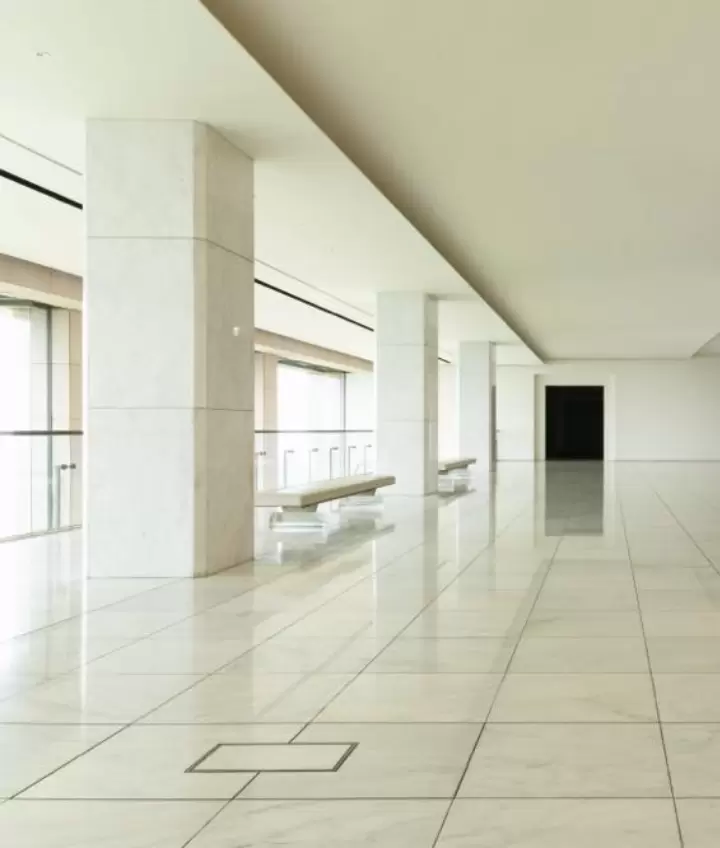
The existing section, where the Indian sandstone exterior walls continue into the interior from the external plaza to the entrance hall, has been retained, and modern elements have been added such as the entrance door and slope, and the white walls and ceiling that serve as the background, creating a contrast between old and new in many places. Also, to make the ocean view from the main lobby look even more beautiful, the ceiling height has been adjusted to be slightly lower as it approaches the opening, and the plain white walls and ceiling frame the Atami sea. Overall, the main areas that visitors visit have been comprehensively planned, and in addition to the entrance hall, lobby, and exhibition rooms, the museum shop and cafe corner have also been designed with the same principles and design concepts.
The exhibition room features a black plaster wall in the Chuo of the space, reducing reflections on the display case glass and enhancing the beauty of the museum's collection of exquisite artworks. The Fujitsubo, a national treasure, is located in a special space covered in black plaster, forming the core of the exhibition flow. The reflection-reducing walls and a special room dedicated to the Fujitsubo are inserted into the space as black plaster walls, creating various scenes and a sequence in the exhibition space. The display cases are designed to resemble floors (toko), with tatami flooring constructed from ascetic cedar frames and low-reflection glass. Another display case features a wooden floor made of Yakusugi cedar integrated into a seismic isolation platform, making it a highlight. Other exhibition rooms also feature new exhibition spaces for contemporary art, enhancing the exhibits' content from Japanese to contemporary art.
The New Materials Research Institute, which I founded with Hiroshi Sugimoto, is based on the idea that "traditional methods and materials are the newest things today." Our design philosophy is to treat Japan's traditional techniques, construction methods, and materials not as relics of the past, but as important resources to be preserved for the future. In the renovation of the MOA MUSEUM OF ART of Art, materials centered on Japanese conifers such as Yakusugi (a type of Japanese cedar), Gyojasugi (a type of cedar), and Yoshino cypress, along with low-fired floor tiles, plaster, earthen walls, and antique-colored metal fittings, were used, all of which are important elements in the spatial composition. In recent years, I have felt particularly strongly that the pursuit of rationality in the use of materials in contemporary architecture has both gained and lost something. The use of Japanese conifers and the plaster and tiles that reveal the hand of the artisan create a presence that cannot be expressed with homogenized modern materials. Furthermore, by combining these with contemporary details in our design methodology, we attempt to conversely coexist a sense of both the past and the present.
Inserting something new is truly a process of trial and error. We pay respect to the existing building, learn from it, and then design the new part. There is no doubt that the founder's philosophy of learning from the museum served as a guiding light for our design.
Profile of Sakakida Tomoyuki
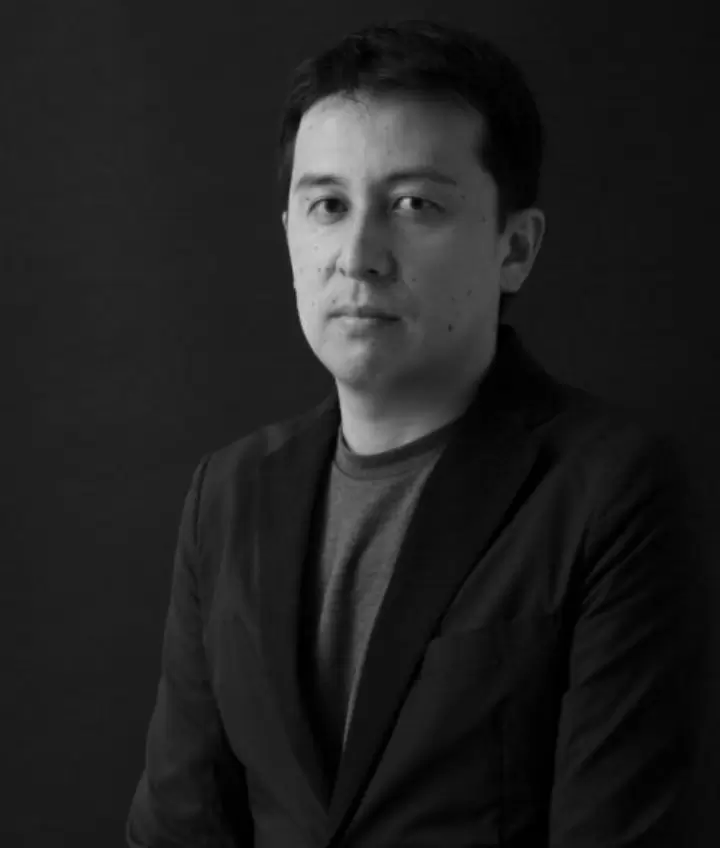
Born in Shiga Prefecture in 1976. After completing the Master's program at the Graduate School of Science and Technology at Kyoto Institute of Technology in 2001, he joined Nihon Sekkei Co., Ltd. In 2003, he established the Sakakida Tomoyuki Architectural Design Office. In 2008, he established the architectural design office "New Material Research Institute" with contemporary artist Hiroshi Sugimoto.
As a partner architect of Hiroshi Sugimoto, he has worked on numerous designs, including the "IZU PHOTO MUSEUM" (2009, Shizuoka), "London Gallery" (2009, 2011, Tokyo), "Christie's Tokyo Office" (2012, Tokyo), "OAK Omotesando Chashakane Tanaka" (2013, Tokyo), "Glass Tea House" (2014, Venice), and "Isetan Salone" (2015, Tokyo). He is currently the director of the New Materials Research Institute, a part-time lecturer at Kyoto University of Art and Design, and a first-class architect.
Click below for details on the materials used
For basic information about the MOA MUSEUM OF ART, please see this article.

The museum is built on a 230,000m2 hill in Atami, and you can see beautiful views of Izu Oshima and Hatsushima from the main lobby and Moore Square. The facility also features a garden that changes with the seasons, with cherry blossoms and azaleas in the spring, fresh greenery in early summer, and autumn leaves in the fall. Enjoy a relaxing resort-like experience while savoring art and nature. The museum opened in 1982, and 36 years later, from 2016 to 2017, it underwent renovation work to revamp the exhibition space and update the facilities. The lobby area and exhibition space were designed by the New Material Laboratory, which is headed by internationally renowned contemporary artist Hiroshi Sugimoto together with architect Tomoyuki Sakakida. We tackled the question of how to reconstruct and pass on the materials and techniques used in ancient, medieval, and early modern times in the present day, and through various attempts, we created a modern space using traditional Japanese materials, embodying the new MOA MUSEUM OF ART.
The contents on this page may partially contain automatic translation.


Special Features
More






![[Mie] TOBA SEASIDE HOTEL Dining Guide | Popular Buffet & Seasonal Menu Introduction](https://resources.matcha-jp.com/resize/720x2000/2026/05/11-263832.webp)

![[80 minutes by train from Kyoto ] Experience the countryside in Fukuchiyama City , Kyoto Prefecture , a special place only locals know about](https://resources.matcha-jp.com/resize/720x2000/2025/12/19-253414.webp)