
Sotodomari: A Hidden Seaside Village of Stone Walls in Ehime, Shikoku
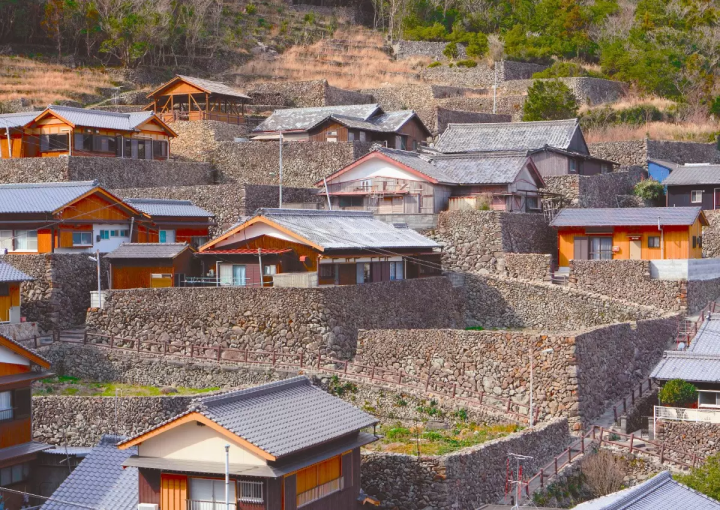
A strange village where tall stone walls surround each house is located in Ainan Town, Ehime Prefecture. We would like to introduce you to "Ishigaki no Sato Gaitomari," a famous spot known only to those in the know.

Written by
Located in the southernmost part of Shikoku's Ehime Prefecture, Ainan Town is an area blessed with a rich natural environment, including the abundant sea and mountains represented by the Ashizuri-Uwakai National Park. The climate is warm throughout the year, and you can see coral and tropical fish.
This service includes sponsored advertisements.
-
Table of Contents
- Ainan’s Hidden Gem: Discover “Sotodomari, Ishigaki no Sato"
- A One-of-a-Kind Spectacular View You’ll Only Find Here
- Why this Landscape Exists: Ancient Wisdom & History of "Sotodomari"
- How to Access Ishigaki no Sato Sotodomari
- Nearby Tourist Spots You Might Want to Visit
- Don't miss the short video that shows the charm of Ishigaki Village!
Ainan’s Hidden Gem: Discover “Sotodomari, Ishigaki no Sato"
Gaitomari is a village located in Ainan Town, Ehime Prefecture, which is famous for its beautiful sea and mandarin oranges.
Located on a steep slope facing the inlet, what makes this place unique is that each house has a tall stone wall.
Due to its unique and beautiful scenery, it is also known as the "Stonewall Village," and has been awarded the Minister of Agriculture, Forestry and Fisheries Award for Japan's Most Beautiful Villages, and has been selected as one of the "Top 100 Historical and Cultural Assets of Fishing Villages to Preserve for the Future."
A One-of-a-Kind Spectacular View You’ll Only Find Here
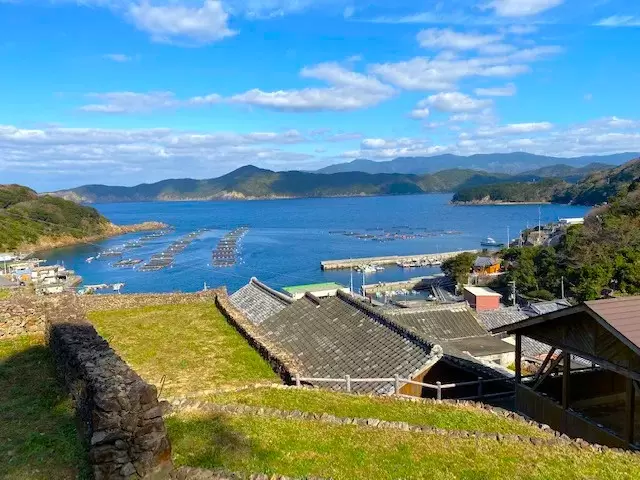
The stone walls are much taller than a human being, and are said to be about 7 meters high, equivalent to the height of a two-story building.
Alleyways weave between the walls, creating a truly maze-like scene.
It is surrounded by mountains on three sides, but on the other side is the clear blue Uwa Sea. If you climb the stone wall slope, you will be able to enjoy a spectacular view of the beautiful ocean view of Ainan.
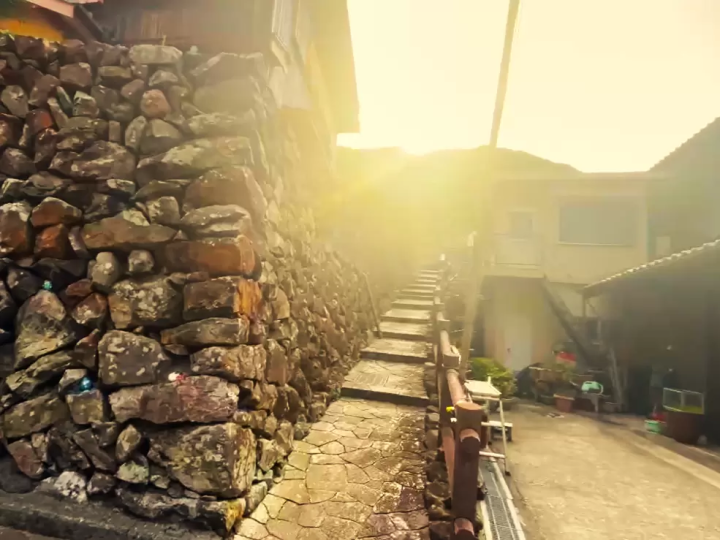
When you stroll around the area, you might even come across some friendly cats. This, combined with the scenery that is so far removed from the hustle and bustle of everyday life, will leave you feeling like your soul is being purified.
This cat often appears in the videos of the Ainan Madai Support Team. If you want to be soothed by watching a cat in action, be sure to check it out.

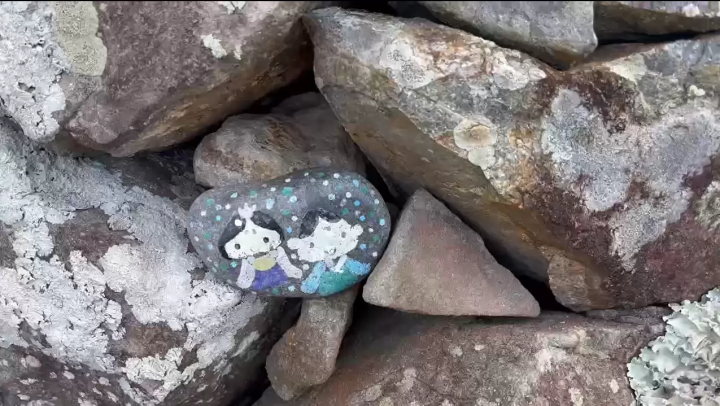
As we walked up the terraced slope, we came across a stone with a cute picture painted on it between the stone walls.
These are probably stone dolls for the Doll's Festival. Every spring, an event is held to exhibit "stone dolls," which are dolls painted on stone. Please come and see the cute stone dolls painted by local people and children.
Why this Landscape Exists: Ancient Wisdom & History of "Sotodomari"
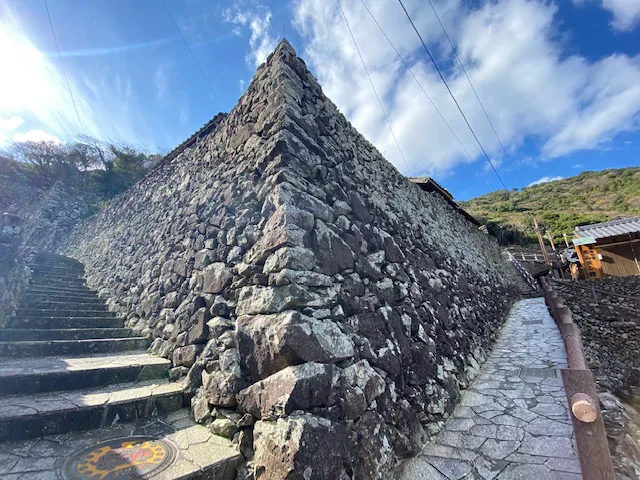
So why was such a high stone wall built?
Its history dates back to the end of the Edo period.
Sotodomari was developed as a new settlement by people who moved to the nearby Nakadomari town at the end of the Edo period due to an increase in population. This high stone wall was built to serve as the foundation for the buildings, as well as to protect against the strong seasonal winds that blow in from the northwest in winter, carrying the tide.
These stones were made from stones excavated during the development of the mountain, and were piled up one by one by hand.
The stone walls are also carefully constructed to allow for good drainage and to prevent damage to other houses if they collapse. In fact, these were built by the residents of Sotodomari in their own way, and it is clear that this stone wall is the culmination of the efforts and wisdom of people from long ago.
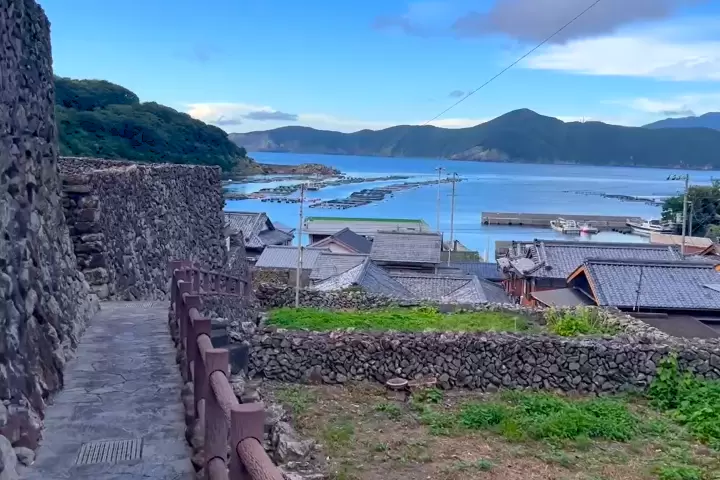
Although Gaitomari is a beautiful town with a series of high stone walls, they have not remained unchanged since the Edo and Meiji periods. In fact, they have collapsed many times.
On April 17, 2024, a magnitude 6 earthquake occurred in the Bungo Channel, causing a section of the wall to collapse. As you can see from the images, the road to Gaido is narrow and even heavy machinery cannot enter. Furthermore, because the stone wall is on private property, no public subsidies are available. The only way to repair the stone wall is to stack it by hand.
Nevertheless, the residents of Sotodomari, who have lived with and loved the stone walls, worked to restore them, stone by stone.
Normally, if the road was paved with concrete, there would be no need to worry about it collapsing, but in order to protect this beautiful landscape, the residents have continued to rebuild it no matter how many times it has collapsed, and have continued to protect it to the present day.
The beauty of the stone walls of Sotodomari is the result of being cherished by local people for over 150 years.
Why not visit this mysterious village surrounded by abundant nature, stone walls, and love?
How to Access Ishigaki no Sato Sotodomari
If you head south from Matsuyama towards Ainan Town on National Route 56, you will arrive at Misano.
Cross the bridge, pass the Daiso Oso store, and go around the corner to reach an intersection.
Turn right there and drive about 15km along Prefectural Route 34 to arrive.
For information on how to get from Matsuyama Airport to Ainan Town, please refer to the article "How to Access Ainan Town."
![[A must-see for those visiting Ainan Town!] How to get to Ainan Town](https://resources.matcha-jp.com/resize/200x2000/2025/11/13-249769.webp)
Nearby Tourist Spots You Might Want to Visit
1. Shiden Kai Exhibition Hall
Along the way, you will come across the Shiden Kai Exhibition Hall. This is the only place where you can see the actual Shiden Kai, also known as the Navy's most advanced fighter plane. The exhibition hall is scheduled to be rebuilt and reopened in 2026.
*Please note that opening hours may be changed due to construction work.

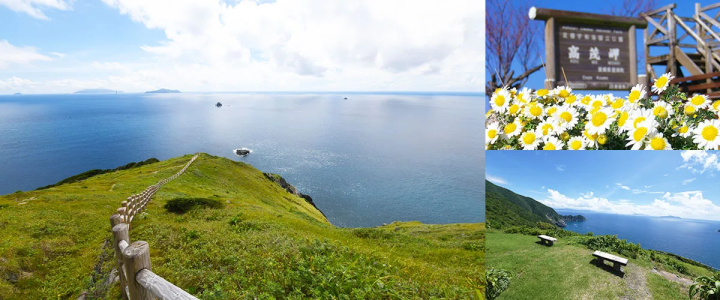
2. Takamo Cape
If you continue along Prefectural Route 34, you will arrive at Takamo Cape, where cliffs exceed 100 meters in height continue. Wild chrysanthemums bloom on the ground, and you can enjoy the magnificent scenery created by nature. The highlight is the sunset over Kyushu.
Don't miss the short video that shows the charm of Ishigaki Village!
There is also a short video that summarizes the contents of this article in 53 seconds, so please feel free to take a look.
How was Ishigaki Village created?

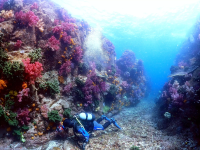

Located in the southernmost part of Shikoku's Ehime Prefecture, Ainan Town is an area blessed with a rich natural environment, including the abundant sea and mountains represented by the Ashizuri-Uwakai National Park. The climate is warm throughout the year, and you can see coral and tropical fish.
The contents on this page may partially contain automatic translation.
Top Articles
There are no articles in this section.
Special Features
More













![[Osaka Sightseeing Bus Tour] Enjoy 360° views of Osaka from an open-top bus!](https://resources.matcha-jp.com/resize/720x2000/2026/05/25-264541.webp)
![[Autumn 2026] Private Night Tour to See the World Heritage Site Toji Temple Illuminated in a Fantastical Light-Up Effect](https://resources.matcha-jp.com/resize/720x2000/2026/04/28-263309.webp)