
Visit Umegashima Onsen, Shizuoka: A Guide to "Skin-Beautifying" Hot Springs & Best Ryokans
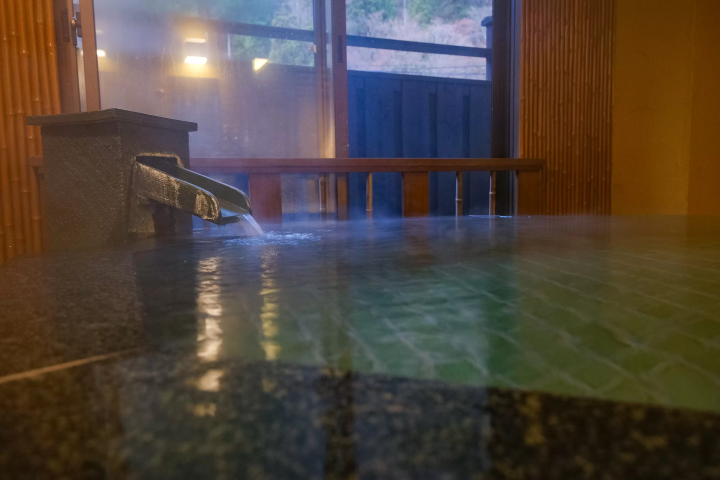
Located 1 hour from Shizuoka Station, Umegashima Onsen-kyo is a People's Health Resort Spring featuring three unique sources. Experience one of Japan's best high-alkaline waters for silky smooth skin. Explore our top recommendations for day-trip baths and luxury stays.

Written by
National hot spring resorts are designated by the Minister of the Environment under the Hot Springs Act as healthy hot spring resorts where the benefits of hot spring use are expected to be sufficient. 79 hot spring resorts have been designated nationwide (as of October 2024). National hot spring resorts are selected based on the following criteria. 1. Conditions regarding the quality and volume of hot spring water (1) The source of the hot spring water used must be a therapeutic spring. (2) The hot spring water used must have an abundant volume of water. The standard volume of water flow must be 0.5 liters per minute or more per hot spring user. 2. Conditions regarding the environment of the hot spring resort (1) The hot spring is suitable as a resort from the perspective of the natural environment, townscape, history, climate, culture, etc. (2) A plan for the placement of doctors who can provide guidance on proper hot spring use and health management from a medical perspective, or a plan for the placement or training policy of personnel who can provide guidance on bathing methods, etc. in cooperation with the doctors, must be established. (3) Appropriate efforts will be made to protect hot spring resources, manage the hygiene of hot springs, promote public use of hot springs, and take into consideration the elderly and disabled, etc. (4) Enhanced efforts to prevent disasters.
This service includes sponsored advertisements.
If you would like to know more about the gourmet food and tourist spots in Umegashima Onsen-kyo, please read this article.
-
Table of Contents
- The Three Springs of Umegashima: Konya, Shinden, and Umegashima Onsen
- Flexible Plans: Relaxing Overnight Stays or Refreshing Day Trips
- Access information
The Three Springs of Umegashima: Konya, Shinden, and Umegashima Onsen
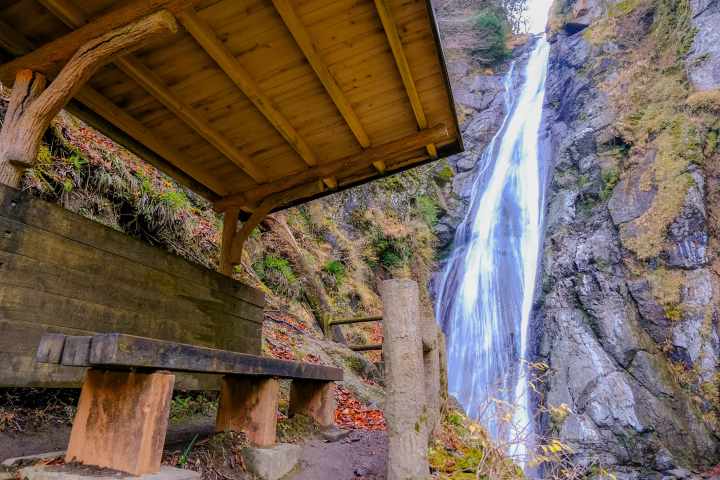
Umegashima Onsen-kyo is located in the mountains, about an hour's drive north from Shizuoka Station. It is home to three of Japan's leading hot springs with strong alkaline water.
Umegashima Onsen-kyo is mainly made up of three hot springs: Konya Onsen, Shinden Onsen, and Umegashima Onsen . Although the quality of the springs varies, they all have one thing in common: they are all highly alkaline hot springs with a pH of over 9.0.
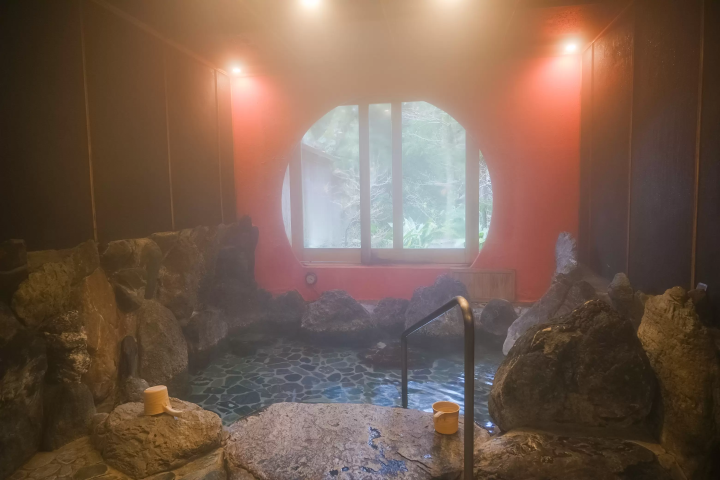
Konya Onsen is the first hot spring you'll arrive at when you arrive from Shizuoka Station. With a pH of 10.3, it is the most alkaline of the three hot springs. Konya Onsen boasts one of the highest pH values in Japan, and is extremely gentle on the skin, creating a smooth, film-like bathing experience.
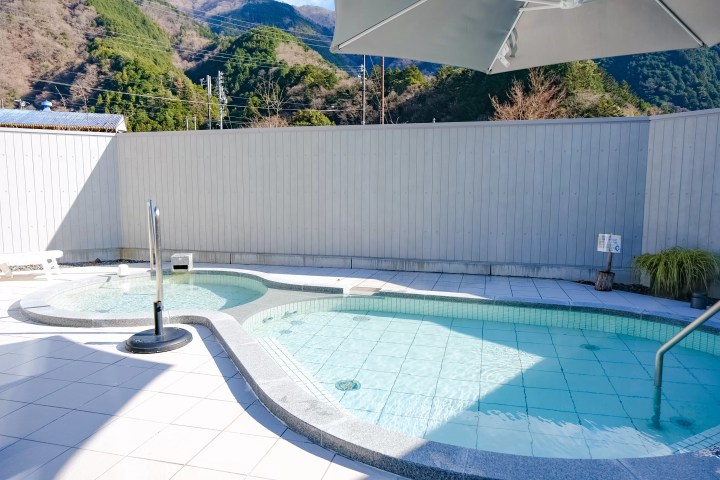
Of the three hot springs, the only one that can be used as a day trip is the Kogane-no-yu in Shinden Onsen . It is often used for hiking, camping, and walking around the area, and is located in the middle of the three hot springs. The water quality is a sodium bicarbonate hot spring, which is effective for relieving neuralgia, muscle pain, and frozen shoulder, and you can easily enjoy the waters of Shinden Onsen .
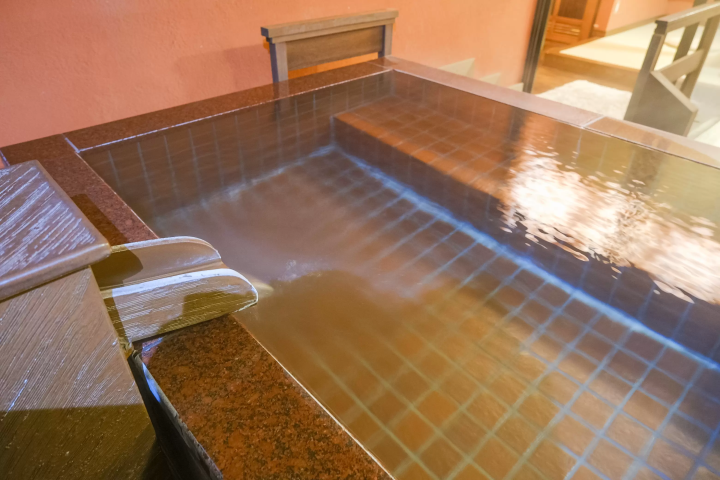
Umegashima Onsen , located at the very Oku , has a pH of 9.6, making it the second most alkaline of the three hot springs. Also known as " Takeda Shingen's hidden hot spring," this hot spring has a long history, having been discovered 1,700 years ago.
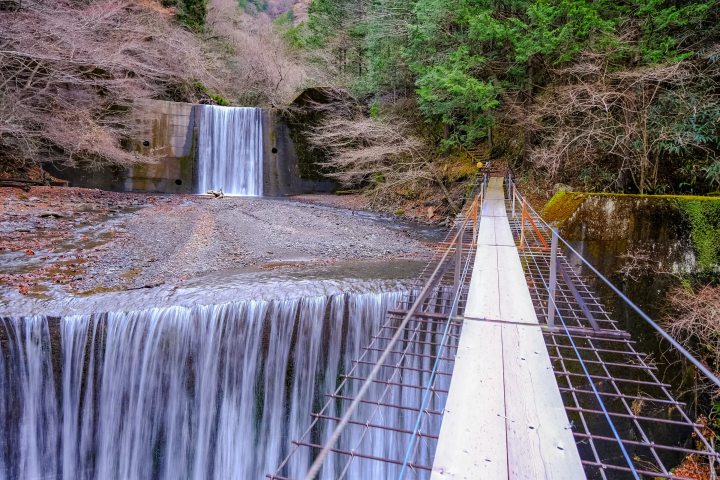
These three hot spring areas have been designated as " People's Health Resort Spring " due to their rich natural environment and historical background.
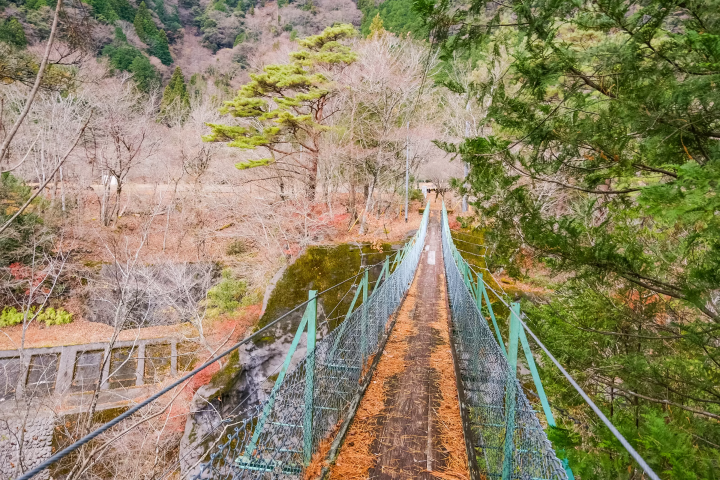
Umegashima Onsen-kyo allows you to enjoy bathing in three different hot springs at once. From here, we will introduce the characteristics of each hot spring, as well as recommended bathing facilities and inns for overnight stays and day trips.
Flexible Plans: Relaxing Overnight Stays or Refreshing Day Trips
Konya Onsen: Enjoy the first bath as many times as you like at "Oonogiso "
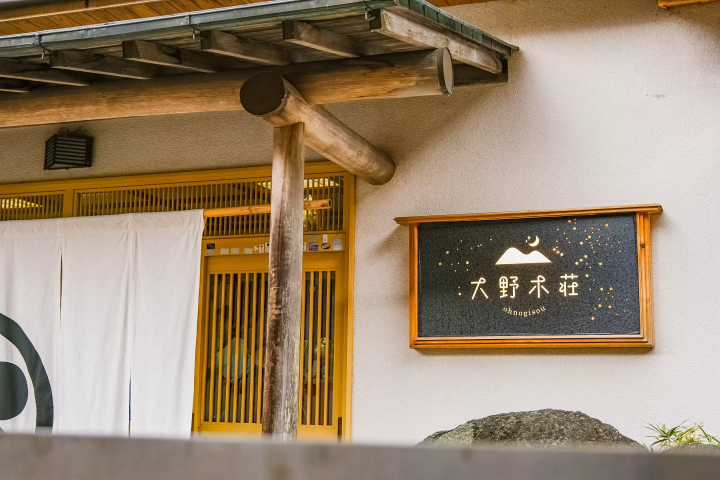
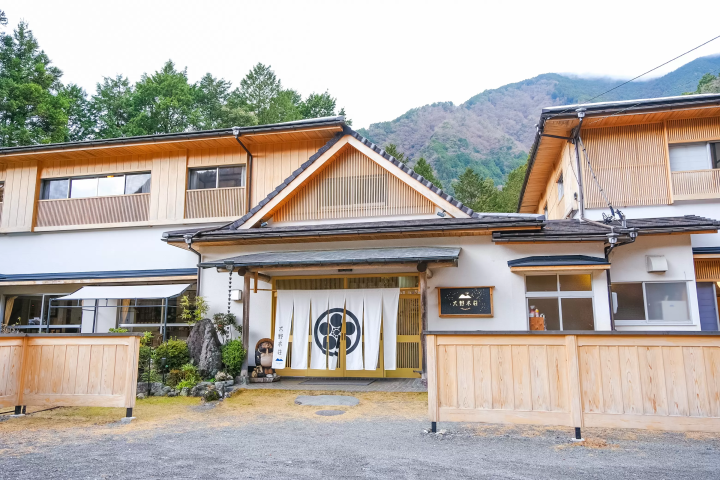
Konya Village is home to tennis courts, golf courses, plum and cherry orchards, and in one area of the village is the inn " Oonogiso ," which has been carefully protecting the Konya Onsen .
Of the three springs, the "simple sulfur spring" has the highest pH of 10.3, and the moment you step into the bath, you will feel an amazing smoothness.
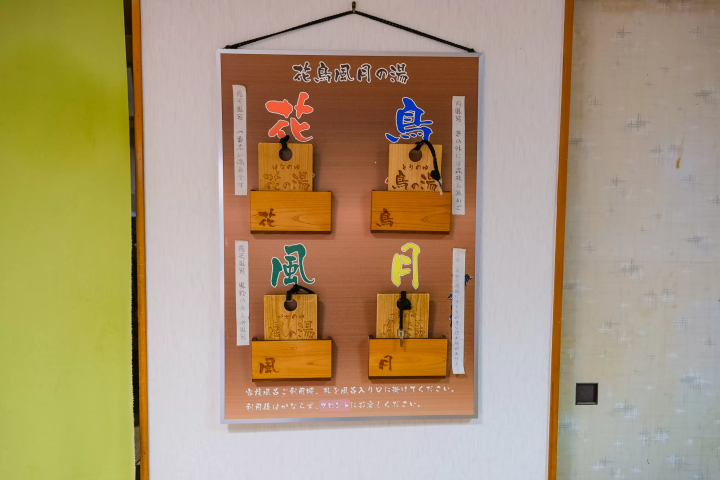
The baths at Oonogiso are completely private. Guests receive a key at the front desk. This is a ryokan filled with hospitality, with the baths cleaned after each use, based on the desire to ensure that all guests are the first to bathe.
There are four baths available, all named "Flowers, Birds, Wind, and Moon." While they all have the same spring quality, each has its own unique concept and atmosphere.
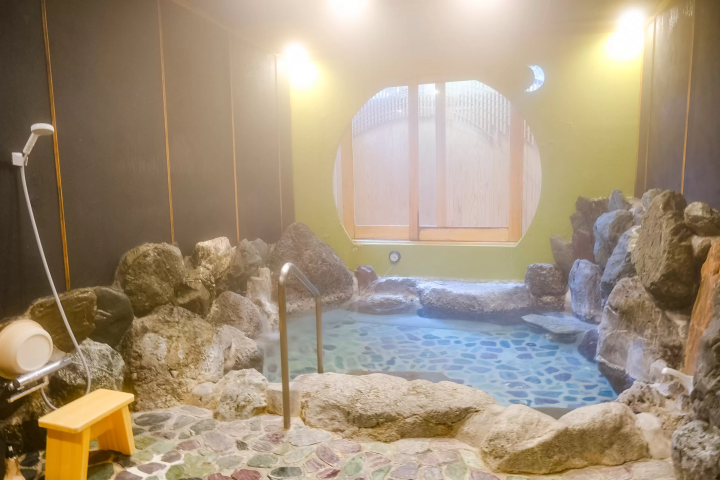
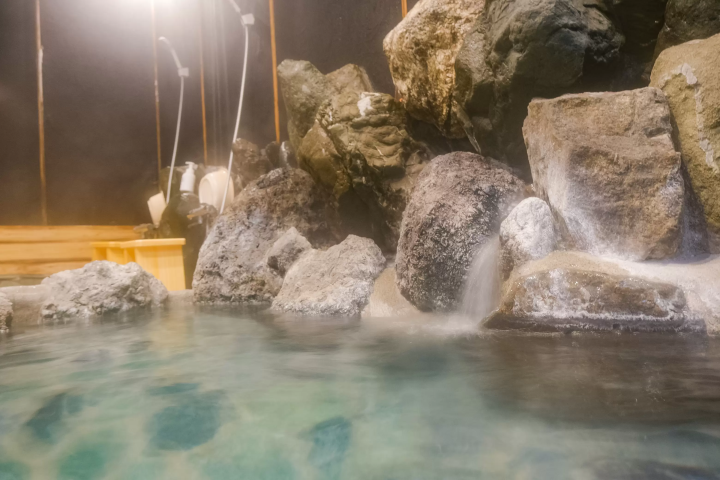
During the cold season, we recommend warming your body in the indoor bath "Tsuki" before entering the open-air bath "Kaze." First, warm your body thoroughly in the relaxing space lit by the indirect lighting of "Tsuki." Once you soak in the water, you will feel the hot spring, which is also known as a "natural lotion," gently enveloping your body.
I was entranced by the smooth, viscous, soft water that felt smooth no matter where it touched my body. I enjoyed a luxurious bath while gazing at the spring water flowing abundantly from the rock face.
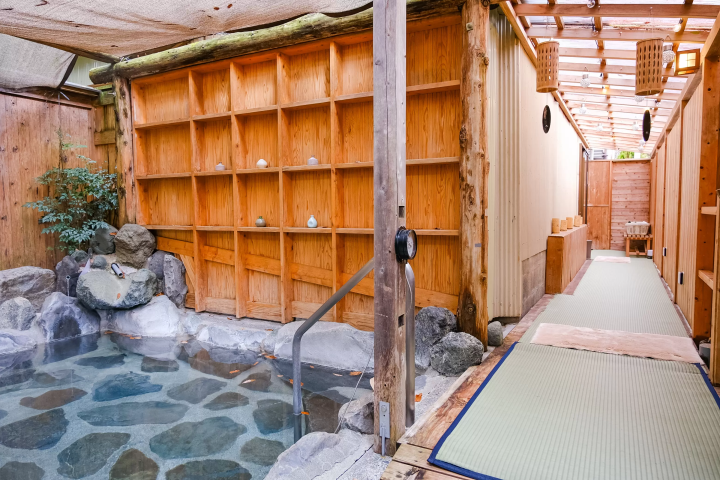
Next, we went to the "Kaze" bath, an open-air bath with a spacious feel and a Japanese feel. Tatami mats are laid from the changing room to the bath, which keeps your feet warm.
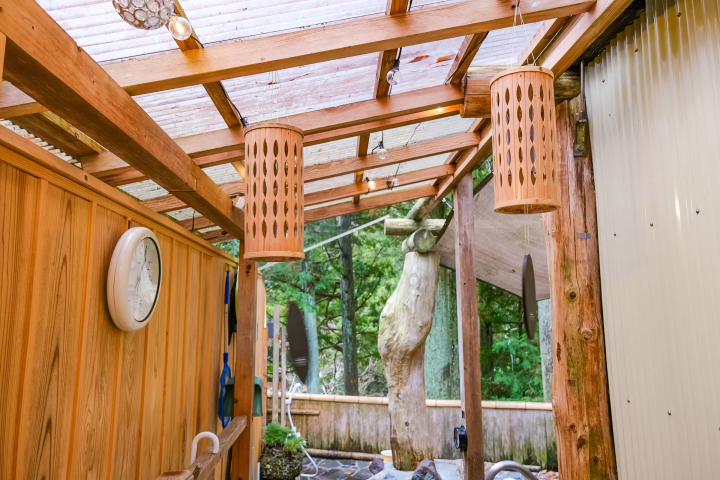
The sound of the wind chimes blends with the sound of the hot spring water, creating an even more relaxing atmosphere.
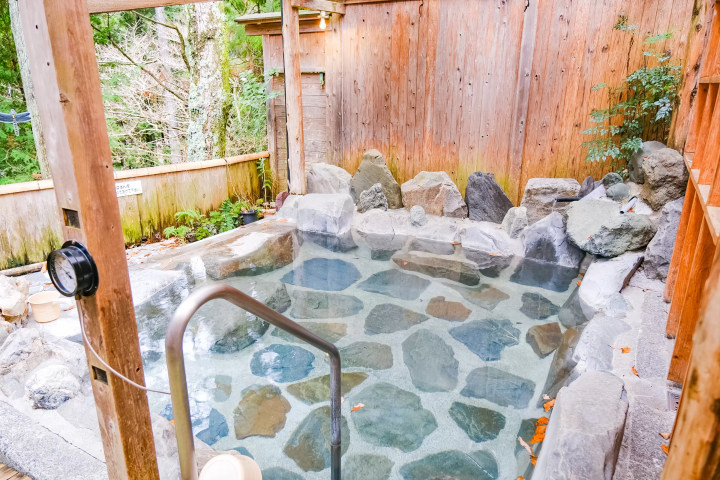
It was a blissful time that relaxed all five senses.
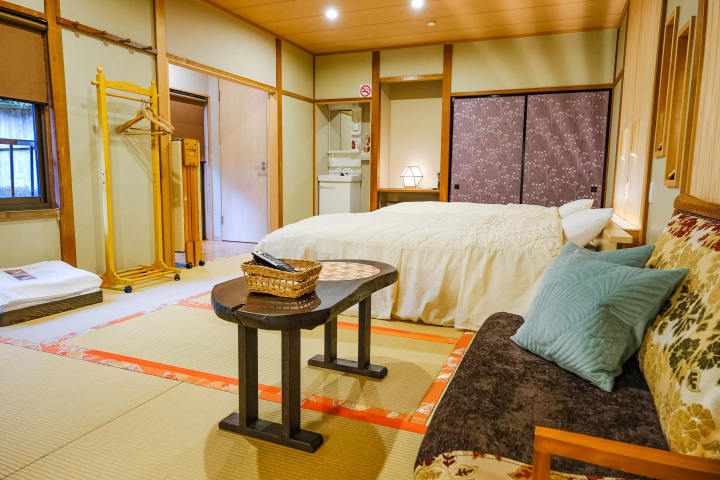
The highlight of the guest rooms is that they are all fitted with elaborate tatami mats. Each room features traditional Japanese tatami mats, tatami mats made from recycled kimono fabric, and other items that add a striking accent to the room.
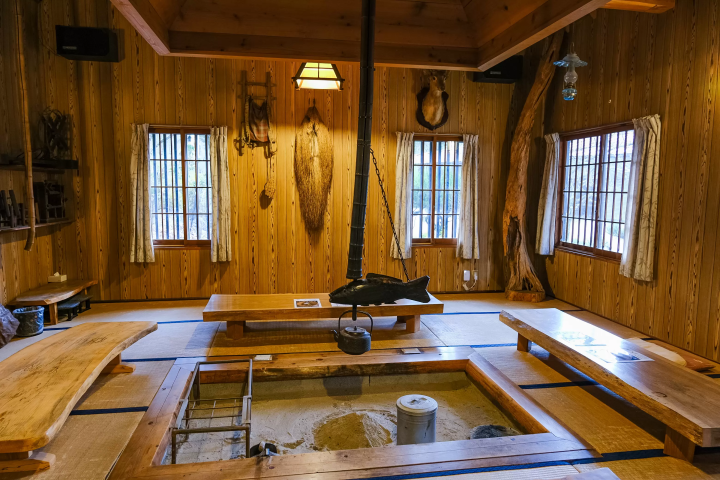
One of the pleasures of staying at a ryokan is the food, which uses plenty of local ingredients. The course menu, with wasabi as the main ingredient and each dish having its own story, is sure to leave a lasting impression on guests. (Please note that dining at the hearth requires a reservation and incurs an additional fee.)
Oonogiso offers four baths and top-notch accommodation with attentive hospitality. Day-trip bathing is also available if you make a reservation, so be sure to include it in your itinerary.
Oonogiso
 4269-10 Umegashima, Aoi Ward, Shizuoka City, Shizuoka Prefecture,, 421...
This inn allows you to bathe in Konya hot springs. You can bathe in the hot springs whether you are staying overnight or just visiting for the day, and the completely private "Kachofugetsu" bath is a specialty.
4269-10 Umegashima, Aoi Ward, Shizuoka City, Shizuoka Prefecture,, 421...
This inn allows you to bathe in Konya hot springs. You can bathe in the hot springs whether you are staying overnight or just visiting for the day, and the completely private "Kachofugetsu" bath is a specialty.
[Umegashima Onsen] Hotel Baikunro: Enjoy both overnight stays and day trips to the hot springs
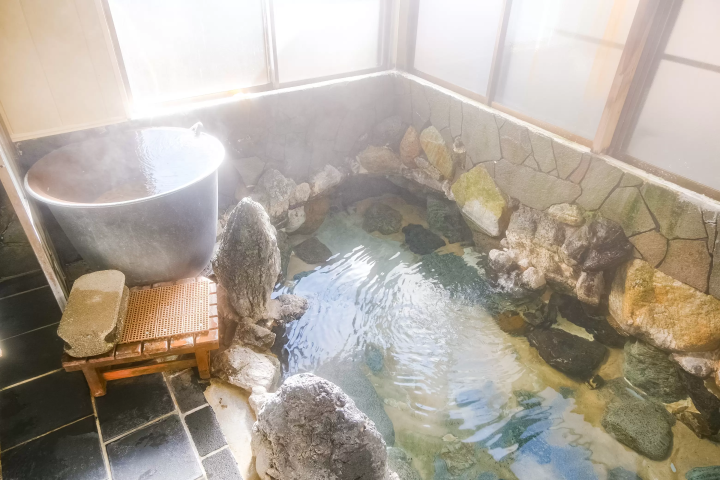
Hotel Baikunro is a long-established inn with over 150 years of history. It is a long-standing inn that has inherited the history of Umegashima Onsen. At Hotel Baikunro, you can still enjoy the abundant hot spring water in four different baths.
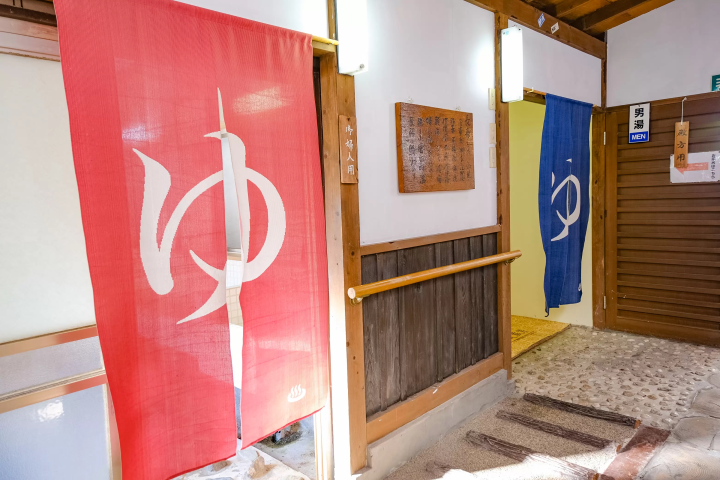
There are four types of baths available: the indoor baths for men and women, "Joban" and "Choju no Yu," as well as the private baths, "Stone Bath" and "Cave Bath." Guests staying overnight, as well as day visitors, can enjoy the baths for one hour for 500 yen per person.
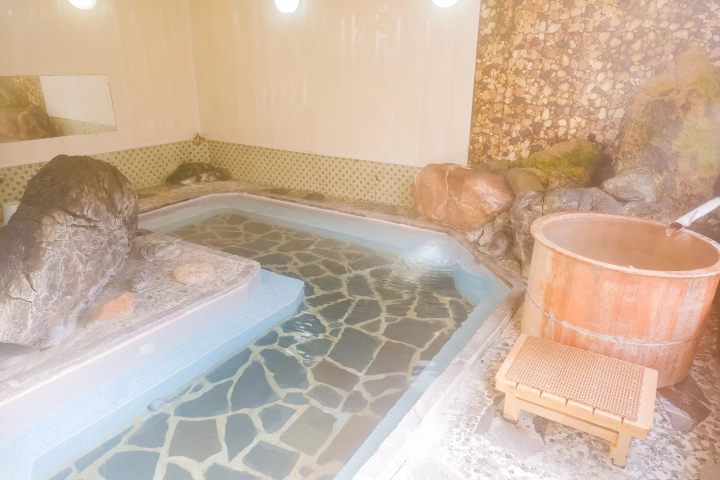
The indoor baths, "Joban no Yu" and "Choju no Yu," are each equipped with a rock bath and a Goemon bath. The Goemon bath is a luxurious bath where you can have the hot spring water all to yourself, filling the bathtub.
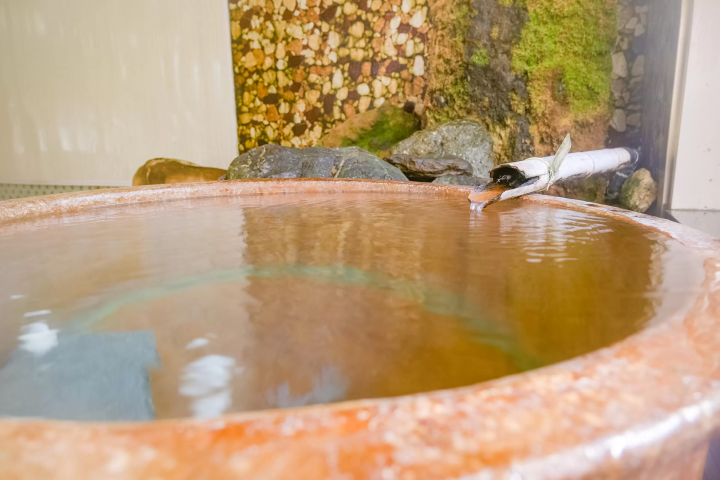
The smooth and soft quality of the spring is obvious just by looking at the water flowing slowly down. When you soak in the hot spring, the rich water envelops your skin as if it were a veil.
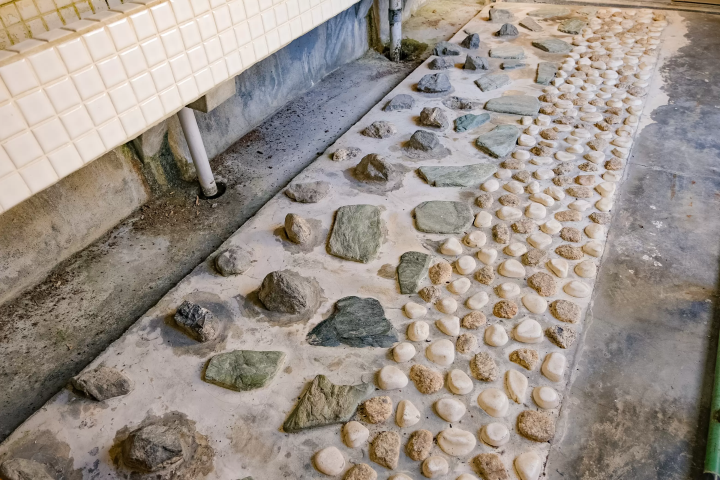
When you leave the indoor bath, you'll notice that there are rough stones and branches embedded in the hallway.
This is the "Health Corridor," a hidden speciality of Hotel Baikunro. If you take off your slippers and walk barefoot, you can experience a unique sensation of stimulating the soles of your feet, just like a foot massage. Enjoy walking along this corridor with your family and friends, and it will become a lasting memory of your trip.
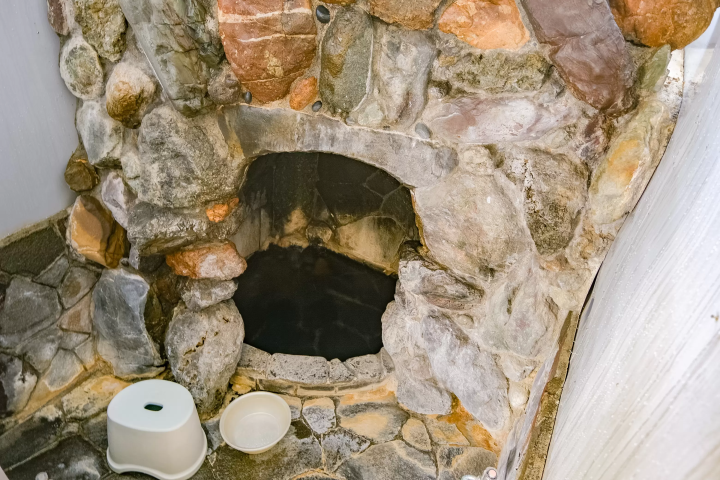
The family baths, "Rock Bath" and "Cave Bath," are perfect for when you want to bathe alone or with a small group. The "Cave Bath," which is surrounded by rocks all the way up to the ceiling, gives you a sense of security, as if you are protected by the hot water and rocks.
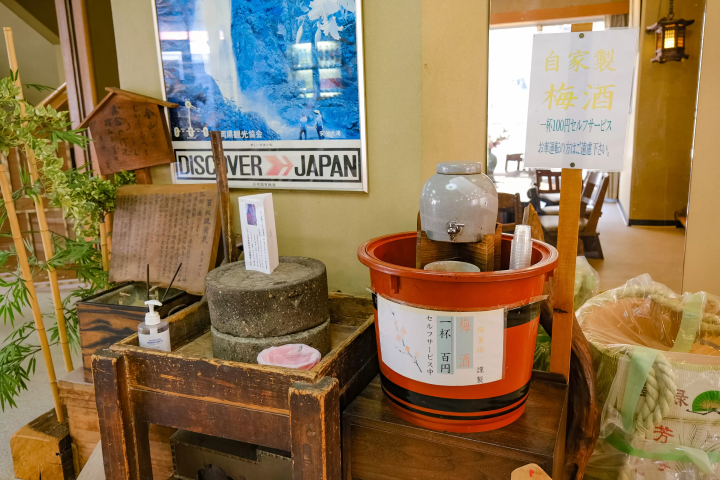
After your bath, why not soak in the afterglow of your bath while enjoying some homemade plum wine and chatting in the lobby?
Hotel Baikunro
 5258-4 Umegashima, Aoi Ward, Shizuoka City, Shizuoka Prefecture, 421-2...
This inn allows you to bathe in Umegashima Onsen whether you are staying overnight or just visiting for the day. The inn has four different types of baths and a "health corridor" where anyone can stimulate their foot pressure points.
5258-4 Umegashima, Aoi Ward, Shizuoka City, Shizuoka Prefecture, 421-2...
This inn allows you to bathe in Umegashima Onsen whether you are staying overnight or just visiting for the day. The inn has four different types of baths and a "health corridor" where anyone can stimulate their foot pressure points.
[Shinden Onsen] "Kogane-no-yu" recommended for day trips to cure the illness
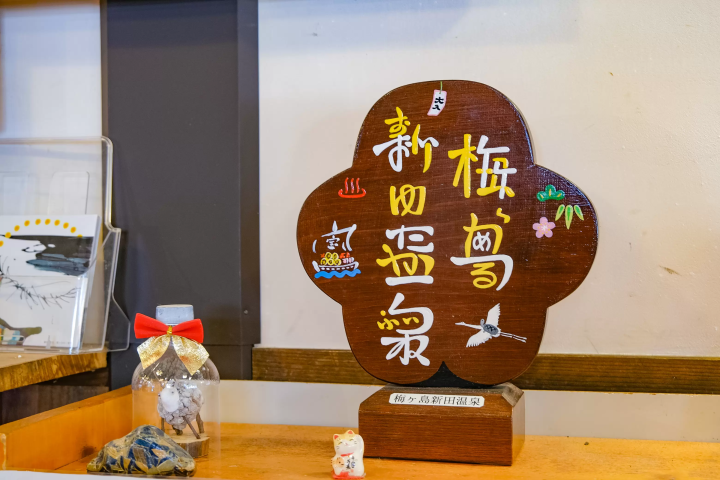
If you want to make the most of Shinden Onsen on a day trip, we recommend the Kogane-no-yu. The Kogane-no-sato Village is also located on the premises, where you can buy meals and souvenirs.
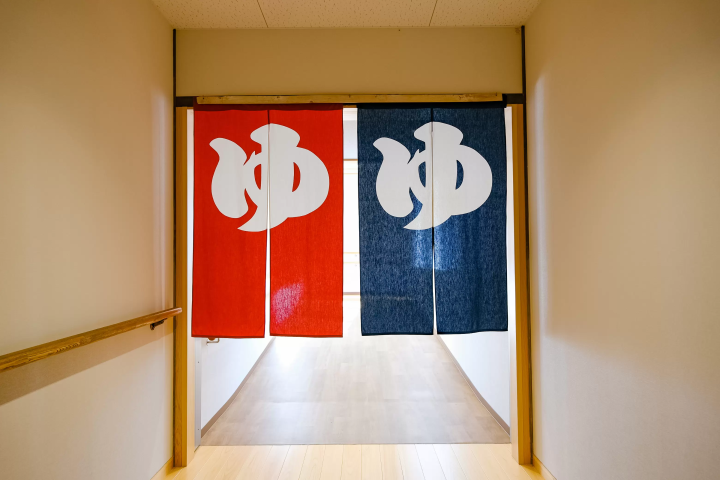
The source of the Kogane-no-yu, Shinden Onsen, is a sodium bicarbonate hot spring, which is effective in relieving neuralgia, muscle pain, and frozen shoulder.
First, wash away any dirt from your body and then bathe in lukewarm water. We recommend warming your body thoroughly before moving on to the hotter general bath and open-air bath. The lukewarm water, which is about body temperature at 36.5-37 degrees, is perfect for warming your body from the inside out. It's so comfortable, it's like being wrapped up in a futon, that you'll lose track of time.
After slowly raising your body temperature, head to the public bath next door. Once you enter the 41-42.5 degree water, you'll immediately start to sweat and feel your metabolism improve.
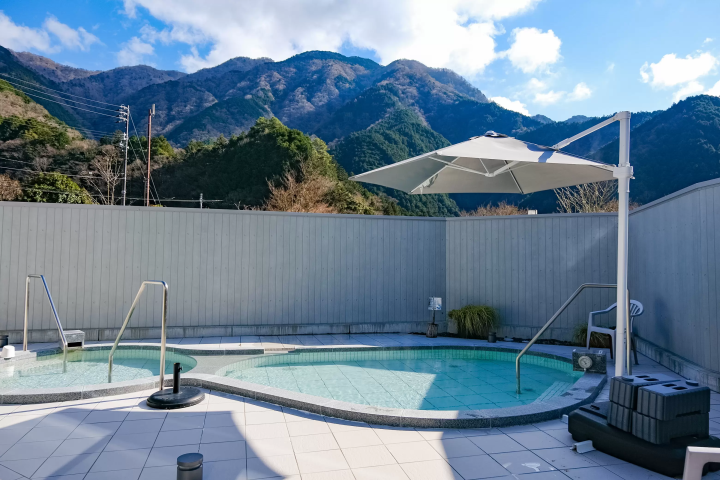
To cool down your body, we recommend the open-air bath where you can enjoy the refreshing air at an altitude of 800m. The open-air bath offers an open view, and the cool air and hot spring water have an exquisite balance that will make you want to soak again and again. The smooth water will make your skin feel moisturized and smoother with each bath.
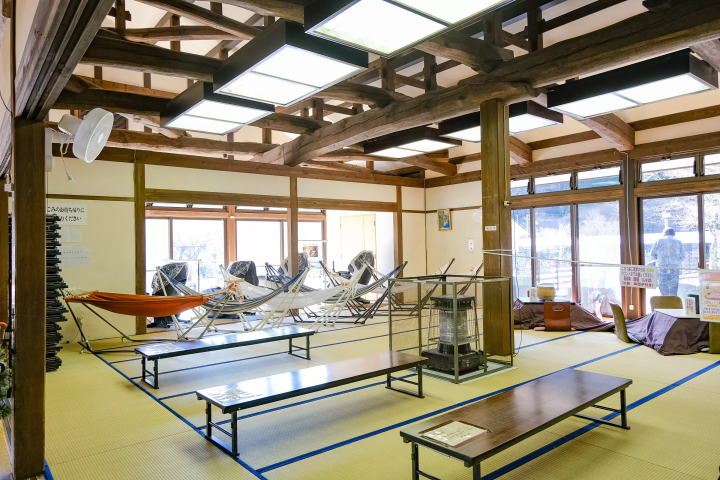
After bathing, you can relax in the tatami-floored resting room, or on the massage chairs and hammocks. This is a convenient day-trip bathing spot for outdoor activities such as fishing, walking, or hiking.
Kogane no Yu
 5342-3 Umegashima, Aoi Ward, Shizuoka City, Shizuoka Prefecture, 421-2...
This is a day-trip hot spring spot where you can bathe in Nitta Onsen, one of the hot spring resorts in the Umegashima Onsen area. With a one-day ticket, you can bathe as many times as you like.
There is also a restaurant called "Golden no Sato" on the premises, so you can spend the day relaxing and taking a therapeutic bath.
5342-3 Umegashima, Aoi Ward, Shizuoka City, Shizuoka Prefecture, 421-2...
This is a day-trip hot spring spot where you can bathe in Nitta Onsen, one of the hot spring resorts in the Umegashima Onsen area. With a one-day ticket, you can bathe as many times as you like.
There is also a restaurant called "Golden no Sato" on the premises, so you can spend the day relaxing and taking a therapeutic bath.
[Umegashima Onsen] Relax your body and mind in four different baths at Yunoshimakan
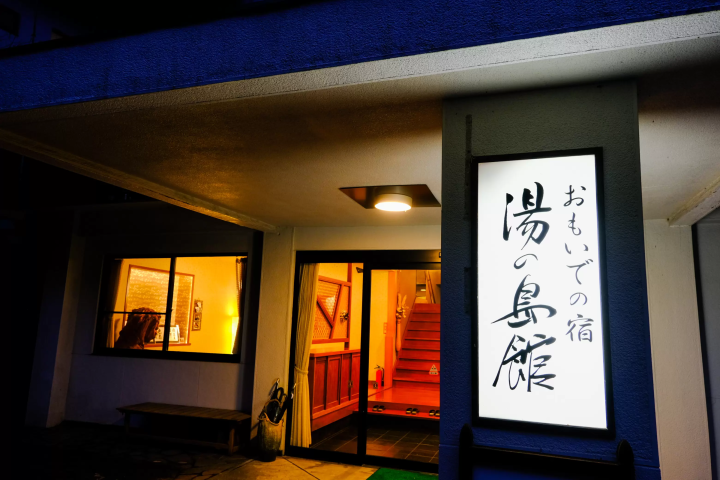
Yunoshimakan in Umegashima Onsen is a long-established inn that was founded in 1958 and stands on the banks of the Abe River. It is an inn surrounded by nature, where the murmuring of the Abe River echoes pleasantly.
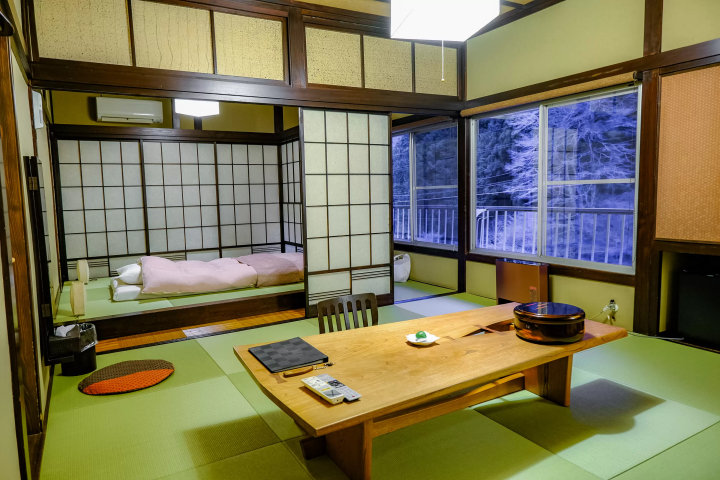
This time, I stayed in the modern Japanese corner room "Aoi." Facing the Abe River, it is an elegant Japanese-style room where you can hear the sound of the river flowing.
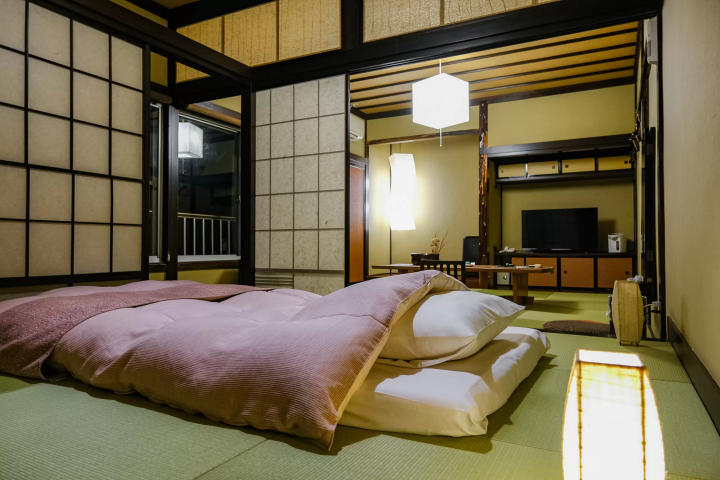
The raised bedroom adds to the extraordinary charm.
Meals are served in a private room. Dinner features a selection of exquisite dishes made with plenty of local Shizuoka and Umegashima ingredients, including Suruga Shamo chicken sukiyaki, Japanese-style shrimp potato gratin, Umegashima amago trout tempura, and sashimi.
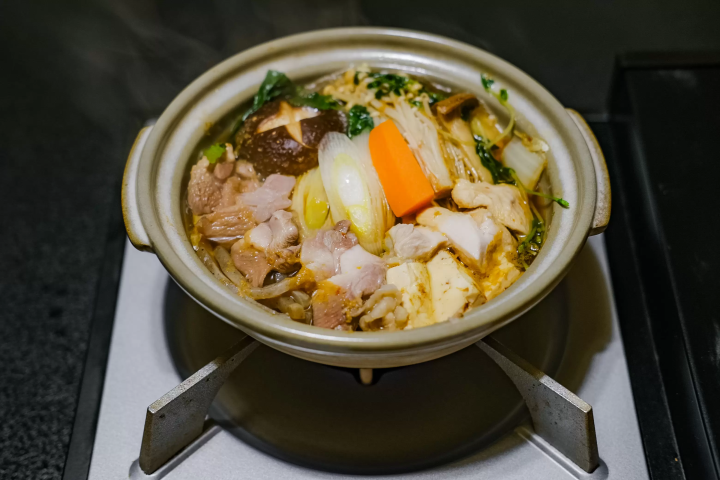
In particular, the Suruga Shamo Chicken Sukiyaki is a specialty dish that you'll want to savor slowly. Shamo chicken from Umegashima Onsen is luxuriously prepared with both breast and thigh meat. The juicy texture of the meat is accentuated when served with tenderly stewed Chinese cabbage and enoki mushrooms.
When mixed with beautiful eggs with yolks produced in Aoi Ward , Shizuoka City , the rich flavor of the meat further enhanced the umami of the meat.
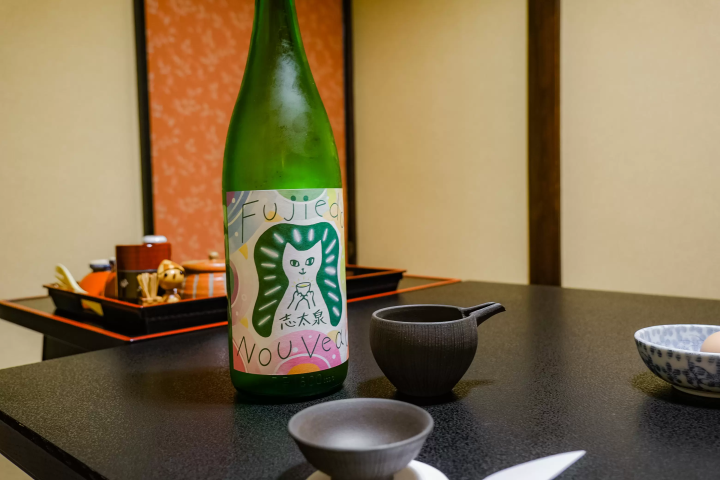
The sparkling sake Fujieda Nouveau from the local sake brewery Shitaizumi Brewery also has a pleasant, refreshing fizz that pops in your mouth, further enhancing the flavor of your meal.
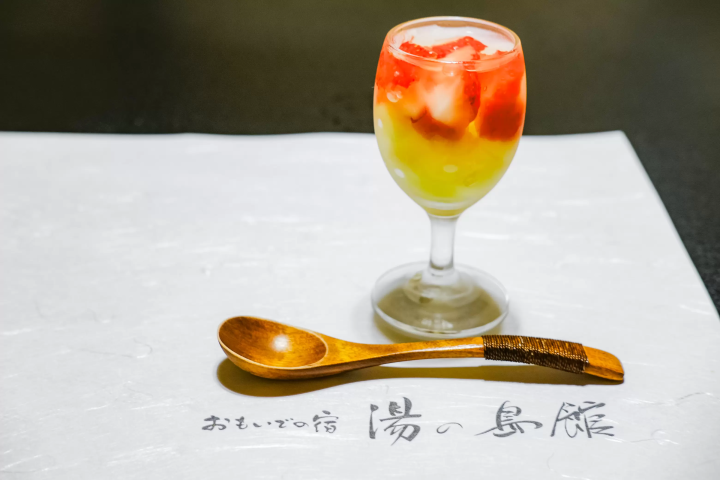
The fresh jelly dessert was a luxurious combination of Shizuoka Crown Melon and Beni Hoppe. The fresh texture filled the mouth with fruit juice, making it the perfect way to end the meal. The hospitality of the inn, which generously provided the local bounty, warmed my heart.
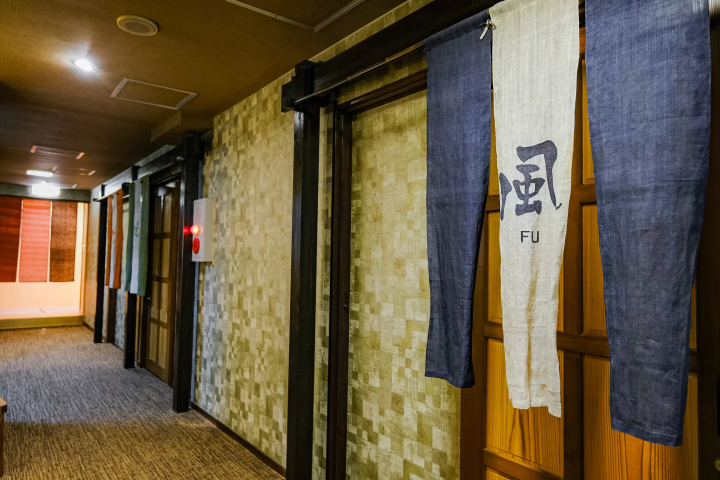
After dinner, we finally headed to the inn's pride and joy, the "Furinkazan" baths, which have four types of bath. The system is that you call the front desk, and if there is an available bath, you will be given a special key to use it.
First, we head to the open-air bath "Yama," which we've heard is recommended for bathing at night.
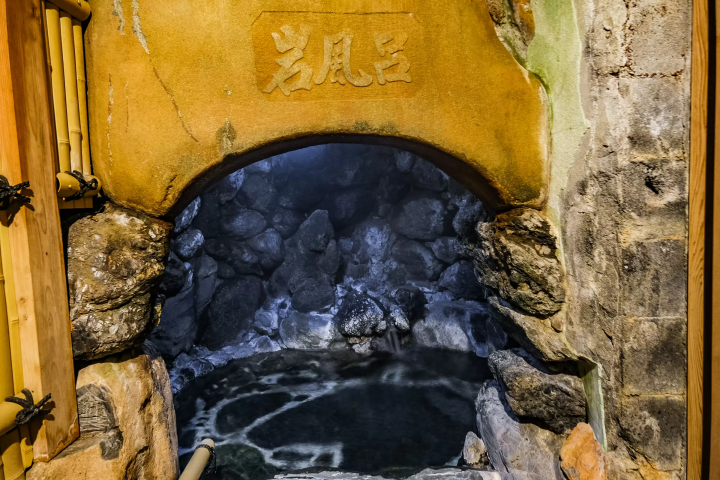
Once you open the door, you'll find yourself in a wild rock bath made entirely of rock. The cave-like space makes you feel the energy of nature itself.
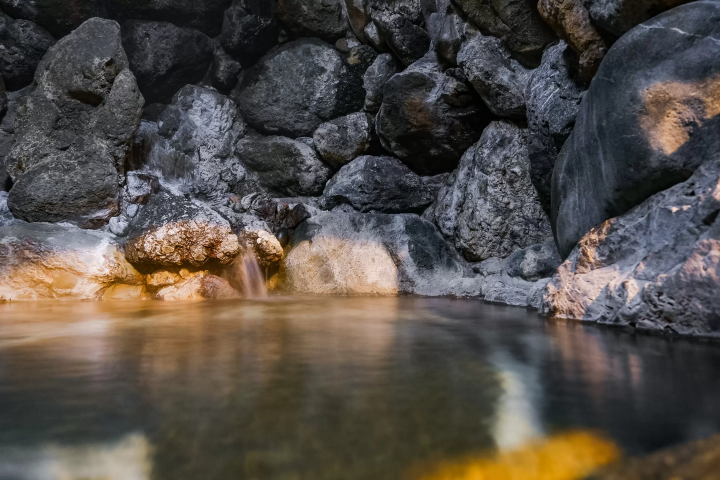
We had the hot spring water flowing from the rock face all to ourselves, enjoying a luxurious stay.
Next is the "Kaze" bath, where you can enjoy a huge wooden bathtub and two Goemon baths.
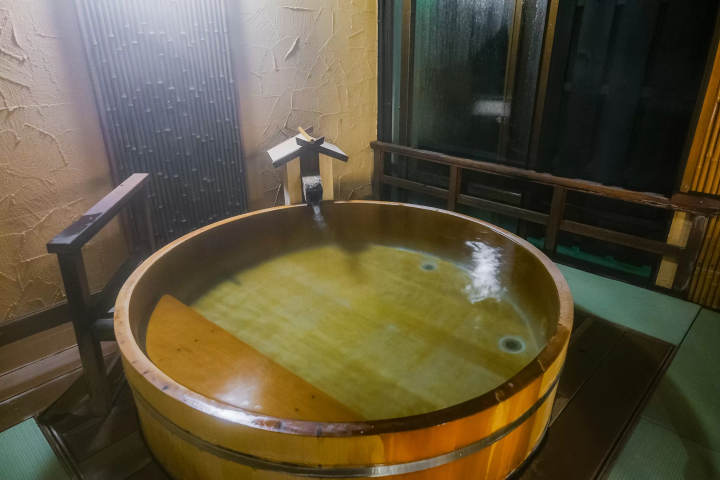
The floor is covered with tatami mats, and the bath is designed in a purely Japanese style. Thanks to the tatami mats, your feet won't feel cold even when bathing in the cold season.
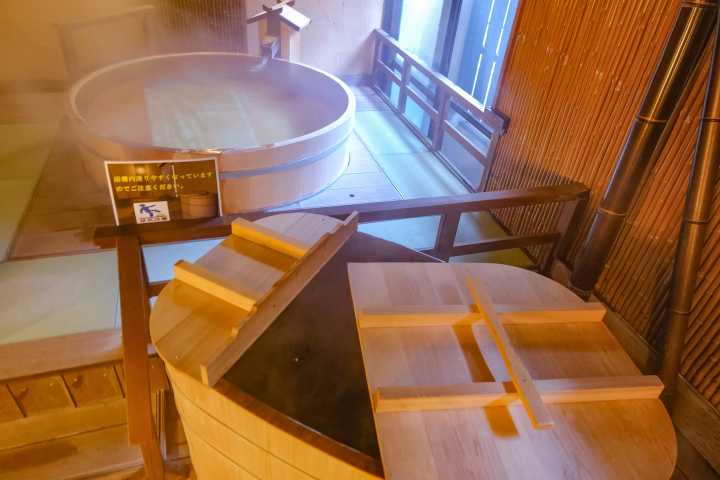
It was a strangely relaxing space, as if a Japanese-style room had been converted into a bath.
The "Hayashi" bath, characterized by the scent of cypress, is a spacious bath with a pale green color scheme where you can stretch out your legs.
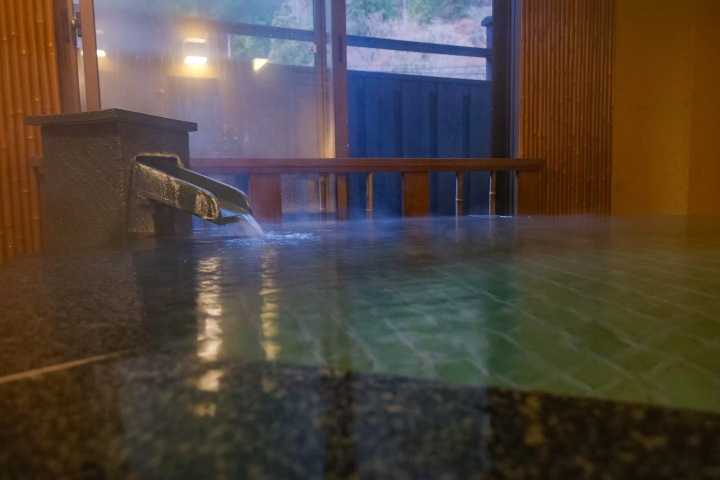
When you are wrapped in the soft, viscous water, even the passage of time seems to slow down. It is so comfortable that you will lose track of time and end up soaking for a long time.
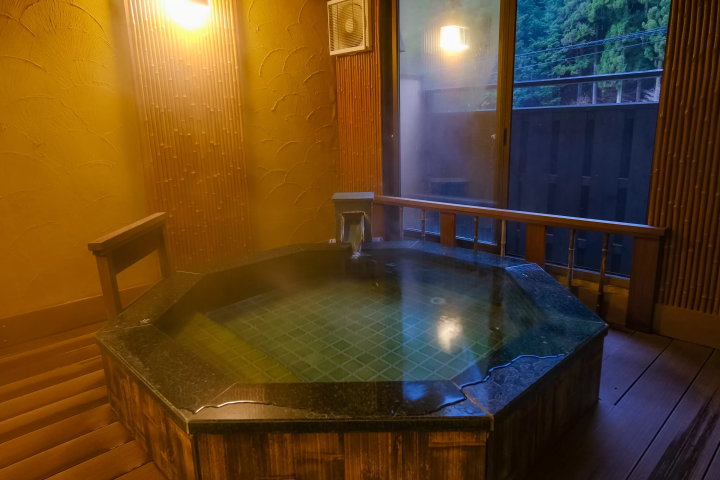
The space was so relaxing that it made me want to close my eyes and quietly listen to the sounds of the water and wind.
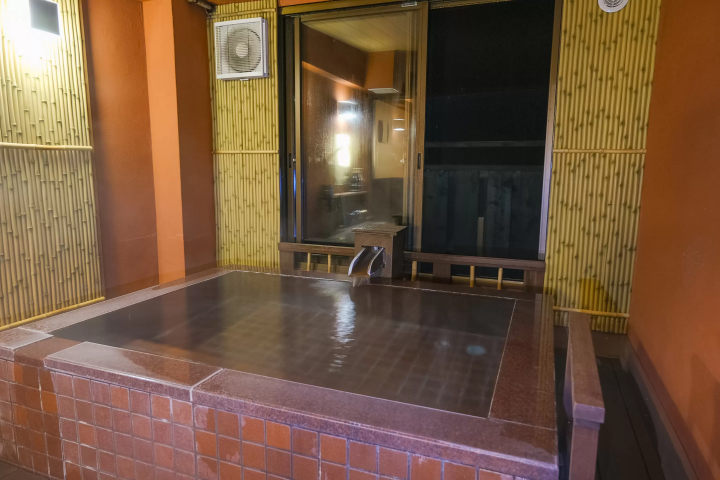
The last bath we visited was the "Hi" bath, which is colored in vermilion, reminiscent of the "red armor" of the Takeda army. It was created with the idea of "a bath where you can feel like Takeda Shingen," and is a must-try for history buffs.
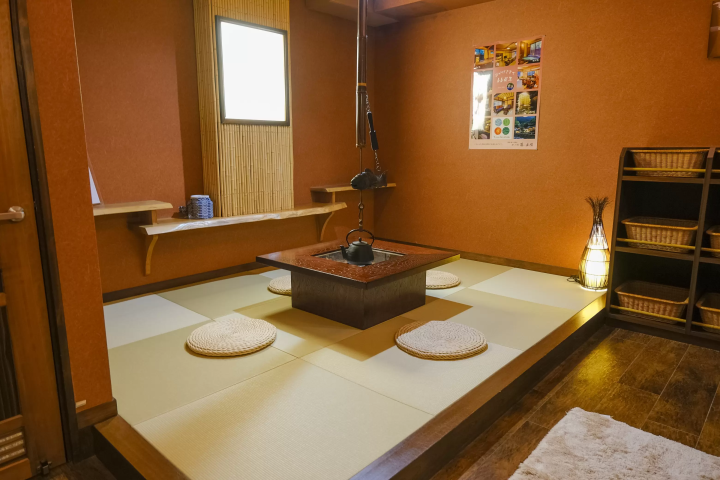
Like the "Hayashi" bath, the "Hi" bath also has a raised area with a hearth, allowing you to see the rest area from the bathtub. It seems like it would be suitable for a variety of occasions, including those with small children.
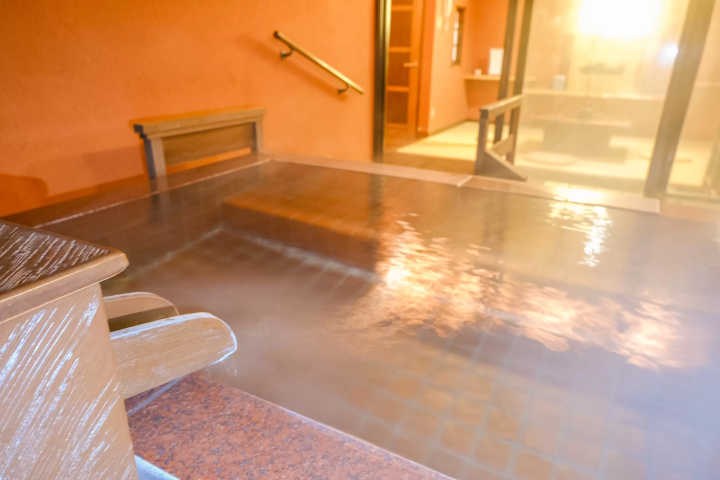
After visiting all four baths, I was able to deeply relax both my body and mind, and the next morning I woke up feeling refreshed. The fatigue of my travels was also soothed, and I was able to start my morning off comfortably, listening to the murmuring of the Abe River.
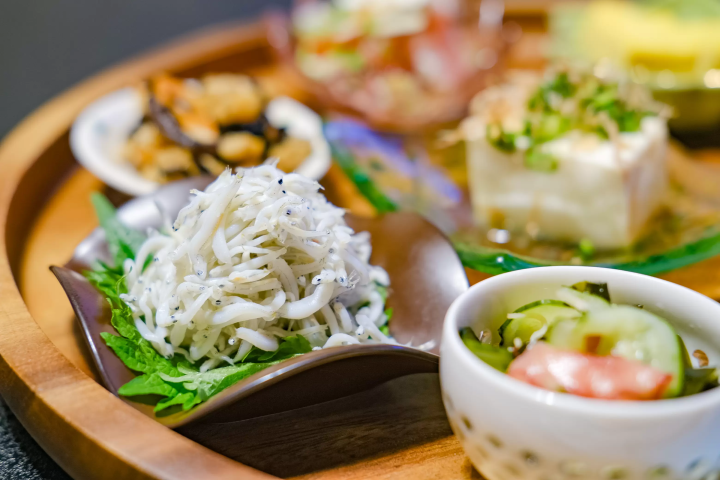
A warm breakfast that fills both your stomach and your heart will start your journey. A colorful table full of Japanese food, including small side dishes on a tray, grilled salmon, steamed dishes, and miso soup, will get your heart pumping right away.
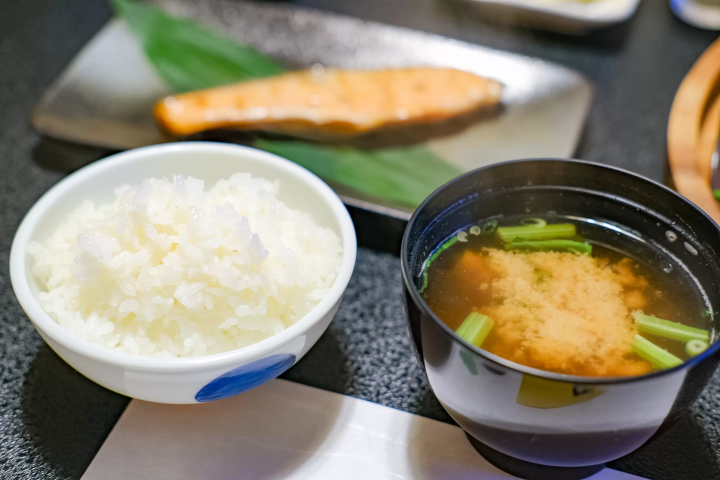
The leisurely breakfast, enjoyed as time passed, became a vivid memory that will stay in my mind, along with the memories of my visit to the four hot springs.
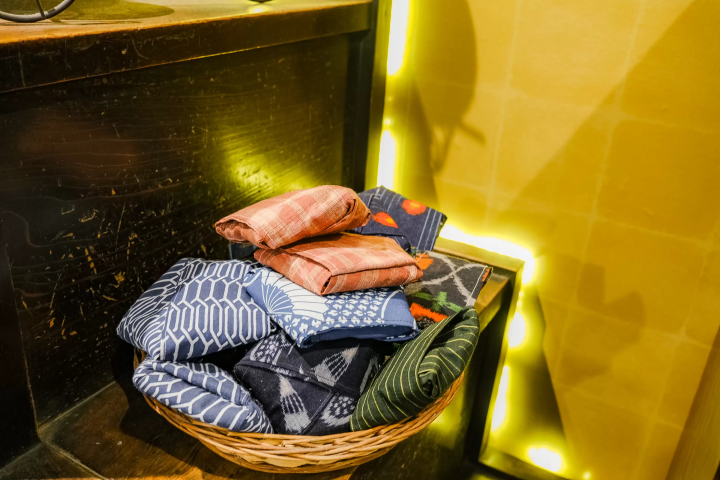
The hot springs at Yunoshimakan are available for day trips if you make a reservation. Be sure to experience the famous hot springs that are said to be Takeda Shingen's secret hot springs.
Yunoshimakan
 5258-7 Umegashima, Aoi Ward, Shizuoka City, Shizuoka Prefecture, 421-2...
This inn is located in a corner of Umegashima Onsen town. Located on the banks of the Abe River, you can bathe in Umegashima Onsen, which was once known as Takeda Shingen's hidden hot spring.
The baths are available for private use, and the attraction is the four baths with different themes called "Fuurinkazan."
5258-7 Umegashima, Aoi Ward, Shizuoka City, Shizuoka Prefecture, 421-2...
This inn is located in a corner of Umegashima Onsen town. Located on the banks of the Abe River, you can bathe in Umegashima Onsen, which was once known as Takeda Shingen's hidden hot spring.
The baths are available for private use, and the attraction is the four baths with different themes called "Fuurinkazan."
Access information
There are two main means of transportation to get to Umegashima Onsen-kyo.
One option is to go by rental car or private car. If you are coming from the Tokyo metropolitan area, it takes about three hours from the Tokyo Interchange, and about an hour on public roads from Shizuoka Station.
Another option is to take the Shinkansen and local bus. First, take the Shinkansen to Shizuoka Station, then take the Shizutetsu Justline to Shizuoka Umegashima Onsen.
However, there are only three buses to Umegashima Onsen on weekdays and five on weekends, so be sure to plan your trip carefully.
National hot spring resorts are designated by the Minister of the Environment under the Hot Springs Act as healthy hot spring resorts where the benefits of hot spring use are expected to be sufficient. 79 hot spring resorts have been designated nationwide (as of October 2024). National hot spring resorts are selected based on the following criteria. 1. Conditions regarding the quality and volume of hot spring water (1) The source of the hot spring water used must be a therapeutic spring. (2) The hot spring water used must have an abundant volume of water. The standard volume of water flow must be 0.5 liters per minute or more per hot spring user. 2. Conditions regarding the environment of the hot spring resort (1) The hot spring is suitable as a resort from the perspective of the natural environment, townscape, history, climate, culture, etc. (2) A plan for the placement of doctors who can provide guidance on proper hot spring use and health management from a medical perspective, or a plan for the placement or training policy of personnel who can provide guidance on bathing methods, etc. in cooperation with the doctors, must be established. (3) Appropriate efforts will be made to protect hot spring resources, manage the hygiene of hot springs, promote public use of hot springs, and take into consideration the elderly and disabled, etc. (4) Enhanced efforts to prevent disasters.
The contents on this page may partially contain automatic translation.
Special Features
More









![[Izu, Shuzenji Onsen] Shuzenji hydrangeas adorn the garden of the inn "SORA Togetsuso Kinryu"](https://resources.matcha-jp.com/resize/720x2000/2024/06/25-185079.webp)

![[2026] Climbing Mount Fuji: The Complete Guide to a Safe Experience](https://resources.matcha-jp.com/resize/720x2000/2023/06/01-138820.webp)