
Enjoy the Oze route from Uonuma! Let's head to Oze, a paradise of beautiful nature!
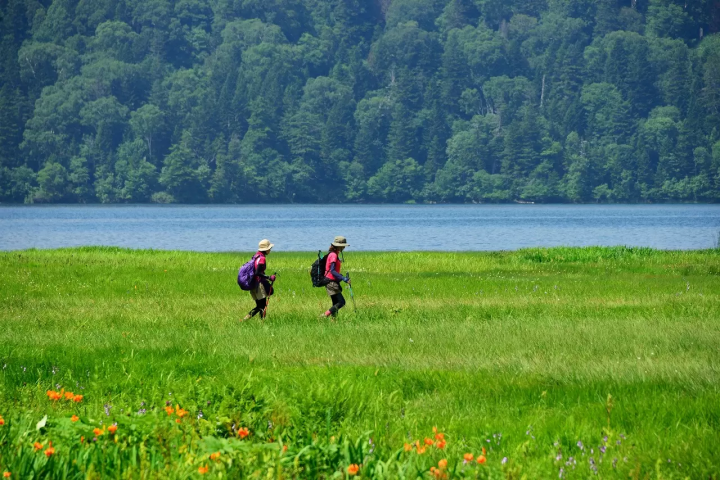
Oze National Park stretches across four prefectures: Niigata, Fukushima, Gunma, and Tochigi. The route from Niigata Prefecture to Oze begins in Uonuma City.

Written by
Uonuma City, located in southern Niigata Prefecture, is a town rich in nature at the foot of the Echigo Sanzan mountain range. Winter snow and spring meltwater irrigate the land, helping to cultivate delicious Uonuma koshihikari rice. Cherry blossoms and fresh greenery in spring, outdoor experiences in summer, golden rice fields and autumn leaves in autumn, and blankets of snow in winter. Every season offers stunning scenery that will make you want to take a photo. After your trip, take a relaxing dip in a hot spring. The flavors unique to a snowy country, such as freshly cooked koshihikari rice and wild vegetable dishes, will satisfy your soul. It's about two hours by Shinkansen from Tokyo. Why not take a leisurely trip to experience the warmth of nature and people?
This service includes sponsored advertisements.
Oze National Park stretches across four prefectures: Niigata, Fukushima, Gunma, and Tochigi. The starting point of the route from Niigata Prefecture to Oze is Uonuma City . Commonly known as the "Oze Route from Uonuma," this route opens annually on June 1st. We'll introduce the appeal of this route, as well as the highlights and ways to enjoy Oze National Park !

The historical romance of Oze Saburo in Uonuma
-
Table of Contents
- What kind of place is Oze?
- How to get there from Uonuma City
- Exploring the charm of the Oze route from Uonuma!
- Full of charm in every season! Seasonal flowers blooming in Oze
- Recommended for first timers! Visit Oze with a nature guide
- What equipment should I bring? Frequently asked questions about hiking in Oze
- Convenient access to Oze! Enjoy the hot springs in Uonuma!
- Summary: Enjoy the journey to Oze! The Oze route from Uonuma was full of charm!
[Note] For the latest information on the season (road opening schedules to Oze, mountain hut opening schedules, road closures, etc.), please check here (Oze Conservation Foundation website) .
What kind of place is Oze?
Oze is a national park that stretches across four prefectures: Uonuma City in Niigata Prefecture, Hinoemata Village in Fukushima Prefecture , Katashina Village in Gunma Prefecture , and Nikko City in Tochigi Prefecture .
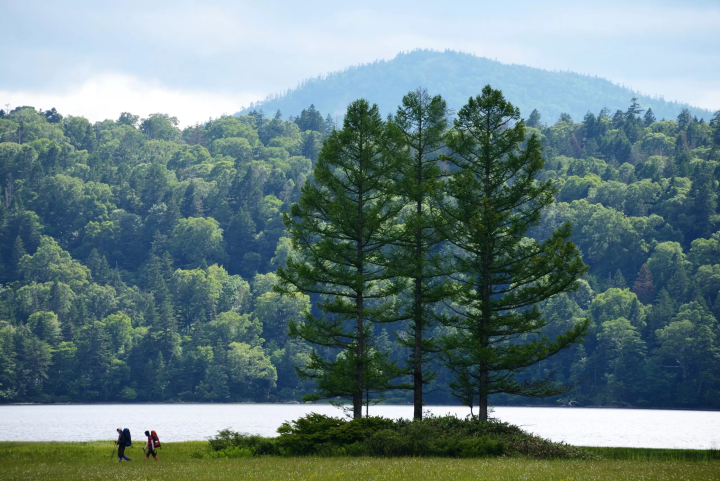
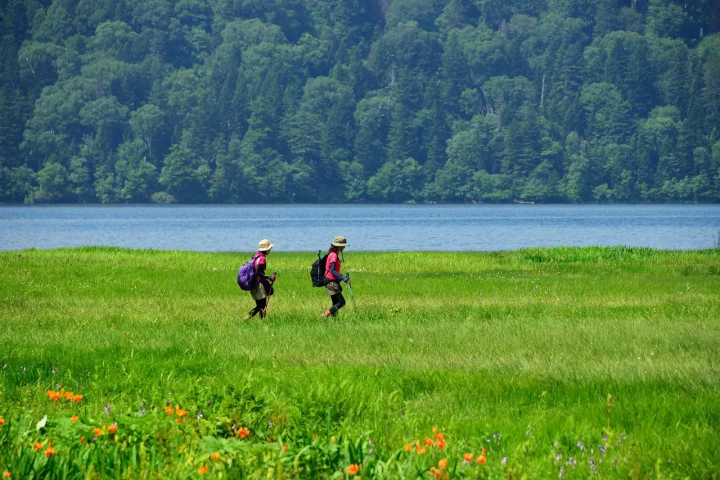
It is broadly divided into two areas. One is the "Ozenuma" area, where a dammed river creates a lake-like landscape . From here, you can see the majestic Mt. Hiuchigatake, the highest peak north of Tohoku. In early summer, visitors are greeted by fluffy cotton grass swaying in the breeze and clusters of vibrant yellow day lilies. This area can be reached on a day trip from Uonuma City by boat and bus.
The other is the Ozegahara area, which is home to one of the largest marshes in Honshu . In spring, the famous skunk cabbage, synonymous with Oze and featured in a song, spreads out before you. The vast marshes and beautiful mountain scenery are breathtaking.
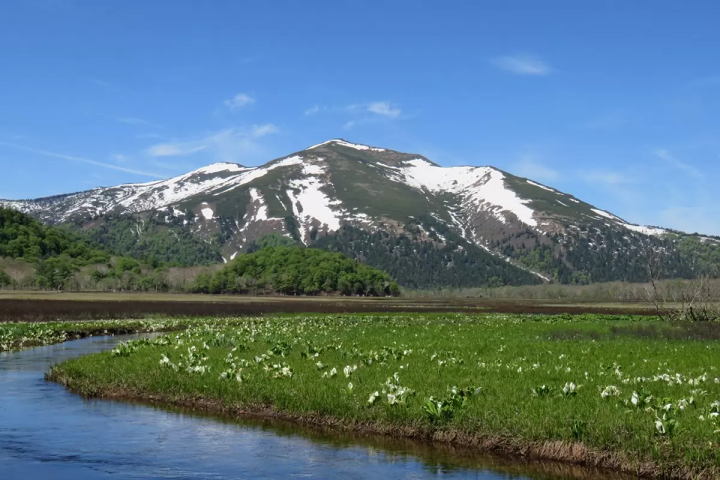
The Oze marshlands are surrounded by mountains. As if in a relay, the scenery changes with the seasons, with a variety of flowers appearing one after the other. It is truly a panorama worthy of being called a "paradise in the sky."
Once you visit, you'll definitely be captivated by the beautiful nature of Oze!
How to get there from Uonuma City
There are two main ways to get from Uonuma City to Oze.
Pattern 1: The journey is full of attractions! "Oze Route from Uonuma" using boats and buses
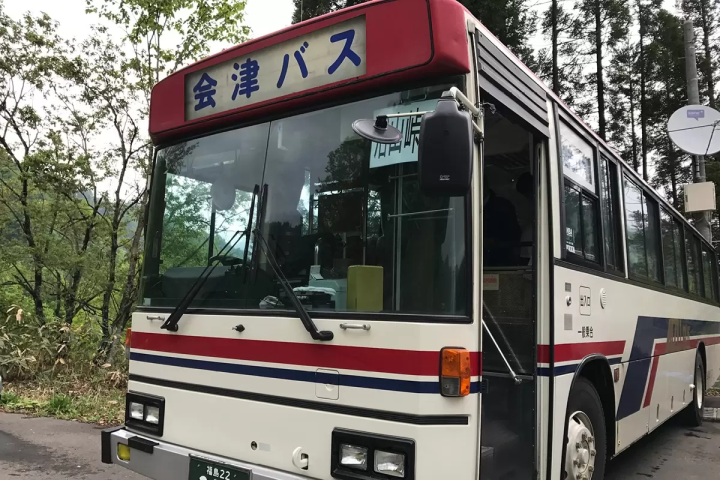
The most recommended way to get from Uonuma to Oze is by boat and bus, taking the "Uonuma to Oze Route." From Uonuma City, start at JR Urasa Station and take a local bus to Oku Dam. From there , cross the huge artificial lake, Oku Lake, by boat, then transfer to a bus and head to Oze and Numayama Pass .
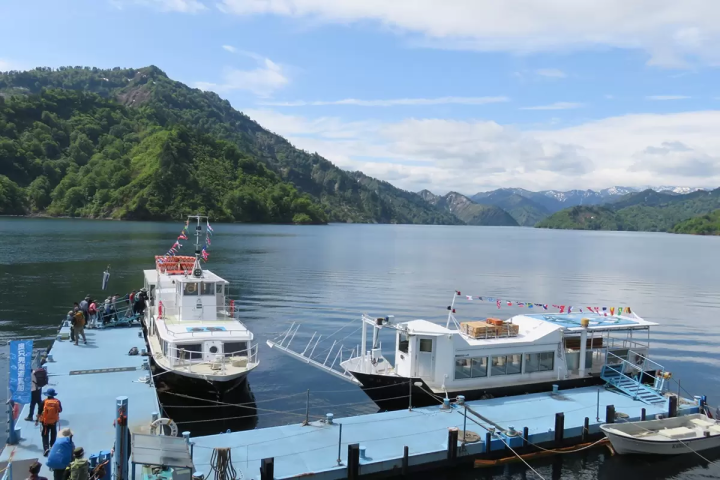
This method allows you to leisurely enjoy the scenery from the window and reduces the worry of driving along the way .
* Advance reservations are required for the Oze route from Uonuma. For details on timetables and reservations, please click here
Pattern 2: Using National Route 352 and heading by car or motorcycle
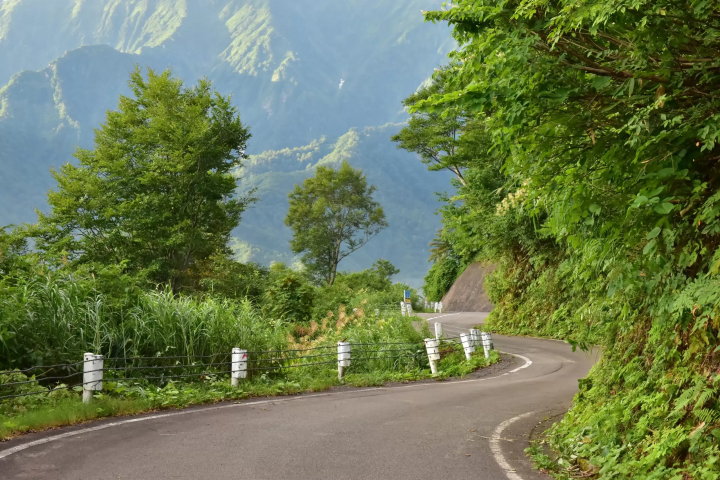
Another option is to take National Route 352, which runs from Uonuma City towards Oze. You can get there by car or motorcycle. This road only goes as far as the Miike Parking Lot. From there, you can transfer to a shuttle bus and travel to Numayama Pass .
However, National Route 352 is closed during the winter, so it is usually only passable from late June to early November .
Please check the latest road information here ▶ Uonuma City Traffic Information
There are also some narrow areas along the way, so please drive with caution!
For details on each access method, click here
Exploring the charm of the Oze route from Uonuma!
What kind of course is the popular "Oze Route from Uonuma" that allows you to enjoy the scenery along the way?
The most distinctive feature of this route is the "vast, unexplored, spectacular scenery" that spreads deep in the mountains of Uonuma. And along the way, you can feel the exhilaration of crossing the majestic lake by boat. It's not just a road to Oze, but a popular unexplored route that's full of attractions to enjoy along the way .
1. The perfect gateway to Oze! The Tadami Oku Line
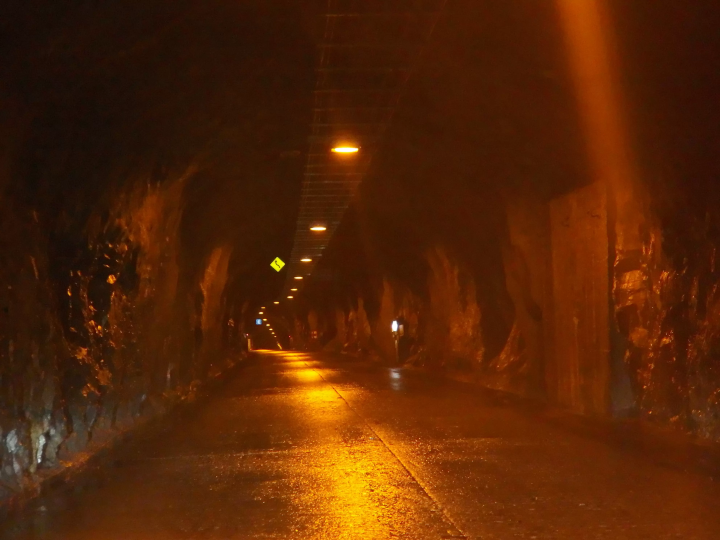
This tunnel road is located on the way from JR Tadami Oku . It can also be considered the entrance to the " Tadami Route from Uonuma." The tunnels are approximately 18km long in total. Originally, it was built to transport materials for the construction of Oku Dam. In parts of the tunnel, the rough, hand-dug walls remain, and even today, you can see the traces of the time of construction, giving you a sense of history that is a highlight !
2. Surrounded by 2,000m-class mountains. Take a boat trip to Oku while enjoying the spectacular views.
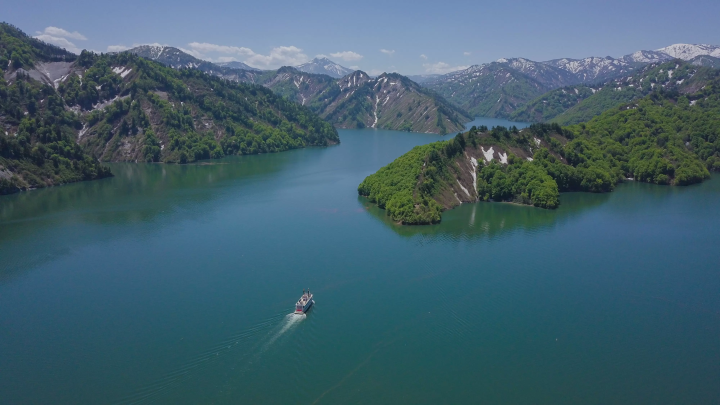
Once you leave the Tadami Oku Line, you will arrive at Tadami Oku . From here, you will travel by boat. Lake Oku is a huge artificial lake completed in 1960. With a water capacity of approximately 600 million cubic meters, it is one of the largest in Japan. From the lake, you can also see Mt. Arasawa and Mt. Hiuchigatake.
The reflection on the lake surface is like a fjord! The greatest attraction of this route is being able to see this magnificent natural scenery. It also builds up anticipation for Oze.
3. A view of the primeval beech forest from the bus. The surprising hidden road "National Route 352"
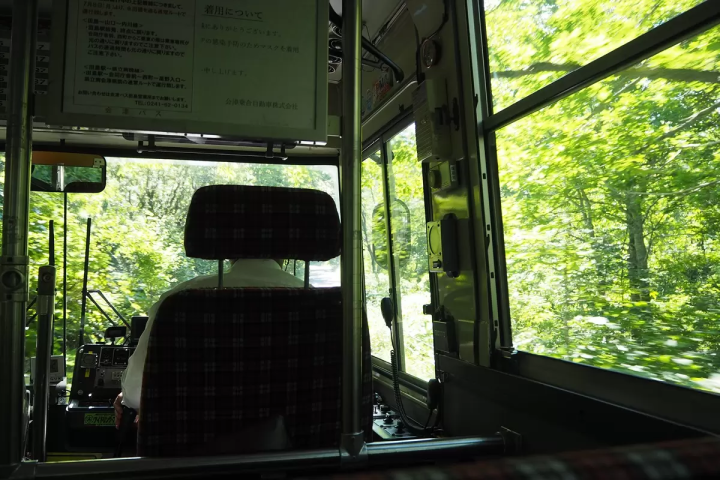
From the Ozeguchi boat landing to Numayama Pass, you will travel by bus along the unexplored road of National Route 352. From the bus window, you can see Mount Hiragatake, one of Japan's 100 famous mountains, and the vast virgin beech forest spreading out below. In season, you can also enjoy the beautiful flowers of the buckwheat fields during your bus trip.
After getting off the bus at Numayama Pass, it's time to set off on your Oze hike!
The journey is full of attractions! For details about the Oze route from Uonuma, click here.
Full of charm in every season! Seasonal flowers blooming in Oze
Oze is famous as a treasure trove of Takayama plants. What kind of flowers can you see in spring, summer, and autumn? Here are some of the plants you can see relatively often on a day hike from Numayama Pass to Lake Oze!
Flowers blooming in Oze in spring
This is the season when the final flower of the Oze season, the "Siberian gentian" (Gentiana spp.), which is also mentioned in the famous song "Summer Memories," blooms, signaling the end of the season, and the entire marshland turns golden yellow. Also, marsh marsh flowers color the marshland after the snow melts.
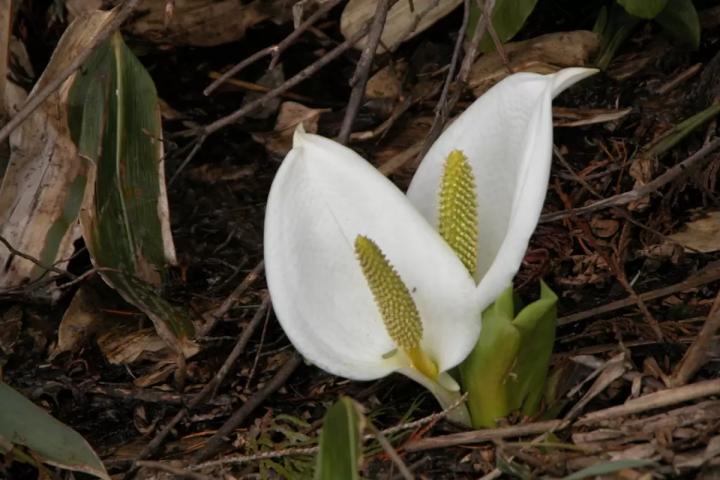
Asian skunk cabbage
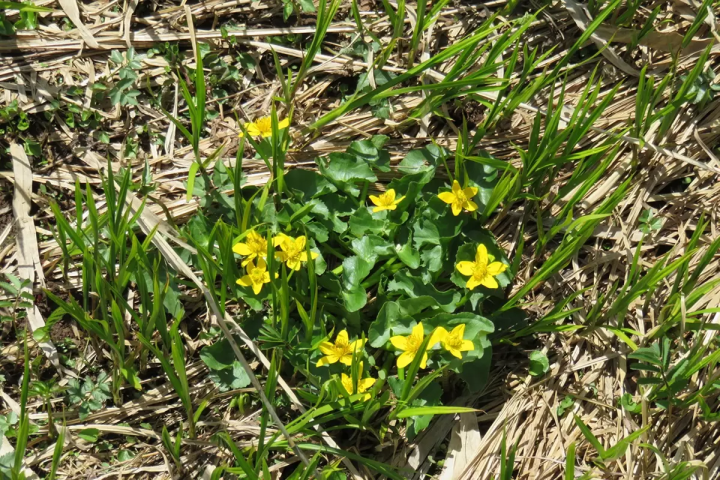
marsh marigold
Flowers blooming in Oze in summer
At the Oe Marsh of Lake Oze, vibrant flowers such as cotton grass and day lilies bloom all over the place .
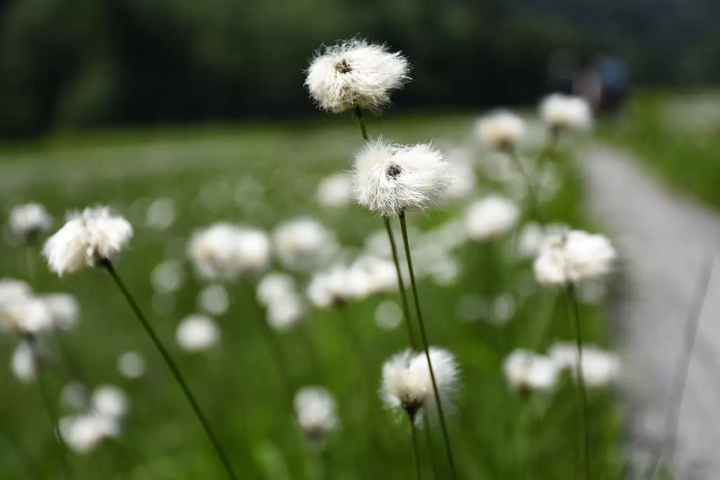
Cotton grass
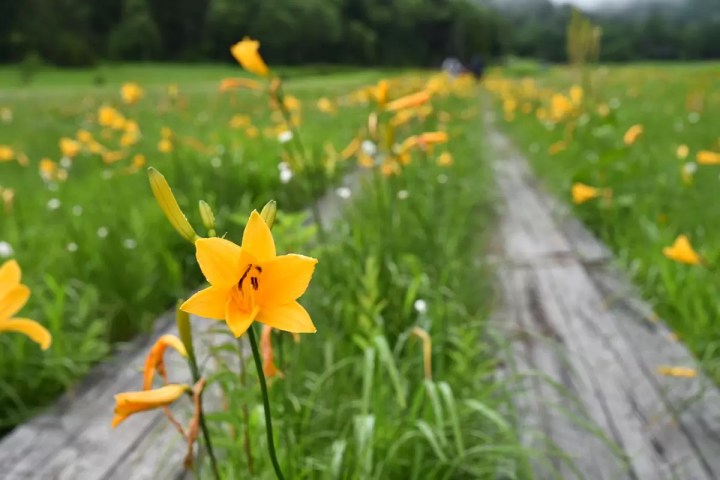
Day lily
Flowers blooming in Oze in autumn
This is the season when the final flower of the Oze season, the Siberian gentian, blooms, signaling the end of the season, and the entire marshland turns golden yellow .
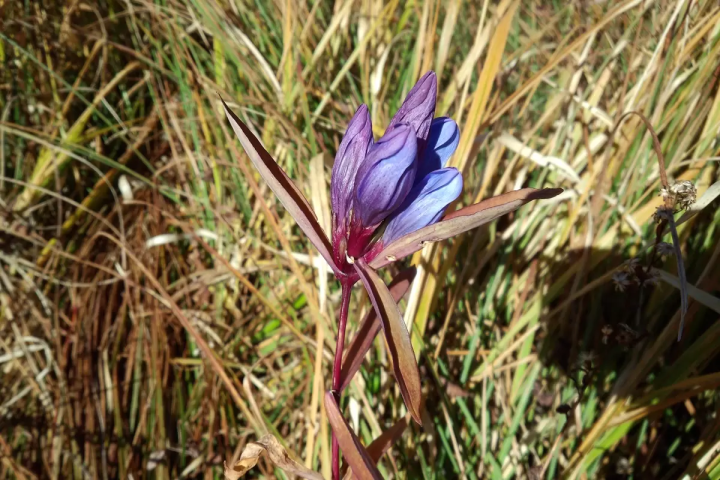
Siberian gentian
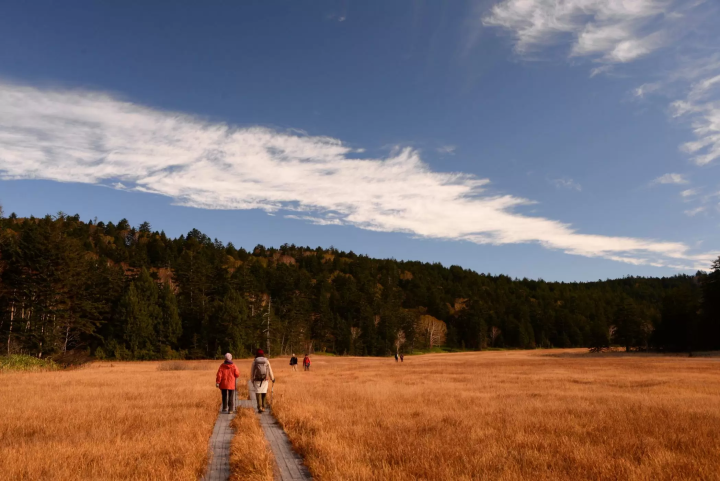
grass autumn leaves
For more information on the flowers that bloom in Oze, click here
For the latest information on Oze, please see here (Source: Oze Conservation Foundation official website)
Recommended for first timers! Visit Oze with a nature guide
Why not take a walk through Oze with a nature guide who is an expert in Oze? Whether you're a first timer or have visited multiple times, you're sure to discover new things and find new ways to enjoy the area!
What is Oze Nature Guide?
In order to provide visitors to Oze National Park with a safe, comfortable, and high-quality nature experience, we employ specialists with guiding skills, emergency response capabilities, and extensive knowledge of Oze and the surrounding area . Guides are members of the Uonuma Nature University, a guide organization in Uonuma City , and are certified Oze guides.
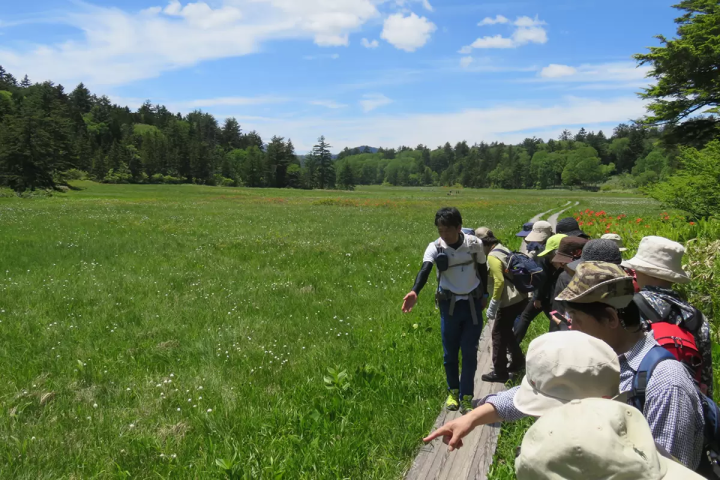
We can also arrange guided tours for individuals and groups . For more details, click here.

What equipment should I bring? Frequently asked questions about hiking in Oze
Frequently Asked Questions
Q: What is the temperature in Oze? What should I wear?
Oze is a mountainous region at an altitude of over 1,000 meters. Expect temperatures to be 10 to 15 degrees lower than on the plains. Even in early June and late September, there are days when the minimum temperature drops below zero, so we recommend bringing long sleeves and long pants even in midsummer. Furthermore, the sun is very strong in midsummer, so a hat is a must-have item.
Q: The local weather forecast for the day is "sunny." I don't need rain gear, right?
Rain gear is essential in case the weather suddenly worsens. Simple gear can easily get the rain blown in by the wind, so we recommend a Joge separate type that allows you to use both hands.
Q: Can I walk in sneakers?
There are many sections with well-maintained boardwalks, so you can walk in sneakers. However, wet boardwalks can be slippery and very dangerous. Also, there are some areas where boardwalks are not maintained, so it is best to wear mountain "trekking shoes."
Q: Can I go on a day trip?
Although you will have less time to spend in Oze, it is possible to enjoy it as a day trip by planning your walking time carefully. What's more, by staying overnight at a hot spring resort in Uonuma City before or after the trip, you can relax and recover from the travel fatigue before setting off or returning home. We recommend planning according to your own physical strength.
Q: Can I buy food in Oze?
There are several shops and restaurants in Oze, but they may sell out or be closed, so it's a good idea to bring at least some food and drink with you.
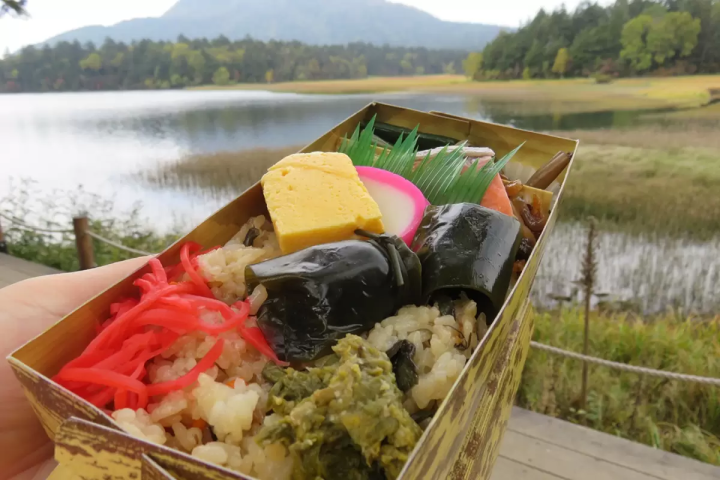
*Omomo is a bento shop in Uonuma City. They serve wild vegetable fried rice, the Kaitaka Takeshi bento, which was created at the request of the author, Kaiko Takeshi.
For more details about Omomo, please click here (advance reservations required)
Convenient access to Oze! Enjoy the hot springs in Uonuma!
The Oze route from Uonuma has little elevation change, so it's possible to enjoy hiking as a day trip. Uonuma City, home to several hot springs, is the perfect place to stay before or after your trip to soothe your fatigue! In addition, each hot spring is also a bus stop on the Oze route from Uonuma.
We will introduce you to hot spring resorts in Uonuma City that you can enjoy before or after hiking in Oze.
1. Oyu Onsen
The hot springs were discovered in 718 AD by Gyoki (a Japanese Buddhist monk active from the Asuka period to the Nara period), and are a representative hot spring resort of Uonuma that was loved by many warlords during the Sengoku period .
Effective for: frozen shoulder, cold sensitivity (to cold), stiff joints, joint pain, etc.
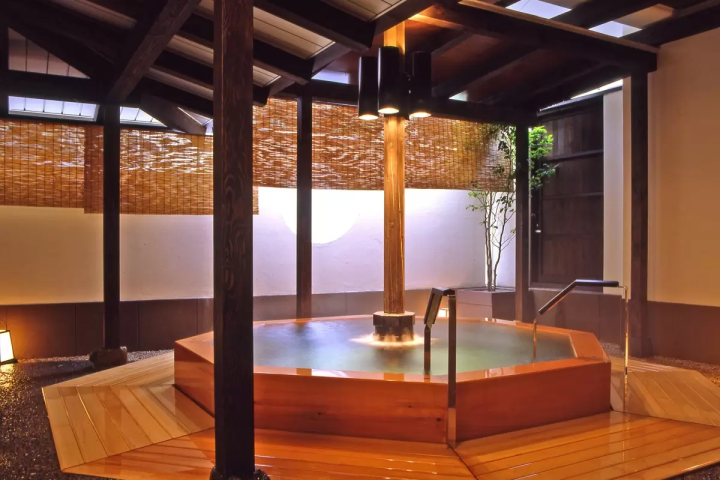
Access to the Oze route from Uonuma: Please use the Minami Echigo Kanko Bus, Oyu Onsen bus stop (or Oyu Onsen Ski Resort bus stop).
For more information on accommodations in Oyu Onsen, click here
2. Tochiomata Onsen
This is one of the few radium springs in the world , and has a long history, having been discovered in the Nara period.
The traditional bathing method of "nagayu" (long bathing), in which you soak in lukewarm water for as long as possible, is said to have a positive effect on the immune system and the body's natural healing powers. Because it warms the body to the core , the hot springs are also famous for being good for fertility.
Indications: Chronic pain or stiffness in muscles or joints, arteriosclerosis, gout, cholelithiasis, chronic cholecystitis, chronic gynecological diseases, chronic skin diseases
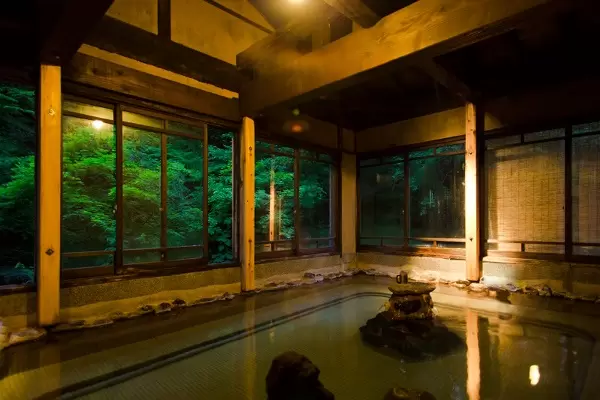
Access to the Oze Route from Uonuma: Please use the Minami Echigo Kanko Bus and Tochiomata Onsen bus stop. However, the 7:45am bus Oku for Tadami Dam from JR Urasa Station does not stop there. Please use the nearest bus stop, Oyu Onsen Ski Resort (approximately a 12-minute walk from Tochiomata Onsen).
For more information on accommodations in Tochiomata Onsen, click here
3. Oritate Onsen
This quiet hot spring resort is nestled in the mountains, with inns lined up along the river. Many guests visit the slightly warm hot springs for therapeutic purposes. The warm, homely hospitality and abundant hot spring water are its attractions .
Effective for: neuralgia, rheumatism, arteriosclerosis, etc.
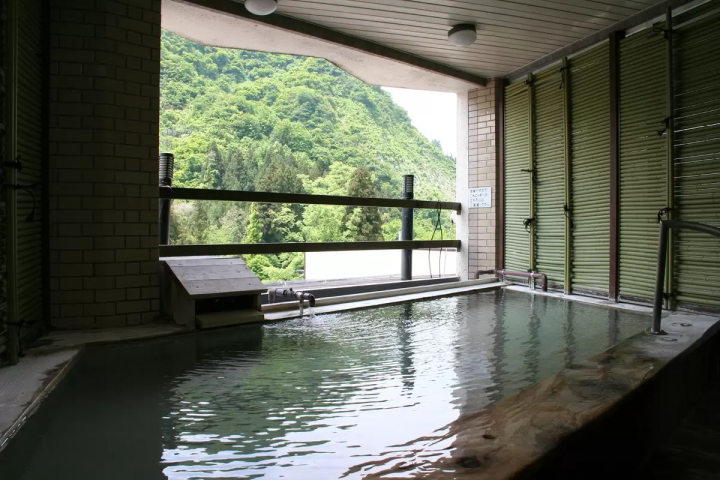
"Access to the Oze route from Uonuma" Please use the Echigo Kanko Bus/Oritate Onsen bus stop.
Click here for details on accommodations in Oritate Onsen
4. Yakushi Onsen
The hot springs warm you to the core and keep you warm for a long time . Located on a hill, the inn "Yamabiko-so" is also available. You can experience the four seasons through various activities such as vegetable harvesting and playing in the river.
Effective for: frozen shoulder, cold sensitivity (to cold), stiff joints, joint pain, etc.
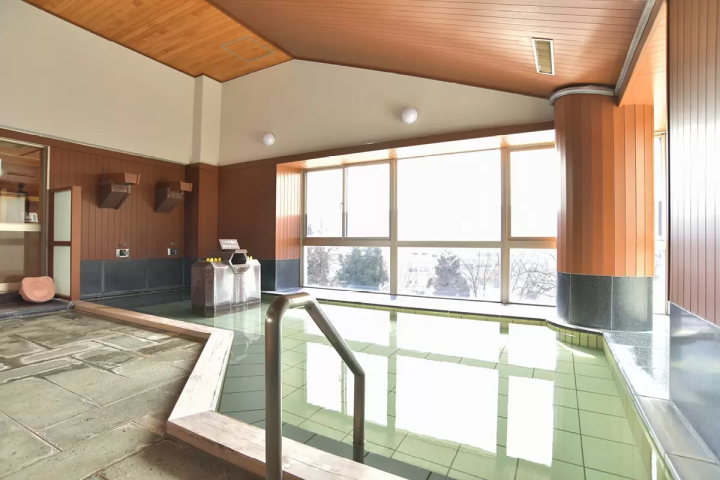
Access to the Oze route from Uonuma: Please use the Echigo Kanko Bus, Yunotani Junior High School bus stop (approximately an 8-minute walk from Yakushi Onsen).
For more information about Yakushi Onsen, click here
5. Ginzandaira Onsen
Surrounded by majestic mountains such as Echigo-Komagatake and Arasawa-dake, this hot spring resort closes down in winter due to heavy snowfall. You can relax and enjoy the hot springs in an atmosphere enveloped in nature.
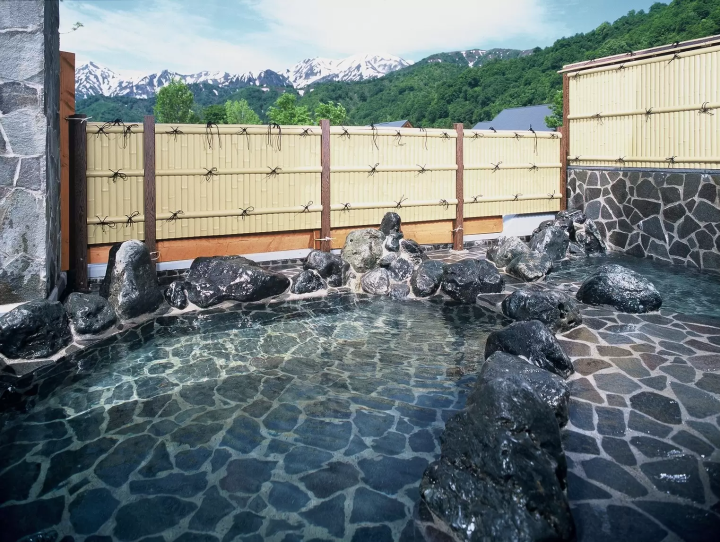
For more information on Ginzandaira Onsen, click here

Summary: Enjoy the journey to Oze! The Oze route from Uonuma was full of charm!
We have introduced Oze, which is full of sights, and the "Oze Route from Uonuma," which has many attractions along the way to Oze.
Why not enjoy Oze along with the hot springs and sightseeing in Uonuma in search of scenery that can only be seen at certain times?
Once you visit, you'll be hooked on Oze.
Download the 2025 Oze Trekking Map here (brochure page)
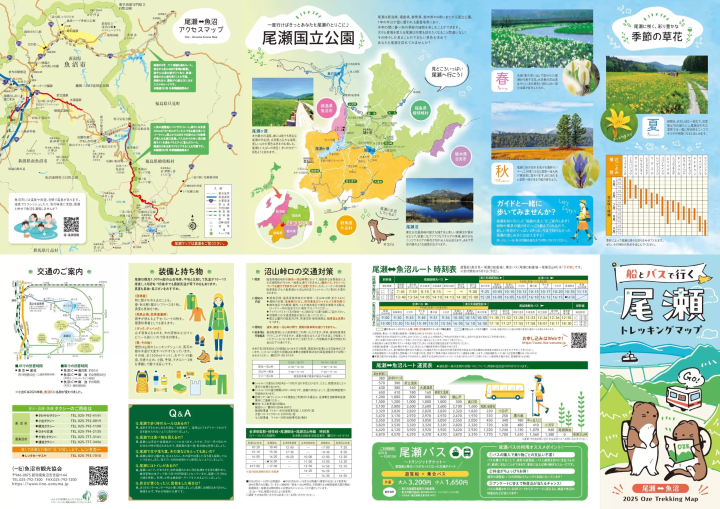
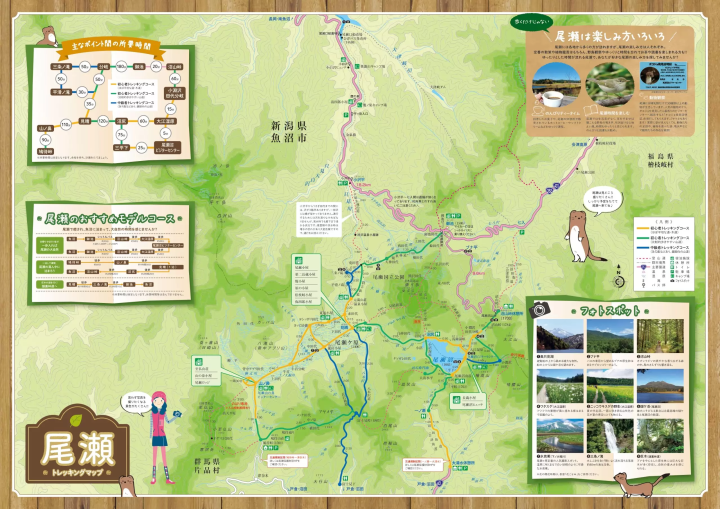
For more information about Oze, please see the Oze Conservation Foundation official website.
Click here to read the romantic story of Oze Saburo, a historical tale that remains in Uonuma.
Uonuma City, located in southern Niigata Prefecture, is a town rich in nature at the foot of the Echigo Sanzan mountain range. Winter snow and spring meltwater irrigate the land, helping to cultivate delicious Uonuma koshihikari rice. Cherry blossoms and fresh greenery in spring, outdoor experiences in summer, golden rice fields and autumn leaves in autumn, and blankets of snow in winter. Every season offers stunning scenery that will make you want to take a photo. After your trip, take a relaxing dip in a hot spring. The flavors unique to a snowy country, such as freshly cooked koshihikari rice and wild vegetable dishes, will satisfy your soul. It's about two hours by Shinkansen from Tokyo. Why not take a leisurely trip to experience the warmth of nature and people?
The contents on this page may partially contain automatic translation.





Special Features
More









![[2026 Latest] Direct bus trip from Osaka to Shirahama! OCAT departure to Nanki Shirahama bus travel guide](https://resources.matcha-jp.com/resize/720x2000/2026/05/21-264354.webp)
