
[Kochi Prefecture, Western Otsuki Town] The most powerful spot in Western Kochi Prefecture! Tsukiyama Shrine, where Tsukiyama also practiced.
![[Kochi Prefecture, Western Otsuki Town] The most powerful spot in Western Kochi Prefecture! Tsukiyama Shrine, where Tsukiyama also practiced.](https://resources.matcha-jp.com/resize/720x2000/2026/02/02-257339.webp)
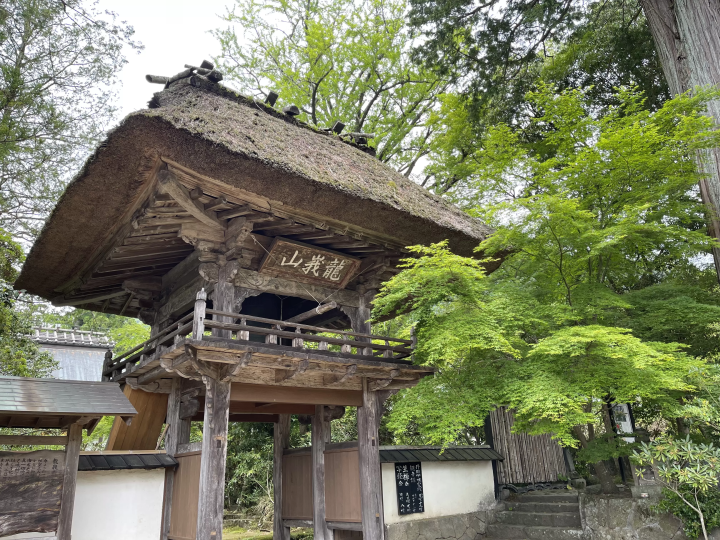
Tsukiyama Shrine, which is named after the moon in the Otsuki Town, is a power spot highly regarded by pilgrims. Why not visit this shrine, which is also an extra temple on the 88 temples of the pilgrim pilgrimage?

Written by
The Hata region of Kochi Prefecture is located at the southwestern tip of Shikoku, and is a peninsula that juts out into the Pacific Ocean, facing Tosa Bay to the east and Bungo Channel to the west. It is made up of three cities, two towns, and one village: Hara Village. It is a natural powerhouse rich in blessings, including the nationally famous Shimanto River and Cape Ashizuri, the blessings of the Kuroshio Current that flows along the coast, and the blessings of mountains that boast the largest area of forests in the country.
This service includes sponsored advertisements.
What is Tsukiyama Shrine?
Tsukiyama Shrine, which is the guardian deity of the sea in Otsuki .
Originally called " Moritsukiyama Gekkoin Nanshoji Temple," it was a sacred place where Shinto and Buddhism were intermingled, but since the Meiji period it has been renamed "Tsukiyama Shrine." The name Tsukiyama is said to have originated from the fact that the shrine's sacred object is a crescent-shaped stone, and that it was named after Tsukiyumi-no-Okami, the deity worshipped here. As the guardian deity of the seas of Otsuki, and as an extra temple on the 88 temples of Shikoku, it attracts a constant stream of worshippers. (From the Otsuki Town Tourism Association website)
Highlights of Tsukiyama Shrine
Lots of moon-shaped rocks
It is said that Kukai once practiced asceticism in front of a Tsukigata stone on this mountain, and many similar moon-shaped stones have been found on this mountain.In addition to the sacred object enshrined in the main hall, they are also placed next to the torii gate and on the dangerous slope of the mountain behind the shrine (this is now considered dangerous and people are advised not to climb), and it is fun to look for them.
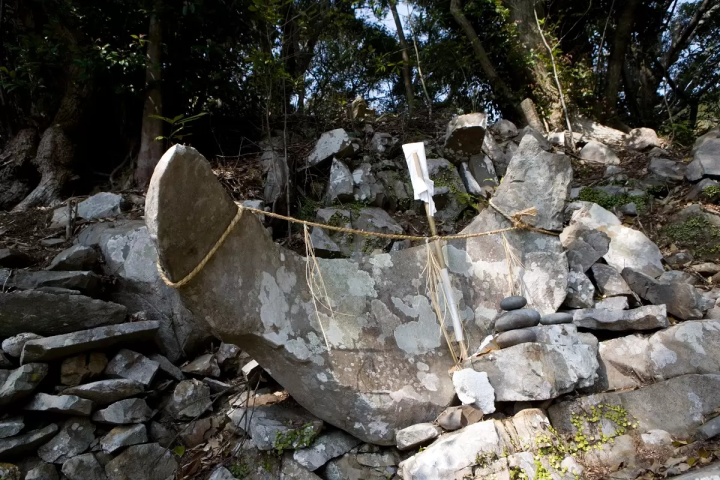
A moon-shaped stone is enshrined here (photo from Otsuki Town website)
The whole mountain is filled with pleasant air
The area around Tsukiyama Shrine is a forest road with almost no houses, which adds to the atmosphere of worship. Pilgrims who choose to visit Mount Gassan Shrine have said that it has a "unique sacred aura."
The surrounding area is also home to the well-maintained "Otsuki Pilgrimage Old Path," and the dirt path through the mountains in particular gives you a real feel for the path of training that once existed. Along the way, you can enjoy the sight of the "shirubefuda" (signposts) carried by the children of Otsuki Elementary School.
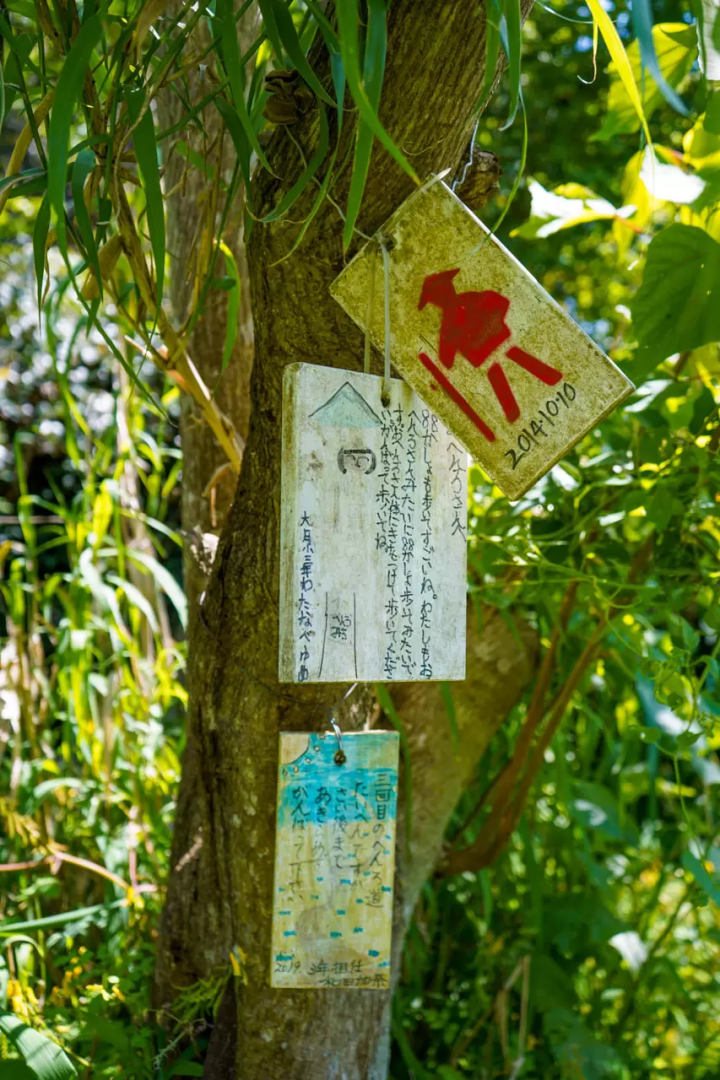
A sign scroll carried by students of Otsuki Elementary School (Photo: Lagoon Racing)
The Daishi Hall, which was built in memory of Kobo Daishi (Kukai), has a painted ceiling
The temple grounds include the main worship hall, which is designated as a historic site of Otsuki Town, and the Daishi Hall, which was built in 1858 (Ansei 5). The Daishi Hall has ceiling paintings that are said to have been done by artists from the late Edo period, such as Ekin, Kawada Shoryu, and Miyada Dosetsu.
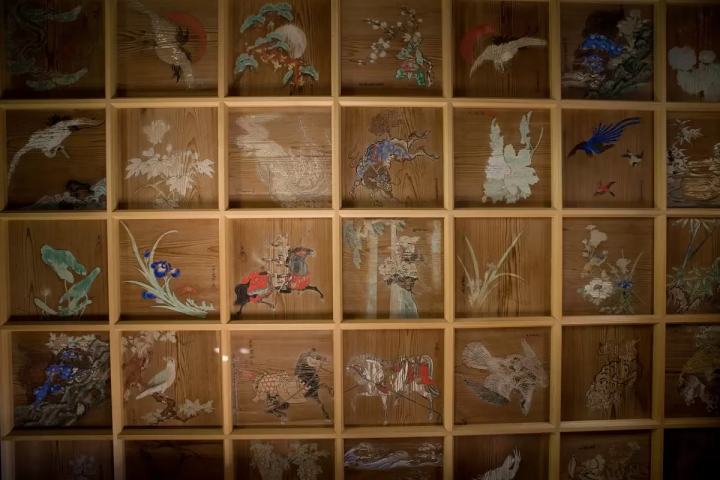
Ceiling painting of Daishido Hall (Photo from Otsuki Town website)
directions
As there is no public transportation, most people visit and tour the temple by car or on foot. You can also participate in a guided tour as part of the Photo Venture organized by Lagoon Racing.
Lagoon Racing https://automaaudio.wixsite.com/lagoon
The Hata region of Kochi Prefecture is located at the southwestern tip of Shikoku, and is a peninsula that juts out into the Pacific Ocean, facing Tosa Bay to the east and Bungo Channel to the west. It is made up of three cities, two towns, and one village: Hara Village. It is a natural powerhouse rich in blessings, including the nationally famous Shimanto River and Cape Ashizuri, the blessings of the Kuroshio Current that flows along the coast, and the blessings of mountains that boast the largest area of forests in the country.
The contents on this page may partially contain automatic translation.
Top Articles
There are no articles in this section.
Special Features
More








![[2026 Latest] Direct bus trip from Osaka to Shirahama! OCAT departure to Nanki Shirahama bus travel guide](https://resources.matcha-jp.com/resize/720x2000/2026/05/21-264354.webp)
