Boso Peninsula, Chiba: Top Attractions and Scenic Spots
Visit Chiba’s South Boso to see Nomizo Waterfall’s heart-shaped reflection, Mt. Nokogiri’s views, Yoro Keikoku’s autumn leaves, and Tokyo German Village lights.

Written by
台灣鄉下人,居住廣島2年,現居東京。擁有準通譯案內士資格。喜歡以歷史的角度來旅遊,讓旅遊更加充實。對日本動畫、音樂、電影、體育、歷史、地理非常感興趣。instagram: https://www.instagram.com/ponsan0119/?hl=ja
This service includes sponsored advertisements.
South Boso Peninsula: Scenic Attractions Near Tokyo
The South Boso Peninsula may be unfamiliar to many travelers, but in 2016, the number one trending spot on Japanese social media platforms like Twitter, Facebook, and Instagram was the Nomizo Waterfall in South Boso, Chiba. Nearby Mt. Nokogiri has also been steadily growing in popularity in recent years.
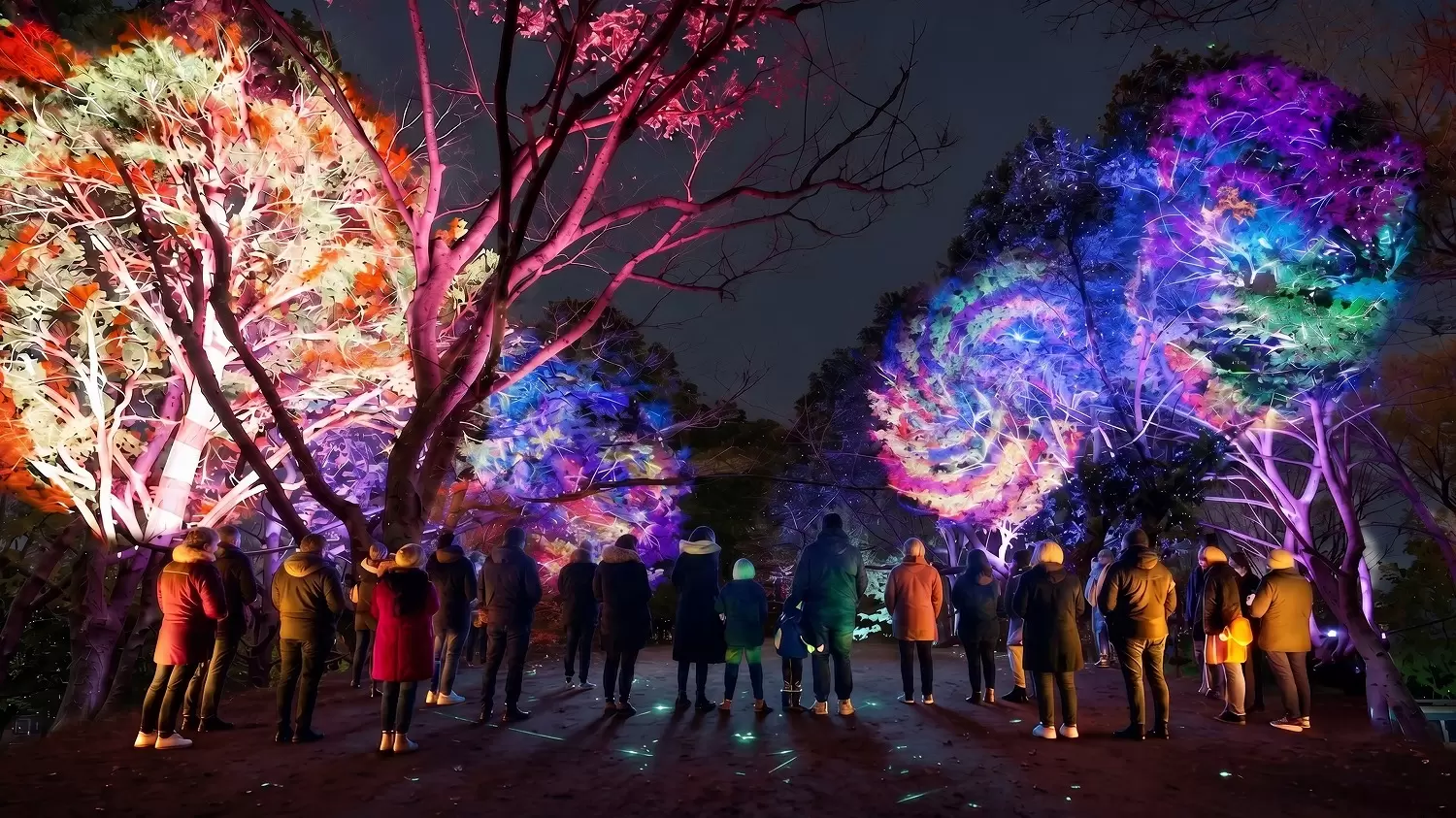
Featuring sweeping views of Tokyo Bay, Mt. Fuji, and the Pacific Ocean, it has naturally become a favorite destination. In autumn, you can visit the famous fall foliage spot Yoro Keikoku, while winter brings vibrant light displays at Tokyo German Village, making this region a charming place to explore year-round!
Where Is South Boso Located in Chiba?

Historically, the area that makes up modern-day Chiba Prefecture was divided into three ancient provinces: Awa, Shimosa, and Kazusa. The peninsula took its name—the Boso Peninsula—by combining characters from Kazusa and Awa, as those two regions covered most of the land. Today, the scenic southern half of this peninsula is simply called South Boso.
During Japan's samurai era in the 1500s (the Sengoku period, 1467 - 1603), South Boso was ruled by a powerful feudal family called the Satomi clan. Although foreign visitors rarely recognize their name, the clan's historical legacy served as the real-life setting for Nanso Satomi Hakkenden, one of Japan's most famous epic fantasy novels.
The Epic Legend: Nanso Satomi Hakkenden
Written in 1842 during the late Edo period (1603 - 1867), this classic tale tells the story of a princess from the Satomi clan and eight heroic samurai warriors born with magical beads. Each warrior represents a core virtue, such as loyalty or honor, and together they embark on an adventure to defend their homeland. Think of it as Japan's traditional equivalent to The Lord of the Rings or a classic superhero saga—so famous that virtually every child in Japan grows up learning about it.
The story remains a major part of Japanese pop culture, inspiring countless movies, TV series, anime, and manga. In fact, a 1980s film adaptation titled Legend of the Eight Samurai launched Hollywood star Hiroyuki Sanada to fame and became a global hit. Beyond action and magic, the story was surprisingly ahead of its time, featuring complex plots and cross-dressing heroes long before such themes were common in traditional literature.
The Surprisingly Romantic Nomizo Waterfall

Nomizo Waterfall has grown into a popular attraction in recent years, famous for its heart-shaped sunlight reflection inside the cave and its vibrant autumn leaves in November. Nomizo Falls and Kameiwa Cave
Because the phenomenon depends on the sunlight's angle, the best time to see the heart shape varies. The ideal conditions occur roughly 10 days before and after the spring equinox around March 20 and the autumn equinox around September 22, when the sun passes over the equator. Visiting in the summer creates an inverted light shape rather than a complete heart.
To catch the perfect heart shape, you must visit between 6:30 AM and 7:30 AM, as the effect disappears after 11:00 AM. Finding this rare and spectacular natural view is a rewarding challenge for early risers!
 1954 Sasa, Kimitsu City, Chiba Prefecture 292-0526
A Natural Forest Oasis: Yoro Keikoku Valley

Yoro Keikoku Valley is a scenic natural retreat where visitors can experience the beauty of all four seasons. Named after the Yoro River running through its center, the valley is located close to Tokyo, making it a popular autumn destination that draws large crowds of foliage seekers every fall. During other times of the year, travelers also visit to enjoy springtime cherry blossoms and unique geological formations.

Key highlights along the valley include the Kobundo Cave Ruins and Awamata Falls (also known as Takataki). Kobundo Cave was originally carved out as a bypass waterway, later creating its current striking appearance after a section collapsed. Awamata Falls is the tallest waterfall in Chiba Prefecture, making it a must-see for anyone aiming to visit the highest waterfall in each of Japan's 47 prefectures! The photo above shows the Kobundo Cave Ruins. Yoro Valley
 〒298-0200 Otaki-cho, Isumi-gun, Chiba
A Sacred Viewpoint: Mt. Nokogiri

During the late Edo period (1603 - 1867), Mt. Nokogiri served as an important stone quarry. Stone extracted from this mountain was used to build well-known landmarks, including Tokyo's Odaiba area, Yokohama Port, and Waseda University. Visitors today can still see the clean, geometric quarry marks left behind. You can reach the summit via a hiking trail or a ropeway cable car. At the top, the ropeway station observation deck offers views of Mt. Fuji and the surrounding expanse of Tokyo Bay.
Nihonji Temple and the Hell Viewpoint

The area extending from the summit down through the mountainside belongs to Nihonji Temple. Due to anti-Buddhist movements during the Meiji period (1868 - 1912) and a devastating fire in 1939, much of the original wooden temple structure was destroyed, leaving behind its stone statues. Among these, the Great Buddha of Mt. Nokogiri and the 100-foot-tall Hyakushaku Kannon carved into the rock face are essential highlights.

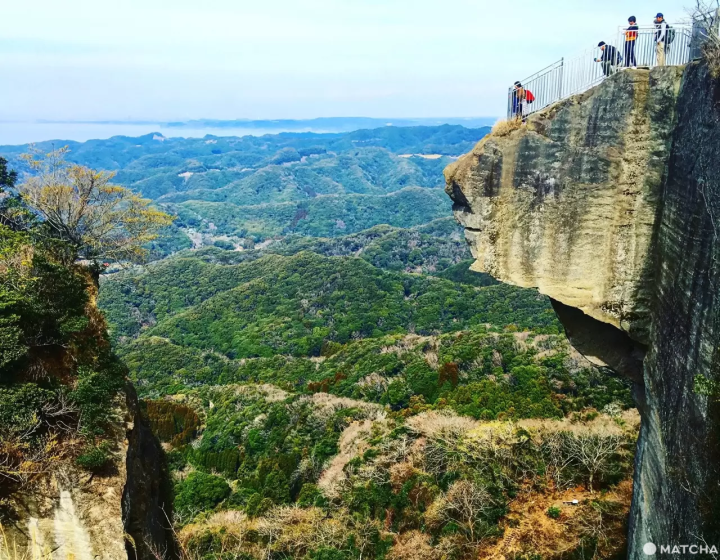
At the peak lies the famous Jigoku Nozoki (Peeking into Hell) observation point. As shown in the photo, visitors stand on an overhanging rock ledge looking down into the sheer drop below. You can experience the thrill of peering down into the abyss for yourself!

Because this area is on a steep mountain with many stairs and trails, using a trekking pole or walking stick is recommended. Visitors with limited mobility should travel with companions to ensure a safe journey. Mt. Nokogiri
 Motona, Kyonan-cho, Awa-gun, Chiba 299-1901
Discover Chiba: Tokyo’s Favorite Coastal Getaway
Many international travelers pass straight through Narita Airport without realizing it is located in Chiba Prefecture rather than Tokyo! In fact, several major attractions around the capital carry "Tokyo" in their names despite being in Chiba—including Tokyo Disneyland, Tokyo German Village, and Narita International Airport.
Beyond these famous spots lies the South Boso Peninsula, a beautiful coastal region that serves as a favorite weekend retreat for Tokyo locals. Offering stunning ocean views, untouched nature, and rich cultural history, South Chiba is a fantastic destination to add to your Japan trip!


台灣鄉下人,居住廣島2年,現居東京。擁有準通譯案內士資格。喜歡以歷史的角度來旅遊,讓旅遊更加充實。對日本動畫、音樂、電影、體育、歷史、地理非常感興趣。instagram: https://www.instagram.com/ponsan0119/?hl=ja



Special Features
More