Chiba Road Trip: Hidden Gems of the Boso Peninsula
Take a scenic road trip through Chiba's Boso Peninsula! Visit Mount Nokogiri, historic temples, beautiful coastlines, and hidden gems near Tokyo.

Written by
I used to live in Japan and managed to conquer 78 out of the 100 famous castles and 12 existing castle towers in 8 years. As a history enthusiast, I also have a passion for baseball and Japanese dramas, which have driven me to visit all 47 prefectures. I hope to convey not only the scenery of Japan but also more of its culture and way of life.
This service includes sponsored advertisements.
Explore Southern Chiba by Car
Travelers who usually rely on public transit in Japan might be curious in trying a new way to travel. This time, we share several hidden gem destinations in the southern Boso Peninsula. If you want to try renting a car and driving during your next trip to Kanto, start with Tokyo's neighbor, Chiba Prefecture!
Umihotaru Parking Area on Tokyo Bay Aqua-Line

When driving to Chiba from Tokyo, you can travel around the northern tip of Tokyo Bay, or cross directly over the bay via the Tokyo Bay Aqua-Line Expressway. Linking Kawasaki City in Kanagawa Prefecture with Kisarazu City in Chiba Prefecture, the Aqua-Line combines an undersea tunnel with a long bridge. Driving from Kawasaki, you travel through a 6-mile (9.6-kilometer) undersea tunnel, arrive at the rest stop in the middle of the bay, and then continue onto a 2.7-mile (4.4-kilometer) elevated bridge. Emerging from the long tunnel onto Umihotaru, a rest area surrounded entirely by open ocean, feels almost like discovering a mythical undersea palace.

This offshore rest stop, Umihotaru, is named after the Japanese word for sea fireflies, bioluminescent ostracods native to the region. These tiny marine creatures glow bright blue when disturbed in the water. The photo shows sea fireflies darting through the water when stirred, leaving glowing trails in the dark. Sea fireflies live along Japan's Pacific coastline, and while they were once abundant around Chiba, environmental shifts have caused their numbers to decline rapidly, prompting local conservation initiatives.

Designed like a multi-story shopping complex, Umihotaru features restaurants, observation decks, and gift shops. Special U-turn lanes allow drivers from Kawasaki or Kisarazu to visit the rest area and return home without paying the full bridge toll across the bay. Given its proximity to Chiba, the rest area naturally offers plenty of fresh local seafood! A serving of seven to eight juicy, freshly fried sardines costs just 400 yen, making it a delicious and budget-friendly snack that has been featured on Japanese television.

Because Kisarazu is famous for clam harvesting, fresh clams are a major local specialty. At Umihotaru, you can try clam-yaki, a regional spin on octopus balls (takoyaki) made with plump local clams instead of octopus. Packed with one to two clams in each piece, eight pieces cost 680 yen and deliver a rich, savory seafood flavor.

Looking back toward Kawasaki, you can spot a sail-shaped structure rising out of the water. Officially named the Kawasaki Artificial Island, this striking landmark serves as a ventilation shaft for the undersea tunnel.
Mount Nokogiri
Chiba Prefecture is mostly flat with few tall peaks, so Mount Nokogiri rises high above the landscape despite its modest height of 1,080 feet (329.4 meters). The mountain is made of tuff, a high-quality stone known as Boshu stone that was heavily quarried for construction. Active since the Edo period (1603-1868), quarrying supplied stone for fortifications around Tokyo Bay, ports in Yokohama and Yokosuka, Yasukuni Shrine, and Waseda University. Quarrying ended in 1982 to protect the environment, and the mountain was converted into a tourist destination. Over centuries of quarrying, cut stone walls transformed the cliffs into sharp, jagged ridges, giving the peak its name, Mount Nokogiri (Saw Mountain).

Wild vines drape over straight-cut stone walls, creating a weathered atmosphere reminiscent of Castle in the Sky. Many visitors even refer to these towering rock faces as Laputa's Wall.
Nihonji Temple
The Boso area features numerous temples and Buddhist statues carved directly into cliff faces, with Nihonji Temple on Mount Nokogiri being the largest. Dating back to the 8th century, Nihonji Temple once housed over a hundred sub-temples and hosted prominent figures in Japanese Buddhist history. However, during the Meiji period (1868-1912), government anti-Buddhist policies damaged many structures, and a major fire in 1939 destroyed additional statues and hall buildings. Today, restoration efforts are funded primarily through visitor admission fees.

Visitors can view the Great Buddha of Yakushi Nyorai (the Healing Buddha). Standing 102 feet (31.05 meters) tall, it is taller than the famous Daibutsu statues in Kamakura and Todaiji Temple in Nara, making it the tallest carved stone Buddha in Japan. Although natural erosion previously caused severe weathering, extensive repairs during the Showa era (1926-1989) restored its grand appearance. Standing before this ten-story stone statue feels serene rather than imposing, thanks to its soft lines and gentle facial expression. Gentle breezes sweeping across the open plaza offer a peaceful atmosphere for quiet reflection.

Walking along the mountain paths reveals numerous Kannon statues carved into rock walls and expressive Arhat statues lining the trails.

In addition to the Great Buddha, Nihonji Temple houses Hyakushaku Kannon, a 100-foot relief carved directly into a sheer quarry wall as a memorial for victims of war and traffic accidents. Framed by cliff walls and climbing vines, the monumental statue creates a solemn, mystical setting.
Jigoku Nozoki Overlook

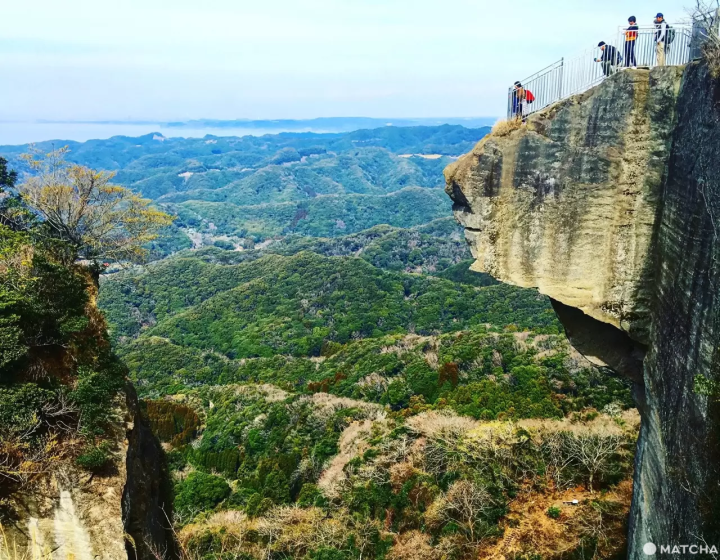
Following trail signs leads to Jigoku Nozoki (Hell Viewpoint), a cliffside platform jutting out over a sheer quarry drop-off. Perched above the abyss, visitors enjoy panoramic views across Tokyo Bay and the Boso Peninsula. Known as a test for anyone afraid of heights, standing over the drop-off feels like stepping into hell for those with vertigo!
Mt. Nokogiri
 Motona, Kyonan-cho, Awa-gun, Chiba 299-1901
Roadside Station Hota Elementary School

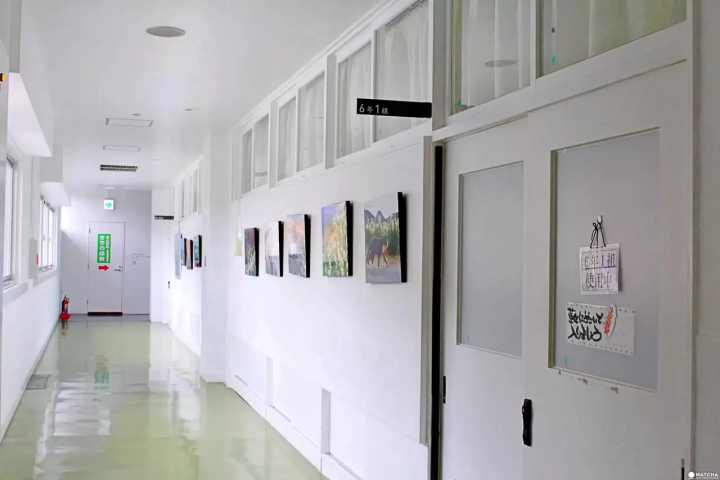
After hiking Mount Nokogiri, stop by Roadside Station Hota Elementary School to refresh and unwind.

Following its closure, this elementary school was repurposed into restaurants, local markets, and day-use hot springs. The former classrooms were even converted into cozy guest rooms for overnight stays!

Ever wondered what it feels like to spend the night inside a Japanese school? While accommodations at Hota Elementary School are simple, they come equipped with all essential amenities.

Guests can unwind in the on-site hot spring bathhouse. Day visitors can also enjoy these relaxing baths before 3:00 PM without booking an overnight stay.
-Related Article: Stay Overnight at a Japanese School in Chiba and Relive Student Life
Temples in Southern Boso
In addition to Nihonji Temple on Mount Nokogiri, southern Boso features several historic, uniquely styled temples built during the height of regional Buddhism. Here are two standout spots worth visiting:
Daifukuji Temple

Daifukuji Temple was built directly into a steep cliffside to enshrine Gake Kannon (Cliff Kannon), creating a striking, commanding silhouette against the rugged rock face. Step inside the main hall to view the Kannon statue carved deep within the cave wall. From certain angles, you can clearly trace the outline of the deity. Because photography is prohibited inside the main hall, you will want to see this impressive view in person!
Naguji Temple

Perched halfway up the mountain, Naguji Temple has maintained its serene atmosphere for centuries as the final stop on the Bando 33 Kannon Pilgrimage route. Designated a cultural property of Chiba City, the historic main hall features distinctive gabled roof decorations carved in the likeness of protective demons (jaki).
Nako Temple (Nako Kannon)
 1125 Nago, Tateyama City, Chiba Prefecture 294-0055
This historic temple is said to have been built in the Nara period (717). It houses many cultural assets, such as the bronze standing statue of Thousand-armed Kannon, which is designated as an important cultural property of the country.
Okinoshima Island

Okinoshima was originally a small island located about 1,600 feet (500 meters) offshore. The Great Kanto Earthquake during the Taisho period (1912-1926) caused the seabed to uplift, creating a sandbar that connected the island directly to the mainland.

Despite its compact size, this island features diverse natural landscapes: uplifted geological strata, ancient shellfish fossils, artifacts from the Jomon period (14,000-300 BCE), vibrant coral reefs, varied coastal terrain, and dense forests. Walking a full loop around the island takes about one to two hours. Even outside official beach season, families gather along the shore to scoop up small fish and crabs. Snorkelers also flock here to explore the colorful underwater marine life. On clear days with good visibility, you can even spot Mount Fuji across the bay!
Tateyama Castle (Hakkenden Museum)

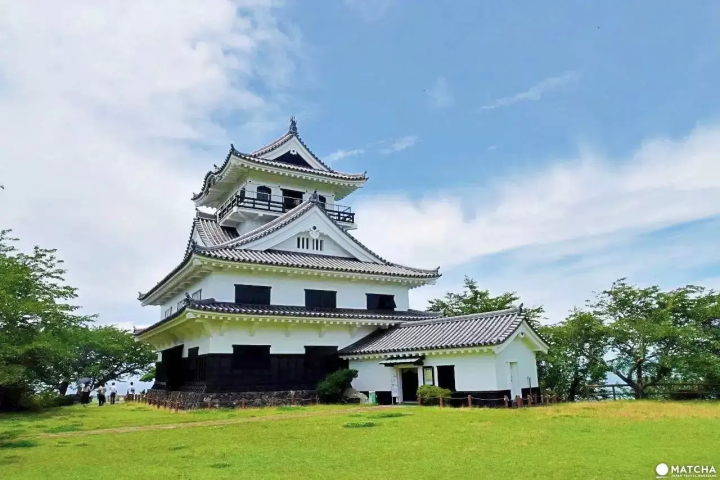
Tateyama Castle had a relatively brief history. Built by the Satomi clan in 1580, it was decommissioned in 1614. Because few historical records survived regarding the original main keep, the current castle keep was reconstructed using Maruoka Castle in Fukui Prefecture as a model. The most famous story associated with the region is the Tale of the Eight Dog Warriors (Satomi Hakkenden), an epic serialized novel written during the mid-Edo period (1603-1868). This legendary tale was later adapted into kabuki plays, films, and television dramas.
The castle keep now serves as a museum displaying rich cultural artifacts tied to the legend. Situated halfway up the hill, Tateyama Castle offers sweeping views of Tokyo Bay, while its former grounds now form part of Shiroyama Park, a popular spot for local walks and dates.
Fresh Seafood in Southern Boso

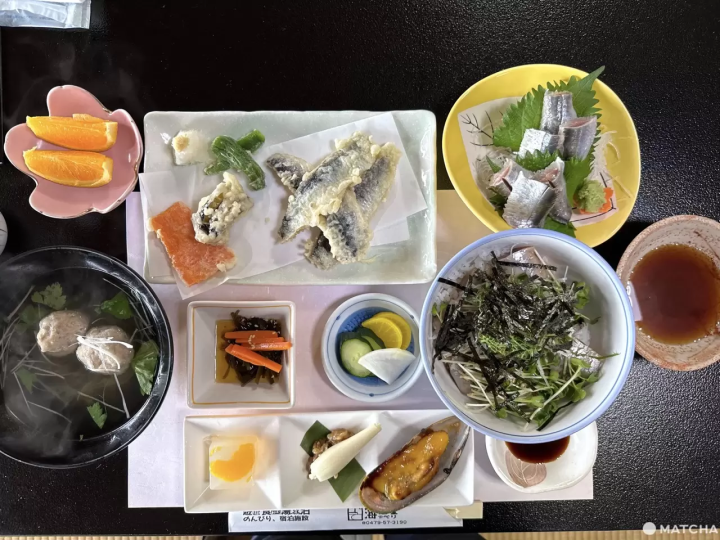
Thanks to the warm Kuroshio Current flowing past southern Boso, local waters yield a bountiful harvest of fresh seafood.

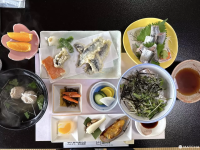
The horse mackerel (aji) here is so plump and flavorful that it completely redefines expectations. Deep-fried horse mackerel sold in supermarket delicatessens is often small, thin, and dry. However, after watching an episode of the TV show Solitary Gourmet set in Boso where the main character thoroughly enjoyed fried horse mackerel, trying it in southern Boso became an absolute must. One bite was incredible! The fish was exceptionally thick and juicy, practically resembling a fish steak. Fresh local catches taste completely different, offering a delicious flavor that words hardly do justice.
Enjoy a Road Trip Through Southern Boso

Although the Boso Peninsula sits close to Tokyo, many of its unique attractions lie a bit far from train stations. Renting a car allows you to drive through an undersea tunnel to an offshore rest stop, see how local communities repurpose closed school buildings, and travel between rugged mountains and sea to visit impressive cliffside temples. If you want to try a self-drive getaway in Japan, starting in southern Boso is a great choice!

I used to live in Japan and managed to conquer 78 out of the 100 famous castles and 12 existing castle towers in 8 years. As a history enthusiast, I also have a passion for baseball and Japanese dramas, which have driven me to visit all 47 prefectures. I hope to convey not only the scenery of Japan but also more of its culture and way of life.




Special Features
More