
Enjoy Naruko Onsen in spring! Introducing famous cherry blossom and canola flower viewing spots and recommended accommodations
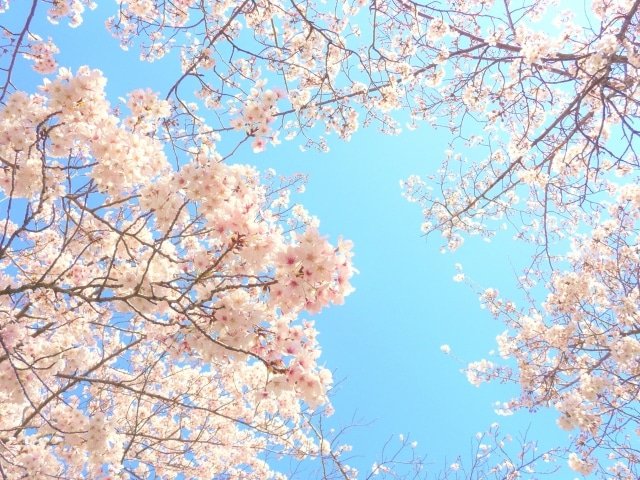
Naruko Onsenkyo in spring is a beautiful hot spring area with canola flower and cherry blossoms. You can enjoy the seasonal nature and rich hot springs at the same time. In this article, we will introduce recommended spots where you can enjoy cherry blossoms and canola flower, as well as accommodations that can serve as a base for sightseeing.

Written by
Minamiaoyama Real Estate is a real estate company located in Minato-ku, Tokyo. In addition to our core real estate business, we offer a wide range of services including food and beverage, accommodation, and modern Japanese architecture. With the motto of "Bringing Japan's proud culture and technology to the world," we offer entertainment that can be enjoyed with all five senses, such as accommodation experiences designed in modern Japanese architecture, dining experiences in a cafe modeled after a Western-style building from around 1900, when Western culture is said to have entered Japan, and a Japanese antenna shop that offers sake and traditional crafts.
This service includes sponsored advertisements.
-
Table of Contents
- A course from Kawatabi Onsen area to Naruko Onsen area
- A course from the Onikobe area to the Nakayama Onsen area
- If you want to enjoy Naruko Onsen in spring, head to Hotel WAMARE Onikobe
A course from Kawatabi Onsen area to Naruko Onsen area

Kawatabi Onsen is a hot springs village that has long been known as "Kakke Kawatabi" (Kawatabi for beriberi). It has a history of over 1000 years and has been popular as a hot springs resort since the Edo period.
Naruko Onsen is also one of the "Three Great Hot Springs of Oshu," and is a hot spring area that boasts an Toyotomi amount of water and beneficial properties. It is also famous for traditional crafts such as Naruko Kokeshi dolls, and there is a workshop where you can experience painting them.
Enjoy the fantastical cherry blossoms at night | Cherry blossom trees along Yuzawa River
The rows of cherry blossom trees blooming on both sides of the Yuzawa River are a sight to behold. During the blooming season, the trees are lit up at night, creating a fantastical view that is different from the daytime.
If you plan on sightseeing at night to see the illuminations, it's a good idea to bring a jacket.
A field of canola flower spreads out as far as the eye can see|The riverbed of the Eai River
If the flowering periods overlap, you can enjoy both the rape canola flower and the cherry blossoms on the Eai River River riverbed below the Kawado Bridge. The combination of the remaining snow on Mount Hanabuchi in the distance is also attractive.
The canola flower Festival is held every year around the end of April.
Enjoy Naruko's home cooking at Restaurant Bettei En
This is a home cooking restaurant that uses local ingredients and serves dishes that are all handmade. They are particular about their food, such as using Naruko lacquerware, a traditional craft, so you can enjoy dishes that you can't find anywhere else.
They serve breakfast, lunch, and dinner, and also provide bento box service using bento boxes.
Remaining snow sparkling in the spring light | Mount Hanabuchi
Mount Hanabuchi in the Naruko Onsen area has an elevation of 984.6m. Located within Kurikoma Quasi-National Park, you can see lingering snow in early spring.
Hanabuchiyama Ski Resort was once located on the southern slope of Mt. Hanabuchiyama. It was a famous ski resort where the National Winter Athletic Meet and All Japan Championships were held, but it closed in 2002.
Naruko Park: Overlooking the hot spring town
Naruko Park is famous for its cherry blossoms and azaleas. It is located on a hill in the Naruko Onsen area and offers a panoramic view of the hot spring town.
Next to Naruko Park is the Japan Kokeshi Museum, where you can enjoy traditional kokeshi displays and kokeshi painting experiences. There is also a giant kokeshi doll, the symbol of Naruko Onsen, which is a popular photo spot.
A course from the Onikobe area to the Nakayama Onsen area
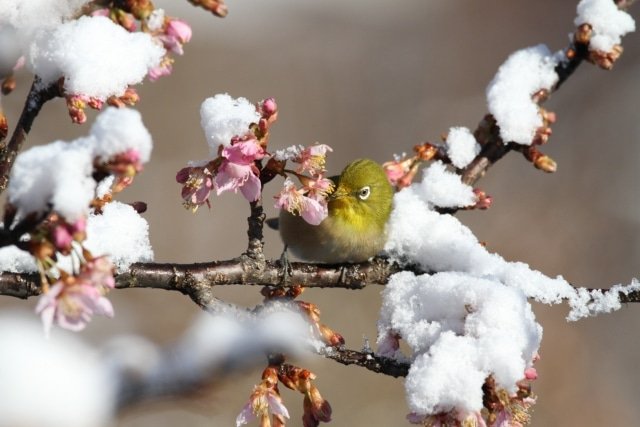
Onikobe Onsen is a hot spring area famous for its Kanketsusen springs and Jigokudani valley. It is surrounded by caldera mountains, and there are tourist spots nearby where you can enjoy activities such as Onikobe Ski Resort and Arao Lakeside Park.
Meanwhile, Nakayama Onsen is a national hot spring resort designated by the Ministry of the Environment. Along National Route 47, there is a public bath called "Shintoro no Yu," where locals and tourists alike can enjoy the natural hot springs.
You can also enjoy barbecues and camping at Arao Lakeside Park
Lake Arao Park is a park rich in nature, where you can see cherry blossoms in the spring. It also has a campground, an athletic field, and other activities, so it's recommended for family trips.
A beautiful contrast between history and remaining snow | Araogawa Shrine
Araogawa Shrine is said to have been founded in the fourth year of the Yoro, and has a very long history. Because the Onikobe area is at a high altitude, you can enjoy the remaining snow at Araogawa Shrine even in mid-April.
Please note that the park is closed for the winter from December to March, except for New Year's Day.
The symbol of the hot spring town | The large cherry blossom tree in front of Nakayama Onsen Station
The large cherry tree in front of Nakayama Onsen Station is the symbol of the hot spring town. It is a gigantic Somei-Yoshino cherry tree with a trunk circumference of 3.4m and a height of about 10m, and was planted in 1917 to commemorate the opening of the Higashi.
During the flowering period, the trees will be lit up from dusk until 10pm.
Silver-white cliffs | Remaining snow at Naruko Gorge
At Naruko Gorge, snow can still be seen from early to mid-April. The beautiful contrast between the thin layer of snow remaining on the valley and mountainside and the spring sunshine is a delight to behold.
Please note that the park is closed for the winter from late November to late April.
If you want to enjoy Naruko Onsen in spring, head to Hotel WAMARE Onikobe
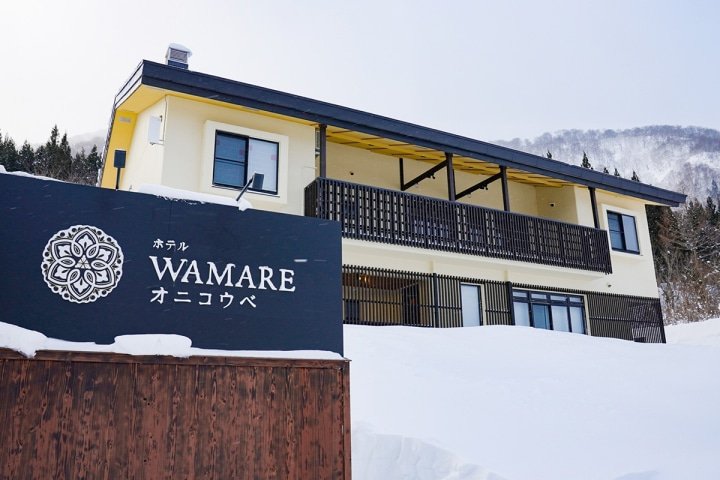
"Hotel WAMARE Onikobe" is a rental inn. The concept is to be an experiential lodging facility where you can experience the history, culture, and traditions of the Tohoku region, and the facility is designed to allow you to enjoy Japanese culture, including Naruko Kokeshi dolls, a traditional craft of Naruko Onsen.
Hotel WAMARE Onikobe is located in the Onikobe area, making it a convenient location for sightseeing in the Naruko Onsen area. Please use it as a base for your trip.
Hotel WAMARE Onikoube
 989-6941 9-38 Komukaihara, Onikobe, Naruko Onsen, Osaki City, Miyagi P...
Hotel WAMARE Onikobe is a rental inn located in Onikobe, Naruko Onsen, Osaki City, Miyagi Prefecture.
The hotel is located in the historic Naruko Onsen area, which has existed for about 1,100 years, and features a Japanese modern design for the interior and exterior, traditional crafts for the interior, and a facility where you can experience the history, culture, and traditions of the Tohoku region.
●Concept
Hotel WAMARE Onikobe is an experiential accommodation facility where you can experience the history, culture, and traditions of the Tohoku region.
Naruko Onsen is famous for the traditional craft of "Naruko Kokeshi". Items from the traditional Kokeshi store "Sakurai Kokeshi" are used for the interior, and you can touch Naruko Kokeshi everywhere in the building.
●Living space that can be enjoyed by large groups
Hotel WAMARE Onikobe can accommodate up to 14 people.
There are living spaces on the first and second floors, where you can eat, chat with other guests, and spend your time relaxing as you like.
●Guest rooms with kokeshi dolls as accents
There are five guest rooms in total.
The rooms are named "Aohada, Enju, Itayakaede, Yamazakura, and Mizuki."
These are the names of the five types of wood that Sakurai Kokeshi often uses, and each room is decorated with a kokeshi doll "Kiji series" made from that wood, with the wood grain visible.
●Facilities
The kitchen space is equipped with a large refrigerator and a system kitchen with a dishwasher.
There is also a microwave, electric kettle, and various tableware, so you can cook during your long stay.
The kitchen table and cupboard are made of cedar from the Kurikoma region where Onikobe is located, allowing you to experience the nature of the Onikobe area.
989-6941 9-38 Komukaihara, Onikobe, Naruko Onsen, Osaki City, Miyagi P...
Hotel WAMARE Onikobe is a rental inn located in Onikobe, Naruko Onsen, Osaki City, Miyagi Prefecture.
The hotel is located in the historic Naruko Onsen area, which has existed for about 1,100 years, and features a Japanese modern design for the interior and exterior, traditional crafts for the interior, and a facility where you can experience the history, culture, and traditions of the Tohoku region.
●Concept
Hotel WAMARE Onikobe is an experiential accommodation facility where you can experience the history, culture, and traditions of the Tohoku region.
Naruko Onsen is famous for the traditional craft of "Naruko Kokeshi". Items from the traditional Kokeshi store "Sakurai Kokeshi" are used for the interior, and you can touch Naruko Kokeshi everywhere in the building.
●Living space that can be enjoyed by large groups
Hotel WAMARE Onikobe can accommodate up to 14 people.
There are living spaces on the first and second floors, where you can eat, chat with other guests, and spend your time relaxing as you like.
●Guest rooms with kokeshi dolls as accents
There are five guest rooms in total.
The rooms are named "Aohada, Enju, Itayakaede, Yamazakura, and Mizuki."
These are the names of the five types of wood that Sakurai Kokeshi often uses, and each room is decorated with a kokeshi doll "Kiji series" made from that wood, with the wood grain visible.
●Facilities
The kitchen space is equipped with a large refrigerator and a system kitchen with a dishwasher.
There is also a microwave, electric kettle, and various tableware, so you can cook during your long stay.
The kitchen table and cupboard are made of cedar from the Kurikoma region where Onikobe is located, allowing you to experience the nature of the Onikobe area.
Minamiaoyama Real Estate is a real estate company located in Minato-ku, Tokyo. In addition to our core real estate business, we offer a wide range of services including food and beverage, accommodation, and modern Japanese architecture. With the motto of "Bringing Japan's proud culture and technology to the world," we offer entertainment that can be enjoyed with all five senses, such as accommodation experiences designed in modern Japanese architecture, dining experiences in a cafe modeled after a Western-style building from around 1900, when Western culture is said to have entered Japan, and a Japanese antenna shop that offers sake and traditional crafts.
The contents on this page may partially contain automatic translation.




Special Features
More










![[Osaka Sightseeing Bus Tour] Enjoy 360° views of Osaka from an open-top bus!](https://resources.matcha-jp.com/resize/720x2000/2026/05/25-264541.webp)
![[Autumn 2026] Private Night Tour to See the World Heritage Site Toji Temple Illuminated in a Fantastical Light-Up Effect](https://resources.matcha-jp.com/resize/720x2000/2026/04/28-263309.webp)