Sauna enthusiasts eagerly look forward to "Totono" in Kyotango
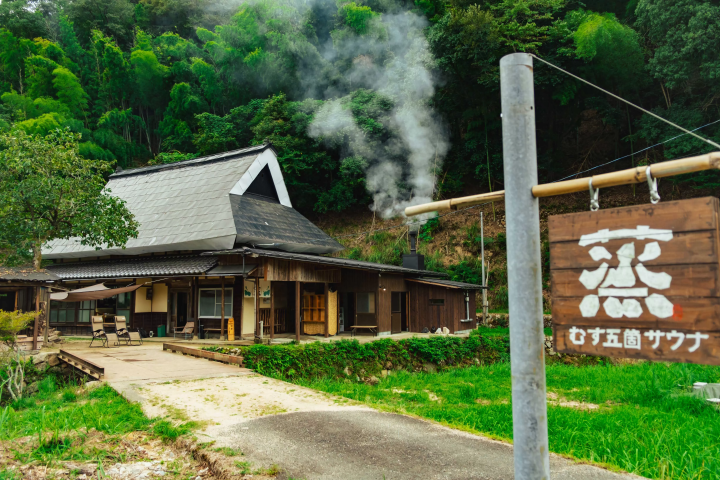
Kyotango City has two saunas. One differentiates itself through the "natural" atmosphere unique to mountain villages, while the other is the world's first hot spring facility that combines saunas with Japan's fermentation culture from a "health" perspective. Each has its own unique character, attracting sauna-goers to the area.

Written by
The Kyoto by the Sea area is about 99 km from Kyoto city, and can be reached in as little as 90 minutes by car or bus. It is close by and offers another side to Kyoto, with a different atmosphere from the city. Once upon a time, there was an ancient nation (Taniha no Kuni) with an advanced culture that was introduced from the continent, and it was also the secret stage of the creation of Japan. The Kyoto by the Sea area is filled with evidence of its origin, such as the legend of the descent of Toyouke-no-Okami, the oldest god of food, the demon legend of Mt. Oe, and the legend of the Dragon Palace. It is filled with the charms of Japan scattered throughout each era, such as Amanohashidate, which was the source of Kyoto culture that fascinates the world and was longed for by the people of the capital during the Heian and Muromachi periods, the Tango Chirimen Corridor woven with silk that has been spun for 300 years, the modern industrial heritage sites of Maizuru and Ayabe, the one-of-a-kind Ine Funaya landscape born from the work of fishermen, and Fukuchiyama Castle, which conveys the Warring States period to the present day. Furthermore, "Kyoto of the Sea" is a land of abundance, blessed with ingredients beloved by the god of food, such as seafood like Matsuba crab and Ine yellowtail, and rice and vegetables grown in pure water. Furthermore, its natural scenery, including the San'in Coast, a Global Geopark, and the mountains and rivers where gods, Buddhas and even demons reside, pique the curiosity of travelers, whose beauty will soothe their souls. It is a region where the culture of "valuing harmony" has lived on since ancient times, and where kind people are gracious and accommodating to travelers when they encounter it. Everything you taste and encounter here is connected to Japan's roots. This is Kyoto of the Sea, the source of Japan that lives in the heavens, earth, mountains and seas.
This service includes sponsored advertisements.
-
Table of Contents
- Steam-Goka Sauna MUSU GOKA SAUNA
- Yuka to Yuge ~ Finnish-style sauna and enzyme bath
Steam-Goka Sauna MUSU GOKA SAUNA
Calming
The sauna is dimly lit. The only light comes from a small window and the flames of a wood stove. This is because the manager wants visitors to "calm their minds and reflect on themselves." You can also enjoy "löyly," a process in which water is poured onto stones heated by the stove to generate steam, which helps to comfortably warm the body while adjusting the humidity, which affects the perceived temperature.
Cool your body naturally
There is no cold bath, which is usually found in saunas. Instead, there is a stream flowing from the mountains. It is shallow enough to lie down in, allowing you to cool down your body while feeling as if you are one with nature. In addition, as snow piles up in the winter, "snow diving" is also popular.
Various ways to enjoy
While bathing in the open air, you can enjoy the scenery of the mountain village, which changes depending on the season and time of day. There is a hearth on the premises, where you can warm up your body and even grill food to eat.
Swimsuits are required so that both men and women can enjoy the baths. It is generally reserved for groups with advance reservations, but there are also days when it can be used by individuals without a reservation so that people can feel like they are visiting a public bath.
MUSU GOKA SAUNA
 1648 Masudome, Mineyama-cho, Kyotango City, Kyoto Prefecture, 627-0053
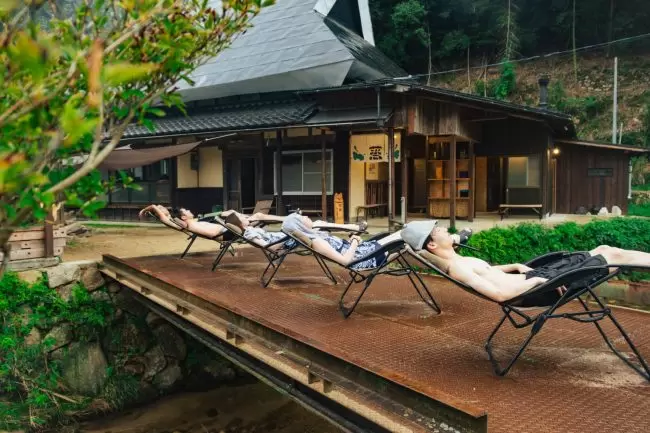
This outdoor sauna is housed in a renovated traditional Japanese house that is over 100 years old. Set in a village surrounded by rural scenery, you can feel the bounty and abundance of nature, and spend a relaxing time as if you were at your grandmother's house in the countryside, something you can't experience in the city.
1648 Masudome, Mineyama-cho, Kyotango City, Kyoto Prefecture, 627-0053
This outdoor sauna is housed in a renovated traditional Japanese house that is over 100 years old. Set in a village surrounded by rural scenery, you can feel the bounty and abundance of nature, and spend a relaxing time as if you were at your grandmother's house in the countryside, something you can't experience in the city.
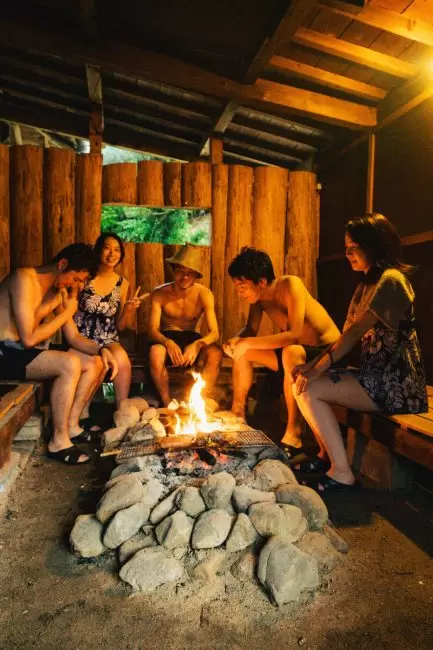
Next to the sauna there is a handmade hearth, which can be used as an outdoor bathing space to lie down or as a place to keep warm in the winter.
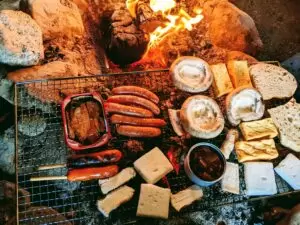
The barbecue is also recommended.
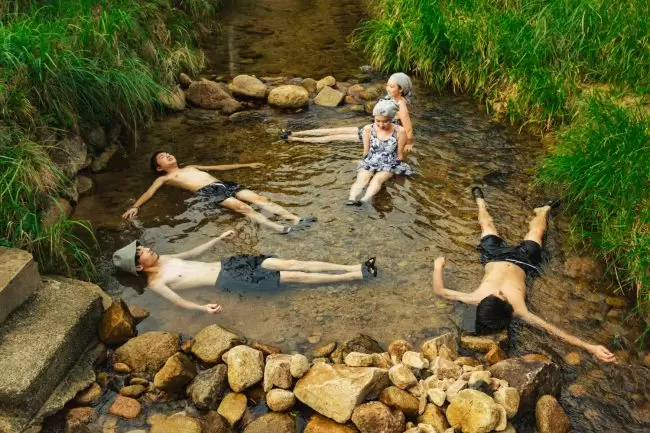
The water is very clear and just the right depth, so lying down there after a sauna bath will make you feel like you're in paradise.
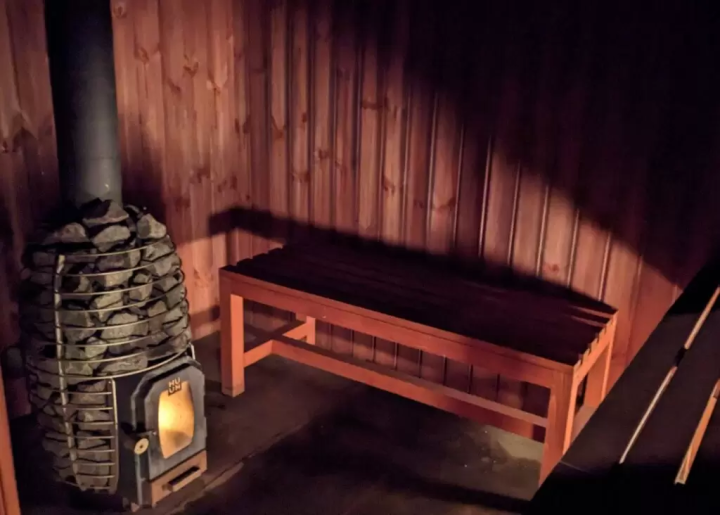
This authentic sauna uses a wood stove and the temperature in the sauna room is 80-90 degrees. The high humidity will warm you from the inside out.
Yuka to Yuge ~ Finnish-style sauna and enzyme bath
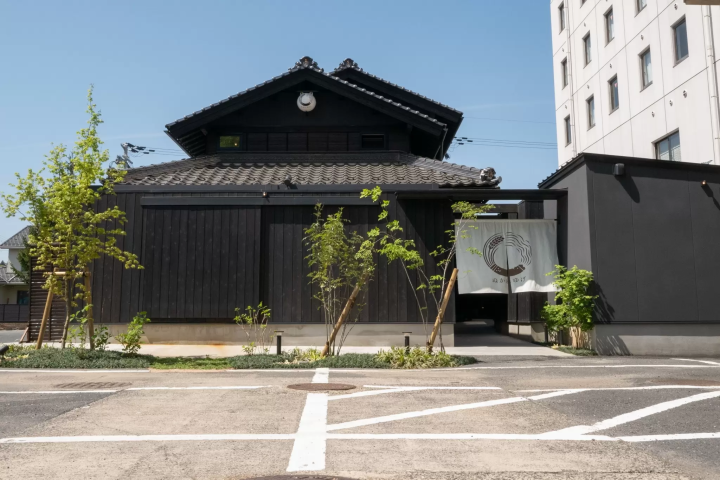
"Yuka to Yuge" attached to HOTEL KISSUIEN
A sauna facility run by a doctor
Kyotango City is known as a "town of healthy longevity," with a population of people over 100 years old three times the national average. Nukatoyuge (Sugitani, Mineyama-cho, Kyotango City) is a hot spring facility equipped with a Finnish-style sauna and rice bran enzyme bath, run by a doctor from a medical perspective, and opened in November 2010. This facility is said to be the first in the world to offer both a sauna and a rice bran enzyme bath. The aim is to achieve "totono," which leads to good health.
There are five saunas, including one that is wheelchair accessible, which is rare nationwide.
The rice bran enzyme bath uses rice bran from Kyotango, and warms the body with the heat of natural fermentation. Using both types of baths is said to have a synergistic effect.
Five unique saunas
There are five saunas: "Nokosetto," which can be used while lying down; "Yufudessa," where you can enjoy your favorite videos and music; "Tauco," which has a Finnish feel; "Hetoki," which has a Japanese atmosphere; and "Yokai-nen," which is wheelchair accessible. Each has its own unique character. All of them allow for loyly, and the balance of intake and exhaust has been adjusted to create saunas that are not stuffy.
The names of the sauna rooms are derived from Finnish words that describe the characteristics of each room, and each room can accommodate 2-3 people (please inquire for groups of 4 or more), and can be reserved exclusively by prior reservation. Both men and women are welcome to use the sauna, as swimwear is required.
Enzyme bath
The rice bran enzyme bath does not use electricity or gas energy, but instead utilizes the heat generated by fermentation. All the rice bran is produced in Kyotango, and after being used in the bath, it is recycled as fertilizer, contributing to recycling agriculture.
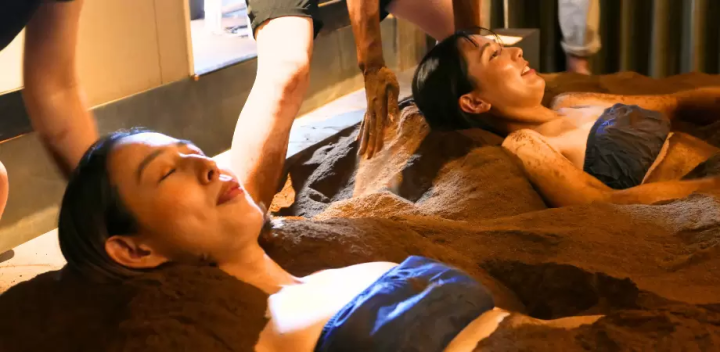
Made with 100% locally grown Kyotango rice bran, the fermented enzyme heat will warm you from the inside out.
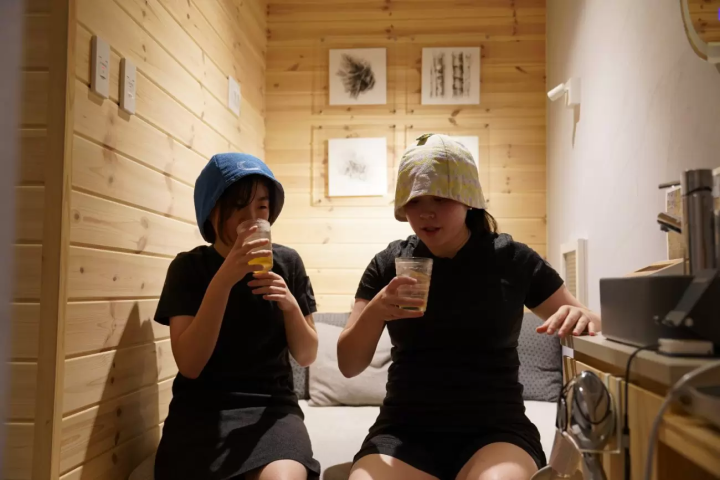
It can be used privately, so you can enjoy it with your family and friends.
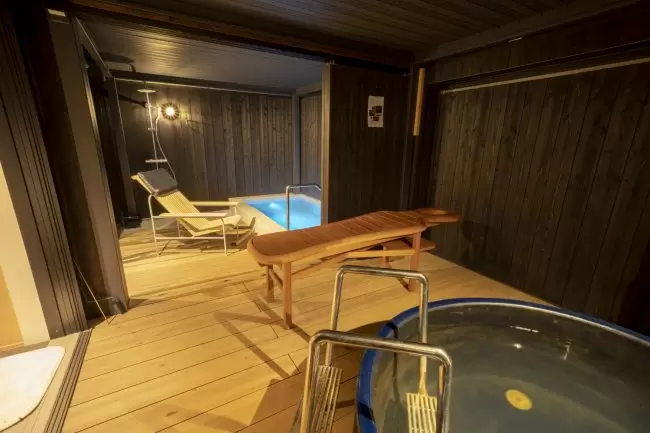
Nuka to Yuge - A unique sauna that combines Japanese fermentation...
 941-1 Sugitani, Mineyama-cho, Kyotango City, Kyoto Prefecture, 627-001...
Nuka to Yuge is a hot spring facility in Tango, Kyoto, where you can enjoy a rice bran enzyme bath and five types of saunas.
This enzyme bath envelops your entire body in fermented rice bran.
Made with 100% locally grown rice bran from Kyotango, the heat from the fermentation of enzymes warms your body from the inside out. Utilizing the heat of natural fermentation by microorganisms, the bath heats up to 60-65°C (feels like a body temperature of around 42°C) without the use of electricity or gas.
A 15-20 minute bath warms you from the inside out, raising your basal body temperature and boosting your immune system.
All five saunas are authentic Finnish-style saunas, allowing you to enjoy a loyly at your own pace.
And, incorporating the latest technology learned from Finland, we've created a sauna that's easy to breathe in. Even those who don't like saunas can enjoy it. We offer a free barrier-free sauna (Yokai-nen) experience with assistance from a caregiver or nurse to people with physical disabilities. For more details, please see the following page.
941-1 Sugitani, Mineyama-cho, Kyotango City, Kyoto Prefecture, 627-001...
Nuka to Yuge is a hot spring facility in Tango, Kyoto, where you can enjoy a rice bran enzyme bath and five types of saunas.
This enzyme bath envelops your entire body in fermented rice bran.
Made with 100% locally grown rice bran from Kyotango, the heat from the fermentation of enzymes warms your body from the inside out. Utilizing the heat of natural fermentation by microorganisms, the bath heats up to 60-65°C (feels like a body temperature of around 42°C) without the use of electricity or gas.
A 15-20 minute bath warms you from the inside out, raising your basal body temperature and boosting your immune system.
All five saunas are authentic Finnish-style saunas, allowing you to enjoy a loyly at your own pace.
And, incorporating the latest technology learned from Finland, we've created a sauna that's easy to breathe in. Even those who don't like saunas can enjoy it. We offer a free barrier-free sauna (Yokai-nen) experience with assistance from a caregiver or nurse to people with physical disabilities. For more details, please see the following page.
The Kyoto by the Sea area is about 99 km from Kyoto city, and can be reached in as little as 90 minutes by car or bus. It is close by and offers another side to Kyoto, with a different atmosphere from the city. Once upon a time, there was an ancient nation (Taniha no Kuni) with an advanced culture that was introduced from the continent, and it was also the secret stage of the creation of Japan. The Kyoto by the Sea area is filled with evidence of its origin, such as the legend of the descent of Toyouke-no-Okami, the oldest god of food, the demon legend of Mt. Oe, and the legend of the Dragon Palace. It is filled with the charms of Japan scattered throughout each era, such as Amanohashidate, which was the source of Kyoto culture that fascinates the world and was longed for by the people of the capital during the Heian and Muromachi periods, the Tango Chirimen Corridor woven with silk that has been spun for 300 years, the modern industrial heritage sites of Maizuru and Ayabe, the one-of-a-kind Ine Funaya landscape born from the work of fishermen, and Fukuchiyama Castle, which conveys the Warring States period to the present day. Furthermore, "Kyoto of the Sea" is a land of abundance, blessed with ingredients beloved by the god of food, such as seafood like Matsuba crab and Ine yellowtail, and rice and vegetables grown in pure water. Furthermore, its natural scenery, including the San'in Coast, a Global Geopark, and the mountains and rivers where gods, Buddhas and even demons reside, pique the curiosity of travelers, whose beauty will soothe their souls. It is a region where the culture of "valuing harmony" has lived on since ancient times, and where kind people are gracious and accommodating to travelers when they encounter it. Everything you taste and encounter here is connected to Japan's roots. This is Kyoto of the Sea, the source of Japan that lives in the heavens, earth, mountains and seas.
The contents on this page may partially contain automatic translation.



Special Features
More







![[Cancelled for 2026] Kawaguchiko Herb Festival, which adorns the shores of Lake Kawaguchi at the Mount Fuji with a purple carpet.](https://resources.matcha-jp.com/resize/720x2000/2025/05/27-234666.webp)