
How Designer Manholes and Collectible Cards Tell Hidden History in Matsusaka, Japan
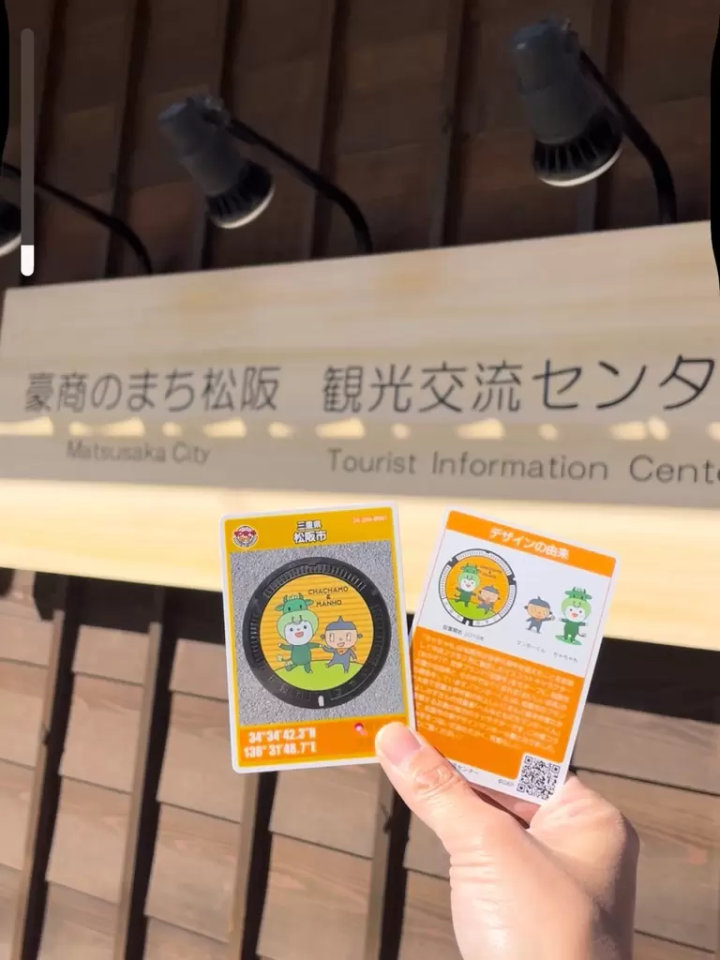
This time, we will introduce the designer manhole cover in Matsusaka City , Mie Prefecture .

Written by
Matsusaka City, Mie Prefecture is located almost in the center of Japan, where you can enjoy world-class gourmet Matsusaka beef, rich history and culture, and beautiful nature. During the Edo period, Matsusaka was the final post town for pilgrimages to Ise-mairi (a pilgrimage to Japan's highest-ranking shrine). These merchants succeeded in trading Matsusaka cotton in Edo and brought prosperity to Matsusaka.
This service includes sponsored advertisements.
What are Designer Manholes?
What’s
that on the ground? Perhaps you’ve seen them before in Japan-they seem like the
usual unassuming manholes from afar, but as you approach to investigate, their
vibrant colors and intricate patterns catch your eye.
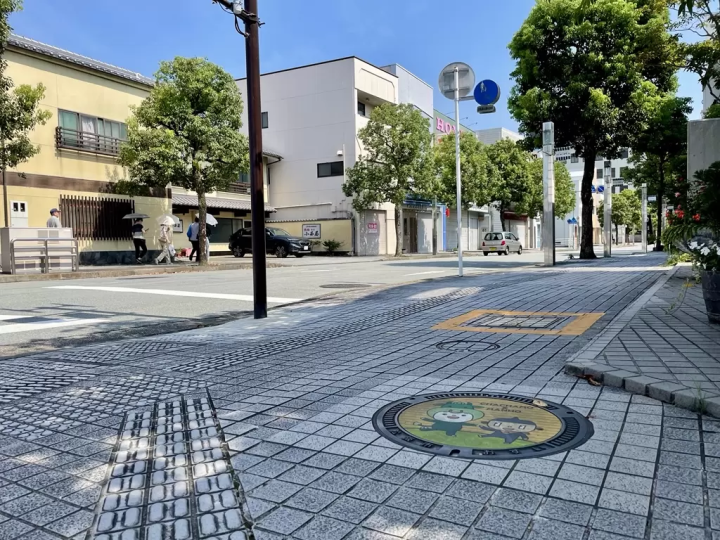
▲Something seems different about this manhole!
Now numbering over 10,000 around the country, designer manholes have expanded beyond their original purpose of improving the image of the country’s sewage systems. Notable historical figures, local mascots, and even famous characters from Japanese media smile up at you from designs embedded in the ground, all working to tell a story about the surrounding area. These beautiful manholes attract fans from around the country and even visitors from abroad to interesting, yet overlooked towns tucked away from metropolitan centers.
Self-proclaimed
manholers travel near and far not only to appreciate these beautiful manholes
in person, but also to seek certain special commemorative tokens. Manhole
trading cards handed out for free near the locations of their respective
manholes have become popular collector’s items and unique ways to get to know a
place.
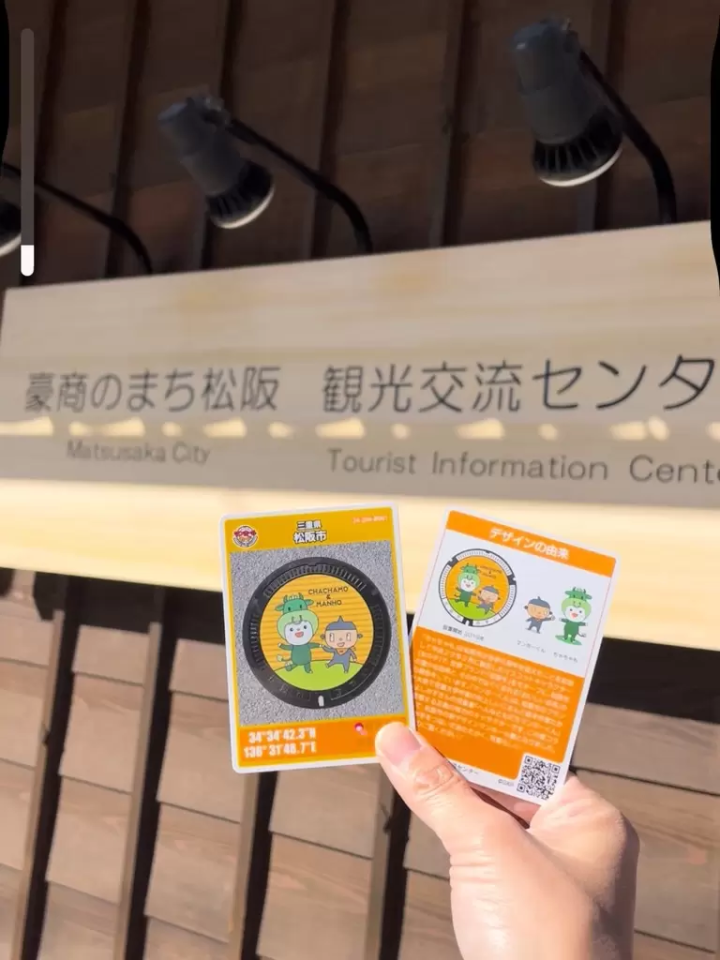
▲A manhole card includes information like where the
manhole is located, how its design came about, and more.
Although
each card includes an explanation of where its design comes from, some subtle
details connecting the design to the region’s history can only be discovered
through thorough exploration. Let’s dive into five manhole cards from a
particular city and take a tour through the hidden, interconnected details of
each design.
Hidden History: Matsusaka’s Story through Manhole
Cards
Our
journey takes us off the beaten path in Mie Prefecture, the home of the Ise
Grand Shrine, to the city of Matsusaka. Although seemingly an ordinary city,
Matsusaka is a hidden gem known for Matsusaka beef, one of Japan’s top three
wagyu, and numerous historic sites and cultural artifacts. Visitors can get to
know the city’s grand past and colorful present through its manhole cards.
Introducing
Matsusaka: The Chachamo and Manho Manhole
Matsusaka beef is the main motif of the design of the
city’s official mascot, Chachamo, who can be found on one of Matsusaka’s
earliest designer manholes.
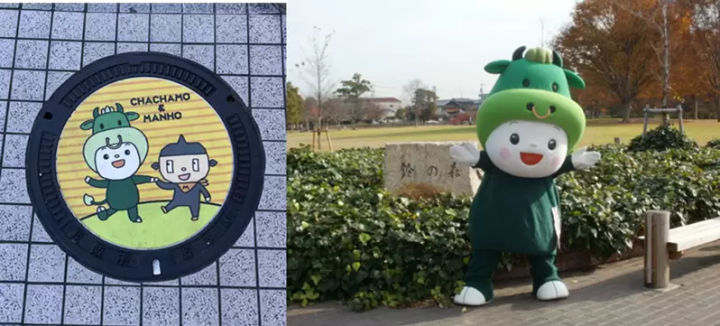
▲Chachamo, Matsusaka’s mascot, appears along with a
popular children’s book character, Manho-kun, in her special manhole design.
Chachamo‘s friendly design also evokes the city’s locally grown tea through
her cow costume’s deep green color. This beloved character can be seen
in-person at events greeting folks with her winning smile.
The
Cow Manhole and a Famous Japanese Scholar
Matsusaka
beef is the pride of the city, so much so that the cow motif appears on yet
another one of the city’s designer manholes. This one depicts a cow wearing an
intriguing object around its neck. Manholers who arrive in Matsusaka via train
may recognize this cow’s accessory as the same object as the statue proudly
greeting visitors in front of Matsusaka Station.
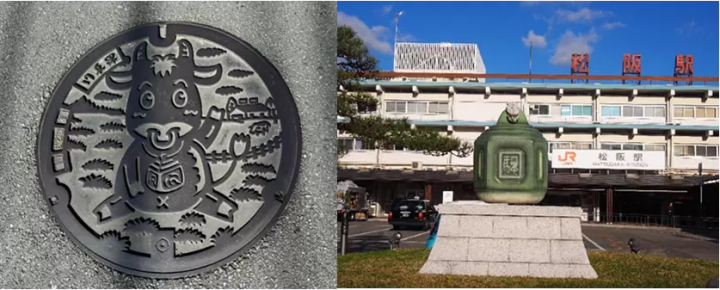
▲The cow manhole contains a secret nod to one of
Japan’s most celebrated literary scholars, Motoori Norinaga.
The
symbol in the manhole and the statue at the station both depict the beloved
bell of Motoori Norinaga, a major figure of late 1700s Japanese history known
for his literary work and his love for the sound of bells. Norinaga was born in
Matsusaka and lived there for nearly his entire life, seeing patients daily as
a doctor while researching classics like the Tale of Genji and the oldest existing record of Japanese history,
the Kojiki. As a leading scholar, he frequently
exchanged letters with his literary disciples through travelers passing through
Matsusaka on the Ise Pilgrimage.
A
Legendary Explorer: the Take-chan Manhole
Shortly
after Norinaga’s time, a young man in Matsusaka watched the same flow of
travelers on the Ise Pilgrimage pass by from his doorstep. Inspired by their
grand journey, this man would grow up to spend the rest of his life on
ground-breaking expeditions throughout Japan’s northern island. Over a century
later, he would be known as Matsuura Takeshiro, the godparent of Hokkaido, and
honored in his hometown by a special manhole located next to his memorial
museum. Manholers visiting the museum in Matsusaka can see Takeshiro’s
hand-drawn maps of the island and records of the indigenous people he advocated
for on display.
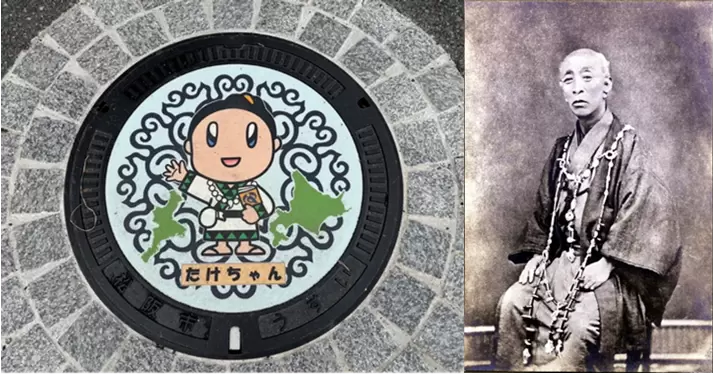
▲Take-chan, a character based on explorer and
cartographer Matsuura Takeshiro, is depicted wearing the traditional clothing
of the indigenous Ainu people who helped him immensely throughout his travels.
A
Trace from Ancient History: The Haniwa Manhole
Matsusaka’s
history flourished during the Edo period when the city saw the rise of Norinaga
and Takeshiro along with many wealthy and influential merchants. However, the
next manhole card suggests that the area’s history goes much further in the
past.
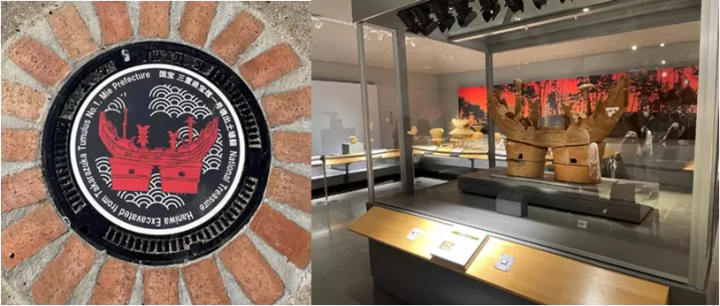
▲This clay artifact, called a haniwa, is the first
boat-shaped haniwa with upright decoration to be discovered in the entire
country. Visitors can view it in person at the Matsusaka City Cultural Asset
Center.
Clay haniwa from the Kofun period (about
250-552 CE), along with certain historic sites like the Takarazuka Tumulus Park
in Matsusaka, are believed to be traces of ancient burial customs and rituals. The
haniwa shapes suggest what houses,
clothing, tools, and other objects of daily life may have looked like in the
distant past. Matsusaka’s boat-shaped haniwa
is a national treasure of Japan that holds major historical value as one of the largest intact artifacts of
its type. You can find the original artifact on permanent display at the city’s
Cultural Asset Center along with dozens of other intriguing haniwa.
The
Path to the Future: The Mora Manhole
Matsusaka’s
long history continues as citizens and local heroes endeavor to shape the city
into a better place. These efforts brought about a local sports promotion
program that aimed to show people of all ages the power of sports through a
cheerful mascot named Mora. Mora is featured on her own special manhole at the
city’s athletic park, where she continues to point the way towards a brighter
and more active future for all.
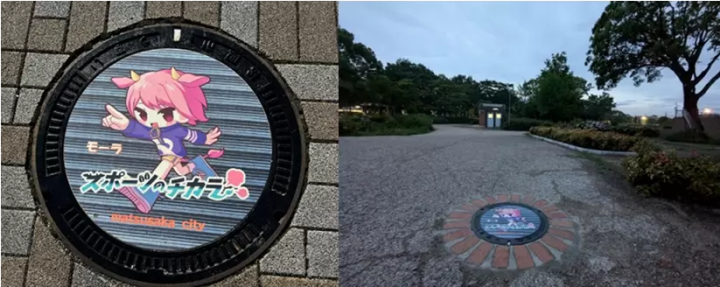
▲Mora leads the way to a new future in her colorful
manhole design.
Beyond
being unique souvenirs and collectable items, manhole cards like these cards in
Matsusaka can weave an intriguing story about local history. The next time
you’re in Japan, take your time to explore and remember to look down-you might
just find a unique story waiting to be told!
Where can I find these Manhole Cards?
All of
Matsusaka’s designer manholes, including the designs not mentioned in this
article, can be found on display in Suzunomori Park and around the city.
However, the cards can only be collected from the locations listed below. Card
availability hours may differ from the card locations’ opening hours, so make
sure to plan ahead!
Get the
full picture of each card’s design by visiting their associated museums and
historic buildings. Happy collecting, and happy exploring!
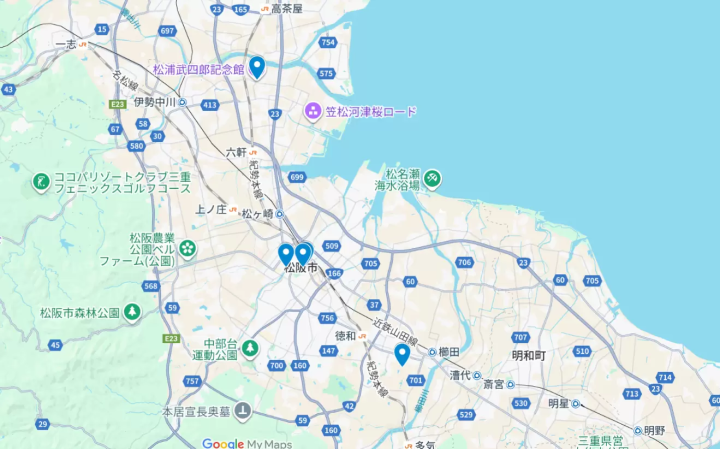
Manhole Card Locations
All of Matsusaka’s card locations and their distribution hours as of writing are listed below. Updated information on Matsusaka’s manhole cards is available on the city’s official website in Japanese:
Chachamo
x Manho
Matsusaka
City Tourist Information Center
Website
(Japanese): https://goshonomachi-matsusaka.com/
Card
distribution: 9am-5pm December to February, 9am-6pm March to November
*Closed
Dec 30-Jan 2
Matsusaka Cow
Matsusaka City Hall Third Annex, Water
and Sewage Department
Website: https://www.city.matsusaka.mie.jp/site/jyougesuidou/
Card
distribution: 8:30am - 5:15pm (Weekdays only)
Take-chan
(Matsuura Takeshiro)
Matsuura
Takeshiro Memorial Museum
Website:
https://takeshiro.net/
Card
distribution: 9am – 4:30pm
*Closed
on Mondays and from Dec 29 – Jan 3. Check the website for details on closure
due to public holidays and exhibit changes.
Haniwa,
National Treasure
Matsusaka
Cultural Asset Center, Haniwa Museum
Website:
https://www.city.matsusaka.mie.jp/site/bunkazai-center/
Card
distribution: 9am – 4:30pm
*Closed
on Mondays and from Dec 29 – Jan 3. Check the website for details on closure
due to public holidays.
Mora,
the Power of Sports
Matsusaka
Municipal Comprehensive Athletic Park Administrative Office
Website:
https://www.city.matsusaka.mie.jp/site/sougouundoukouen/
Card
distribution: 8:30am-5:15pm
*Closed on Mondays and the next business day after
public holidays.
Matsusaka City, Mie Prefecture is located almost in the center of Japan, where you can enjoy world-class gourmet Matsusaka beef, rich history and culture, and beautiful nature. During the Edo period, Matsusaka was the final post town for pilgrimages to Ise-mairi (a pilgrimage to Japan's highest-ranking shrine). These merchants succeeded in trading Matsusaka cotton in Edo and brought prosperity to Matsusaka.
The contents on this page may partially contain automatic translation.
![[SHIMAKAZE: A Train You Should Ride at Least Once] The Most Comfortable Direct Ride to Ise-Shima from Nagoya, Osaka, and Kyoto](https://resources.matcha-jp.com/resize/720x2000/2025/06/09-235798.webp)


Special Features
More







![[Mie] TOBA SEASIDE HOTEL Dining Guide | Popular Buffet & Seasonal Menu Introduction](https://resources.matcha-jp.com/resize/720x2000/2026/05/11-263832.webp)

![[80 minutes by train from Kyoto ] Experience the countryside in Fukuchiyama City , Kyoto Prefecture , a special place only locals know about](https://resources.matcha-jp.com/resize/720x2000/2025/12/19-253414.webp)