
Purify your body and mind under a waterfall—Experience Japanese culture and spirit at Oiwasan Nissekiji Temple in Toyama
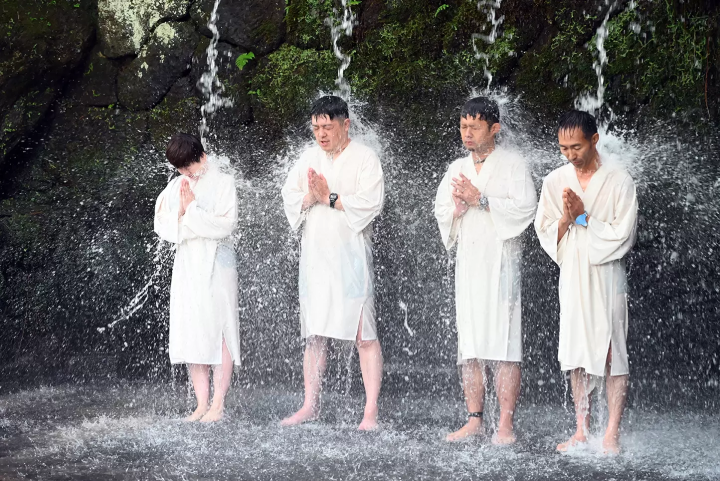
We introduce a visit to Oiwasan Nissekiji Temple in Kamiichi Town , Toyama Prefecture , located at the foot of Mount Tsurugi in the Tateyama Tateyama range, and an experience of waterfall training (takigyo). We will introduce a special training experience that will bring you into deep contact with Japanese culture and spirit, as well as the famous water gourmet food "Oiwa Somen" and hot springs that you should enjoy together, all of which are blessed by the water.

This service includes sponsored advertisements.
-
Table of Contents
- Seeking an authentic experience that cannot be found through mere sightseeing
- Oiwasan Nissekiji Temple - A challenging waterfall training experience at Roppon Falls
- Oiwakan - Enjoy Oiwa Somen noodles in temple gate district
- Oiwa Fudo no Yu - Relax your body and mind in the hot springs
Seeking an authentic experience that cannot be found through mere sightseeing
Oiwasan Nissekiji Temple in Toyama Prefecture , Oi Kamiichi Town , dates back to the Nara period. It is a training center for mountain religion that worships Fudo Myo-o (Acala), a deity carved by the Nara period monk Gyoki, and is the Motoyama of the Shingon Esoteric sect with a history of over 1,300 years. It is known as one of the most sacred sites in the Hokuriku region and as a sacred site of Fudo Myo-o, attracting pilgrims from all over the country, and is affectionately known locally as "Oiwa no Fudo-san."
This cliff-carved statue of Fudo Myo-o (Acala) is designated as a National Historic Site and an Important Cultural Property, and is said to be the greatest masterpiece of its kind in Japan. A cliff-carved Buddha refers to an image of a Tathagata, Bodhisattva, Myo-o, or other deity carved directly into the natural rock face or a large boulder. The Acala Buddha at Nissekiji Temple stands over three meters tall, carved in half relief and slightly tilted. This posture allows the statue to meet the gaze of worshippers, conveying both a sense of gentle embrace and overwhelming power.
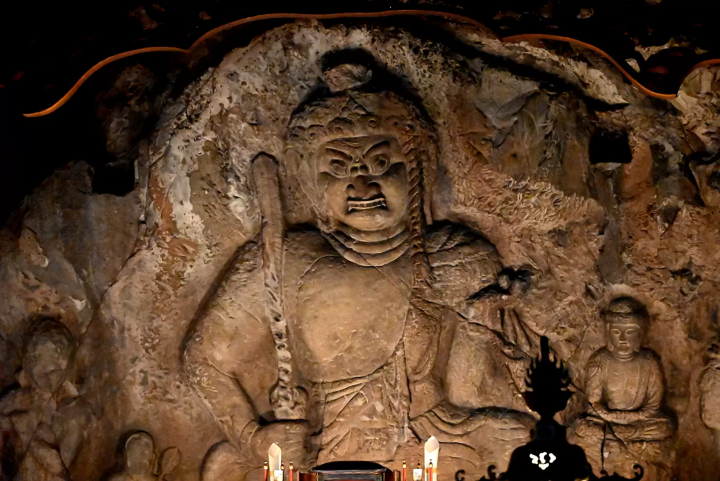
The impressive rock-carved Buddha statue of Acala is lit by a faint light in the dimly lit main hall.
Nissekiji Temple has a history of being hit by fires many times. The main hall (Fudo Hall), which was built to surround the rock-carved Buddha, was rebuilt after being completely destroyed in a fire in 1967, but the cliff-carved Buddha was left almost unscathed. Because there was a risk that the rock-carved Buddha would crack if water was poured on the heated rocks, the temple chose not to pour water on the fire, but instead burned down the wooden building to protect the cliff-carved Buddha.
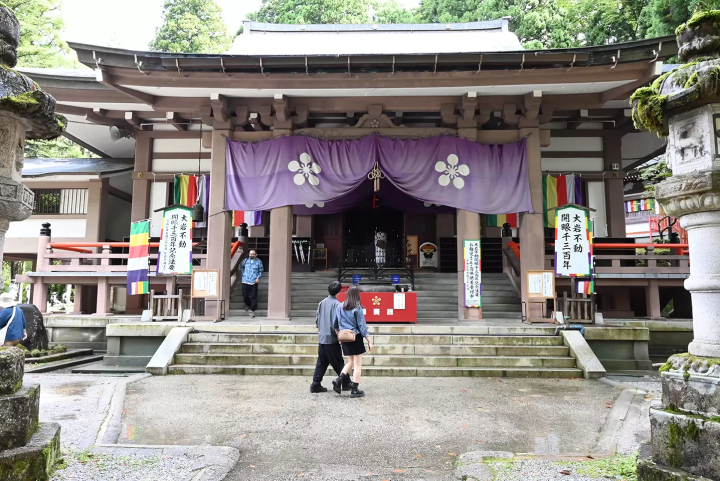
You can also enter the main hall and worship there.
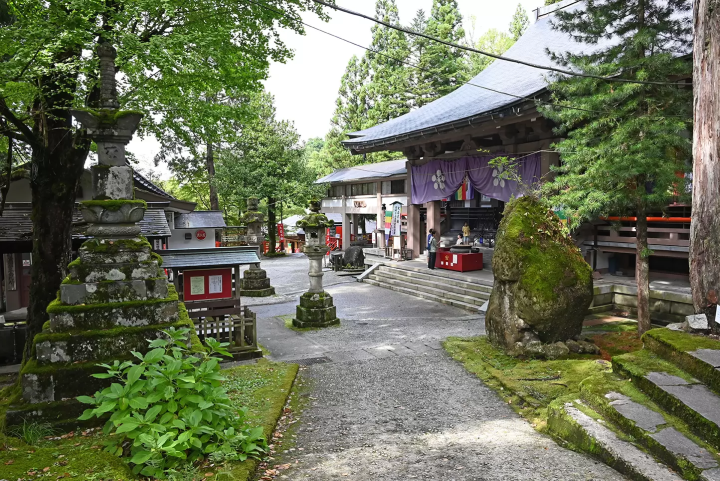
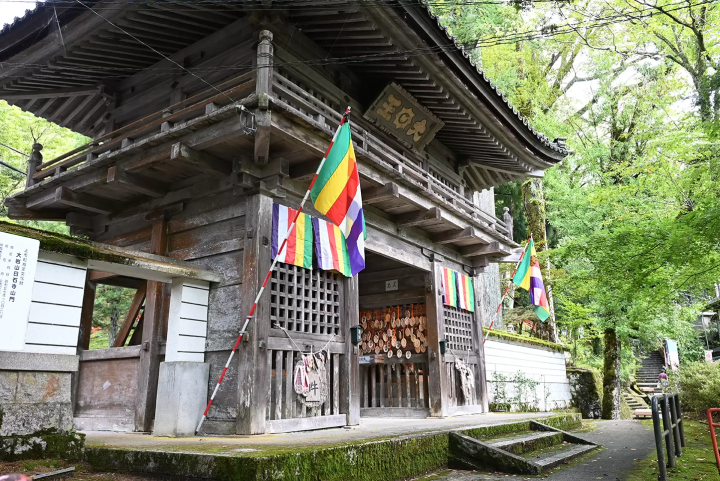
The moss-covered grounds have buildings built along the natural topography, creating a dignified atmosphere. The Sanmon Gate, located halfway up the approach to the temple, known as the Hyakudanzaka Saka, was built in the Edo period. It has been designated a cultural asset of Kamiichi Town, and is said to grant visitors good fortune in maintaining healthy legs.
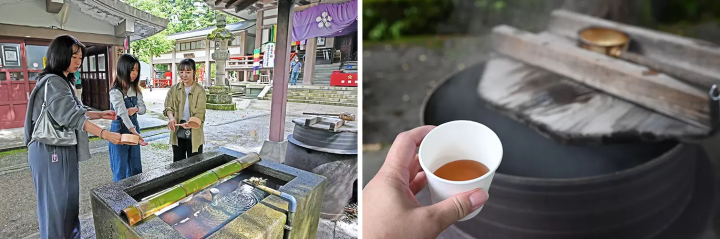
In front of the main hall there is a chozuya (purification fountain) and an office. Before praying, be sure to purify your hands at the chozuya. At Nissekiji Temple, prayers are held in the main hall on the 1st and 27th of each month, as well as every Sunday at 11:00 AM, with goma wood being burned, and worshippers are offered tea made from the megusurinoki (eye medicine tree). On prayer days, you can enjoy megusurinoki tea at the chozuya even outside of prayer times.
There are many things to see within the temple grounds, one of which is the Mie pagoda. It is the oldest pagoda still standing in Toyama Prefecture. In fact, the pagoda is unfinished and is the only pagoda in Japan without walls. Also, to the Oku of the main hall, near the Roppon Falls, there is a sacred spring called Fujisui, which is said to be effective against eye diseases.
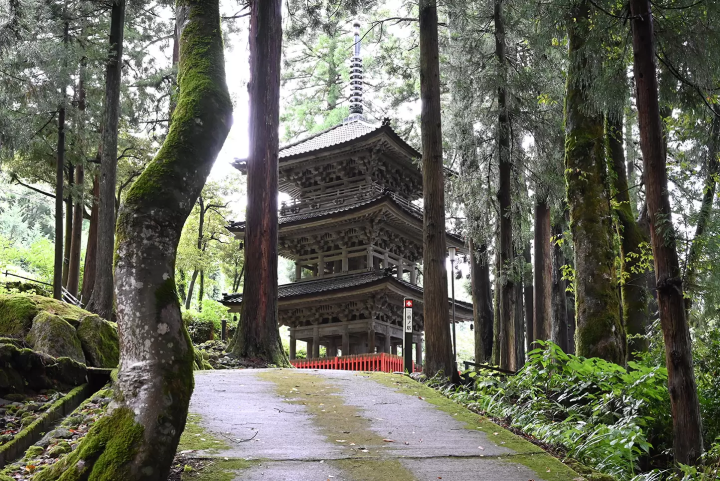
The Mie pagoda of Nissekiji Temple. The fresh air in the temple grounds makes walking around the temple grounds feel as pleasant as forest bathing.
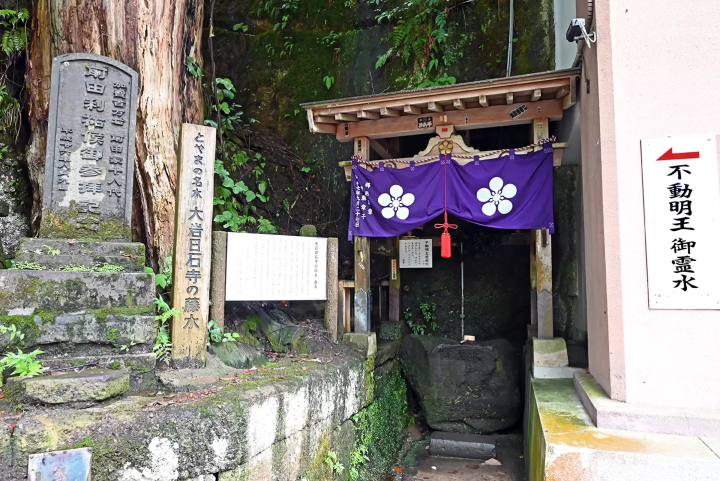
"Fuji mizu" is said to be effective against eye diseases.
There are other waterfalls, such as Roppon Falls(six waterfalls) and Juunishi Falls (twelve waterfalls), and with the Sengaike Gorge flowing nearby, the abundant water purifies the temple grounds and keeps them moist and hydrated.
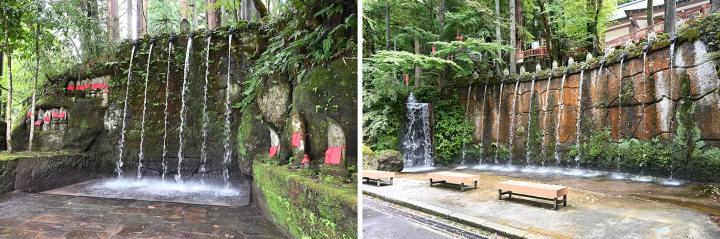
Left: Only those who have applied for the waterfall training experience can enter Roppon Falls. Right: The Twelve Branches Waterfall, located below Roppon Falls, is open to the public.
Oiwasan Nissekiji Temple - A challenging waterfall training experience at Roppon Falls
The charm of visiting Nissekiji Temple lies not only in admiring its architecture and serene atmosphere, but also in experiencing the depth of Japanese faith, spirituality, and culture that has been cherished since ancient times. Through hands-on practices, visitors are invited to connect with these traditions. At Nissekiji, one can take part in ascetic experiences such as Takigyo (waterfall meditation) and shabutsu (tracing Buddhist images). Among them, the most recommended challenge is the Takigyo at the temple’s “Roppon-daki” (Six waterfalls).
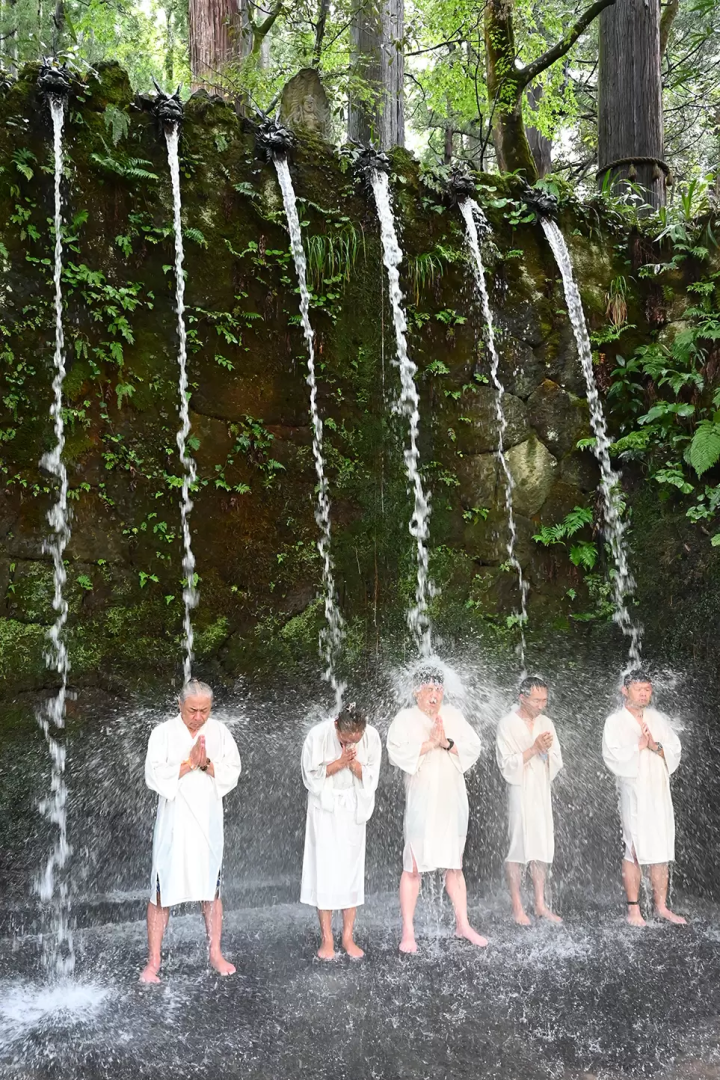
In "Takigyo," you can purify your body and mind by being splashed by six waterfalls while wearing the white attire (white robes and kimonos) used for training. This is a special and unforgettable experience that can be experienced with the whole body, not only for tourists from overseas but also for modern Japanese people.
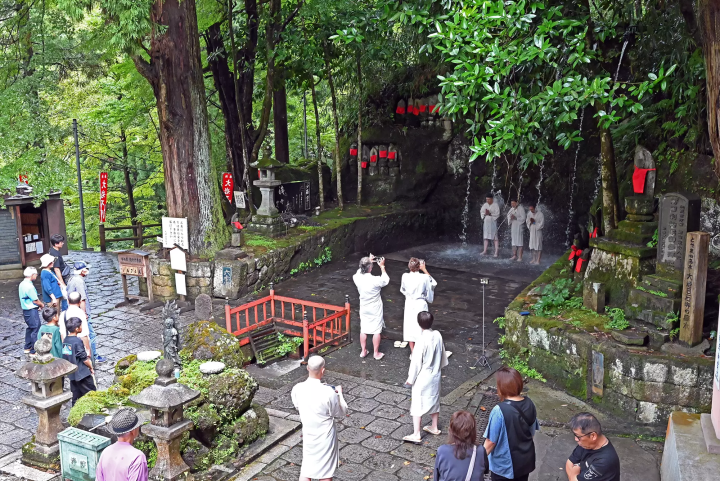
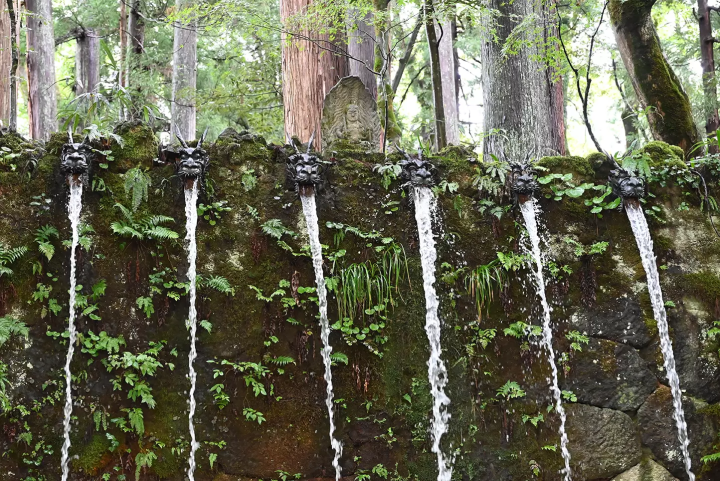
“Roppon-daki” (Six waterfalls) is 5.5 meters high, and the water flowing from the six dragon heads is meant to purify the six senses: eyes, ears, nose, tongue, body, and mind.
Rokkon is a Buddhist term that refers to the six organs and functions that form the basis of our perception of things, including the five senses of the human eye (sight), ear (hearing), nose (smell), tongue (taste), and body (touch), plus the mind (perception and heart). It is believed that earthly desires arise through these senses, and the goal of training is to purify these senses, known as "rokkon shojo."
Waterfall training is said to be synonymous with training, but originally it was a training to be done before the main training, to purify the body and prepare the mind in order to move forward towards future goals, and to reexamine one's own shortcomings and weaknesses.In recent years, it has also been done to improve concentration in the hot season and endurance in the cold season.
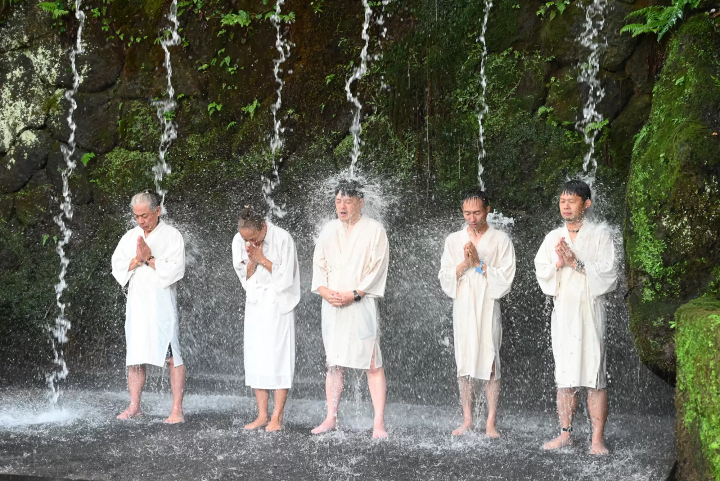
A group of people from the Kanto region came to experience waterfall asceticism. Many worshippers come from far away, and even from overseas, to experience waterfall asceticism.
The flow of waterfall training
1) Reception and pray
First, you check in at the office and write your wish on a goma stick. The experience costs 3,000 yen, including rental of white clothing and sandals. This goma stick is burned as a memorial service during the waterfall opening ceremony held every June.
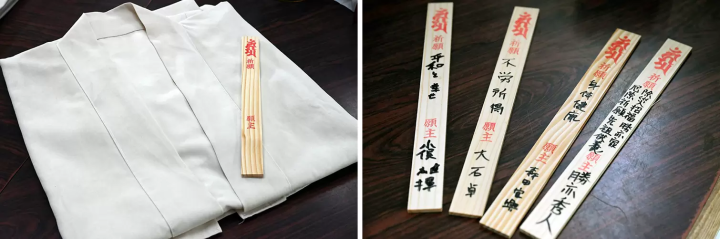
2) Change of clothes
After listening to the explanation at the office and borrowing your white robes and sandals, you can change in the changing room located in the basement to the left of the main hall. If you are worried about your white robes becoming see-through if they get wet, you should bring a swimsuit or undergarment. You can bring your own towel, or you can purchase original towels at the office.
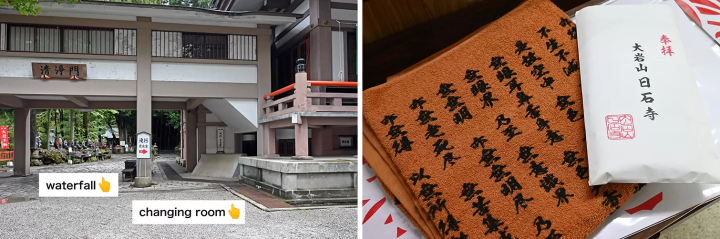
3) Go to the waterfall
The six waterfalls to the left of the main hall are the training ground for the "Takigyo" experience. Before entering the waterfall, you take off your sandals and bow to the waterfall before entering. Choose one of the six waterfalls and let yourself be hit by the flowing water. Because the waterfalls have a strong current, try to let the water hit your shoulders and the base of your neck, not your head.
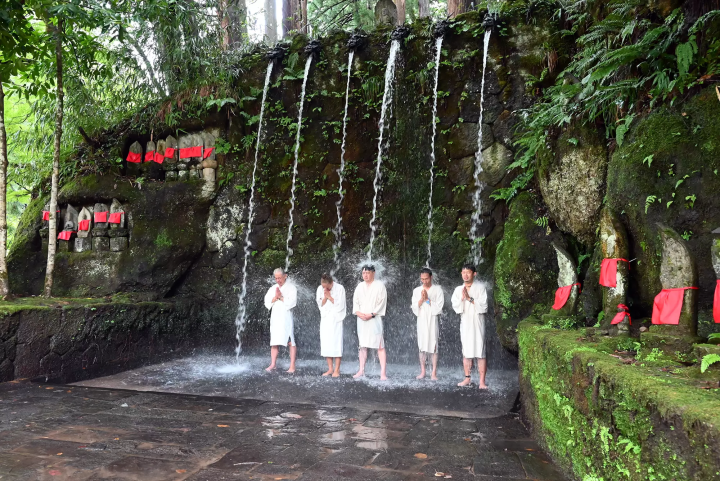
Points to note
・You can enter the waterfall as many times as you like.
・When it is crowded, take turns at reasonable times.
・If you enter the waterfall headfirst, the force of the water will cause you to lose your balance, so try to hit the back of your shoulders or neck at first.
・Please be careful not to get hit for too long as it will make your body cold.
・Waterfall training is available even in winter
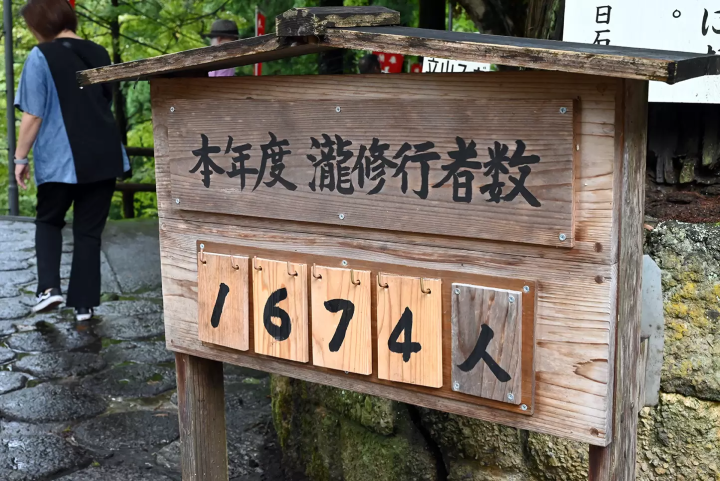
There is a counter near Roppon Falls that shows the number of practitioners.
The waterfall's cold enough to make your body shiver even in summer, but that's the real thrill of the training! Being hit by the waterfall clears away distracting thoughts, cleanses the body from Oku, and it feels as though your mind is sharpened. Nissekiji's waterfall training can be experienced all year round, but the "kanshugyo" (cold training) that takes place during the coldest winter months has also become a seasonal tradition.
Oiwasan Nissekiji Temple
[Address] 163 Oiwa, Kamiichi town, Nakaniikawa-gun, Toyama Prefecture
TEL 076-472-2301
[Open] Visiting hours: 9:00-16:00
[Closed] No holidays
[Fee] Free admission, 3,000 yen for waterfall training (includes rental of white clothing and sandals)
[Parking] 100 cars (free)
Oiwakan - Enjoy Oiwa Somen noodles in temple gate district
After visiting Nissekiji Temple and completing your waterfall training, you should definitely try the Oiwa Somen noodles served at the restaurants along the approach to the temple. Nowadays, there are fewer restaurants serving Oiwa Somen noodles along the approach to the temple, but in the past, there were many such restaurants lined up along the road.
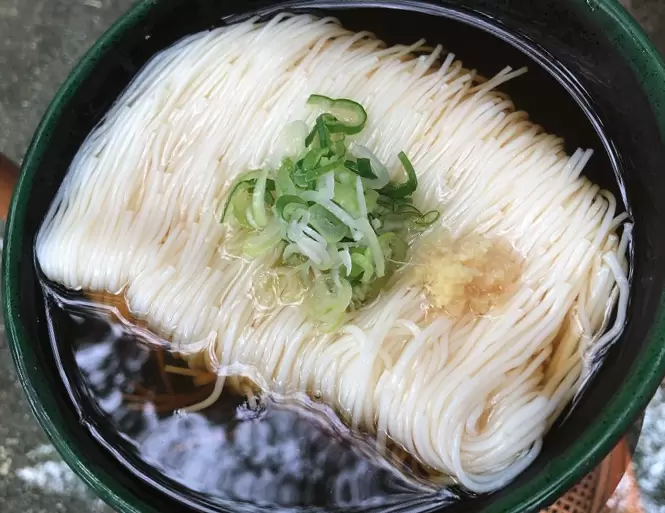
Oiwa Somen uses noodles that have been aged for three years, and is characterized by its silky smooth texture and firmness. The noodles are firmed in cold, famous water, so they don't get too soft even when dipped in soup, and you can taste the pure water with every bite. Many people visit Oiwa in the summer just for the somen noodles, and on weekends there are often long lines.
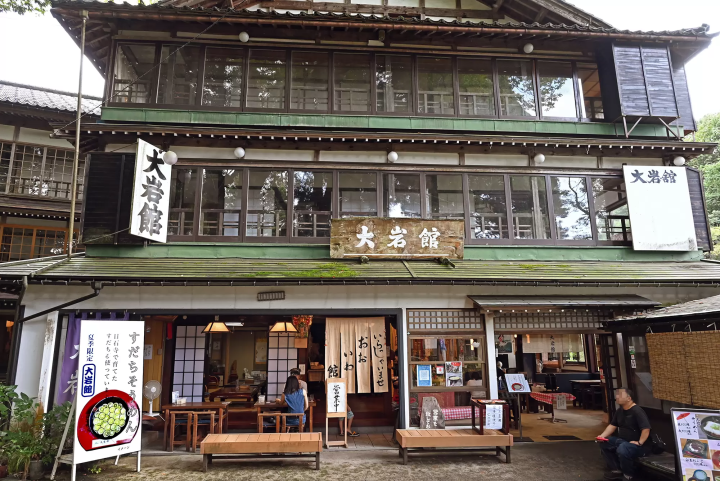
Of the three remaining shops in the temple town, Oi is said to have the longest history. It is located at the end of the Hyakudanzaka Saka, at the bottom of the stairs in front of the main hall, and also operates as a restaurant and inn.
At Oiwakan, you can enjoy set meals using wild vegetables and river fish in addition to somen noodles. During the wild vegetable season from spring to early summer, freshly picked bracken, fern, taros, bamboo shoots, and more are used to decorate meals in a variety of ways, including as tempura or Japanese dishes.
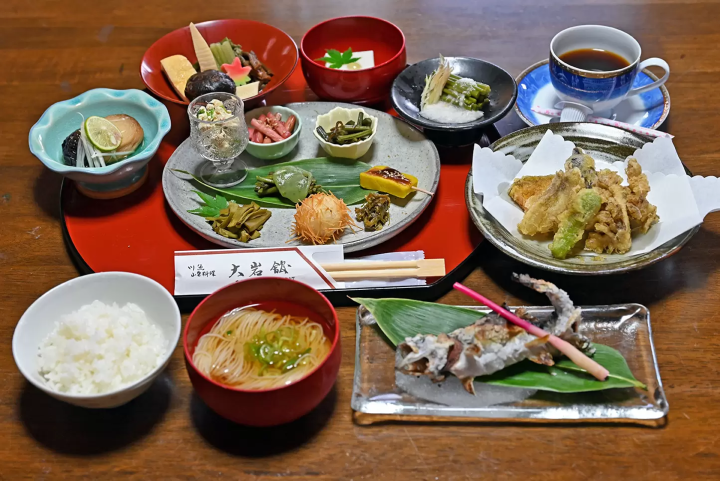
The mountain vegetable set meal (2,500 yen) and the mountain vegetable and trout set meal (3,200 yen) require reservations. The set menu changes depending on the season and includes dishes such as simmered mountain vegetables, white dressing, butterbur miso, and dried gluten with soy sauce. Somen noodles, rice, and coffee are also included, making for a very filling meal.
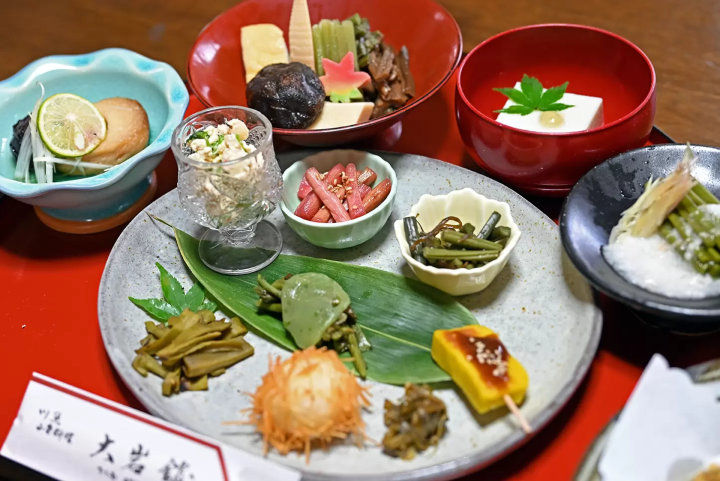
Outside of the season, the restaurant offers a colorful menu using preserved wild vegetables, such as salted ones, so you can enjoy it all year round.Of course, set meals are also served with the restaurant's famous somen noodles.
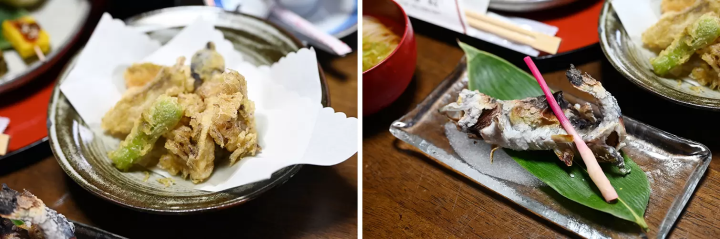
The hot, freshly fried tempura and fragrant, freshly grilled trout are delicious!
You can order Oiwa somen noodles, mountain vegetable tempura, and grilled salted rock trout as individual dishes, and you can also enjoy sweets such as shiratama dango and kuzukiri. Oiwa somen noodles served with a refreshing, mellow broth will gently seep into your body. Set meals require reservations, so be sure to let them know the date and time of your visit.
Oiwakan
[Address] 31 Oiwa, Kamiichi town, Nakaniikawa-gun, Toyama Prefecture
TEL 076-472-2307
[Business hours] 10:00-15:00
[Closed] Irregular holidays (reservations required outside of summer)
[Parking] Available
https://www.instagram.com/ooiwakan
Oiwa Fudo no Yu - Relax your body and mind in the hot springs
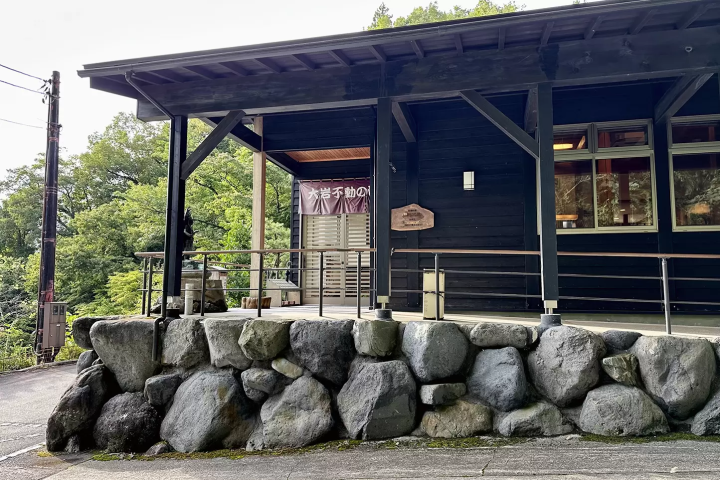
After your waterfall training at Nissekiji Temple, we recommend soaking in a nearby hot spring facility. There are many day-trip hot springs scattered around Kamiichi Town and the neighboring Tateyama area, where you can soak in the hot water to warm your body and slowly soothe the fatigue of your travels.
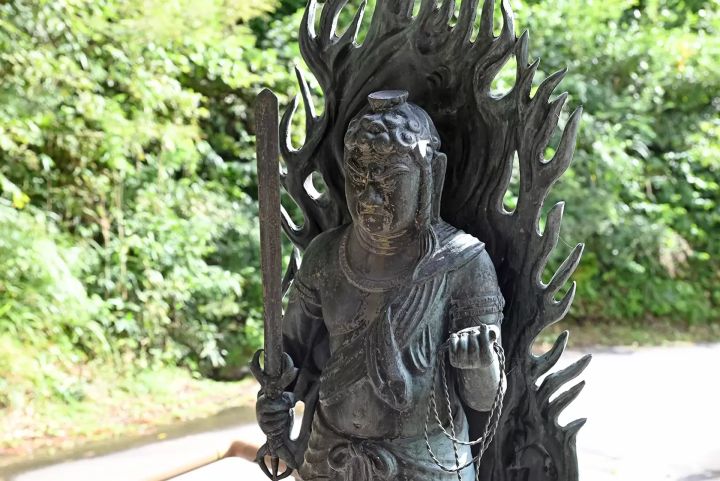
A statue of Acala enshrined at the entrance.
Oiwa Fudo no Yu, located near Nissekiji Temple, is a day-trip bathing facility where you can enjoy the beneficial effects of natural hot spring water that springs from 1,500 meters underground. The building, made with an abundance of local cedar and cypress, blends naturally into the rural woods, allowing you to relax and unwind.
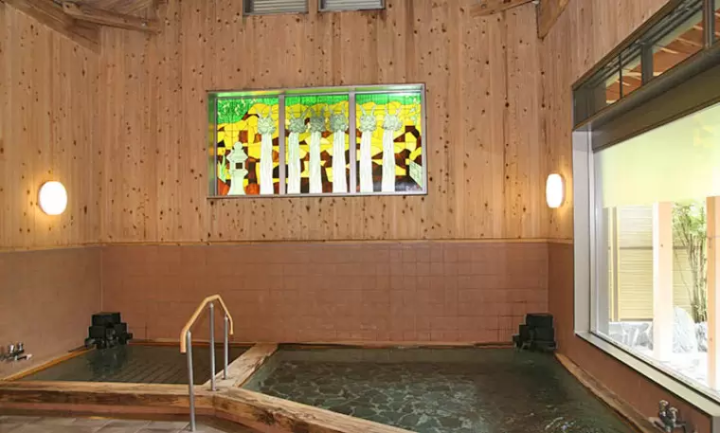
Roppontaki no Yu is decorated with stained glass depicting Roppontaki waterfalls.
The indoor baths are decorated with stained glass depicting Acala and the Six Waterfalls, and are called "Acala Bath" and "Six Waterfalls Bath," respectively, with the men's and women's baths switching weekly. The indoor baths have two wooden bathtubs, and it is also recommended to relax in the open-air bath while listening to the sounds of the river and the birdsong.
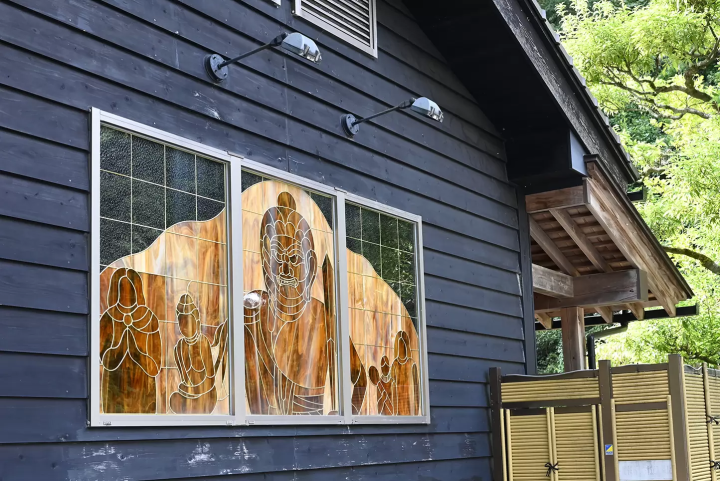
This is a photo of the window of Acala Bath taken from the parking lot. Looking out from the indoor bath, the light filtering through is very beautiful.
Oiwa Fudo no Yu
[Location] 3 Omatsu Nabetani, Kamiichi town, Nakaniikawa-gun, Toyama Prefecture
TEL 076-473-3622
[Business hours] Weekdays 14:00-21:00, Saturdays, Sundays and holidays 12:00-21:00
Closed: Tuesdays and Wednesdays (open on public holidays)
[Fee] Junior high school students and above: 500 yen, elementary school students: 180 yen, infants: 100 yen
[Parking] 30 cars (free)
https://www.instagram.com/ooiwa_hudounoyu
Oiwasan Nissekiji Temple is a popular tourist spot, but it is also a place of training with a history of 1,300 years. It is worth visiting cultural assets such as the rock-carved Buddha and the Mie pagoda, and walking around the temple grounds surrounded by nature, but you can also experience the essence of Japanese culture by trying waterfall training.
The refreshing feeling after being splashed by the cold waterfall goes beyond a mere tourist experience and leaves a lasting impression on visitors. The Oiwa somen noodles and hot springs that enhance that feeling are sure to make your trip even more fulfilling.
We are working to enliven the entire Hokuriku area.
The contents on this page may partially contain automatic translation.
Special Features
More









![[Latest] Complete Guide to atmos Exclusive Sneakers & Special Edition Models | Apparel and Upcoming Release Information](https://resources.matcha-jp.com/resize/720x2000/2026/05/28-264818.webp)

![[Izu, Shuzenji Onsen] Shuzenji hydrangeas adorn the garden of the inn "SORA Togetsuso Kinryu"](https://resources.matcha-jp.com/resize/720x2000/2024/06/25-185079.webp)