Learning from Tsutenkaku, Osaka’s Icon: Community-Based Tourism in Practice
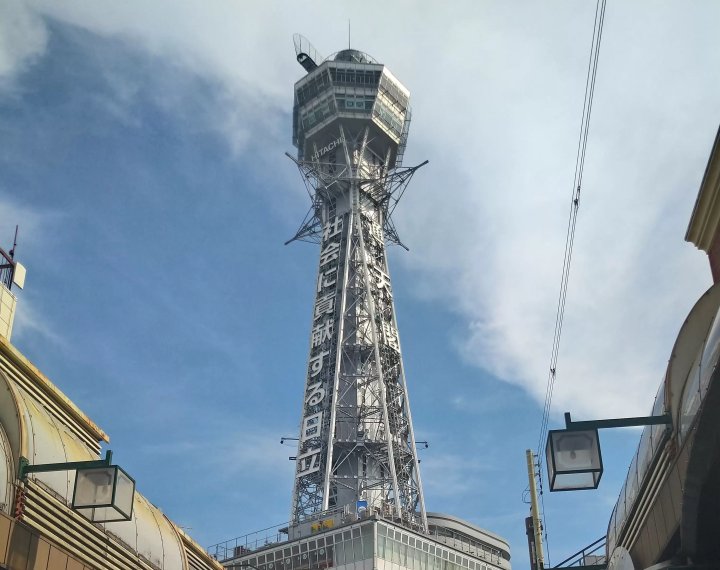
This article introduces a guided learning tour designed for students and business leaders interested in regional revitalization, focusing on Tsutenkaku Tower, one of Osaka’s most iconic landmarks. Participants will explore how Tsutenkaku evolved from a symbol of local downtown culture into a leading tourist attraction, while gaining firsthand insights from senior executives into the key management decisions and community-driven initiatives that supported its transformation.

Written by
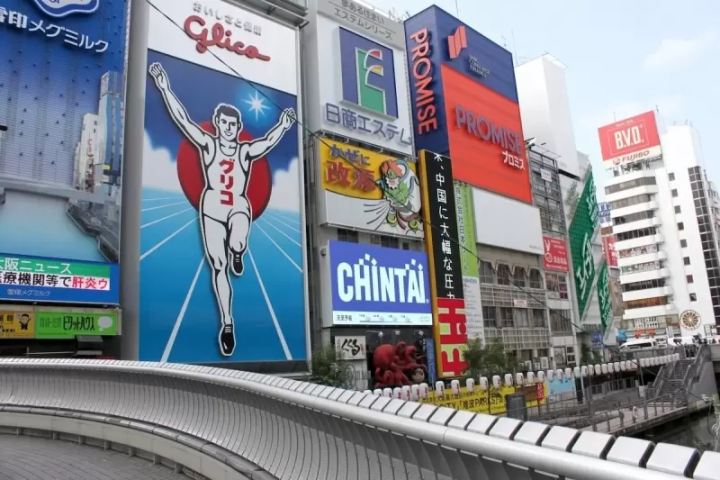
Namba in Osaka is the cultural center where theaters, shopping streets, and gourmet spots are all within walking distance, blending entertainment with authentic Osaka culture. It is a highly attractive MICE area where participants can enjoy exploring the city itself. The Namba ⇔ Kansai International Airport MICE Guide provides comprehensive MICE support based on Nankai Group venues, hotels, and convenient access. Pre- and post-event, we also offer tour plans combining industrial tourism—such as corporate visits and factory tours—in South Osaka and Wakayama. HP:https://www.japanrootsguide.com/en "This account is operated by Nankai Co., Ltd." [Photo description] 1. Rapi:t express train directly connecting Kansai International Airport and Namba 2. Scenery of Dotombori
This service includes sponsored advertisements.
-
Table of Contents
- Learning Directly from Tsutenkaku Leadership: The Story Behind Its Revival and Popularity
- What Is Tsutenkaku: The History and Character of an Icon of Osaka and Shinsekai
- The Neighborhood Around Tsutenkaku: Shinsekai and the Evolution of Osaka’s Local Character
- Tsutenkaku Today: An Evolving Observation Tower Rooted in the Local Community
- Tour Details
- Experiential Attractions at Tsutenkaku: A Challenge of Thrill and the Extraordinary
- How to contact us
Learning Directly from Tsutenkaku Leadership: The Story Behind Its Revival and Popularity
Tsutenkaku was once a symbol of downtown culture in Osaka’s Shinsekai district. Today, it has evolved into one of Osaka’s most visited landmarks, attracting travelers from both Japan and overseas.Behind this transformation lies a long history of reform and adaptation to changing times, as well as sustained collaboration with the surrounding Shinsekai area. After experiencing severe challenges, including a decline to approximately 190,000 visitors in 1975 and another crisis during the pandemic in 2020 with around 200,000 visitors, Tsutenkaku has successfully recovered to welcome more than 1.2 million visitors annually.In 2024, the organization entered a new phase by becoming part of a major railway group, further strengthening its management foundation and long-term growth strategy.
This study tour offers rare insight into the decision-making processes, strategic thinking, and future vision that supported Tsutenkaku during this period of transformation.Learning about leadership perspectives and community-based initiatives directly at the site provides an experience that goes beyond ordinary sightseeing. Why not explore Tsutenkaku not only as a tourist attraction, but as a living case study in sustainable tourism developed together with the local community?

What Is Tsutenkaku: The History and Character of an Icon of Osaka and Shinsekai
Tsutenkaku stands at the heart of Osaka’s Shinsekai district as one of the city’s most iconic landmarks. True to the meaning of its name, which refers to a tower reaching toward the sky, Tsutenkaku has long been cherished as a symbol of local pride and identity.The current tower is the second generation structure. The original Tsutenkaku was completed in 1912 and immediately gained attention with its innovative design, inspired by elements of the Arc de Triomphe and the Eiffel Tower. At the time, it was recognized as the tallest structure in Japan. However, the tower was tragically lost to a fire in 1943 and later dismantled. Driven by strong calls from the local community to rebuild the tower, Tsutenkaku was reconstructed in 1956 and has since remained an enduring symbol of Osaka.
In addition to panoramic views from the observation deck located approximately ninety meters above ground, visitors are welcomed by Billiken, a figure known as a bringer of good fortune. In 2007, Tsutenkaku was designated as a Registered Tangible Cultural Property, further reinforcing its role as a place where the history and vitality of Osaka can be experienced by visitors from around the world.Inside the tower, guests can explore historical exhibitions, souvenir shops, and immersive attractions that offer moments of thrill and escape from everyday life. Through these diverse elements, Tsutenkaku continues to evolve as a comprehensive visitor destination that brings together sightseeing, culture, and entertainment.
The Neighborhood Around Tsutenkaku: Shinsekai and the Evolution of Osaka’s Local Character
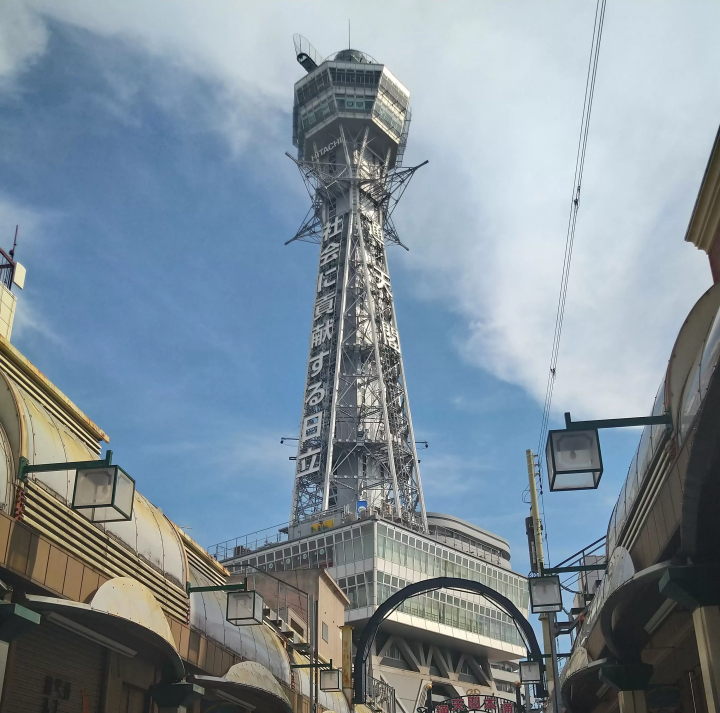
When visiting Tsutenkaku, exploring the surrounding Shinsekai district is an essential part of the experience. Shinsekai was created in the late Meiji period and early Taisho era through the redevelopment of a former exposition site. At the time, it drew attention as a cutting edge urban area inspired by cities such as Paris and New York. After the war, however, redevelopment slowed, and the streets gradually filled with standing bars, local clubs, and traditional amusement venues. The area transformed into a lively neighborhood deeply rooted in everyday life, often perceived by outsiders as a place that felt deep and somewhat intimidating. Yet this raw atmosphere also became one of Shinsekai’s defining attractions, sometimes described as the hidden face of Osaka.
Beginning in the 1980s, Shinsekai regained attention as the setting for films and television dramas. By the 2000s, the district had evolved into a popular tourist area lined with kushikatsu restaurants and retro entertainment venues, leading to a renewed appreciation of its energetic and unmistakably Osaka style.Today, Shinsekai continues to develop as an international tourism destination welcoming visitors from Japan and abroad, while preserving the atmosphere of Japan’s high growth era and its distinctive downtown culture. The neighborhood has also become a place where families and female travelers can explore with confidence, offering a clear example of a community that moves forward while carefully preserving what matters most.
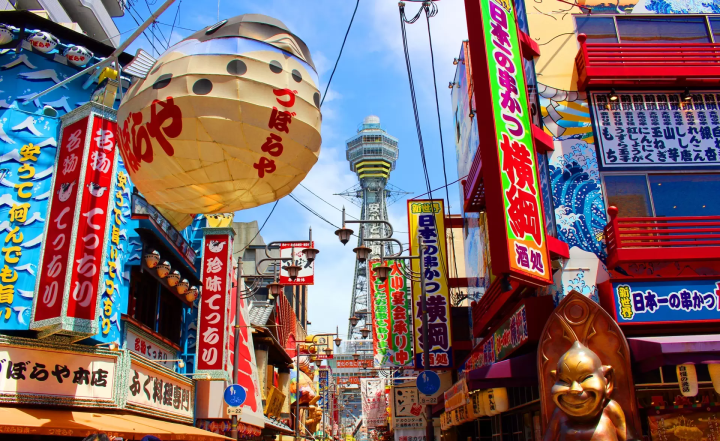
Tsutenkaku Today: An Evolving Observation Tower Rooted in the Local Community
Having grown alongside the vibrancy of the Shinsekai district, Tsutenkaku has evolved into a multifunctional visitor destination that goes beyond its role as a simple observation tower. While the panoramic views over Osaka remain a major highlight, the interior of the tower now features exhibitions that convey the history of Shinsekai, antenna shops developed in collaboration with food companies, and immersive attractions that are especially popular with travelers from overseas. The tower also offers numerous photo-friendly spots, making it an enjoyable destination for visitors of all ages, including families and groups of friends. Over time, Tsutenkaku has transformed into a place where each visitor can discover a unique way to enjoy the experience.
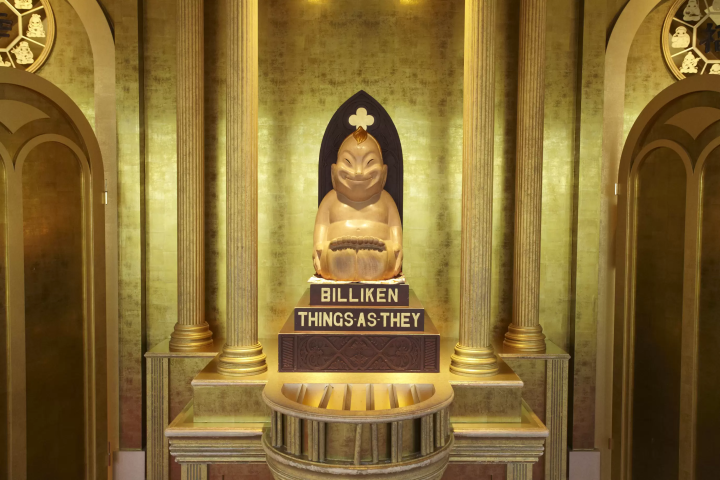
No visit to Tsutenkaku would be complete without encountering Billiken, a symbol of good fortune widely beloved by both locals and first-time visitors. On the fifth floor, the Golden Observation Deck recalls the lavish atmosphere of Toyotomi Hideyoshi’s golden tea room. From this space, visitors can take in sweeping views of Osaka, earning it the nickname a sky oasis in the heart of the city.
Enshrined within this golden setting is the third generation Billiken, often affectionately described as a blond gentleman. Traditionally believed to grant wishes when visitors touch the soles of his feet, Billiken attracts those hoping for business success, academic achievement, and fulfillment in love. Revered not only as part of the Seven Gods of Good Fortune but also as an eighth guardian figure, Billiken has become one of Tsutenkaku’s most recognized power spots, watching over the happiness of Osaka from above.
Tour Details
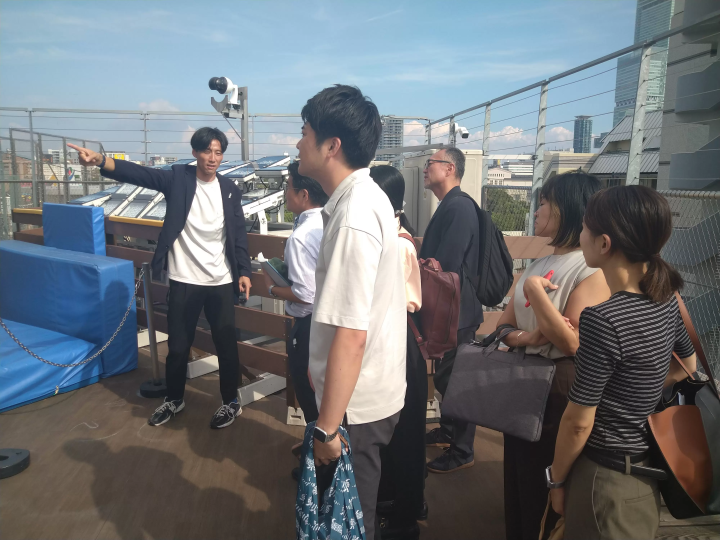
This tour offers an in-depth exploration of Tsutenkaku Tower, one of Osaka’s most iconic landmarks, tracing its renewal from a symbol of downtown culture to an internationally recognized tourist attraction. Participants will learn from a business and community collaboration perspective, gaining firsthand insight from senior leadership into the strategic decisions behind overcoming visitor decline, navigating social crises, transforming management structures, and shaping future growth.
・Fee:¥57,500 (tax included)
*Group rate — price per group, not per person
・Group Size:1–10 people
・Duration:Approx. 120–150 minutes
・Contents:Facility tour and a talk session with Tsutenkaku executives
*Optional Add-ons:Experience the popular attractions “DIVE & WALK” and “TOWER SLIDER” (available upon request)
・Booking:At least 1 month in advance
Experiential Attractions at Tsutenkaku: A Challenge of Thrill and the Extraordinary

"DIVE&WALK"
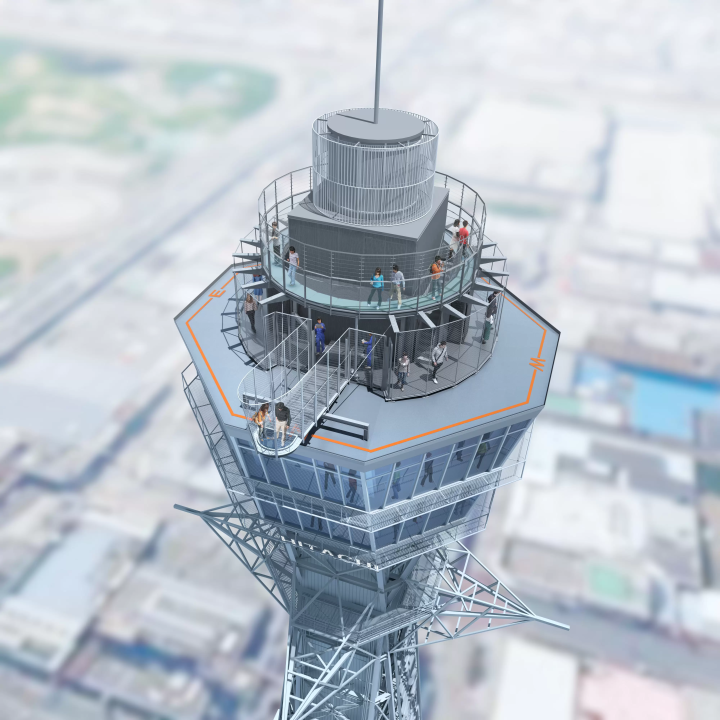
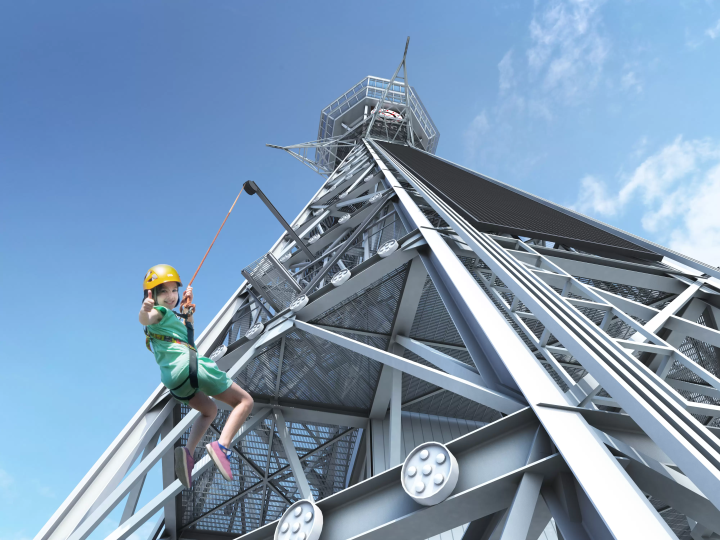
“DIVE & WALK” at Tsutenkaku is a unique attraction that allows visitors to walk across the rooftop of the observation deck at a height of approximately twenty-six meters while secured with safety harnesses. Often described as an aerial walk, this experience offers panoramic views of Osaka and the lively streets of the Shinsekai district from a perspective rarely accessible to the public. The experience fee includes an original photo service, allowing participants to capture a memorable image alongside landmark scenery such as Tsutenkaku itself and the surrounding cityscape, making it a popular choice for visitors seeking a lasting souvenir of their adventure.
For those seeking an even greater thrill, DIVE provides the opportunity to step off from a platform nearly forty meters above ground. This bold challenge invites participants to leap into open space while taking in sweeping views of Osaka below, delivering a powerful sense of exhilaration. By fully utilizing the height and structure of Tsutenkaku, these attractions have gained considerable popularity, especially among international visitors. DIVE&WALK represents a form of experiential tourism that goes beyond observation, offering a dynamic and unforgettable way to engage with Osaka’s urban landscape.
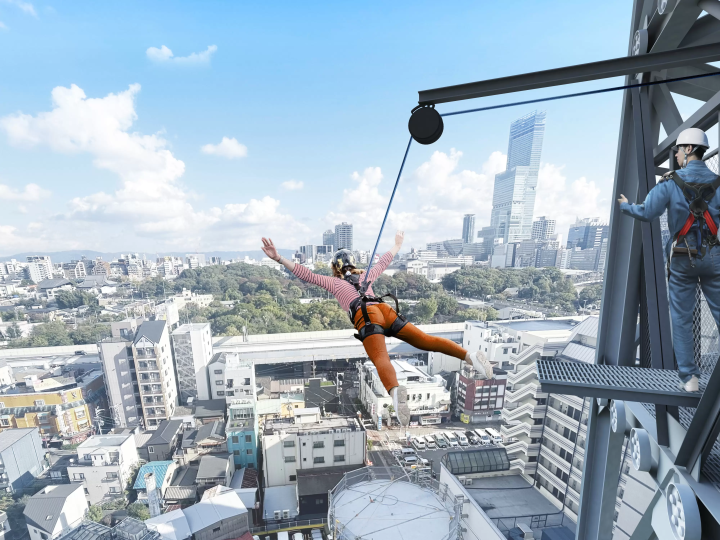
“DIVE & WALK” Experience Fee (per session)
・Opening Hours:10:00 – 20:00 (last entry 19:15)
・Fee:Adults (ages 15–65):¥3,000
Children (ages 9–14):¥2,000
*Children must be accompanied by an adult.
*Other participation conditions apply—please check when purchasing.
Purchase online tickets here
*Participants of the Industrial Tourism program can also add this attraction as an optional activity.
"TOWER SLIDER"
Next, we introduce TOWER SLIDER, an experiential attraction that makes full use of the height and structure unique to Tsutenkaku. The entrance is located beyond the spiral staircase connecting the second and third floors, leading to an exhilarating descent from a height of twenty-two meters down to the first basement level in approximately ten seconds. This tube style slider extends around sixty meters in total length and wraps around the exterior of the tower. Constructed with stainless steel and transparent panels, it allows participants to experience both speed and a strong sense of openness, delivering thrill and excitement at the same time. The entire ride is recorded on video, which can be downloaded afterward, allowing visitors to relive the experience long after their visit. Taking on this attraction while looking up at Tsutenkaku itself offers a bold and memorable way to engage with the landmark. We invite you to enjoy this new form of experiential attraction that can only be found here.
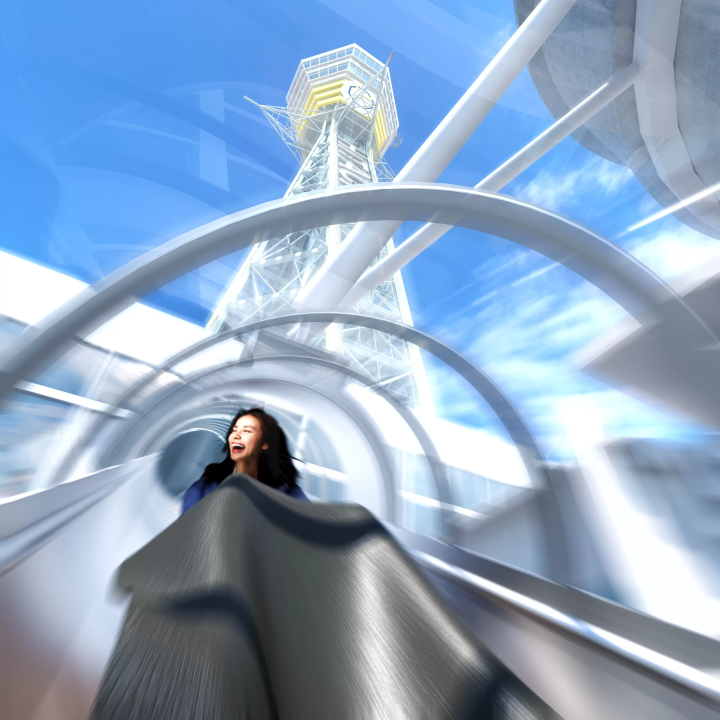
“TOWER SLIDER” Experience Fee (per ride)
・Opening Hours:10:00 – 19:30
・Fee:Adults (ages 15–65): ¥1,000
Children (ages 7–14): ¥500
*Participation conditions apply. Please check the details when purchasing tickets.
Purchase online tickets here
*Participants of the Industrial Tourism program can also add this attraction as an optional activity.
In this way, Tsutenkaku offers far more than the functions of an observation tower. Visitors can enjoy a wide variety of experiences, including experiential attractions such as “DIVE & WALK”, exhibitions that explore local history, and souvenir shops rooted in the surrounding community.
By bringing together thrill, learning, and shopping in one place, Tsutenkaku allows visitors to experience the character of Osaka through all five senses. Through experiences found nowhere else, we invite you to discover the vibrant energy and lasting appeal of the city.
How to contact us
1. Please fill out the necessary information in the form below and contact us.
2. We will contact you from "industrial.tourism@nankai.co.jp" within 3 business days.
Please feel free to contact us with any inquiries from available dates to detailed tour information!
Namba in Osaka is the cultural center where theaters, shopping streets, and gourmet spots are all within walking distance, blending entertainment with authentic Osaka culture. It is a highly attractive MICE area where participants can enjoy exploring the city itself. The Namba ⇔ Kansai International Airport MICE Guide provides comprehensive MICE support based on Nankai Group venues, hotels, and convenient access. Pre- and post-event, we also offer tour plans combining industrial tourism—such as corporate visits and factory tours—in South Osaka and Wakayama. HP:https://www.japanrootsguide.com/en "This account is operated by Nankai Co., Ltd." [Photo description] 1. Rapi:t express train directly connecting Kansai International Airport and Namba 2. Scenery of Dotombori
The contents on this page may partially contain automatic translation.
Special Features
More







![[Cancelled for 2026] Kawaguchiko Herb Festival, which adorns the shores of Lake Kawaguchi at the Mount Fuji with a purple carpet.](https://resources.matcha-jp.com/resize/720x2000/2025/05/27-234666.webp)