
The strangest festival in Japan: "Oiseko" in Minamisatsuma, Kagoshima
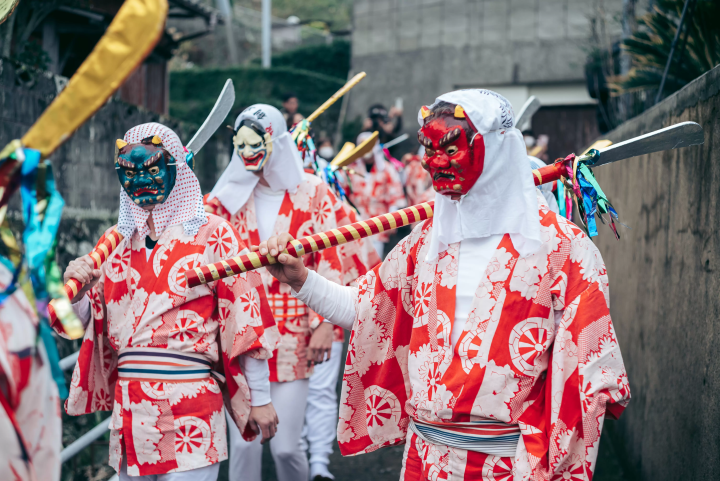
In the Kataura district of Kasasa Town, Minamisatsuma City, Kagoshima Prefecture, there is a unique festival called "Kataura no Oiseko," which has been passed down since ancient times. It was born out of faith in Ise Shrine in Mie Prefecture, which many people longed to visit at least once in their lifetime. We will introduce its origins, which are filled with history and mysterious legends.

Written by
[Kagoshima Prefecture] Minamisatsuma City is located on the southwestern tip of the mainland, and is a city full of food and natural resources. Filming location for the movie “You Only Live Twice” Ganjin Yamato Landing Site ● [Japan Heritage] Important Preservation District for Groups of Traditional Buildings “Kaseda Fumoto” ●Birthplace of Kurose Toji/Ata Toji (Minamisatsuma Shichizo Shochu) ●One Hundred Famous Mountains in Kyushu “Kinpozan” ●Mt. Nomadake, one of the three famous mountains on the Satsuma Peninsula
This service includes sponsored advertisements.
-
Table of Contents
- basic information
- The soul of Japan lies at the edge of the map
- A trip to the sacred places of Kasasa and Kataura
- Why "Ise"?
- The beginning of the Ise sect
basic information
Date: February 11th every year
Location: Kataura district, Kasasa town, Minamisatsuma city, Kagoshima prefecture
The soul of Japan lies at the edge of the map
Japan's famous tourist destinations -- Tokyo, Kyoto, Osaka -- are certainly wonderful to explore on the "Golden Route." However, if you wish to experience the hidden depths of Japan's soul, head to Kasasa Town, located at the southern tip of Kyushu, just west of Minamisatsuma City in Kagoshima Prefecture.
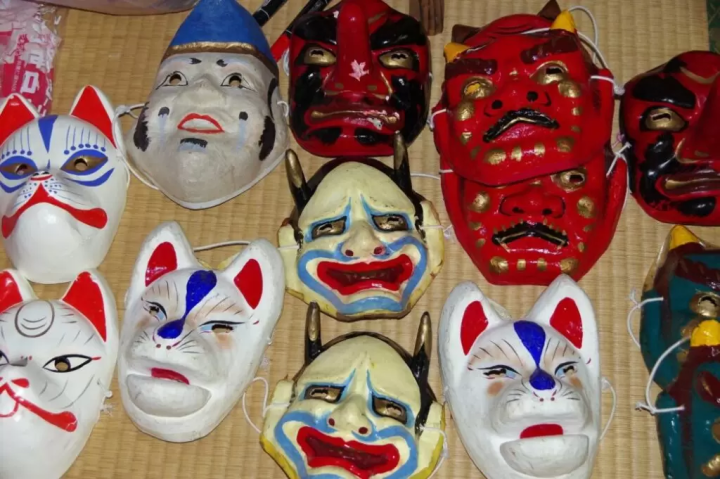
The Oiseko Shinto ritual held here every February is more than just a traditional event. It is a living testament to the community bonds that have been carefully protected by local people for 400 years, without any outside interference, and it awakens a sense of awe for the invisible that modern people have forgotten.
A trip to the sacred places of Kasasa and Kataura
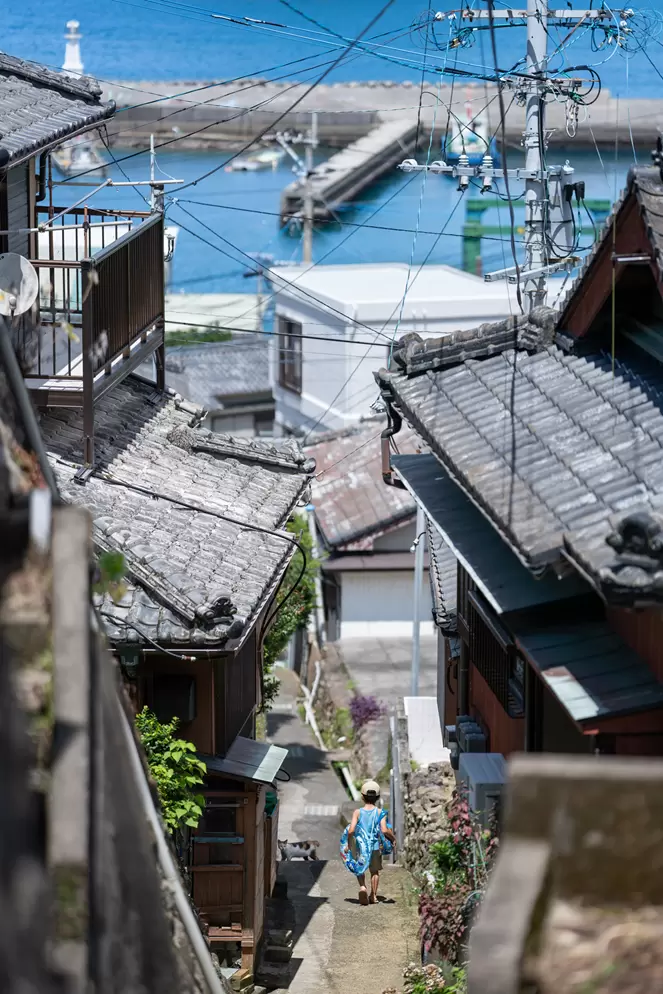
Kasasa Town in Minamisatsuma City is said to be the place where Ninigi-no-Mikoto, the grandson of the gods, landed in Japan's oldest mythology, as described in the Kojiki and Nihon Shoki.
This area, where the steep mountains of the ria coast drop into the sea, is of course a thriving fishing industry, but the unique culture of "half farming, half fishing" and the "spirit of mutual assistance" are still deeply rooted here.
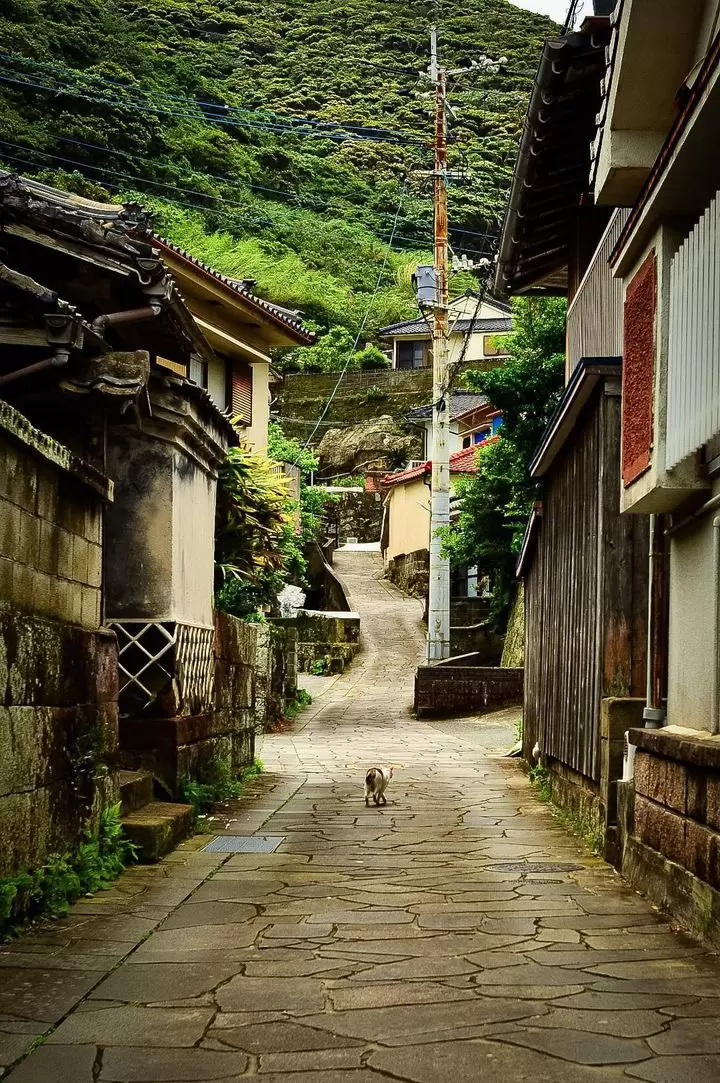
This is why a unique culture remains in its purest form here. When you step into the village of Kataura, the first thing that strikes you is the colors. The deep, crystal blue sea, the old stone walls, and the quiet alleys where houses line up shoulder to shoulder. There is no hustle and bustle of the city here, nor any excessive signs. All you can hear is the sound of the waves and the peaceful sounds of people living their lives.
Why "Ise"?
"Oise-ko" is a traditional Japanese mutual aid organization (ko) that originally aimed to pilgrimage to Ise Grand Shrine in Mie Prefecture. In the days before transportation was developed, a pilgrimage to Ise was a once-in-a-lifetime dream for common people. As a result, "ko" were formed in various regions, with representatives visiting Ise and sharing the blessings with the entire community.
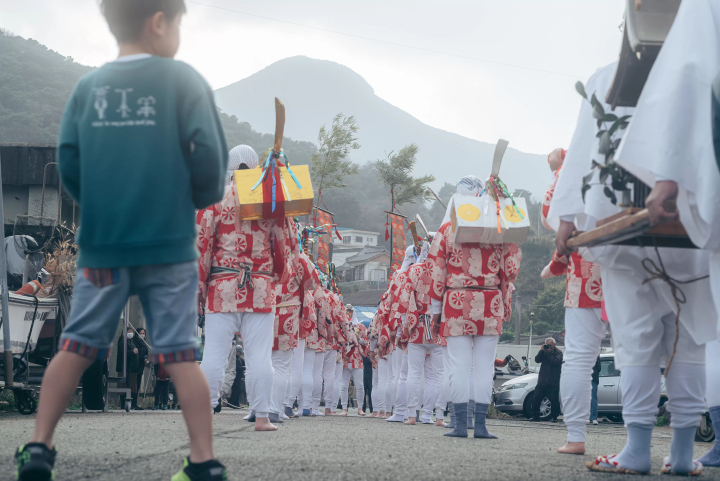
The beginning of the Ise sect
This festival was born out of faith in Ise Shrine in Mie Prefecture, a place that people once longed to visit at least once in their lifetime. We will introduce the origins of this festival, which is steeped in history and mysterious legends.
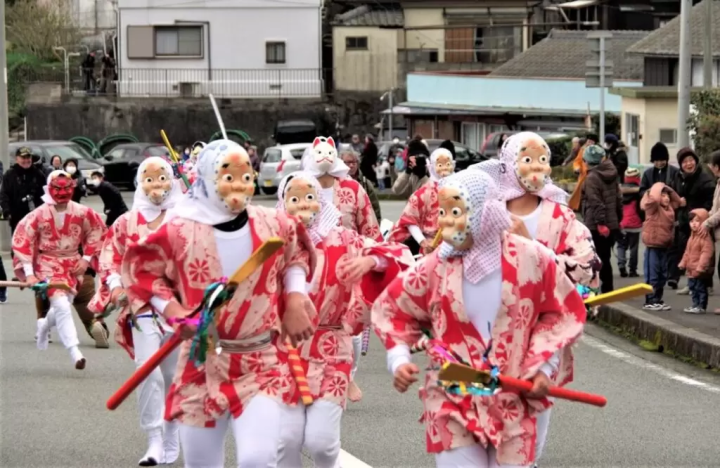
1. The journey from the distant Ise Shrine to the local area
During the Edo period, the journey to Ise Shrine in Mie Prefecture was an extremely difficult one for people from faraway Satsuma (present-day Kagoshima). Therefore, the people of Kataura formed an association called a "ko" and pooled their money to send a representative to Ise Shrine.
However, because of the many hardships they faced on their long journey, they eventually welcomed the divine spirit of Ise Shrine to this land and enshrined it in the local area, which is said to be the beginning of the festival.
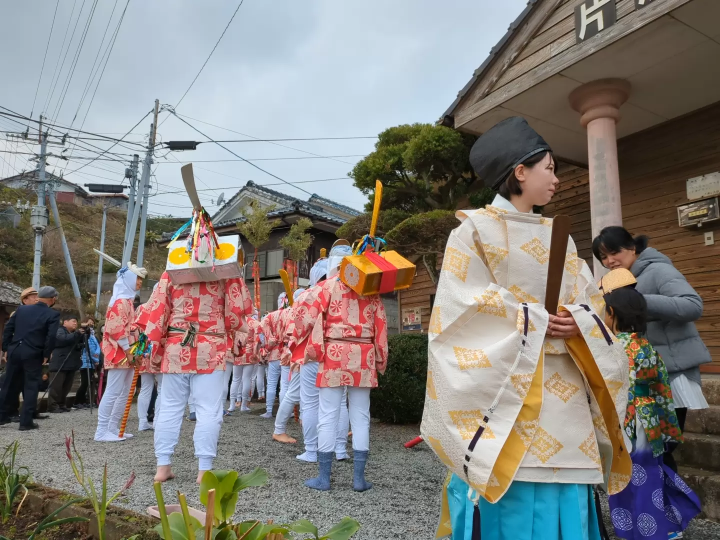
2. The "God of Fire Prevention" who protected homes from fires
The Kataura area has been hit by several major fires in the past, including the one in 1843 (Tenpo 14), in which most of the village was burned down, but legend has it that the only house that miraculously survived was the one that enshrined Ise Shrine .
Since then, Ise Shrine has been deeply worshipped as a god who protects from fires. Even today, in the year when the lodgings for Ise Shrine are decided to be on the mountain side, the entire village still has the custom of making special efforts to be careful about fires.
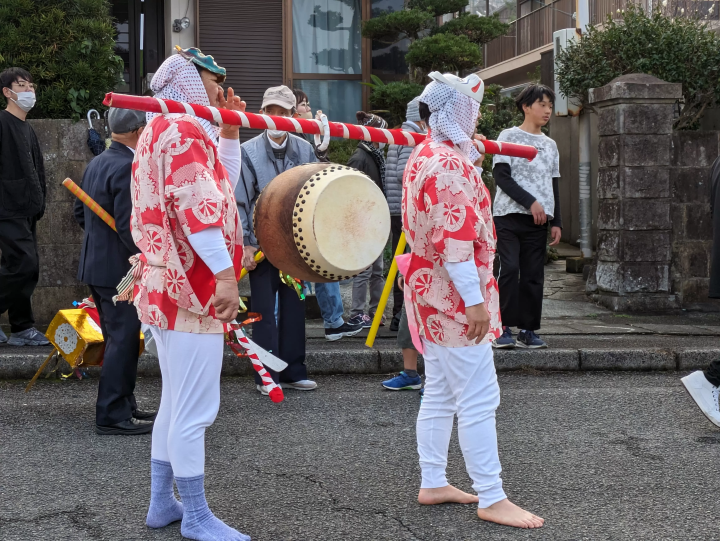
3. Festival highlight: A procession of young people dressed as women
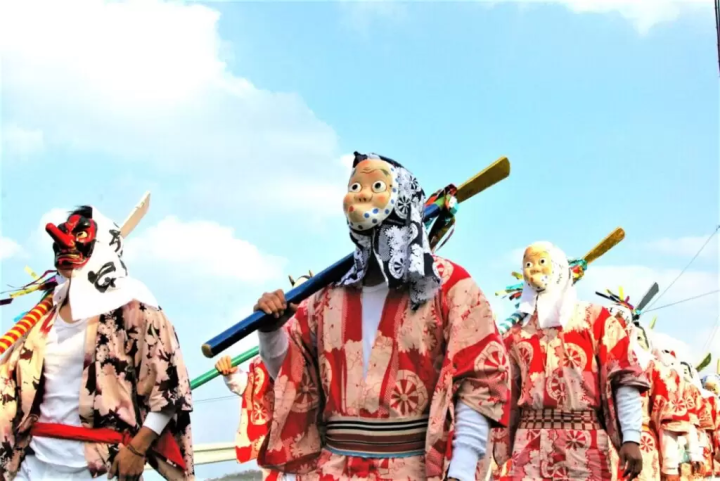
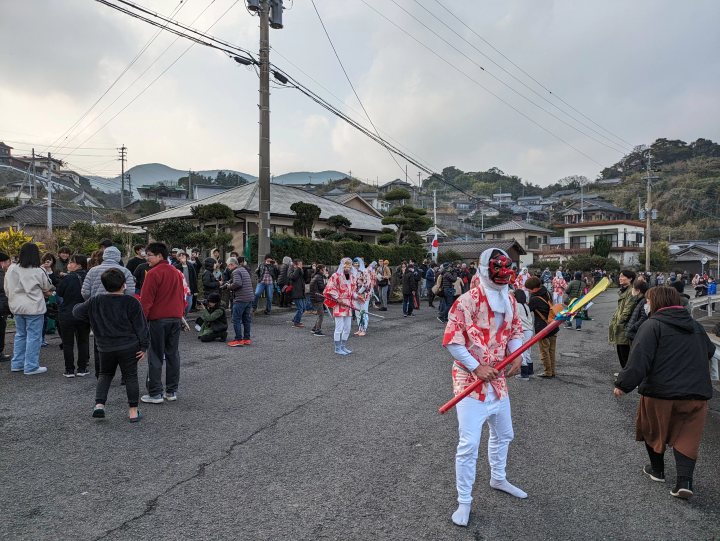
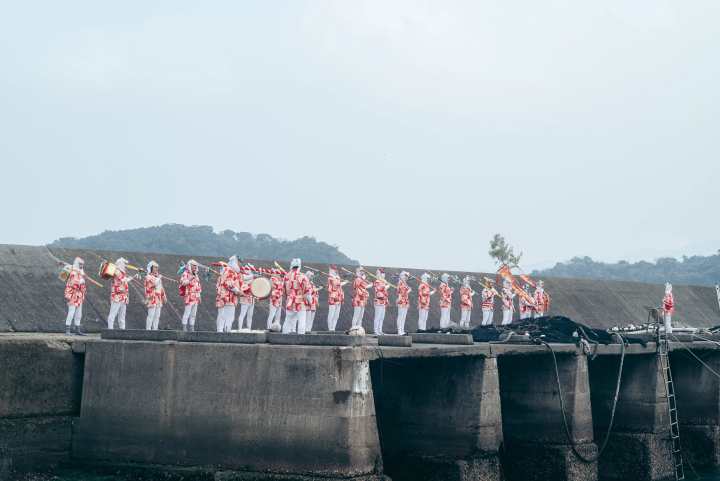
Every year on February 11th, young people, mainly "nise" (young men) who are 15 years old by traditional Japanese age reckoning, parade through the town with a portable shrine. This procession has a unique feature that you won't see anywhere else.
Why do they cross-dress? The deity of Ise Shrine (Amaterasu Omikami) is said to be a woman. In order not to offend the deity, the young men who serve dress up in women's clothing and wear masks while dancing.
Reasons for carrying weapons The young men are holding naginata (long swords), spears and swords, which are a reenactment of the way they protected the gods from outside enemies on their long journey to Ise.
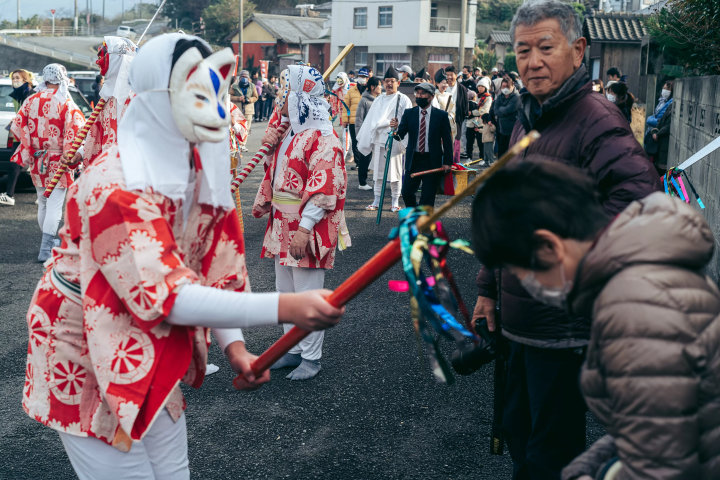
4. The mysterious chant "Oiyana, Oiyana"
During the procession, young people chant the unique chant "Oiyana, Oiyana."
There are various theories about the origin of this phrase, but one is that it is said to have evolved from the phrase "Oiyan naa? (Are you there?)" that people used to greet each household when traveling around collecting travel expenses for pilgrimages to Ise Shrine.
remarks
Currently, Ise Shrine is managed by the community center, but in the past, the village officials were called council members, and they would draw lots to have each council member's house stay at the shrine each year. However, this was often seen as disrespectful to the gods, so the council members began to refuse to manage the shrine, and this continues to this day.
[Kagoshima Prefecture] Minamisatsuma City is located on the southwestern tip of the mainland, and is a city full of food and natural resources. Filming location for the movie “You Only Live Twice” Ganjin Yamato Landing Site ● [Japan Heritage] Important Preservation District for Groups of Traditional Buildings “Kaseda Fumoto” ●Birthplace of Kurose Toji/Ata Toji (Minamisatsuma Shichizo Shochu) ●One Hundred Famous Mountains in Kyushu “Kinpozan” ●Mt. Nomadake, one of the three famous mountains on the Satsuma Peninsula
The contents on this page may partially contain automatic translation.


Special Features
More











![[Shinjuku Girls' Trip] 4 Recommended Shops for Women at Odakyu Ace!](https://resources.matcha-jp.com/resize/720x2000/2026/05/11-263877.webp)