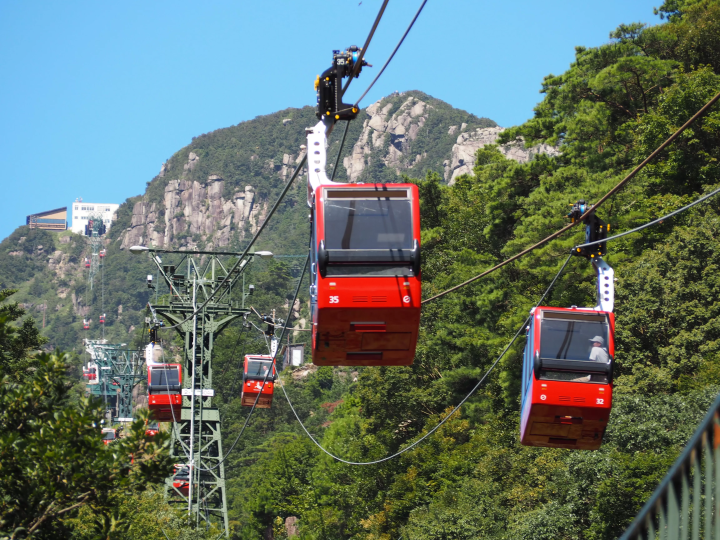
A journey through traditional culture on an e-BIKE: Experience Tango Chirimen in Yosano Town
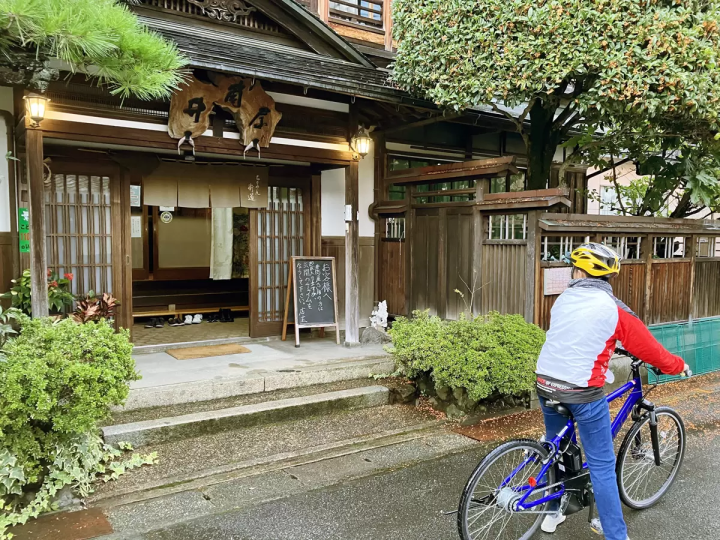
First, I took the Kyoto Tango Railway Miyatoyo Line (Miyazu Line) to Yosano Station. I rented an e-bike in front of the station. The power of the sports-type e-bike when you start moving is completely different from that of a regular bicycle. Just a little pedaling will send you moving forward quickly, and even hills won't tire you out.

Written by
The Kyoto by the Sea area is about 99 km from Kyoto city, and can be reached in as little as 90 minutes by car or bus. It is close by and offers another side to Kyoto, with a different atmosphere from the city. Once upon a time, there was an ancient nation (Taniha no Kuni) with an advanced culture that was introduced from the continent, and it was also the secret stage of the creation of Japan. The Kyoto by the Sea area is filled with evidence of its origin, such as the legend of the descent of Toyouke-no-Okami, the oldest god of food, the demon legend of Mt. Oe, and the legend of the Dragon Palace. It is filled with the charms of Japan scattered throughout each era, such as Amanohashidate, which was the source of Kyoto culture that fascinates the world and was longed for by the people of the capital during the Heian and Muromachi periods, the Tango Chirimen Corridor woven with silk that has been spun for 300 years, the modern industrial heritage sites of Maizuru and Ayabe, the one-of-a-kind Ine Funaya landscape born from the work of fishermen, and Fukuchiyama Castle, which conveys the Warring States period to the present day. Furthermore, "Kyoto of the Sea" is a land of abundance, blessed with ingredients beloved by the god of food, such as seafood like Matsuba crab and Ine yellowtail, and rice and vegetables grown in pure water. Furthermore, its natural scenery, including the San'in Coast, a Global Geopark, and the mountains and rivers where gods, Buddhas and even demons reside, pique the curiosity of travelers, whose beauty will soothe their souls. It is a region where the culture of "valuing harmony" has lived on since ancient times, and where kind people are gracious and accommodating to travelers when they encounter it. Everything you taste and encounter here is connected to Japan's roots. This is Kyoto of the Sea, the source of Japan that lives in the heavens, earth, mountains and seas.
This service includes sponsored advertisements.
Required time
Yosano Station to Yosano Tourist Association (near Chirimen Kaido): Approximately 6 km Bicycle: Approximately 30 minutes Walk: Approximately 1 hour 20 minutes Car: Approximately 13 minutes
Transportation
On foot
The e-BIKE ride starts from Yosano Station!
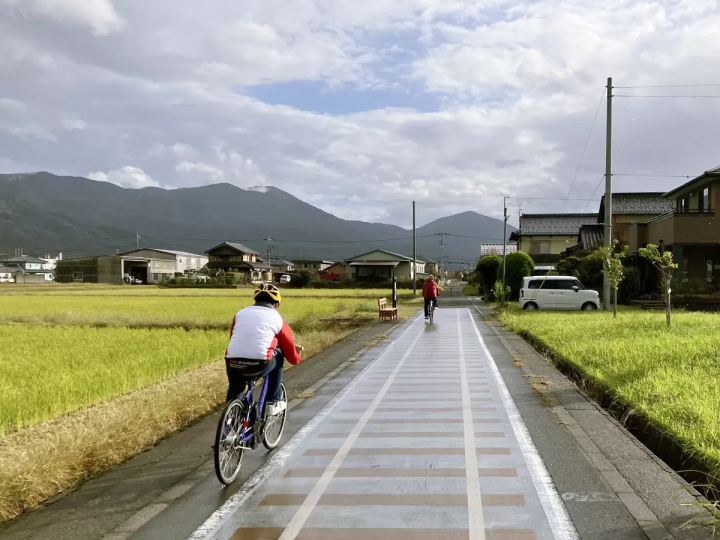
This approximately 12km cycling road, known as the Kaya Railway Former Bicycle Path, is a remodeled version of the old Kaya Railway tracks. From the Taisho era through the 1980s, the Kaya Railway served as a means of transporting the local specialty, Tango Chirimen, and as a means of transportation for local residents. Now that the line has been abandoned, it is loved by tourists as a cycling road and by locals as a walking and jogging course.
It's an exhilarating experience speeding through the tranquil countryside on an e-BIKE. You can feel the pleasant smell of greenery and the breeze. Along the way, you'll also come across the former Kayo Station building, built in the Taisho era, which gives you a sense of the old railway line. The Kayo Railway No. 2 Locomotive, on display next to the station building, is a designated Important Cultural Property of Japan, marking its 150th anniversary this year (2023).
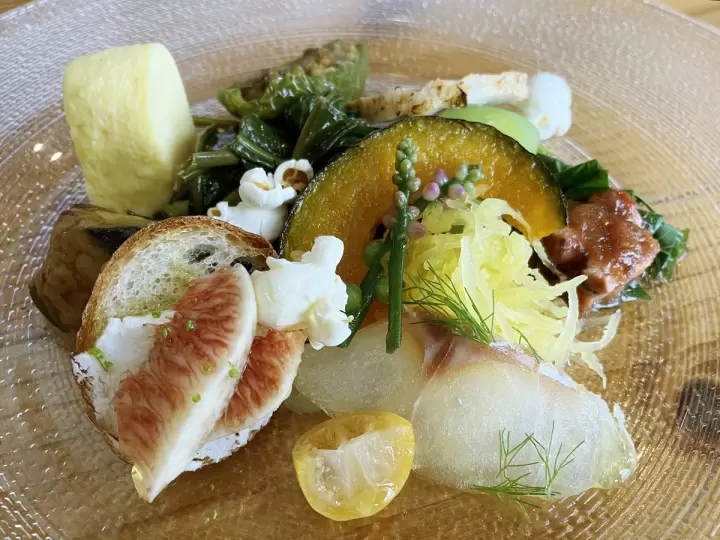
Enjoy the bounty of Yosano's sea and fields in a European-style dining setting
We took a little detour off the bike path to the European-style dining restaurant "Cuccini" for lunch, where we enjoyed a slightly luxurious course-style lunch.
1
European Dining Cuccini
Chirimen Kaido - A place where the townscapes of the Edo, Meiji, Taisho and Showa periods remain
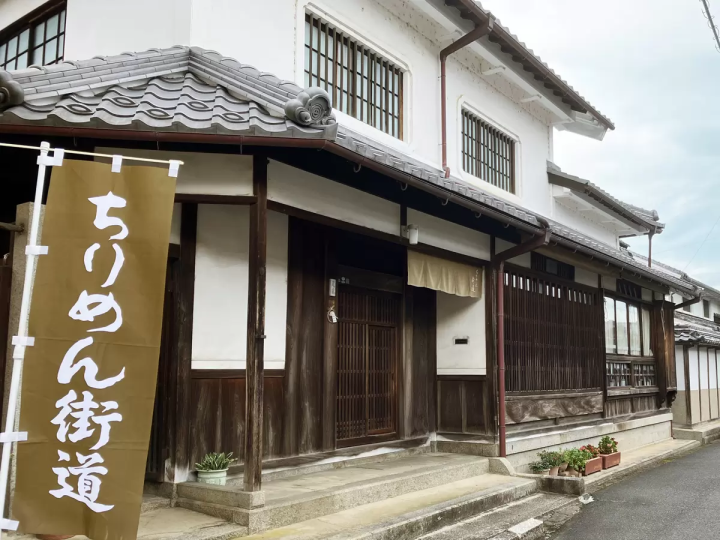
After the meal, we took a leisurely 20-minute bike ride, then headed to Chirimen Kaido, passing through the former Kayo Railway bicycle path. Chirimen Kaido is an old road in the Kayo district of Yosano Town, famous as an area that flourished from the Edo period to the early Showa period as a producer of Tango Chirimen, a high-quality silk fabric. The area retains its old-fashioned townscape, with townhouses, weaving factories, inns, sake breweries, and banks. It has been designated as an Important Preservation District for Groups of Traditional Buildings by the national government and is affectionately known as Chirimen Kaido.
Along Chirimen Kaido, many old buildings remain, including the Former Bito Family Residence, a Tango Chirimen merchant house built in 1863, and Izutsuya, a restaurant and inn that has been in operation since the Meiji era. The Former Bito Family Residence in particular is a valuable building that combines merchant architecture, storehouses, and early Showa-era Western-style architecture based on the large farmhouses of the time. It is currently designated a Kyoto Prefecture Tangible Cultural Property and is open to the public as a representative building of the Chirimen Kaido. Furthermore, it was announced in November that it would also be designated a National Important Cultural Property! You can see and experience the romance of history in the shoin-style tatami room, uchigura (storehouses), and the Western-style building that was added on the second floor.
Stroll along Chirimen Kaido in your dream kimono
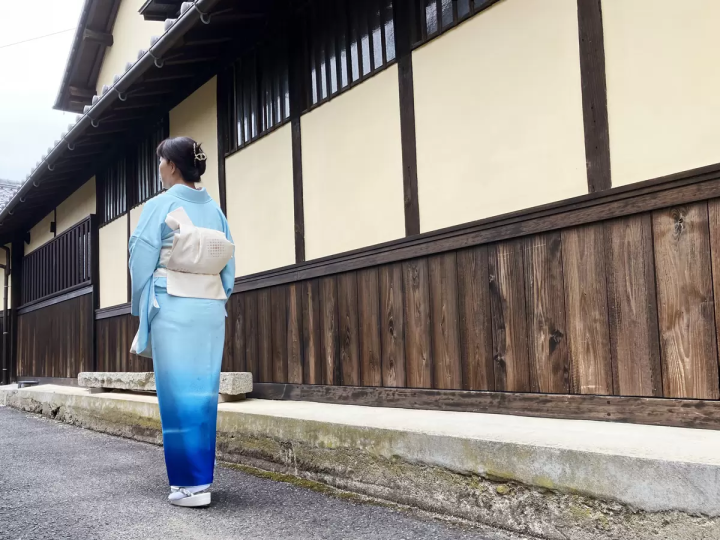
For girls' trips, we recommend getting dressed in a kimono and strolling along Chirimen Kaido.
We'll stroll gracefully in a kimono along the Chirimen Highway, which we just rode on an e-BIKE. Walking in a Tango Chirimen kimono, you'll find it feels lighter than you'd expect. It's soft to the touch, and there's no static electricity that can make it difficult to move your hem. The greatest feature of Tango Chirimen is the fine unevenness on the surface of the fabric, called "shibo." Not only is it supple and wrinkle-resistant, but the diffuse reflection of light also enhances the depth of the color. Walking in a kimono along the old highway lined with townhouses feels like traveling back in time to the Edo period. Imagine the women who walked these streets in Tango Chirimen kimonos back then, and why not take photos here and there, pretending to be the wife of a chirimen merchant?
We'll stroll gracefully in a kimono along the Chirimen Highway, which we just rode on an e-BIKE. Walking in a Tango Chirimen kimono, you'll find it feels lighter than you'd expect. It's soft to the touch, and there's no static electricity that can make it difficult to move your hem. The greatest feature of Tango Chirimen is the fine unevenness on the surface of the fabric, called "shibo." Not only is it supple and wrinkle-resistant, but the diffuse reflection of light also enhances the depth of the color. Walking in a kimono along the old highway lined with townhouses feels like traveling back in time to the Edo period. Imagine the women who walked these streets in Tango Chirimen kimonos back then, and why not take photos here and there, pretending to be the wife of a chirimen merchant?
Try your hand at silk art, cultivated on Chirimen Kaido
After strolling along Chirimen Kaido, return to the former Kaya Town Hall for a weaving experience. Choose your favorite color of silk thread and weave a coaster on a hand loom. Your original handwoven coaster will be completed in about 50 minutes. You can also try your hand at making a braided friendship bracelet using 100% silk thread. Using a table called a round stand, you will move four strands of thread in order to weave the piece. Why not enjoy this experience with the whole family?
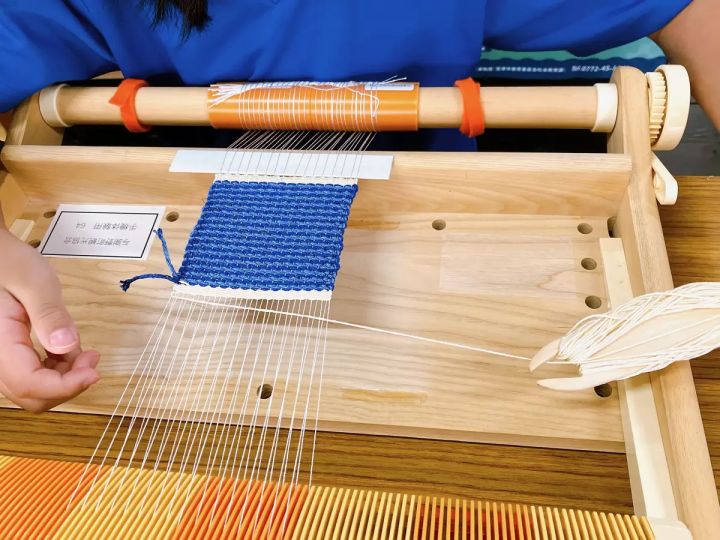
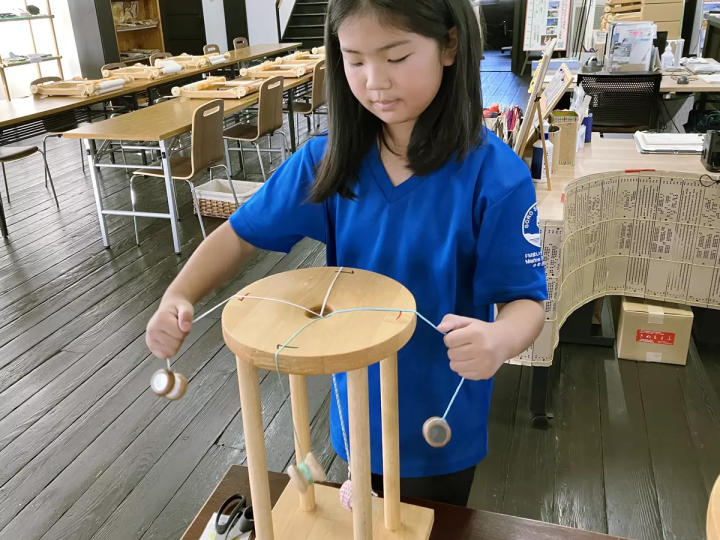
Rent a bicycle at Yosano Station and take a stroll along Chirimen Kaido, a designated Japanese Heritage Site. The tourist information center also offers fun activities for families. Enjoy a retro experience.
Spots introduced in this itinerary
The Kyoto by the Sea area is about 99 km from Kyoto city, and can be reached in as little as 90 minutes by car or bus. It is close by and offers another side to Kyoto, with a different atmosphere from the city. Once upon a time, there was an ancient nation (Taniha no Kuni) with an advanced culture that was introduced from the continent, and it was also the secret stage of the creation of Japan. The Kyoto by the Sea area is filled with evidence of its origin, such as the legend of the descent of Toyouke-no-Okami, the oldest god of food, the demon legend of Mt. Oe, and the legend of the Dragon Palace. It is filled with the charms of Japan scattered throughout each era, such as Amanohashidate, which was the source of Kyoto culture that fascinates the world and was longed for by the people of the capital during the Heian and Muromachi periods, the Tango Chirimen Corridor woven with silk that has been spun for 300 years, the modern industrial heritage sites of Maizuru and Ayabe, the one-of-a-kind Ine Funaya landscape born from the work of fishermen, and Fukuchiyama Castle, which conveys the Warring States period to the present day. Furthermore, "Kyoto of the Sea" is a land of abundance, blessed with ingredients beloved by the god of food, such as seafood like Matsuba crab and Ine yellowtail, and rice and vegetables grown in pure water. Furthermore, its natural scenery, including the San'in Coast, a Global Geopark, and the mountains and rivers where gods, Buddhas and even demons reside, pique the curiosity of travelers, whose beauty will soothe their souls. It is a region where the culture of "valuing harmony" has lived on since ancient times, and where kind people are gracious and accommodating to travelers when they encounter it. Everything you taste and encounter here is connected to Japan's roots. This is Kyoto of the Sea, the source of Japan that lives in the heavens, earth, mountains and seas.
The contents on this page may partially contain automatic translation.



Special Features
More