
Sand speaks. Experience the world's greatest artistic creations at the Fukiagehama Sand Festival in Minamisatsuma, Kagoshima
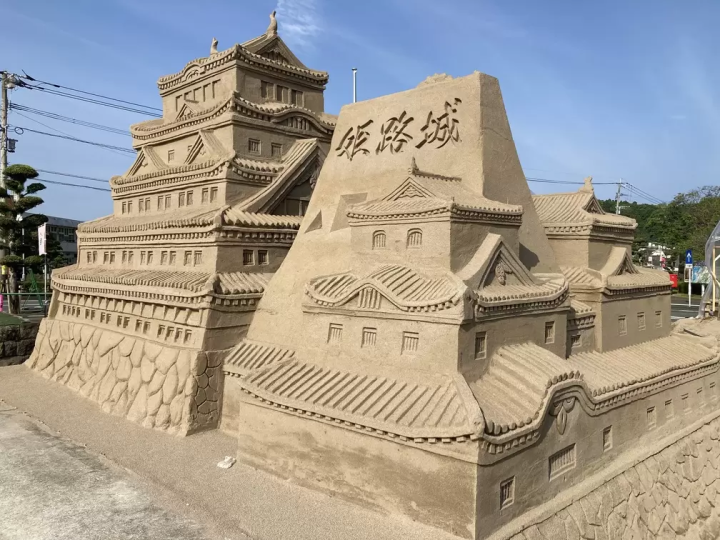
Have you ever seen a sand sculpture up close? Minamisatsuma City is located on the west coast of the Satsuma Peninsula in Kagoshima Prefecture. Here you'll find Fukiagehama, one of Japan's three largest sand dunes. The Fukiagehama Sand Festival is held on this vast canvas of sand.

Written by
[Kagoshima Prefecture] Minamisatsuma City is located on the southwestern tip of the mainland, and is a city full of food and natural resources. Filming location for the movie “You Only Live Twice” Ganjin Yamato Landing Site ● [Japan Heritage] Important Preservation District for Groups of Traditional Buildings “Kaseda Fumoto” ●Birthplace of Kurose Toji/Ata Toji (Minamisatsuma Shichizo Shochu) ●One Hundred Famous Mountains in Kyushu “Kinpozan” ●Mt. Nomadake, one of the three famous mountains on the Satsuma Peninsula
This service includes sponsored advertisements.
-
Table of Contents
- 1. The true nature of this "giant life" made only of sand and water
- 2. The uniquely Japanese aesthetic of "ephemerality"
- 3. The whole town becomes a museum. A newly reborn "satellite format"
- 4. Minamisatsuma's "food and culture" completes your trip
- 5. Sand sculpture as sustainable art
- On your next trip to Japan, head south on the map.
1. The true nature of this "giant life" made only of sand and water
The main attraction of the Fukiagehama Sand Festival is the gigantic sand sculptures, each several meters tall.
When tourists see it for the first time, they always ask, "Is it really made of just sand and water?"
A dialogue with nature without adhesives
Amazingly, these sand sculptures are made without any adhesives or other materials. All that is used is the fine sand from Fukiagehama Beach and ordinary water. The sand and water are placed in a special mold and then compacted repeatedly with heavy machinery and foot traffic to create a "sand block." Sculptors then carve out this solid block, starting from the top.
World-class artists gather
The reason this festival is called "one of the largest in Japan" is not just because of its size.
Top-class sand sculptors (professional sand sculptors) with world championship experience will gather from Japan and abroad to work together with local sand sculptors and local residents.
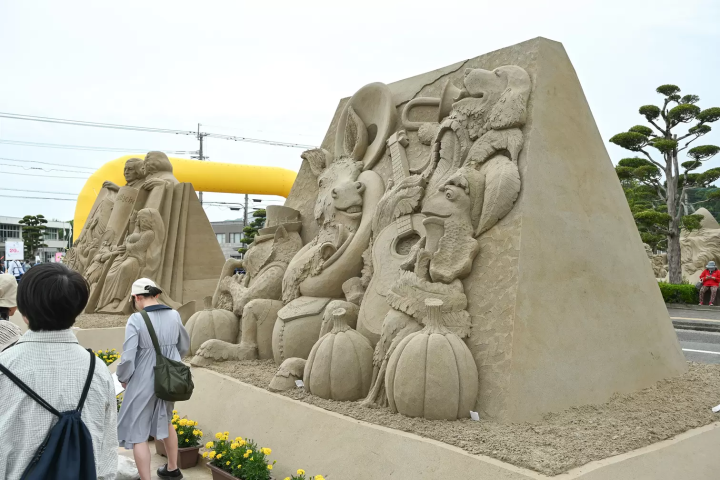
The pieces they carve over the course of several weeks are so detailed that it's hard to believe they're made from sand, with the texture of every strand of hair, the wrinkles in clothing, and even the sparkle in eyes all rendered in such detail.
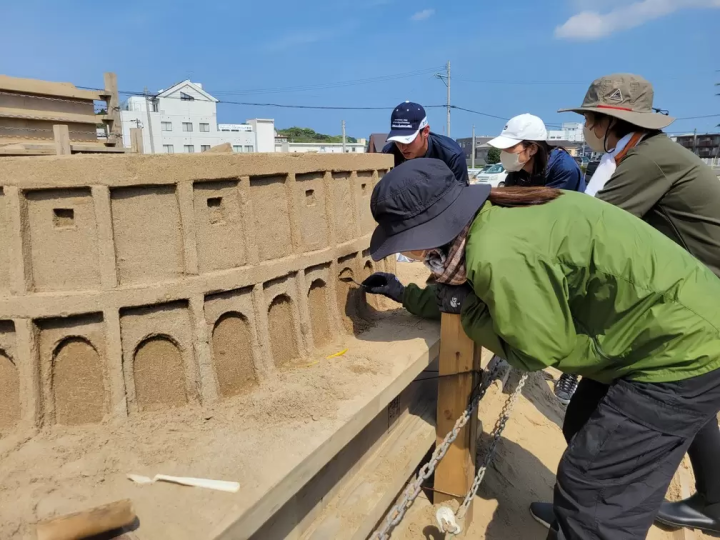
Sand sculpture production scene
2. The uniquely Japanese aesthetic of "ephemerality"
Once the event is over, the sand sculptures will be returned to the sand they came from. This characteristic of "no matter how beautiful they are, they will eventually disappear" is what makes them so appealing, as it connects with the "wabi-sabi" and "impermanence" that foreign visitors feel in Japanese culture.

Even the production process is entertainment
In addition to the actual festival, the "production period" is also a major highlight. The sound of sand being scraped in the silence, and the sense of tension as the shape gradually becomes apparent. Sand sculpture making is a perfect match for the modern travel style, which finds value not only in the beauty of the finished product, but also in the "process" leading up to completion.
3. The whole town becomes a museum. A newly reborn "satellite format"
In recent years, the Fukiagehama Sand Festival has not been limited to one venue. It has evolved into a walkable event, with sand sculptures scattered throughout the city of Kaseda, the central town of Minamisatsuma City.
A fusion of walking around the city and sand sculptures
Sand art suddenly appears on the eaves of shopping streets and in front of historic buildings. Tourists, map in hand, travel around the town as if on a treasure hunt. This allows visitors to experience the everyday life of the local area , not just simply viewing an event, but also shopping at a local supermarket or enjoying lunch at a long-established restaurant.
4. Minamisatsuma's "food and culture" completes your trip
After being impressed by the sand sculptures, fill your remaining senses with the rich blessings of Minamisatsuma. This city is packed with the "real Japan" that inbound tourists seek.
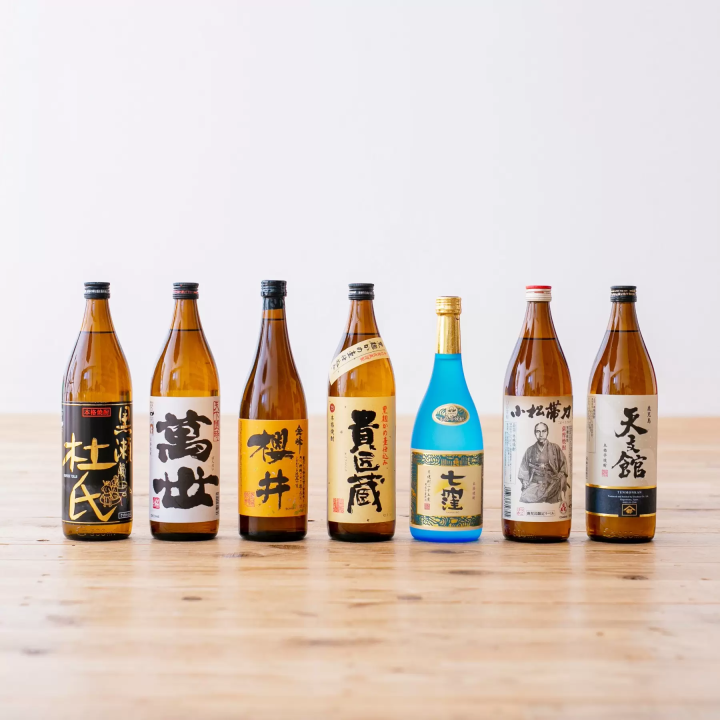
The holy land of shochu
Kagoshima is synonymous with authentic shochu. Minamisatsuma City is home to seven breweries that continue to preserve traditional methods. After viewing the sand sculptures, you can enjoy a local favorite. This is the real joy of visiting this area.

Street vendors and festivals
The event will be held in the city center, with many stalls and food stalls lining the streets, allowing you to enjoy local ingredients and cuisine.
It is filled with food that can be enjoyed by both children and adults while watching the scenery of a Japanese festival.
With black pork, chicken dishes, and local delicacies, you're sure to be full.
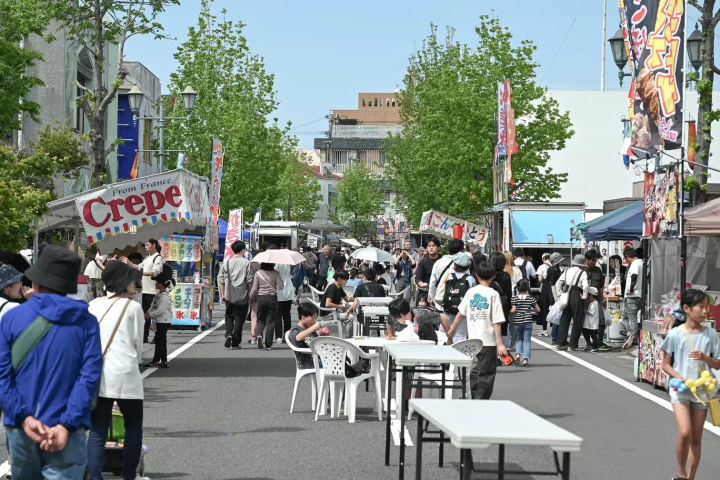
Shopping street scenery
5. Sand sculpture as sustainable art
"Sustainability" is a hot topic all over the world these days, and sand sculptures are the ultimate eco-friendly form of art.
The only ingredients are natural sand and water.
After the event ends, they will return to nature.
No waste is produced.
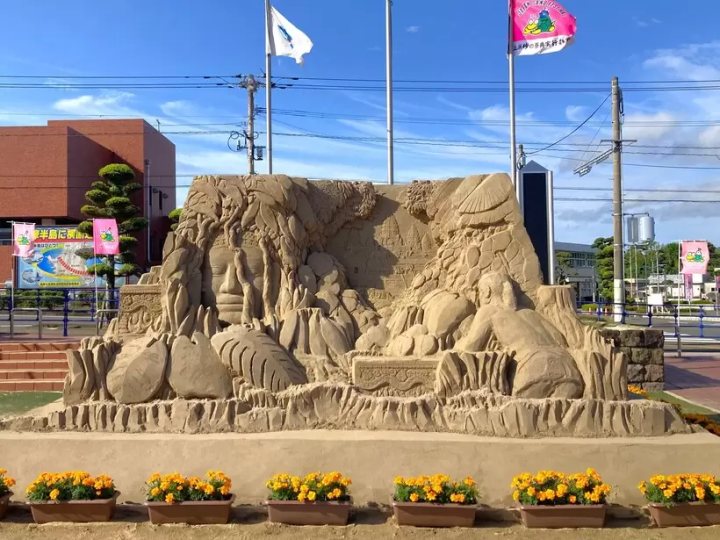
This clean attitude is a strong motivation for conscious global travelers to visit the place. Participating in the Fukiage Beach Sand Festival is synonymous with taking part in a culture that loves, protects, and enjoys nature.
On your next trip to Japan, head south on the map.
Japan's Golden Route (Tokyo, Kyoto, Osaka) is not the only place to visit. Witness the "sand art" that appears for a few weeks and then disappears in Minamisatsuma City, at the southern tip of Kagoshima, Kyushu.
It's sure to be an experience of a lifetime, with a scale that can't be captured in a photograph, the smell of the wind that can only be experienced there, and the warm hospitality of the local people.
Before the sand changes shape, why not write your story in Minamisatsuma City?
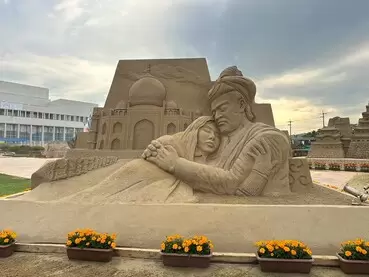
[Kagoshima Prefecture] Minamisatsuma City is located on the southwestern tip of the mainland, and is a city full of food and natural resources. Filming location for the movie “You Only Live Twice” Ganjin Yamato Landing Site ● [Japan Heritage] Important Preservation District for Groups of Traditional Buildings “Kaseda Fumoto” ●Birthplace of Kurose Toji/Ata Toji (Minamisatsuma Shichizo Shochu) ●One Hundred Famous Mountains in Kyushu “Kinpozan” ●Mt. Nomadake, one of the three famous mountains on the Satsuma Peninsula
The contents on this page may partially contain automatic translation.
Top Articles


Special Features
More








![[Izu, Shuzenji Onsen] Shuzenji hydrangeas adorn the garden of the inn "SORA Togetsuso Kinryu"](https://resources.matcha-jp.com/resize/720x2000/2024/06/25-185079.webp)
