Plant-Based Dyeing Experience at Atelier Shimura in Tokyo
Experience natural dyeing at Atelier Shimura in Tokyo, where traditional Japanese craftsmanship, seasonal plants, and silk come together in a hands-on workshop.

Written by
Tokyo
English editor at MATCHA, Hinton has been living in Japan since 2018, having previously spent a year here as a high school exchange student. She enjoys traveling around Japan, exploring local history and culture, and tasting craft beers from different prefectures along the way.
This service includes sponsored advertisements.
Experience Traditional Plant-Based Dyeing in Tokyo
Japan's traditional crafts are celebrated worldwide for their exceptional quality, intricate complexity, and the devotion of their artisans. Through Wabunka, travelers can move beyond passive observation and step directly into this living heritage alongside master craftspeople.
We had the privilege of joining a traditional plant-based dyeing (kusakizome) workshop at Atelier Shimura in Tokyo. Here, the legacy of Fukumi Shimura—celebrated textile master and Living National Treasure of Japan—continues to thrive.
From the earthy scent of raw botanicals to the fluid movement of silk as it absorbed the rich dye, every moment offered a calming, grounding connection to nature.
Participating in this delicate process provided an unforgettable, firsthand appreciation for how traditional Japanese craftsmanship transforms natural elements into living color.
-
Table of Contents
- Atelier Shimura: Masters of Natural Color
- The Colorful Art of Plant-Based Dyeing: Connecting with Earth
- Appreciating Color
- Silk Weaving Experience
- My Thoughts on This Unforgettable Experience
- Connecting with Nature through Craft
Atelier Shimura: Masters of Natural Color
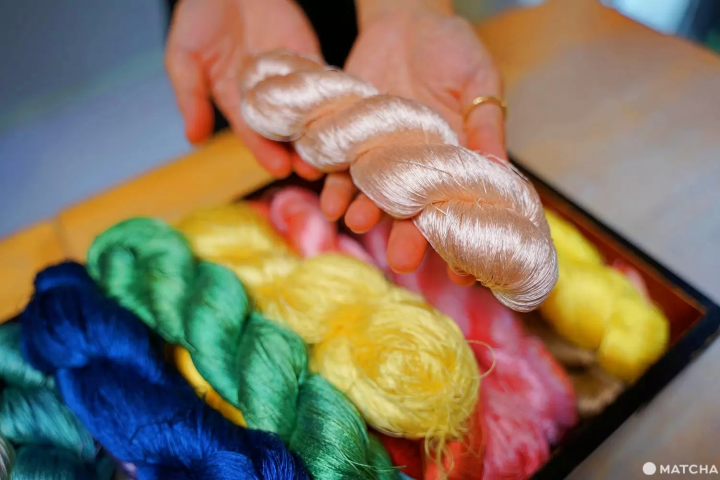
Atelier Shimura’s core business centers on crafting kimonos by using traditional kusakizome (natural plant-dyeing) to dye threads and fabrics, and tsumugi-ori (hand-spun silk weaving) techniques.
The brand was established in 2015 by Shoji Shimura to preserve and promote the extraordinary legacy of his grandmother, Fukumi Shimura—a celebrated textile master designated a Living National Treasure of Japan in 1990 for her revival of traditional plant-dyeing methods. Built around her life’s work, Atelier Shimura shares the beauty of authentic kimonos with the world.
Headquartered in Kyoto, the company expanded to Tokyo in 2017 with a workshop and gallery space in Setagaya Ward. During our visit, we experienced the magic of plant-based dyeing firsthand, discovering how seasonal plants transform plain fabrics into bold, vibrant colors.
The nearest transit hub is Soshigaya-Okura Station on the Odakyu Line. From the station, Atelier Shimura is an 8-minute taxi ride or a 20-minute walk. If the weather is nice, I recommend walking, as it is nearly a straight path from the North exit of the station and many small local shops line the street, offering a view of everyday life in suburban Tokyo.
The Colorful Art of Plant-Based Dyeing: Connecting with Earth
Before dyeing begins, the artisan guiding you welcomes you over tea to share the history of Atelier Shimura and Living National Treasure Fukumi Shimura (an interpreter can be arranged for non-Japanese speakers).
Our guide, Ms. Taniguchi, first studied natural dyeing at university before apprenticing under Shimura, mastering both tsumugi-ori (hand-spun silk weaving) and traditional plant-dyeing as a professional artisan. Her deep expertise and warm conversation over tea immediately put us at ease, creating an open space to ask questions throughout the experience.
Dyeing, Weaving, and Combined Workshops
Atelier Shimura offers plant-based dyeing workshops at both its Tokyo and Kyoto locations, which can be combined with an optional silk weaving experience.
While the dyeing workshop takes about two hours, weaving takes a few hours. If you wish to try both on the same day, simply note it in your booking application; they can arrange a combined six-hour session, including a break. Prices vary depending on the experience selected.
If you would like, you can also request in advance to try on a Kimono!
Plant-Based Dyeing Experience
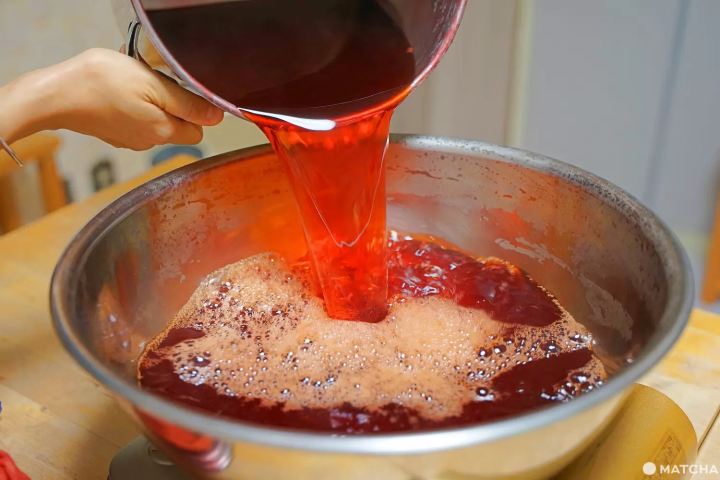
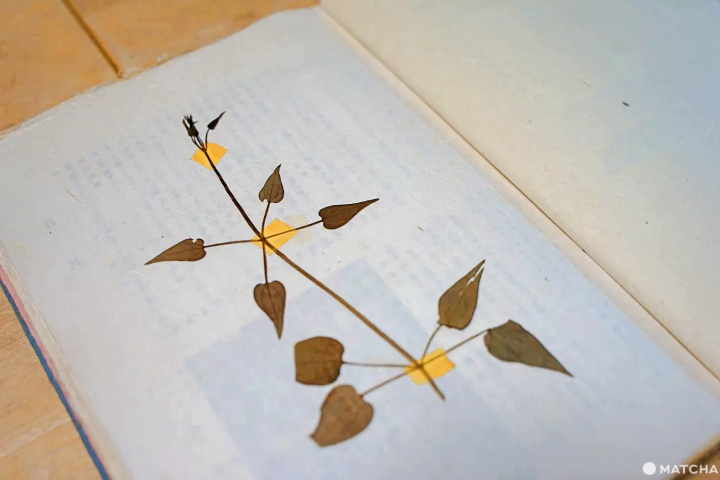
We chose the Plant-Based Dyeing Experience to create a custom silk scarf. Because workshops feature seasonal botanicals, our autumn session used stems from the Japanese madder plant, akane, to produce a rich red dye.
(Note: If you have a specific color preference outside its natural harvest time, you can request it in the comments of your online application for special arrangement).
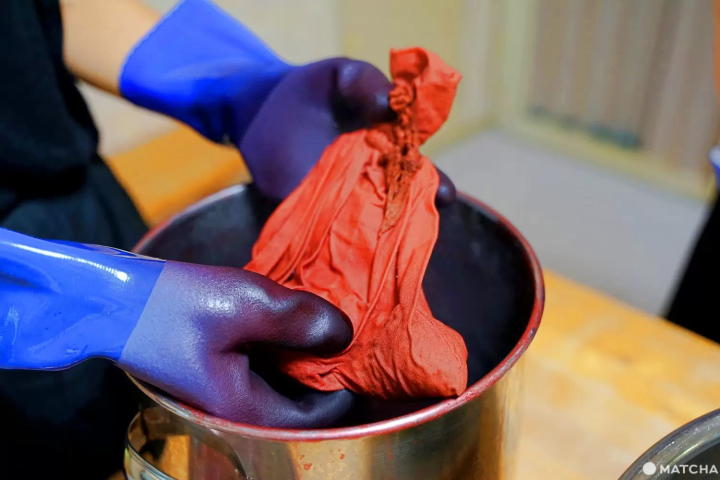
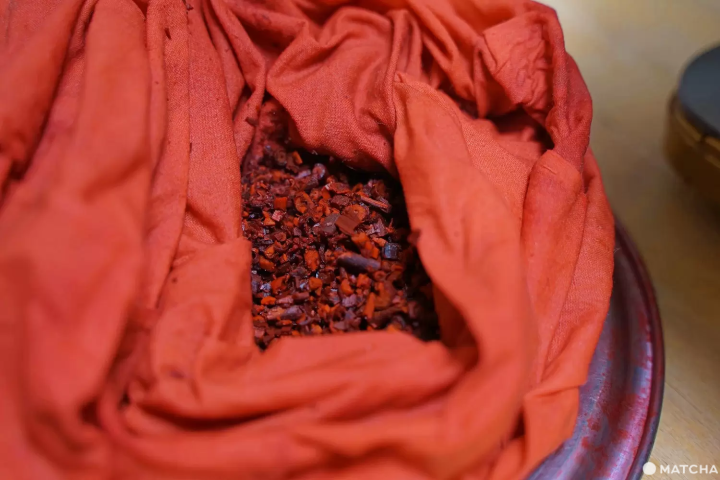
A pot of dye was brought out, and we were shown the Japanese madder that had been soaking in the hot water, producing the vibrant red dye.
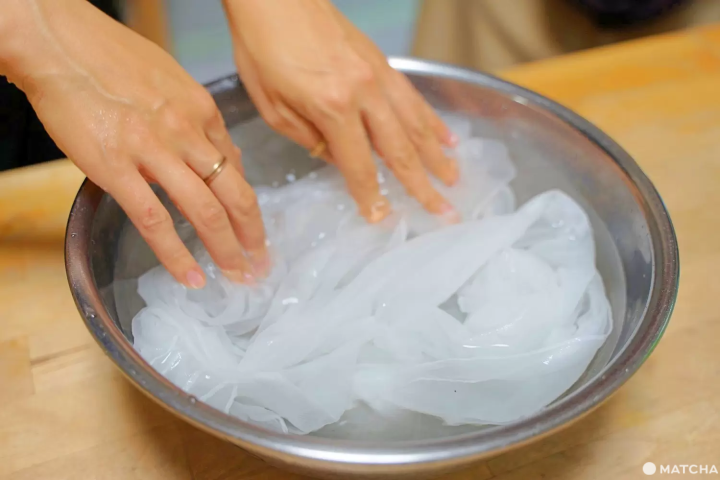
Before we began, Ms. Taniguchi placed the scarf in water to demonstrate proper technique—showing us how to circulate the silk gently and press out excess liquid without damaging the fibers. Her clear example made the handling process easy to grasp.
Protected by an apron and thick heat-resistant gloves, it was then time for me to submerge the white scarf into the hot red dye bath. I was initially nervous about spreading the fabric evenly, but Ms. Taniguchi stayed right by my side to monitor the pigment setting, instantly putting me at ease.
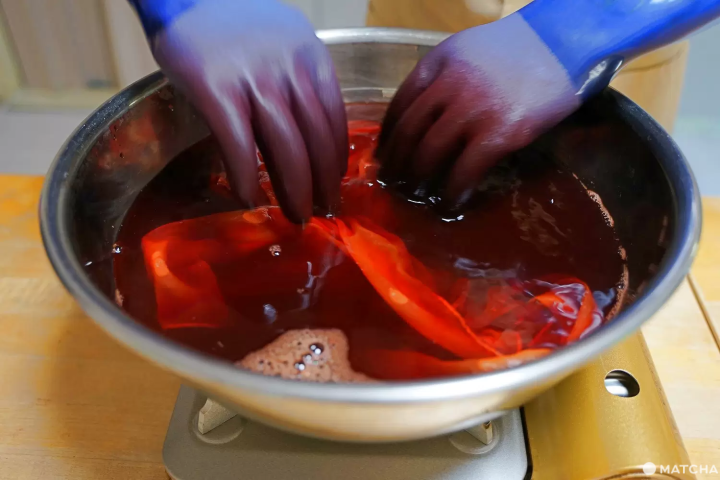
While mixing the scarf in the dye, I found the experience to be very calming. The warm steam from the pot of hot dye had the relaxing smell of herbal tea, similar to chamomile.
During the dyeing process, artisans clear their minds completely to focus entirely on the color unfolding before them, sharpening their physical senses. Ms. Taniguchi shared that she feels this experience is similar to meditation for her, and that during this process she enjoys "thinking of nothing". In a modern world filled with constant noise, this quiet focus on the present moment felt like a rare luxury.
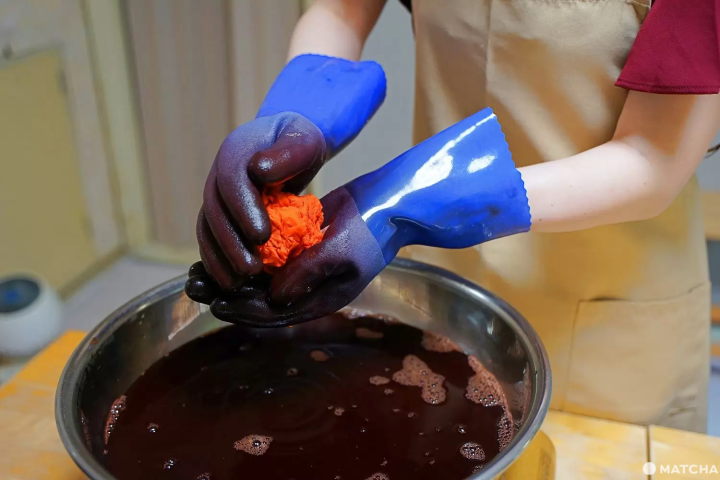
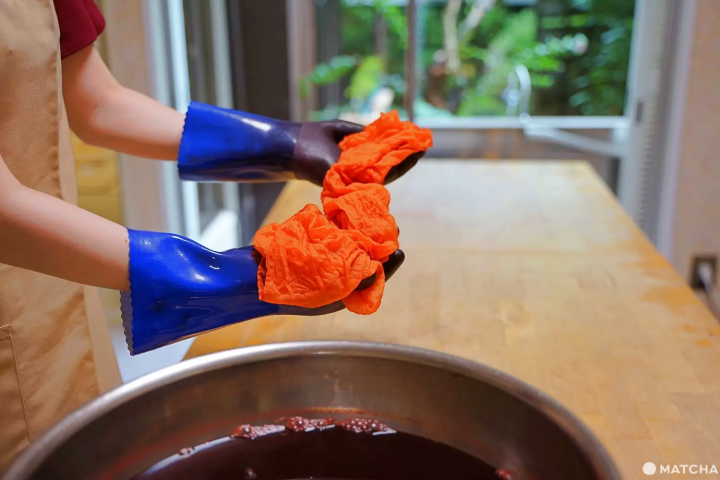
Once the pigment took hold, I gathered the silk into a gentle ball to press out excess liquid. Following Ms. Taniguchi's advice, I avoided twisting or wringing the fabric like a towel, which could break the delicate silk fibers.
Check the Color and Repeat the Process
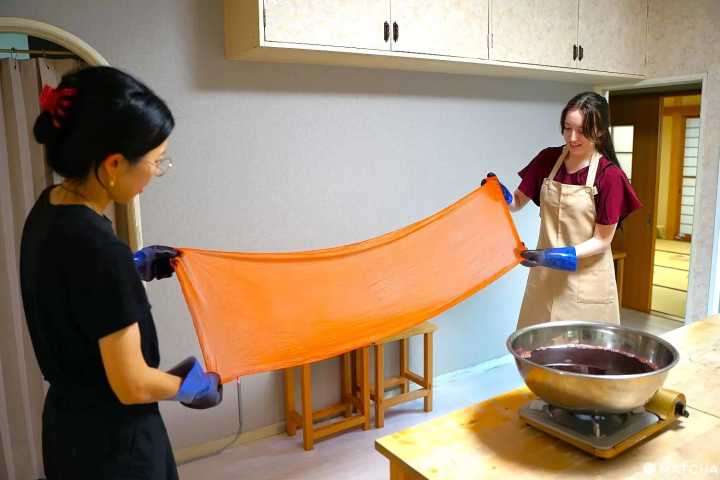
Together with Ms. Taniguchi, we then extended the fabric and took a look at the color. I was surprised at how bright the color was! The Japanese madder plant is classified as an herb, and the leaves and stem of the plant are green, so I was surprised that its roots could produce such a vibrant red color.
After taking a look at the color, the process of placing the scarf in the dye must be repeated about two more times (usually three times in total).
The Final Steps: Natural Mordant Used to Lock In the Color
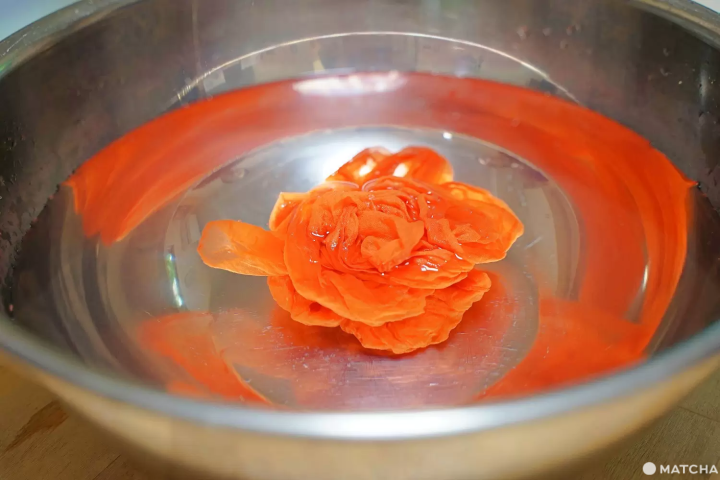
To set the pigment, the fabric is submerged in a bath of water dissolved with alum powder—a step repeated two to three times. The alum gives the water a noticeably silky texture; watching the vibrant crimson scarf swirl through the clear liquid felt like watching a goldfish swim gracefully through a pond, adding another deeply tranquil moment to the process.
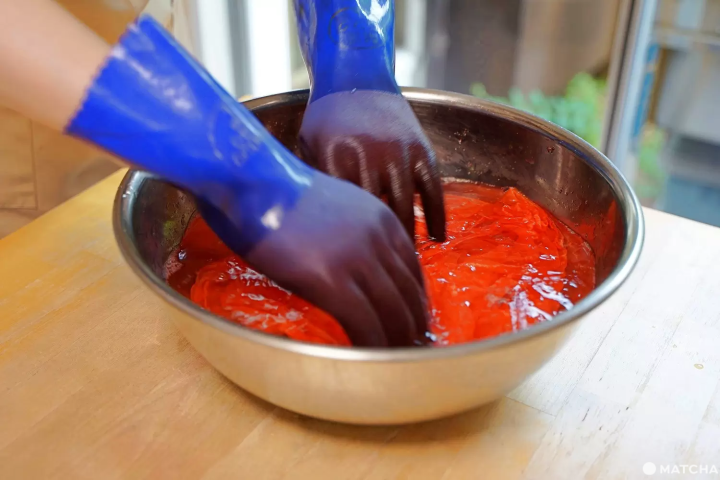
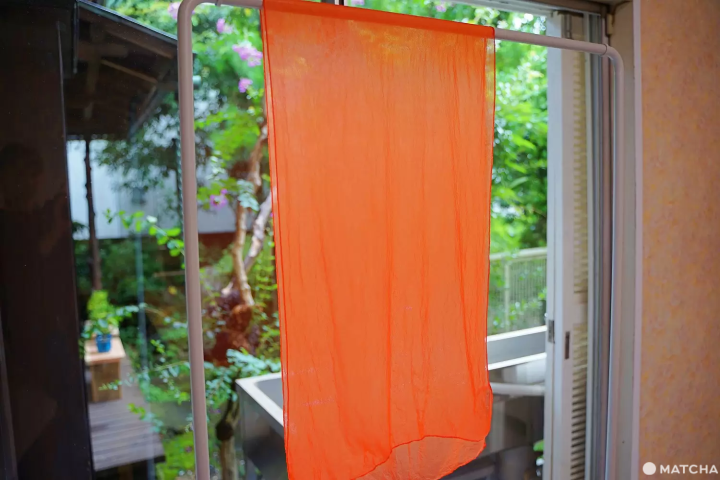
With this step, a fascinating union of three elements of nature: botanical (plant dye), animal (silk), and mineral (alum). After dyeing, the fabric is briefly exposed to sunlight before being hung to dry completely in the shade.
More to Experience
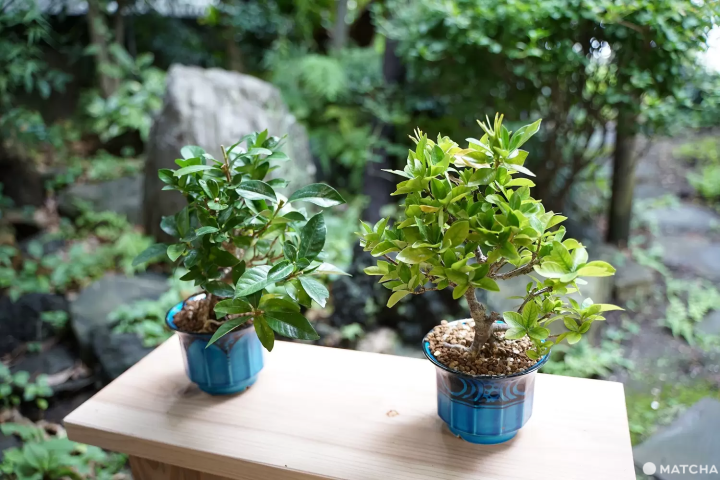
While your craft dries, there is still plenty to explore. Outside, a serene garden cultivates key dye plants, including loquat trees—a perfect spot to enjoy your tea on a pleasant day.
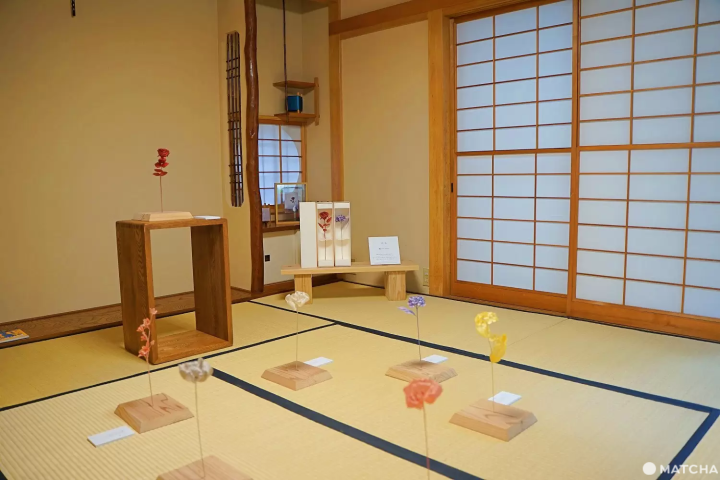
A traditional tatami room (washitsu) doubles as a rotating gallery space. During our visit, it featured an exhibition of handcrafted paper origami flowers: "hananowa," produced by Gifu Product Development Laboratory (GPDL).
Framed by beautifully designed wooden beams, the room itself feels like a work of art, offering guests a tranquil space to relax and experience authentic Japanese architecture.
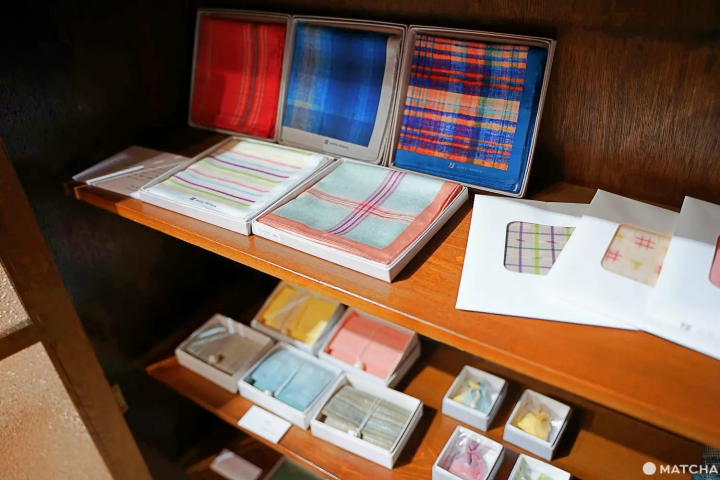
Before leaving, be sure to browse the shop, which features artisanal goods handcrafted by Atelier Shimura.
Each piece—from silk accessories to books detailing their master craft—showcases the rich, organic beauty of traditional kusakizome dyeing, offering meaningful keepsakes and souvenirs.
Appreciating Color
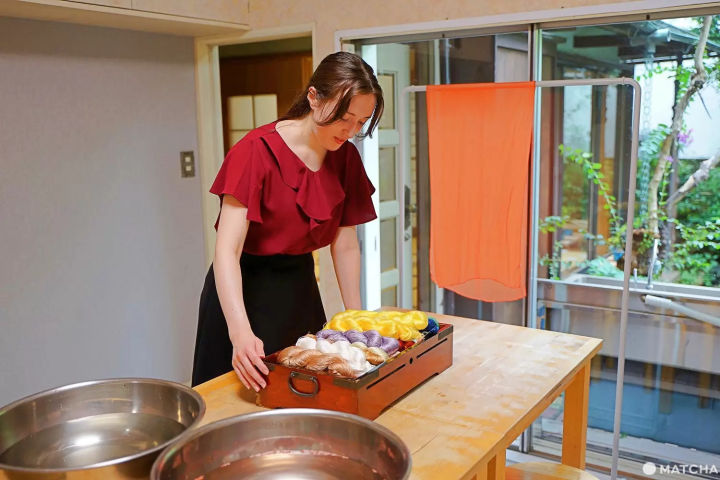
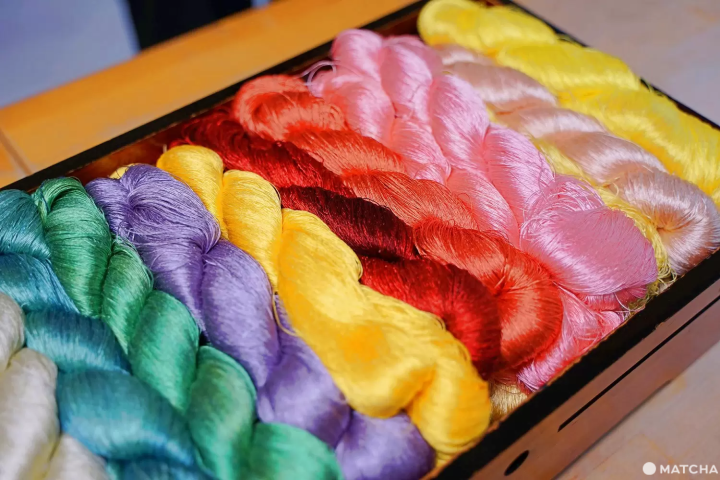
At the end of the experience, visitors can view a display of beautifully dyed thread samples, demonstrating how different plant materials yield a rich spectrum of subtle shades within a single color family.
Ms. Taniguchi’s favorite dye is shikon (a deep purple), cherished for the mesmerizing shift in hue during the dyeing process. She explained that because natural plant dyes reflect the organic world, even contrasting pairs like yellow and purple harmonize effortlessly to elevate one another. When woven together, threads of red, yellow, purple, and blue merge into a singular textile that evokes the luminous beauty of a twilight sky.
We did our experience in mid-September, when Japanese madder is in season. Evoking the deep red of an autumn sunset, Atelier Shimura refers to akane as a "mother color". Compared to other natural reds (such as safflower or sappanwood), it produces a softer, more grounded, and soothing hue.
The dye is extracted from the roots of the Japanese madder plant. Using the underground root portion of the plant is believed to be what gives the shade its earthy, calming character. Because native Japanese madder has become virtually extinct, Indian madder root is used today.
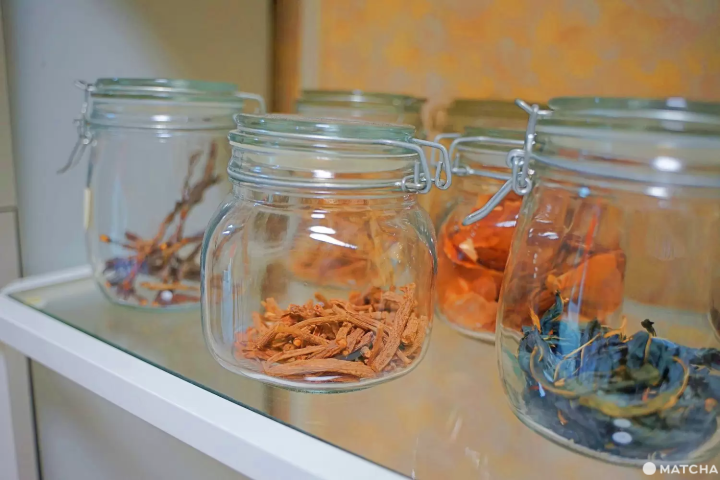
Historically, in the Edo period (1603 to 1868), there were over 48 distinct shades of brown and more than 100 shades of gray!
Natural plant-dyeing is an ever-evolving craft where traditional native sources sometimes fade away or integrate global varieties.
Silk Weaving Experience
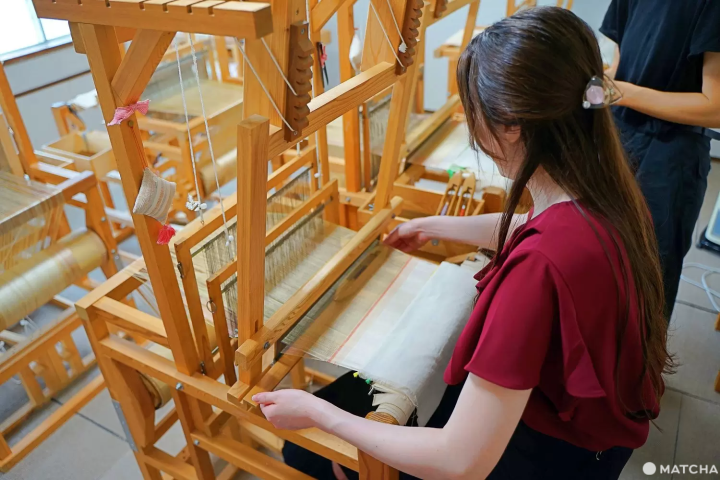
Atelier Shimura also offers the opportunity to weave your own fabric on a traditional loom. After you select your preferred thread colors, an artisan guides you through threading and operating the loom.
Because each natural shade is so vibrant, even introducing a single thread of a new color completely transforms the character of the woven textile.
My Thoughts on This Unforgettable Experience
Nestled in a quiet Tokyo neighborhood, Atelier Shimura offers a serene sanctuary to fully immerse yourself in the craft.
The workshop reconnected me with the natural world: the herbal aroma of steaming akane dye, the gentle feel of silk, and the mineral solution of the mordanting rinse. I was also reminded of how vibrant the natural world is.
Seeing the bright red color of the scarf I dyed was an experience that gave me a new way to enjoy nature's natural color at each step of the process.
Also, the hospitality of Atelier Shimura and Ms. Taniguchi made me feel very welcome. Her instructions were clear and easy to follow, and she helped me every step of the way. She even asked me questions about where I was from, and I felt like she was genuinely happy to welcome us and share her craft.
Connecting with Nature through Craft
The Plant-Based Dyeing Experience at Atelier Shimura is a deeply relaxing retreat for anyone fascinated by textiles, traditional craftsmanship, or Japanese kimono culture. It is equally rewarding for nature lovers seeking a tranquil connection to the earth.
Accessible and welcoming, this immersive workshop offers an unforgettable hands-on cultural activity for solo travelers, couples, and families with children alike.
Read also



In cooperation with Atelier Shimura
English editor at MATCHA, Hinton has been living in Japan since 2018, having previously spent a year here as a high school exchange student. She enjoys traveling around Japan, exploring local history and culture, and tasting craft beers from different prefectures along the way.


Special Features
More