Zenkoji Temple, Nagano's Sacred Site: Legends and Traditions

Discover Nagano's sacred Zenkoji Temple. Explore the legendary black ox, walk the pitch-black Okaidan Meguri tunnel, and find unique Shinshu souvenirs.

Written by
Ah Hei, a travel author and sharer of travel memories, has been deeply in love with everything about Japan since youth. Even after visiting numerous prefectures, her journey never stops—she is always looking to uncover a different side to these places.
This service includes sponsored advertisements.
Zenkoji Temple: A Spiritual Landmark in Nagano
Among the places worth exploring in Nagano, Zenkoji Temple leaves a deep impression, with its quiet aura of serene solitude.
Zenkoji is not only one of the oldest temples in Japan, but also a focal point of Japan's spiritual faith. Read on to learn about Zenkoji Temple's history, cultural significance, and features.
-
Table of Contents
- The History and Legends of Zenkoji Temple
- A Famous Pilgrimage Site
- Highlights of the Zenkoji Main Hall
- Guardians of the Six Realms
- Sandals of Devotion and Healing
- Led to Enlightenment by an Ox
- Bring Home a "Happy Ox" from Zenkoji Temple
The History and Legends of Zenkoji Temple
Founded in 642 AD, Zenkoji predates the emergence of organized schools of Japanese Buddhism, making it one of the oldest active temples in the country.
Nagano City itself did not exist first; it developed entirely as a monzen-machi (a town built in front of a temple) to support the millions of pilgrims who flocked there over the centuries. Beginning as a small settlement at the temple's entrance, Nagano eventually achieved official city status in 1897.
The temple’s primary objects of worship are the Amida Tathagata, Kannon Bodhisattva, and Mahasthamaprapta Bodhisattva. Collectively known as the Zenkoji Amida Triad, this group is designated an Important Cultural Property of Japan.
The Amida Tathagata statue is said to be the very first Buddha image brought to Japan, arriving from the Korean Kingdom of Kudara in either 522 or 552 AD. Today, it is revered as a Hibutsu (Hidden Buddha). Wrapped like a mummy and stored in a box behind the main altar, it is perpetually kept from public view.
Because the original statue is strictly hidden, a replica called the Maedachi Honzon serves as a stand-in. Every seven years, the temple hosts the massive Gokaicho Festival. During this event, the replica is briefly displayed to the public, drawing millions of visitors who come to touch a sacred wooden pillar linked directly to the statue.
The original statue’s backstory is rooted in historical turmoil. During an ancient war over whether Japan should adopt Buddhism, the statue became the center of a dispute between two feuding clans and was thrown into the Naniwa canal.
It was later rescued by Yoshimitsu Honda of Shinano province (present-day Nagano), who first enshrined it in his home in 642 AD. The temple's name, Zenkoji, derives from the Chinese reading of his name, Zenko.
Architectural Features
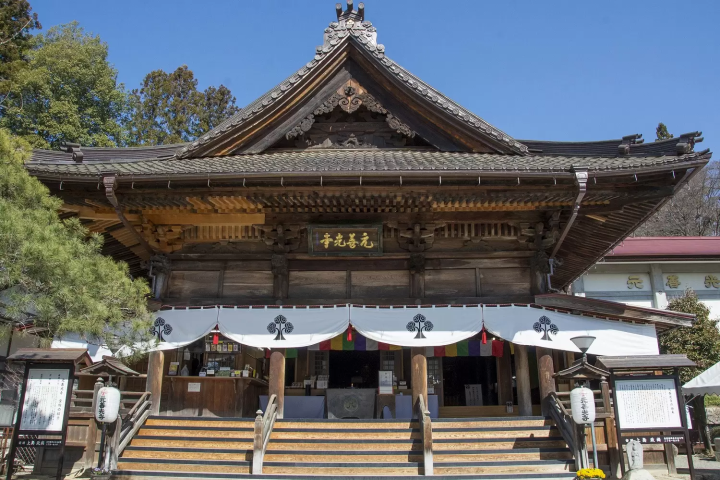
The original building of Zenkoji Temple, located in Iida City. Photo by Pixta
Due to its geographical setting, Zenkoji is also known as Shinshu Zenkoji or Shinano Zenkoji.
Zenkoji Temple originally stood in what is now Iida City, but was later relocated to Nagano City amid the shifting tides of history, where it has remained ever since.
The Main Hall is a designated National Treasure. Rebuilt in 1707 after numerous fires, it is a massive wooden structure built in the shumakutsu-zukuri style, meaning its roof resembles the shape of a T-shaped bell.
Zenkoji is incredibly large for an ancient wooden building, constructed with a double roof to withstand heavy Nagano winter snows.
A Sanctuary that Welcomed Women
Historically, many major Buddhist centers in Japan—such as Mount Koya or Mount Hiei—strictly banned women from entering or worshipping. Zenkoji was a revolutionary exception.
From its very inception, it welcomed women, offering them a direct path to salvation. To this day, the temple is uniquely co-managed by two leaders: a male head priest (Jushoku) and a female head priestess (Monshu), who represents the imperial lineage.
A Famous Pilgrimage Site
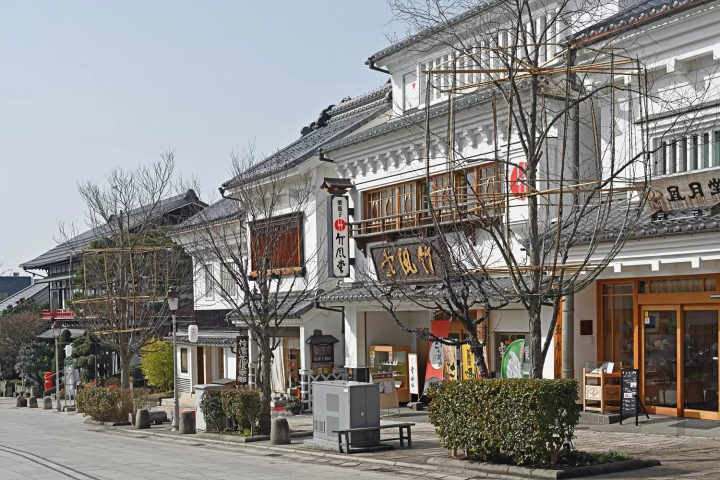
The street leading to Zenkoji. Photo by Pixta
Walking from the shopping street toward Zenkoji, visitors will find that the long avenue surprisingly conceals more than twenty sub-temples — some plainly visible, others waiting to be discovered.
Zenkoji was established before Japan had instituted any specific religious sects, so it naturally became a non-sectarian Buddhist temple. It is precisely this open, inclusive nature that allows it to accommodate so many small sub-temples within its grounds.
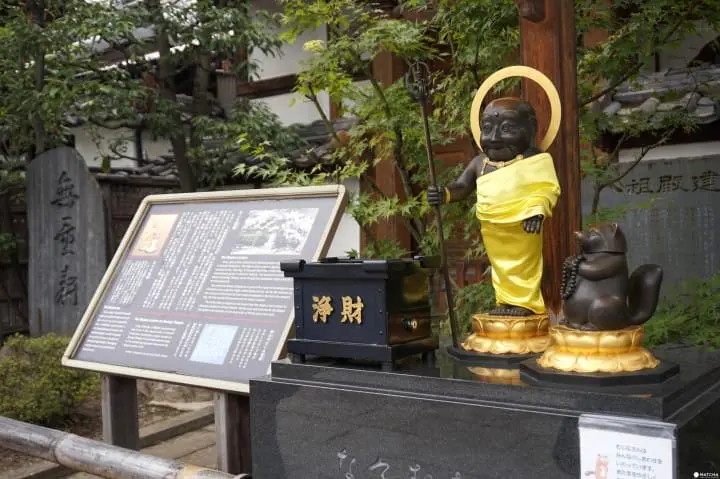
Beyond the shopping street and across the road stands Zenkoji. Here, visitors will find an intriguing stone monument flanked by a Buddhist statue and a tanuki (Japanese raccoon dog) statue.
Legend has it that a tanuki once transformed into human form to worship at Zenkoji, but became so physically and mentally at ease that its tail slipped out, giving it away.
Because Zenkoji has always welcomed both humans and animals alike, this tale became a beloved piece of temple lore. Blessed by the tanuki's presence, this spot is now regarded as a place to pray for business success and financial fortune.
The temple receives around 8 million visitors a year and is especially popular among women, who have historically always been welcomed there — fitting with its non-sectarian, all-are-welcome philosophy.
A Japanese proverb captures the esteemed place this temple holds in the hearts of the Japanese people: "Even if it is far, you must visit Zenkoji at least once."
Highlights of the Zenkoji Main Hall
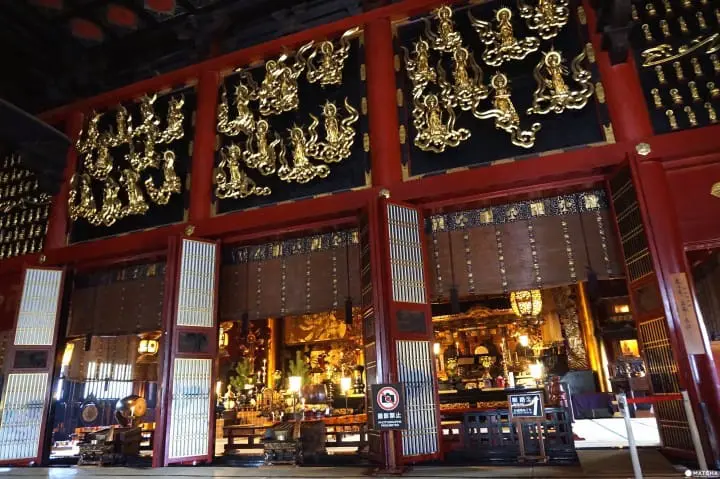
Please note that inside the Zenkoji Main Hall (Honden), photography is strictly prohibited. The few images shown here were captured as part of authorized media coverage.
The main hall is home to a worn, wooden statue of Binzuru, a physician disciple of the Buddha.
According to folklore, if you have an ailment—say, a sore knee or a headache—you rub the corresponding part on Binzuru's body, and then rub your own body to transfer his healing energy. Centuries of continuous human touch have rubbed the statue’s facial features completely smooth.
Okaidan Meguri: A Journey Through the Dark
After admiring the Main Hall and offering your prayers, you can experience the Okaidan Meguri—a pitch-black corridor walk designed as a form of spiritual training.
This narrow passage runs directly beneath the temple’s sacred, hidden deity (Gohonzon). Inside, the darkness is absolute. To navigate it, you must slide your right hand along the wooden wall and follow the footsteps of the person ahead of you, step by cautious step.
This sensory deprivation serves as a mini-pilgrimage to quiet the mind and purify your senses. If you are struggling with uncertainty or find yourself at a crossroads in life, walking through this passage offers a rare chance to let go of distractions.
The ultimate goal of the journey is to find the Key to the Pure Land (the Gokuraku no Jomae), a metal lock mounted on the wall directly beneath the deity.
It is believed that touching this key in the absolute dark grants salvation and a direct connection to the Buddha. The moment your hand finds the metal lock, your resolve clears, the weight on your shoulders lifts, and your heart finally finds peace.
Guardians of the Six Realms
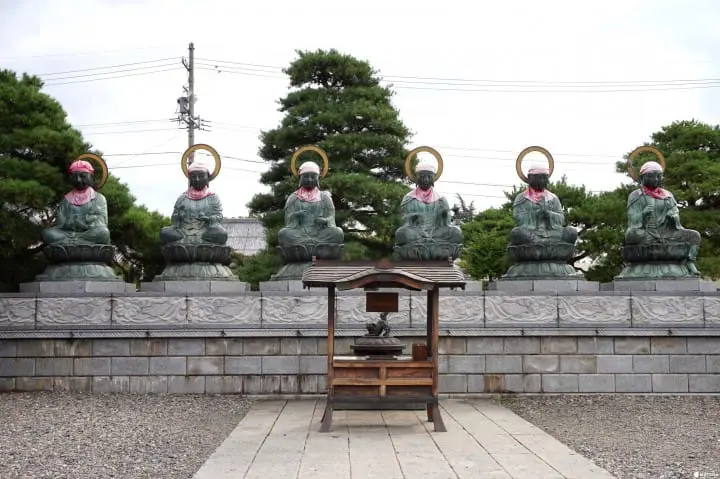
Standing just outside Zenkoji are six Jizo statues, representing the Six Realms of Reincarnation: the Heavenly Realm, the Human Realm, the Ashura Realm, the Animal Realm, the Hungry Ghost Realm, and the Hell Realm.
Enshrining these six Jizo statues here carries a profound intention: to deliver worshippers — and indeed all sentient beings — from the suffering of the Six Realms, and to guide everyone together toward the Pure Land.
Sandals of Devotion and Healing
At its heart, Zenkoji is a temple where visitors seek blessings for good health, personal safety, and everyday peace of mind.
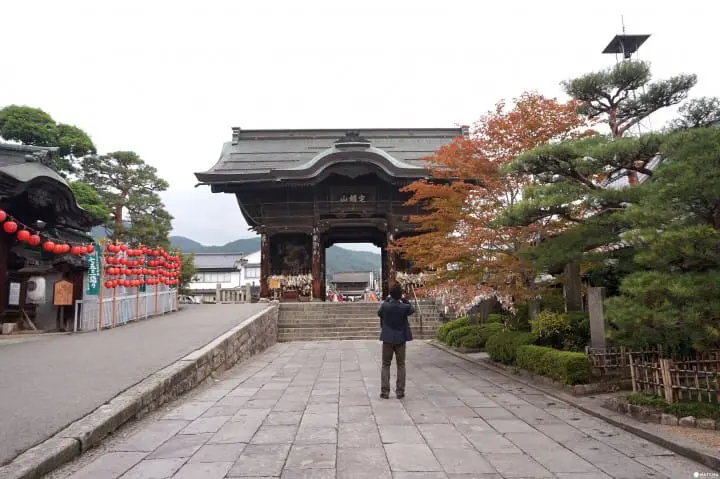
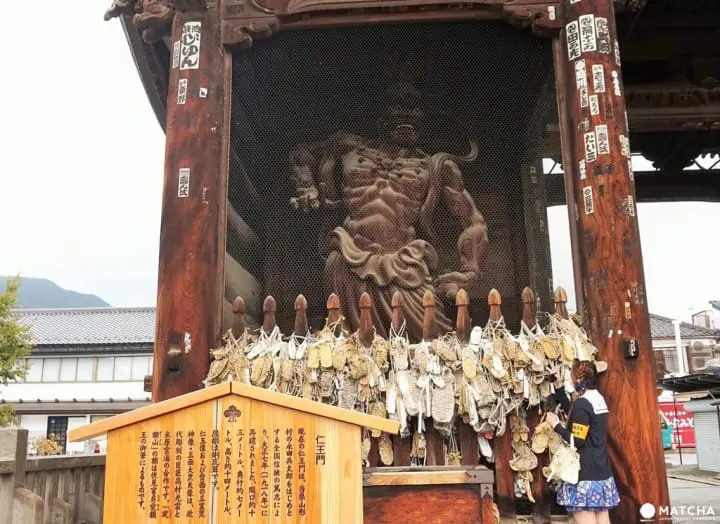
In front of the grand Niomon Gate, you will notice a display of straw sandals (waraji) hanging on both sides of the fierce guardian deities. Placed there by local residents and devoted pilgrims, each pair bears a heartfelt written wish, gently tied to the gate in the hope that it will come true.
Unlike standard ema (wooden wishing plaques), this display of hanging sandals is quite endearing and brings a warm smile to visitors' faces. It seems fitting that wishes for leg, foot, or limb health might be especially well-received here.
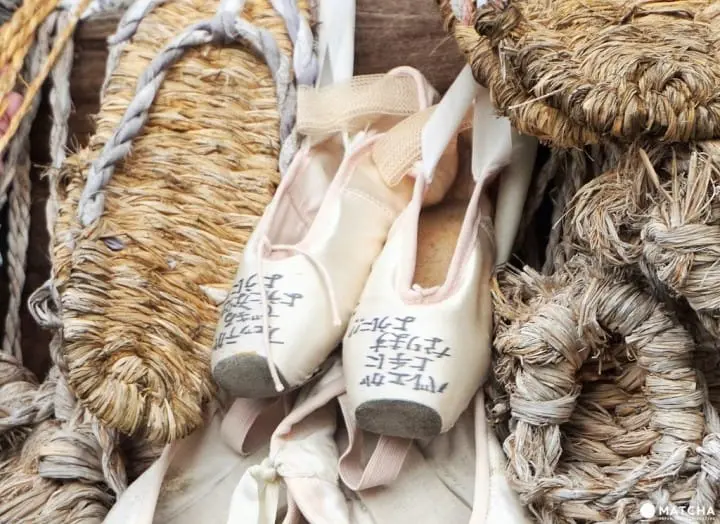
Surprisingly, ballet shoes can also be spotted hanging here. This is said to be a more recent phenomenon: people believe that hanging ballet shoes will bring blessings of success and smooth performances in dance competitions.
Truly, as times change, so do people's wishes — and fresh, novel offerings continue to emerge.
Led to Enlightenment by an Ox
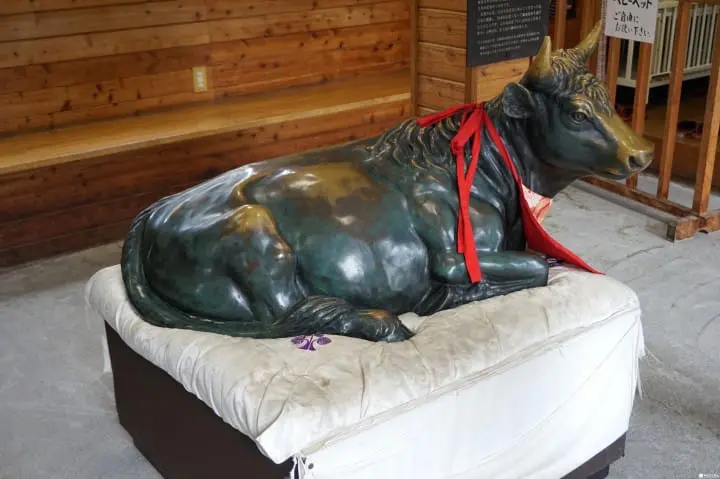
Inside one of the temple buildings stands a statue of a black ox, which visitors are welcome to touch.
The statue carries an intriguing backstory involving a bad-tempered old woman. After an ox snatched a piece of her cloth, she chased it in anger all the way to Zenkoji — and in doing so, stumbled upon this ancient temple.
There, she discovered that the ox had left the cloth near a Buddhist statue, an auspicious sign suggesting that things were about to take a turn for the better. That ox, once the source of her anger — and, in hindsight, amusement — is now honored as the black ox statue that sits peacefully here today.
Bring Home a "Happy Ox" from Zenkoji Temple
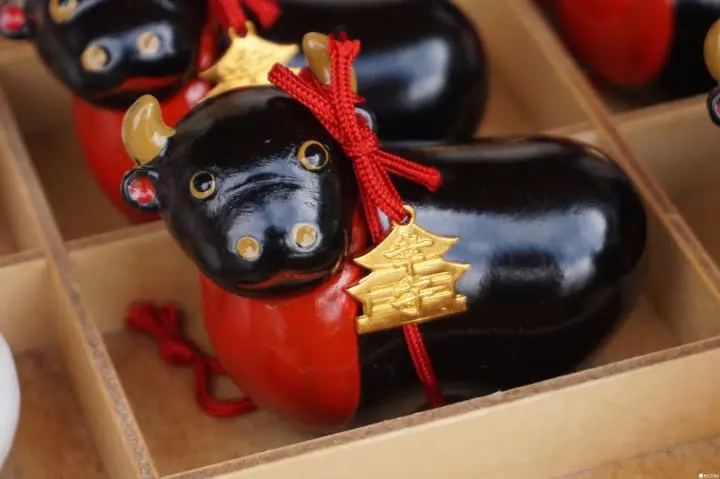
As a souvenir, you can purchase a Shiawase Ushimori (Happy Ox Amulet)—a wonderfully cute, ox-shaped omamori that doubles as a fortune slip (omikuji).
These charming clay figurines have a paper fortune tucked neatly inside their hollow bases. They are available in both classic black and pure white, and cost 700 yen each.
Not only do they make a lovely keepsake to protect your home, but they also serve as a sweet reminder of the temple’s legendary black ox that guided a wandering soul to happiness.
Enjoy Exploring Zenkoji Temple
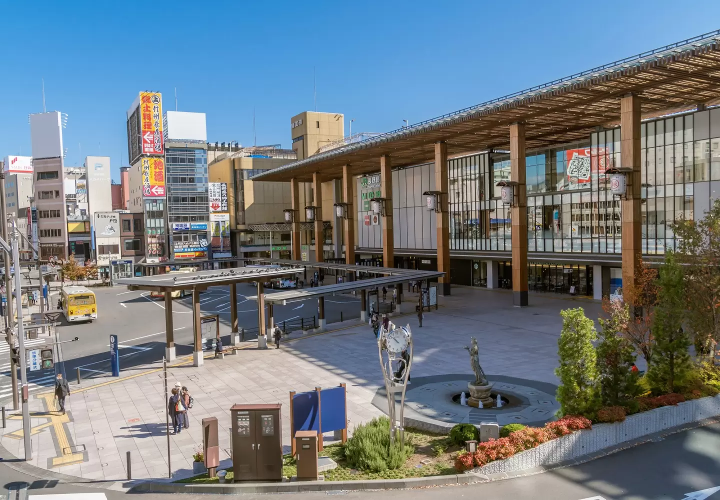
JR Nagano Station's Zenkoji Exit. Photo by Pixta
Before leaving Zenkoji, visitors are encouraged to stop by the incense burner in front of the temple hall and waft the smoke toward themselves, especially toward the head. It is said that doing so can boost wisdom and intellect.
Afterward, a stroll down the shopping street offers the chance to pick up Nagano specialties, such as Shinshu's famous soba noodles and miso — perfect choices for souvenirs.
Zenko-ji Temple
 491 Motoyoshicho, Nagano, Nagano City, Nagano Prefecture 380-0851
Nagano Zenkoji is a historic Buddhist temple in Nagano City that was founded over 1,400 years ago. It enshrines Zenkoji Nyorai, one of the three great Buddhas of Japan, and is visited by many worshippers. It is a famous spot that attracts many people from all over the country during the "Gokaicho" (opening ceremony).
491 Motoyoshicho, Nagano, Nagano City, Nagano Prefecture 380-0851
Nagano Zenkoji is a historic Buddhist temple in Nagano City that was founded over 1,400 years ago. It enshrines Zenkoji Nyorai, one of the three great Buddhas of Japan, and is visited by many worshippers. It is a famous spot that attracts many people from all over the country during the "Gokaicho" (opening ceremony).


Ah Hei, a travel author and sharer of travel memories, has been deeply in love with everything about Japan since youth. Even after visiting numerous prefectures, her journey never stops—she is always looking to uncover a different side to these places.


Special Features
More