Tokyo's November Tori no Ichi Fairs: 2026 Dates, Highlights
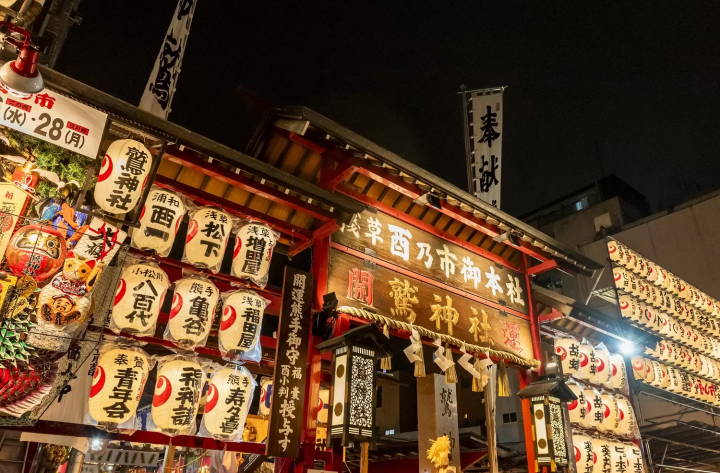
Tokyo's Tori no Ichi Fairs take place on November 7 and 19 in 2026! Explore festival hours, access, and lucky rake traditions in Asakusa, Shinjuku, and Fuchu.

Written by
This account is managed by MATCHA. We aim to provide useful information to our readers in an enjoyable manner.
This service includes sponsored advertisements.
Held in November! Tokyo's Tori no Ichi Fairs
Every November, a traditional festival called Tori no Ichi is held at shrines throughout Tokyo to pray for business prosperity and good fortune.
The festivals at Otori Shrine in Asakusa, Hanazono Shrine in Shinjuku, and Okunitama Shrine in Fuchu are known as the "Three Major Tori no Ichi Festivals of Eastern Japan."
In 2026, the Tori no Ichi Fairs will take place on November 7 and 19, with two markets: "Ichi no Tori" (First Fair) and "Ni no Tori" (Second Fair).
During the festival, shrine grounds come alive with colorful stalls selling decorative lucky rakes, lively vendor chants, and traditional hand-clapping ceremonies wishing for prosperity.
This guide introduces Tokyo's three major Tori no Ichi Fairs, including their dates, hours, access information, highlights, and tips on buying your own lucky rake.
-
Table of Contents
- What Is Tori no Ichi? Japan's Festival of Good Fortune
- Tokyo's Three Major Tori no Ichi Fairs: Dates and Hours
- 1. Asakusa Tori no Ichi: Otori Shrine and Chokokuji Temple
- 2. Shinjuku Tori no Ichi at Hanazono Shrine
- 3. Fuchu Tori no Ichi at Okunitama Shrine
- How to Buy a Lucky Rake: Prices, Traditions, and Display Tips
- Frequently Asked Questions About Tokyo's Tori no Ichi in 2026
What Is Tori no Ichi? Japan's Festival of Good Fortune

Tori no Ichi is a traditional Japanese festival held on the Days of the Rooster (Tori no Hi) each November. Visitors gather at shrines and temples to pray for good fortune, protection from misfortune, and business prosperity.
Dating back to the Edo period (1603–1868), the festival originated from markets selling farming tools and agricultural products, gradually evolving into the lively celebration seen today.
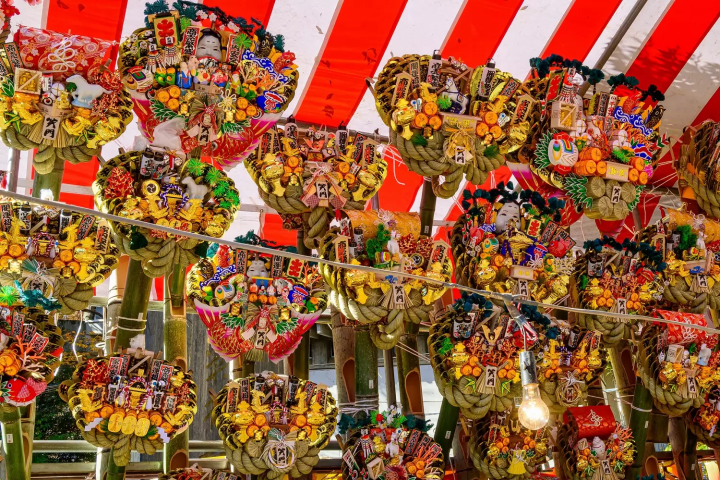
Kumade lucky rakes. Photo by Pixta
The festival's signature lucky charm is the kumade, a decorative rake symbolizing the act of "raking in" wealth and good fortune. Originally a farming tool, the kumade is now adorned with auspicious ornaments such as maneki-neko (beckoning cats), the Seven Lucky Gods, and gold coins.
When purchasing a kumade, you may experience tejime, a traditional hand-clapping ceremony performed with vendors to wish for prosperity. The rhythmic clapping, enthusiastic chants, and colorful displays of lucky rakes create the festive atmosphere that makes Tori no Ichi so memorable.
Tokyo's Three Major Tori no Ichi Fairs: Dates and Hours

The dates of Tori no Ichi vary each year, as the festival follows the traditional Japanese calendar's Days of the Rooster, which occur every 12 days.
Depending on the year, Tori no Ichi is held two or three times in November. The first festival day is called "Ichi no Tori," the second "Ni no Tori," and the third, when applicable, "San no Tori."
In 2026, Tori no Ichi will take place on Saturday, November 7, and Thursday, November 19. There will be only two festival days, with no San no Tori.
Tokyo's Major Tori no Ichi Fairs in 2026: Overview
| Location | Dates | Hours |
| Asakusa: Otori Shrine and Chokokuji Temple | Ichi no Tori: November 7 Ni no Tori: November 19 |
0:00 – 24:00 |
| Shinjuku: Hanazono Shrine | Ichi no Tori: November 6 - 7 Ni no Tori: November 18 - 19 |
Eve Festival (Zen'yasai): approx. 15:00 – 24:00 Main Festival (Honsai): approx. 12:00 – 24:00 |
| Fuchu: Okunitama Shrine | Ichi no Tori: November 7 Ni no Tori: November 19 |
Check the official website for detailed hours of the Kumade Market |
Although all three Tori no Ichi festivals take place on the same dates, their hours and celebrations differ.
Asakusa's Tori no Ichi runs continuously for 24 hours on each festival day, while Hanazono Shrine in Shinjuku holds an Eve Festival the day before each main festival.
For Okunitama Shrine in Fuchu, we recommend checking the official website for the latest Kumade Market hours before your visit.
1. Asakusa Tori no Ichi: Otori Shrine and Chokokuji Temple

Asakusa is lively year-round, but the atmosphere becomes even more festive during Tori no Ichi.
Held at Otori Shrine and the adjacent Chokokuji Temple, Asakusa's Tori no Ichi is one of Tokyo's most famous celebrations of the festival.
Numerous stalls selling decorative lucky rakes line the shrine and temple grounds, offering everything from small, charming designs to large, elaborately decorated creations.
Even if you don't plan to buy one, admiring these colorful rakes is a wonderful way to experience Japan's tradition of good-luck charms.
The surrounding streets also fill with food stalls, where you can enjoy Japanese festival treats while soaking up the lively atmosphere of Asakusa's historic downtown district.

Special goshuin (shrine and temple stamps) have also been offered at Asakusa's Tori no Ichi in previous years. If you collect goshuin, check whether limited-edition designs will be available in 2026.
For the latest details on designs, distribution hours, and availability, please refer to the official announcements from each shrine and temple.
2026 Asakusa Tori no Ichi: Event Overview
| Event | Details |
| Ichi no Tori | November 7, 2026 |
| Ni no Tori | November 19, 2026 |
| Hours | 0:00 – 24:00 |
| Venue | Otori Shrine, Chokokuji Temple |
| Map |
Otori Shrine Chokokuji Temple |
| Access |
Approx. 9 min walk from Iriya Station (Tokyo Metro Hibiya Line) Approx. 10 min walk from Minowa Station (Tokyo Metro Hibiya Line) Approx. 11 min walk from Asakusa Station (Tsukuba Express) |
| Official Website |
Otori Shrine Chokokuji Temple Tori no Ichi |
As Tori no Ichi attracts large crowds, we recommend using public transportation.
If you're combining the festival with sightseeing in Asakusa, you can easily walk to the venue from Asakusa Station on the Tsukuba Express Line.
Please note that Tsukuba Express Asakusa Station is separate from the Asakusa Stations served by the Tokyo Metro Ginza Line and Toei Asakusa Line. Be sure to check your route in advance.
Read also

2. Shinjuku Tori no Ichi at Hanazono Shrine

Located in the heart of Shinjuku's bustling entertainment district, Hanazono Shrine hosts one of Tokyo's largest Tori no Ichi festivals every November, known as the Dai-Tori-Matsuri (Grand Tori Festival).
In 2026, the festival will take place over four days, with an Eve Festival (Zen'yasai) and Main Festival (Honsai) held for both Ichi no Tori and Ni no Tori.
The first Eve Festival will be held on Friday, November 6, followed by the Main Festival on Saturday, November 7. The second Eve Festival takes place on Wednesday, November 18, with the Main Festival on Thursday, November 19.
What makes Hanazono Shrine's Tori no Ichi special is the chance to experience a lively Japanese tradition amid Shinjuku's modern cityscape.

During the festival, colorful lanterns illuminate the shrine grounds, while stalls display an impressive variety of decorative lucky rakes symbolizing business prosperity.
Food stalls also line the surrounding streets, attracting locals, tourists, and office workers heading home.
After dark, the glowing lanterns and colorful lucky charms create a magical atmosphere, revealing a different side of Shinjuku.
If you're visiting Shinjuku for shopping or dining in November, don't miss the chance to experience this lively traditional festival at Hanazono Shrine.
2026 Shinjuku Hanazono Shrine Tori no Ichi: Event Overview
| Event | Details |
| Ichi no Tori |
Eve Festival: November 6 Main Festival: November 7 |
| Ni no Tori |
Eve Festival: November 18 Main Festival: November 19 |
| Hours |
Eve Festival: approx. 15:00 – 24:00 Main Festival: approx. 12:00 – 24:00 |
| Venue | Hanazono Shrine |
| Map | Hanazono Shrine |
| Access |
Right by Exit E2 of Shinjuku-sanchome Station (Tokyo Metro Marunouchi and Fukutoshin Lines, Toei Shinjuku Line) Approx. 7 min walk from the East Exit of JR Shinjuku Station |
| Official Website | Hanazono Shrine |
Hanazono Shrine is conveniently located just outside Exit E2 of Shinjuku-sanchome Station.
Unlike Asakusa's Tori no Ichi, the festival at Hanazono Shrine does not run 24 hours. Operating hours vary between the Eve Festival and Main Festival, so be sure to check the schedule before visiting.
*The listed hours are estimates for festival stalls and may change depending on conditions on the day.
3. Fuchu Tori no Ichi at Okunitama Shrine
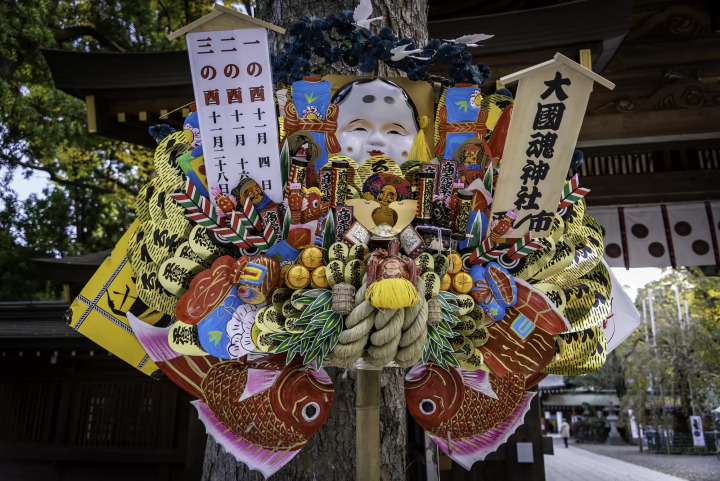
Photo by Pixta
Located in Fuchu, Tokyo, Okunitama Shrine is a historic shrine said to have been founded in 111 AD. It once served as the sosha (head shrine) of the former Musashi Province.
Every November, Otori Shrine, located within the grounds of Okunitama Shrine, hosts the traditional Tori no Ichi festival, attracting visitors who come to pray for business prosperity and good fortune.
Dating back to the Edo period (1603–1868), Tori no Ichi evolved from markets selling farming tools and agricultural products into one of Fuchu's beloved autumn traditions.
During the festival, stalls display a colorful variety of decorative lucky rakes, from small, charming designs to elaborate creations adorned with maneki-neko (beckoning cats), Otafuku faces, and koban gold coins. Admiring these auspicious decorations is a wonderful way to experience Japan's unique culture of good-luck charms.

Photo by Pixta
In addition to the lively rake market, Okunitama Shrine offers Shinpu Kumade (sacred talisman rakes) during Tori no Ichi to bring good fortune and business prosperity.
Unlike the elaborately decorated rakes sold at festival stalls, Shinpu Kumade are sacred amulets issued by the shrine itself. For 2026 distribution hours and offering fees (hatsuhoryo), please check the shrine's official website.
For a more relaxed festival experience away from central Tokyo, Okunitama Shrine in Fuchu is well worth visiting. Its colorful rake market and historic atmosphere offer a wonderful glimpse into a tradition dating back to the Edo period.
2026 Okunitama Shrine Tori no Ichi: Event Overview
| Event | Details |
| Ichi no Tori | November 7, 2026 |
| Ni no Tori | November 19, 2026 |
| Hours | Please check the official website for detailed schedules. |
| Venue | Otori Shrine (Within the grounds of Okunitama Shrine) |
| Map | Okunitama Shrine |
| Access |
Approx. 5 min walk from Fuchu Station (Keio Line) Approx. 5 min walk from Fuchu-Hommachi Station (JR Nambu and Musashino Lines) |
| Official Website | Okunitama Shrine: Otori Shrine Annual Festival |
From Shinjuku, take a Keio Line Special Express train to Fuchu Station (approximately 25–30 minutes). Okunitama Shrine is about a 5-minute walk from the station's South Exit.
As the area around the shrine can get crowded during the festival, we recommend using public transportation.
How to Buy a Lucky Rake: Prices, Traditions, and Display Tips
If you're visiting Tori no Ichi for the first time, you might wonder how to choose a lucky rake or whether you need to negotiate the price.
Here, we explain how to select a rake, traditional purchasing customs, and how to display it at home.
Start Small When Buying Your First Lucky Rake
Lucky rakes sold at Tori no Ichi range from palm-sized charms to large, elaborately decorated creations.
Traditionally, first-time buyers start with a small rake and purchase a slightly larger one each year, symbolizing the hope for growing prosperity and good fortune.
However, there's no obligation to follow this custom. Simply choose a rake that suits your budget, personal taste, and available display space.
Do You Have to Haggle When Buying a Lucky Rake?
Haggling over the price of a lucky rake is a traditional part of Tori no Ichi.
According to custom, buyers negotiate a lower price but then pay the original amount, leaving the difference as a celebratory tip (goshugi) for the vendor. This playful exchange symbolizes good fortune for both parties.
However, not all stalls follow this tradition, and purchasing customs vary by vendor.
Haggling is entirely optional. If you're visiting for the first time, feel free to ask the price and simply choose a rake you like.
Where Should You Display a Lucky Rake at Home?
Lucky rakes are traditionally displayed in a high place at home or in a shop to invite good fortune and prosperity.
If you have a kamidana (household Shinto altar), you can place your rake nearby. Otherwise, choose a clean, bright spot, such as your entryway or living room.
There is also a custom of holding your rake high while carrying it home, symbolizing rising fortunes. However, be mindful of others when walking through crowded festival grounds.
Frequently Asked Questions About Tokyo's Tori no Ichi in 2026
Q. When will Tokyo's Tori no Ichi be held in 2026?
In 2026, Tori no Ichi will be held on Saturday, November 7, and Thursday, November 19.
November 7 is the day of Ichi no Tori (First Fair), and November 19 is he day of Ni no Tori (Second Fair).
Additionally, Hanazono Shrine in Shinjuku will host Eve Festivals (Zen'yasai) on November 6 and November 18.
Q. Will there be a San no Tori in 2026?
No. Since there are only two Days of the Rooster in November 2026, the festivities conclude with Ni no Tori, and there will be no San no Tori (Third Fair).
Q. Where are Tokyo's Three Major Tori no Ichi held?
The three major Tori no Ichi festivals featured in this guide take place at Otori Shrine and Chokoku-ji Temple in Asakusa, Hanazono Shrine in Shinjuku, and Okunitama Shrine in Fuchu.
Each offers a unique atmosphere, so choose the one that best fits your Tokyo sightseeing plans and travel itinerary.
Q. Are all Tori no Ichi festivals in Tokyo held 24 hours a day?
No. Operating hours vary depending on the venue.
The Tori no Ichi in Asakusa runs from 0:00 to 24:00 on each festival date.
At Hanazono Shrine in Shinjuku, the hours differ between the Eve Festival and the Main Festival, while for Okunitama Shrine in Fuchu, you will need to check their official website for the Kumade Market's operating hours.
Q. Can I attend Tori no Ichi even if I don't buy a rake?
Of course you can. Even without buying a rake, you can fully enjoy the traditional Japanese festival atmosphere by praying at the shrines and admiring the lavishly decorated rakes.
Even for first-time visitors, it provides a wonderful opportunity to experience traditional Japanese culture firsthand.
Q. Do I always have to haggle when buying a rake?
No. While haggling is one of the festival's long-standing traditions, it is by no means mandatory.
Selling styles differ from stall to stall, so feel free to make your purchase following each shop's preferred method.
Q. Which Tori no Ichi is best for first-time visitors?
For those who want to immerse themselves in traditional Japanese culture and the historic shitamachi (downtown) atmosphere of Edo, the Tori no Ichi at Otori Shrine and Chokoku-ji Temple in Asakusa is highly recommended.
For those looking to combine the festival with shopping, dining, or nighttime sightseeing in Shinjuku, Hanazono Shrine is the ideal choice.
Meanwhile, if you would like to venture a little outside central Tokyo and enjoy a half-day excursion in Fuchu, the Tori no Ichi at Okunitama Shrine is also a wonderful option.
Enjoy Tokyo's Tori no Ichi Fairs in 2026

Dating back to the Edo period (1603–1868), Tori no Ichi is a traditional Japanese festival celebrating good fortune and business prosperity. Today, it offers visitors a wonderful opportunity to experience Japanese culture while welcoming good luck for the coming year.
In 2026, Tokyo's three major Tori no Ichi festivals will take place on Saturday, November 7, and Thursday, November 19. Hanazono Shrine in Shinjuku will also hold Eve Festivals on November 6 and 18.
Each venue offers a unique experience, from Asakusa's historic downtown atmosphere to the lively celebrations in central Shinjuku and the traditional rake market at Okunitama Shrine in Fuchu.
If you're visiting Tokyo in November, don't miss the chance to experience Tori no Ichi! Enjoy the festive atmosphere, admire the colorful lucky rakes, and welcome good fortune for the year ahead.
Read also


Main image from Pixta
This account is managed by MATCHA. We aim to provide useful information to our readers in an enjoyable manner.


Special Features
More