
If you're looking to buy souvenirs in Toyosu, try Eclat de Jour. A summary of Japanese New Year's culture and baked goods
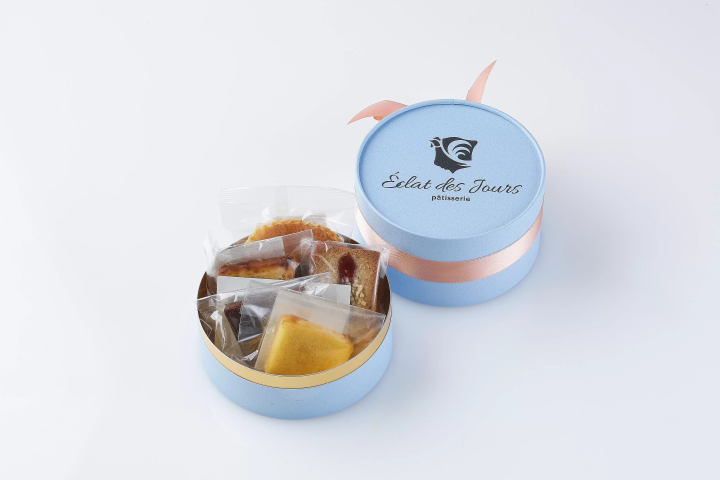
If you're wondering what souvenir to bring home for the New Year holidays, head to Toyosu Eclat de Jours for baked goods. We'll introduce you to Japanese New Year culture and baked goods that last a long time and are easy to give away.

Written by
The patisserie "Éclat des Jours" opened in Toyosu, Tokyo in June 2020. "Éclat des Jours" is a coined word meaning "glorious days" in French, and was named with the hope that our sweets will accompany our customers on their special days and everyday moments, and add color to their memorable "glorious days." The concept of Éclat des Jours' sweets is "freshness," "melting texture," and "smoothness." Based on the techniques and flavors that owner chef Yohei Nakayama acquired through his training in France, we value textures that are familiar to Japanese people and easy to eat. We aim to bring out the maximum flavor of the ingredients themselves while adding contrast to simple compositions. Our goal is to be a comprehensive patisserie. We offer a wide range of products, including entremets (whole cakes), petit gateaux (individual cakes), baked goods such as buttery madeleines and cookies, breads such as baguettes and croissants baked in-store every morning, and chocolates and jams that decorate our display cases. In the future, we also plan to expand our product lineup to include small gifts for everyday use and for relaxing at home. While cherishing French traditions, we are always challenging ourselves with new flavors, and hope to remain a patisserie that is loved by our customers for a long time.
This service includes sponsored advertisements.
The New Year's holiday in Japan is a time packed with events that mark the end of the year and welcome the new year in a good mood. From finishing work to returning home to relatives and gatherings, it's a hectic time, but it also means more time spent with family. An essential part of the Japanese New Year's holiday is the culture of giving gifts. When returning to one's parents' home or visiting relatives, it's common not to visit empty-handed. Baked goods, which keep well and are easy to distribute, are a popular choice.
In this article, we will introduce traditional Japanese New Year's celebrations, along with baked goods perfect for returning home or as a New Year's greeting.
-
Table of Contents
- Why baked goods are chosen as gifts
- Eclat de Jours baked goods
- Store Information
- Experience Japanese culture with the New Year's zodiac signs
- A New Year's Eve staple: Toshikoshi soba noodles and the New Year's Eve bell
- New Year's Day Osechi cuisine and family time
- New Year's greetings at the first shrine visit of the year
- What is Otoshidama? A Japanese custom that spreads during the New Year holidays
- summary
Why baked goods are chosen as gifts
The New Year's holiday season is a busy time, which is why people choose gifts that are easy to prepare and don't cause any problems.
The reason baked goods tend to become classics is simple.
- It keeps well so you can buy it early
- Easy to carry at room temperature
- Individually wrapped, they're easy to distribute at family gatherings.
- It is easy to enjoy regardless of generation
Unlike fresh sweets, you don't have to worry about time or keeping them cold, so they're perfect for travelling home or as New Year's greetings.
Eclat de Jours baked goods
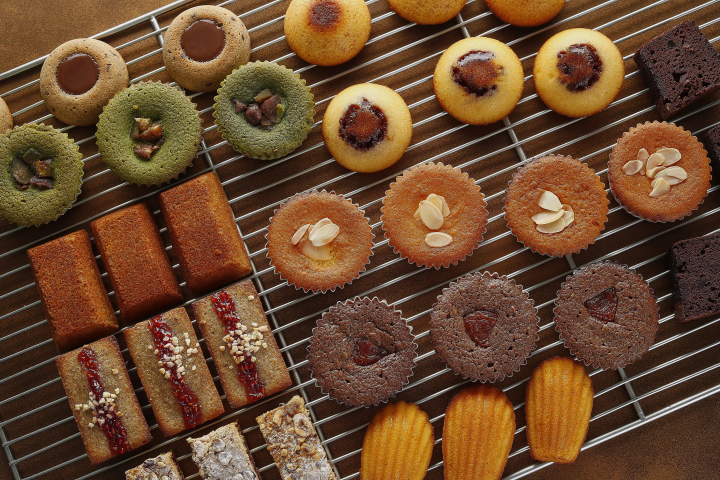
The appeal of Eclat de Jour's baked goods is that they are easy to handle, which is a common problem when giving gifts for the New Year holidays, especially when it comes to numbers.
There are a wide variety of sizes, so it's easy to choose according to your purpose, whether it's a substantial gift to take to your parents' house or something easy to hand out at a gathering of relatives. Not only the baked goods themselves, but the wrapping is also elegant, making them perfect for year-end and New Year greetings when you want a neat and tidy look.
They are made to last for 2 to 3 weeks after purchase, so you can rest assured when you want to prepare a gift early.
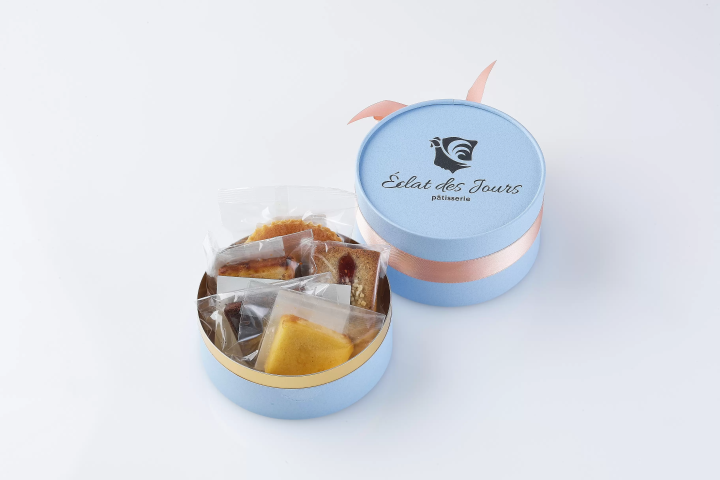
Circle box of 5 baked goods
¥2,160 tax included
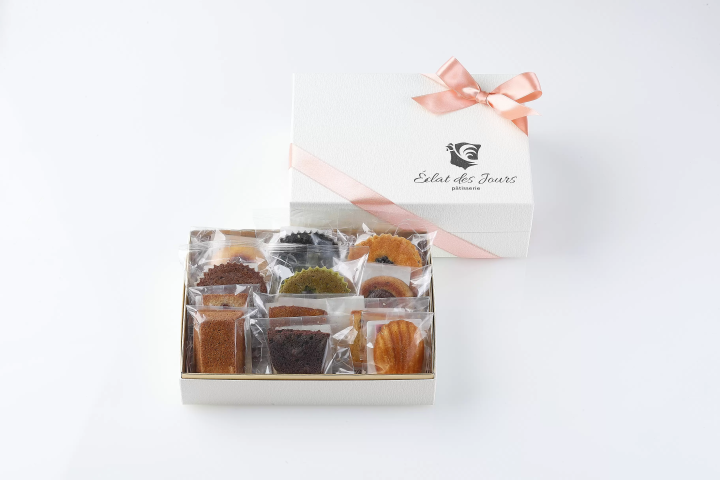
Royal S
Assorted baked goods (12 pieces)
¥4,536 tax included
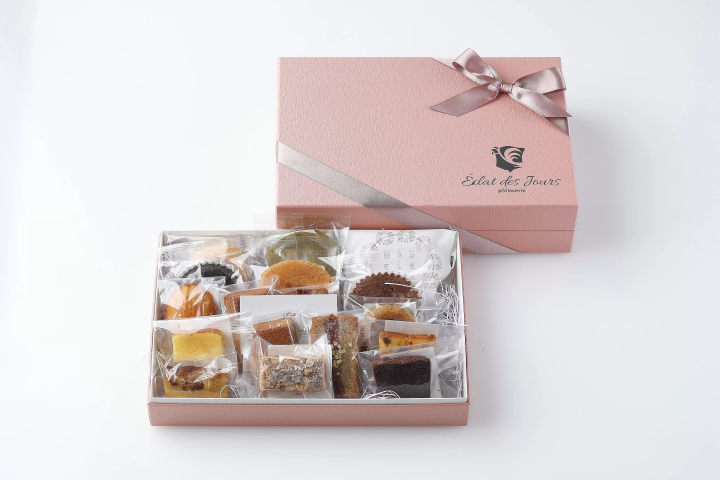
Royal M
Assorted baked goods containing 17 pieces
¥6,156 tax included
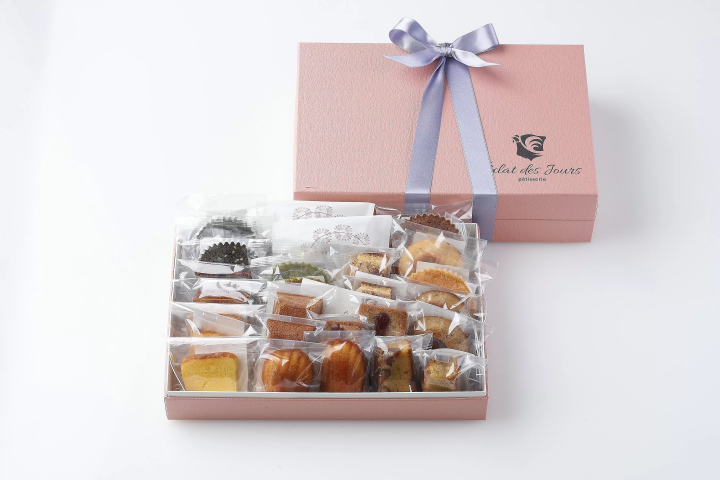
Royal L
Assorted baked goods containing 26 pieces
¥8,856 tax included
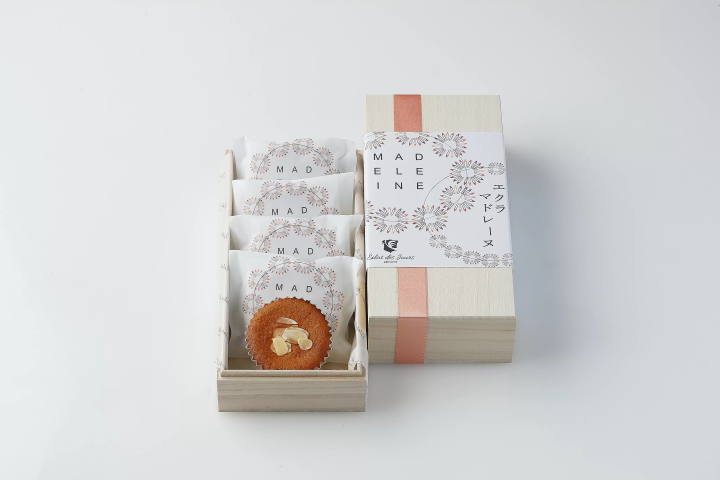
Ec La Madeleine 5-piece set
¥2,376 tax included
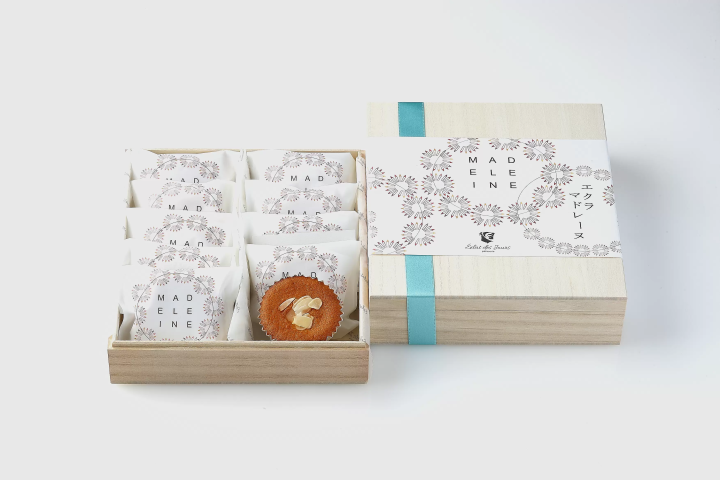
Eclamadeleine 10-piece set
¥3,996 tax included
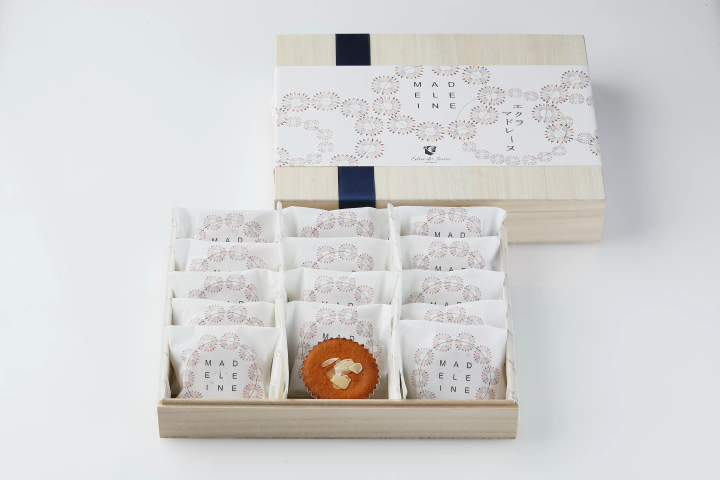
Eclamadeleine 15-piece set
¥5,616 tax included
Popular items often sell out by the evening, so if you want to be sure to get your hands on one, we recommend making a reservation in advance.
These products can be reserved online up to seven days in advance. If you have plans to return home or visit friends and family, be sure to check the online reservation system early.
Store Information
Store name: Éclat des Jours Toyosu Bayside Cross store
Address: Urban Dock Lalaport Toyosu 3, 2-4-9 Toyosu, Koto-ku, Tokyo
Access: Tokyo Metro Yurakucho Line "Toyosu Station" Exit 2b, right outside / Yurikamome "Toyosu Station" 3-minute walk
Business hours: Weekdays 11:00-20:00, Saturdays, Sundays, and holidays 10:00-20:00
Closed: Mondays and Tuesdays
Phone number: 03-5534-8966
Official website: https://www.eclatdesjours.jp/
Instagram: https://www.instagram.com/eclatdesjours_english/
Eclat de Jour Toyosu store's New Year's holiday opening hours
December 27th 10:00-20:00
December 28th 10:00-20:00
Closed on December 29th
December 30th 11:00-20:00
December 31st 11:00-18:00
January 1st 10:00-20:00
January 2nd 11:00-20:00
January 3rd, 10:00-20:00
January 4th, 10:00-20:00
Experience Japanese culture with the New Year's zodiac signs
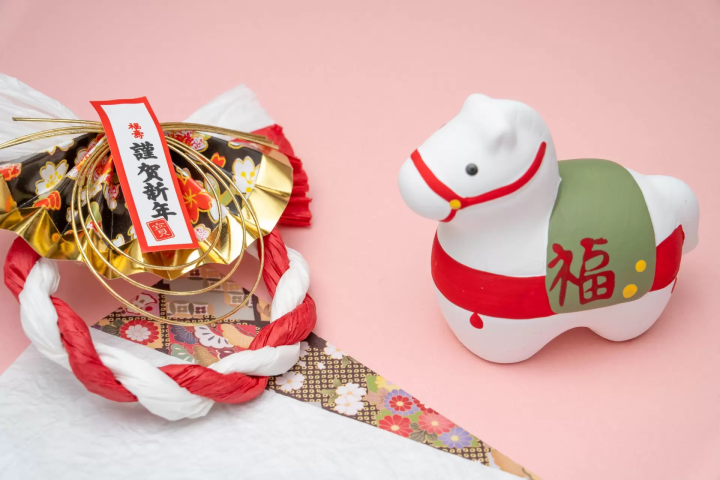
The zodiac is a cultural element that originated in ancient China as a calendar concept, was introduced to Japan, and has since become established in annual events and daily life.
The zodiac is a system in which 12 animals rotate in order,
Rat, Ox, Tiger, Rabbit, Dragon, Snake, Horse, Sheep, Monkey, Rooster, Dog, and Boar
Since years are represented in this 12-year cycle, many people remember the zodiac sign of the year they were born, which can also be a good conversation starter.
In Japan, the zodiac is used as a symbol of the year as the new year approaches, so you'll see zodiac motifs everywhere around the year-end and New Year holidays, including on New Year's cards, decorations, votive plaques at shrines, and charms. 2026 is the year of the horse. It's easy to spot even while traveling, making it an easy-to-identify symbol of the Japanese New Year.
A New Year's Eve staple: Toshikoshi soba noodles and the New Year's Eve bell
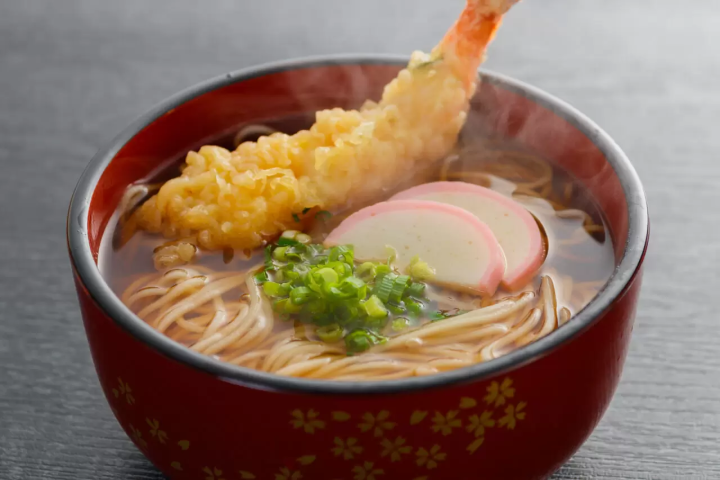
Eating toshikoshi soba noodles on the night of December 31st is a staple of New Year's Eve in Japan. It is said that the long, thin noodles represent wishes for a long and healthy life.
Another essential part of New Year's Eve is the Joya no Kane, a ritual in which temple bells are rung to welcome the new year, and is often rung 108 times. There are various theories about the origin of the number 108, but it is believed to represent the exorcism of the 108 earthly desires, delusions, and desires that people are said to have, one by one, and the preparation of the mind to welcome the new year. The quiet sound of the bells echoing through the night air is a moment when you can feel the calm atmosphere unique to the end of the year in Japan.
New Year's Day Osechi cuisine and family time
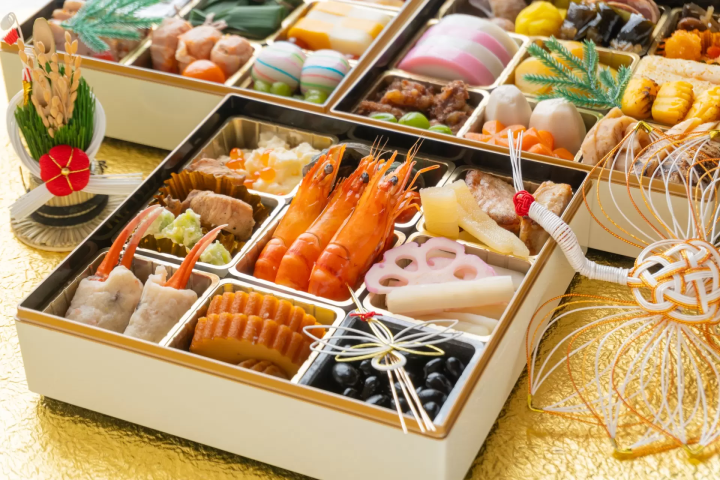
January 1st is New Year's Day.
A typical New Year scene is when families gather around to eat osechi ryori (traditional New Year's dishes). Each dish in osechi is said to have a meaning, and the dish is filled with auspicious culture, with black beans representing health, herring roe representing prosperity of descendants, and shrimp representing longevity. Another key aspect of the Japanese New Year is the idea of not putting too much effort into cooking and taking it easy.
New Year's greetings at the first shrine visit of the year
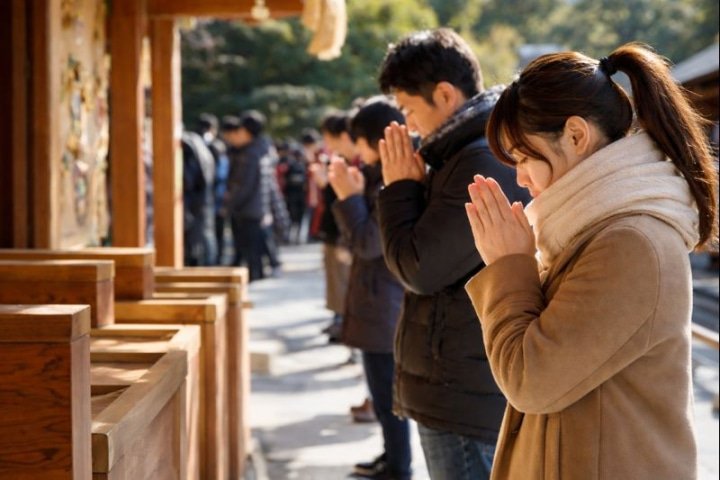
When the new year begins, many people visit shrines and temples for their first visit of the year. They pray for health and happiness for the year ahead, draw fortune slips, and write their wishes on votive plaques. For those visiting Japan during the New Year holidays, visiting a shrine or temple for the first time is one of the best ways to experience Japanese culture.
What is Otoshidama? A Japanese custom that spreads during the New Year holidays
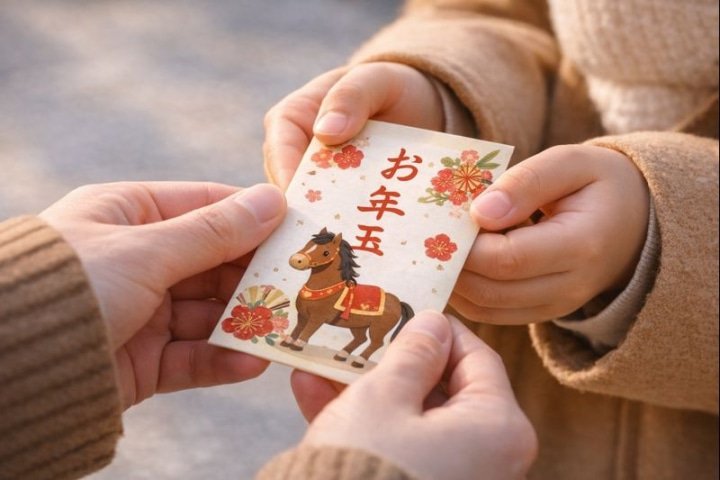
When relatives gather together during the New Year holidays, children look forward to receiving New Year's money.
Otoshidama is a custom in which adults give money to children as a New Year's gift.
When giving money, it is customary to put it in a small envelope called a Pochibukuro, rather than simply handing it over. Many of them have designs of the zodiac animals or lucky charms, and choosing the envelope is one of the joys of the New Year.
Many families adjust the amount of money given depending on the child's age and relationship, but there are many different ways of thinking about it. What's important is not the amount of money, but wrapping it carefully and showing your feelings, which is a uniquely Japanese point.
summary
As the end of the year approaches, the demand for gifts increases dramatically as people return home and make rounds to say hello. If possible, it's best to prepare gifts well in advance of your trip. Eclat de Jour's baked goods make New Year's greetings a little easier and a little warmer. We hope they will be such a gift.
The patisserie "Éclat des Jours" opened in Toyosu, Tokyo in June 2020. "Éclat des Jours" is a coined word meaning "glorious days" in French, and was named with the hope that our sweets will accompany our customers on their special days and everyday moments, and add color to their memorable "glorious days." The concept of Éclat des Jours' sweets is "freshness," "melting texture," and "smoothness." Based on the techniques and flavors that owner chef Yohei Nakayama acquired through his training in France, we value textures that are familiar to Japanese people and easy to eat. We aim to bring out the maximum flavor of the ingredients themselves while adding contrast to simple compositions. Our goal is to be a comprehensive patisserie. We offer a wide range of products, including entremets (whole cakes), petit gateaux (individual cakes), baked goods such as buttery madeleines and cookies, breads such as baguettes and croissants baked in-store every morning, and chocolates and jams that decorate our display cases. In the future, we also plan to expand our product lineup to include small gifts for everyday use and for relaxing at home. While cherishing French traditions, we are always challenging ourselves with new flavors, and hope to remain a patisserie that is loved by our customers for a long time.
The contents on this page may partially contain automatic translation.



Special Features
More











![[Osaka Sightseeing Bus Tour] Enjoy 360° views of Osaka from an open-top bus!](https://resources.matcha-jp.com/resize/720x2000/2026/05/25-264541.webp)
![[Autumn 2026] Private Night Tour to See the World Heritage Site Toji Temple Illuminated in a Fantastical Light-Up Effect](https://resources.matcha-jp.com/resize/720x2000/2026/04/28-263309.webp)