
Aizome Indigo Dyeing on Awaji Island: Japan Blue Workshop & Retreat Guide
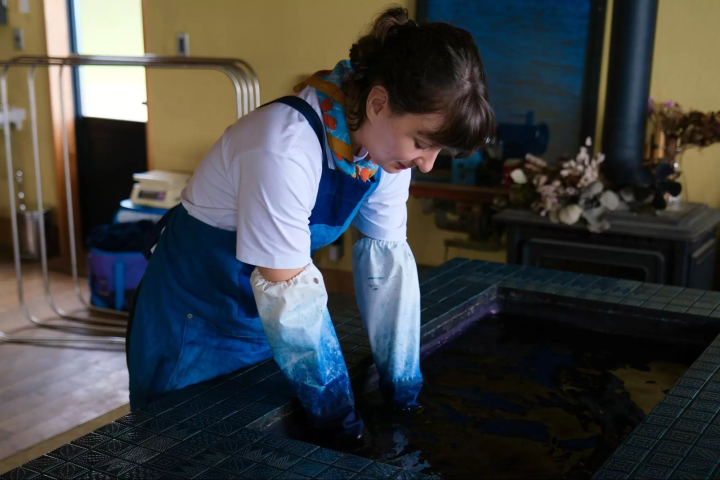
The "Awaji Ai Land Project" on Awaji Island is a studio handling everything from indigo cultivation to dyeing. It features traditional dyeing workshops and retreats at its guesthouse. This article introduces the deep healing and Japanese tradition born from their sustainable practices in harmony with nature.
Written by
Sharing the allure of Awaji with the world, the Tourism Association highlights everything from breathtaking seasonal blooms to a culinary heritage so exquisite it was once known as 'Miketsu-kuni,' or the Land of Imperial Provisions.
This service includes sponsored advertisements.
-
Table of Contents
- Awaji Ai Land Project: The Couple Reviving Aizome
- What Is Aizome? The History of Japanese Indigo Dyeing
- Awaji Indigo Workshop Experience: From Sukumo to Dye Vat
- Zero-Waste Indigo: Sustainable Craft Practices
- Staying at Onokoro Blue 1185: Awaji’s Indigo Retreat
- Why Indigo Matters Today: Culture and Mindfulness
- How to Get to Awaji Ai Land Project (Access from Kobe & Osaka)
- Workshop & Retreat Reservations (How to Book)
Food and nature are two of Awaji Island’s main traits, yet few travelers realize it also protects one of Japan’s most beautiful traditions. Aizome, natural indigo dyeing, continues here much as it has for centuries. This deep natural blue, once essential for kimono, workwear, and everyday fabric, became so closely tied to Japan that it is now recognised worldwide as “Japan Blue.”

The art of aizome: natural indigo dyeing transforming textiles with centuries-old Japanese craftsmanship.
If you want to know more about the charms of Awaji Island, we also recommend this article.
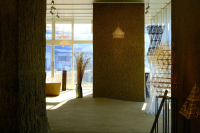
Awaji Ai Land Project: The Couple Reviving Aizome
At Awaji Ai Land Project, Eri and her husband, Seiichi, a couple originally from Osaka, are reviving indigo in the most traditional way. Drawn to a quieter agricultural life, they began with simple vegetable farming and seed exchanges with friends. One day, a friend handed them a small envelope of indigo seeds. They planted them casually, not expecting much, yet the plants flourished almost effortlessly in Awaji’s warm climate and soft soil.
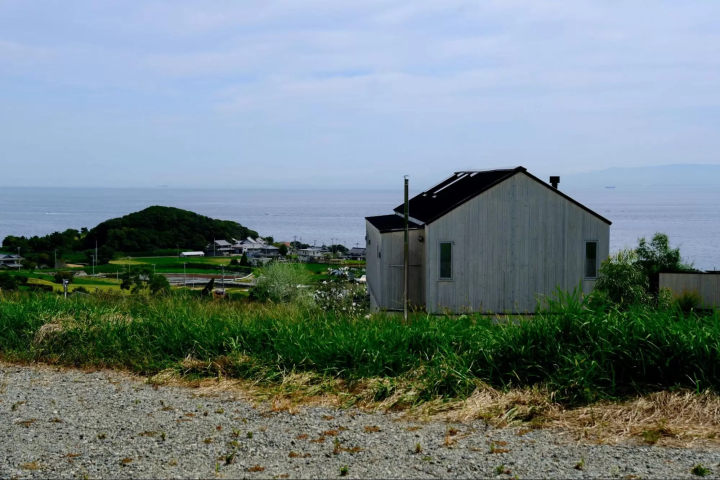
View of the sea and fields from the Awaji Ai Land Project studio on Awaji Island.
What started as an experiment gradually grew into a full indigo farm and Awaji indigo retreat. Today, it is one of the rare places in Japan where the entire indigo cycle happens on the same land: cultivating plants, fermenting leaves into dye, and immersing cloth into the deep blue vats.
What Is Aizome? The History of Japanese Indigo Dyeing
Indigo dyeing has deep roots in Japanese culture. Its use can be traced back to the Nara period, with dyed textiles preserved in the Shōsōin Repository. By the Heian period, dye plants were already listed in legal texts such as the Engishiki. Indigo cultivation flourished during the Edo period, becoming a major agricultural industry across the country. Among the most renowned was Awa Indigo from Tokushima, known for producing some of Japan’s highest-quality sukumo.
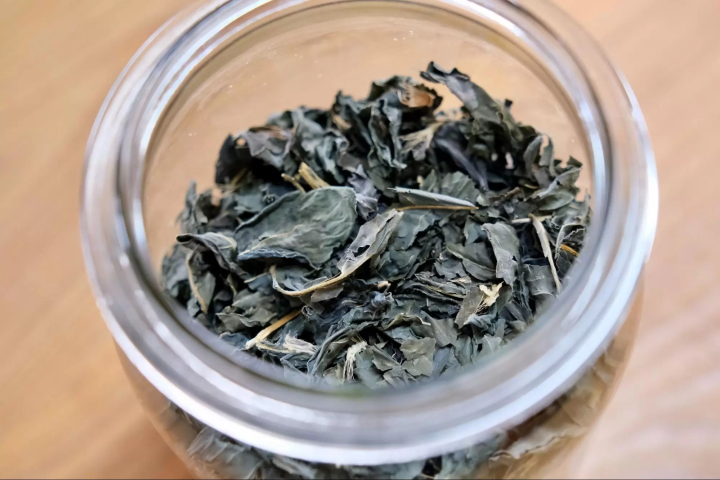
Dried aizome indigo leaves used in traditional Japanese dyeing.
Today, the farming rhythm remains the same. From June to September, farmers harvest indigo leaves several times each season, always before the plants flower. Some regions prize the “first cut” as particularly high in quality. In autumn, small white flowers appear, followed by seed pods. The seeds are dried, saved, and planted the following year.
In Japan, indigo is not just a color. It is a seasonal cycle and a cultural symbol.
Awaji Indigo Workshop Experience: From Sukumo to Dye Vat
At Awaji Ai Land Project, the indigo dyeing workshop begins with sukumo, fermented indigo leaves that form the heart of natural Japanese indigo. Preparing sukumo is a year-long process. For more than a hundred days, the leaves are turned, warmed, and fed with ash lye and water, slowly transforming into a deep, earthy dye material.
The indigo vats that hold this sukumo behave almost like living beings: they need warmth, balance, oxygen, and gentle daily care. Without this attention, the color simply will not appear.
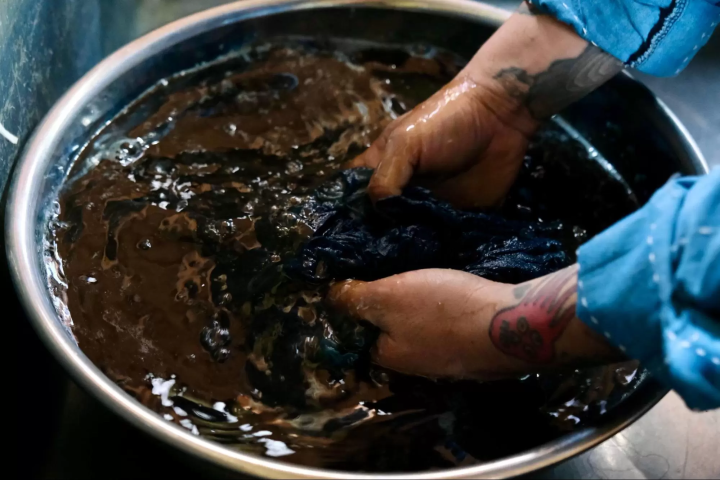
Indigo-dyed fabric being rinsed to remove excess dye and reveal the traditional Japanese blue color.
During the workshop, this alchemy unfolds in your hands. When fabric is first dipped into the indigo vat, it emerges green. As it meets the air, it slowly oxidizes and deepens into the signature Japan Blue. Every fold, twist, or bind creates patterns that resemble galaxies, waves, or clouds.
The act of dying feels therapeutic, almost like a dialogue with nature. Watching the brilliant blue emerge from nothing is calming and meditative.
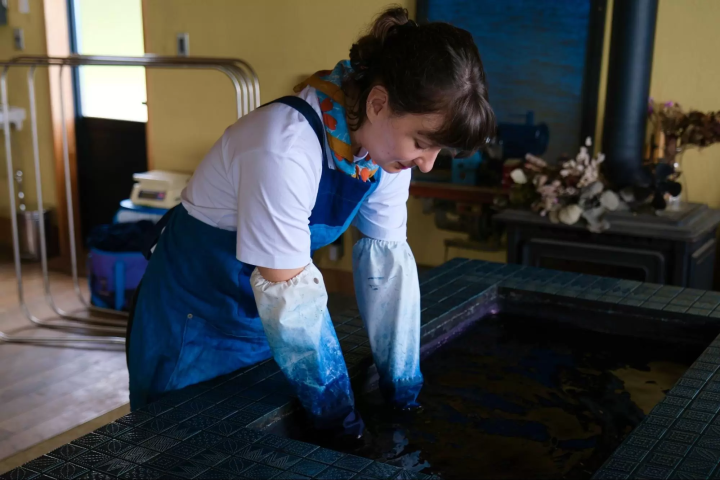
Kristina during the workshop at Awaji Ai Land Project, dipping fabric into the indigo dye vat.
At the workshop, it is possible to try aizome (indigo dyeing): fold the fabric as you prefer, lower it gently into the vat, and watch as the deep blue gradually emerges. Unlike synthetic dyes, the outcome is never predictable, and this surrender to chance is part of the craft’s beauty.
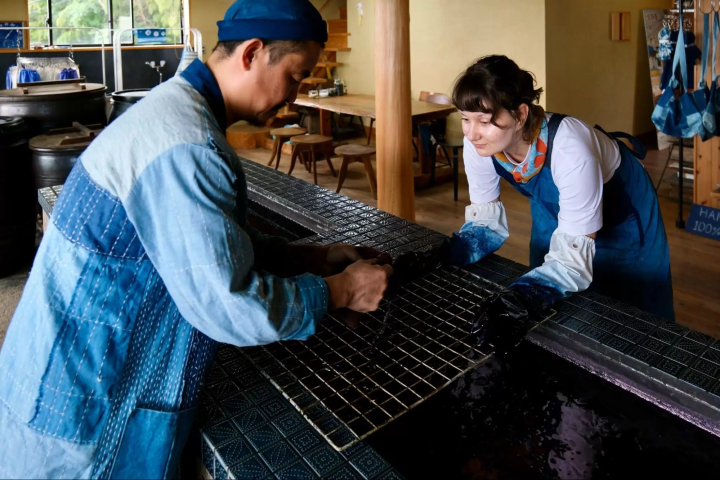
Seiichi-san providing step-by-step guidance to Kristina during the indigo workshop
Natural indigo also brings its own benefits. It is known to be antibacterial, deodorizing, gentle on the skin, and safe for the environment. Wastewater from natural indigo dyeing can even be returned to rivers or to the sea without harm.
Zero-Waste Indigo: Sustainable Craft Practices
The AWAJI Ai Land Project is more than a workshop. It is a model for community-based craft. The couple collaborated with local welfare facilities, offering work opportunities to people facing social challenges, including hikikomori youth (young people who severely isolate themselves at home, avoiding any social contact).
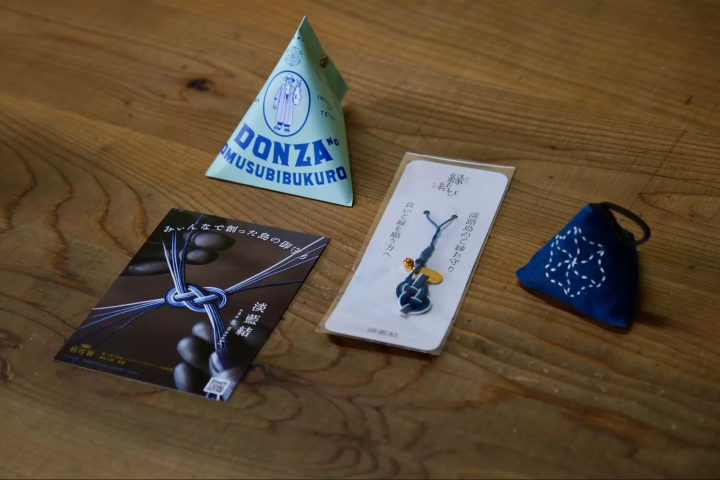
Protective charms for nearby shrines and "DONZA OMUSUBIBUKURO"— small pouches filled with Awaji’s famous incense sticks — created at the Awaji Ai Land Project.
They also create protective charms (omamori) for nearby shrines using indigo-dyed cloth. One of their most meaningful creations is the "DONZA OMUSUBIBUKURO": small pouches filled with Awaji’s famous incense sticks. These sticks are leftover pieces that would normally remain unused during production. Instead of being discarded, they are wrapped in indigo and transformed into something purposeful and symbolic.
All the leaves and organic matter removed from the dye vats are returned to the fields as fertilizer, completing a circular, zero-waste cycle.
Their philosophy is simple: “What we make should remain even after we are gone — something that belongs to everyone and supports the community”.
Staying at Onokoro Blue 1185: Awaji’s Indigo Retreat
A more recent achievement of the AWAJI Ai Land Project is Onokoro Blue 1185 (藍宿ル1185), a guesthouse located directly beside the workshop, designed as an extension of the indigo experience.
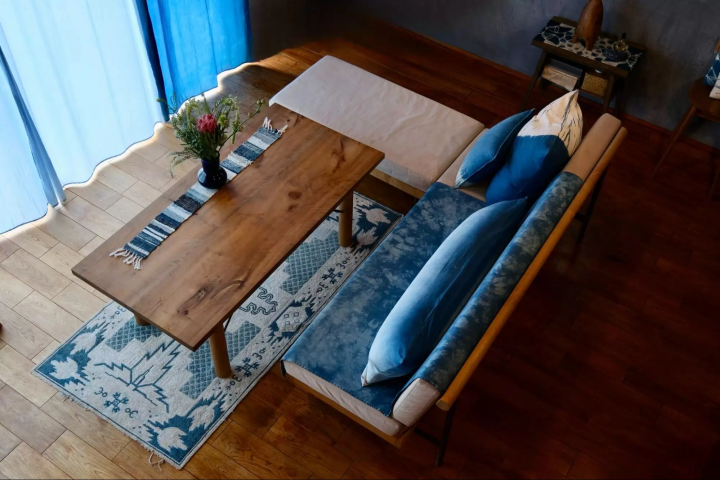
The curated interior of Onokoro Blue 1185 showcasing indigo-dyed textiles.
This little space is curated down to the smallest details. Wide windows open toward the indigo fields and the sea, filling the space with soft natural light. Inside, a loft bedroom with two double beds feels like a secret hideout: cozy and warm.
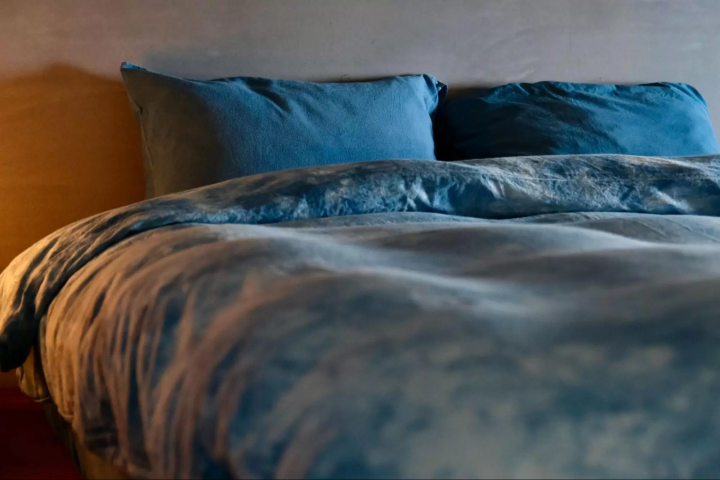
One of the double beds in the loft, featuring indigo-dyed textiles.
The small kitchen is equipped with basic cookware for simple meals. All around the house, interior details feature indigo-dyed textiles, natural plaster and sustainable materials like hempcrete. Among these, there is also a second-hand Ako rag, a precious piece handwaved in Ako City, Hyogo.
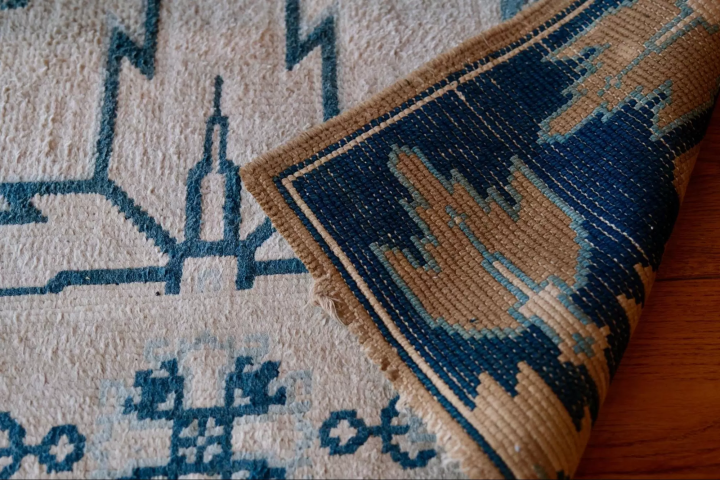
The second-hand Ako rag, a handcrafted textile from Ako City, Hyogo.
Why Indigo Matters Today: Culture and Mindfulness
In a world of instant gratification, natural indigo teaches us patience. The seeds need months to sprout and grow, sukumo fermentation requires a hundred careful days, and dye vats are tended every day, like living companions.
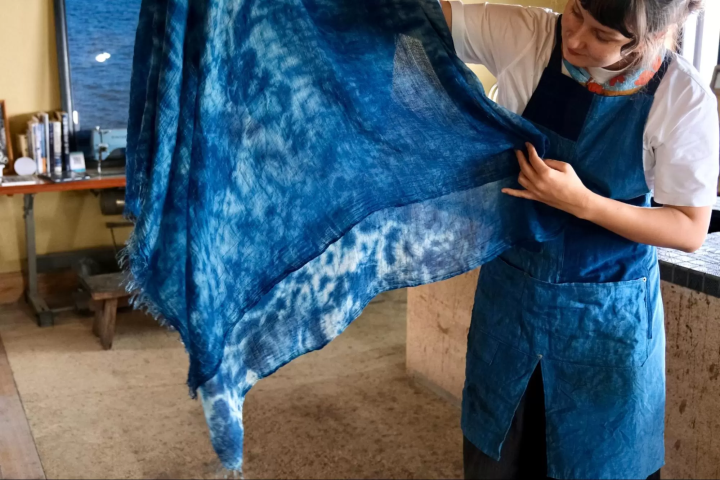
Kristina displaying her finished piece from the indigo workshop at Awaji Ai Land Project.
The couple often says: “Indigo is alive. If you push it too hard, the color won’t come out. You have to let it breathe.”
This way of thinking becomes a form of meditation. Working with indigo requires patience, softness, and trust — qualities that many travelers rediscover here, surrounded by Awaji’s sea breeze and slow rhythms. More than a souvenir, it becomes a small act of healing, shaped by culture, sustainability, and the people who keep this craft alive. A kind of experience that stays long after the fabric dries.
How to Get to Awaji Ai Land Project (Access from Kobe & Osaka)
Reaching the AWAJI Ai Land Project is quite straightforward from both Osaka and Kobe.
For most travelers, the easiest way to reach the Awaji Ai Land Project is by highway bus from Kobe. Buses leave regularly from Kobe Sannomiya and go directly to Higashiura Bus Terminal on Awaji Island. The ride takes around 1 hour.
Travelers coming from Osaka should first take a train to Kobe (Sannomiya), about 25–30 minutes by JR or Hanshin, and then transfer to the highway bus bound for Awaji Island.
From Higashiura, switch to the island’s local Awajin Awa-hime bus and ride to Kamaguchi. This is the closest stop to the workshop. From there, expect a short 10-minute walk uphill. The road is gentle but can feel steep with luggage, so the project offers a pick-up service from Kamaguchi if you prefer an easier arrival. Just let them know in advance.
If you would like more flexibility once you reach the island, you can also hop into a taxi or rent a small car directly at the Higashiura Bus terminal (reservation required).
Workshop & Retreat Reservations (How to Book)
To take part in the dyeing workshop or stay at the retreat, booking is required.
The primary way to make a reservation is through this page, though booking via Instagram is also possible.
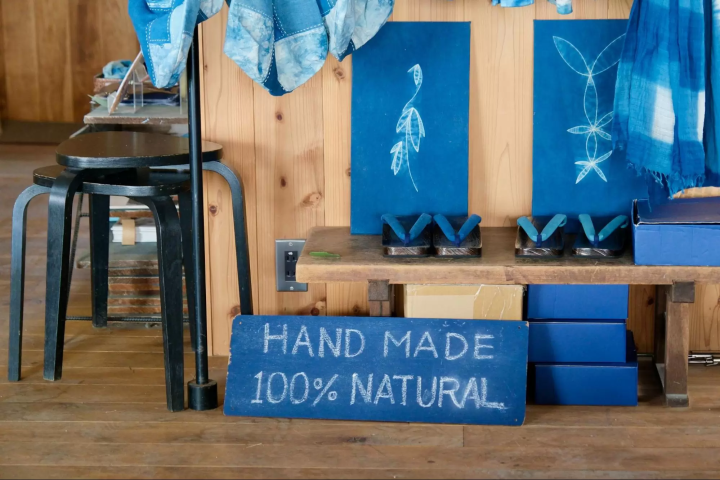
Inside the Awaji Ai Land Project studio, featuring a display of indigo-dyed objects. Hand made and 100% natural.
For accommodation and longer stays, it is possible to check availability and make reservations through their official website: 1185.onokoro.blue. Please note that the official website is available in Japanese only, but you can use Google Translate to navigate it.
Awaji Island has many other attractions! Please check out this article too.
Sharing the allure of Awaji with the world, the Tourism Association highlights everything from breathtaking seasonal blooms to a culinary heritage so exquisite it was once known as 'Miketsu-kuni,' or the Land of Imperial Provisions.
The contents on this page may partially contain automatic translation.






Special Features
More








![[Introducing our English Program] Experience English-language activities at KidZania Tokyo!](https://resources.matcha-jp.com/resize/720x2000/2026/05/19-264204.webp)


![Enjoy popular spots in Okayama Prefecture with the great value digital travel ticket [Okayama Hare Tabi Passport]!](https://resources.matcha-jp.com/resize/720x2000/2025/04/28-232194.webp)