
Soil Museum SHIDO Awaji Island: A Complete Guide to Japan’s Soil Art Museum
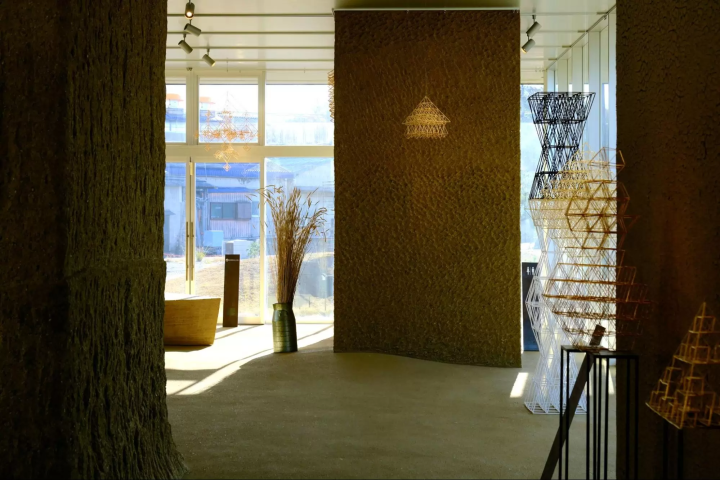
Discover "Soil Museum SHIDO" on Awaji Island—a one-of-a-kind destination where a century-old lime plaster manufacturer transforms traditional earth walls into stunning contemporary art. Explore breathtaking architecture inspired by geological layers, enjoy a unique "edible soil" smoothie, and join a hands-on workshop to create your own textured soil art.

Written by
Sharing the allure of Awaji with the world, the Tourism Association highlights everything from breathtaking seasonal blooms to a culinary heritage so exquisite it was once known as 'Miketsu-kuni,' or the Land of Imperial Provisions.
This service includes sponsored advertisements.
If you want to know more about the charms of Awaji Island, please read this article.

-
Table of Contents
- The Idea Behind Soil Museum SHIDO
- Inside Soil Museum SHIDO: Architecture Made from Awaji Island Soil
- tutito(土と): Hands-On Soil Art Experiences at Soil Museum SHIDO
- Eating at Soil Museum SHIDO: Desserts and the Soil Smoothie
- How to Book Experiences at Soil Museum SHIDO
- How to Get to Soil Museum SHIDO (Public Transport Access)
- What Else to Do Near Soil Museum SHIDO: Local Dining on Awaji Island
- Is Soil Museum SHIDO Worth Visiting?
Awaji Island is widely known for its local food, coastal scenery, and natural landscapes, but it is also home to one of Japan’s most distinctive cultural facilities: Soil Museum SHIDO.
Opened in 2023 on Awaji Island’s west coast, Soil Museum SHIDO is a museum dedicated entirely to soil as material. Located within the grounds of a traditional earthen wall factory, the museum explores Awaji Island soil not only as a construction material, but as architecture, exhibition surface, and hands-on creative medium.
The Idea Behind Soil Museum SHIDO
Soil Museum SHIDO was not created by a new creative startup, but by Kinki Kabezai Kogyo, an earthen wall manufacturer established in 1912.
For more than a century, the company has worked with tsuchikabe (土壁)—traditional Japanese earthen walls made from natural soil, sand, straw, and water. Tsuchikabe has long been a fundamental element of Japanese architecture, used in houses, temples, storehouses, and tea rooms for its ability to regulate humidity, provide natural insulation, and express the character of local soil through texture and color.
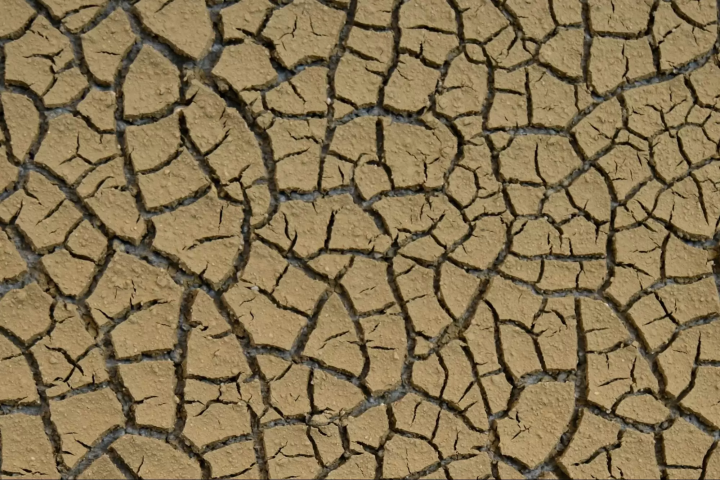
Textured earthen wall at Soil Museum SHIDO
As modern construction materials such as concrete became widespread in the 20th century, soil walls gradually disappeared from everyday architecture. Soil remained present, but largely unseen, reduced to a technical building material rather than something people consciously experienced.
According to company president Junji Hamaoka, Soil Museum SHIDO was created to change that perception.
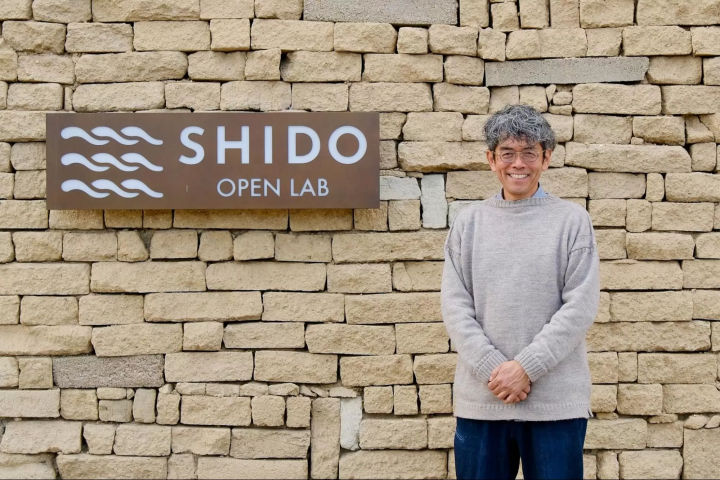
Junji Hamaoka, the creator of Soil Museum SHIDO
With relatively few museums on Awaji Island, the aim was for soil itself to become the main character. Rather than an invisible structural component, soil is presented as a material capable of shaping space and artistic expression when handled with skill. In doing so, SHIDO reframes a traditional architectural material as a contemporary cultural medium.
Inside Soil Museum SHIDO: Architecture Made from Awaji Island Soil
Soil Museum SHIDO is more than a single exhibition room. The museum brings together architecture, rotating exhibitions, art experiences, a cafe, and original products, all connected by one central idea: soil as the foundation of culture and place.
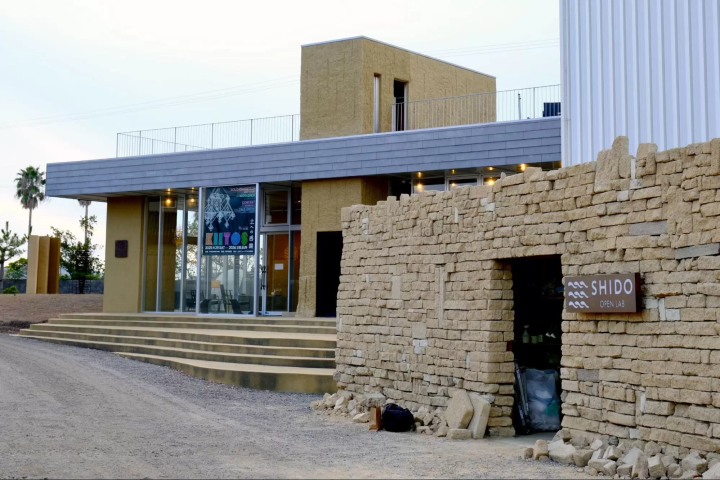
Exterior view of Soil Museum SHIDO on Awaji Island’s west coast
At the core of the museum’s interior concept is Jimon (地文)—a term referring to the visible patterns of the earth’s surface, such as mountains, rivers, plains, and erosion marks. In geography, jimon describes how land is shaped over time.
At SHIDO, this concept is translated directly into architecture. The textured soil walls throughout the museum resemble cracked fields, exposed slopes, and layered earth revealed through excavation, turning natural geological processes into a visual and tactile spatial experience.
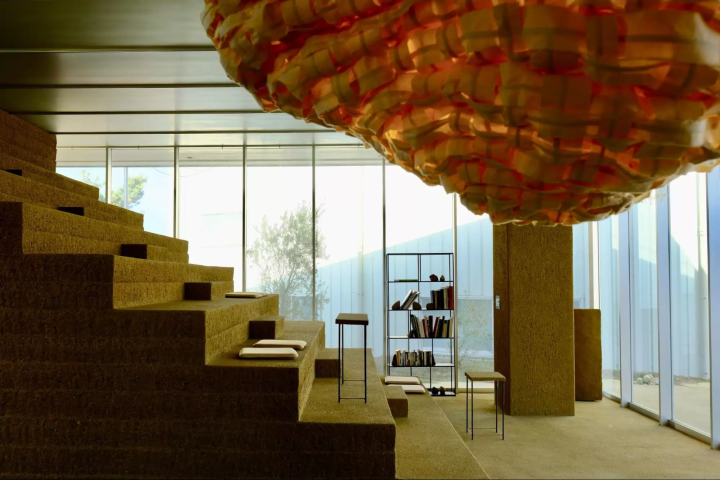
Interior of Soil Museum SHIDO
This idea is closely tied to Awaji Island itself. Awaji is often referred to in Japanese mythology as the “land of beginnings,” and nearby Izanagi Shrine enshrines Izanagi-no-Mikoto and Izanami-no-Mikoto, deities associated with the creation of mountains, rivers, plants, fire, and water. Rather than presenting mythology directly, SHIDO reflects these ideas through material. The soil walls appear as if the land itself has risen to form the space.
Display of soil-based art materials developed at Soil Museum SHIDO
Beyond the permanent installation, Soil Museum SHIDO hosts planned exhibitions and events that explore soil in dialogue with other natural materials and contemporary art practices.
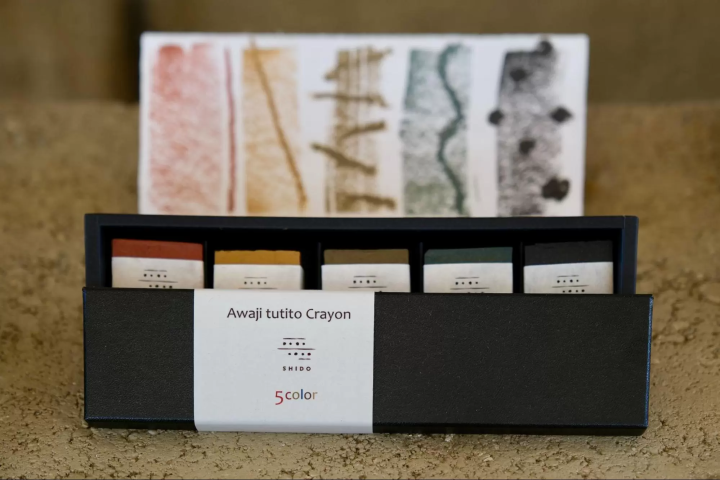
Crayon made of Awaji soil
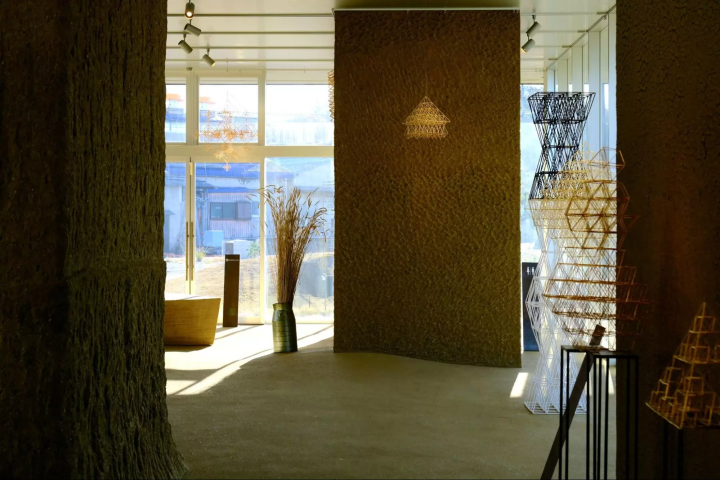
During one recent exhibition, traditional Finnish Himmeli, geometric ornaments made from dried straw, were displayed within the earthen architecture. The contrast between light straw structures and dense soil surfaces highlighted how different natural materials shape space in fundamentally different ways, while sharing a common origin in the natural world.
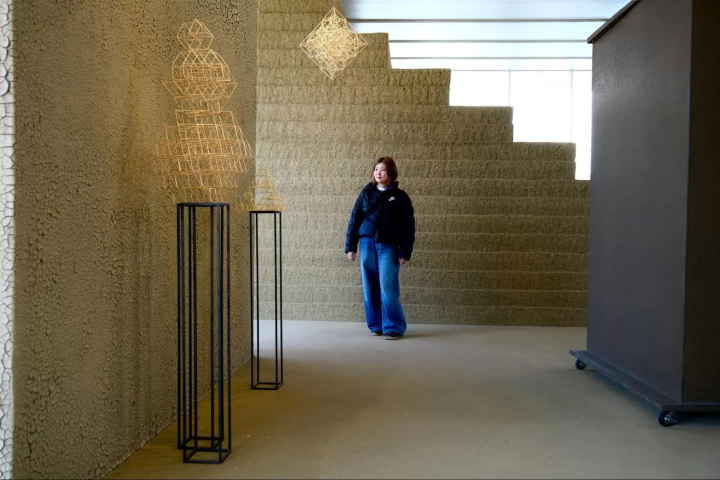
The museum also features rotating exhibitions focused on soil and natural materials
According to Hamaoka, this dialogue between soil architecture and nature-based art is intentional. Humans evolved surrounded by natural materials, yet modern life has largely separated people from them. Inside the museum, many visitors experience a noticeable sense of calm. This is not as a design effect, but as a physical response to being surrounded by soil, something essential yet rarely touched in everyday life.
tutito(土と): Hands-On Soil Art Experiences at Soil Museum SHIDO
Soil Museum SHIDO presents soil not as something to simply observe, but as a material to walk on, touch, and experience with all five senses. For visitors who want to engage more directly, the museum offers hands-on soil art experiences at tutito(土と).
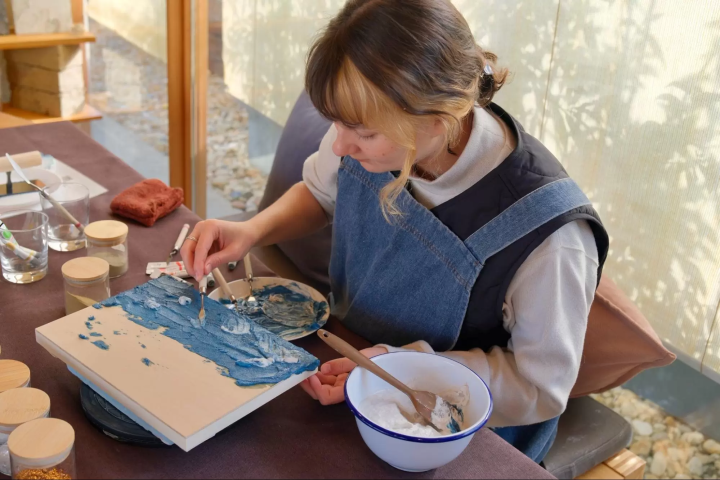
Hands-on soil texture art workshop at tutito experience space near Soil Museum SHIDO
Opened in December 2023, tutito is a dedicated experience space located directly across from the museum. Its concept is straightforward: soil should not only be seen, but mixed, shaped, and understood through physical interaction. All workshops use Awaji Island soil as the primary material and are designed so that even complete beginners can participate comfortably.
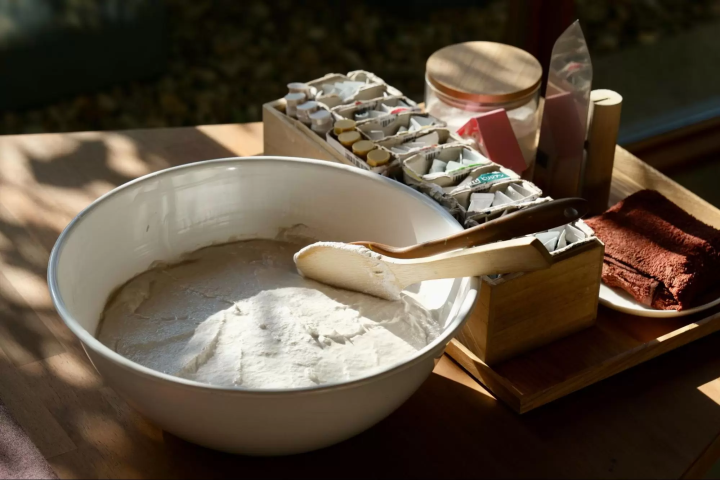
Preparation of soil plaster used for texture art workshops at tutito Awaji Island
The main program is the soil texture art workshop, where participants create a three-dimensional abstract artwork using Awaji Island soil and watercolor pigments. After receiving an A4-sized wooden canvas, soil wall material, paints, and a palette knife, the process begins by mixing pigments directly into white soil plaster to create custom colors.
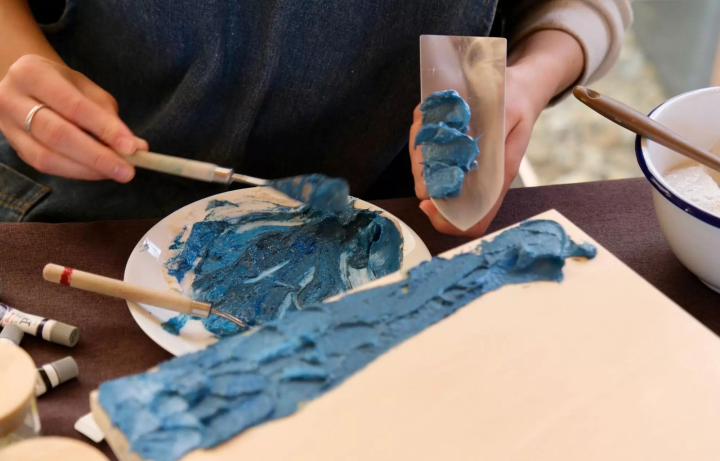
Applying pigmented soil plaster with a palette knife
Rather than drawing an image or aiming for a specific result, the workshop emphasizes sensory response. Color selection is intuitive, and as soil is applied with a palette knife, attention naturally shifts from thinking to feeling—weight, resistance, moisture, and balance. The process encourages slowing down and adjusting pace, allowing the material itself to guide when a surface feels complete.
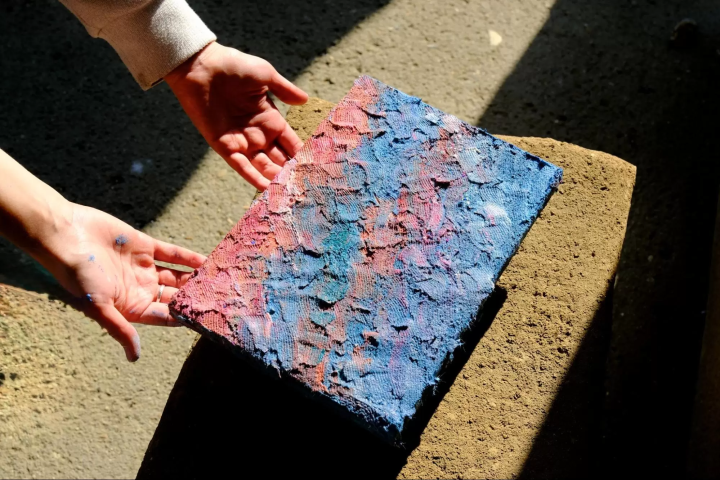
Completed soil texture art panel created using Awaji Island soil at tutito
No artistic skill is required, and there is no evaluation of the final result. Thanks to the natural thickness and texture of the soil, even first-time participants often leave with a finished piece suitable for home display! The experience typically takes 60–90 minutes, and completed works can be taken home once dry or shipped within Japan to a home or hotel for those arriving by public transport.
Eating at Soil Museum SHIDO: Desserts and the Soil Smoothie
The experience continues in the cafe space. The menu features original drinks and desserts inspired by the museum’s theme, including items visually shaped to resemble earth, layers of soil, and landscape forms.
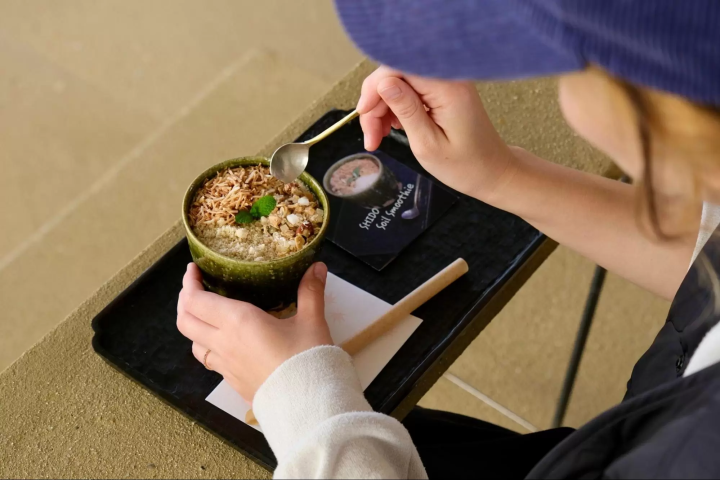
Soil smoothie made with edible diatomaceous earth
For those interested in going further, the cafe also serves the museum’s most talked-about item: the soil smoothie. Made using edible diatomaceous earth, the smoothie reflects a practice that exists in some cultures, particularly in the United States, where diatomaceous earth has historically been consumed.
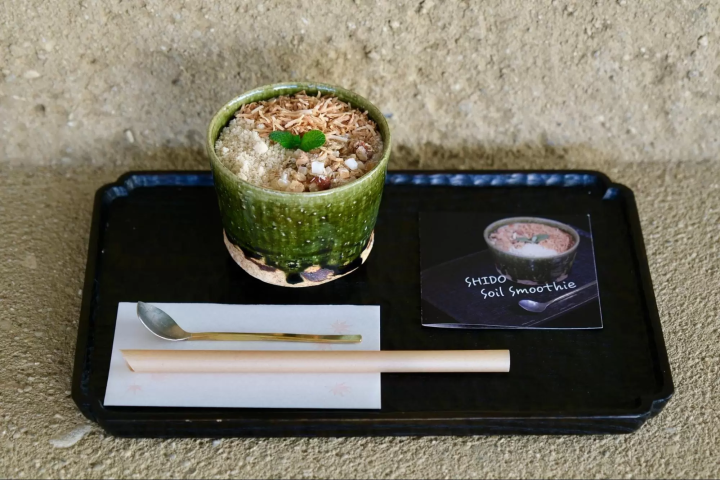
Edible soil smoothie at Soil Museum SHIDO cafe
Its main component, silicon, is widely known as a mineral associated with beauty and health supplements. At SHIDO, it is blended into a banana-flavored smoothie that is mild, smooth, and more approachable than many expect.
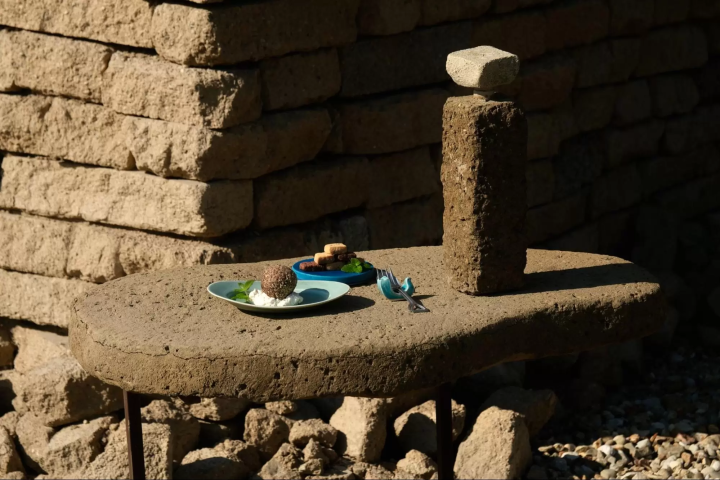
Desserts that echo the museum’s concept
Visitors who are curious but not ready to try edible soil will also find multiple non-soil options available. Several desserts and drinks echo the museum’s concept visually while using familiar ingredients, making the cafe accessible regardless of comfort level. (Please remember that cafe use requires separate museum admission.)

View of the Awaji Island coastline from the rooftop of Soil Museum SHIDO
The museum rooftop is also open to visitors, offering open views of the Awaji Island coastline and sunset-facing Seto Inland Sea.
How to Book Experiences at Soil Museum SHIDO
Museum admission does not require advance booking and can be purchased on-site. The admission fee is 500 yen (free for junior high school students and under).
However, hands-on experiences at tutito(土と) require advance reservation, particularly on weekends and during holiday periods. Booking is recommended through this official website.
Finished artworks can be taken home once dry. For visitors arriving by public transport, shipping within Japan to a home or hotel is available for an additional fee.
How to Get to Soil Museum SHIDO (Public Transport Access)
Soil Museum SHIDO is located on the west coast of Awaji Island, near Taga Beach (Taganohama).
From Osaka or Kobe
・Take a train to Kobe Sannomiya Station (JR, Hankyu, or Hanshin lines).
・From Sannomiya Bus Terminal, board a highway bus bound for Awaji Island (Awaji Kotsu or Honshi Kaikyo Bus).
・Get off at Awaji IC or a nearby stop on the west coast route.
・Transfer to a local bus or taxi to the Taga area (approximately 15–20 minutes by taxi).
What Else to Do Near Soil Museum SHIDO: Local Dining on Awaji Island
After visiting Soil Museum SHIDO, it’s easy to continue exploring the area through food. The surrounding west coast of Awaji Island is home to small, locally run eateries and izakaya-style restaurants that focus on seasonal fish, Awaji chicken, and locally raised beef.
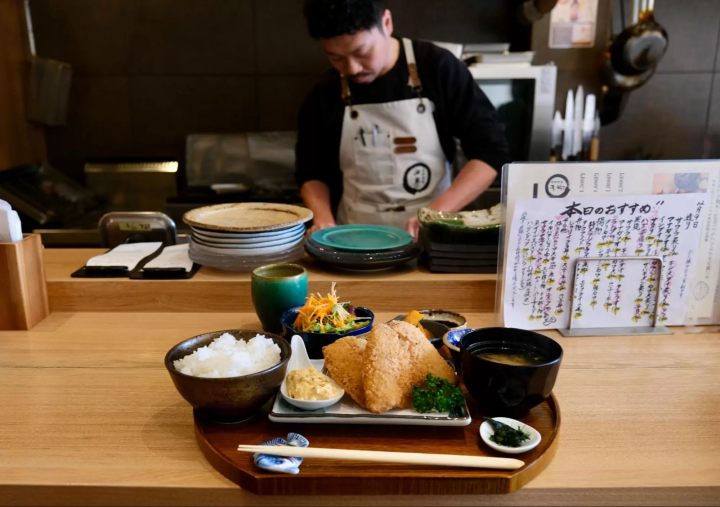
Local lunch set with rice and side dishes at Shokudo Sakaba Yamazaki
Within about 5 minutes on foot, one reliable option is Shokudo Sakaba Yamazaki (食堂酒場 山嵜), which opened in August 2024 in a renovated former electronics shop along the shopping street area.
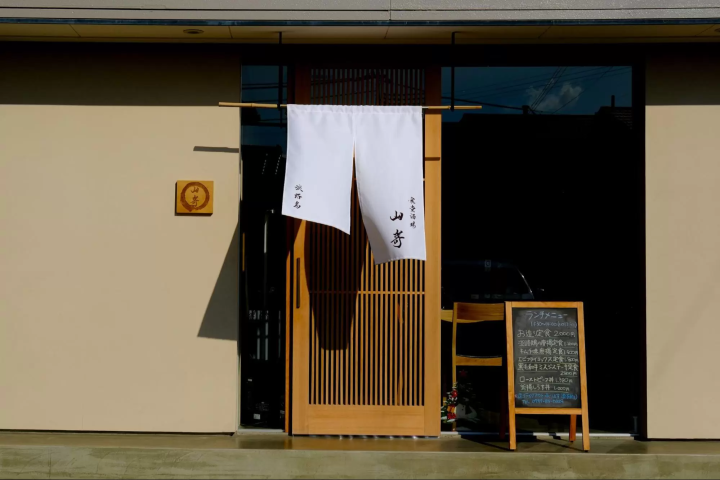
Exterior of Shokudo Sakaba Yamazaki, a local diner near Soil Museum SHIDO
The interior is centered around a U-shaped counter surrounding the kitchen, creating an open yet practical dining space.
The menu focuses on well-balanced set meals using local ingredients. Popular choices include:
・Sashimi set (お造り定食)
・Awaji chicken karaage (kimchi flavor)
・Fried locally caught horse mackerel (aji fry) set
・Kuroge Wagyu misuji steak set
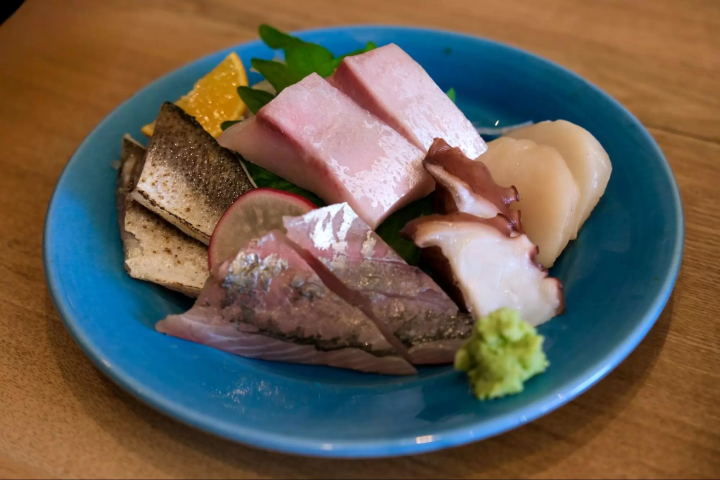
Sashimi set meal featuring fresh local fish
Pairing Soil Museum SHIDO with a nearby local meal creates a natural half-day itinerary: architecture and art first, followed by regional food rooted in Awaji Island’s daily life, all within walking distance.
Is Soil Museum SHIDO Worth Visiting?
Soil Museum SHIDO is particularly well suited for travelers interested in Japanese architecture, material culture, contemporary art, and hands-on experiences. Unlike traditional museums that focus primarily on visual display, this place allows visitors to walk on soil, touch it, work with it, and even taste it, making it a rare destination in Japan centered on material-based experience rather than observation alone.
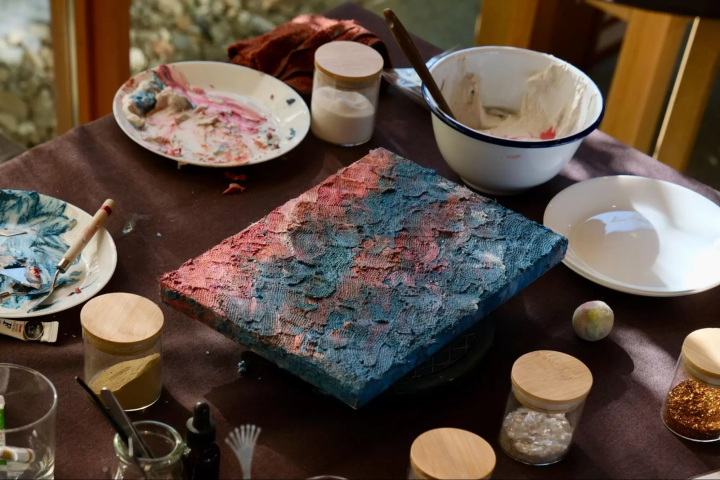
Finished soil texture artwork resting on a table after a workshop at tutito
It is especially appealing to travelers who enjoy craft-focused travel, slower itineraries, and places that connect local industry with cultural expression. The museum pairs naturally with other creative experiences on Awaji Island, where traditional crafts, food culture, and small-scale workshops remain closely tied to the land.
For visitors planning a longer stay, Soil Museum SHIDO works well as part of a broader Awaji Island itinerary focused on ceramics, natural dyeing, and local food culture, all within easy reach of Kobe and Osaka.
If you want to know more about other experiences, check out this article.
Sharing the allure of Awaji with the world, the Tourism Association highlights everything from breathtaking seasonal blooms to a culinary heritage so exquisite it was once known as 'Miketsu-kuni,' or the Land of Imperial Provisions.
The contents on this page may partially contain automatic translation.






Special Features
More











![[Introducing our English Program] Experience English-language activities at KidZania Tokyo!](https://resources.matcha-jp.com/resize/720x2000/2026/05/19-264204.webp)


![Enjoy popular spots in Okayama Prefecture with the great value digital travel ticket [Okayama Hare Tabi Passport]!](https://resources.matcha-jp.com/resize/720x2000/2025/04/28-232194.webp)