
Awaji Island Food Culture: From Farm to Table in Japan
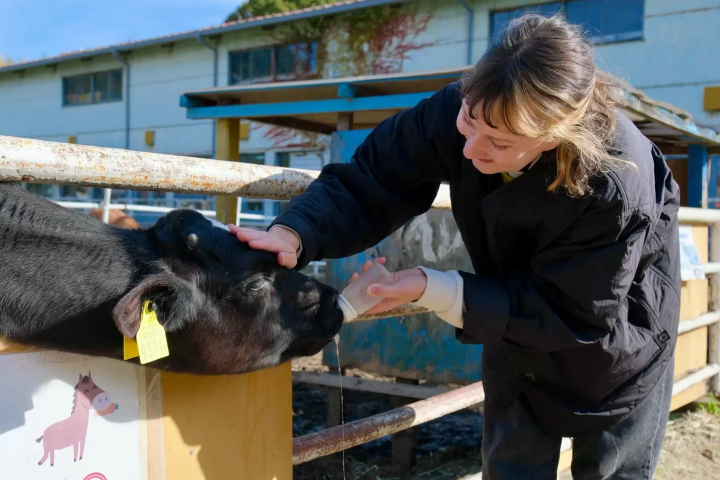
Awaji Island has long been celebrated as "Miketsukuni," a land of abundant food. Discover the stories that connect producers to your table—from onion harvesting and daily life at a dairy ranch to local eateries and cozy cafes serving the island's bounty. Only 1 hour from Kobe, come experience a journey of nature and food culture.

Written by
Sharing the allure of Awaji with the world, the Tourism Association highlights everything from breathtaking seasonal blooms to a culinary heritage so exquisite it was once known as 'Miketsu-kuni,' or the Land of Imperial Provisions.
This service includes sponsored advertisements.
Awaji Island has a lot to offer! Check out this article too.
Sitting between Kobe and Tokushima in Japan’s Seto Inland Sea, Awaji Island is known for its rich food culture and natural landscapes. A mild climate, fertile land, and abundant fishing grounds have supported agriculture, livestock, and fishing on Awaji Island for centuries, earning it a reputation as one of Japan’s true ingredient islands.
This journey explores Awaji Island’s food culture at its source. From onion fields and dairy farms to local kitchens and quiet spaces designed for rest, it follows how ingredients move from soil and sea to the table. By meeting the people who grow, raise, and prepare them, travel in Awaji Island becomes an experience shaped by patience, care, and time.
-
Table of Contents
- Awaji Island as Miketsukuni: Food and Cultural Continuity
- Awajishima Hamada Farm: Onions between sea and sun
- Awaji Island Farm: A Hands-On Dairy Experience
- Akafuji, Sumoto: from farm to table
- Neki – Frames & Coffee: a quiet cup to end the journey
- Living with food, not consuming it
Awaji Island as Miketsukuni: Food and Cultural Continuity
Awaji Island is historically known as Miketsukuni—the “land of food.”
The term dates back to the Heian period (794–1185) and referred to provinces that supplied food to Japan’s imperial court. Alongside Awaji Island (Hyogo Prefecture), Wakasa (Fukui Prefecture), and Shima (Mie Prefecture) were recognized for their abundance of ingredients and their long-standing role in supporting court cuisine.
This historical role still lingers on Awaji Island today, not as a formal title, but as an attitude toward food. Ingredients are treated with respect, not as commodities, but as part of a cultural continuity passed quietly from one generation to the next.
Awaji Island’s food self-sufficiency rate is often cited as exceeding 100%
On Awaji Island, agriculture, livestock farming, and fishing operate as a single system. This balance has produced a food self-sufficiency rate often cited as exceeding 100%, placing the island among the highest in Japan.
This approach goes beyond production alone. Cultivation, processing, and local sales are closely linked, with community farms and agro-tourism offering ways for both residents and visitors to engage with everyday food practices. Meals are understood as the result of natural conditions, human labor, and time. Food on Awaji Island is not separate from daily life, but embedded in it.
Moving through the island with this perspective, you begin to notice food taking shape well before it appears on the table.
Awajishima Hamada Farm: Onions between sea and sun
Awajishima Hamada Farm is situated in Minamiawaji City, where open fields overlook the sea and the wind carries a faint trace of salt. Run by the Hamada family, the farm becomes especially lively during peak working periods in both autumn to early winter and spring to early summer autumn and early winter, when multiple generations work the fields together, filling the space with conversation.
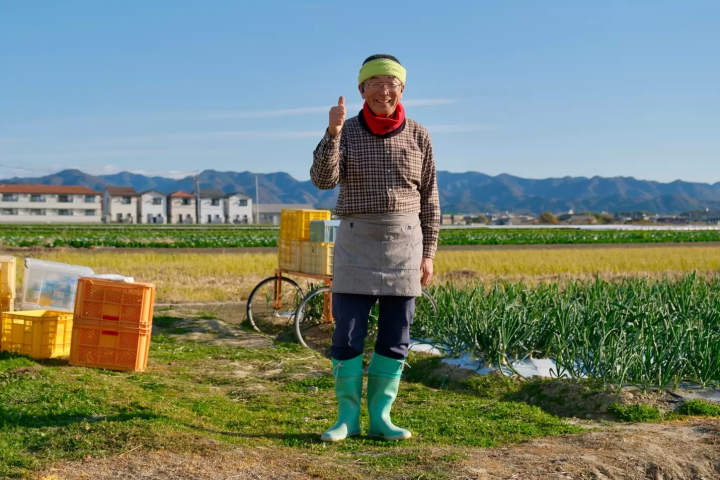
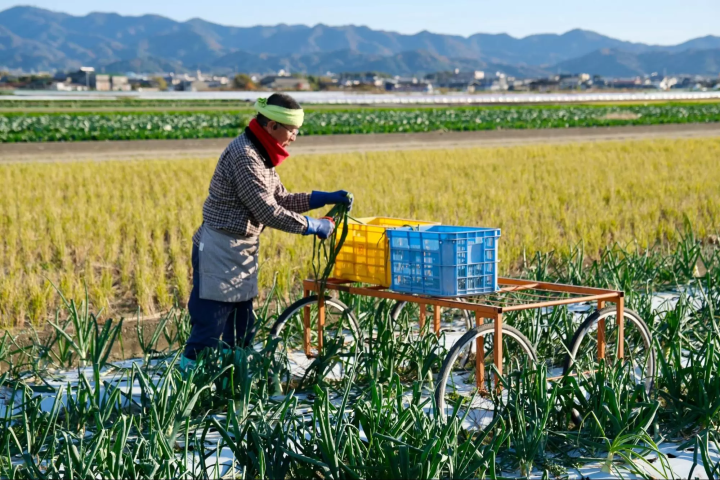
Hamada-san working in the onion fields on a sunny day
On Awaji Island, onions develop gradually under long hours of sunlight, warm seasonal temperatures, and soil shaped by the surrounding sea. These conditions give Awaji onions their characteristic mild sweetness and tender texture.
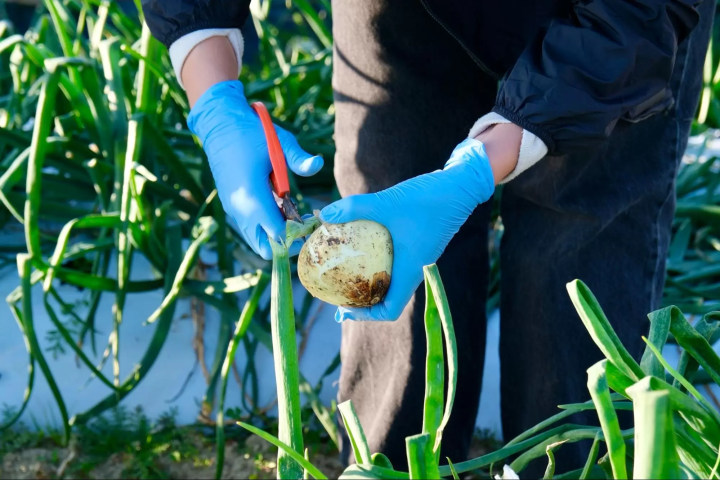
Awaji Onions are famous for their crisp texture and natural sweetness
The Awaji onion growing season begins in September, marking the start of the annual cultivation cycle. From September to December, visitors can observe and take part in onion planting, while the harvest season runs from mid-November through mid-June. Because different onion varieties are grown across these periods, Awaji onions are available year-round, each reflecting a specific stage of the island’s agricultural calendar.
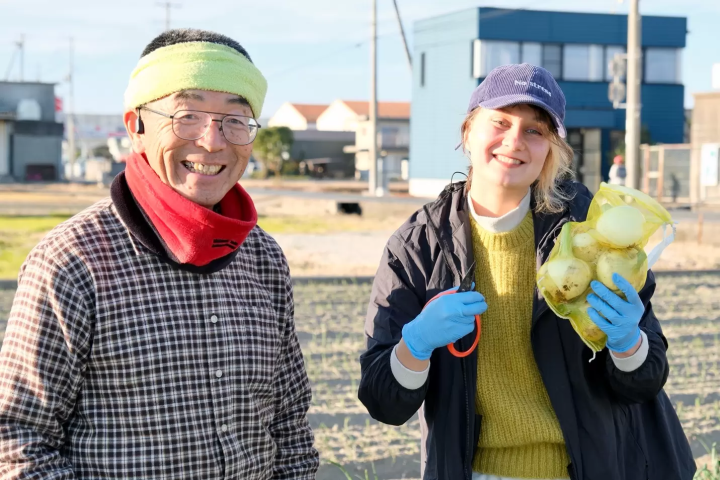
Hamada-san and Kristina after spending time in the fields harvesting onions
During certain periods, visitors can spend time in the fields with local farmers, learning about cultivation methods, seasonal rhythms, and daily farm work. Harvesting an onion by hand, lifting it from the soil, and clearing away the earth offers a physical understanding of how food is produced on Awaji Island.
The experience is open to visitors of all ages and does not require prior farming experience, making it accessible even for first-time participants. Advance booking is required and can be completed online by clicking the button below.
Working in the fields, hands in the soil, exposed to the island’s open air, you gain a clearer understanding of how place, time, and human effort shape food.
Awaji Island Farm: A Hands-On Dairy Experience
Awaji Island Farm, also known as Awajishima Ranch, is a working dairy farm where cows are raised in open pastures and spacious barns. This is not a sightseeing attraction, but an operational ranch where daily farm work continues as usual. Visitors are invited to observe and take part in routine dairy activities, gaining direct exposure to how milk is produced on Awaji Island.
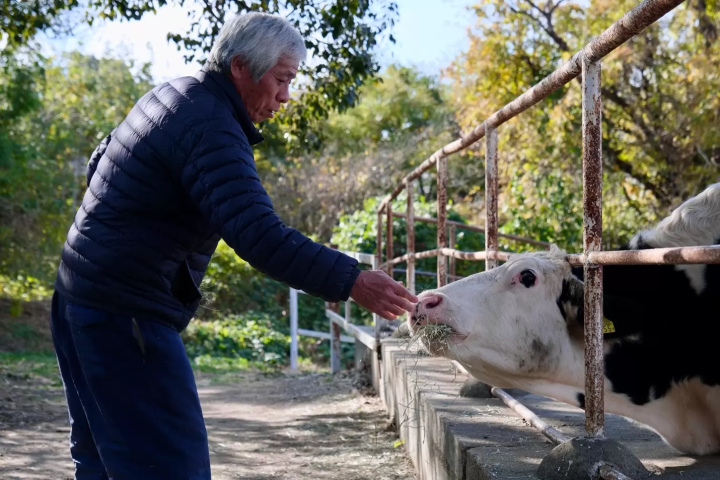
Feeding hay to a cow at Awaji Island Farm
Participants can try milking a cow, making butter by hand, or feeding a calf with a bottle. Each activity introduces the steps behind everyday dairy products through direct involvement rather than explanation alone.
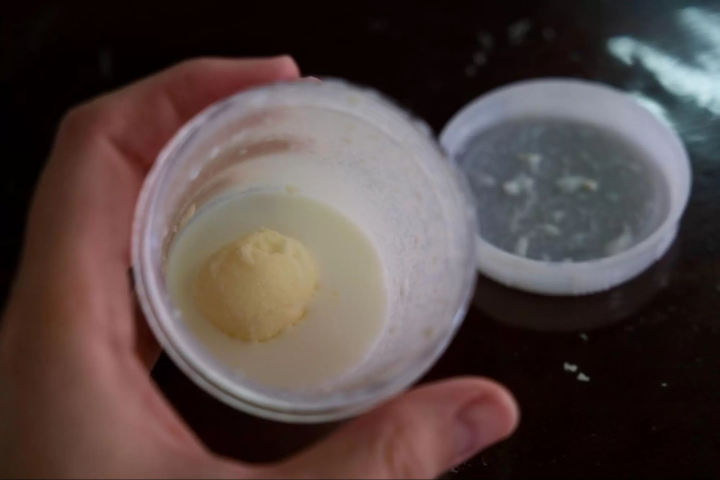
With steady shaking, fresh milk transforms into butter inside the container.
Butter-making is one of the most engaging parts of the visit. Fresh milk is poured into a small container and shaken by hand until the fat separates and forms butter. The process takes only a few minutes, but seeing the change happen through repeated movement makes it unexpectedly absorbing. Once finished, the butter is tasted immediately on a cracker, fresh, rich, and unlike anything you would find packaged or stored.
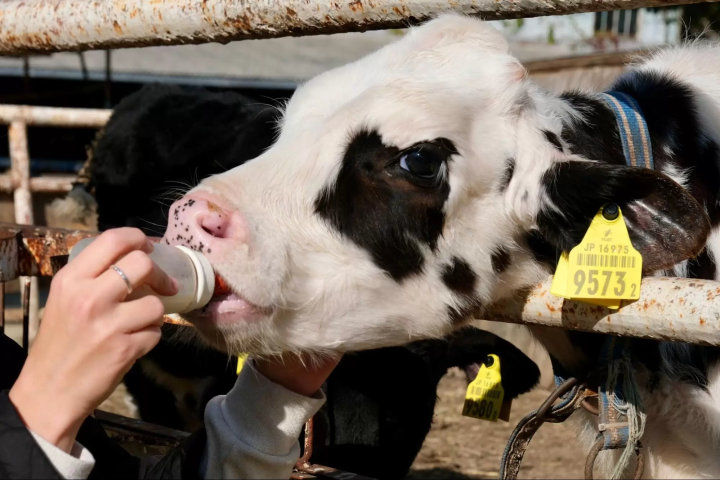
Feeding a calf with a bottle at Awaji Island Farm
What stands out most is the farming environment itself. Cows are kept in clean, open spaces, fed carefully managed diets, and monitored daily to maintain their health. This approach is reflected in the milk’s flavor, which is absolutely amazing!
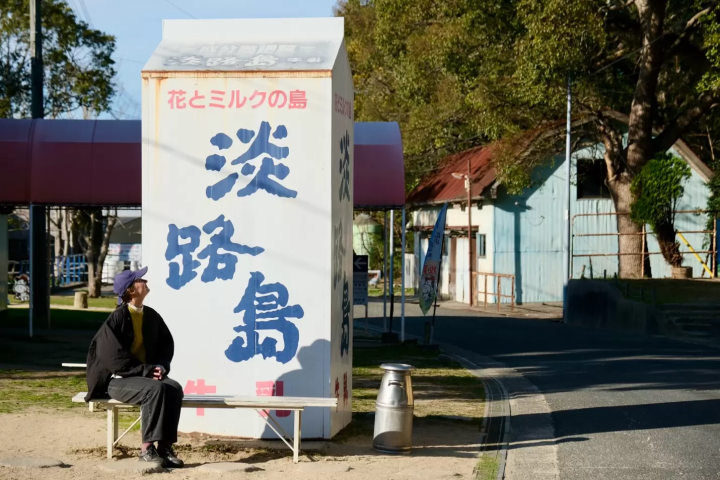
Kristina sitting in front of the Awaji Island Farm entrance, marked by a sign shaped like a giant milk carton
One specialty you’ll hear locals mentioning is Mozart Milk, produced by cows kept in calm surroundings where classical music is played in the barns. The practice is simple: reducing stress supports steady milk production and results in a naturally smooth taste. Mozart Milk is sold throughout Awaji Island in both original and coffee varieties. If you’re visiting the island, it’s well worth trying!
Akafuji, Sumoto: from farm to table
In Sumoto City on Awaji Island, Akafuji is a small local eatery known for its Japanese-style breakfasts and simple lunch sets. The restaurant opens early, serving breakfast from 6:30 to 10:00, before reopening for lunch from 11:00 to 14:30.
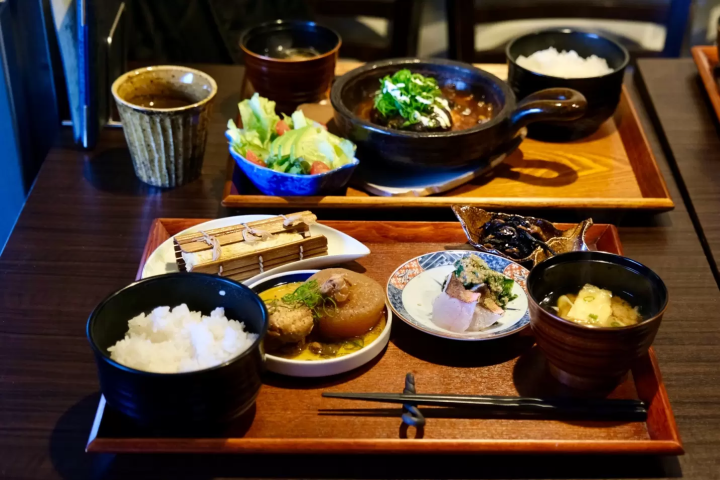
A seasonal meal made with local ingredients, served at Akafuji
Meals are based on set menus featuring locally grown Awaji rice, fish or meat, miso soup, eggs, and pickles, with lighter options such as chicken porridge also available. The rice is grown on the island and prepared with care, reflecting the restaurant’s focus on everyday ingredients and straightforward cooking.
Opening hours and menu updates are shared directly by the owner through the restaurant’s Instagram account.
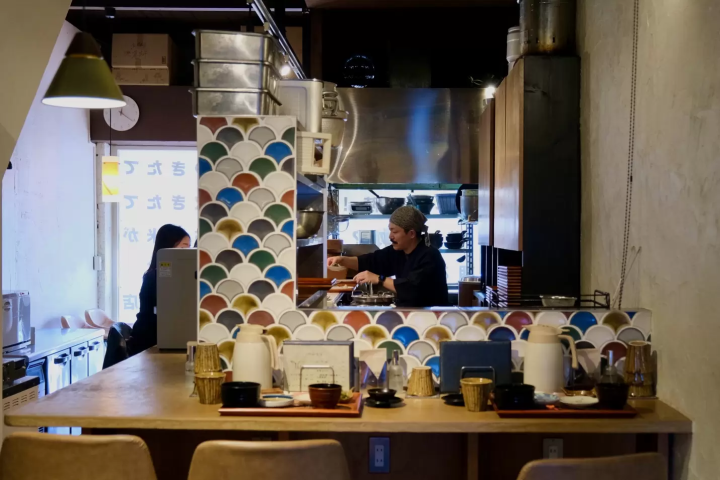
Inside Akafuji, a small local eatery in Sumoto
The food tastes clean and complete, filling without weighing you down. Lunch moves at a slow pace, drawing attention to the work and time involved before the food arrives at the table.
Neki – Frames & Coffee: a quiet cup to end the journey
Neki – Frames & Coffee is tucked into a quiet residential area of southern Awaji Island. It is the kind of cafe people visit at the end of the day, when there is no schedule left to follow.
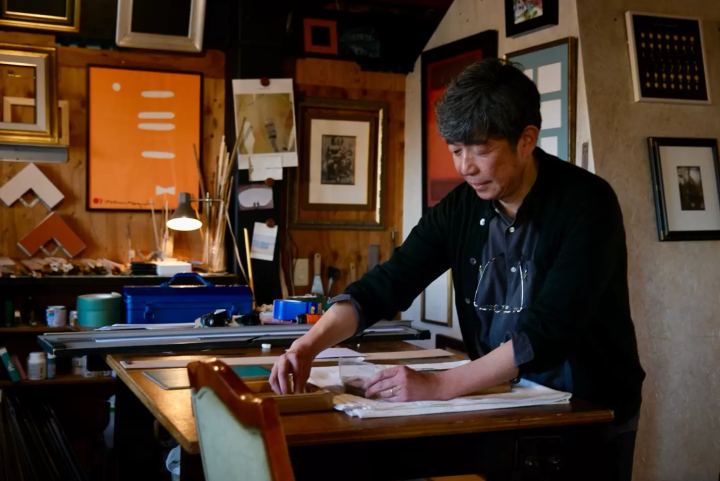
Kato-san inside Neki – Frames & Coffee, surrounded by handcrafted frames
The cafe sits in a small renovated building, and once inside, there is little reason to leave. The space is arranged to keep voices low and time unmarked. Many visitors come alone, settling in with a book or staying over a single cup of coffee longer than planned, without feeling any need to rush.
The owner of Neki – Frames & Coffee is a professional frame maker, and this background shapes the interior. Handcrafted frames and framed works line the walls, giving the cafe a distinct identity. Sitting inside, attention naturally shifts to small details: the grain of the wood, the sound of cups placed on the counter, and the movement of light across the room.

Kristina inside Neki – Frames & Coffee, taking a quiet moment with a cup of coffee and a cake
After walking around Awaji Island all day, Neki felt like a place where you could sit without doing anything else, finish the cup slowly, and let the impressions of the day settle.
Living with food, not consuming it
Awaji Island does not explain food through displays or stories, but through everyday actions. Pulling onions from the soil, watching farmers work at a steady pace, feeding a calf at a working dairy farm, none of it feels arranged for visitors. These are ordinary moments, yet they reveal how much care and repetition sit behind what usually appears effortless.
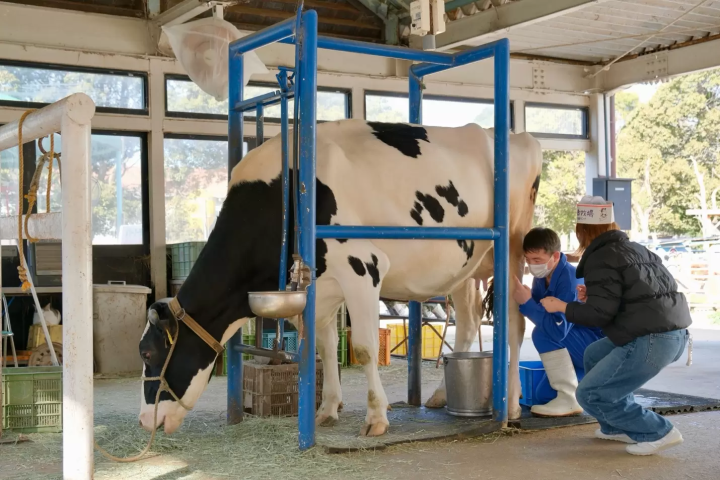
A staff member at Awaji Island Farm showing a visitor how to milk a cow
What makes this even more striking is how close it all is. Just over an hour from Osaka or Kobe, Awaji feels removed from the speed of the cities without being distant. This island is worth visiting for travelers who enjoy slowing down and spending time with everyday life.
For those who want to experience the slow flow of time and appreciate the everyday activities of life, Awaji Island is sure to be a special place worth visiting.
There are many other ways to enjoy Awaji Island. Check out this article for more details.
Sharing the allure of Awaji with the world, the Tourism Association highlights everything from breathtaking seasonal blooms to a culinary heritage so exquisite it was once known as 'Miketsu-kuni,' or the Land of Imperial Provisions.
The contents on this page may partially contain automatic translation.






Special Features
More








![[Introducing our English Program] Experience English-language activities at KidZania Tokyo!](https://resources.matcha-jp.com/resize/720x2000/2026/05/19-264204.webp)


![Enjoy popular spots in Okayama Prefecture with the great value digital travel ticket [Okayama Hare Tabi Passport]!](https://resources.matcha-jp.com/resize/720x2000/2025/04/28-232194.webp)