Visiting Dejima: Nagasaki’s Restored Dutch Trading Post
Step back in time at Dejima in Nagasaki. Explore the restored artificial island that served as Japan's sole international trading hub during the Edo period.

Written by
Born in Niigata. After gaining experience in corporate marketing, I moved to Singapore in 2011, where I worked as an editor. I returned to Japan in 2015 and joined MATCHA as a writer. Through my travels both in Japan and abroad, I love sharing my discoveries with a wide audience.
This service includes sponsored advertisements.
Dejima: Nagasaki's Historic, International Trading Center
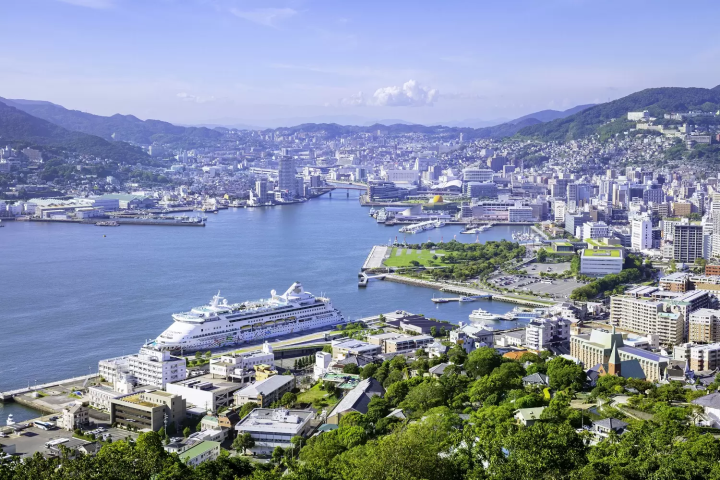
Near the bustling streetcar lines in the heart of Nagasaki, a historic neighborhood appears almost out of nowhere. This is Dejima, an area that looks as if it were frozen in Japan’s Edo period (1603–1868).
Originally constructed as a walled trading post to facilitate commerce between Japan and the Netherlands, its historic buildings are currently being meticulously restored.
Taking a stroll here feels like stepping back in time. Below, we’ll introduce the must-visit spots in Dejima, the historic stage of international trade.
Dejima can be easily accessed from the Dejima stop on Streetcar Line No. 1.
-
Table of Contents
- The 390 Years of History Surrounding Dejima
- Dejima's Reconstructed Buildings
- The Chief Factor’s Residence: A Blend of Japanese and Western Styles
- Medicine and Culture Exhibits in the Old Stone Storehouse

The 390 Years of History Surrounding Dejima
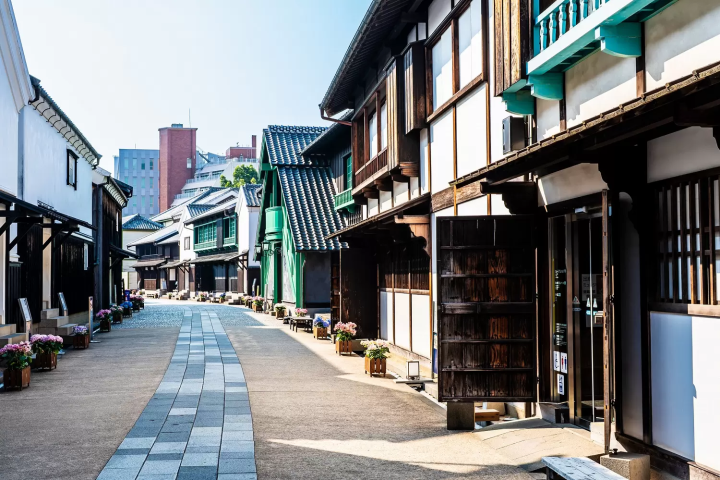
Photo by Pixta
Built in 1636, Dejima was originally an artificial island. During the Edo period, the ruling shogunate banned Christianity across Japan and constructed Dejima to segregate the local population from the Portuguese living in Nagasaki.
While it was once completely isolated, today the former island has been integrated into the modern city.
Before long, the Dutch East India Company established a trading post here. Because Edo-period Japan strictly isolated itself from the outside world, Dutch and Chinese merchant ships were the only foreign vessels permitted to drop anchor.
As a result, Dejima served as Japan’s sole gateway to the Western world.
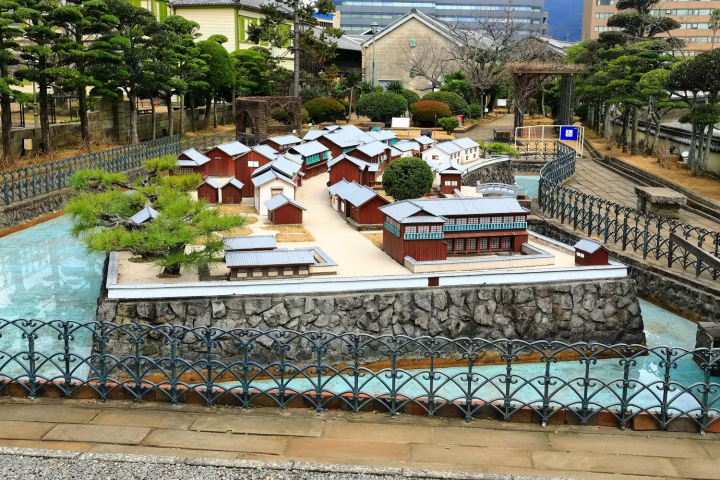
Photo by Pixta
However, during the transition to the Meiji period (1868–1912), extensive land reclamation and modernization projects essentially swallowed the original island, leaving Dejima buried under new urban development.
If you want to see what this historic trading post looked like in its prime, a detailed, 1/15 scale model of Edo-period Dejima is on display in the miniature garden on-site.
Dejima's Reconstructed Buildings
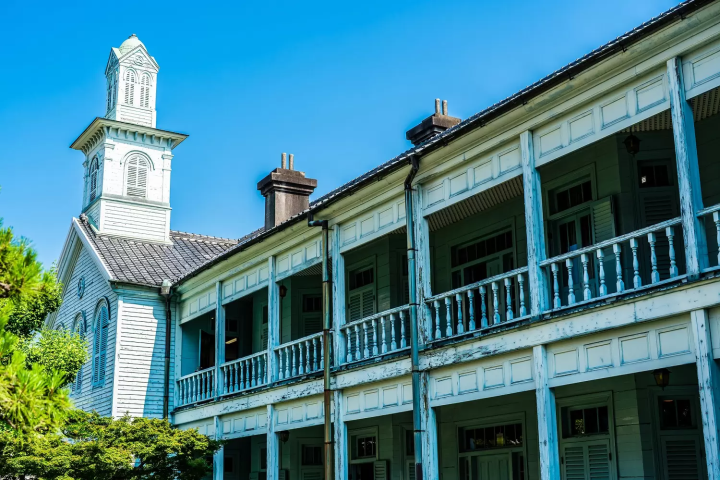
Photo by Pixta
Today, you can still experience the vibrant atmosphere of Dejima just as it was when Dutch traders first set foot on the island.
One of the area's most striking landmarks is a colorful, blue-paneled building known as the Old Dejima Seminary. While it may look more like an elegant residence than a church, this structure is actually the oldest surviving Protestant seminary in Japan.
Another standout structure is the Old Nagasaki International Club, an elegant, English-style building featuring striking green pillars.
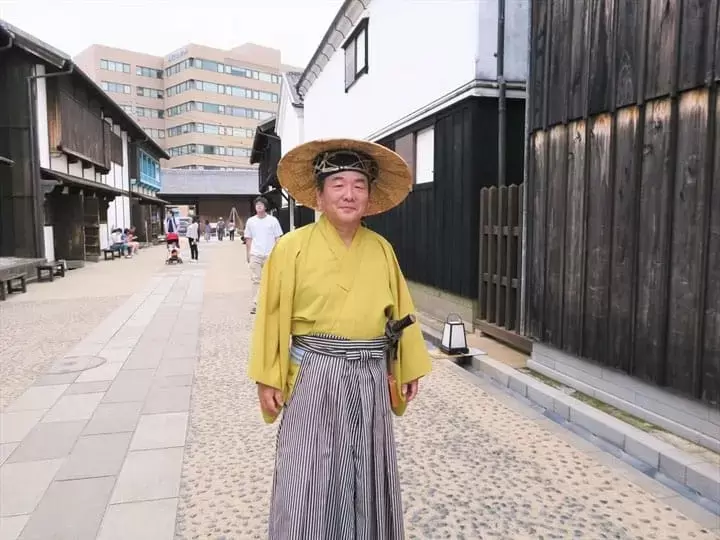
Nearby, you will find the Captain’s Quarters (historically known as the First Ship's Captain's Room), where the Dutch ship captains used to reside. Today, this historic space offers a kimono-rental experience.
Slipping into traditional Japanese clothes, taking photos, and strolling around the historic streets of Dejima is a fantastic way to immerse yourself in the atmosphere!
The Chief Factor’s Residence: A Blend of Japanese and Western Styles
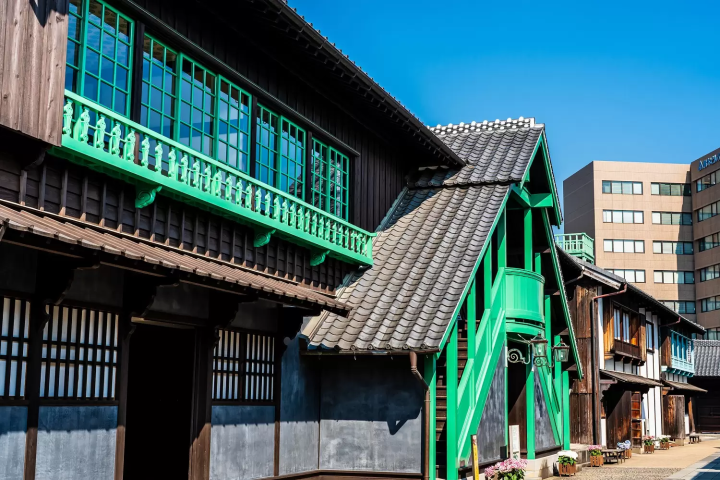
Photo by Pixta
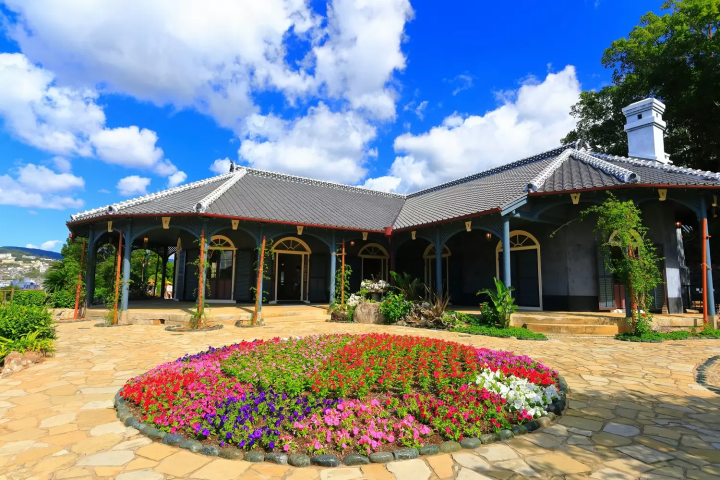
With its striking design and distinct green exterior, the Chief Factor’s Residence (traditionally called the Kapitan Room) is one of Dejima's most recognizable buildings.
During the Edo period, this structure served as both the home and office for the head of the Dutch trading post.
Head up to the second floor to explore a beautifully recreated room, staged exactly as it would have looked when in use. Here, you'll see large European tables and chairs set directly on top of carpets laid over traditional Japanese tatami mats.
It is a fascinating, slightly surreal blend of Western and Japanese styles that perfectly captures the unique cultural fusion of early Dejima.
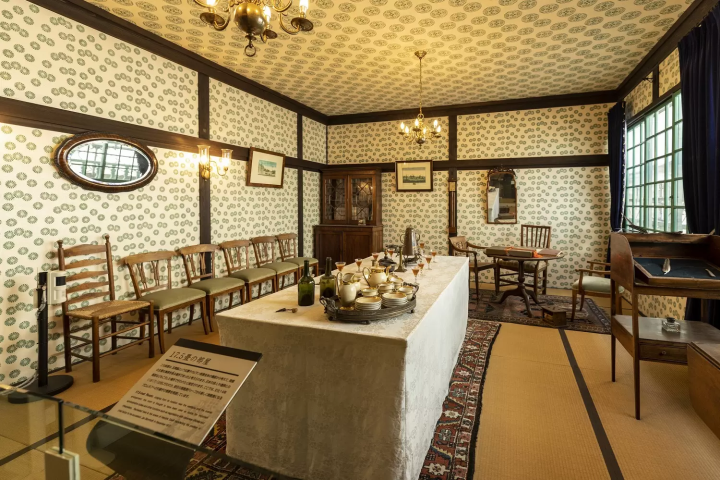
Photo by Pixta
In this dining area, you can get a firsthand look at how the Dutch celebrated. The table is laid out for a festive banquet, piled with meat dishes, fresh bread, and wine—a stark contrast to the traditional Japanese diet of the Edo period.
Over on the second floor of the Captain’s Quarters, you'll spot another unique cultural mashup. Instead of a traditional Japanese futon, a Western bed sits directly on top of the tatami mats.
This is a visual reminder of how these Dutch traders maintained their European lifestyles while living on the isolated island.
Medicine and Culture Exhibits in the Old Stone Storehouse
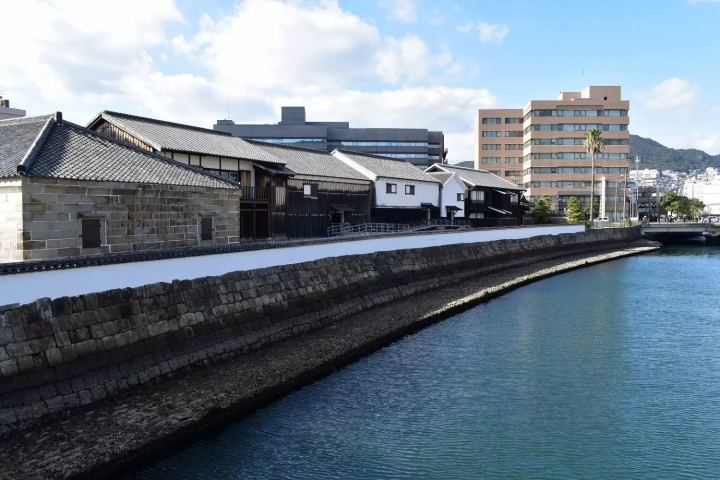
Photo by Pixta
Constructed near the end of the Edo period, the historic Old Stone Storehouse is an impressive structure that now serves as an exhibition hall for artifacts excavated on-site.
Among the highlights on display is an array of Arita porcelain tableware. If you look closely at these traditional Japanese designs, you will spot the initials "VOC"—the monogram of the Dutch East India Company.
These rare plates are particularly fascinating for the way they seamlessly blend European branding with Eastern artistry.
Among the literature on display is the Kaitai Shinsho (New Book of Anatomy), famed as the first Western medical text translated and published in Japan.
You will also find a historic Dutch-Japanese dictionary used by early translators. Looking at these texts, it becomes vividly clear that Dejima was at the absolute forefront of intellectual exchange, serving as Japan's window to global knowledge.
Alongside these academic works and daily items is a flintlock pistol, undoubtedly carried for self-defense.
Seeing an object like this brings the past to life, sparking the imagination to visualize the high-stakes trade and the daily realities of the people who lived on the island.
Enjoy Exploring Dejima
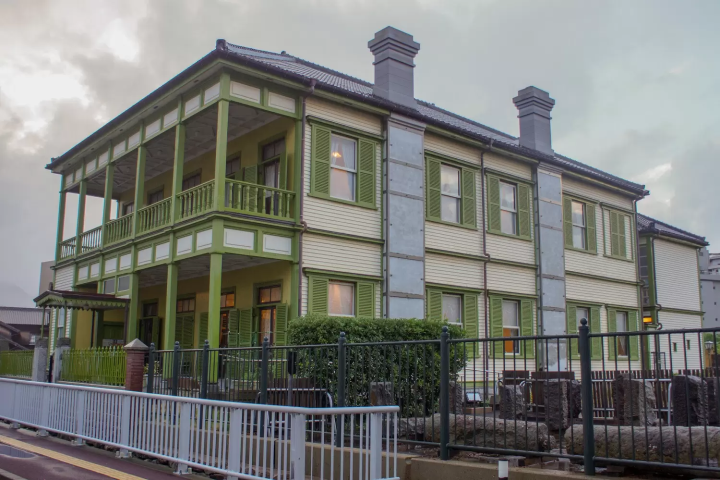
Photo by Pixta
Although the surrounding area has dramatically transformed due to modern urban development, Dejima itself remains a captivating time capsule.
Within its borders, the meticulously reconstructed Edo-period shops and the unique blend of Japanese and European cultures still thrive today. Walking through this historic site, you can truly feel the adventurous spirit of the international commerce that once linked Europe and East Asia.
Don't miss the chance to visit Dejima and experience the fascinating 390-year story that this remarkable island has to tell.
Dejima
Location: Google Maps
Hours: 8:00 - 21:00
Admission: 1,100 yen
Official website: https://nagasakidejima.jp/english/
Read also


Born in Niigata. After gaining experience in corporate marketing, I moved to Singapore in 2011, where I worked as an editor. I returned to Japan in 2015 and joined MATCHA as a writer. Through my travels both in Japan and abroad, I love sharing my discoveries with a wide audience.



Related Article



Special Features
More