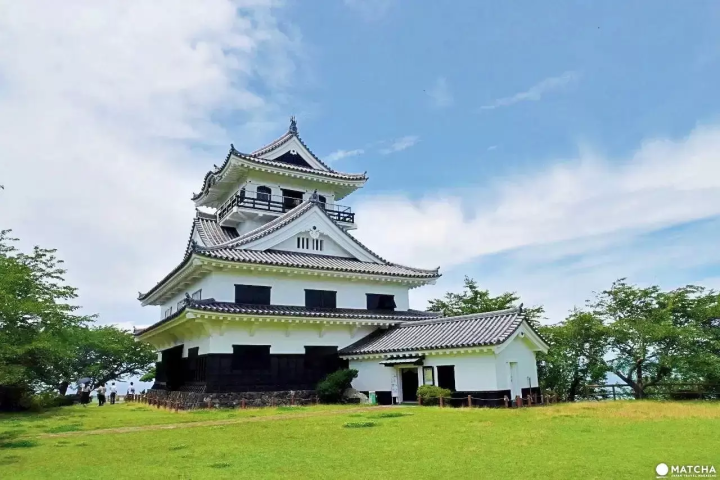
Plum Blossom Festivals in Japan: 10 Famous Events in 2026

Discover the beauty of plum blossoms in Japan! Explore 10 famous plum blossom spots and festivals (Ume Matsuri) to celebrate spring, culture, and longevity.

Written by
This is the official account of MATCHA's editorial department. Our articles feature useful travel information for visitors to Japan, from how-to guides to recommended places to visit.
This service includes sponsored advertisements.
Japan's Plum Blossom Spots and Festivals
Plum blossoms are deeply rooted in Japan's history and culture and have been loved by many for centuries.
Plum blossom festivals are held throughout Japan to celebrate the arrival of spring.
In this article, we introduce 10 famous plum blossom spots and festivals in Japan along with cultural facts related to these graceful blooms.
Plum Blossoms in Japan
Plum Blossoms in Japanese Culture
Plum Blossom Spots and Festivals
1. Ogose Plum Grove near Tokyo
2. Kairakuen Garden: Mito Plum Blossom Festival
3. Tsukuba Plum Blossom Festival
4. Akima Plum Blossom Festival in Gunma
5. Osaka Tenmangu Shrine: Tenma Tenjin Plum Blossom Festival
6. Kyoto: Kitano Tenmangu Shrine's Plum Blossom Festival
7. Nara's Tsukigase Plum Valley
8. Ishiyamadera Temple's Plum Blossom Festival
9. Dazaifu Tenmangu Shrine
10. Ushinoo Plum Grove in Saga
The Plum Blossom: One of Japan's Iconic Flowers
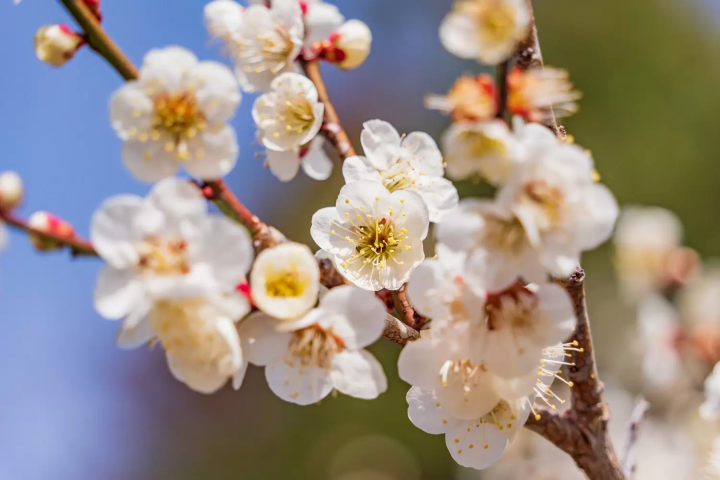
Photo by Pixta
Plum trees are classified as deciduous hardwoods in the Rosaceae family and the Prunus genus.
It is said that there are over 300 plum tree varieties today, including improved cultivars. Depending on the variety and region, the blooming period typically ranges from late January to around March.
One distinctive feature of plum blossoms is their longer blooming period compared to cherry blossoms.
The flower colors vary, including white, pink, and red, depending on the variety. Plums are believed to have been introduced from China, and since then, they have been cherished and have become culturally established in Japan.
Plum Blossoms in Japanese Culture
Photo by Pixta
Man'yoshu, the oldest existing collection of Japanese poetry compiled in the 8th century, includes numerous poems themed around plum blossoms. This shows their significance in Japanese culture.
Plum blossoms, which bloom in early spring after enduring the winter cold, are regarded as symbols of purity and indomitable spirit, earning the affection of samurai and poets alike.
Their blooming period coincides with the New Year celebrations, making them a popular good luck charm.
During the New Year, they are often displayed alongside other auspicious symbols such as pine and bamboo. Due to their long lifespan and the strong vitality of ancient trees that still produce buds, plum blossoms are also considered a flower that symbolizes longevity.
Plum Groves at Tenjin Shrines
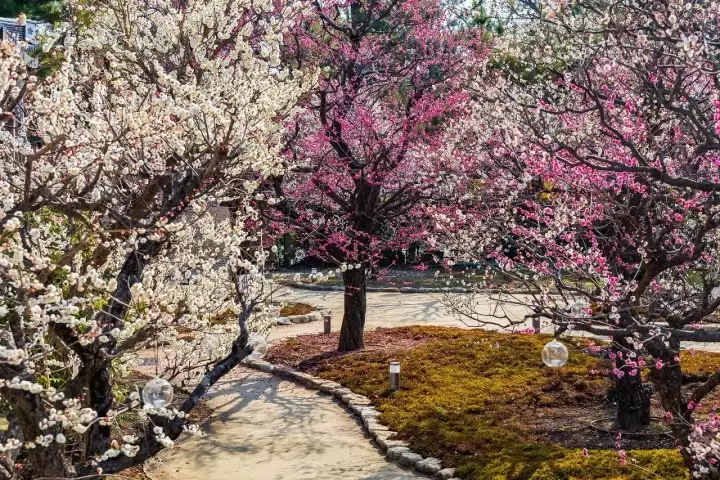
The plum grove at Kitano Tenmangu Shrine in Kyoto
Many Japanese shrines dedicated to Tenman-Tenjin, the deity of learning, have plum groves and host plum blossom festivals in early spring.
This feature goes back to Sugawara no Michizane (845-903), a scholar, poet, and politician of the Heian era, who had a deep fondness for plum blossoms.
Legend has it that when he was removed from his prestigious position at the imperial court and assigned to a minor role in Dazaifu, his beloved plum tree flew to Kyushu to be close to him.
After his exile and death, Sugawara no Michizane was deified as Tenman-Tenjin, the guardian of learning, leading to the popularity of plum blossom festivals at Tenjin and Tenmangu shrines throughout Japan.

Now, let's introduce famous plum blossom spots and festivals across the country where you can enjoy the charming plum flowers.
1. Ogose Plum Blossom Festival in Iruma, near Tokyo
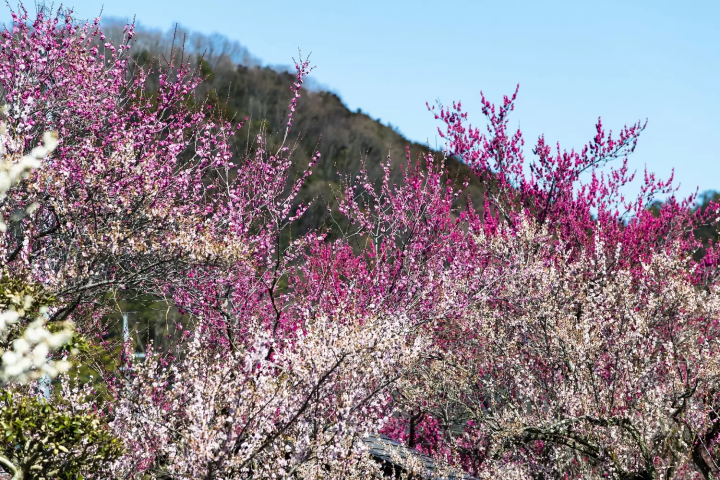
Photo by Pixta
The Ogose Plum Blossom Festival takes place in Ogose, a town in the Iruma District of Saitama Prefecture. The Ogose Plum Grove spans approximately 2 hectares with around 1,000 plum trees.
During the blooming period, about 20,000 plum trees, including those naturally growing in the surrounding area, bloom spectacularly, creating a breathtaking sight.
On weekends and holidays during the festival period, there are also events such as mini steam locomotive rides, performances by traditional Japanese taiko drums, and folk music, making it an enjoyable experience for both adults and children.
Ogose can be reached in about 70 minutes by train from Tokyo's Ikebukuro Station via the Tobu Tojo Line.
Ogose Plum Grove
Address: 113 Doyama, Ogose Town, Iruma District, Saitama Prefecture MAP
Opening Hours: 8:30 AM – 4:00 PM
2026 Festival Dates: February 14 - March 15
Admission fee: 500 yen
Official Website: https://ogose-kanko.jp/tourist_attractions/ogose-bairin/
2. Kairakuen Garden: Mito Plum Blossom Festival
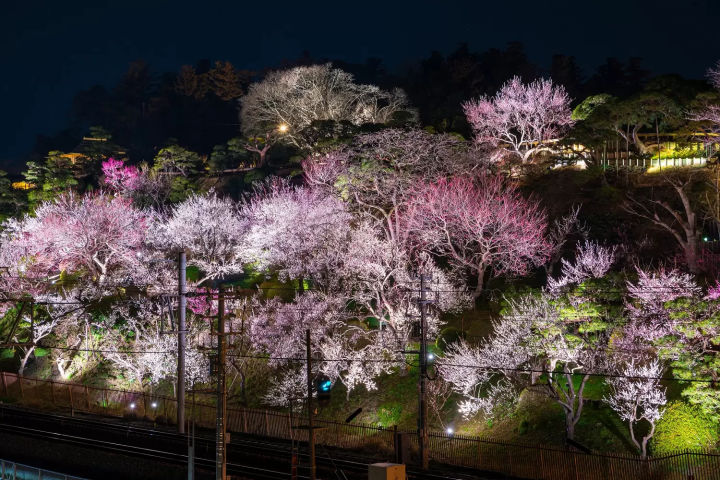
Photo by Pixta
The Mito Plum Blossom Festival, held in Ibaraki's Mito City, boasts a history of over 120 years. The main venue, Kairakuen Garden, is renowned as one of Japan's three most beautiful gardens and a famous plum blossom spot.
During the blooming season, around 3,000 plum trees of approximately 100 varieties blossom, heralding the arrival of spring. One of the festival's charms is the extended viewing period, as it features both early and late-blooming varieties.
The second venue is the Kodokan, a facility that was once a samurai academy, located within the precincts of Mito Castle. The garden of the Kodokan is also home to plum trees that bloom beautifully in February.
In 2026, the festival will celebrate its 130th event, with a variety of planned activities such as nighttime plum blossom illuminations, the Japan Umeshu Festa (an event dedicated to plum liquor), martial arts shows and demonstrations, tea ceremonies, and others.
Kairakuen Garden
Address: 1-3-3 Tokiwacho, Mito City, Ibaraki Prefecture MAP
Opening Hours: 6:00 AM – 7:00 PM
Festival Dates: February 11 – March 22, 2026
Admission fee: Adults 320 yen, Children 160 yen, Seniors (over 70) 160 yen
Official Website: https://mitokoumon.com/ume/ (Japanese)
3. Tsukuba Plum Blossom Festival
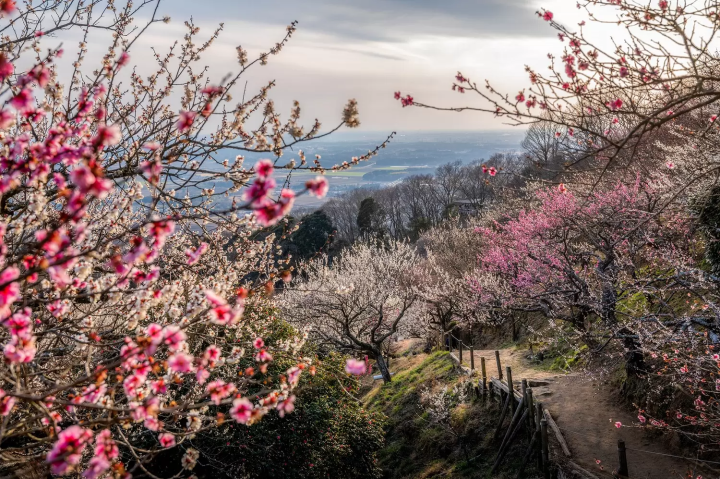
Photo by Pixta
The Tsukuba Plum Blossom Festival is held at the foot of Mount Tsukuba in Ibaraki. The festival takes place in the Mount Tsukuba Plum Grove, a 4.5-hectare plum garden with approximately 1,000 white and red plum trees.
The garden features charming structures like the Azumaya, Seseragi Bridge, and Ogi Bridge, which complement the plum blossoms beautifully.
Notably, on clear days, visitors can enjoy stunning views of Mount Fuji from the Azumaya observation deck, providing a quintessentially Japanese landscape.
Free Wi-Fi is available throughout most areas of the garden (excluding some sections), making it convenient for international visitors as well.
Mount Tsukuba Plum Grove
Address: 1688 Numata, Tsukuba City, Ibaraki Prefecture
Opening Hours: 9:00 AM – 4:00 PM
Festival Dates: February 7 – March 15, 2026
Official Website: https://umematsuri.jp/ (Japanese)
4. Akima Plum Blossom Festival in Gunma
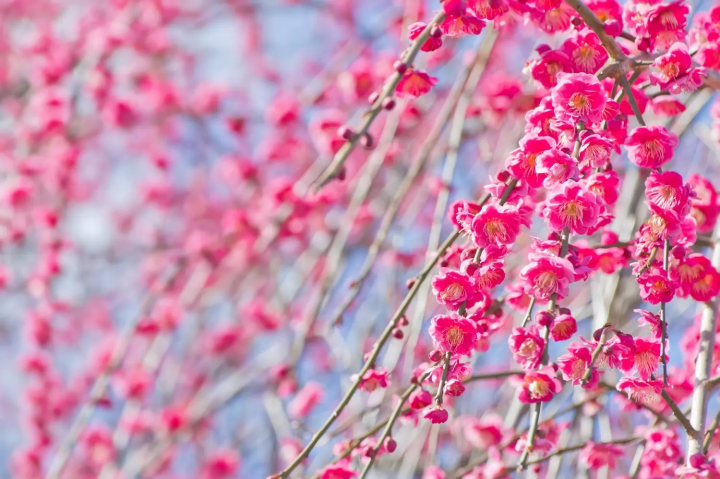
One of the three major plum gardens in Gunma, the Akima Plum Grove hosts the Akima Plum Blossom Festival.
This expansive plum garden covers approximately 50 hectares and is home to about 35,000 plum trees, filling the air with the elegant fragrance of red and white plum blossoms.
The typical peak bloom period is from early to mid-March. The garden features well-maintained walking paths, making it accessible for both small children and the elderly to stroll comfortably while enjoying the plum blossoms.
During the festival, various events are scheduled, including plum blossom illuminations, pottery experiences, and performances of traditional Japanese gagaku music.
Akima Plum Grove
Address: 672 Nishikamiakima, Annaka, Gunma Prefecture MAP
Opening Hours: Free access for strolling
Festival Dates: mid-February – Late March, 2026
Official Website: Akima Plum Grove (Japanese)
5. Osaka Tenmangu Shrine: Tenma Tenjin Plum Blossom Festival
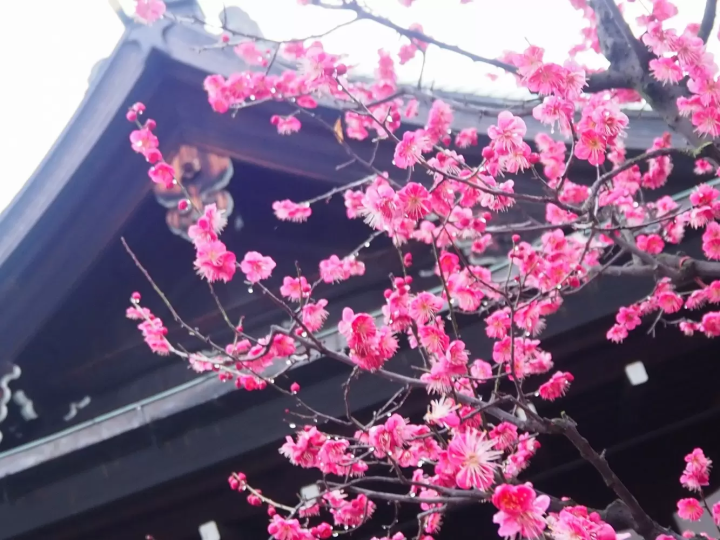
If you're looking to enjoy plum blossoms in Osaka, the Tenma Tenjin Plum Blossom Festival is highly recommended.
The venue, Osaka Tenmangu Shrine, is conveniently located, just a short walk from JR Osaka Tenmangu Station and Osaka Metro Minami-morimachi Station.
This shrine is dedicated to Tenjin, the deity of learning, also known as the historical figure of Sugawara no Michizane, a Heian-period poet and scholar, who deeply loved plum blossoms.
Osaka Tenmangu Shrine
Address: 2-1-8 Tenjinbashi, Kita Ward, Osaka City MAP
Opening Hours: 9:30 AM – 4:30 PM (Entry until 4:00 PM)
Festival Dates: February 11 – March 2, 2026
Admission fee: adults 700 yen, children 400 yen, visitors with disabilities 400 yen
Official Website: https://osakatemmangu.or.jp/saijireki/ume (Japanese)
6. Kyoto: Kitano Tenmangu Shrine's Plum Blossom Festival
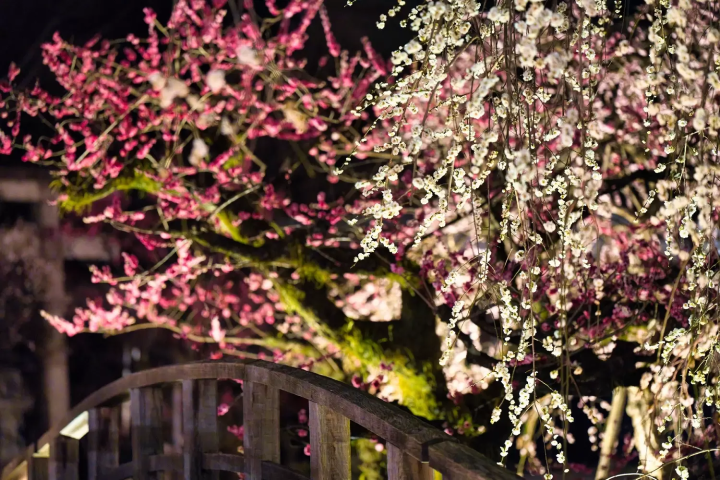
At Kyoto's Kitano Tenmangu Shrine, dedicated to Sugawara no Michizane, the guardian deity of learning, the Plum Blossom Festival (Baikasai) is held on the anniversary of his death.
Within the shrine grounds, there is a plum grove called Hana no Niwa, where approximately 1,500 plum trees of around 50 different varieties connected to Sugawara no Michizane are planted.
The plum garden is open from early February until late March (*admission fee: adults 1,200 yen, children 600 yen).
The plum blossom festival, known as Baikasai, is held each year on February 25, the day when Sugawara no Michizane passed away.
During the bloom period, various types of plums will flower, and walking paths are provided so that visitors can leisurely enjoy viewing the blossoms. The festival features special openings of the treasure hall and outdoor tea ceremonies conducted by maiko (apprentice geishas).
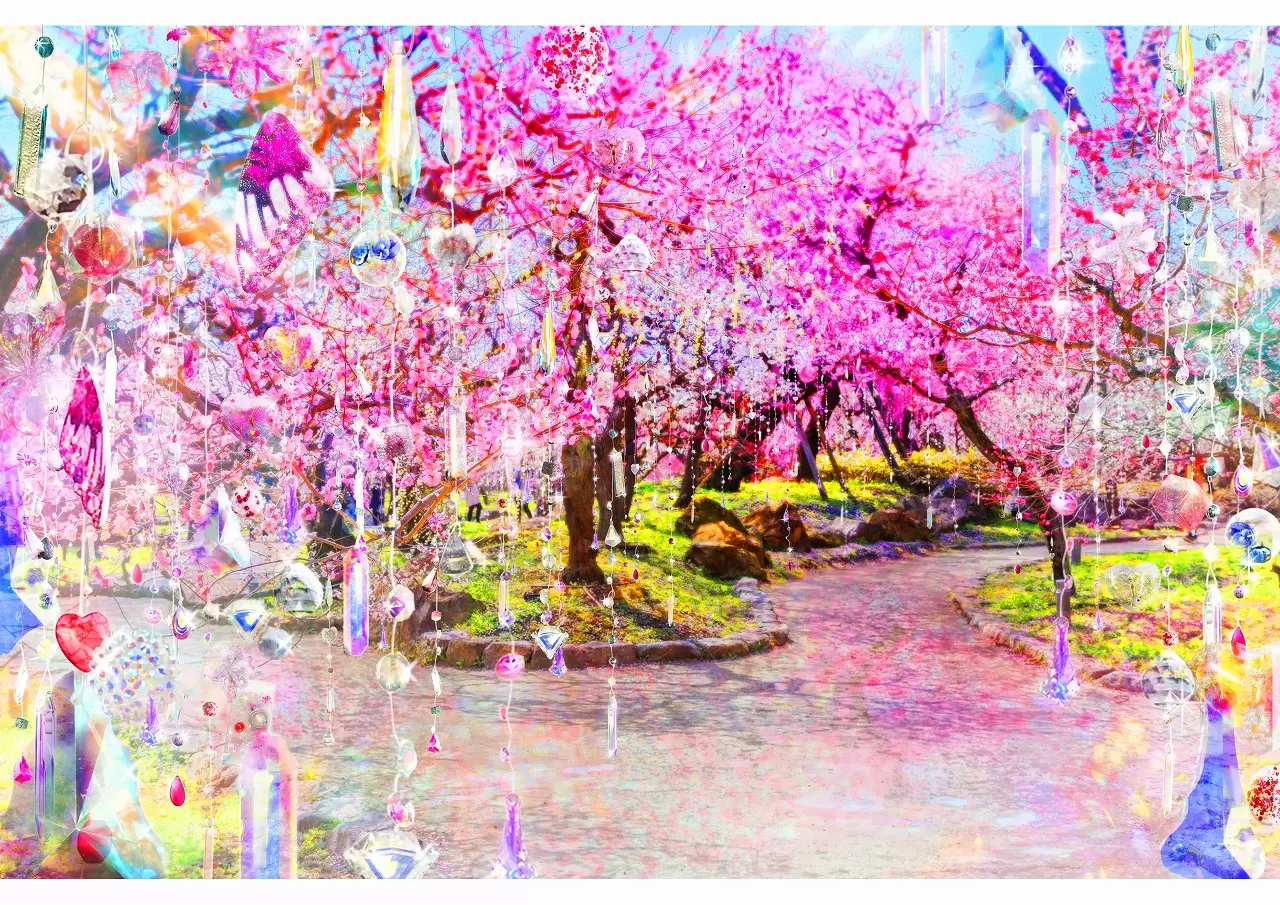
This year, the shrine is hosting the Kyoto Nippon Festival from February 1 to May 24. During the event, there will be flower-themed art installations and nighttime illuminations around the precincts.
Kitano Tenmangu Shrine
Address: Bakucho, Kamigyo Ward, Kyoto City, Kyoto Prefecture MAP
Opening Hours: 9:00 AM – 4:00 PM (Last entry at 3:40 PM)
Admission fee: adults 1,200 yen, children 600 yen
Baisakai Festival Date: February 25, 2026
Official Website: https://kitanotenmangu.or.jp/ (Japanese)
7. Nara's Tsukigase Plum Valley Plum Blossom Festival
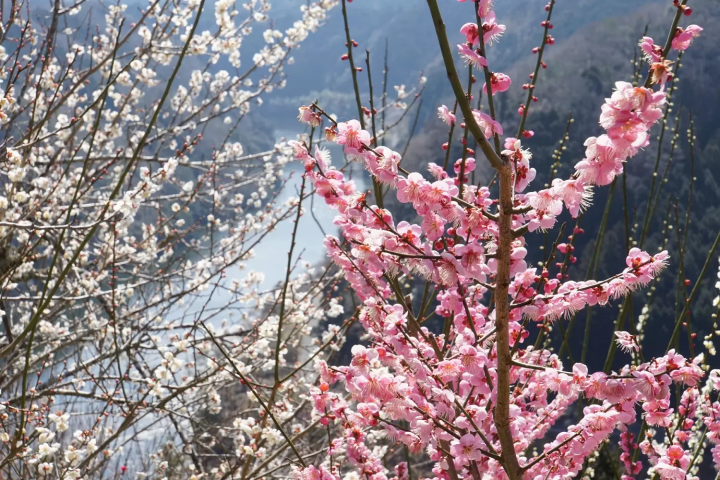
Tsukigase Plum Valley in Nara is one of Japan's premier plum blossom sites with about 10,000 plum trees on its hillsides.
As spring approaches, the area becomes awash with the vibrant colors of red and white plum blossoms, known for its stunning displays.
During the plum festival, various events are held, such as photo contests and haiku competitions, attracting a large number of tourists.
There are various plum gardens in the area, including the Ume Plum Park, a relaxation spot, the Houra Plum Grove, which offers beautiful views of the valley, and the Tenjin Plum Grove, which is home to numerous plum trees that make it a feast for the senses.
Tsukigase Plum Valley
Address: 21-8 Nagahibiki, Nara City, Nara Prefecture MAP
Opening Hours: Free access for strolling
Festival Dates: February 14 – March 29, 2026
Official Website: https://narashikanko.or.jp/event/detail_10289.html (Japanese)
8. Ishiyamadera Temple's Plum Blossom Festival
Ishiyamadera Temple, located in Otsu City near Kyoto, is a historic temple believed to have been built in the mid-8th century. It is particularly famous as the place where Murasaki Shikibu started to write the Tale of Genji, the world's first novel, during the early 11th century.
The temple grounds feature three plum gardens, where around 400 plum trees of about 40 different varieties bloom beautifully during the festival period.
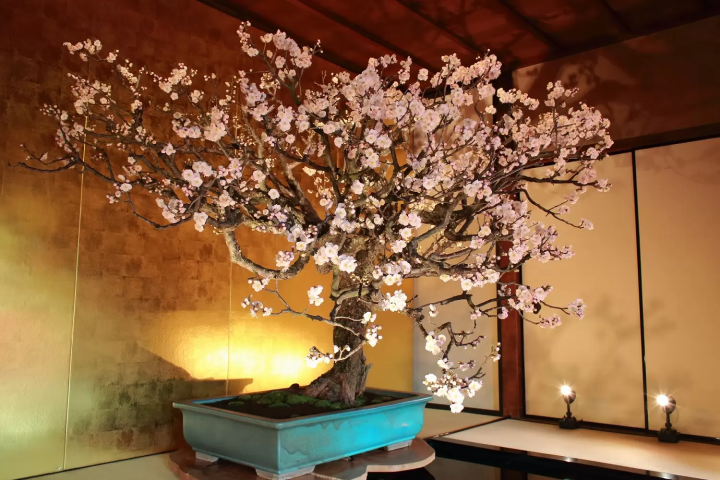
The Ume Tsukushi event (February 18 - March 18) is dedicated to plum blossoms. Throughout the event, there will also be an exhibition of over 100 bonbai (plum tree bonsai) displays scattered across the temple grounds, adding to the visual delight.
Additionally, local shops will offer seasonal dishes, sweets, and teas, allowing visitors to enjoy the plum experience not only visually but also through their taste buds.
This event is followed by Sakura Mairi (March 19 - April 12), an event dedicated to cherry blossoms. Ishiyamadera is famous as a "hana-dera", a flower temple, with seasonal blooms gracing its grounds all year.
Ishiyamadera Temple
Address: 1-1-1 Ishiyama, Otsu City, Shiga Prefecture MAP
Opening Hours: 8:00 AM – 4:00 PM
Festival Dates: February 18 – March 18, 2026
Official Website: https://www.ishiyamadera.or.jp/guide/event/umetsukushi
9. Dazaifu Tenmangu Shrine: Dazaifu Tenmangu Monzen Festival
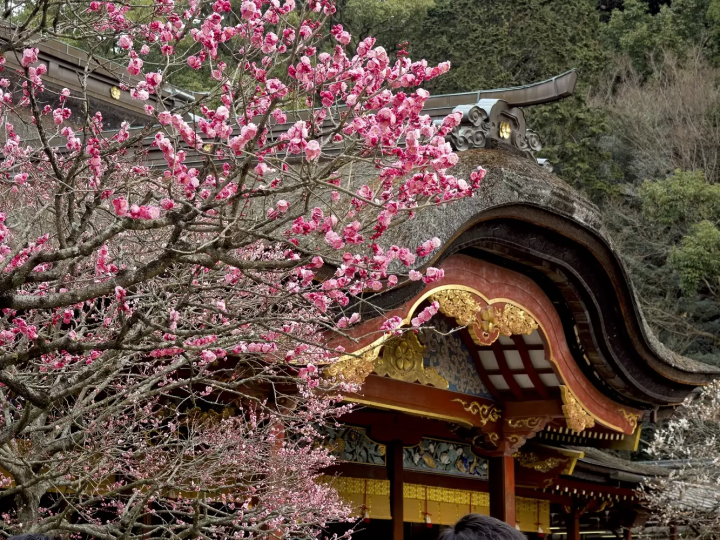
At Dazaifu Tenmangu Shrine, dedicated to Sugawara no Michizane, the Dazaifu Tenmangu Monzen Festival is held in early spring.
This festival is related to the "Banquet of Plum Blossoms" mentioned in a verse from the Man'yoshu poetry collection, which is also the origin of the current era name "Reiwa".
Various events are held throughout the festival period, such as the Kyokusui no Utage, a traditional poetry competition, and the Monzen Matsuri Fair.
During the Kyokusui no Utage, participants dressed in Heian period clothing recite waka poetry while drinking from sake cups as part of a traditional ritual.
At the Monzen Matsuri Fair, there is a limited opportunity for participants to enjoy a free painting experience on Kiuso, wooden figures modeled after the Japanese bullfinch, traditionally used in Dazaifu Tenmangu ceremonies.
This event provides a strong connection to Japan's traditional culture, so be sure to visit!
Dazaifu Tenmangu Shrine
Address: 4-7-1 Saifu, Dazaifu City, Fukuoka Prefecture MAP
Opening Hours: 6:30 AM – 6:30 PM
Festival Dates: February 1 – March 20, 2026
Official Website: https://www.dazaifutenmangu.or.jp/en/discover-dazaifu-tenmangu/nature-and-seasons/
10. Ushinoo Plum Grove in Saga: Misato Ushinoo Plum Blossom Festival
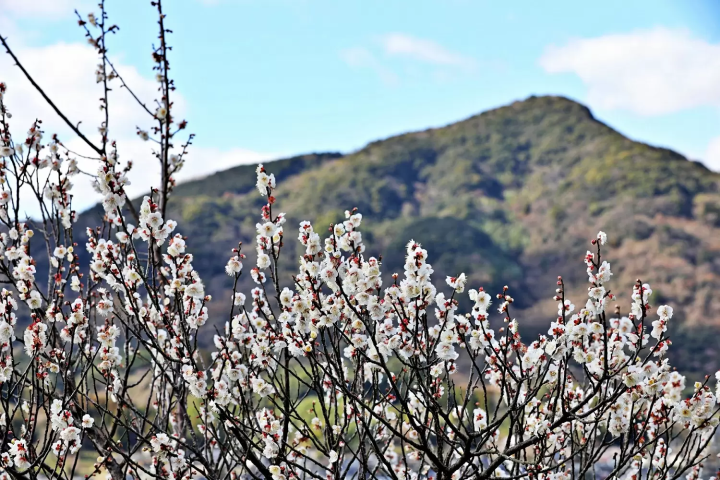
The Ushinoo Plum Grove is a vast plum grove in Ogi, a town in Saga, covering approximately 22 hectares and home to around 5,000 plum trees.
From the summit, visitors can enjoy excellent views, and during the blooming season, the sight of white plum blossoms sprawling below creates a breathtaking panorama.
Known as a renowned plum blossom spot since the late Edo period, it attracts many visitors from all around Japan.
The plum blossoms usually reach their blooming peak from late February to early March, coinciding with the Misato Ushio Plum Blossom Festival, which is usually held on February 25.
During the festival, visitors can enjoy sales of local agricultural products and specialties, along with food trucks offering a variety of refreshments. Due to traffic regulations during the festival period, using a shuttle bus is recommended.
Ushinoo Plum Grove
Address: 4907 Ikegami, Ogi Town, Saga Prefecture MAP
Opening Hours: Free access for strolling
Festival Dates: Typically from late February to early March
Official Website: https://www.ogi-kankou.com/tourist/ushinoo-plumforest.html (Japanese)
Enjoy the Plum Blossom Festivals that Announce Spring
The plum blossom festivals are a perfect opportunity to fully appreciate the delicate beauty of plum flowers. Surrounded by the elegant fragrance of plum blossoms, you can experience a sense of tranquility and relaxation.
Why not venture out to one of the plum festivals mentioned in this article and feel the early arrival of spring?
Read also


Written by Cakutama editorial team
Main image by Pixta
This is the official account of MATCHA's editorial department. Our articles feature useful travel information for visitors to Japan, from how-to guides to recommended places to visit.
Top Articles
There are no articles in this section.
Special Features
More