10 Sites From "Kokuho": Filming Locations and Story Settings (Spoilers)
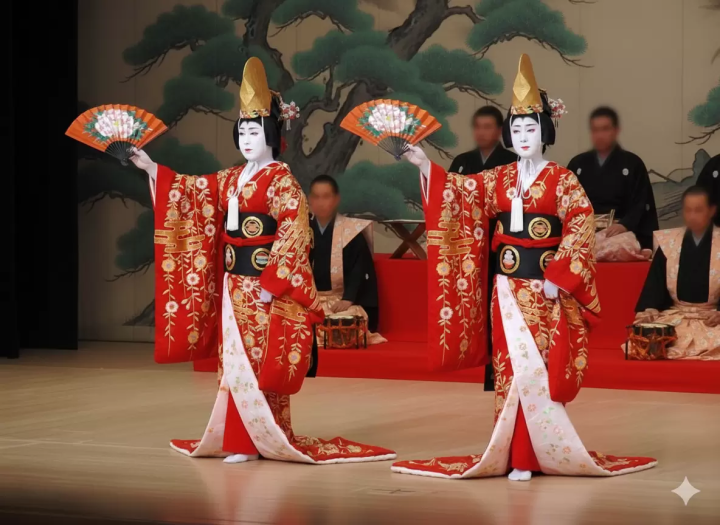
Discover 10 places from Kyoto, Osaka, and other cities that served as filming locations for "Kokuho" - a must-see for fans who want to relive the world of the movie.

Written by
Born in Taipei, Taiwan. I worked in the inbound tourism industry in Kyoto, writing a blog about travel in Japan. I joined MATCHA in October 2019.
Hobbies: travel, watching trains, visiting stylish cafes, sweets, collecting seal stamps, watching musicals, taking photos, and others - so many, in fact, that I find it weird myself.
more
This service includes sponsored advertisements.
Places to Visit If You Enjoyed "Kokuho"
The movie "Kokuho" (lit. "National Treasure"), starring Ryo Yoshizawa and Ryusei Yokohama, is the story of an orphan who becomes a successful Kabuki actor.
The title refers to "ningen kokuho," the highest distinction that a Japanese artist can receive for their accomplishments.
Many unforgettable scenes, born from the actors' stunning performances, have made the film a hit with over 10 billion yen in box office revenue in Japan.
Most of the filming took place in the Kansai region (western Japan) in locations that are quite easy to access. In this article, we introduce 10 places that served as filming locations for "Kokuho" — a must-visit for fans!
-
"Kokuho" Filming Locations
- A Masterpiece Blending Traditional Performing Arts with Film
- 4 Kabuki Theaters Featured in "Kokuho"
- 4 Key Filming Locations Related to Kikuo's Story
- 2 Story Settings from Kabuki Plays
A Masterpiece Blending Traditional Performing Arts with Film
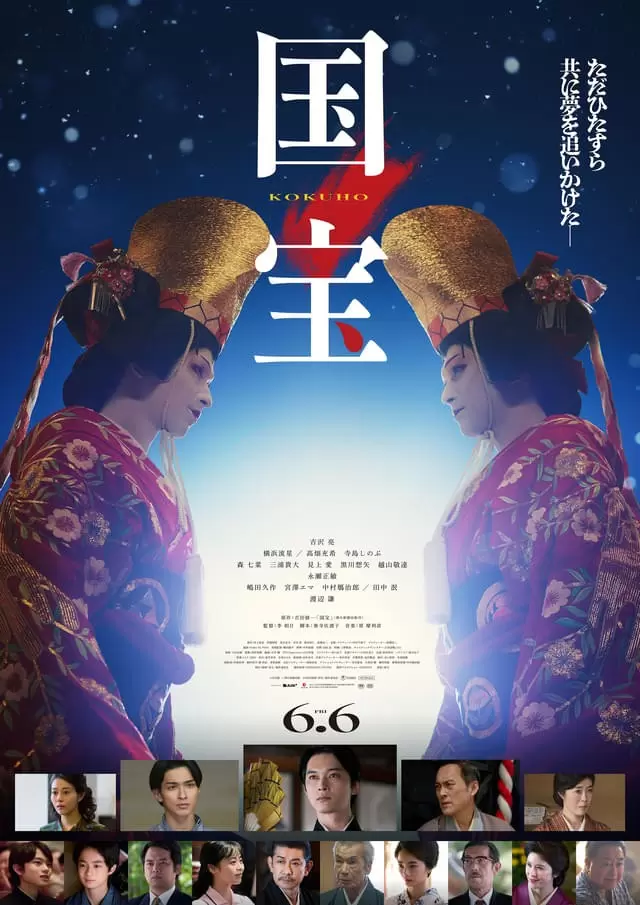
Picture courtesy of PR TIMES ©Shuichi Yoshida / Asahi Shimbun Publications ©2025 Movie "Kokuho" Production Committee
Based on the novel of the same name by Shuichi Yoshida, the movie "Kokuho" is directed by Sang-il Lee.
The story follows the protagonist, Kikuo Tachibana (Yosuke Ryo), born into a yakuza family but endowed with innate talent that leads him into the world of Kabuki.
As he navigates a life full of ups and downs over fifty years, he bonds with Shunsuke (Ryusei Yokohama), his friend and rival. Their friendship is intertwined with complex emotions such as natural talent and bloodline.
Set against the mysterious and opulent world of Kabuki, with a powerful storyline, the film has surpassed 13 billion yen in box office revenue as of September 2025. It recorded the highest commercial performance among live-action films released in 2025 and is scheduled for further screenings overseas in October.
4 Kabuki Theaters Featured in "Kokuho"
The movie "Kokuho" contains many memorable scenes that leave a lasting impression. Let’s explore the theaters and backstage areas where many of these scenes were filmed.
1. Izushi Eirakukan
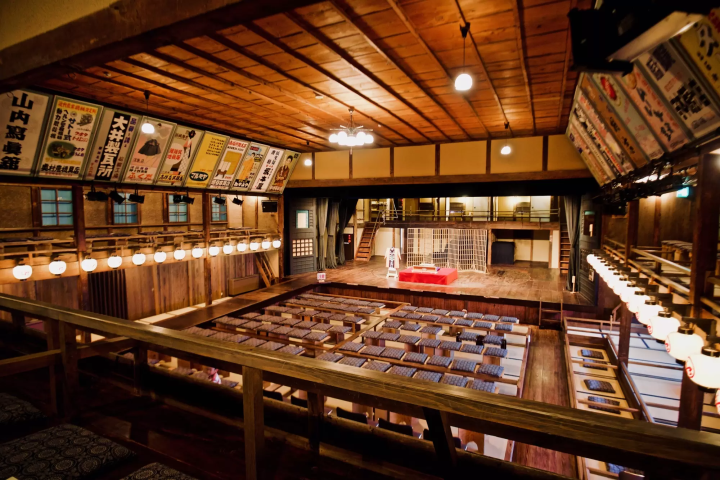
Photo by Pixta
Izushi Eirakukan, located in Toyooka in northern Hyogo Prefecture, is the oldest theater in the Kansai region.
Since opening in 1901, it has continued to host performances such as Kabuki, concerts, and rakugo on an irregular schedule. When there are no performances or private bookings, visitors can tour the inside of the theater.
In the film, this theater appears as the venue where Kikuo and Shunsuke perform "Futari Fuji Musume" after they grow up. The backstage scenes were also shot here. Izushi Eirakukan
 17-2 Yanagi, Izushi-cho, Toyooka City, Hyogo Prefecture, 668-0234
This is the oldest playhouse in the Kinki region, which opened in the late Meiji period. It hosted performances such as Kabuki, Rakugo, and movies, and flourished as a part of Tajima's popular culture. It closed in the mid-Showa period, but underwent major renovations in the Heisei period and reopened as a playhouse in 2008. It is used for a wide range of purposes, from Kabuki performances to local events, and the interior is also open to the public.
17-2 Yanagi, Izushi-cho, Toyooka City, Hyogo Prefecture, 668-0234
This is the oldest playhouse in the Kinki region, which opened in the late Meiji period. It hosted performances such as Kabuki, Rakugo, and movies, and flourished as a part of Tajima's popular culture. It closed in the mid-Showa period, but underwent major renovations in the Heisei period and reopened as a playhouse in 2008. It is used for a wide range of purposes, from Kabuki performances to local events, and the interior is also open to the public.
Read also
2. Naniwa-za in the Film: Kyoto's Pontocho Kabuki Theater
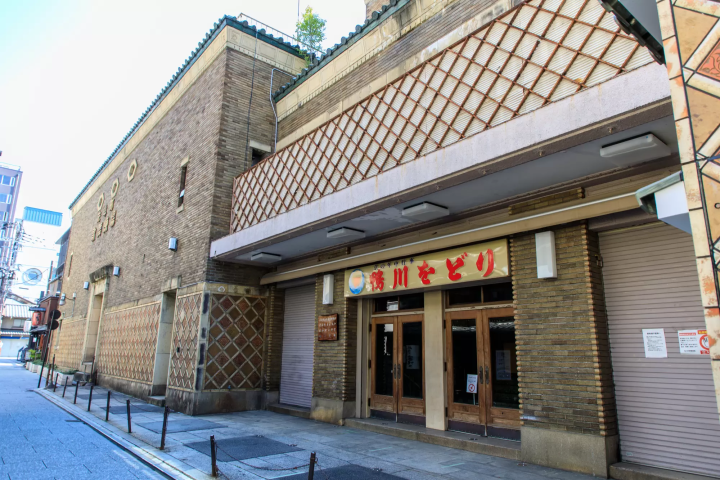
Photo by Pixta
This location appears in the scene that depicts Kikuo, who was taken in by the Hanai family, entering the backstage of the Naniwa-za theater for the first time.
The Naniwa-za in the film is fictional, but the filming location used is Kyoto's famous Pontocho Kabuki Theater. Meanwhile, the interior backstage scenes were shot at Kamishichiken Kabukai, a stage renowned for dance performances by Kyoto's geiko.
The Pontocho Kabuki Theater is a performance venue located in Pontocho, one of Kyoto's five famous entertainment districts (hanamachi).
This location is renowned for hosting the Kamo River Odori Dance Festival, held annually from May 1 to 24. The dance performances by geisha and maiko in their glamorous costumes are a must-see for fans of traditional Japanese arts. Pontocho Kabureen Hall
 130 Hashishitacho, Nakagyo Ward, Kyoto City, Kyoto Prefecture, 604-800...
Pontocho Kaburenjo is a performing arts theater built around 1927. It is used for traditional performing arts performances, concerts, and dance recitals.
130 Hashishitacho, Nakagyo Ward, Kyoto City, Kyoto Prefecture, 604-800...
Pontocho Kaburenjo is a performing arts theater built around 1927. It is used for traditional performing arts performances, concerts, and dance recitals.
3. Minami-za Theater
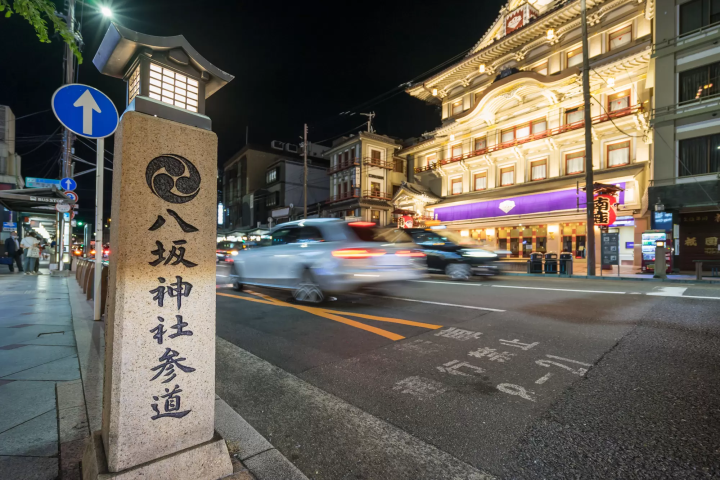
Photo by Pixta
In Kyoto, as you enter Gion, the first striking sight is the luxurious and ornate building known as Minami-za Theater. This is Japan's oldest theater, dating back to the Edo period (1603-1868), and has undergone several renovations, transforming into a modern theater.
In the film, Minami-za appears as the venue where Kikuo and Shunsuke face their first big stage challenge with "Futari Dojoji." For Kabuki actors, performing on the Minami-za stage is a great honor, representing a significant milestone in their careers.
Minamiza
 605-0075 Shijo Ohashi Higashizume, Higashiyama Ward, Kyoto Prefecture
Built in 1929 in traditional Japanese architecture, this famous theater hosts traditional Kabuki performances.
605-0075 Shijo Ohashi Higashizume, Higashiyama Ward, Kyoto Prefecture
Built in 1929 in traditional Japanese architecture, this famous theater hosts traditional Kabuki performances.
4. Hino-honza Theater in the Film: Biwako Otsu Hall
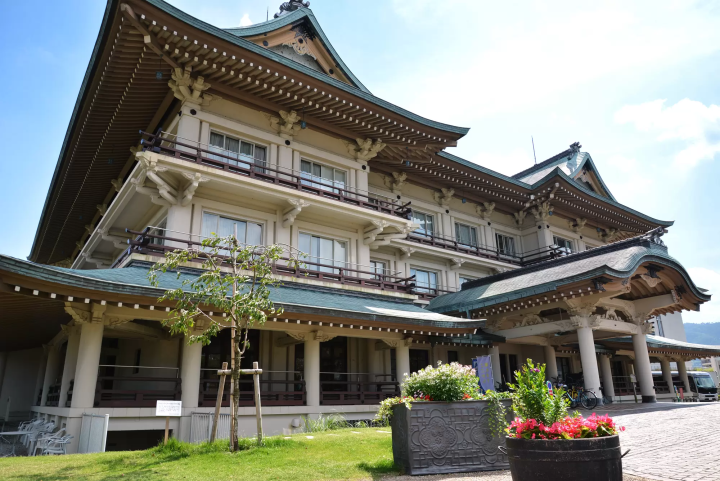
Photo by Pixta
The Hino-honza Theater that appears multiple times in the latter half of the film is fictional.
The actual filming location is the former Biwako Hotel main building in Shiga Prefecture, now known as Biwako Otsu Hall.
The building's exterior was designed by the same company that created Tokyo's Kabukiza Theater, which is why the atmosphere resembles that of the real theater, making it an ideal filming location. Lake Biwa Otsukan
 5-35 Yanagigasaki, Otsu City, Shiga Prefecture, 520-0022
Located on the shores of Lake Biwa, Biwako Otsukan is a complex that was renovated from the former Lake Biwa Hotel, which was known as the "guest house of Lake Biwa" in the early Showa period. It features a stately Momoyama-style exterior and was featured as the Kabuki theater "Hinomotoza" in the film "KOKUHÔ: National Treasures of Japan." It is also used as a restaurant, for weddings and various events, and offers an elegant setting for spending time here.
5-35 Yanagigasaki, Otsu City, Shiga Prefecture, 520-0022
Located on the shores of Lake Biwa, Biwako Otsukan is a complex that was renovated from the former Lake Biwa Hotel, which was known as the "guest house of Lake Biwa" in the early Showa period. It features a stately Momoyama-style exterior and was featured as the Kabuki theater "Hinomotoza" in the film "KOKUHÔ: National Treasures of Japan." It is also used as a restaurant, for weddings and various events, and offers an elegant setting for spending time here.
4 Key Filming Locations Related to Kikuo's Story
Numerous important scenes in the film were shot at locations that can be easily reached and visited. Below, we introduce some of them.
5. Minazuki Shrine and Yoshiwara Irie in Maizuru: Where He Vows to Avenge His Father
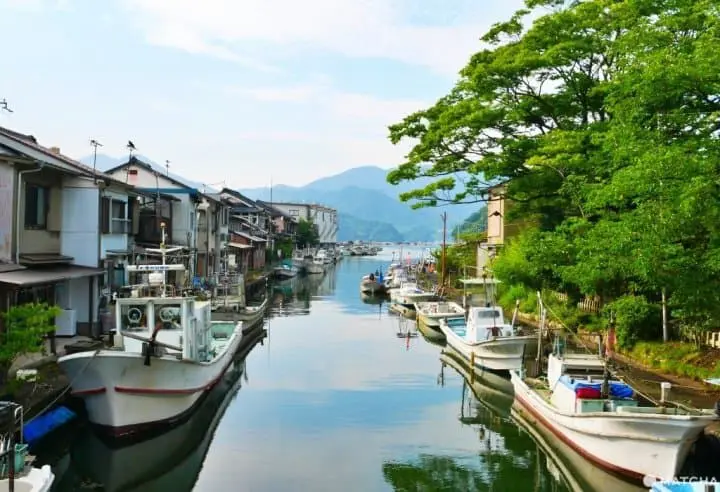
This scene in the film depicts Kikuo's father dying in a yakuza conflict, and Kikuo vows revenge. The scenes where he plans his revenge under a rural shrine and beneath a bridge were filmed at Maizuru’s Minazuki Shrine and Yoshiwara Irie.
Maizuru's Yoshiwara district is a fishing town that retains the nostalgic atmosphere of Showa-era Japan. The scenery of waterways and fishing boats dating back to the Edo period is often called "Japan's Venice," and it attracts many international tourists. Yoshihara Irie
 Higashiyoshihara, Maizuru City, Kyoto Prefecture 624-0921
Yoshihara Irie, located in Maizuru City, Kyoto, is a nostalgic fishing town nicknamed the "Venice of the East." Its unique landscape of houses lining the canal with fishing boats floating in front of them is captivating. It's a popular photo spot with both domestic and international tourists. It's also the birthplace of Kyoto's modern fishing industry.
The area around Yoshihara Irie isn't densely packed with tourist facilities, so it's primarily a residential area for local residents. Please be mindful of your manners and enjoy the natural surroundings quietly.
Higashiyoshihara, Maizuru City, Kyoto Prefecture 624-0921
Yoshihara Irie, located in Maizuru City, Kyoto, is a nostalgic fishing town nicknamed the "Venice of the East." Its unique landscape of houses lining the canal with fishing boats floating in front of them is captivating. It's a popular photo spot with both domestic and international tourists. It's also the birthplace of Kyoto's modern fishing industry.
The area around Yoshihara Irie isn't densely packed with tourist facilities, so it's primarily a residential area for local residents. Please be mindful of your manners and enjoy the natural surroundings quietly.
6. Tamatebashi Bridge: From Kikuo's and Shunsuke's Youth
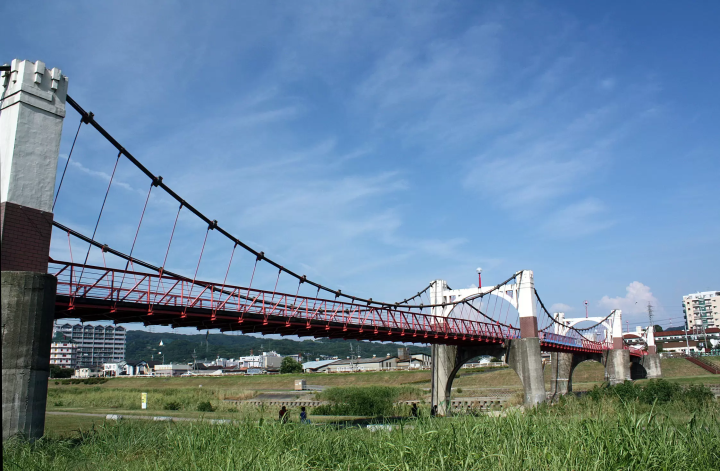
Photo by Pixta
This is the road where Kikuo, now taken in by the Hanai family, goes to school with Shunsuke. The scenes depicting their youthful days, as they were playing along the riverbank and practicing Kabuki on a suspension bridge, are set at this location.
The suspension bridge is Tamatebashi, located between Ishikawacho and Tamate-cho in Kashiwara City, Osaka Prefecture.
Built in 1928, this bridge has a history of nearly one hundred years. With its distinctive appearance, it remains in use today as a vital transportation route for the local community. Tamate Bridge
 3 Domyouji, Fujiidera City, Osaka Prefecture, 583-0012
Tamate Bridge in Fujiidera City, Osaka Prefecture, was built in the early Showa period as part of the access road from Domyoji Station to Tamateyama Amusement Park, and is now designated as a national registered tangible cultural property.
3 Domyouji, Fujiidera City, Osaka Prefecture, 583-0012
Tamate Bridge in Fujiidera City, Osaka Prefecture, was built in the early Showa period as part of the access road from Domyoji Station to Tamateyama Amusement Park, and is now designated as a national registered tangible cultural property.
7. Imamiya Shrine in Kyoto: The Nomination Ceremony Parade
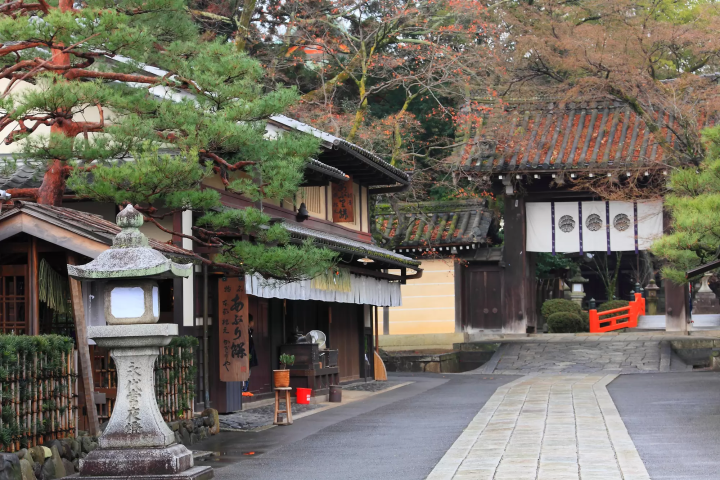
Photo by Pixta
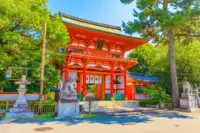
The scene where Kikuo, representing the third-generation Hanai Hanjirō, and Watanabe Ken, as the second-generation Hanai Hanjirō, take part in a parade riding rickshaws to celebrate the naming ceremony—where Hanai Bajiō (Kikuo) inherits the name of Hanai Hakuro—was filmed at the east gate of Imamiya Shrine in Kyoto.
This location, rich in traditional old-town atmosphere, is often used as a filming site for period dramas. Imamiya Shrine
 21 Imamiyacho, Murasakino, Kita-ku, Kyoto City, Kyoto Prefecture, 603-...
It is said that there was a shrine dedicated to the god of plague even before the founding of the Heian capital.
Imamiya Shrine was founded in the fifth year of the Shoreki era, when a portable shrine was constructed and a Murasakino Goryoe ceremony was held to pray for the elimination of an epidemic from the capital.
21 Imamiyacho, Murasakino, Kita-ku, Kyoto City, Kyoto Prefecture, 603-...
It is said that there was a shrine dedicated to the god of plague even before the founding of the Heian capital.
Imamiya Shrine was founded in the fifth year of the Shoreki era, when a portable shrine was constructed and a Murasakino Goryoe ceremony was held to pray for the elimination of an epidemic from the capital.
8. Hotel Ito: Where Kikuo Performs Alone in a Red Kimono
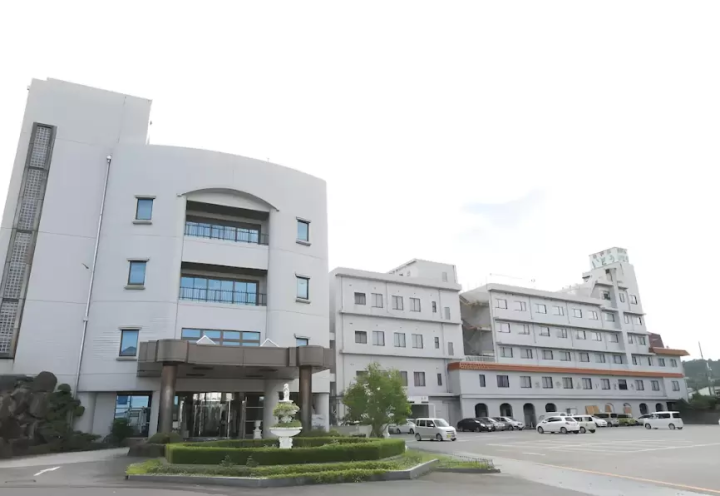
Photo by Pixta
This venue appears in the scene that depicts Kikuo, who has been expelled from the Kabuki world after an incident, performing alone on a rooftop while wearing a battered dance kimono and with his makeup smudged, after being beaten by an angry customer during a regional tour.
The scene is accompanied by a famous line, "What was I even looking for...?" and has been used in the trailer.
The filming took place at Hotel Itō in Iwade City, Wakayama Prefecture. The hotel exudes Showa-era atmosphere and gained renewed attention thanks to this iconic scene, highlighting Kikuo’s dance amid despair.
Hotel Ito
 83 Miya, Iwade City, Wakayama Prefecture, 649-6226
Hotel Ito in Iwade City, Wakayama Prefecture, was also used as a filming location for the movie "KOKUHÔ: National Treasures of Japan" The rooftop and guest rooms were used for filming as they retain a strong Showa-era atmosphere.
83 Miya, Iwade City, Wakayama Prefecture, 649-6226
Hotel Ito in Iwade City, Wakayama Prefecture, was also used as a filming location for the movie "KOKUHÔ: National Treasures of Japan" The rooftop and guest rooms were used for filming as they retain a strong Showa-era atmosphere.
2 Story Settings from Kabuki Plays
In the film, famous kabuki plays such as "Tsumoru Koi Yuki no Seki no To," "Renjishi," "Fuji Musume," "Futari Dojoji," "The Love Suicides at Sonezaki," and "Sagi Musume" ("The Dance of the Heron Maiden") appear.
Some of their locations are fictional, but here we will introduce two real locations where the plays are set.
9. Musume Dojoji
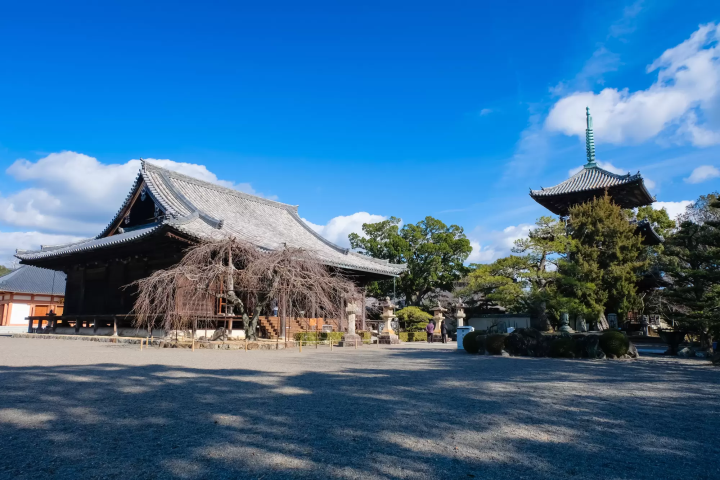
Photo by Pixta
A Kabuki play frequently referenced in the film is "Musume Dojoji," a story about Kiyohime, a girl who becomes vengeful because of unrequited love.
In its variant with two main performers, "Futari Dojoji," the play features dancers dressed in luxurious kimonos, performing for over an hour, a feat that requires advanced techniques and stamina.
The Dojoji referenced in the title of the play is an ancient temple located in Wakayama, known as the setting for the tragic love story of Anchin and Kiyohime. Dojoji Temple
 1738 Kanemaki, Hidakagawa-cho, Hidaka-gun, Wakayama Prefecture, 649-13...
This is the oldest temple in Wakayama Prefecture, and is known as the setting for the tragic love story of Anchin and Kiyohime. It has been the subject of the Noh and Kabuki plays "Dojoji," and within the temple grounds, "Illustrated Sermons" are held, where the story is explained using picture scrolls. The temple also houses many cultural assets.
1738 Kanemaki, Hidakagawa-cho, Hidaka-gun, Wakayama Prefecture, 649-13...
This is the oldest temple in Wakayama Prefecture, and is known as the setting for the tragic love story of Anchin and Kiyohime. It has been the subject of the Noh and Kabuki plays "Dojoji," and within the temple grounds, "Illustrated Sermons" are held, where the story is explained using picture scrolls. The temple also houses many cultural assets.
10. Sonezaki Shinju (The Love Suicides at Sonezaki)
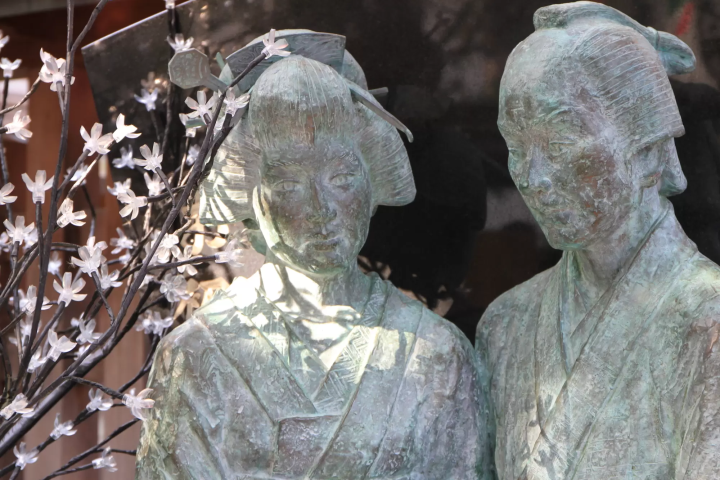
Photo by Pixta
The Kabuki play "The Love Suicides at Sonezaki" depicts a tragic love story between Tokuzaemon, a samurai, and Ohatsu, a girl who works in a brothel. Involved in a money dispute and dishonored, the lovers resolve to commit double suicide in the wilderness of Roteijin to prove their love and innocence.
Sonezaki is now one of the most lively areas in Osaka's Umeda district.
At the site of the story, Tsuyutenjin Shrine, there are statues of Tokuzaemon and Ohatsu, and locals affectionately call it "Ohatsu Tenjin." This illustrates how deeply this story is embedded in the cultural fabric of Osaka.
Tusyu-no-Tenjinja Shrine
 2-5-4 Sonezaki, Kita-ku, Osaka, Osaka 530-0057
Enjoy the World of "Kokuho"
The movie "Kokuho" has a run time of nearly three hours, which might feel long for those unfamiliar with Kabuki.
However, from my perspective as a viewer, I was never bored. Even if you have no prior knowledge of Kabuki, you can enjoy it as a form of art, and you will undoubtedly be captivated by the actors' performances and their powerful presence.
Watching the film is sure to draw you into the charm of Kabuki, and it may even inspire you to visit the filming locations featured in the story.


Born in Taipei, Taiwan. I worked in the inbound tourism industry in Kyoto, writing a blog about travel in Japan. I joined MATCHA in October 2019.
Hobbies: travel, watching trains, visiting stylish cafes, sweets, collecting seal stamps, watching musicals, taking photos, and others - so many, in fact, that I find it weird myself.
more



Special Features
More