Woodblock Printing in Tokyo: Create Your Own Ukiyo-e Fan
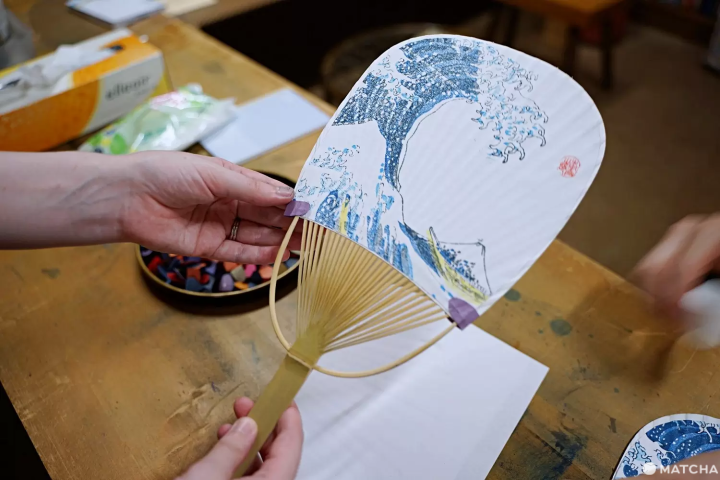
Try woodblock printing in Tokyo at the historic Takahashi Kobo studio! Discover the art of ukiyo-e, learn traditional techniques, and create your own Japanese fan.

Written by
Tokyo,Japan
Assistant editor at MATCHA since 2023, Kate is a photographer who enjoys traveling Japan's hidden gems and adventuring off the beaten path. Living in Japan since 2018, she has traveled across different areas of Japan. From indulging in Aomori’s apple pies and fiery festivals to exploring the quaint charm of Nagasaki’s cat-filled streets she is always searching for new areas full of atmospheric beauty, festivals, and seasonal events to capture on camera.
This service includes sponsored advertisements.
Cultural Experiences in Japan Provided by Wabunka
Wabunka offers cultural experiences that allow travelers to explore Japanese traditions through art, craftsmanship, food, and other hands-on activities.
Many programs provide opportunities to meet skilled artisans, discover the stories behind their work, and try traditional techniques firsthand.
We recently joined Wabunka’s woodblock printing workshop at Takahashi Kobo in Tokyo. During the experience, we discovered the story behind ukiyo-e printing and had the chance to try this traditional craft firsthand.
We found the workshop both enjoyable and insightful, and highly recommend it to anyone curious about Japanese art and craftsmanship.
-
Table of Contents
- Takahashi Kobo: Keeping the Tradition of Woodblock Printing in Tokyo
- Learn the History of Woodblock Printing: Techniques and What Makes It Special
- The Printing Experience
- My Thoughts About the Experience
- Create Your Own Precious Keepsake in Tokyo
Takahashi Kobo: Keeping the Tradition of Woodblock Printing in Tokyo
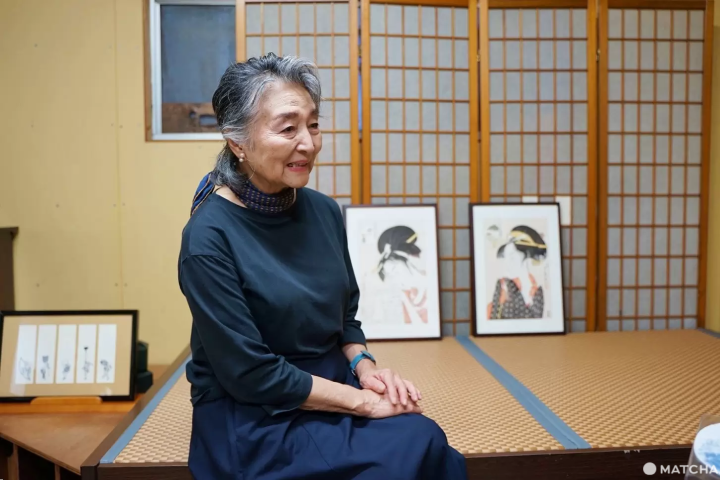
Japanese woodblock printing, or mokuhanga, is the traditional technique behind ukiyo-e, one of Japan’s most recognizable art forms. The craft developed and flourished during the Edo period (1603–1868), when artisans carved images into wooden blocks and printed them onto paper using pigments.
During the Edo period, ukiyo-e prints served as the "magazines" and "posters" of their day. Produced in large quantities for ordinary people, they captured popular culture—from landscapes and famous travel destinations to kabuki actors, beautiful women, and scenes of daily life.
In Tokyo, this centuries-old craft is preserved at Takahashi Kobo, the city’s oldest surviving woodblock printing studio, with a history spanning more than 165 years.
At Takahashi Kobo, visitors can experience traditional woodblock printing firsthand. Guided by skilled artisans, participants print a classic ukiyo-e design onto washi paper, which is then crafted into a traditional bamboo-handled fan.
Learn the History of Woodblock Printing: Techniques and What Makes It Special
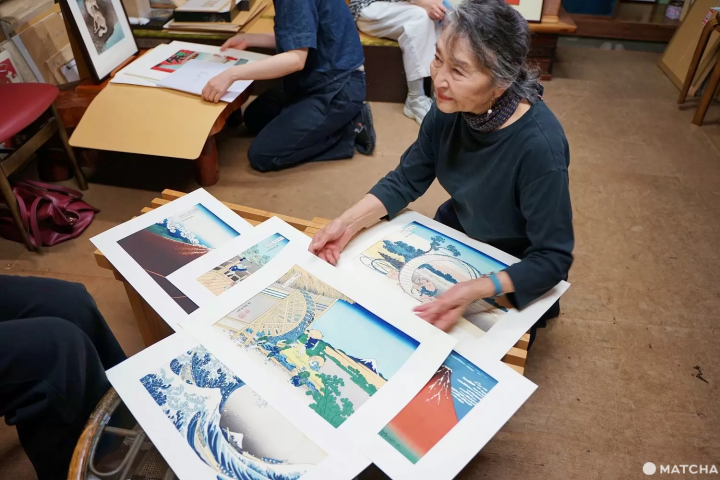
At the beginning of the workshop, Takahashi-sensei sat down with us and introduced the history of woodblock printing, explaining how this remarkable art form became so popular.
Art That Could Be Enjoyed by Everyone
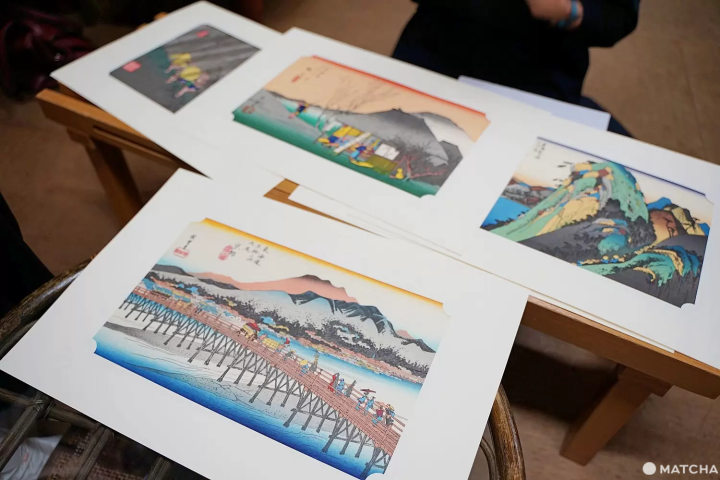
During the peaceful Edo period, art and entertainment became accessible to ordinary citizens outside the aristocracy and samurai class. Ukiyo-e offered an affordable way for the public to enjoy art and discover distant places beyond their daily surroundings.
For just 16 mon (about 500 yen today), almost anyone could buy a print showcasing scenic views from across Japan, crafted with eye-catching woodblock techniques.
More Than Meets the Eye: A Tactile Experience
Takahashi-sensei highlighted subtle details in woodblock prints that are easily overlooked.
From silver ink shimmering like falling rain to blind embossing that adds texture to snow and cherry blossoms, ukiyo-e was clearly a tactile medium as much as a visual one.
In the Edo period, viewers appreciated these prints by hand—feeling their physical textures and tilting them in the light to reveal shimmering finishes and subtle color gradients.
The Creative Process Behind Ukiyo-e Prints
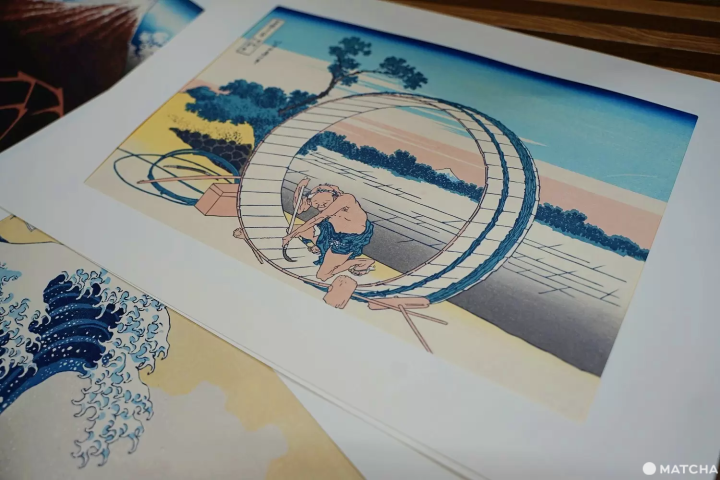
We also learned that producing a print during the Edo period required the craftsmanship of four different specialists:
- an illustrator who created the original drawing;
- a carver who transferred the illustration onto durable mountain cherry woodblocks;
- a printer who applied the pigments and produced the final impressions—the process we would experience ourselves later in the workshop;
- a publisher who organized the team and decided on subjects and themes for each series.
Takahashi Kobo initially worked as a publisher and printer, but over the years, the workshop began handling all stages involved in creating hanga prints, making them true masters of the craft.
The Printing Experience
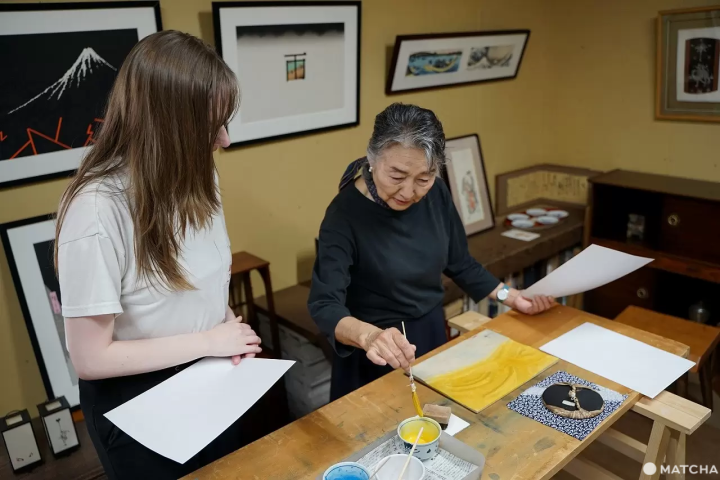
After getting a grasp of how woodblock printing works, it was our turn to try it! We started by working on the yellow base of this print, mixing a colorful yellow pigment.
After brushing the pigment over the raised area on the woodblock, we added a single drop of glue. This is crucial when printing, as the glue helps prevent the pigment from wearing off.
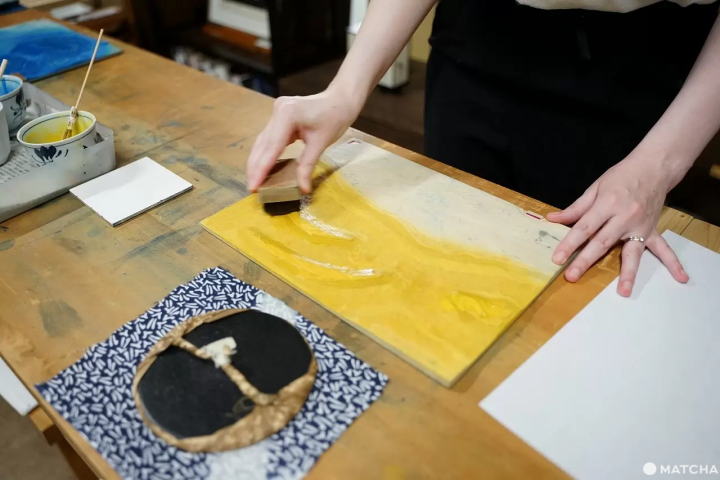
Many pigments traditionally used in woodblock prints contain minerals. A brush is then used to mix the pigment and glue across the wooden block. Once the raised areas were covered, it was time to press the first layer of the print.
Holding the piece of paper with both hands, we carefully lined it up against the guide. This was the most nerve-racking part for me, as I can be very clumsy!
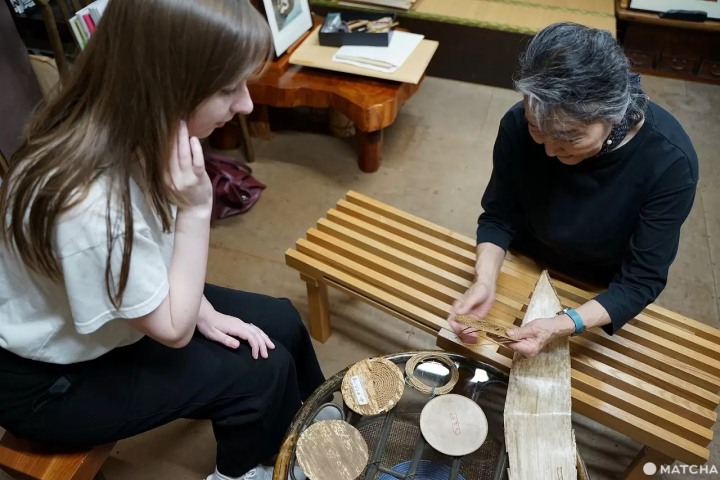
Once the paper is in place, you use a baren, a circular tool traditionally made from bamboo, to apply pressure and transfer the image.
Typically, when creating a print, four types of baren are used, each providing a different level of pressure and finesse.
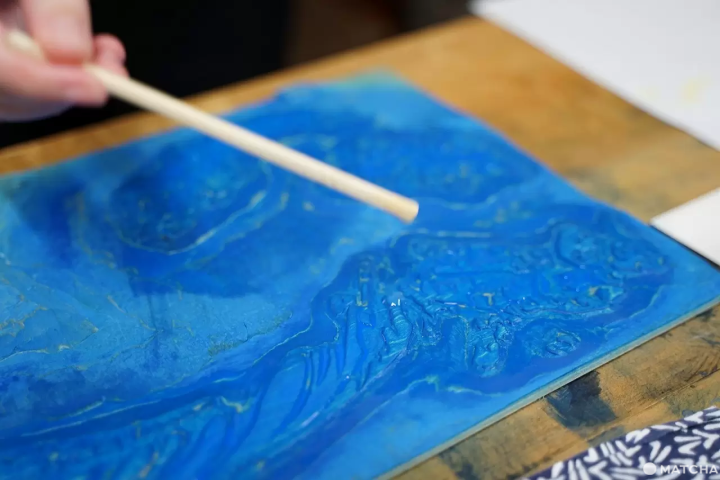
The first color came out great! Using the same techniques and steps, we then created the next layer. This time, we used a different block and blue pigment to create the wave.
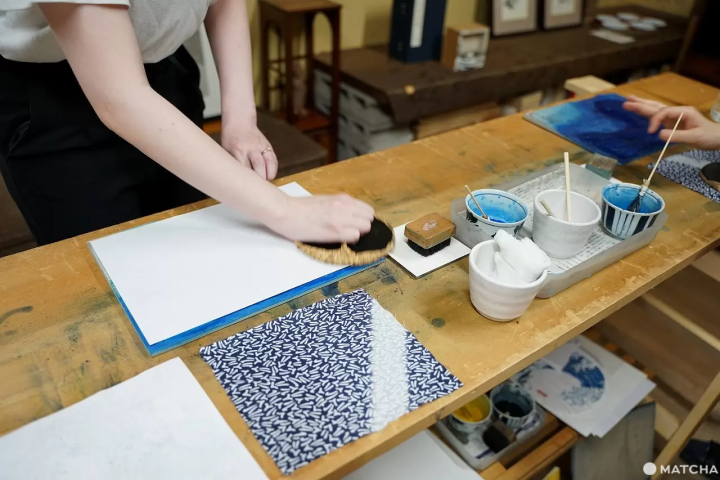
When creating prints, artisans generally begin with the lightest colors before gradually moving on to darker ones.
After pressing the blue layer, it was time to use the block that creates the black outlines of the design and brings the final image together.
Everything had been going well up to this point, and because the black outline really completes the entire print, I was nervous about making a mistake.
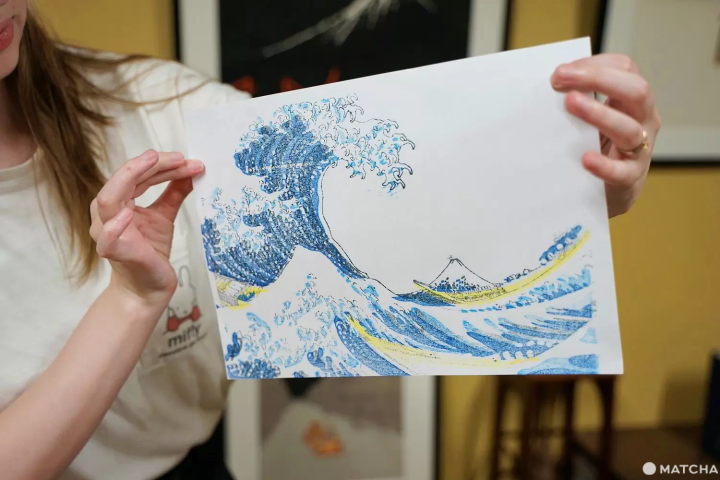
Despite my nerves, the print came out great! Whew, what a relief!
It made me realize that although the craft itself is meticulous, most people—even those without any previous arts or crafts experience—could easily enjoy this workshop thanks to the excellent teachers.
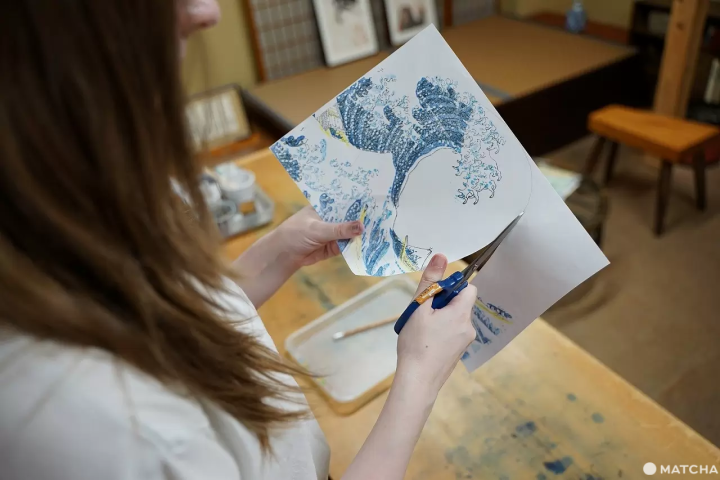
Now that the print was finished, I began the process of turning it into a fan! Taking the print, I drew the outline of the fan and started cutting the paper.
After that, I flipped the paper over and added glue before placing it onto the fan.
The final touches involved brushing over the surface so that everything stuck together and adding colorful paper around the edges to secure it.
And voilà—it was complete!
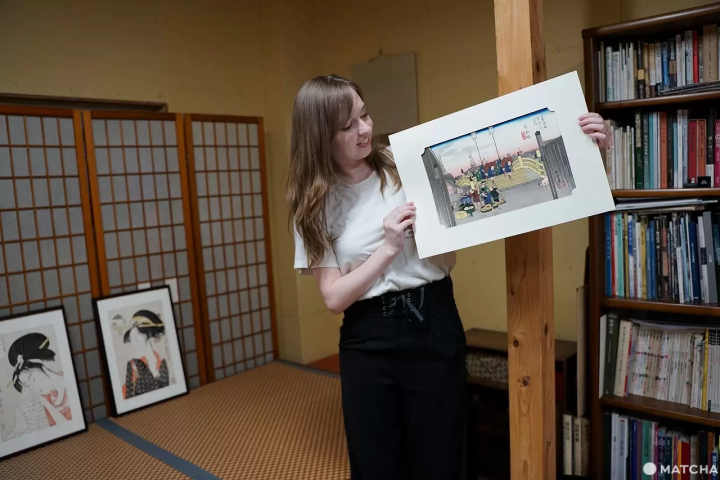
In addition to your custom fan, you will receive a woodblock print by Takahashi Kobo as a souvenir.
Choose your favorite vibrant piece from their extensive collection—it comes ready to display as a keepsake from your time in Japan!
My Thoughts About the Experience
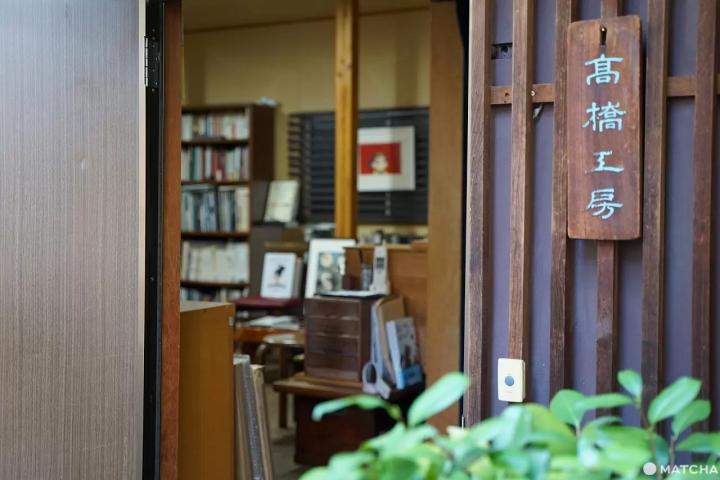
The workshop takes place in an intimate setting, and you are guided step by step through the entire process. This creates a comfortable and relaxing environment, which also helps if you're someone who tends to get nervous, like me.
Furthermore, although you're working with ink and pigments, you don't need to worry too much about making a mess. The workshop is well organized and carefully prepared. Considering the materials involved in creating a print, the messiest you'll probably get is a little pigment on a finger or two!
The workshop made me even more impressed with ukiyo-e prints than I had been before. I came away with a much better understanding of why these prints became so popular, their cultural importance, and what an efficient yet resourceful method of creating art woodblock printing can be.
Although you're essentially creating copies of an artwork, you can still sense the craftsmanship, care, and time that go into each piece.
Overall, the experience was fun and a great way to try a traditional Japanese craft while in Tokyo.
Create Your Own Precious Keepsake in Tokyo
Whether you love traditional craftsmanship, enjoy getting creative, or hold a deep appreciation for Japanese culture, this workshop is a must.
You will not only learn inside Tokyo's oldest woodblock printing studio alongside master craftspeople, but you may also discover a new side of yourself along the way.
Beyond this experience, Wabunka offers several other activities worth checking out, from making traditional Japanese sweets and experiencing tea ceremonies to painting lucky cats and trying kintsugi repair.
You'll also find a wide range of activities and programs across Japan, so you're certainly not limited to Tokyo. Many workshops are available in destinations such as Kyoto, Osaka, Kanazawa, the Mt. Fuji area, and beyond.
Read also



Assistant editor at MATCHA since 2023, Kate is a photographer who enjoys traveling Japan's hidden gems and adventuring off the beaten path. Living in Japan since 2018, she has traveled across different areas of Japan. From indulging in Aomori’s apple pies and fiery festivals to exploring the quaint charm of Nagasaki’s cat-filled streets she is always searching for new areas full of atmospheric beauty, festivals, and seasonal events to capture on camera.


Special Features
More