
Tokoname 1-Day Itinerary: Pottery Experience, Sake Brewery Tour & Walking Tour Near Nagoya Airport
Tokoname City is just a 30-minute train ride from Nagoya and a short walk from Chubu Centrair International Airport. This is a full-fledged Tokoname experience that goes beyond mere sightseeing. This one-day itinerary includes pottery making, sake brewery tours, and a Pottery Footpath , allowing you to deeply appreciate Japan's craftsmanship and food culture.

Written by
We promote tourism with the slogan "Happy Come On TOKONAME," which expresses our desire that "everyone who visits Tokoname City will be able to experience its various charms, feel happy and joyful, and go home with the power of happiness (happiness) that will give them energy for the next day."
This service includes sponsored advertisements.
-
Table of Contents
- The charm of the town of Tokoname
- "A one-day sensory experience combining Tokoname ware and local sake."
- 1. Ceramics Hall
- 2. Pottery Footpath
- 3. Udon Sweet Wabisuke
- 4. Sawada Brewery
- 5. Kyoei Kiln Ceramic Art School
- 6. Tokonameya
- Half-day courses are also available to suit your travel purpose and schedule!
- A morning course featuring Tokoname ware and gourmet cuisine
The charm of the town of Tokoname
Tokoname is a town known as the production center of "Tokoname ware," one of Japan's six ancient kilns. The pottery culture that has continued for over a thousand years is still alive and well in people's lives.
Furthermore, its history as a port town facing Ise Bay and its food culture, with its long-established sake breweries, are also part of its charm. The real appeal of a trip to Tokoname is that you can get to know the town in depth not just by visiting tourist spots, but by actually "experiencing" it.
This itinerary allows you to experience Tokoname with all your senses through activities such as pottery making, sake brewery tours, and a stroll along the Yakio walking path.
This day trip is recommended for those looking for an authentic Japanese cultural experience near Nagoya.
"A one-day sensory experience combining Tokoname ware and local sake."
This tour starts at the Tokoname City Ceramic Art Museum and takes you to a total of six spots in one day, including a Pottery Footpath, a long-established sake brewery, a pottery class, and a restaurant (with lunch and dinner included).
From a slightly in-depth guided tour led by a ceramic artist, to a visit to a Tokoname-established sake brewery, a pairing experience of Tokoname ware sake cups with local sake, making your own sake cup, and a special lunch and dinner served in Tokoname ware, there are plenty of fascinating experiences to enjoy!
The tour includes many special experiences that you wouldn't normally get on an independent trip.
Furthermore, you can easily travel to spots that are difficult to access without a car using the private taxi included in the tour! Since you can leave the driving to the taxi driver, you can fully enjoy the sake served at breweries and restaurants.
1. Ceramics Hall
● Accessible by free shuttle bus from the airport island!
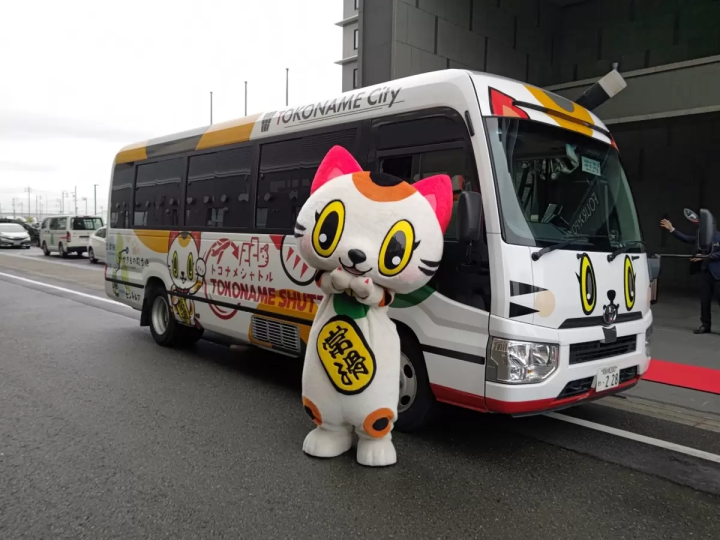
The Tokoname Shuttle Bus is easily recognizable by its wrapping design featuring Tokoname City mascot, "Tokotan"!
The tour departs from the Tokoname City Ceramic Art Museum. A free shuttle bus, the "Tokoname Shuttle," operates from the airport island where Chubu Centrair International Airport is located, and it takes about 20 minutes to reach the Tokoname City Ceramic Art Museum.
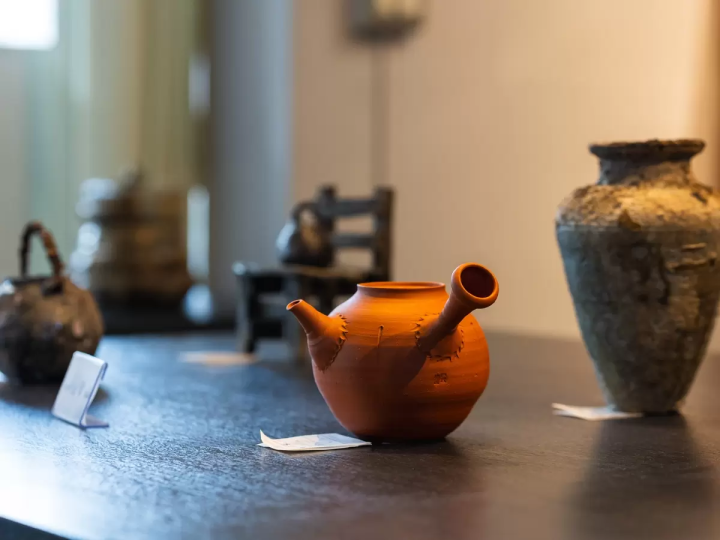
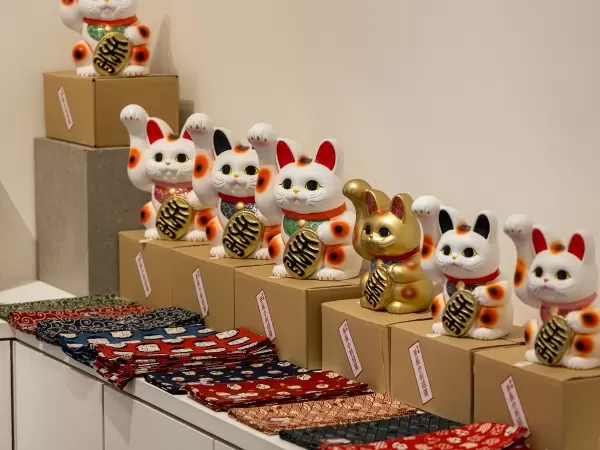
A sales corner featuring Tokoname ware and Tokoname made by local potters.
Examples of exhibits at the "TOKONAME Gallery" located within the building.
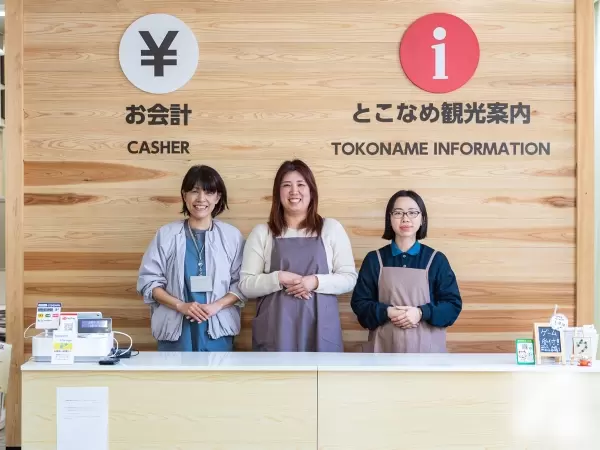
At the tourist information center, you can get tourist brochures and other useful travel information.
In addition to purchasing Tokoname ware and souvenirs, the gallery displays a wide range of works, including Tokoname ware. Head there earlier than the meeting time to enjoy shopping and viewing the artwork.
Additionally, there is a tourist information center located inside the building, making it convenient for gathering travel information.
●Here's the key point!
○ Access the meeting point from the airport via a free shuttle bus!
○ You can purchase Tokoname ware and souvenirs. ○ A tourist information center is conveniently located on the premises, making it a great base for your trip.
Tokoname Tourist Information Center
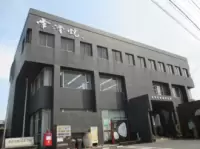 3-8 Sakaemachi, Tokoname City, Aichi prefecture, 479-0836
The Tokoname Tourist Information Center in Tokoname City, Aichi Prefecture, is a base for visitors to Tokoname, providing easy-to-understand information about the area. Located a five-minute walk from Meitetsu Tokoname Station, it's conveniently located, making it easy for first-time visitors to Tokoname to find their way there without getting lost.
The information center offers a wide range of tourist information about Tokoname City and the surrounding area, including tourist maps, brochures, and event information. Our staff is also happy to assist you with advice on sightseeing routes and recommendations for recommended spots. Our hospitality, unique to Japan, ensures that international visitors feel at ease.
Tokoname is known as one of Japan's Six Ancient Kilns, and is the birthplace of Tokoname ware, a craft with a thousand-year history. The information center introduces tourist attractions that allow visitors to experience the region's history and culture, including the Pottery Walk, pottery making experiences, local cuisine, and cultural assets. We also provide access information to popular, photogenic spots like Maneki-neko Street and the INAX Live Museum, making it a popular starting point for many visitors.
The tourist information center also sells local specialties and Maneki-neko souvenirs, including Tokoname ware accessories and local crafts, making perfect souvenirs or gifts. Information on limited-time exhibitions and workshops is also available, so you'll always find something new no matter how many times you visit.
The Tokoname Tourist Information Center also serves as a "place of interaction" connecting locals and tourists, and goes beyond simply providing information to help enrich the travel experience of visitors. Please feel free to stop by as the starting point for learning more about the charms of Tokoname.
3-8 Sakaemachi, Tokoname City, Aichi prefecture, 479-0836
The Tokoname Tourist Information Center in Tokoname City, Aichi Prefecture, is a base for visitors to Tokoname, providing easy-to-understand information about the area. Located a five-minute walk from Meitetsu Tokoname Station, it's conveniently located, making it easy for first-time visitors to Tokoname to find their way there without getting lost.
The information center offers a wide range of tourist information about Tokoname City and the surrounding area, including tourist maps, brochures, and event information. Our staff is also happy to assist you with advice on sightseeing routes and recommendations for recommended spots. Our hospitality, unique to Japan, ensures that international visitors feel at ease.
Tokoname is known as one of Japan's Six Ancient Kilns, and is the birthplace of Tokoname ware, a craft with a thousand-year history. The information center introduces tourist attractions that allow visitors to experience the region's history and culture, including the Pottery Walk, pottery making experiences, local cuisine, and cultural assets. We also provide access information to popular, photogenic spots like Maneki-neko Street and the INAX Live Museum, making it a popular starting point for many visitors.
The tourist information center also sells local specialties and Maneki-neko souvenirs, including Tokoname ware accessories and local crafts, making perfect souvenirs or gifts. Information on limited-time exhibitions and workshops is also available, so you'll always find something new no matter how many times you visit.
The Tokoname Tourist Information Center also serves as a "place of interaction" connecting locals and tourists, and goes beyond simply providing information to help enrich the travel experience of visitors. Please feel free to stop by as the starting point for learning more about the charms of Tokoname.
2. Pottery Footpath
Guided tour by a ceramic artist! A walk along the "Pottery Footpath" and a studio visit.
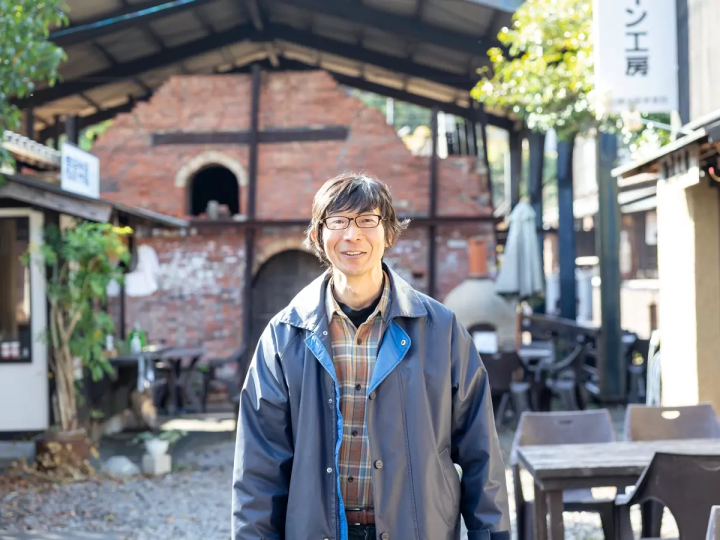
Takayuki Yagi, a ceramic artist and guide who will show you around the Pottery Footpath.
Here, we met up with Mr. Takayuki Yagi, who will be our guide for our first destination, the "Pottery Footpath." Mr. Yagi is an active ceramic artist who has his workshop along the walking path. This tour will take us around Course A of the "Pottery Footpath," which is approximately 1.6 km long. With Mr. Yagi as our guide, we set off into the town of Tokoname!
*The guided route may vary depending on the weather and conditions on the day.
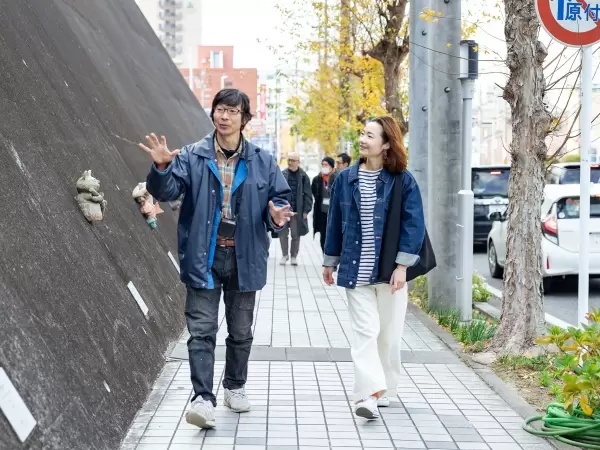
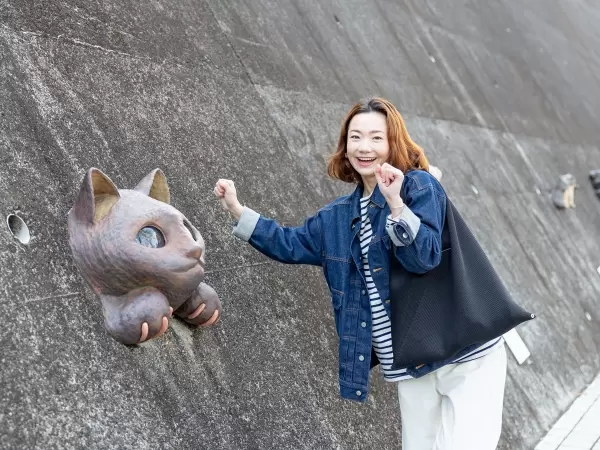
There are 39 "lucky ceramic Beckoning Cat." Eleven "lifelike cats" are also hidden on the wall.
Our first stop was "Tokoname Beckoning Cat Street."Tokoname City boasts the highest production volume of Maneki- Beckoning Cat) in Japan! Along the road connecting Tokoname Station and the Ceramic Art Museum, "lucky ceramic Beckoning Cat" are on display. Each one is said to be made by 39 ceramic artists from Tokoname and imbued with good fortune. They are all unique, with charming expressions and gestures, some so endearing you can't help but stare.
But why did the production of Maneki-neko (beckoning Beckoning Cat) become so popular in Tokoname ? According to Mr. Yagi, "In Tokoname, a ceramic sculpting technique developed to shape clay without using a potter's wheel in order to decorate architectural ceramics, and it is believed that this led to the Beckoning Cat we see today." Even cute Beckoning Cat have a history!
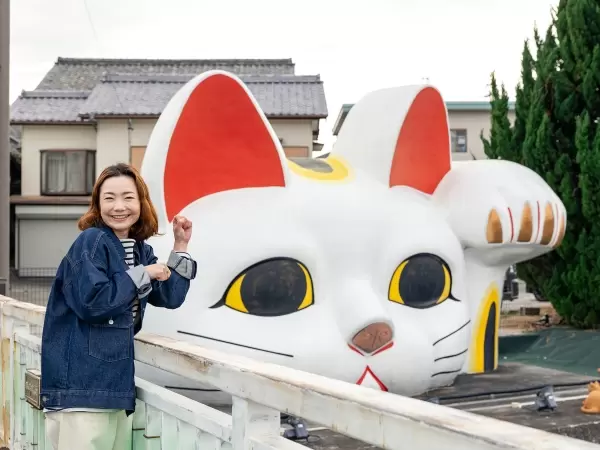
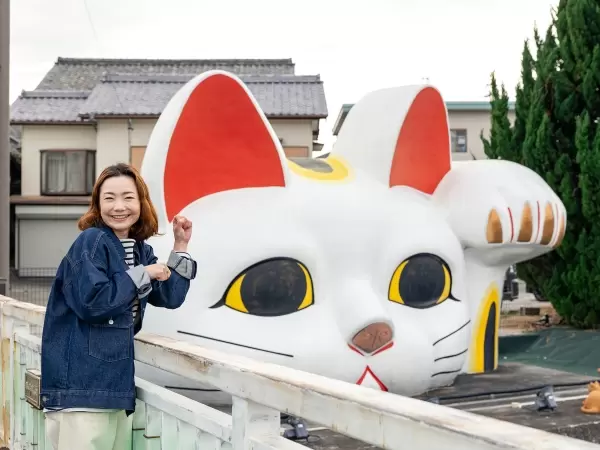
Tokonyan, the guardian cat. It is said that its left paw attracts "people" and its right paw attracts "good fortune."
If you look up at the street wall, you'll see Tokonyan, the guardian cat, peeking out. This giant Beckoning Cat is 3.8 meters tall and 6.3 meters wide! If you go up to the overpass, you can take a photo with Tokonyan, making it a popular photo spot in Tokoname. Tokonyan's good luck power might just grant your biggest wish!
○Here's the key point!
〇A lucky ceramic Beckoning Cat imbued with good fortune.
Tokonyan , the symbol of Tokoname , is a popular photo spot!
Tokoname Manekineko Street Tokonyan
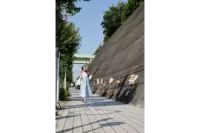 479-0836 Tokoname City, Aichi Prefecture
The life-like cat is placed next to the giant beckoning cat, and even when seen up close, it looks just like a real cat.
Along the road heading east from Meitetsu Tokoname Station to the Tokoname City Ceramic Hall, you'll find a giant beckoning cat statue, 39 magical beckoning cats, and 11 lifelike cat ceramics on a concrete wall. This popular spot is known as Tokoname Manekineko Street.
Each lucky cat is made with love by 39 pottery artists in Tokoname City. Moreover, the 39 lucky cats are filled with various blessings. The lifelike cats are placed next to the giant beckoning cat. Even when seen up close, they resemble real felines.
479-0836 Tokoname City, Aichi Prefecture
The life-like cat is placed next to the giant beckoning cat, and even when seen up close, it looks just like a real cat.
Along the road heading east from Meitetsu Tokoname Station to the Tokoname City Ceramic Hall, you'll find a giant beckoning cat statue, 39 magical beckoning cats, and 11 lifelike cat ceramics on a concrete wall. This popular spot is known as Tokoname Manekineko Street.
Each lucky cat is made with love by 39 pottery artists in Tokoname City. Moreover, the 39 lucky cats are filled with various blessings. The lifelike cats are placed next to the giant beckoning cat. Even when seen up close, they resemble real felines.
 479-0836 Sakaemachi, Tokoname City, Aichi Prefecture
A popular spot in Tokoname City, situated along the Chita Peninsula in Aichi Prefecture, is where you can see a huge and impressive beckoning cat (maneki neko). This functions as a signpost for those aiming to visit the Tokoname Pottery Path from Tokoname Station.
The cat statue peeking out from above the wall measures 3.8 meters high and 6.3 meters wide. When visiting the Chita Peninsula in Aichi Prefecture, please come and see Tokonyan for yourself in Tokoname City.
479-0836 Sakaemachi, Tokoname City, Aichi Prefecture
A popular spot in Tokoname City, situated along the Chita Peninsula in Aichi Prefecture, is where you can see a huge and impressive beckoning cat (maneki neko). This functions as a signpost for those aiming to visit the Tokoname Pottery Path from Tokoname Station.
The cat statue peeking out from above the wall measures 3.8 meters high and 6.3 meters wide. When visiting the Chita Peninsula in Aichi Prefecture, please come and see Tokonyan for yourself in Tokoname City.
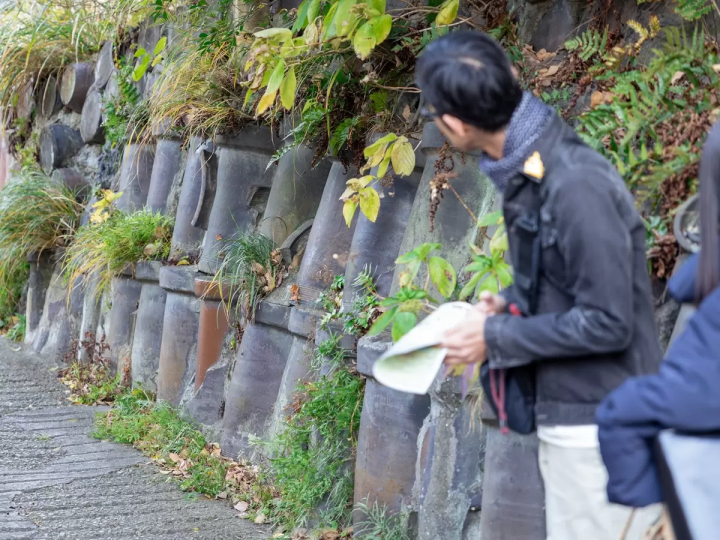
Instead of using concrete, earthenware pipes were used to retain soil on slopes.
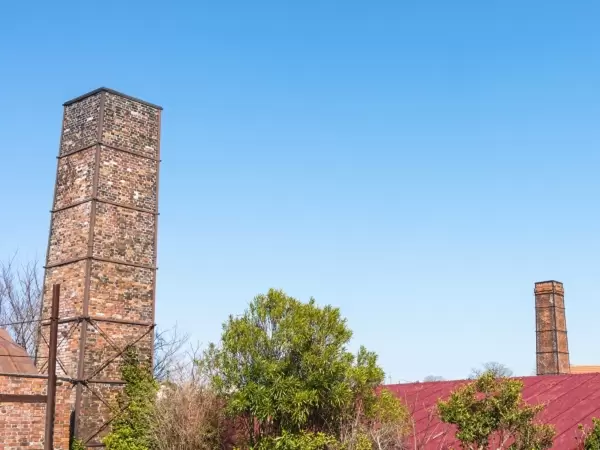
Brick chimneys stand everywhere along the Pottery Footpath.
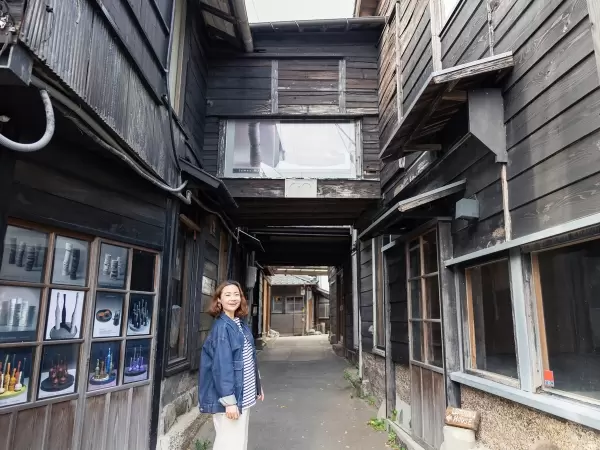
A former clay pipe factory. The covered walkway spanning the alley is a rare architectural feature not seen today!
From here, we enter the hillside of the "Pottery Footpath." Since there are continuous slopes, comfortable shoes and clothing are recommended for your stroll. The labyrinthine alleys will make you feel like you're on an adventure and will be exciting. According to Mr. Yagi, in the past, carts loaded with many large clay pipes used to climb this steep slope! Please note that the Pottery Footpath is a local road and there are many private houses along it. When strolling or taking pictures, please be sure to observe proper etiquette.
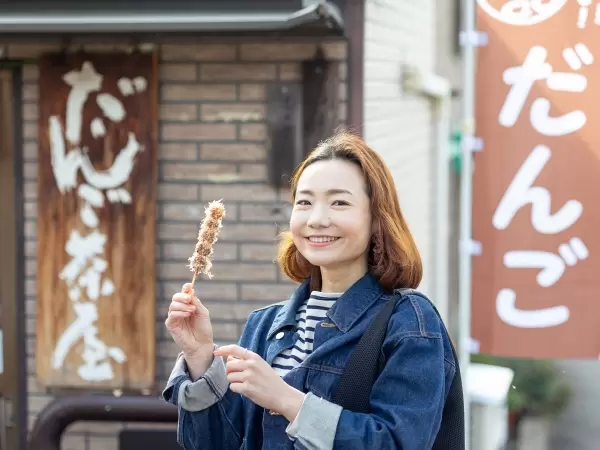
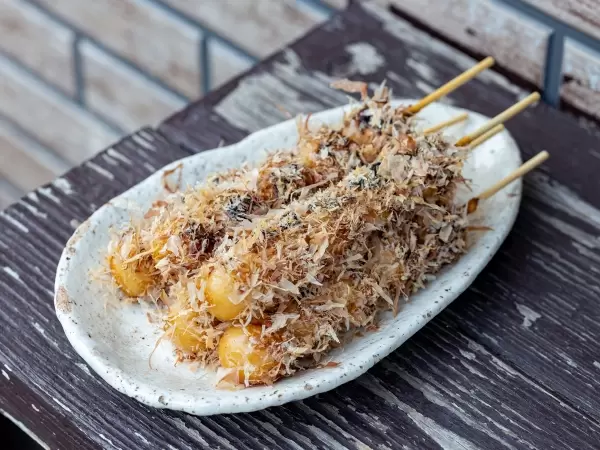
Enjoy eating fragrant rice dumplings made with local tamari soy sauce while strolling around!
As you stroll along the walking paths, you'll discover plenty of fun things, such as concrete pipes covering the slopes, chimneys built in surprisingly narrow places, and buildings that were constructed using covered walkways to transport the pipes! Along the way, I was tempted by the savory aroma wafting from a "dango tea house" and couldn't resist taking a detour. In keeping with the town's reputation as a place of Beckoning Cat, their specialty "cat dango," sprinkled with bonito flakes, is perfect for eating on the go.
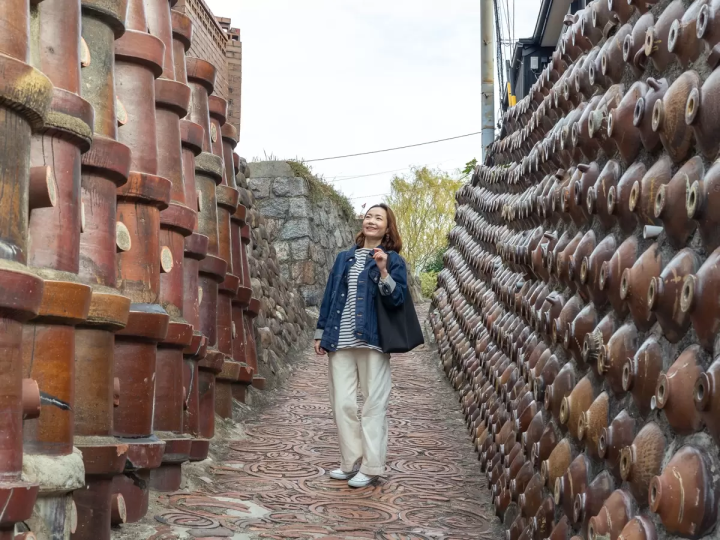
"Dokanzaka" feels like a trip into another dimension.
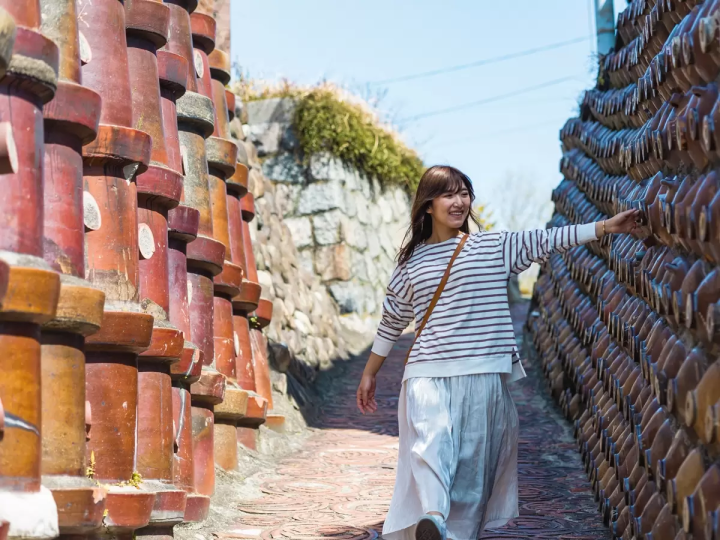
This is "Dokan-zaka" (Earthen Pipe Hill), a street covered with walls made of clay pipes from the Meiji period and shochu bottles from the early Showa period. It is one of the iconic spots along the Pottery Footpath.
Let's also take a look at the ground. The ground is covered with discarded "kesawa" rings used during the firing of clay pipes. This unique pattern was created out of consideration for making the slopes easier to walk on without slipping.
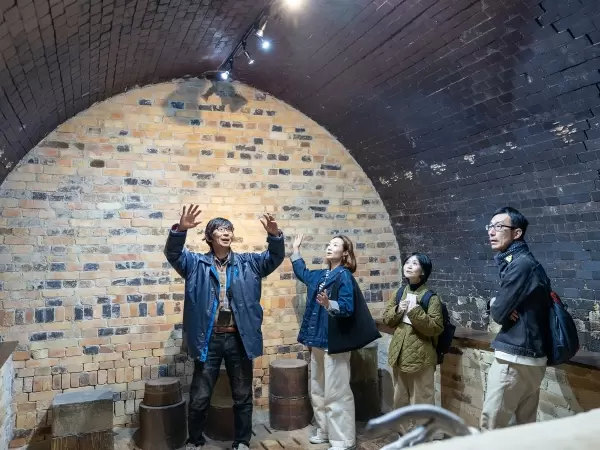
Inside the kiln preserved and displayed within the "Climbing Kiln Square Exhibition Workshop Hall"
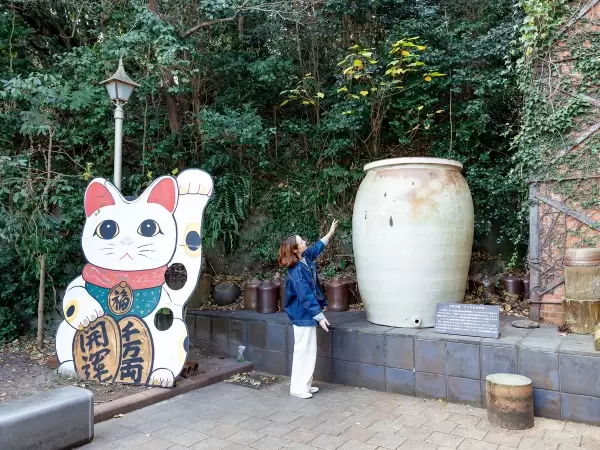
Tokoname ware is known for its large ceramic pieces such as jars, a testament to its high level of technical skill.
The next spot is the "Noborigama Hiroba Exhibition Workshop Hall," located at the midpoint of the Pottery Footpath Course A. Inside the hall, a kiln that was actually used is preserved and on display, and you can even go inside! This kiln was made around 1921 and is characterized by having two entrances on the front. Before the war, it was mainly used to fire shochu bottles, clay pipes, and teapots, and after the war, bonsai pots were mainly fired in it.
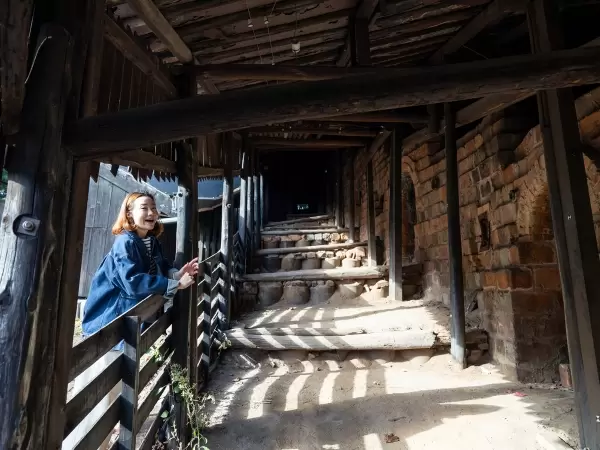
The "Noborigama (Toei Kiln)" has a tilt angle of approximately 17 degrees and eight firing kilns.
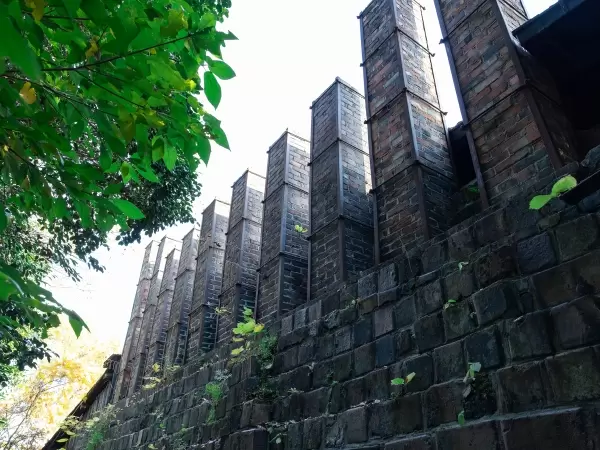
Check out the 10 chimneys of different heights!
There is another climbing kiln in the climbing kiln plaza, called "Noborigama (Toei Kiln)." Built around 1887 (Meiji 20), it is one of the largest climbing kilns still existing in Japan! It is registered as a National Important Tangible Folk Cultural Property.
After touring the kiln, which has eight firing chambers, we walked around to the back and saw a row of chimneys. There were 10 chimneys in total. According to Mr. Yagi's explanation, the reason the sides of the chimneys are taller is because it is calculated to ensure that the temperature rises evenly to the edges of the kiln, resulting in a uniform firing process.
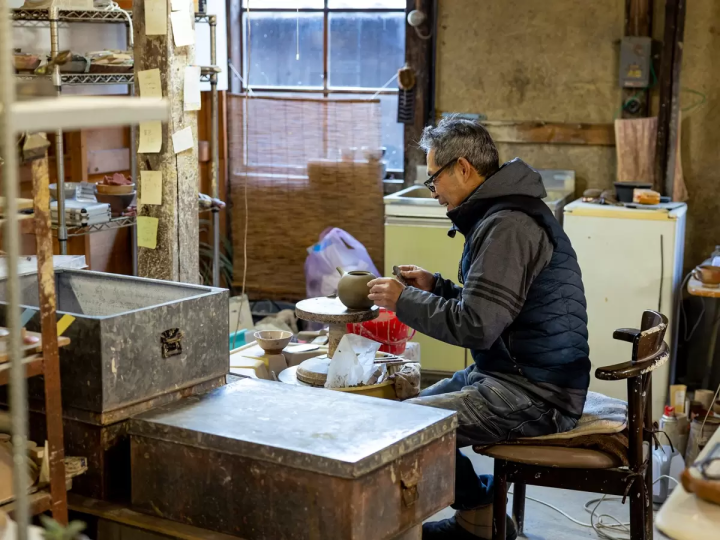
As I passed by the Ishimizu Kiln workshop, they were in the middle of assembling the parts for a teapot!
Sometimes, you might even stumble upon a pottery workshop and catch a glimpse of the pottery-making process! On this particular day, we were lucky enough to visit "Ishimizu Kiln," a workshop run by a friend of our guide, Mr. Yagi, and witness the creation of a teapot. The way the intricate parts were assembled to form the teapot was truly a testament to the craftsman's skill!
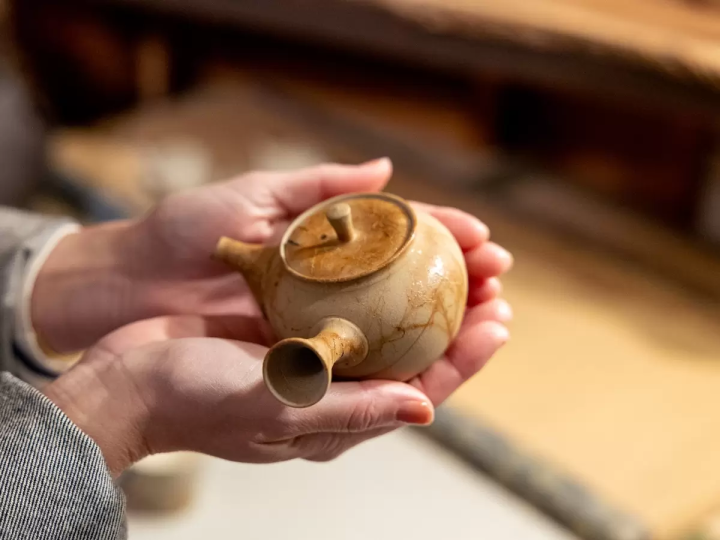
As befits Tokoname, a town by the sea, this teapot is made using the "seaweed-covered" technique, where seaweed is wrapped around the clay body before firing.
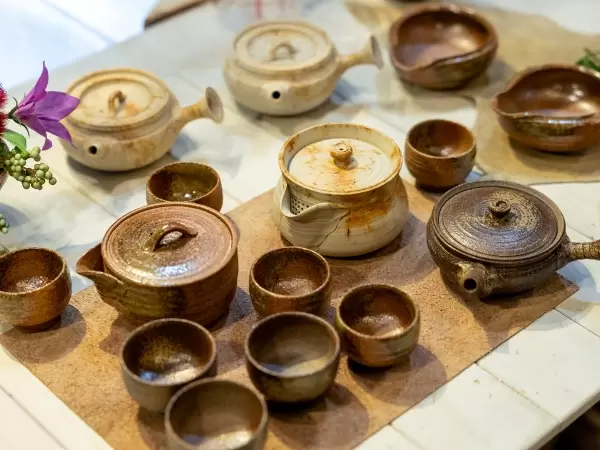
The pottery displayed in the workshops along the Pottery Footpath. You might just find your favorite one-of-a-kind piece.
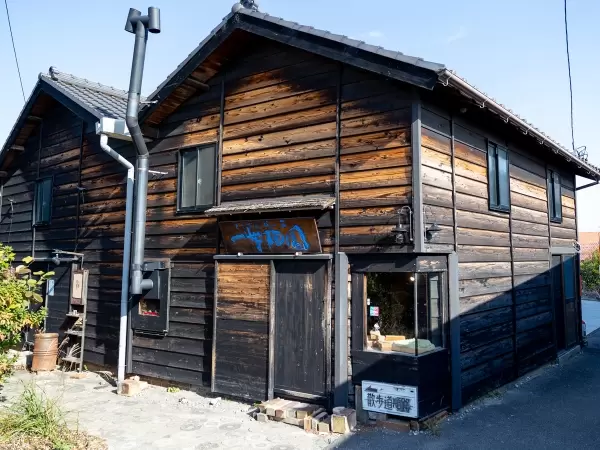
"Ichisei Pottery Garden" is a workshop run by our guide, Mr. Yagi. If you're lucky, you might be greeted by the shop's resident cat.
Guide Yagi also creates his own works at his own studio, "Issei Touen," and you can purchase your favorite pottery pieces on the spot.
●Here's the key point!
○A nostalgic landscape lined with chimneys and clay pipes. ○Learn about the town's history, culture, and stories with a guided tour by a ceramic artist.
Tokoname Pottery Footpath Dango Teahouse Dokan-zaka Noborigama Kiln Plaza Exhibition & Workshop Noborigama (Toei Kiln) Sekisuigama Issei Toen
 479-0836 Sakaemachi, Tokoname City, Aichi Prefecture
The Tokoname Pottery Footpath refers to the area where the ceramic industry was at its most prosperous in the early Showa period. Chimneys, kilns, and factories still dot the area, quietly conveying the state of those days.
Today, many artists still have studios here. The area has wonderful galleries, cafes, pottery shops, and miscellaneous goods stores.
The starting point for the walk is the Tokoname City Ceramic Hall, which is a 5-minute walk from Tokoname Station.
Enjoy strolling through the maze-like alleyways with the pamphlet you got here in hand.
There are also sightseeing guided tours that provide visitors with a deeper understanding of Tokoname. Please take advantage of these excursions.
479-0836 Sakaemachi, Tokoname City, Aichi Prefecture
The Tokoname Pottery Footpath refers to the area where the ceramic industry was at its most prosperous in the early Showa period. Chimneys, kilns, and factories still dot the area, quietly conveying the state of those days.
Today, many artists still have studios here. The area has wonderful galleries, cafes, pottery shops, and miscellaneous goods stores.
The starting point for the walk is the Tokoname City Ceramic Hall, which is a 5-minute walk from Tokoname Station.
Enjoy strolling through the maze-like alleyways with the pamphlet you got here in hand.
There are also sightseeing guided tours that provide visitors with a deeper understanding of Tokoname. Please take advantage of these excursions.
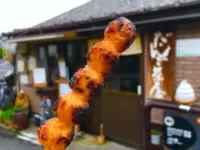 4-11 Sakae Town, Tokoname City, Aichi Prefecture, 479-0836
Located within the tourist spot "Pottery Footpath," the dumplings made with local soy sauce are so delicious you won't be able to stop eating them once you start.
We also recommend the local specialty "Neko Dango" topped with Katsuobushi, named after Tokoname, the city of beckoning cats, and soft serve ice cream on hot days!
In a homely atmosphere, the shop's owners, a grandfather and grandmother, will kindly tell you stories of Tokoname's past and answer any questions you may have.
4-11 Sakae Town, Tokoname City, Aichi Prefecture, 479-0836
Located within the tourist spot "Pottery Footpath," the dumplings made with local soy sauce are so delicious you won't be able to stop eating them once you start.
We also recommend the local specialty "Neko Dango" topped with Katsuobushi, named after Tokoname, the city of beckoning cats, and soft serve ice cream on hot days!
In a homely atmosphere, the shop's owners, a grandfather and grandmother, will kindly tell you stories of Tokoname's past and answer any questions you may have.
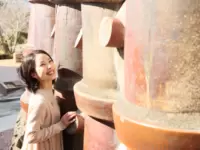 Sakae Town, Tokoname City, Aichi Prefecture, 479-0836
Saka , located in Tokoname City on the Chita Peninsula in Aichi Prefecture , is about 10 meters south of the shipping wholesaler Takita Family Home, and is one of the most representative sights on the Pottery Footpath .
The left and right walls are densely covered with clay pipes from the Meiji period and shochu bottles from the early Showa period, and the slope is paved with discarded "kesawa" rings used in firing clay pipes, making it easy to walk on without slipping.
If you are visiting the Chita Peninsula in Aichi Prefecture , be sure to stop by Saka in Tokoname City as part of your sightseeing.
Sakae Town, Tokoname City, Aichi Prefecture, 479-0836
Saka , located in Tokoname City on the Chita Peninsula in Aichi Prefecture , is about 10 meters south of the shipping wholesaler Takita Family Home, and is one of the most representative sights on the Pottery Footpath .
The left and right walls are densely covered with clay pipes from the Meiji period and shochu bottles from the early Showa period, and the slope is paved with discarded "kesawa" rings used in firing clay pipes, making it easy to walk on without slipping.
If you are visiting the Chita Peninsula in Aichi Prefecture , be sure to stop by Saka in Tokoname City as part of your sightseeing.
 6-145 Sakaemachi, Tokoname City, Aichi Prefecture, 479-0836
The museum preserves and exhibits a "double-fired, down-fired square kiln."
On the second floor, there is a sales corner and a pottery class where you can casually enjoy the experience of painting pottery. Since you can paint with a special pen instead of a brush, it is popular as it is easy for even small children to try.
Located on the Pottery Footpath A course, it can be used as a place to rest or for changing diapers.
<Painting experience> (Lucky cat, plate, jar, clay pipe, ornament)
●Production time: 1 hour ●Number of participants: Maximum 30 people *Please consult for groups of 10 or more ●Price: 750 yen - 2,200 yen
* For reservations for groups of 9 or more, if you cancel on the day, a cancellation fee of 50% of the experience fee will be charged. (There is no cancellation fee if the number of people changes.)
*If there is availability on the day, you can experience it without making a reservation.
6-145 Sakaemachi, Tokoname City, Aichi Prefecture, 479-0836
The museum preserves and exhibits a "double-fired, down-fired square kiln."
On the second floor, there is a sales corner and a pottery class where you can casually enjoy the experience of painting pottery. Since you can paint with a special pen instead of a brush, it is popular as it is easy for even small children to try.
Located on the Pottery Footpath A course, it can be used as a place to rest or for changing diapers.
<Painting experience> (Lucky cat, plate, jar, clay pipe, ornament)
●Production time: 1 hour ●Number of participants: Maximum 30 people *Please consult for groups of 10 or more ●Price: 750 yen - 2,200 yen
* For reservations for groups of 9 or more, if you cancel on the day, a cancellation fee of 50% of the experience fee will be charged. (There is no cancellation fee if the number of people changes.)
*If there is availability on the day, you can experience it without making a reservation.
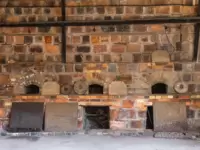 6-208 Sakae-cho, Tokoname City, Aichi Prefecture, 479-0836
Located on the Pottery Footpath in Tokoname City Chita Peninsula in Aichi Prefecture , there is a climbing kiln. Built around 1887 (Meiji 20), it was in use until 1974 ( Showa 49) and is one of the largest climbing kilns still standing in Japan.
It features a slope of approximately 17 degrees, eight kilns, and ten chimneys of different heights.
It was designated as an Important Tangible Folk Cultural Property of Japan in 1982 (Showa 57), and was also recognized as a Heritage of Industrial Modernization in 2007 (Heisei 19).
If you are visiting Tokoname City on the Chita Peninsula in Aichi Prefecture , be sure to stop by the climbing kiln in Tokoname City as part of your sightseeing.
6-208 Sakae-cho, Tokoname City, Aichi Prefecture, 479-0836
Located on the Pottery Footpath in Tokoname City Chita Peninsula in Aichi Prefecture , there is a climbing kiln. Built around 1887 (Meiji 20), it was in use until 1974 ( Showa 49) and is one of the largest climbing kilns still standing in Japan.
It features a slope of approximately 17 degrees, eight kilns, and ten chimneys of different heights.
It was designated as an Important Tangible Folk Cultural Property of Japan in 1982 (Showa 57), and was also recognized as a Heritage of Industrial Modernization in 2007 (Heisei 19).
If you are visiting Tokoname City on the Chita Peninsula in Aichi Prefecture , be sure to stop by the climbing kiln in Tokoname City as part of your sightseeing.
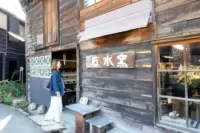 6-135 Sakae-machi, Tokoname City, Aichi Prefecture, 479-0836
This is a pottery workshop and pottery craft store located within the Tokoname Pottery Footpath .
6-135 Sakae-machi, Tokoname City, Aichi Prefecture, 479-0836
This is a pottery workshop and pottery craft store located within the Tokoname Pottery Footpath .
 7-33 Sakae Town, Tokoname City, Aichi Prefecture, 479-0836
This workshop and gallery is run by a Tokoname ware artist. In addition to exhibiting and selling works, the artist offers guided tours and shares insights into the techniques and background of the craft. English-language tours are available, making it a great place to gain a deeper understanding of Tokoname pottery culture.
7-33 Sakae Town, Tokoname City, Aichi Prefecture, 479-0836
This workshop and gallery is run by a Tokoname ware artist. In addition to exhibiting and selling works, the artist offers guided tours and shares insights into the techniques and background of the craft. English-language tours are available, making it a great place to gain a deeper understanding of Tokoname pottery culture.
3. Udon Sweet Wabisuke
Lunchtime with the local specialty, "Clay Pot Curry Udon," and Tokoname milk.
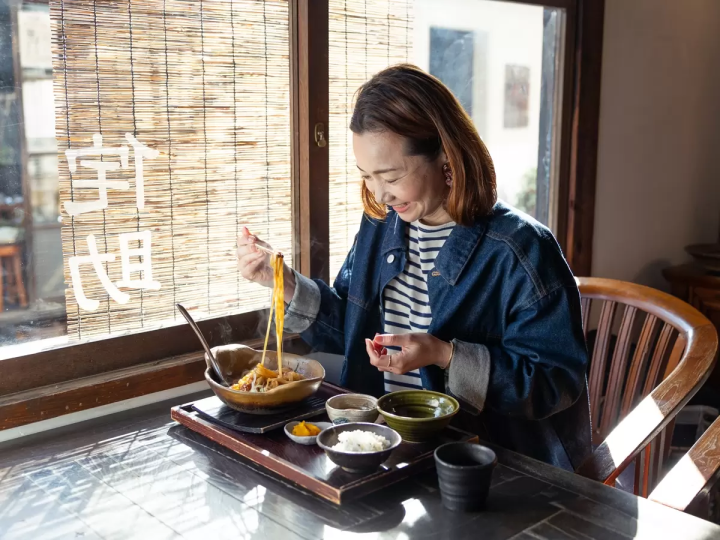
You can enjoy it in many ways, like adding a soft-boiled egg or rice!
After a stroll that worked up an appetite, we stopped for lunch at "Udon Kanmi Wabisuke" on "Kurafutoya Street." In this charming space, a renovated clay pipe factory, we enjoyed their specialty, "clay pot curry udon."
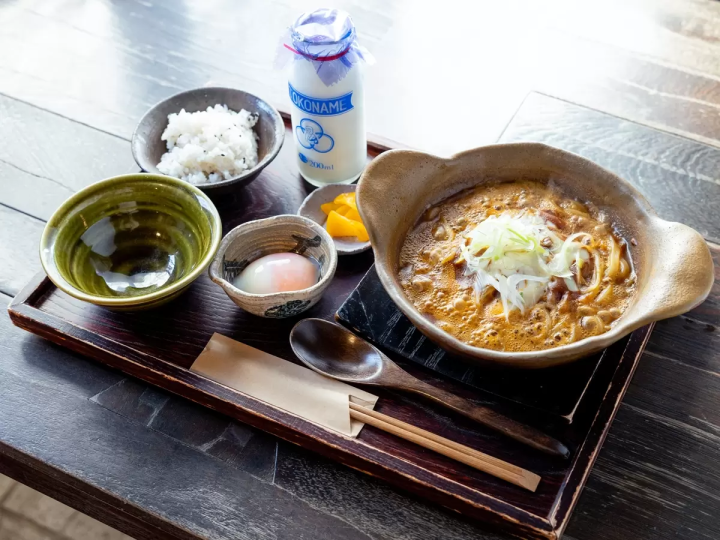
A set meal featuring curry in an earthenware pot, a soft-boiled egg, and rice, plus Tokoname milk!
The chewy noodles are coated in a rich, Japanese-style curry blended with dashi broth and melted cheese. Adding a soft-boiled egg halfway through creates a milder flavor. Furthermore, adding rice to the leftover curry turns it into a kind of rice porridge. You can enjoy multiple flavors in one dish, and because it's served in an earthenware pot, it stays piping hot until the very last bite, which is another great point.
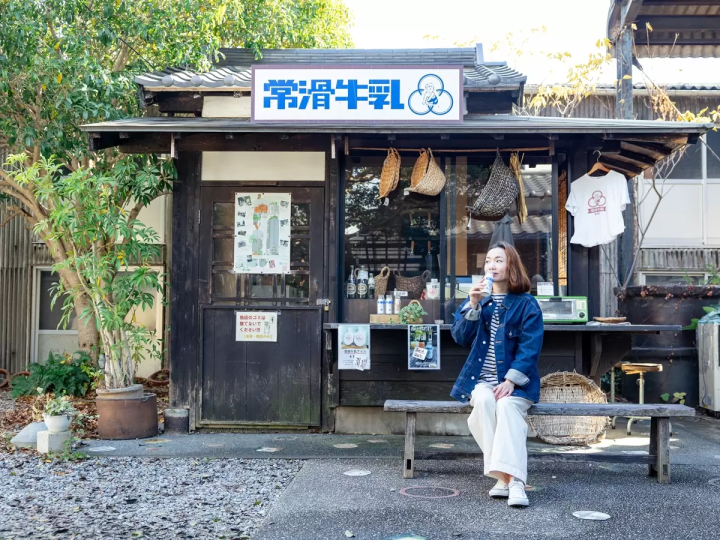
BAITEN, a Tokoname milk stand located on Kurafudoya Street.
The "Tokoname Milk" served with the tour's lunch boasts freshness, as the raw milk is pasteurized at low temperature on the same day it's squeezed and shipped the next day. Its subtle sweet aroma and mellow, elegant flavor are perfect after a curry udon meal. You can choose between milk or coffee milk, and the retro-designed milk bottles are very popular on social media!
*If the shop is closed, you can purchase Tokoname milk at "Pan Kobo Fusha" across the street.
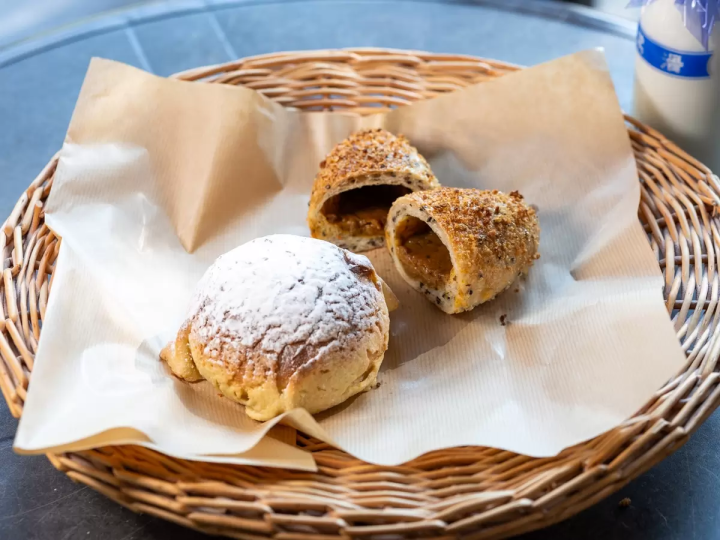
The most popular items at "Pan Kobo Fuusha" are the melon bread and the black sesame curry bread.
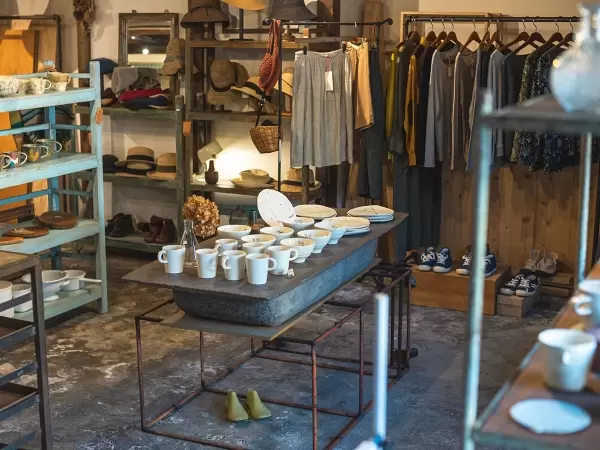
"MADOYAMA" sells miscellaneous goods, clothing, and works by local ceramic artists.
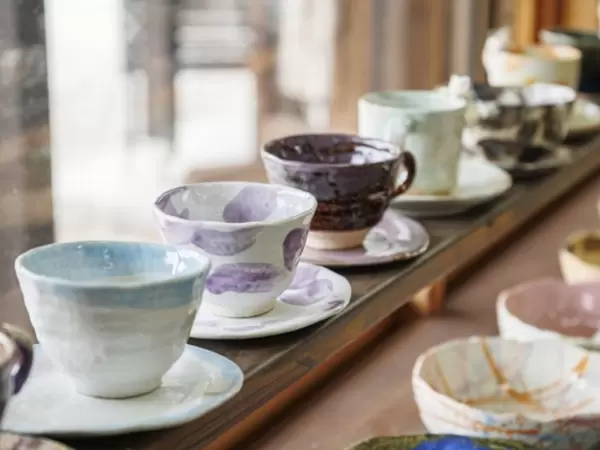
At "Seiko," you'll find a selection of Tokoname Tokoname ware dishes.
After your meal, you'll have about 30 minutes of free time, so take a stroll around the area. On the same "Kurefudoya Street" as Wabisuke, you'll find a Tokoname Milk stand and the popular bakery "Pan Kobo Fusha." Also nearby are "MADOYAMA" and "Seiko," which sell Tokoname ware and selected Tokoname goods, making it a great place to find souvenirs from Tokoname.
●Here's the key point!
Lunch will be Tokoname's specialty, "Clay Pot Curry Udon" and Tokoname Milk. You can also enjoy strolling around and shopping during your free time.
Udon & Sweets Wabisuke Tokoname Milk Stand Pan Koubou Fusha (Bakery Fusha) MADOYAMA ni:no Seiko Pottery Experience Workshop
 3-89 Sakae Town, Tokoname City, Aichi Prefecture, 479-0836
This cafe is located in a corner of a renovated building that was originally a clay pipe factory built in the early Showa. The pillars and beams that have stood the test of time have been left as they are, creating a relaxing space that makes the most of the historical charm.
They offer a wide variety of desserts, including the famous "Earthenware Pot Curry Udon," "Zenzai" (red bean soup), and "Shaved Ice." From meals to resting, you can spend a Tokoname time enjoying the atmosphere of Tokoname.
3-89 Sakae Town, Tokoname City, Aichi Prefecture, 479-0836
This cafe is located in a corner of a renovated building that was originally a clay pipe factory built in the early Showa. The pillars and beams that have stood the test of time have been left as they are, creating a relaxing space that makes the most of the historical charm.
They offer a wide variety of desserts, including the famous "Earthenware Pot Curry Udon," "Zenzai" (red bean soup), and "Shaved Ice." From meals to resting, you can spend a Tokoname time enjoying the atmosphere of Tokoname.
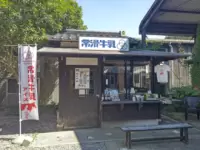 3-89 Sakae Town, Tokoname City, Aichi Prefecture, 479-0836
A small hut on Kurefu Tsuchiya Street on the Pottery Footpath.
The building, located on the site of what was originally a clay pipe factory, retains a nostalgic feel, and next to it is the actual kiln where the clay pipes were fired.
Tokoname Milk, which was founded in Showa in the Sanwa district of Tokoname under the name Sanwa Milk, was born with the hope that "people will drink milk and become healthy." The logo, which features a child in the middle of three circles, represents the company name and the hope that children will drink milk and become healthy.
Currently, about 70% of Tokoname Milk is made for school lunches and is consumed in elementary and junior high schools in Tokoname City, Obu City, and Chita City . Tokoname Milk is so popular that it is known by everyone on the Chita Peninsula .
The soft, sweet aroma and mellow, elegant flavor are the result of our commitment to freshness, as the milk is pasteurized at 85 degrees the same day it is squeezed and shipped the next day. Enjoy this classic taste loved by the people of the Chita Peninsula.
Even if the Tokoname Milk Stand is closed, you can still enjoy Tokoname Milk at Tokoname Fusha, located right in front of the stand.
3-89 Sakae Town, Tokoname City, Aichi Prefecture, 479-0836
A small hut on Kurefu Tsuchiya Street on the Pottery Footpath.
The building, located on the site of what was originally a clay pipe factory, retains a nostalgic feel, and next to it is the actual kiln where the clay pipes were fired.
Tokoname Milk, which was founded in Showa in the Sanwa district of Tokoname under the name Sanwa Milk, was born with the hope that "people will drink milk and become healthy." The logo, which features a child in the middle of three circles, represents the company name and the hope that children will drink milk and become healthy.
Currently, about 70% of Tokoname Milk is made for school lunches and is consumed in elementary and junior high schools in Tokoname City, Obu City, and Chita City . Tokoname Milk is so popular that it is known by everyone on the Chita Peninsula .
The soft, sweet aroma and mellow, elegant flavor are the result of our commitment to freshness, as the milk is pasteurized at 85 degrees the same day it is squeezed and shipped the next day. Enjoy this classic taste loved by the people of the Chita Peninsula.
Even if the Tokoname Milk Stand is closed, you can still enjoy Tokoname Milk at Tokoname Fusha, located right in front of the stand.
 3-90 Sakae Town, Tokoname City, Aichi Prefecture, 479-0836
A bakery located on Kurefu Tsuchiya Street on the Pottery Footpath.
It's a great place to take a break from your stroll, and we also recommend taking a stroll with some freshly baked bread in hand.
3-90 Sakae Town, Tokoname City, Aichi Prefecture, 479-0836
A bakery located on Kurefu Tsuchiya Street on the Pottery Footpath.
It's a great place to take a break from your stroll, and we also recommend taking a stroll with some freshly baked bread in hand.
 3-111 Sakae Town, Tokoname City, Aichi Prefecture, 479-0836
This shop was renovated from a clay pipe factory, and the first floor sells miscellaneous goods, clothing, and works by local pottery artists, while the second floor is a cafe popular for its curry lunches.
Don't miss the exquisite curries made by simmering lots of vegetables for a long time, such as the vegetable curry topped with plenty of seasonal vegetables, or the butter chicken curry made with an onion and tomato base and fragrant butter!
We also recommend the parfaits made with seasonal fruit.
3-111 Sakae Town, Tokoname City, Aichi Prefecture, 479-0836
This shop was renovated from a clay pipe factory, and the first floor sells miscellaneous goods, clothing, and works by local pottery artists, while the second floor is a cafe popular for its curry lunches.
Don't miss the exquisite curries made by simmering lots of vegetables for a long time, such as the vegetable curry topped with plenty of seasonal vegetables, or the butter chicken curry made with an onion and tomato base and fragrant butter!
We also recommend the parfaits made with seasonal fruit.
 1-1 Togocho, Tokoname City, Aichi Prefecture, 479-0835
The shop is a renovated tenement house that is over 90 years old.
On the first floor, in addition to Tokoname ware, there are also cute miscellaneous goods on display.
The second floor is a cafe, and their popular lunch menu uses locally grown seasonal vegetables.
We also recommend the homemade dessert "ni:no Pudding."
1-1 Togocho, Tokoname City, Aichi Prefecture, 479-0835
The shop is a renovated tenement house that is over 90 years old.
On the first floor, in addition to Tokoname ware, there are also cute miscellaneous goods on display.
The second floor is a cafe, and their popular lunch menu uses locally grown seasonal vegetables.
We also recommend the homemade dessert "ni:no Pudding."
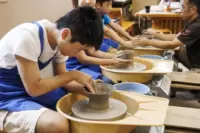 3-91 Sakae-cho, Tokoname City, Aichi Prefecture, 479-0836
You can create your own Tokoname ware using a potter's wheel or by hand.
Why not buy it as a memento of your trip or as a gift for someone special?
●Contents: Electric potter's wheel and hand-building (weekdays only)
●Production time: 40 minutes, 60 minutes, 90 minutes ●Capacity: Negotiable
●Price: From 3,300 yen
●Other: On-site pottery experience also available
3-91 Sakae-cho, Tokoname City, Aichi Prefecture, 479-0836
You can create your own Tokoname ware using a potter's wheel or by hand.
Why not buy it as a memento of your trip or as a gift for someone special?
●Contents: Electric potter's wheel and hand-building (weekdays only)
●Production time: 40 minutes, 60 minutes, 90 minutes ●Capacity: Negotiable
●Price: From 3,300 yen
●Other: On-site pottery experience also available
4. Sawada Brewery
Brewery tour & pairing experience of Tokoname ware sake cups with Hakuro
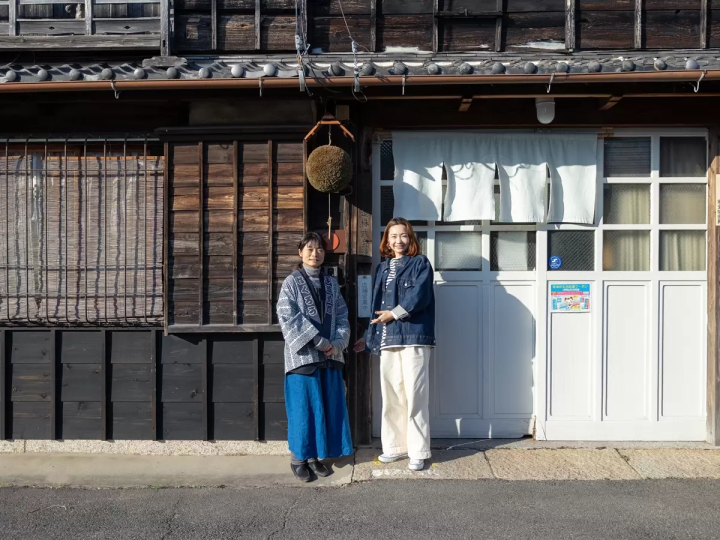
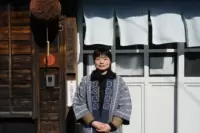
Kaoru Sawada, the 6th generation owner, will give us a tour of the storehouse.
After lunch, we boarded a chartered taxi and headed to our next destination, Sawada Sake Brewery. Founded in 1848 during the late Edo period, it is a long-established sake brewery with fans all over Japan for its "Hakuro" sake.
Upon entering the charming, black-painted building, we were greeted by the sixth-generation owner, Kaoru Sawada.
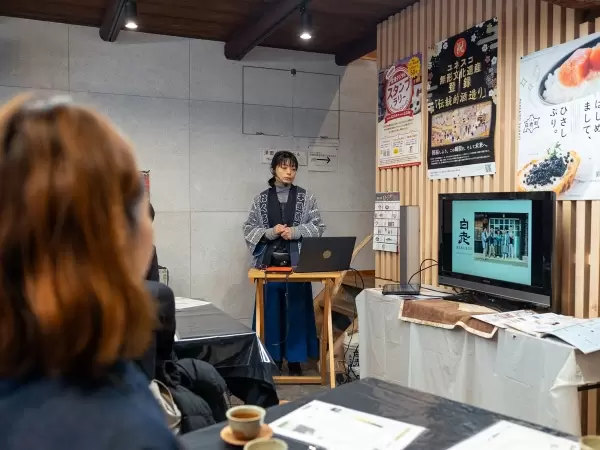
You can learn about the history of Chita as a thriving sake-producing region through slides and videos.
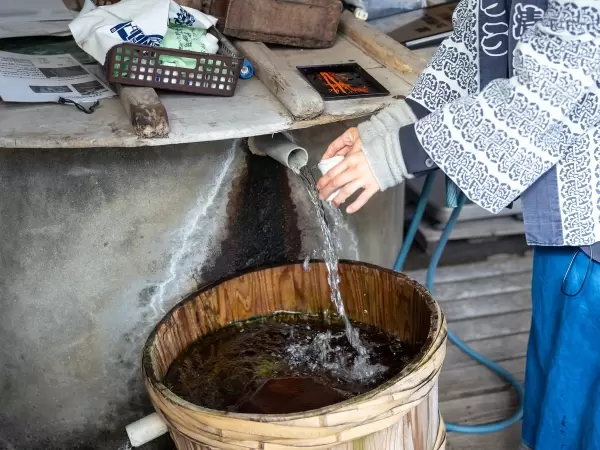
The brewing water comes from a spring about 2km away, drawn through a private water supply system. A space called "Shinmizu" where the general public can draw water has also been completed!
First, they presented slides introducing the history, climate, and dedication to sake brewing of the Chita Peninsula, and even offered samples of the brewing water. The brewing water is a light, soft water that is incredibly smooth. Apparently, they use this water as a base and blend it with three other types of water with different properties to suit each sake.
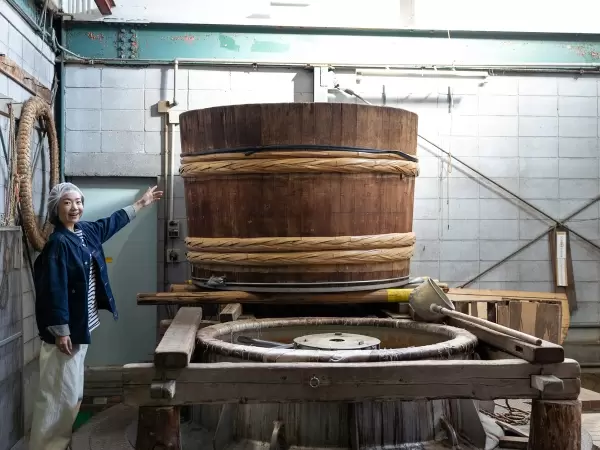
A large steamer called a "koshiki" is used to steam sake rice. Only a few breweries in Japan still use the traditional wooden koshiki.
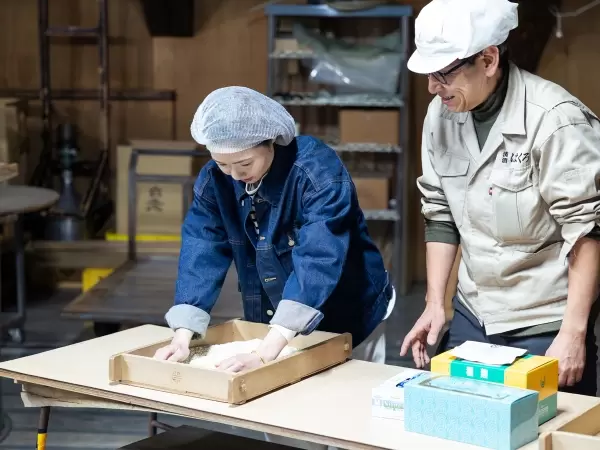
Experience making koji using koji trays
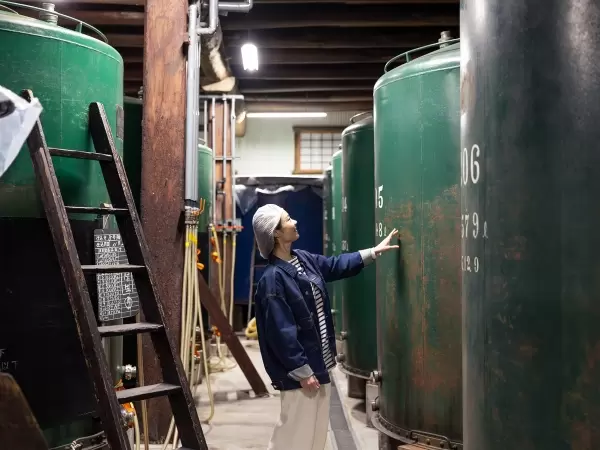
Each type of sake is carefully managed in small tanks according to its specific design requirements.
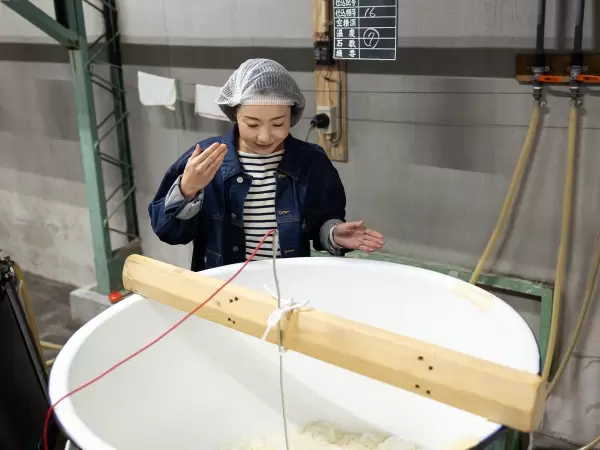
Let's take a look at "shubo," the base of sake. Experience the rising aroma and the state of the bubbles.
And now, finally, it's time for a tour of the brewery.
Sawada Brewery, which upholds traditional sake brewing methods, is symbolized by its koji-making process using koji trays. It is the only brewery in Aichi Prefecture that uses koji trays, which are now only used for ginjo sake, to make all of its sake. Although it is a very time-consuming process, they say that by making koji in small batches using koji trays, they can produce sake that brings out the delicious flavor of the rice.
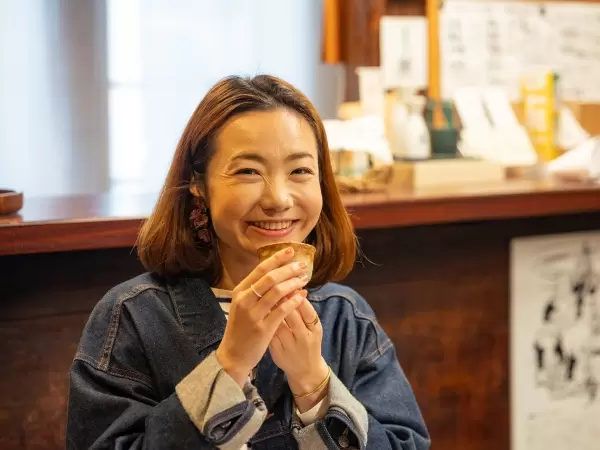
With a tour, you can enjoy alcohol without worrying about driving.
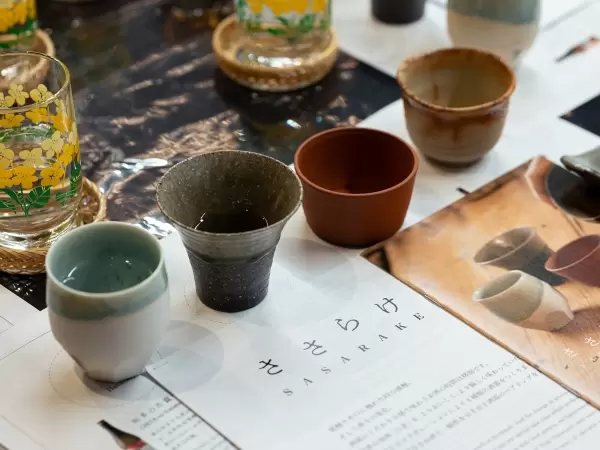
Enjoy the unique characteristics of each sake, such as "Chita no Hakuro " with its sweet aroma and refreshing acidity, or " Chita Shiraoi" with its dry finish, along with the accompanying glassware.
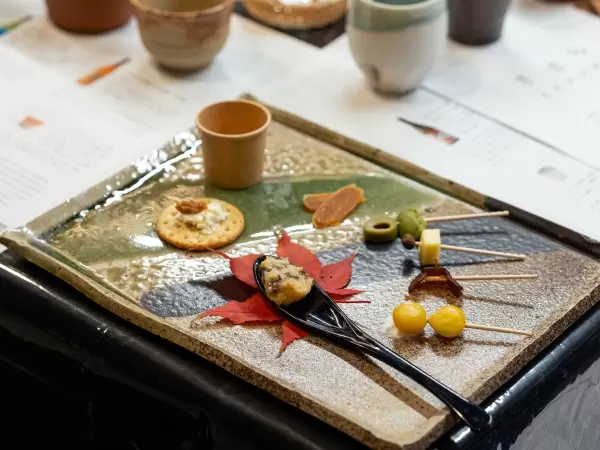
Includes a set of snacks perfect for pairing with alcohol, such as sake lees paste with raisins and karasumi (cured mullet roe) washed with sake.
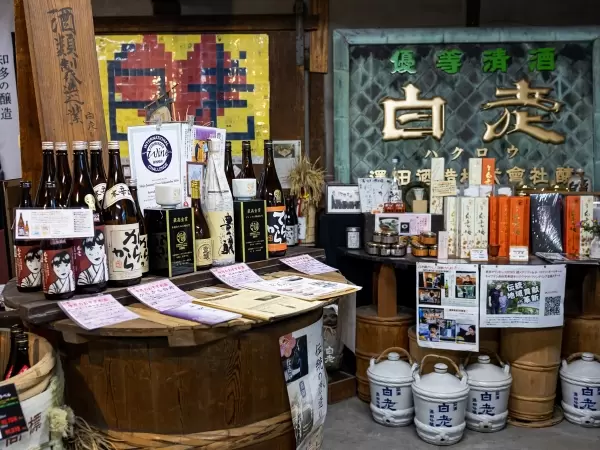
You can also purchase the alcohol you like after tasting it.
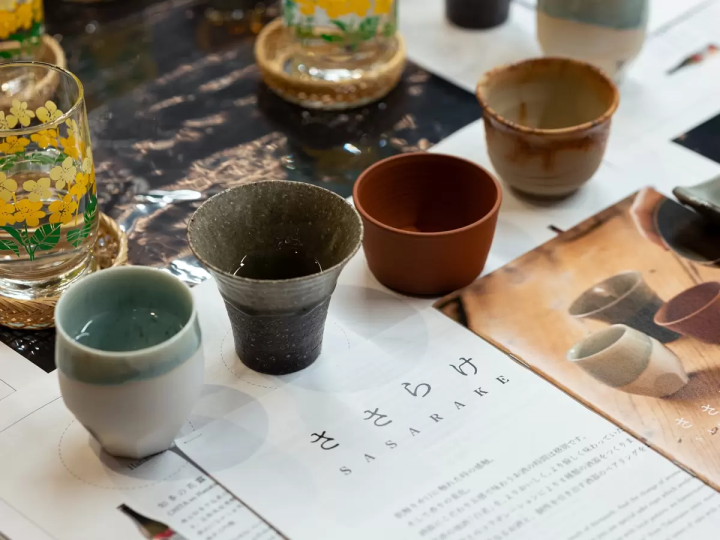
After the tour, it's time for the much-anticipated tasting in the tasting room "Sakafune." We'll enjoy the "Sasarake" set, a collaboration with ceramic artists from Tokoname. This special pairing menu allows you to enjoy local sake from Hakuro paired with sake cups created by four different ceramic artists to perfectly complement the characteristics of each sake.
●Here's the key point!
○ Visit a sake brewery that has been operating since the Edo period ○ Experience pairing Tokoname ware sake cups with local sake "Hakuro"
Sawada Shuzo (Sake Brewery)
 479-0818 4-10 Kobacho, Tokoname City, Aichi Prefecture
Sawada Shuzo is a historic sake brewery founded in Tokoname City, Aichi Prefecture in 1848, at the end of the Edo period. Tokoname City is also known for its Tokoname ware.
The brewery's representative brand is ""Hakurou."" The name of the brewery reflects the ""carefully polished white color of rice'' alongside ""a wish for the health and longevity of its customers'' and ""pursuing an expertise in sake brewing.''
The Chita Peninsula, where Tokoname is located, is a region with a thriving culture of brewing products such as seafood, agricultural and livestock products, as well as sake, miso, vinegar, and tamari soy sauce. To support the local rich food culture, Sawada Shuzo continues to produce rich, flavorful sake using local rice, spring water, and traditional wooden tools for everything from ordinary sake to daiginjo. The brewery believes that old yet traditional methods are the best way to bring out the deliciousness of rice and avoid any unpleasant tastes.
Since the company's founding, the brewing water that is indispensable for sake brewing has been sourced from a spring up on a hill two kilometers away from the brewery. The water has been brought to a well in the sake brewery through a private tap.
As a local sake brewery originating from the fermented food culture of the Chita Peninsula, they believe in creating sake that complements food while being in harmony with nature.
Be sure to take a tour of the sake brewery. You can enjoy tastings and experience how sake is made through great care and attention to ingredients, manufacturing methods, and tools. To make Tokoname's local ""Hakurou"" sake more delicious and enjoyable, the brewery has created four types of sake vessels in collaboration with potters. On the tour, you can enjoy pairing sake with different flavors and sake vessels that bring out the individuality of each fermented rice beverage.
479-0818 4-10 Kobacho, Tokoname City, Aichi Prefecture
Sawada Shuzo is a historic sake brewery founded in Tokoname City, Aichi Prefecture in 1848, at the end of the Edo period. Tokoname City is also known for its Tokoname ware.
The brewery's representative brand is ""Hakurou."" The name of the brewery reflects the ""carefully polished white color of rice'' alongside ""a wish for the health and longevity of its customers'' and ""pursuing an expertise in sake brewing.''
The Chita Peninsula, where Tokoname is located, is a region with a thriving culture of brewing products such as seafood, agricultural and livestock products, as well as sake, miso, vinegar, and tamari soy sauce. To support the local rich food culture, Sawada Shuzo continues to produce rich, flavorful sake using local rice, spring water, and traditional wooden tools for everything from ordinary sake to daiginjo. The brewery believes that old yet traditional methods are the best way to bring out the deliciousness of rice and avoid any unpleasant tastes.
Since the company's founding, the brewing water that is indispensable for sake brewing has been sourced from a spring up on a hill two kilometers away from the brewery. The water has been brought to a well in the sake brewery through a private tap.
As a local sake brewery originating from the fermented food culture of the Chita Peninsula, they believe in creating sake that complements food while being in harmony with nature.
Be sure to take a tour of the sake brewery. You can enjoy tastings and experience how sake is made through great care and attention to ingredients, manufacturing methods, and tools. To make Tokoname's local ""Hakurou"" sake more delicious and enjoyable, the brewery has created four types of sake vessels in collaboration with potters. On the tour, you can enjoy pairing sake with different flavors and sake vessels that bring out the individuality of each fermented rice beverage.
5. Kyoei Kiln Ceramic Art School
Challenge yourself to make your own sake cup!
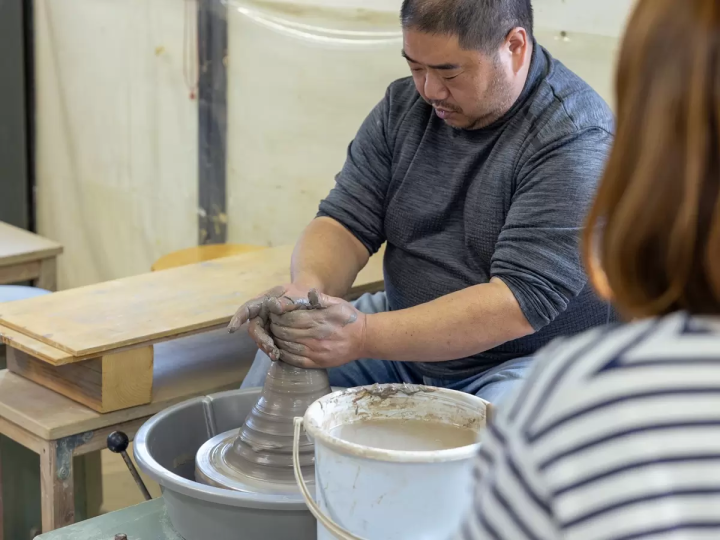
Koichiro Takeuchi, a ceramic artist who is also an instructor at the school and creates the tableware for "Sasarake"
Next, we'll experience "making your own sake cup" at the Kyoei Kiln Ceramic Art School. The instructor, Koichiro Takeuchi, is actually one of the ceramic artists who made the "Sasarake" vessels into which we poured sake earlier at Sawada Brewery! As a demonstration, he showed us the process of making pottery using an electric potter's wheel. In Mr. Takeuchi's hands, the lump of clay transformed as if it were alive, and the shape of the vessel was completed in no time.
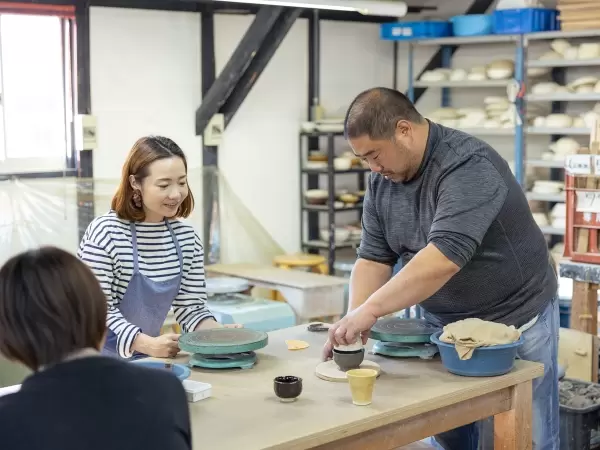
Our instructors will support you from the very beginning! Even beginners can feel at ease.
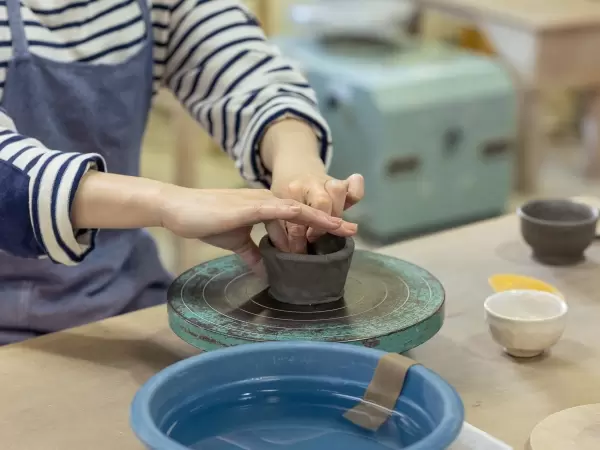
Place the clay on the potter's wheel and even out the thickness while imagining the shape you want to create.
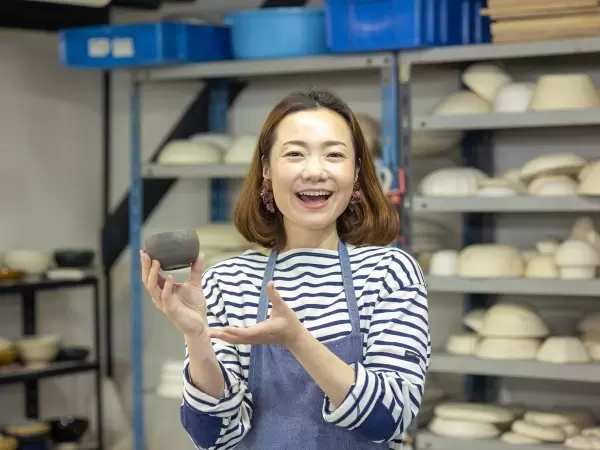
My adorable, round-shaped "My Sake Cup" is complete!
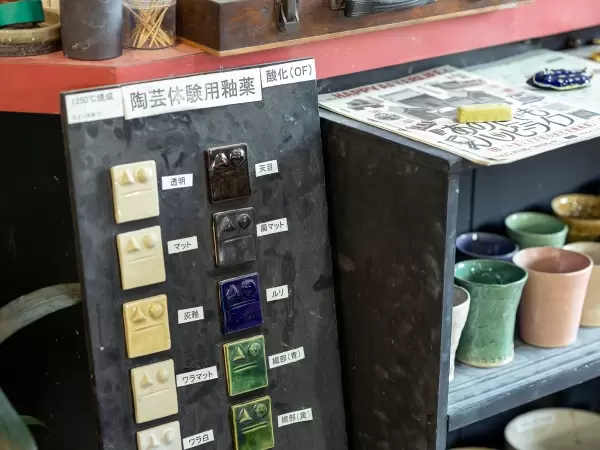
There are many colors and textures of glaze to choose from. Enjoy the finished product!
For those who think making pottery like a professional is too difficult, don't worry. In this course, you'll experience a technique called "ball making," a hand-building method that's easy even for beginners. You'll put your fingers into a lump of clay and gradually pinch and shape it. Once the shape of the vessel is complete, you can choose your favorite glaze and the experience is over. After that, the glaze will be applied and the piece fired at the workshop, and the finished product will be delivered to your home in about two months.
Having your own unique sake cup, one of a kind in the world, is sure to become an unforgettable memory of your trip to Tokoname.
This is the key point!
〇 Demonstration by a ceramic artist of Tokoname ware sake cups "Sasarake" 〇 Try making your own one-of-a-kind sake cup
Kyoei Kiln Ceramic Art School
 2-88 Hojo, Tokoname City, Aichi Prefecture, 479-0833
●Price: Starting at ¥3,500 (excluding tax)
●Contents: Electric potter's wheel, hand-building, and tatara pottery
●Time: 2-3 hours
●Capacity: Maximum 25 people
2-88 Hojo, Tokoname City, Aichi Prefecture, 479-0833
●Price: Starting at ¥3,500 (excluding tax)
●Contents: Electric potter's wheel, hand-building, and tatara pottery
●Time: 2-3 hours
●Capacity: Maximum 25 people
6. Tokonameya
Enjoy a special talk between the sake brewery and the shop owner, along with a special dinner featuring the bounty of Tokoname.
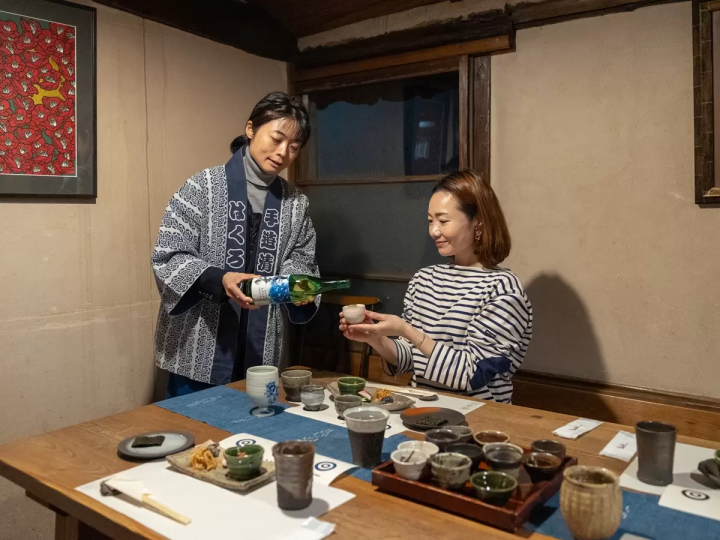
Tokonameya is a sister store of Sawada Sake Brewery. If you're lucky, you might even get to enjoy a drink while listening to valuable stories from the owner and the brewery!
The tour concludes with a return to the Pottery Footpath and a visit to "Tokonameya," a renovated wooden former clay pipe factory. As a place to showcase the charm of Tokoname, the dining area on the first floor offers a "sencha tea set" brewed in a teapot and "Tokoname chirashi" (scattered sushi) made with seasonal local fish, while the gallery on the second floor displays works such as Tokoname ware.
Dinner service is also available every Friday, which is also the day the tour is held! This course includes a special dinner featuring the local sake "Hakuro".
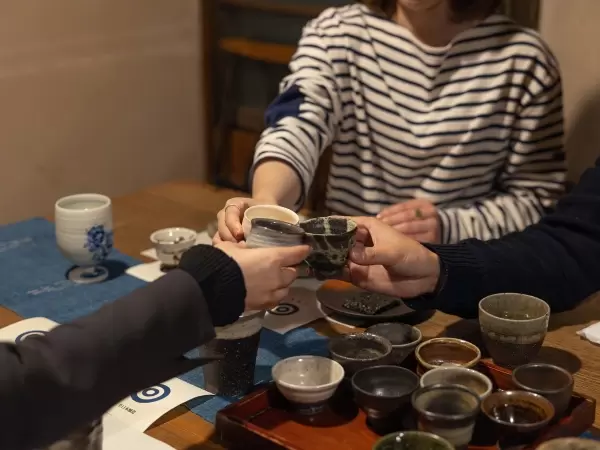
Choose your favorite Tokoname ware sake cup and toast!
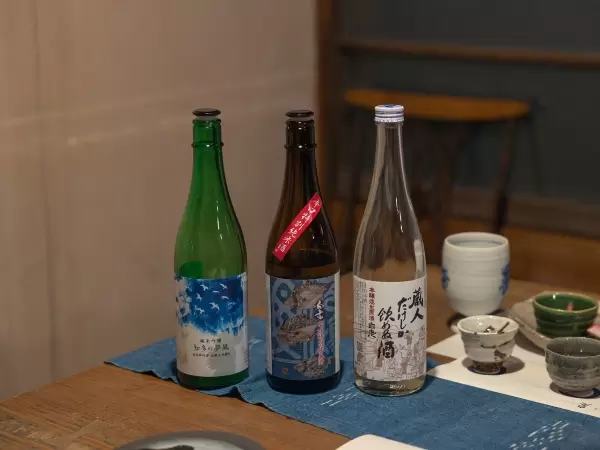
From left to right: Junmai Ginjo Hakuro"Chita no Yumekaze", Dry Special Junmai Sake Hakuro(Kawahagi), "Sake that only brewery workers can drink" *The sake is for illustrative purposes only.
By the way, did you know that Tokoname City has a rather unusual ordinance? It's called the "Ordinance to Promote Toasts with Local Sake Poured into Tokoname Ware Vessels." It's something you'd expect from Tokoname, a town famous for its pottery and Tokoname!
Choose your favorite sake cup from the Tokoname ware selection, pour in the local sake, and then everyone raises a toast!
The menu includes mustard eggplant made with sake lees from Sawada Brewery, simmered local beans (peanuts), Tokoname chirashi sushi with seasonal local fish from the Chita Peninsula , and local specialty Onizaki seaweed, making for a delicious meal that pairs perfectly with sake.
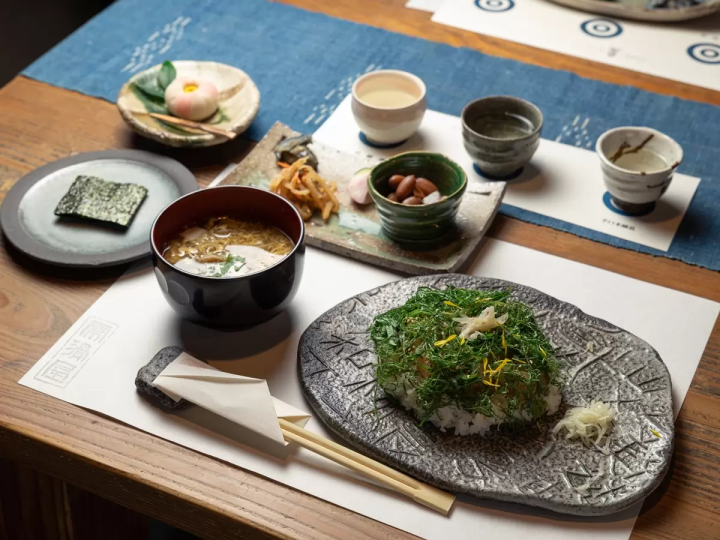
A special dinner is included on the tour. After the meal, you will receive either fresh Japanese sweets from a long-established confectionery shop or homemade mousse and jelly.
Not only are the vegetables and seafood ingredients produced locally, but so are the fermented seasonings such as soy sauce, mirin, and sake. Tokoname is truly a land rich in food!
●Here's the key point!
〇Special dinner featuring Tokoname chirashi sushi made with Tokoname fish + local sake "Hakuro"〇Special talk by the owner and the sake brewery owner
Tokonameya
 479-0836 3-111 Sakaemachi , Tokoname City, Aichi Prefecture Sakae Town
This cafe offers a wide selection from its menu, including lunch sets to enjoy Tokoname chirashi-zushi made with seasonal freshly-caught fish, matcha tea sets, and Japanese sweets sets all served in Tokoname ware bowls. With the Sencha set, you can enjoy seasonal desserts and tea brewed in a Tokoname-yaki teapot. All of the dishes and cafe items are served in unique Tokoname yaki pottery, which further enhances the food's deliciousness in appearance.
The building is an old wooden pipe factory that has been renovated to create a relaxing space.
Various Tokoname ware are lined up on the 2nd floor, with the gallery also promoting the charms of Tokoname. You can purchase popular products such as the Shiraoi sake series and plum wine made in partnership with Sawada Sake Brewery.
479-0836 3-111 Sakaemachi , Tokoname City, Aichi Prefecture Sakae Town
This cafe offers a wide selection from its menu, including lunch sets to enjoy Tokoname chirashi-zushi made with seasonal freshly-caught fish, matcha tea sets, and Japanese sweets sets all served in Tokoname ware bowls. With the Sencha set, you can enjoy seasonal desserts and tea brewed in a Tokoname-yaki teapot. All of the dishes and cafe items are served in unique Tokoname yaki pottery, which further enhances the food's deliciousness in appearance.
The building is an old wooden pipe factory that has been renovated to create a relaxing space.
Various Tokoname ware are lined up on the 2nd floor, with the gallery also promoting the charms of Tokoname. You can purchase popular products such as the Shiraoi sake series and plum wine made in partnership with Sawada Sake Brewery.
The packed day-long itinerary will fly by before you know it. After dinner, the tour will conclude.
From the final stop, "Tokonameya," it's about a 10-minute walk to the nearest station, Tokoname Station. There are plenty of accommodations around Tokoname Station and on the airport island, so we recommend spending a night in Tokoname to soak up the memories of the tour.
● [A one-day course offering a five-sensory experience combining Tokoname ware and local sake]
■Tour Itinerary
10:00 Meet at the Ceramics Hall
10:00 Pottery Footpath(Guided walk and workshop visit by ceramic artist Mr. Yagi)
12:00 Udon Amami Wabisuke (Tokoname dish: Clay pot curry udon served in a Tokoname ware bowl + Tokoname milk)
12:45-13:15 Free time 13:30 Sawada Sake Brewery (brewery tour & "Sasarake" experience)
*A pairing of sake vessels and local sake for all five senses
15:15 Kyoei Kiln (Demonstration by ceramic artist Mr. Takeuchi & "My Own Sake Cup" Making Experience)
17:00 Tokonameya(Special dinner "Local ingredients x Local sake" + Owner x Brewery workshop [Special event on Fridays])
19:00 Tour ends at the location. *Transportation during the tour will be by foot or private taxi. ■Price: 30,000 yen per person (for 2 participants), 28,000 yen (for 3-5 participants) ■Tour duration: 9 hours (10:00-19:00)
■Schedule: Year-round (held on Fridays)
■Minimum number of participants: 2 to 5 people (more than 5 people can be discussed)
Half-day courses are also available to suit your travel purpose and schedule!
● A photogenic walking course featuring Tokoname ware and sweets
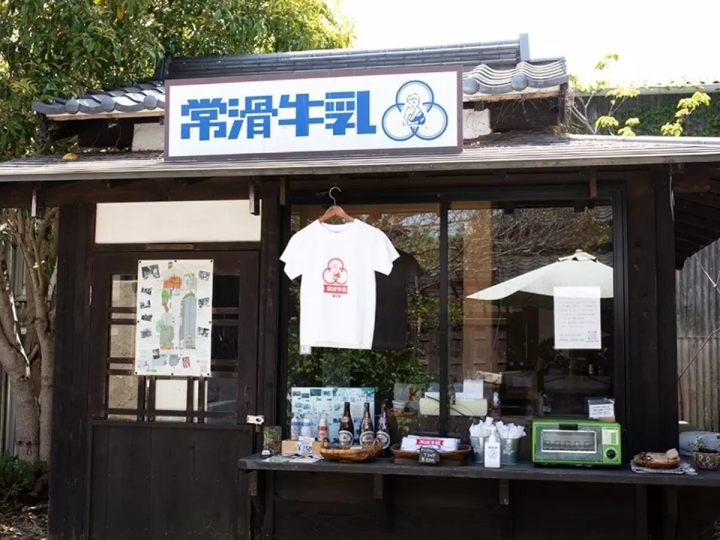
This afternoon course involves strolling along the Tokoname Pottery Footpath and enjoying popular sweets served in Tokoname ware. Take a relaxing break with a limited-edition snack set featuring either "coffee zenzai" or flavorful "ou senzai" served with Tokoname milk.
This is a convenient and highly satisfying walking plan that condenses the charm of Tokoname into a short amount of time. It's also recommended for a stopover after arriving at the airport.
■Tour Itinerary 1
4:00 Meet at the Ceramics Hall
14:00-15:30 Pottery Footpath(Stroll & Workshop Visit)
15:30-16:00 Udon Amami Wabisuke
16:00 Dismissal ■Price: 11,000 yen per person (for 2 participants), 10,000 yen per person (for 3-5 participants) ■Tour duration: 2 hours (14:00-16:00)
■Schedule: Year-round (held on Thursdays and Fridays)
■Minimum number of participants: 2 to 5 people (more than 5 people can be discussed)
A morning course featuring Tokoname ware and gourmet cuisine
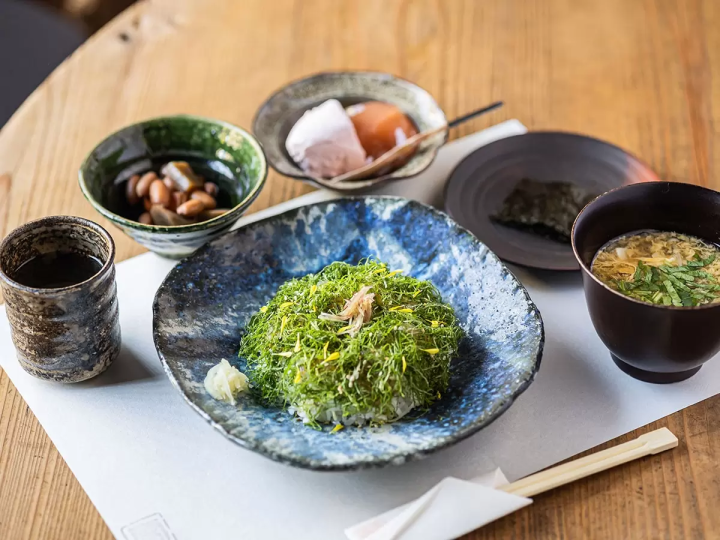
Take a stroll along the Pottery Footpath and enjoy a luxurious lunch. Savor colorful dishes made with local ingredients, including "Tokoname Chirashi," served in special Tokoname ware. Furthermore, exclusively for this content, you can choose your favorite sake cup from among those handcrafted by Tokoname artisans and enjoy it with local sake, engaging all your senses. This is a sophisticated half-day course for discerning travelers that allows you to fully enjoy Tokoname's culture and cuisine in a short amount of time.
■Tour Itinerary
10:00 Ceramics Hall
10:00-12:00 Pottery Footpath(Stroll & Workshop Visit)
12:00-13:00 Tokonameya(Lunch: Tokoname Chirashi and local sake)
13:00 Dismissal ■Price/Per person (for 2 participants): 13,000 yen, (for 3 participants): 12,000 yen, (for 4-5 participants): 11,000 yen ■Tour duration: 3 hours 15 minutes (10:00-13:00)
■Schedule: Year-round (held on Tuesdays and Fridays)
■Minimum number of participants: 2 to 5 people (more than 5 people can be discussed)
We promote tourism with the slogan "Happy Come On TOKONAME," which expresses our desire that "everyone who visits Tokoname City will be able to experience its various charms, feel happy and joyful, and go home with the power of happiness (happiness) that will give them energy for the next day."
The contents on this page may partially contain automatic translation.
Special Features
More








![[Izu, Shuzenji Onsen] Shuzenji hydrangeas adorn the garden of the inn "SORA Togetsuso Kinryu"](https://resources.matcha-jp.com/resize/720x2000/2024/06/25-185079.webp)
