Suica Card for Japan Travel and Shopping: How to Buy and Use (2026)

Simplify your Japan trip by using the Suica card for trains, subways, and shopping. Discover where to buy a Suica, how to charge it, and where it's accepted across Japan.

Written by
This is the official account of MATCHA's editorial department. Our articles feature useful travel information for visitors to Japan, from how-to guides to recommended places to visit.
This service includes sponsored advertisements.
Suica: An IC Card for Smooth Transportation in Japan
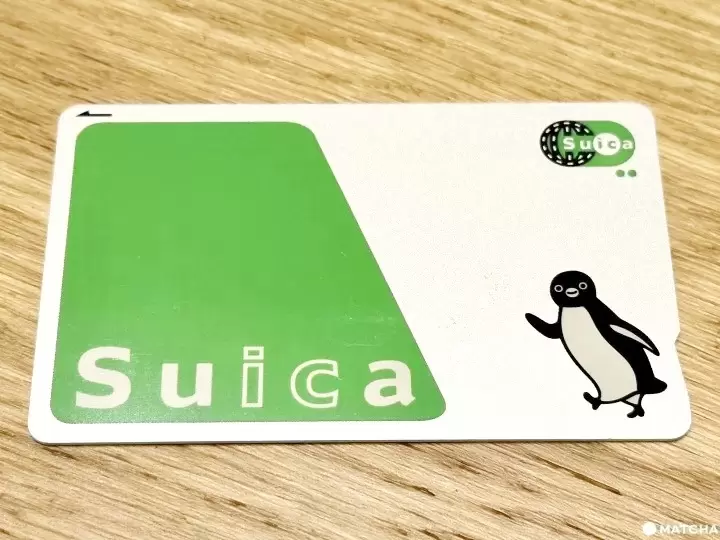
The Suica is a prepaid IC card issued by JR East that serves as an essential all-in-one tool for travel and shopping in Japan.
By charging the card in advance, you can move seamlessly through ticket gates with a simple tap, eliminating the need to buy individual paper tickets for JR lines, subways, and private railways in major cities like Tokyo, Osaka, and Kyoto.
Beyond transit, it functions as an electronic wallet accepted at convenience stores, vending machines, and various station shops.
While the Japan Rail Pass is limited to JR lines, a Suica is highly recommended for its flexibility across almost all networks—just keep in mind that some rural stations may still require paper tickets if they lack IC card readers.
Suica Card: Where to Buy and How to Use
1. Where to Buy a Suica Card
2. Suica Card Types
- Regular Suica Card
- Welcome Suica
- Mobile Suica
- Welcome Suica Mobile for iOS
3. Other IC Cards: Pasmo, ICOCA (Osaka), and Regional IC Cards
4. Suica and Japan Rail Pass: Use Both for Seamless Travel
5. How to Buy a Suica at JR Ticket Vending Machines
6. How to Charge the Suica Card
7. How to Use Suica and IC Cards at Ticket Gates and for Shopping
8. Suica Card Information Summary
Where to Buy a Suica Card
The Welcome Suica, available exclusively for visitors to Japan, can be purchased at Tokyo's Narita Airport or Haneda Airport from the vending machines in front of the JR ticket office.
The regular Suica IC card can be bought online beforehand and picked up at Haneda Airport.
You can also buy a Suica card once you've arrived in Japan at the JR-EAST Travel Service Center within Narita Airport or Haneda Airport, or at the JR ticket offices at major JR stations in the Tokyo area.
For official information on Suica cards, please refer to the JR-EAST official website.
Please note that Suica cards are only sold in the eastern Japan area (wherever JR East operates). This includes the greater Tokyo area and Tohoku (northern Japan). If you travel extensively in western Japan, including Osaka and Kyoto, you can opt for ICOCA or other regional IC cards.
Suica Card Types
The Suica is available as a physical card or as a mobile app, both of which can be used to pay for rides on any train line that accepts IC card payments in Japan.
Below, we introduce the features of each type of Suica and where to buy them.
1. Regular Suica Card
Regular Suica cards can be used by both residents of Japan and tourists.
You can buy a Suica at any JR ticket office in the Tokyo area or JR-EAST Travel Centers. Purchasing a Suica requires a 500 deposit, which will be returned to you if you return the card to a JR-EAST ticket office if you don't need it anymore.
You can charge the Suica with any sum and use it as electronic money to pay for train rides on any line, for city bus rides, and for shopping at convenience stores, vending machines, and shops that accept IC card payments.
2. Welcome Suica

Image courtesy of JR EAST
Welcome Suica is a physical IC card issued by JR-EAST exclusively for foreign visitors to Japan. If you arrive at Tokyo's Narita Airport or Haneda Airport, you can buy the Welcome Suica at the JR-EAST Travel Service Center within the airport.
The Welcome Suica does not require a deposit. The basic fee is 1,000 yen for both adults and children, and you can charge it with the sum of your choice.
The only limitation is that the Welcome Suica is only valid for 28 days. To find out more visit the official JR-EAST page.
Now, it is also possible to book Ninja WiFi with Welcome Suica, a convenient package that secures both your internet connection and transportation in Japan.
Pick them up together at the airport, then take the train to start your journey right away. This also means that you won't need to wait in line to buy the Suica card.
3. Mobile Suica
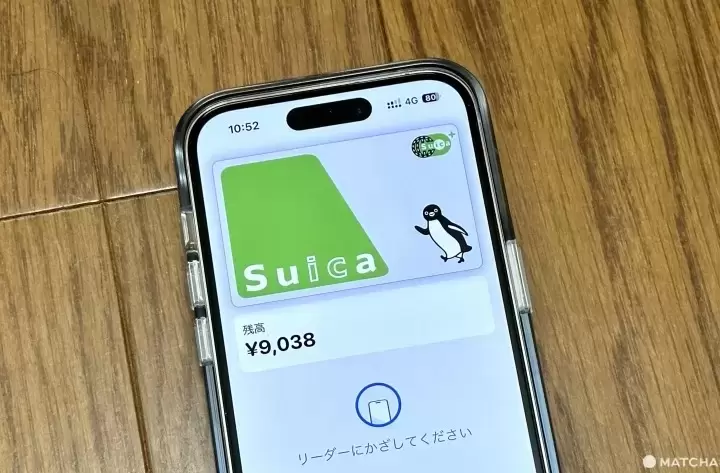
To use a mobile IC card like Suica or Pasmo, first ensure your phone's region is set to Japan.
Once you download the app and link a credit card, you can instantly purchase a new digital card or transfer an existing physical one by scanning it with your camera. This allows you to recharge your balance anytime, anywhere.
To travel, simply tap your phone on the ticket gate reader; your device must be powered on, but it does not need to be unlocked or connected to Wi-Fi to function.
Using Google Pay or Apple Wallet
For international residents, using a mobile wallet is often the most convenient option, though it typically requires your device’s regional settings to be set to Japan.
- iPhone Users: Open the Wallet app, select the option to add a Transit Card, and follow the prompts to activate your preferred digital IC card.
- Android Users: Open Google Wallet, navigate to the E-Money section, and select the digital IC card you wish to enable.
To add funds, simply select "Add Money" within the app and choose your preferred payment method. Once set up, you can recharge your balance instantly from your phone at any time.
4. Welcome Suica Mobile for iOS
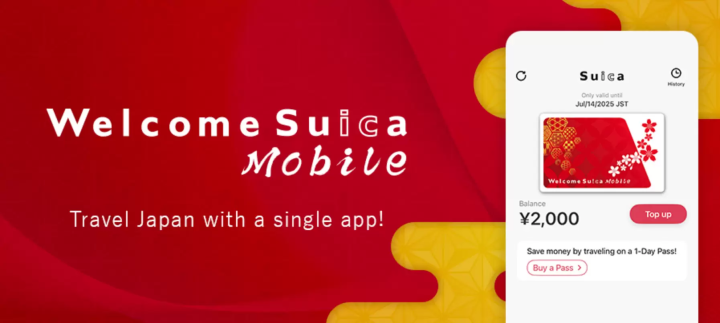
Picture courtesy of JR EAST
The Welcome Suica Mobile app is an English-exclusive service designed specifically for foreign visitors. Unlike the physical Welcome Suica card, which expires after 28 days, the mobile version remains valid for 180 days.
The app allows you to easily issue a digital card and top up your balance directly from your iPhone. Beyond transit and payments, it provides real-time train updates and tourist information.
Additionally, it offers the convenience of purchasing unreserved seats on the Tohoku, Akita, Yamagata, Joetsu, and Hokuriku Shinkansen lines for an additional fee.
To start using the Welcome Suica Mobile, please refer to the official JR-East website.
Other IC Cards: Pasmo, ICOCA (Osaka), and Regional IC Cards
The Suica card is issued by JR East and is primarily sold in Tokyo and eastern Japan; however, it is accepted for transit and payments nationwide.
Several other IC cards offer the exact same functionality across Japan, issued by different regional operators. Suica’s primary counterpart in the Tokyo area is the Pasmo card, issued by the Tokyo Metro and private railway companies.
Similarly, in the Kyoto and Osaka regions, JR West issues the ICOCA card. Regardless of which card you choose, any of these major IC cards can be used interchangeably for travel and shopping throughout the country.
Below, we introduce some other IC cards with the same functions as Suica.
1. PASMO
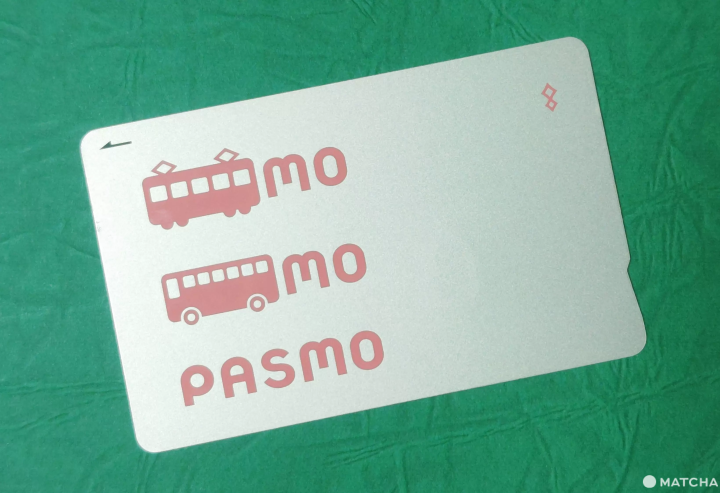
A PASMO card is nearly identical to the Suica. It allows for entrance and exit to train, subway, and metro stations with a simple tap. It can also be used on buses and to make purchases. The only significant difference is its appearance (shown above) and where you can purchase it.
While Suica is only available at JR-EAST stations in Tokyo and eastern Japan, the PASMO card can be purchased at stations in eastern Japan operated by other railways, such as Tokyo Metro, Keisei Railways, Keikyu Railways, Tobu Railways, and others.
PASMO is very convenient if you are not at a JR station but want to get a prepaid card quickly. It can also be used at JR stations and across Japan as well.
The PASMO card is purchased in a similar way to the Suica. Go to a ticket machine, change the language to English, and follow the instructions.
A special PASMO for visitors to Japan, called the PASMO PASSPORT, is available to buy at station ticket counters (not at machines).
The PASMO PASSPORT is an IC card usable for 28 days. You can purchase it at Narita and Haneda airports, as well as at Tokyo Metro stations like Ueno, Shinjuku, and Ikebukuro.

2. ICOCA: Available in Osaka and Kyoto
In Osaka, Kyoto, and the greater Kansai region, ICOCA (issued by JR-WEST) is more common.
You can purchase an ICOCA at ticket machines at JR train stations in western Japan.

3. Kitaca, Manaca, Sugoca, and Others
Other Japanese IC cards include Kitaca in Hokkaido, Manaca in the Nagoya area, and Sugoca in southern Japan (Kyushu). It is possible to use a Suica card in these areas as well (some exceptions apply).
Whatever their name might be, they work all the same and can be purchased the same way. If you are planning to travel in Japan by subway, train, or bus, IC cards are the easiest way to get around.
Suica and Japan Rail Pass: Use Both for Seamless Travel

For travelers visiting multiple cities, the most efficient strategy is to use the Japan Rail (JR) Pass in tandem with an IC card (Suica, PASMO, or ICOCA).
While the JR Pass offers unlimited travel on the Shinkansen and JR-operated lines for a fixed price, it is not accepted on private subways, buses, or non-JR railways (such as the Tokyo Metro or Osaka Metro).
To avoid being stopped at ticket gates when switching networks, keep a charged IC card handy; it covers almost all non-JR transit with a simple tap.
By using the JR Pass for long-distance travel and an IC card for city-specific subways and private lines, you can navigate Japan's complex rail system seamlessly and stress-free.

How to Buy a Suica at JR Ticket Vending Machines

Suica and other IC cards can be bought at ticket counters or ticket vending machines.
To buy a Suica, go to to station operated by JR-EAST (any JR station in eastern Japan).
To buy a PASMO, go to a Tokyo Metro station or any other station that is not operated by JR in the Tokyo area.
To buy an ICOCA, go to any station in western Japan that is operated by JR-WEST (any JR station in the Kyoto - Osaka - Hiroshima area).
Follow the directions below to buy a card.
1. Find a Ticket Machine

Ticket vending machines are located near the ticket gates at train stations.
First, we recommend changing the language to English to make the following steps easier.
2. Purchase a New IC Card (Suica, Pasmo, ICOCA, etc.)

After you change the language setting, you need to press the "Purchase a New IC card" button.
3. Select the Type of Card
You can choose the amount of yen to put on your IC card initially. Anything from 1,000 yen to 10,000 yen is possible. Select the button of the IC card you wish to purchase. In this case, we chose an IC card worth 2,000 yen.
4. Insert Your Payment
If you choose a card worth 2,000 yen, the card itself will have a 1,500 yen charge. The cost of the card itself is 500 yen, which is a refundable deposit.
5. Use Your IC Card
The IC card is ready to use right away. Now you do not have to worry about buying tickets each time you ride on trains, subways, or buses. If the IC card is empty, charge it at one of the ticket machines.
How to Charge the Suica Card
At Convenience Stores

Most of the ticket vending machines of railway companies that accept transportation IC cards have a function for charging the IC cards.
However, the most convenient and easily accessible machine for charging IC cards is the ATM at Japan's 7-Eleven convenience stores.

Picture courtesy of JR-EAST
The first step is to press '電子マネーチャージ' (Electronic Money Charge) at the top of the screen, then place your card in the reading area on the right side.
Next, you will see options for selecting an amount. After choosing the amount, the cover at the bottom will open, and you can insert bills. Wait for a moment, and the charge will be completed, and there are no handling fees, which is very convenient.
You can also ask the store staff for assistance in charging at convenience stores in Japan. When charging, simply say 'Charge' in English, and then state the amount and make the payment in cash.
Convenience stores where you can charge: 7-Eleven, FamilyMart, Lawson, ポプラ (Popura), MINI STOP, and Daily Yamazaki.
Top-up at Major Train Stations

In the initial screen, click on the right side where it says 'チャージ(入金)する' (Charge/Deposit).
After that, the screen will show you several amount options.
Press the button showing the amount you want to charge your IC card with, then proceed to insert bills or coins in the same manner as the purchasing steps. (The specific steps may vary depending on the railway company's machine).
How to Use Suica and IC Cards at Ticket Gates and for Shopping
At Ticket Gates within Train Station

Photo by Pixta
The machines of various railway companies may vary slightly, but most of them work as shown in the picture above.
You simply need to lightly touch the card to the blue area, and it will automatically allow passage through the ticket gate. The same procedure applies when exiting the station.
As Electronic Payment Method

IC cards can be used as electronic payment methods (E-Money) for accepting vendors.
In addition to using it for transportation and convenience stores, it can also be used at a wide variety of other stores. For example, well-known drugstores like Matsumoto Kiyoshi, Daikoku, and Tsuruha, fast-food chains like McDonald's, Matsuya, Coco Ichibanya, Mos Burger, and many more.
Suica Card Information Summary
| Name | Suica card | Welcome Suica | Mobile Suica |
| Purchase Qualifications | Anyone | Foreign Tourists on Short-Term Tourist Visas | Anyone with a smartphone *The phone's region needs to be set to Japan |
| Price | 500 Japanese yen (refundable) + desired top-up amount | You can choose from 1,000, 2,000, 3,000, 4,000, 5,000, or 10,000 yen | Not required |
| Discount | Not applicable | Get Suica Penguin-related merchandise by showing the app at HOTEL MET Shibuya, Tokyo STATION HOTEL, and Hotel Metropolitan Tokyo. | Not applicable |
| Limitation | Unlimited Usage for an Unlimited Number of Days | Valid for only 28 Days | Unlimited Usage for a Certain Number of Days |
| Ticket Purchase Location | Automatic Ticket Machines or Ticket Counters at JR Stations in Eastern Japan | JR EAST Travel Service Center at Specific Stations: Narita Airport, Haneda Airport | Download the mobile app |
FAQ
Which is better, Suica or Pasmo?
Suica and Pasmo are both contactless smart card systems widely used for public transportation and various purchases in Japan, especially in the Tokyo metropolitan area. Both cards are functionally equivalent, and they can be used interchangeably for the most part.
Can I use Suica or Pasmo in Kyoto?
Yes. While Suica and Pasmo cards are not directly issued in the Kansai region, they can still be used in Kyoto and the wider Kansai area for transportation on compatible IC card readers. This includes using the cards on the JR West lines, Kyoto City Subway, and non-JR lines such as Keihan Railway and Hankyu Railway, which accept IC cards for fare payment. Additionally, many buses in Kyoto also accept IC cards for payment. Therefore, if you already have a Suica or Pasmo card from another region in Japan, it can still be used for convenient fare payment during your travels in Kyoto.
Do you need both Pasmo and Suica?
No. The Pasmo and Suica cards serve the same purpose as rechargeable contactless smart cards for transportation and various purchases in Japan. They are both widely accepted in the Tokyo metropolitan area and can be used interchangeably for the most part. The only significant difference between them is that they are issued by different companies.
Can I use Pasmo for Shinkansen?
While the Pasmo card can be used on many train and subway lines in Japan, it cannot be used directly as a form of payment for Shinkansen (bullet train) tickets. Passengers typically need to purchase separate tickets for Shinkansen travel.
Do Suica and PASMO cards expire?
Suica and Pasmo cards themselves do not have an expiration date for the card itself. However, the stored value on the card may have an expiration date specified by the respective card issuers. We recommend checking the specific terms and conditions for your Suica or Pasmo card to understand any expiration policies that may apply to the stored value or the card itself.
Is it worth getting a Suica card?
In short, yes. Unlike rail passes, which are valid only on designated railway networks, a Suica or Pasmo card can be used to pay for transportation on all modes of transportation, including trains, subways, and buses. An IC card like Suica or Pasmo is all you need in order to transfer from one railway to another. Additionally, it can also be used for cashless payments at station shops and some restaurants.
Get Around with Ease with a Suica Card
Whether it's a physical card or a digital version, an IC card like Suica is the easiest way to get around and make casual purchases in nearly every area of Japan.
Currently, various railway lines across Japan have started to offer the service of entering stations by swiping credit cards and debit cards. For more details, please refer to the official websites of the respective railway companies.


This is the official account of MATCHA's editorial department. Our articles feature useful travel information for visitors to Japan, from how-to guides to recommended places to visit.
Top Articles
There are no articles in this section.
Related Article


Special Features
More