Early Cherry Blossoms in Tokyo: 4 Spots to Visit in February-March
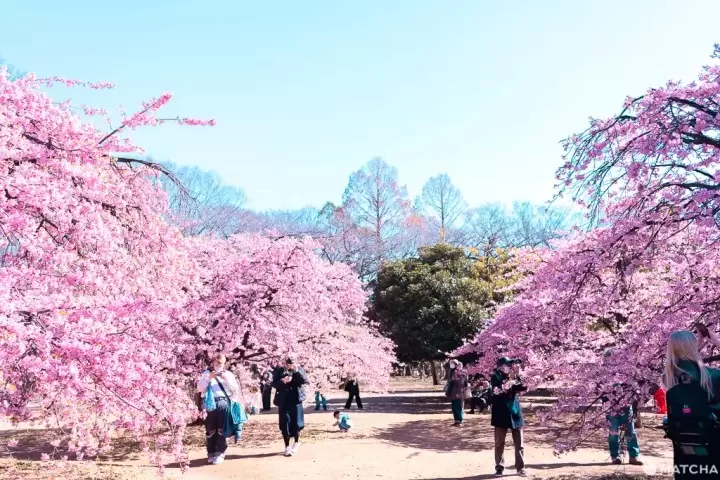
Want to see early cherry blossoms in Tokyo? Discover four must-visit spots for Kawazu-zakura in February and March 2026. Capture stunning pink blooms before the main season starts.

This service includes sponsored advertisements.
Cherry Blossoms Blooming in February and March
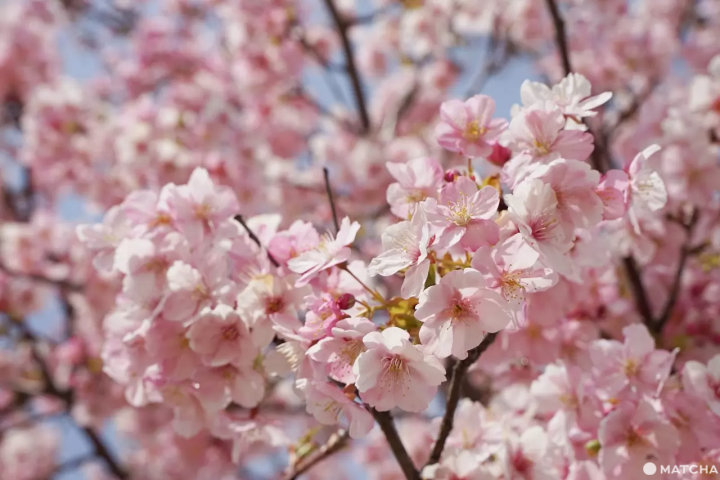
While Somei Yoshino is the standard variety for peak season, other cherry blossoms bloom as early as February. The most popular early-blooming variety is the Kawazu-zakura, which peaks in February and March.
Named after their discovery site in Shizuoka Prefecture, Kawazu-zakura are synonymous with the southern Izu Peninsula.
While the famous Kawazu Sakura Festival begins in early February, you can also find these blooms in Tokyo. Tokyo’s trees typically peak slightly later, offering a month-long viewing window from mid-February to mid-March.
Early Cherry Blossom Spots in Tokyo
1. Kyunakagawa River Kawazu-zakura: Cherry Blossoms and Tokyo Skytree
2. Happoen Garden
3. Kiba Park
4. Yoyogi Park near Harajuku

1. Kyunakagawa River Kawazu-zakura: Early Cherry Blossoms and Tokyo Skytree
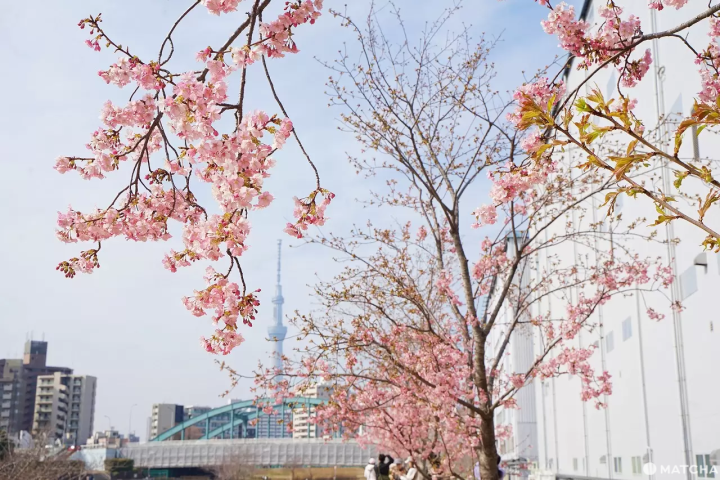
Located in eastern Tokyo, the Kyunakagawa River offers a scenic spot to enjoy early cherry blossoms with TOKYO SKYTREE in the background.
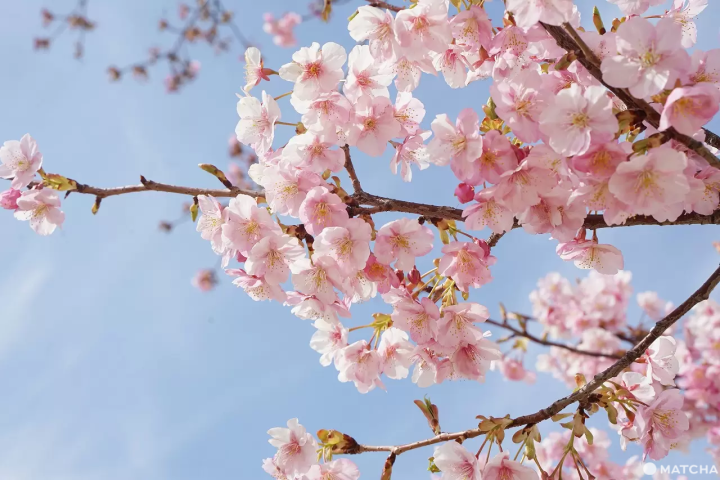
Approximately 30 Kawazu-zakura and Okan-zakura trees line the riverbank promenade. While the grove is small, it provides a peaceful atmosphere for a leisurely stroll.
This is also a fantastic location for railway enthusiasts, as trains frequently cross the iron bridge directly over the river.
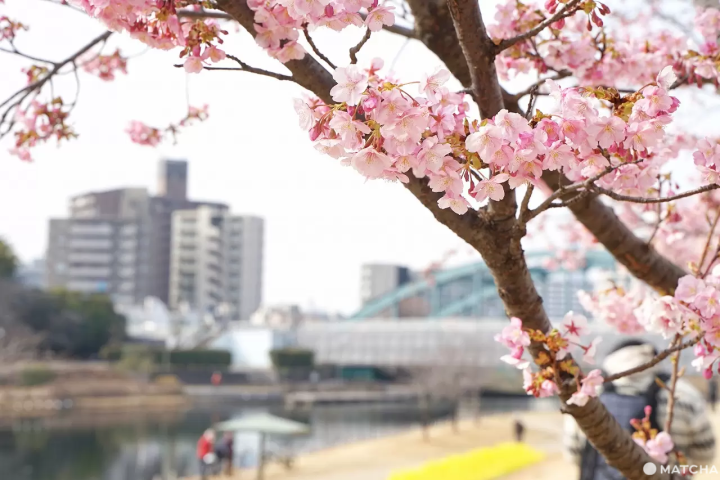
The closest stations to this river are Hirai Station on the JR Sobu line and Kameido-Suijin Station on the Tobu Kameido line. From both stations, it’s about a 10-15 minute walk to the promenade.
It takes about 20 minutes to get to Hirai Station from Tokyo Station with one transfer. From Shinjuku Station, you can get there in about 30 minutes without having to transfer trains.
The place might be a little bit difficult to find. Search for the Fureaibashi Bridge that goes over Kyunaka River on Google Maps, and you shouldn’t have trouble getting to this area.
Kyunakagawa River Kawazu-zakura Cherry Trees
Location: Map
Nearest station: Kameido Suijin Station (Tobu Kameido Line), Hirai Station (JR Sobu Line)
2. Happoen Garden: Early Cherry Blossoms in a Japanese Garden
Happoen Garden is a 400-year-old urban oasis featuring traditional Japanese architecture, tranquil ponds, and a historic tea room. In February, the Kawazu-zakura bloom beautifully near the garden entrance and the Kochuan teahouse.
The season continues through early April with over 80 trees, including Somei Yoshino, weeping cherry trees, and double-flowered varieties. Starting in late March, visitors can also experience the garden's stunning evening illumination events.
Please note that while Happoen is used as a wedding venue, event space, and restaurant spot, the garden itself can be visited for free.
Happoen can be reached in about 5 minutes on foot from JR Meguro Station and Gotanda Station.
Happoen Garden
Location: Tokyo, Minato ward, Shirokanedai 1-1-1
Official website: https://www.happo-en.com/ (Japanese)
3. Kiba Park: Easy Access from Tokyo Station

To those searching for a spot to view the cherry blossoms near Tokyo Station, we recommend Kiba Park along Oyoko River. This is another quiet area with a promenade along the riverside with a row of trees bearing kawazu-zakura.
The area is quiet, so if you’re lucky, you may be able to see mejiro (*1) birds among the blossoms too.
The closest station to Kiba Park is Kiba Station, which can be reached by riding the Tokyo Metro Tozai Line from Otemachi Station. Otemachi is near the north exit of JR Tokyo Station. It takes about 7 minutes, and you don’t need to transfer trains.
Near Kiba Park is the Tokyo Museum of Contemporary Art, as well as Monzen-Nakacho, an area where you can feel the old town culture of Tokyo.
There are several sightseeing spots here, such as Kiyosumi-Shirawaka, which is an area with a large number of cafes, so you can add this to your list of places to visit when coming to view the cherry blossoms.
*1 Mejiro: a type of bird smaller than a tree sparrow that has green wings. This bird lives in areas from East Asia to South-East Asia.
4. Yoyogi Park near Harajuku
In addition to its famous Somei Yoshino trees, Yoyogi Park is also a great place to see Kawazu-zakura.
A 10-minute walk from the Harajuku entrance (located next to Meiji Jingu) will bring you to the Kawazu cherry blossom area.
These trees are known for their low-hanging, lush branches, making it easy to spot adorable Japanese White-eyes (mejiro) darting among the flowers to drink nectar.
Yoyogi Park
Location: MAP
Enjoy Early Blooming Cherry Blossoms in Tokyo
If you want to experience the cherry blossoms early, use this guide to plan your visit in February or March.
The deep pink Kawazu-zakura offer a stunning head start to the sakura season and are perfect for early spring photography.
FAQ
Where can I see early cherry blossoms in Tokyo?
In Tokyo, several locations offer early glimpses of cherry blossoms before the full bloom season, ideal for visitors seeking an early sakura experience. Sumida Park along the Sumida River in Asakusa and Ueno Park, known for its abundance of cherry trees, typically showcase early blooming varieties from late March to early April. The scenic Chidorigafuchi area near the Imperial Palace offers a picturesque row of cherry blossoms along the moat during the same period. Yasukuni Shrine and Inokashira Park are also notable spots to enjoy early cherry blossoms, adding to Tokyo's charm with their stunning displays before the peak of sakura season.
How early do cherry blossoms bloom in Japan?
Cherry blossoms, known as sakura in Japan, typically bloom in different regions of the country at varying times. The most popular type of sakura in Japan is the Somei Yoshino variety, which generally starts to bloom in late March to early April. The blooming period can vary each year depending on factors like weather conditions, including temperature and rainfall.
Are the cherry blossoms in Japan in early May?
In Japan, cherry blossoms typically bloom earlier in the spring season, generally from late March to early April, varying depending on the region and specific local climate conditions. By early May, the cherry blossoms have usually reached their peak bloom or have already shed their petals, especially in regions where they bloom earlier in the season.
In northern regions like Hokkaido, where the climate is cooler, cherry blossoms may bloom later, into early May. However, in most central and southern parts of Japan, including popular destinations like Tokyo, Kyoto, and Osaka, the cherry blossoms are usually past their peak bloom by early May.
Where are the earliest cherry blossoms in Japan?
The earliest cherry blossoms in Japan can be found in regions like Okinawa, typically blooming from late January. Most of the cherry trees in Okinawa are of the Hikanzakura variety, which blooms earlier than other varieties. The most popular cherry blossom trees in Japan, however, are the Somei Yoshino variety, which typically starts blooming in March. The first Shomei Yoshino cherry blossoms appear in Kyushu, Shikoku, and southern Honshu around mid-March.
Can you still see cherry blossoms in mid-April?
Yes, in the Tohoku region of Japan, including areas like Aomori, Akita, and Fukushima, cherry blossoms can still be seen in mid-April, extending the viewing season for visitors to enjoy the beauty of sakura during that time.
Why are Japan's cherry blossoms blooming earlier?
Japan's cherry blossoms are blooming earlier due to various factors, prominently influenced by climate change resulting in warmer temperatures. The urban heat island effect in cities like Tokyo and Osaka accelerates this process, alongside altered weather patterns and irregularities such as warmer winters and premature spring warmth. These fluctuations and the overall impact of global warming play a significant role in disrupting the natural cycles of cherry blossoms, leading to the observed trend of earlier blooming across Japan. This shift underscores the larger implications of environmental changes on seasonal events and natural phenomena worldwide.


MATCHA編集者。


Related Article


Special Features
More