Japan's Autumn Foliage Season: Weather, Best Spots, How to Enjoy

Learn when and where to enjoy Japan's autumn foliage by region, including tips on the best weather, what to wear in autumn, and the top spots to visit.

Written by
This is the official account of MATCHA's editorial department. Our articles feature useful travel information for visitors to Japan, from how-to guides to recommended places to visit.
This service includes sponsored advertisements.
Japan's Autumn Foliage Season: October to December, From North to South
If you’re visiting Japan in autumn, then viewing the fall foliage (momiji) at a temple or in a nature-rich area is a must!
Japan's autumn foliage season starts in October in Hokkaido, the northernmost region, and peaks in late November - early December in areas like Tokyo, Kyoto, Osaka, and Fukuoka.
The foliage turns crimson and yellow, creating a stunning contrast to the clear blue sky, as autumn weather tends to be clear with few rainy days after the end of October through December.
Read on to discover when the autumn foliage season starts in each region in Japan, weather features, what to wear, and 10 of Japan's most famous autumn foliage spots.
Autumn Foliage in Japan: Weather and Travel Tips
Autumn Foliage Season by Region
Weather and What to Wear in Autum in Japan
How to Enjoy the Fall Foliage in Japan: What to Bring
Top 10 Fall Foliage Spots in Japan
1. Hokkaido: Jozankei Gorge
2. Aomori: Oirase Stream
3. Nikko: Nikko Toshogu Shrine
4. Tokyo: Rikugien Garden
5. Kamakura: Meigetsuin Temple
6. Kyoto: Rurikoin Temple
7. Osaka: Minoo Park
8. Hiroshima: Momijidani Park
9. Fukuoka: Maizuru Park
10. Oita: Yabakei Gorge
Momijigari: The Cultural Background of Fall Foliage Viewing

Read also


Autumn Foliage Season by Region
The table below shows the best times to enjoy the fall foliage at major destinations in Japan and the average temperatures of these regions during that month, listed from north to south.
| Region | Annual Peak Period | Average Temperature |
| Hokkaido (Obihiro) | Mid-October | 10.0℃ |
| Hokkaido (Sapporo) | Late October | 11.8℃ |
| Miyagi / Sendai | Mid-November | 9.4℃ |
| Kanazawa | Late November | 11.5℃ |
| Tokyo | Late November | 12.1℃ |
| Nagoya | Late November | 12.2℃ |
| Kyoto / Osaka | Early December | 7.0℃ (Kyoto) 8.6℃ (Osaka) |
| Hiroshima | Mid-November | 12.5℃ |
| Fukuoka | Late November | 13.8℃ |
The autumn foliage season changes depending on the climate of that year, location (height above sea level), and other factors.
For example, in the Daisetsuzan Volcanic Group in Hokkaido, said to be where the foliage changes the earliest in Japan, leaves begin to change colors on the summit as early as September.
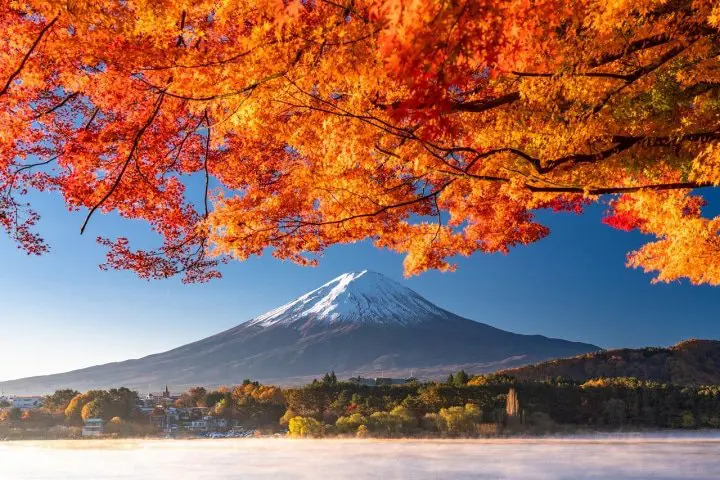
Photo by Pixta
Depending on the species of the tree, there are some with leaves that fall within two weeks after changing, while others will continue to lose their leaves over the course of a month.
It may not be as short as cherry blossoms, which begin to fall within a week, there are times when the leaves may fall earlier than expected due to the weather. It might even be wise to consider yourself lucky if you see the leaves before they fall.
Read also

Weather and What to Wear in Autum in Japan

The autumn leaves season will vary depending on the region, but usually takes place from around middle October to the beginning of December. Japan during this period will often have relatively clear weather and days with pleasant weather and fresh air.
Be sure to bring long-sleeved clothing and thin sweaters during October. For November, you’ll want to bring jackets and thicker sweaters due to the colder weather. Once it’s December, you’ll need a coat for many of the places that you’ll be visiting.
Read also


How to Enjoy the Fall Foliage in Japan: What to Bring
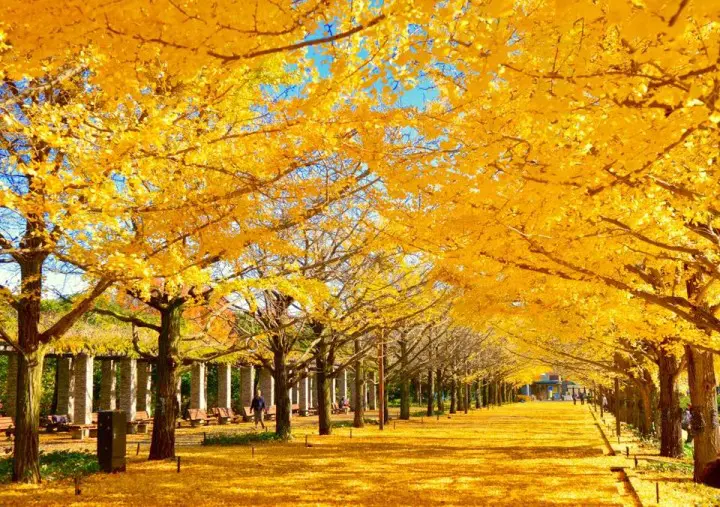
In Japan, going to see the autumn leaves is called momijigari. The word “gari” or “picking” may be attached to the word, but the practice itself actually means to visit the fields or mountains to enjoy and see the autumn leaves. You don't have to actually go picking for autumn leaves!
Popular autumn foliage spots are often in the mountains, so be sure to wear shoes that are easy to walk in. It’ll also be reassuring to have clothes that protect against the cold in the chilly weather.
Mountain weather changes very easily, so we suggest bringing along rain gear. By doing so, you can refresh both your mind and body by choosing a day with great weather to hike up a mountain in autumn.
If the autumn leaves have already fallen, please take a look at the ground. The fallen leaves might be covering the ground like a carpet!
↑ Return to the top of article.
10 Famous Autumn Foliage Spots in Japan
If you’re traveling to Japan in the autumn, the beautiful autumn leaves are something you’ll want to witness. Below, we introduce 10 famous fall foliage spots in Japan, from north to south.
1. Jozankei Gorge, Hokkaido

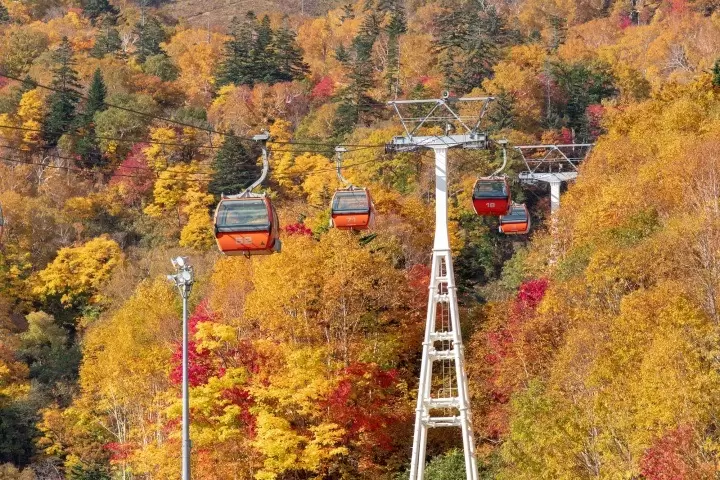
In Jozankei, located about one hour by bus from central Sapporo, you can enjoy various activities amid the autumn leaves.
Enjoy the autumn leaves while riding a canoe, as shown in the picture, or while horse riding. If you take the ropeway, you can also look down on the autumn leaves from the top of the mountain.
Jozankei is also a hot spring district, so be sure to utilize the hot springs and heal your fatigue on the way home. Jozankei

Read also


2. Oirase Stream, Aomori
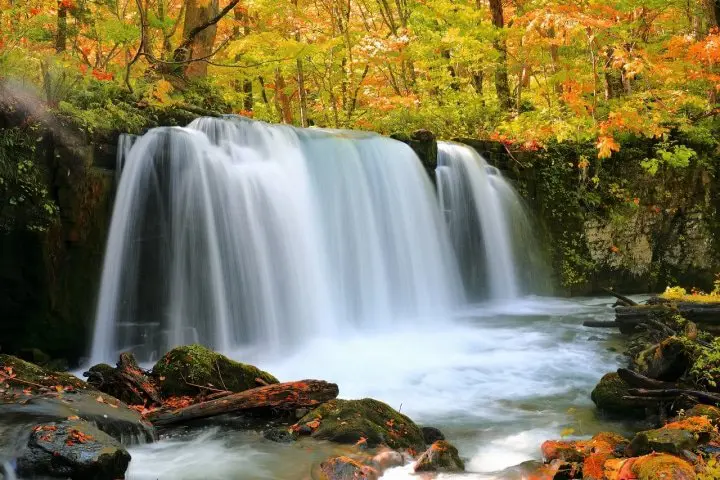
Photo by Pixta
Oirase Stream is a stream that flows from Lake Towada in Aomori. The clear stream is gentle, but sometimes rough flow that runs approximately fourteen kilometers between boulders and trees.
You can enjoy the beautiful scenery here throughout the year, but the entire area is dyed in vivid colors during the autumn leaves season. There are also well-maintained roadways and promenades along the stream, making this an area that anyone can easily take a stroll in.
The stream is located around a 120-minute bus ride from Shin-aomori Station, or 90 minutes from Hachinohe Station. It is in the heart of Towada-Hachimantai National Park. Oirase Gorge
 034-0301 60 Okuse, Towada City, Aomori Prefecture
Oirase Gorge is a beautiful river that flows from Lake Towada in Aomori Prefecture. Stretching for about 14 kilometers from Lake Towada, this mountain stream is a sight to behold, with natural beauty such as waterfalls and clear streams.
The mountain stream is covered with trees, creating a tunnel-like landscape. Below, there is a promenade and roadway, and in autumn, the autumn leaves are beautiful, so if you take a stroll, you will feel as if you have been lost in the autumn leaves. Oirase Gorge is a great spot to enjoy the beauty of nature.
034-0301 60 Okuse, Towada City, Aomori Prefecture
Oirase Gorge is a beautiful river that flows from Lake Towada in Aomori Prefecture. Stretching for about 14 kilometers from Lake Towada, this mountain stream is a sight to behold, with natural beauty such as waterfalls and clear streams.
The mountain stream is covered with trees, creating a tunnel-like landscape. Below, there is a promenade and roadway, and in autumn, the autumn leaves are beautiful, so if you take a stroll, you will feel as if you have been lost in the autumn leaves. Oirase Gorge is a great spot to enjoy the beauty of nature.

3. Nikko Toshogu Shrine, Nikko
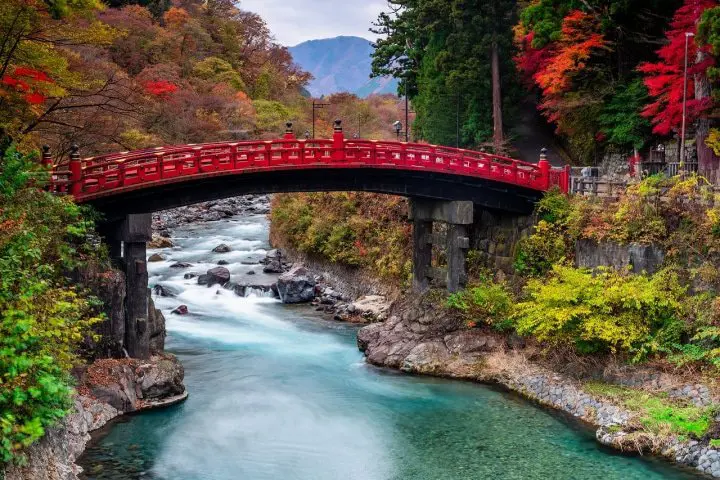
Photo by Pixta
Nikko Toshogu Shrine, located in Nikko, Tochigi, is a famous sightseeing spot in Japan that is also registered as a UNESCO World Heritage Site. This wonderful sight of the autumn leaves can be seen near the sacred bridge of Nikko Futarasan Shrine.
If you travel further to Kegon Falls, you’ll also find a view that combines the 100-meter waterfall together with the autumn leaves. Nearby Lake Chuzenji is also a wonderful location to enjoy the fall foliage.
Nikko Toshogu
 2301 Sannai, Nikko City, Tochigi Prefecture 321-1431
Read also


4. Rikugien Garden, Tokyo
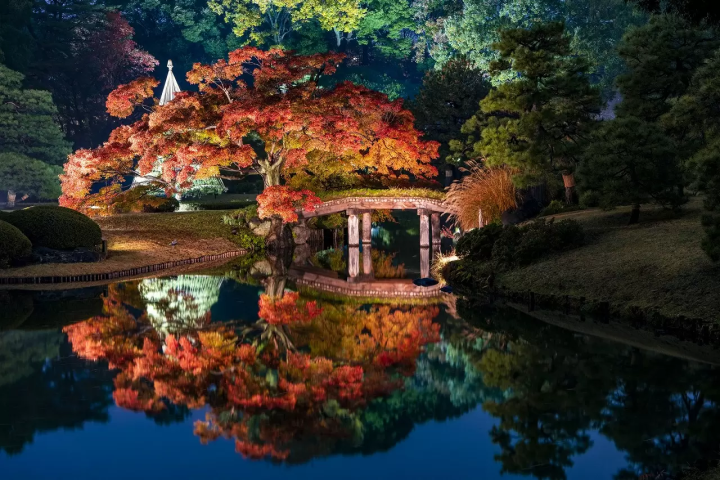
Rikugien Garden in fall. Photo by Pixta
Rikugien, one of Tokyo’s most famous autumn foliage spots, is a historical Japanese garden built in 1702.
As autumn arrives, the garden will be decorated with fallen leaves from 450 Japanese maple trees, as well as 600 other varieties of maple and ginkgo trees.
After sunset, the garden will be illuminated, providing a stunning view of the autumn foliage that transforms the scene beyond its daytime appearance for you to enjoy. Rikugien Garden
 113-0021 6-16-3 Honkomagome, Bunkyo-ku, Tokyo
Rikugien Garden is one of the most famous Japanese gardens. This garden was built in 1702 and covers a vast area of approximately 8.9 hectares. Rikugien is known as a strolling garden with a rocky mountain spring, and its beauty and perfection was such that even the Edo period shogun, Tokugawa Tsunayoshi, visited it many times.
113-0021 6-16-3 Honkomagome, Bunkyo-ku, Tokyo
Rikugien Garden is one of the most famous Japanese gardens. This garden was built in 1702 and covers a vast area of approximately 8.9 hectares. Rikugien is known as a strolling garden with a rocky mountain spring, and its beauty and perfection was such that even the Edo period shogun, Tokugawa Tsunayoshi, visited it many times.
Read also


5. Meigetsuin Temple, Kamakura
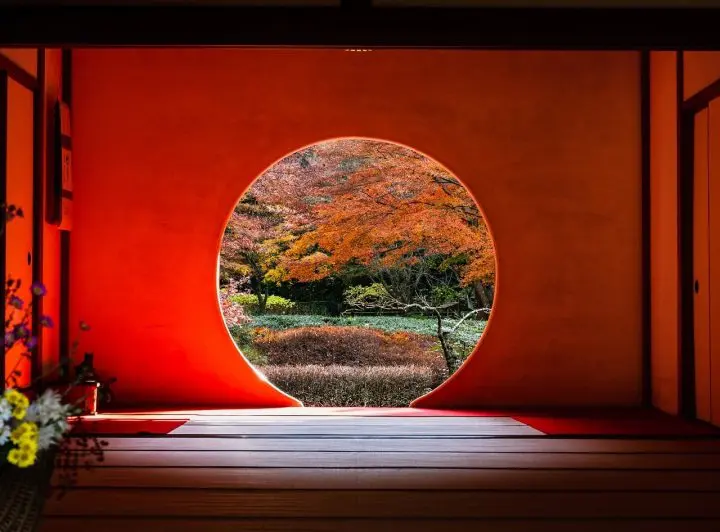
Photo by Pixta
Famous for its hydrangeas, Meigetsuin Temple is surrounded by beautiful natural scenery throughout the year.
For the best view of the fall foliage, be sure to visit the main hall and look out at the garden through its distinctive circular window. Meigetsuin Temple
 189 Yamanouchi, Kamakura City, Kanagawa Prefecture, 247-0062
Meigetsuin is a Zen temple built in 1394, and is also known as the "Hydrangea Temple" because of the beautiful hydrangeas that bloom in June. During the autumn foliage season, the view from the round window of the main hall of Meigetsuin is especially recommended. With the red and yellow trees decorating the window, you will feel as if you are looking at a painting.
189 Yamanouchi, Kamakura City, Kanagawa Prefecture, 247-0062
Meigetsuin is a Zen temple built in 1394, and is also known as the "Hydrangea Temple" because of the beautiful hydrangeas that bloom in June. During the autumn foliage season, the view from the round window of the main hall of Meigetsuin is especially recommended. With the red and yellow trees decorating the window, you will feel as if you are looking at a painting.
Read also


6. Rurikoin Temple, Kyoto

Photo by Pixta
Rurikoin Temple in Kyoto is a lesser-known spot among the many famous foliage sites in the city. Here, you can enjoy a scenery that resembles a painting, where light and shadows intertwine with the vibrant leaves.
Typically, Rurikoin Temple is not open to the public, but it is periodically accessible during limited times in spring and autumn. We highly recommend visiting in autumn if you have the opportunity. Rurikoin Temple
 601-1255 55 Kamitakano Higashiyama, Sakyo-ku, Kyoto City, Kyoto Prefec...
Highlights of Rurikoin Temple are the Lapis Lazuli Garden, with its splendid carpet of moss, and the Garyo Garden, which depicts a dragon soaring into the sky.
On the second floor in particular, the way the autumn leaves are reflected off the glossy black floor is particularly beautiful, creating a scene that is almost like a painting.
601-1255 55 Kamitakano Higashiyama, Sakyo-ku, Kyoto City, Kyoto Prefec...
Highlights of Rurikoin Temple are the Lapis Lazuli Garden, with its splendid carpet of moss, and the Garyo Garden, which depicts a dragon soaring into the sky.
On the second floor in particular, the way the autumn leaves are reflected off the glossy black floor is particularly beautiful, creating a scene that is almost like a painting.

7. Minoo Park, Osaka
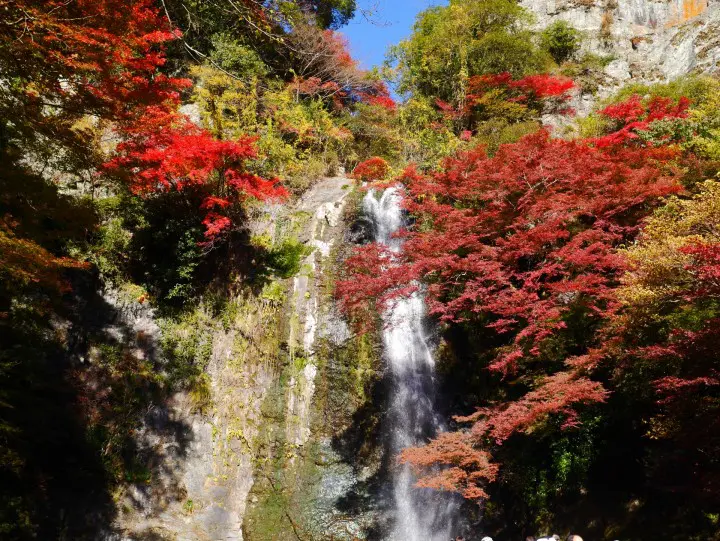
A popular autumn foliage destination in Osaka is Minoo Park. One of its main attractions is Minoo Falls, set amidst lush nature.
The trail leading to the waterfall also serves as a hiking path, making it a scenic and enjoyable experience.

Minoo Park is also known for a unique specialty: maple leaf tempura. This snack features fried maple leaves coated in sweet batter, making it a delicious and addictive treat perfect for enjoying while exploring the park.

8. Momijidani Park, Hiroshima
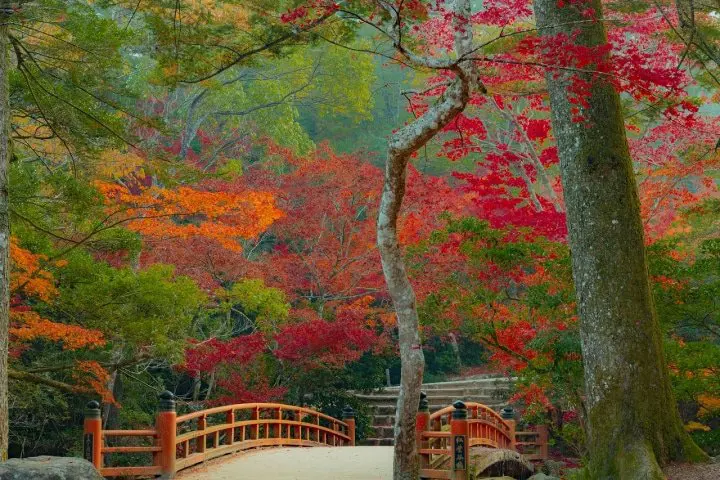
Picture by Pixta
Hiroshima's Momijidani Park is a renowned spot for autumn leaves, located just about ten minutes on foot from the World Heritage Site of Itsukushima Shrine.
The park is lined with approximately 700 maple trees that display vibrant colors each year from mid to late November. The scenery around Momiji Bridge is especially stunning during this season.

9. Maizuru Park, Fukuoka
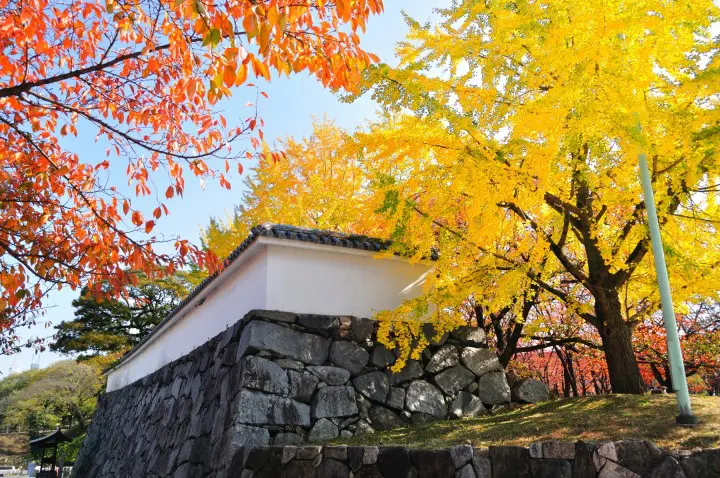
Picture courtesy of Fukuoka City
Maizuru Park in Fukuoka Prefecture is an autumn leaves spot easily accessible in ten minutes by subway from Hakata in central Fukuoka.
Originally, the location where Fukuoka Castle was built in the Edo period, it is now a park. To this day, the stone walls and other traces of the castle still remain as a reminder of that period.
You can easily visit Maizuru Park along with the Japanese gardens in the neighboring Ohori Park.
10. Yabakei Gorge, Oita
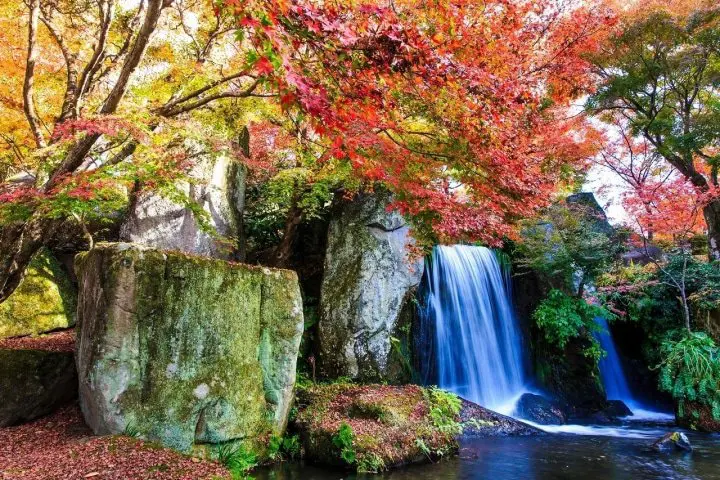
Picture from Pixta
Besides its spectacular fall foliage, Yabakei Gorge is home to several historical sites, including a 185-meter tunnel, dug by hand in the 1700s, and the longest arched stone bridge in Japan! The area is also home to several temples and is the perfect place to enjoy autumn leaves with a historical feel.

Momijigari: The Cultural Background of Enjoying the Fall Foliage
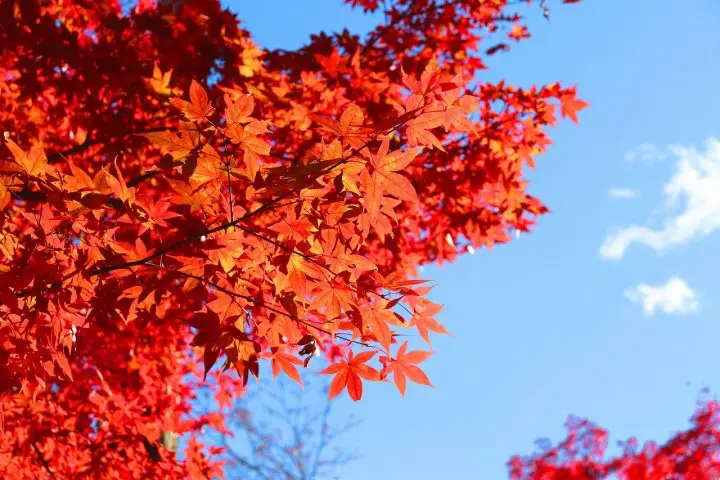
Photo by Pixta
It is said that Japan began to enjoy the autumn leaves as a leisure activity sometime during the middle of the Edo era (1603-1868).
However, poetry expressing admiration for gingko trees exist in the Man’yoshu, Japan's earliest collection of poetry dating back to the eighth century. As a result, various theories exist surrounding the origin of this culture.
There are also various theories on the origin of the word momijigari. “Momijigari” originally referred to hunting animals such as wild boars and birds. One theory states that the activity of going to gather the beautiful autumn leaves was likened to that of hunting by the nobility, thus becoming known as momijigari.
There is also a legend surrounding Mt. Togakushi in Nagano stating that long ago, there was once a female demon by the name of Momiji who attacked travelers. She was punished by order of the Emperor at the time for her crimes.
Theories state that this legend is the origin of “momijigari.” The names of famous plays found in Noh and Kabuki theater called “Momijigari” were also created based on this legend.
FAQ
When should I go to Japan for autumn foliage?
For the best experience of autumn foliage in Japan, plan your visit between late October and early December, with variations depending on the region. Early changes begin in Hokkaido and northern areas in late October, peaking in central regions like Kyoto and Tokyo from mid to late November. Southern destinations such as Hiroshima showcase their best colors from late November to early December. By scheduling your trip during these periods, you can witness the vibrant autumn landscapes across Japan, ensuring a memorable and picturesque experience of the country's fall foliage. Be sure to monitor local forecasts for the most accurate timing of peak colors in each region you plan to visit.
What do you wear in autumn in Japan?
When preparing for autumn in Japan, pack a selection of versatile clothing items like long-sleeved shirts, sweaters, and light jackets for easy layering to accommodate changing temperatures. Pair these with pants, jeans, skirts, or dresses for varied outfit options. Opt for comfortable walking shoes suitable for exploring different terrains, and don't forget accessories such as scarves, hats, and gloves to stay warm on cooler days. Be sure to pack rain gear like a compact umbrella or a lightweight rain jacket to be ready for sporadic showers. By including these essential pieces in your autumn wardrobe, you'll be equipped to enjoy Japan's fall season in comfort and style.
Which prefecture in Japan is best in autumn?
One of the best prefectures in Japan to experience the beauty of autumn foliage is Kyoto Prefecture. Known for its historic temples and traditional culture, Kyoto comes alive with vibrant shades of red, orange, and yellow during the fall season, creating a breathtaking display of autumn colors. Popular spots like Arashiyama, Kiyomizu-dera, and Tofuku-ji are renowned for their stunning foliage, attracting visitors from around the world. Additionally, the tranquil gardens, atmospheric streets, and ancient landmarks in Kyoto provide a picturesque backdrop for experiencing the essence of autumn in Japan.
How long do autumn leaves last in Japan?
The duration of autumn leaves in Japan typically varies depending on factors like location, weather conditions, and tree species. Generally, the fall foliage season lasts from a few days to a few weeks in a specific area, with peak colors marking a relatively short-lived period within that time frame. It's essential to plan your visit to catch the autumn hues at their most vibrant, considering regional variations and checking foliage forecasts for specific locations in Japan. By staying informed and timing your trip accordingly, you can maximize your chances of enjoying the beautiful spectacle of autumn leaves in Japan to the fullest.
What is the color of the fall in Japan?
During the fall season in Japan, the colors of autumn foliage typically range from vibrant reds and oranges to brilliant yellows and golden hues. The changing leaves create a picturesque landscape across the country, with various tree species contributing to the diverse palette of colors. Maple trees, ginkgo trees, and other deciduous varieties transform into stunning shades as their leaves turn, painting the landscapes with a kaleidoscope of warm tones. These vibrant colors of autumn, known locally as "koyo," attract visitors from around the world to witness the beauty of Japan's fall foliage in all its seasonal glory.
When should I go to Japan for autumn foliage?
To witness the breathtaking autumn foliage in Japan at its peak, plan your visit between late October and early December, varying slightly depending on the region. Early foliage changes start in Hokkaido and northern areas from late October, while central regions like Kyoto and Tokyo reach their peak colors from mid to late November. Southern destinations such as Hiroshima display their vibrant autumn hues from late November to early December. By scheduling your trip during these times, you can enjoy the stunning landscapes and picturesque scenes of fall colors across Japan. Stay updated with local forecasts to ensure you catch nature's autumn spectacle in each region at its most dazzling.
How would you describe the fall foliage in Japan?
The fall foliage in Japan, known as "koyo," is a mesmerizing natural spectacle characterized by a vibrant tapestry of colors that paint the landscapes in shades of red, orange, yellow, and gold. The changing leaves of maple trees, ginkgo trees, and various deciduous species create a picturesque panorama, transforming parks, mountainsides, and temple gardens into breathtaking scenes of seasonal beauty. The vivid hues of autumn foliage captivate visitors as they meander through forests, gardens, and historic sites, providing a sensory feast and a profound appreciation for nature's captivating transformation during the fall season in Japan.
Enjoy the Fall Foliage in Japan
Momijigari is a traditional Japanese activity of enjoying autumn leaves, practiced for many years. If you visit Japan during this season, we encourage you to venture outdoors and experience the breathtaking beauty of the fall foliage.
Read also


Main image by Pixta
This is the official account of MATCHA's editorial department. Our articles feature useful travel information for visitors to Japan, from how-to guides to recommended places to visit.
Top Articles
There are no articles in this section.
Related Article




Special Features
More